




Prostate-specific antigen (PSA) testing is a common tool used to screen for prostate cancer and monitor prostate health over time. Many men with diabetes may wonder whether their condition can influence PSA results, potentially affecting detection and ongoing monitoring. Understanding this relationship helps you interpret your results more accurately and reduces unnecessary anxiety.
Research suggests that diabetes can sometimes affect PSA levels, although the impact varies between individuals. Factors like blood sugar control, inflammation, and certain medications may play a role in slightly lowering or altering PSA readings. Knowing this helps you and your doctor understand the context behind your results.
It’s important to compare PSA values over time rather than relying on a single measurement. Tracking trends allows your specialist to identify meaningful changes and determine whether further investigation is needed. Consistent monitoring gives a clearer picture of your prostate health despite the influence of diabetes.
Being aware of how diabetes may interact with PSA levels helps you make informed decisions about follow-up and treatment. Open discussions with your healthcare team ensure that any changes are interpreted correctly, supporting timely interventions and effective management of prostate health.
Understanding PSA
Prostate-specific antigen (PSA) is a protein produced by the prostate gland. Elevated PSA levels can signal a range of conditions, including prostate cancer, benign enlargement of the prostate, inflammation, or infection.
Interpreting PSA results isn’t straightforward and requires context. Factors such as your age, overall health, medications, and other medical conditions can influence the numbers.
Being aware of these variables helps you and your doctor understand what a particular PSA level may mean. This ensures more accurate evaluation and informed decisions about any necessary follow-up or further testing.
How Diabetes Might Influence PSA
Research suggests that diabetes may slightly lower PSA levels in some men, which can make interpretation more complex. Factors like hormonal changes, lower testosterone, or metabolic effects linked to insulin resistance may play a role. Knowing this helps you understand why your PSA might not always reflect the full picture.
It’s important to remember that a lower PSA does not mean you cannot develop prostate cancer. The effect is subtle and mainly influences the reading rather than the actual risk. Being aware of this allows you to discuss results confidently with your doctor.
Understanding how diabetes interacts with PSA levels helps you and your healthcare team make informed decisions about monitoring and follow-up. When you know what to expect, you can approach testing and results with greater reassurance and clarity.
Factors That May Influence PSA Levels in Men with Diabetes
| Factor | How It Affects PSA | Notes / Recommendations |
| Blood Sugar Control | Poor glycaemic control may indirectly influence PSA via inflammation or tissue effects | Maintain stable blood sugar for more reliable readings |
| Hormonal Changes / Testosterone | Lower testosterone in diabetes may slightly reduce PSA production | Consider in interpretation; does not reduce cancer risk |
| Medications | Some drugs (e.g., metformin) may alter PSA slightly | Always inform your doctor of all medications |
| Obesity / Metabolic Syndrome | May decrease PSA concentration per volume | BMI and metabolic health considered in interpretation |
| Inflammation | Diabetes-related low-level inflammation can cause PSA fluctuations | Trends over time more reliable than single readings |
| Age | PSA naturally rises with age, may be modified by diabetes | Age-specific reference ranges improve assessment |
| Recent Procedures / Infection | Catheterisation, biopsy, or UTI may raise PSA temporarily | Retest after recovery to confirm trend |
| Surgery / Postoperative State | Healing processes may temporarily alter PSA | Monitor trends rather than single values |
Testosterone and Hormonal Changes
Men with diabetes often have lower testosterone levels, which can influence PSA production. PSA values may sometimes appear lower than expected, even when further prostate assessment is still needed. Understanding this helps you recognise why results may not always tell the full story.
Lower hormone levels can affect how your doctor interprets PSA readings. Being aware of this interaction allows you to ask informed questions about your results and follow-up plans. It ensures that any potential concerns are addressed promptly.
Considering testosterone and hormonal changes helps you and your healthcare team view PSA results in context. When you understand the connection, you can approach testing and monitoring with greater confidence and clarity.
Blood Sugar Control
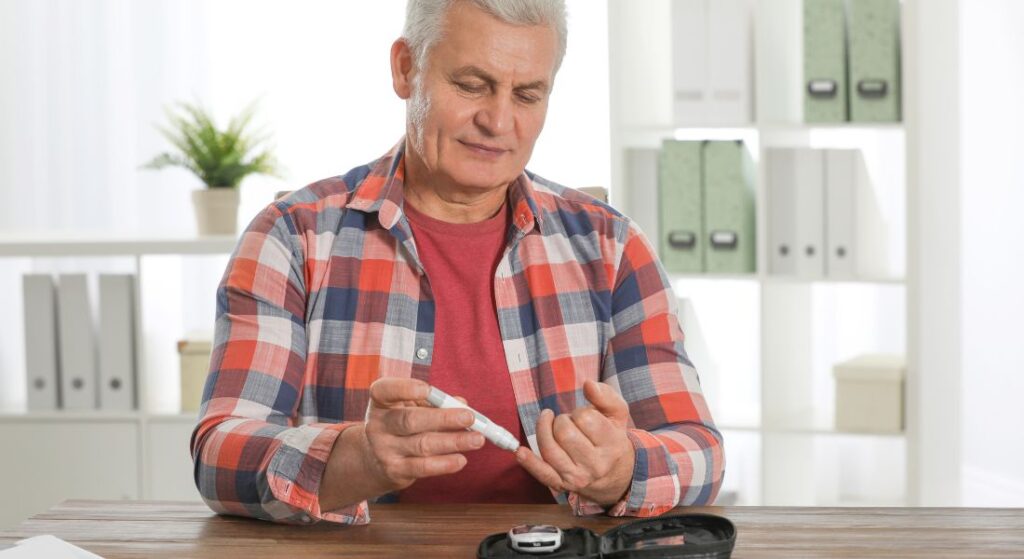
Poor glycaemic control can affect your overall health and the function of the prostate. While high blood sugar doesn’t directly increase PSA levels, it can influence inflammation or tissue health, which may indirectly impact readings. Being aware of this helps you understand how your results could be affected.
Maintaining stable blood sugar is important for accurate monitoring and effective follow-up. You can support this through consistent medication, diet, and lifestyle habits. Taking an active role in controlling your glucose gives your doctor a clearer picture of your prostate health.
Good blood sugar management supports overall health and may help make ongoing monitoring more consistent. When you keep levels stable, it ensures that monitoring and any subsequent decisions are based on reliable information.
Obesity and Metabolic Syndrome
Type 2 diabetes is often linked with obesity and metabolic syndrome, which can influence PSA readings. You may find that excess body fat and associated hormonal changes alter PSA production, sometimes making results less straightforward to interpret. Understanding this connection helps you see why your doctor considers more than just the PSA number.
When reviewing your results, your healthcare team will often take BMI and overall metabolic health into account. This provides a more accurate assessment of your prostate status and any potential risks. Being aware of these factors allows you to discuss results with confidence.
Maintaining a healthy weight and addressing metabolic issues can support clearer PSA monitoring. When you take steps to improve metabolic health, it not only benefits PSA interpretation but also your overall wellbeing.
Inflammation and PSA
Diabetes can lead to low-level systemic inflammation, which sometimes affects the prostate. You may notice that PSA levels fluctuate slightly due to this inflammation, making interpretation more nuanced. Understanding this helps you avoid unnecessary worry over a single elevated reading.
Doctors often look at trends in PSA over time rather than relying on one result. Comparing multiple measurements gives a clearer picture of what is normal for you and whether any changes are significant. This approach helps guide follow-up and potential interventions.
Being aware of the role of inflammation allows you to approach PSA testing with perspective. It ensures that both you and your healthcare team can make informed decisions based on patterns rather than isolated values.
Medication Considerations

Certain diabetes medications can indirectly affect PSA levels or prostate function. You may have heard that metformin, for example, has been studied for its possible effects on prostate cancer risk and PSA levels, although the evidence remains mixed. Understanding these influences helps you see why your doctor considers medications when interpreting PSA results.
Your healthcare team will review all medications you are taking when assessing PSA readings. This ensures that any potential effects on results are taken into account, allowing for more accurate evaluation. You can discuss concerns about your prescriptions openly with your doctor.
Being aware of how medications interact with PSA allows you to participate actively in your care. It helps you and your doctor make informed decisions about follow-up testing and management.
Timing of PSA Testing
In men with diabetes, the timing of PSA tests can be important to ensure accurate results. Factors such as recent infections, urinary catheterisation, prostate procedures, or other medical conditions may temporarily affect PSA levels. Being aware of these factors helps you understand why results can sometimes fluctuate.
Doctors may recommend repeating tests to confirm trends rather than relying on a single reading. Tracking PSA over time provides a clearer picture of prostate health and reduces uncertainty. You can feel more confident when results are interpreted in context.
Understanding the timing and conditions of PSA testing allows you to approach monitoring proactively. It ensures that both you and your healthcare team have reliable information to guide follow-up and potential treatment decisions.
Age and PSA Interpretation
PSA levels naturally increase as men get older, and having diabetes adds another layer to consider. You may find that older men with diabetes require more careful interpretation of results, especially if testosterone levels are lower than average. Knowing this helps you understand why age and health status are important in evaluating PSA.
Doctors often use age-specific reference ranges to guide decision-making. This approach provides a more accurate assessment of prostate health compared with a single universal threshold. You can discuss with your specialist how your individual factors may influence interpretation.
Being aware of how age and diabetes interact with PSA helps you approach testing with perspective. It allows you and your healthcare team to make informed choices about follow-up and monitoring tailored to your situation.
Impact on Prostate Cancer Detection
Slightly lower PSA levels in men with diabetes could make early detection of prostate cancer more challenging if screening isn’t personalised. You should understand that your doctor may interpret results differently to account for this factor. Awareness of this helps you stay proactive in monitoring your prostate health.
Regular monitoring and a tailored assessment are essential. Depending on your risk factors and overall health, your doctor might recommend additional imaging or biopsies to ensure nothing is missed. This personalised approach reduces the chance of delayed detection.
Knowing how diabetes can influence PSA readings empowers you to engage with your care actively. It helps you discuss testing plans confidently and ensures that decisions about follow-up and investigations are well-informed.
Lifestyle Factors
Exercise, a balanced diet, and maintaining a healthy weight can have a positive impact on both diabetes management and prostate health. You’ll find that these habits may also help PSA readings remain more consistent over time. Being mindful of your lifestyle supports overall wellbeing and recovery.
Good metabolic health plays a key role in optimising the accuracy of PSA monitoring. When blood sugar, weight, and physical activity are well managed, your doctor can interpret results with greater confidence. Small, consistent changes can make a noticeable difference.
Taking an active role in lifestyle management empowers you to support your own health. By combining healthy habits with regular monitoring, you create the best conditions for accurate assessment and long-term prostate care.
Inflammatory Conditions and PSA
Conditions like prostatitis or urinary tract infections can temporarily raise PSA levels. You should be aware that men with diabetes may be more prone to infections, which can make interpreting PSA results more challenging. Understanding this helps you avoid unnecessary concern over a single elevated reading.
Monitoring trends over time is often more informative than relying on a single test. Your doctor may recommend repeating PSA measurements to differentiate between inflammation and other causes. This approach ensures that any changes are accurately understood.
Being mindful of inflammatory conditions allows you to work closely with your healthcare team. It helps guide decisions about follow-up, additional testing, and overall prostate monitoring with confidence.
Post-Surgical Considerations
After prostate surgery or a biopsy, PSA is an important tool to monitor for any signs of cancer recurrence. After a biopsy or prostate procedure, inflammation and healing can temporarily affect PSA readings, so your doctor may monitor the trend over time. Knowing this helps you interpret results more accurately in context.
Close and regular follow-up is essential to ensure changes are identified promptly. Your healthcare team will track PSA over time, comparing it with previous readings to get a clear picture of recovery. This careful monitoring allows timely intervention if needed.
Being aware of post-surgical factors empowers you to stay proactive in your care. By understanding how diabetes and recovery influence PSA, you can approach monitoring with confidence and clarity.
Importance of Specialist Assessment

If you have diabetes, it’s important to discuss PSA results with a specialist who understands both prostate and metabolic health. You’ll benefit from an interpretation that takes into account diabetes, medications, age, and other risk factors. This personalised approach helps ensure that your results are assessed accurately.
Specialist input allows for tailored recommendations and follow-up plans. By considering all relevant factors, your doctor can provide guidance that is safe and specific to your situation. You can feel more confident knowing your care is based on a full understanding of your health.
Working with a knowledgeable specialist ensures that decisions about monitoring or further testing are well-informed. It supports safer outcomes and helps you stay proactive in managing both prostate and metabolic health.
Monitoring PSA Trends
Doctors usually focus on how PSA changes over time rather than a single reading. For men with diabetes, repeated testing helps distinguish normal fluctuations from potential issues and provides a clearer picture of prostate health. Tracking trends allows more accurate and proactive management.
- Identify Changes Early: Monitoring trends enables your healthcare team to detect unexpected rises and investigate promptly.
- Reassurance and Proactive Care: Regular observation can provide confidence that any potential problem will be addressed quickly.
- Engage in Your Care: Understanding PSA patterns helps you participate actively in decisions about follow-up and interventions.
- Support Informed Decision-Making: Trend tracking ensures that your doctor can make recommendations based on the bigger picture, not just a single result.
Overall, monitoring PSA trends allows for safer, more personalised care. By focusing on patterns over time, both you and your healthcare team can make informed choices about follow-up and treatment if needed.
Patient Engagement
It’s important for you to understand how diabetes can influence PSA levels. Being actively involved in your care through regular testing, reporting any symptoms, and keeping blood sugar under control helps ensure that monitoring is accurate and meaningful.
Education about the interaction between diabetes and PSA allows you to interpret results more confidently. When you know what to watch for, you can take proactive steps alongside your healthcare team.
Staying engaged empowers you to make informed decisions about your health. It supports better outcomes and ensures that any changes are addressed promptly and appropriately.
Integration with Other Diagnostic Tools
PSA testing is just one part of evaluating prostate health. You should understand that imaging studies, digital rectal exams, and a thorough review of your clinical history all complement PSA results. This combined approach gives a more complete picture of your prostate status.
For men with diabetes, integrating multiple diagnostic tools is particularly important. Diabetes can subtly influence PSA readings, so using additional assessments helps ensure nothing is overlooked. You can feel more confident when decisions are based on a broader set of information.
Using several tests together helps your healthcare team make safer and more accurate recommendations. Being aware of how these tools work together helps you participate actively in discussions about follow-up and treatment options.
Follow-Up Recommendations

Regular follow-up with both urologists and endocrinologists helps ensure that PSA results are interpreted in the context of your overall health. You may need adjustments to how often testing is done or additional investigations depending on trends and individual risk factors. Understanding this helps you stay proactive in your care.
Specialist guidance ensures that any changes are identified early and addressed promptly. By coordinating care between different experts, you receive a more accurate assessment of prostate health. You can feel reassured that your monitoring strategy is tailored to your needs.
Consistent follow-up supports safe and effective long-term management. Staying engaged and informed allows you to participate actively in decisions about screening and ongoing health strategies.
Psychological Considerations
It’s common to feel anxious about PSA readings, especially when diabetes may complicate interpretation. You should feel comfortable discussing any concerns openly with your healthcare team, as this can help reduce stress and provide reassurance.
Understanding how risk factors and management strategies affect your results can give you more perspective. Being informed allows you to approach monitoring with greater confidence and less worry.
Addressing the emotional impact of testing is an important part of overall health. When you feel supported and knowledgeable, it encourages adherence to follow-up plans and promotes a more positive experience.
Collaborative Care Approach
A coordinated approach between urologists and diabetes specialists helps provide holistic care. You can benefit when blood sugar, medications, and lifestyle factors are considered alongside PSA results. This ensures that all aspects of your health are taken into account.
Collaboration allows for more accurate interpretation and personalised recommendations. When specialists work together, potential complications can be anticipated and addressed early. You gain reassurance knowing that your care is comprehensive and well-managed.
Engaging in a collaborative care plan supports safer and more effective long-term monitoring. Being part of this process empowers you to participate actively and make informed decisions about your health.
Summary of Key Points
Diabetes may slightly lower PSA levels in some men because of hormonal and metabolic changes. You should understand that this does not prevent the detection of prostate cancer but makes careful interpretation of results important.
Regular monitoring and assessing trends over time provide a clearer picture of prostate health. Repeated measurements help distinguish normal variations from potential concerns and guide timely action.
Personalised care, involving both urologists and diabetes specialists, ensures that PSA readings are interpreted accurately. Staying engaged with follow-up, lifestyle management, and specialist guidance supports safe and effective long-term monitoring.
FAQs:
1. Can diabetes affect PSA levels?
Yes. Research suggests that diabetes may slightly lower PSA levels in some men, possibly due to hormonal and metabolic changes associated with the condition. However, diabetes does not prevent prostate cancer from developing. Your doctor will interpret PSA results alongside your overall health and risk factors.
2. Does having diabetes make PSA testing less reliable?
PSA testing remains a valuable tool for detecting and monitoring prostate conditions in men with diabetes. However, slightly lower PSA levels may make interpretation more complex. Doctors often consider factors such as age, symptoms, medications, and PSA trends over time rather than relying on a single result.
3. Why might men with diabetes have lower PSA levels?
Men with diabetes may have lower testosterone levels and metabolic changes that can reduce PSA production. Obesity and insulin resistance may also contribute to lower PSA readings. These factors can make PSA values appear lower than expected in some individuals.
4. Can high blood sugar directly increase PSA levels?
High blood sugar does not usually raise PSA levels directly. However, poorly controlled diabetes may contribute to inflammation or infections that can temporarily influence PSA readings. Maintaining good blood sugar control supports overall prostate health and more consistent monitoring.
5. Can diabetes delay the detection of prostate cancer?
In some cases, slightly lower PSA levels in men with diabetes could make prostate cancer more difficult to detect at an early stage. This is why doctors consider additional factors, including symptoms, family history, digital rectal examination findings, and imaging when needed. Regular screening remains important.
6. Do diabetes medications affect PSA levels?
Some diabetes medications, including metformin, have been studied for their potential effects on prostate health and PSA levels. Current evidence is mixed, and no medication should be assumed to significantly change PSA results. Always tell your doctor about all medications you are taking before PSA testing.
7. How often should men with diabetes have a PSA test?
The appropriate screening interval depends on your age, PSA history, family history, and overall prostate cancer risk. Your doctor may recommend more frequent monitoring if you have additional risk factors or abnormal results. Following your personalised screening plan is the best approach.
8. Should I prepare in any special way before a PSA test if I have diabetes?
In most cases, no special preparation is required beyond following your doctor’s instructions. Inform your healthcare provider about any recent urinary infections, prostate procedures, or medications that could affect the results. Keeping your diabetes well managed also supports accurate health assessments.
9. What other tests may be used alongside PSA testing?
PSA is only one part of prostate cancer assessment. Your doctor may also perform a digital rectal examination (DRE), order an MRI scan, or recommend a prostate biopsy if further investigation is needed. These tests provide a more complete picture of your prostate health.
10. Should I be concerned if my PSA level changes over time?
A change in PSA does not automatically mean you have prostate cancer. PSA levels can fluctuate due to several factors, including benign prostate enlargement, infection, inflammation, or diabetes-related influences. Your specialist will assess the overall trend and determine whether additional evaluation is necessary.
Final Thoughts: Understanding PSA Levels When You Have Diabetes
Although diabetes may slightly influence PSA levels, it should never be viewed in isolation when assessing prostate health. Regular PSA testing, careful interpretation of results, good blood sugar management, and ongoing follow-up with your healthcare team all play an important role in the early detection and monitoring of prostate conditions. By taking a personalised approach that considers your overall health and risk factors, you can make informed decisions and support the best possible long-term outcomes. If you would like expert assessment for prostate symptoms, PSA changes, or treatment options, you can contact us at Prostate Clinic London to discuss your first appointment and the next steps in your care.
References:
- Werny, D.M., Saraiya, M. and Gregg, E.W. (2006) ‘Prostate-specific antigen values in diabetic and nondiabetic US men, 2001–2002’, American Journal of Epidemiology, 164(10), pp. 978–983. Available at: https://academic.oup.com/aje/article/164/10/978/162456
- Fukui, M., Tanaka, M., Kadono, M., Imai, S., Hasegawa, G., Yoshikawa, T. and Nakamura, N. (2008) ‘Serum prostate-specific antigen levels in men with type 2 diabetes’, Diabetes Care, 31(5), pp. 930–931. Available at: https://pubmed.ncbi.nlm.nih.gov/18276768/
- Fowke, J.H., Motley, S.S., Cookson, M.S., Concepcion, R., Chang, S.S. and Wills, M.L. (2012) ‘Diabetes and lower serum PSA concentrations in African-American and Caucasian men’, Prostate Cancer and Prostatic Diseases. Available at: https://pmc.ncbi.nlm.nih.gov/articles/PMC3345239/
- Porcaro, A.B., et al. (2016) ‘Impact of diabetes mellitus on prostate cancer detection and PSA screening performance’, Urologic Oncology: Seminars and Original Investigations. Available at: https://www.sciencedirect.com/science/article/pii/S107814391500406X
- Bansal, D., et al. (2013) ‘Metabolic factors and prostate-specific antigen levels: implications for prostate cancer screening’, BJU International. Available at: https://academic.oup.com/bju/article/112/2/238/2399175