


Raised PSA Evaluation



Raised PSA Evaluation
With Professor Prasanna Sooriakumaran, a world-leading prostate cancer specialist
A raised PSA (prostate-specific antigen) level can be concerning and often raises questions about the possibility of prostate cancer. However, it is important to understand that a raised PSA does not necessarily mean cancer is present, and in many cases, it may be related to non-cancerous conditions.
At this stage, the key is not just the result itself, but how it is interpreted. PSA levels can be influenced by a range of factors, and understanding what your result means in the context of your age, symptoms, and overall health is essential in determining the most appropriate next steps.
Professor Prasanna Sooriakumaran provides expert assessment of raised PSA levels, carefully reviewing your results alongside any previous tests and clinical information. His approach ensures that any further investigation is recommended only where it is appropriate, helping to avoid unnecessary procedures while ensuring that important findings are not missed.
This structured, specialist-led evaluation allows you to move forward with a clear understanding of your situation and the most appropriate course of action.

Professor Prasanna Sooriakumaran
MA (Oxon) BMedSci (Hons) BMBS (Hons) PGCertMedLaw ADCertClinInv (Cornell) FRCS (Urol) FEBU USMLE PhD

Raised PSA Levels with Professor Prasanna Sooriakumaran
Testimonials

Book a Consultation
Arrange a consultation with Professor Prasanna Sooriakumaran for clear, specialist guidance on your diagnosis, results, or treatment options.
Book a Consultation
Excellent Google Reviews

Based on 30 reviews


Lee Mottershead
7 months ago

I have now seen Professor PS twice and could not have been more impressed. His expertise is beyond doubt but he also manages to convey important information in a way that is both calming and easy to understand. He is also supported by an excellent team. Indeed, on my recent visit to the LSDC London clinic, his reception manager went out of her way to ensure i could have tests taken the same day.

Kajan Shanmuganathan
7 months ago
Prof PS was wonderful to have as my urologist. After an abnormal finding on a whole-body screening, I knew immediately that I wanted Prof PS to review my case. My initial consultation took place over the Christmas period, and I was extremely fortunate that Simmon (PA) managed to schedule a last-minute appointment despite the holiday period. Thanks to this, I was able to see Prof PS promptly and had a follow-up MRI arranged within just 3–4 days, which was especially impressive given the time of year. I am very happy with the excellent service, efficiency, and level of care I received. I highly recommend Prof PS and the team.

Ian Hart
7 months ago
Being diagnosed with Prostate Cancer isn't much fun, even when you're told it is low grade stage 2, and shouldn't cause you any problems. Finding out it is actually locally advanced stage 3 is distinctly unsettling! Luckily for me, I only found out the second part by getting myself referred to Prof PS, who removed the offending tumour for me. I cannot praise PS and his team, and the care I received from them, highly enough. He inspired confidence from the moment I first met him, and dealt with my cancer in a very matter of fact, down to earth way, putting me at ease throughout the whole experience.

Chris Taylor
8 months ago
By far the best specialist I have ever experienced. A lovely person as well as a great Urologist. Would heartily recommend.

olivier m
8 months ago
It was a short but as excellent of an experience as one would hope for when receiving high PSA results. The secretarial team of Prof PS was extremely responsive, including after hours. Prof PS took the matter seriously and head on, without wasting any time. He was also clear in explaining various steps. It meant a lot that he was clearly looking for the best interest of his patient and to get ahead of any problem. 5 stars every step of the way.

D
8 months ago
It is difficult to put into words how knowledgeable and skilful a surgeon Prof PS is, it is unlikely that one could find better care anywhere else.

P M
8 months ago
I received excellent care from Prof PS. He arranged a very prompt MRI and follow up consultation which meant I could enjoy a peaceful and stress free Christmas. Thank you Prof PS.

Andrew Attard Montalto
8 months ago
Excellent care from Prof PS. I always felt very reassured from my first consultation right through to post-op care. The operation went very well and my rate of recovery is better than expected. Thank you so much Prof PS!

david aquilina
8 months ago
I have to say that my overall experience has been excellent. I went into this procedure full of concern mainly due to the fact that I am still relatively young at age 51 and Prof Prasanna directed me towards the right procedure for my condition of an enlarged prostate. I have undergone an Aquablation procedure and the outcome and recovery has been good. Highly recommended!

Harry Heathcoat Amory
8 months ago
Strongly recommend Prof PS - very approachable as well as measured and clear in his consultations. A very good patient experience.
Fees and Pricing
Understanding the cost of your assessment is an important part of planning your care. The following provides a guide to consultation fees for raised PSA assessment.
Consultation Fees
Initial
Consultation
£325
A detailed consultation to review your PSA result, assess your risk, and determine whether further investigation is required.
Follow-Up
Consultation
£225
Follow-up appointments are available to review any additional tests and provide clear guidance on next steps.
If further tests or investigations are recommended, a clear breakdown of associated costs will be provided during your consultation, ensuring full transparency before proceeding.

Finance and Insurance







What Does a Raised PSA Mean?

- Benign prostate enlargement (BPH)
- Inflammation or infection of the prostate (prostatitis)
- Recent activity, such as exercise or ejaculation
- Age-related changes in the prostate


Ranked Among the UK's Top 10 Prostate Cancer Surgeons
Experience plays a critical role in prostate cancer treatment, particularly when it comes to achieving the best possible outcomes. Surgical technique and specialist expertise can have a meaningful impact on cancer control, as well as functional outcomes such as continence and erectile function.
Professor Prasanna Sooriakumaran has been recognised among the leading prostate cancer surgeons in the UK, including being featured in the Daily Mail’s list of top prostate cancer surgeons. This recognition reflects both his experience and his commitment to delivering high-quality care for patients.
This level of expertise is an important factor for patients seeking private prostate cancer treatment in London.
Recognised Internationally for Excellence in Prostate Cancer Care








When Should a Raised PSA Be Investigated?

What Happens If Your PSA Is Raised?

Why Specialist Assessment Matters

Is a Raised PSA Something to Worry About?

What Should You Do Next?

Book a Consultation
Professor Prasanna Sooriakumaran in the Media

Professor Prasanna Sooriakumaran discusses the importance of being a patient-centred doctor and the value of cultivating emotional intelligence in patient interactions during this podcast.

Professor Prasanna Sooriakumaran discusses men's health, prostate cancer, and longevity medicine in the inaugural Emerald podcast.
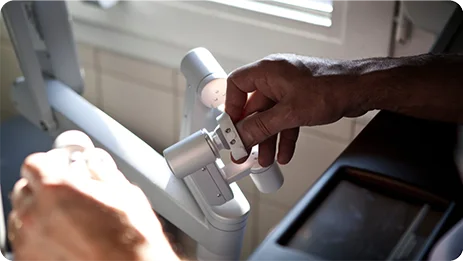
Professor Prasanna Sooriakumaran discusses whether you should consider prostate cancer screening.
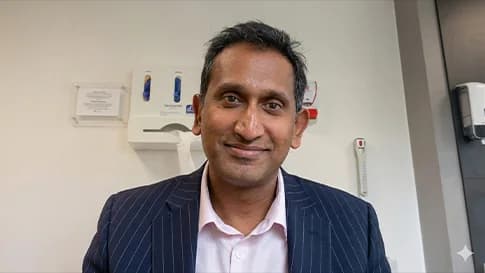
Professor Prasanna Sooriakumaran introduces himself to Top Doctors and discusses what he is most passionate about: caring for patients.

Professor Prasanna Sooriakumaran was a guest on Nadia's Lab, where he discussed prostate cancer, robotic surgery, and what every man should know about prostate health.
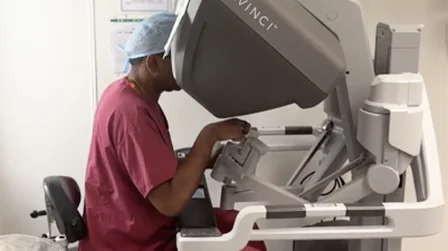
Professor Prasanna Sooriakumaran gives an overview of all aspects of prostate cancer, from screening and diagnosis to treatment options and beyond.
Frequently Asked Questions

Does a raised PSA mean I have prostate cancer?
No. A raised PSA does not automatically mean prostate cancer is present. In many cases, it is caused by non-cancerous conditions such as prostate enlargement or inflammation. Further assessment is used to understand the cause.
What PSA level is considered high?
There is no single “normal” PSA level. What is considered raised depends on your age, individual baseline, and changes over time. Results are interpreted in context rather than using a fixed cut-off.

Will I need a biopsy if my PSA is raised?
Not necessarily. A biopsy is only recommended in selected cases, usually after further assessment such as repeat PSA testing or MRI. Many patients do not require a biopsy.
Should I repeat my PSA test?
In some cases, yes. PSA levels can fluctuate, so repeating the test may help confirm whether the result is consistently raised before considering further investigation.

What happens after a raised PSA result?
The next step is usually a structured assessment, which may include repeat PSA testing and, where appropriate, MRI imaging. This helps determine whether any further investigation is needed.
Why should I see a specialist for a raised PSA?
Interpreting a raised PSA requires specialist input. An expert review ensures your result is assessed in context, helping to avoid unnecessary tests while ensuring that any significant concerns are properly investigated.

Book a Consultation
If you have been diagnosed with prostate cancer or are considering surgery, a consultation can help you understand your options and decide on the most appropriate next step.
Book a Consultation
Leadership Roles
Professor Prasanna Sooriakumaran is always looking to grow, innovate, and improve patient care for urology and prostate cancer patients in every possible way. To achieve this, he has secured several other prestigious leadership roles.

Urological innovation

Chief Men’s Health Officer

Chief Academic Officer

Lead Medical Advisor in Men’s Health

Research Physician

Lead for Urology and Men’s Health

Clinical Lead for Robotic Soft-Tissue Surgery

Invited Reviewer



Leading a £3 Million Oxford Prostate Cancer Surgery Trial


Appointed to Establish Mayo Clinic's Urology & Prostate Services in London
Patient Experiences
Read all of Professor Prasanna Sooriakumaran's patient reviews at Doctify.




Consultation Locations
Professor Prasanna Sooriakumaran practises as a robotic prostate cancer surgeon within the NHS at one of the UK’s highest-volume centres. He also sees private patients through Prostate Clinic London at leading private hospitals across London, providing access to high-quality facilities and specialist care.