A calm, plain-language guide to prostate cancer — what it is, how it is found, the tests you may be offered and what your results mean — written by a consultant urological surgeon.
A Consultant-Led Guide
Prostate Cancer Guide
A calm, plain-language guide to prostate cancer — what it is, how it is found, the tests you may be offered and what your results mean — written by a consultant urological surgeon.
01Section 1 · An Introduction
A Personal Introduction from Professor Sooriakumaran
For many men, the first suspicion of prostate cancer brings uncertainty, worry and a lot of questions. Some men are told they have a raised PSA. Others are advised to have an MRI scan or biopsy. Some have no symptoms at all, but are concerned because of their age, family history or a recent health check.
At that point, clear information matters.
This guide has been created to help men and their families understand prostate cancer in a straightforward, practical and balanced way. It explains what the prostate is, how prostate cancer is usually detected, what tests may be recommended, and what treatment options may be available depending on the stage and nature of the disease.
Prostate cancer is not one single situation. Some prostate cancers are slow-growing and may be suitable for careful monitoring. Others require active treatment. The right decision depends on the individual patient, the results of their investigations, their general health and their personal priorities.
Having treated many men with prostate cancer, I know that the period before and just after diagnosis can be one of the most difficult parts of the journey. My aim with this guide is to give you a clearer understanding of the process from initial concern through to diagnosis, treatment and follow-up care.
This information is not a replacement for a medical consultation, but it should help you feel better prepared for the conversations you may need to have with your doctor or specialist.
Over the course of my career, I have treated many men with prostate cancer, including those considering robotic prostatectomy and other treatment options. One thing remains consistent: patients make better decisions when they understand their condition properly and have the opportunity to ask the right questions.
I hope this guide gives you a useful starting point, reduces some of the confusion, and helps you take the next step with more confidence.
Professor Prasanna Sooriakumaran
Consultant Urological Surgeon Prostate Clinic London
Questions about your own situation? Speak to a specialist urologist.
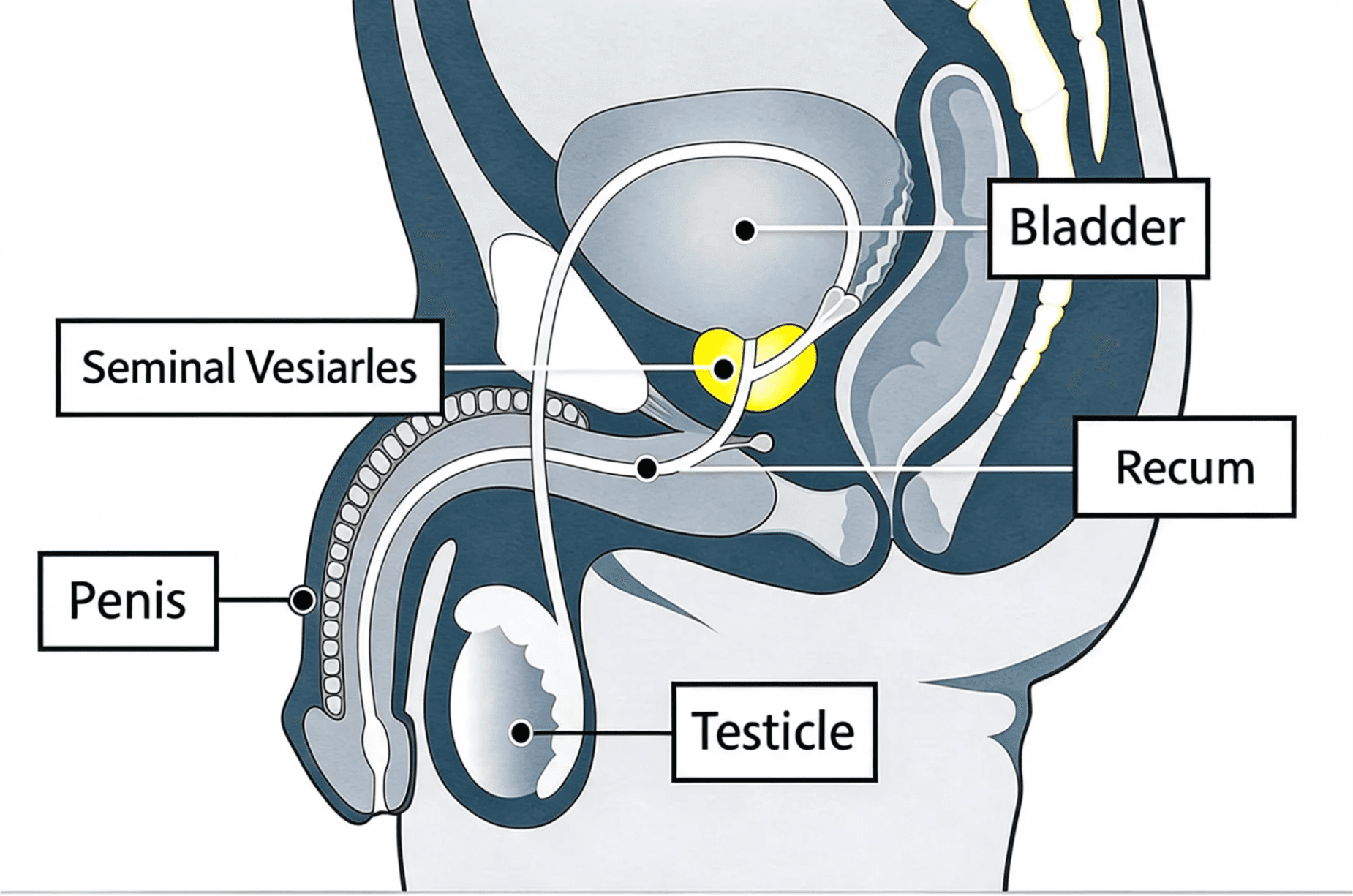
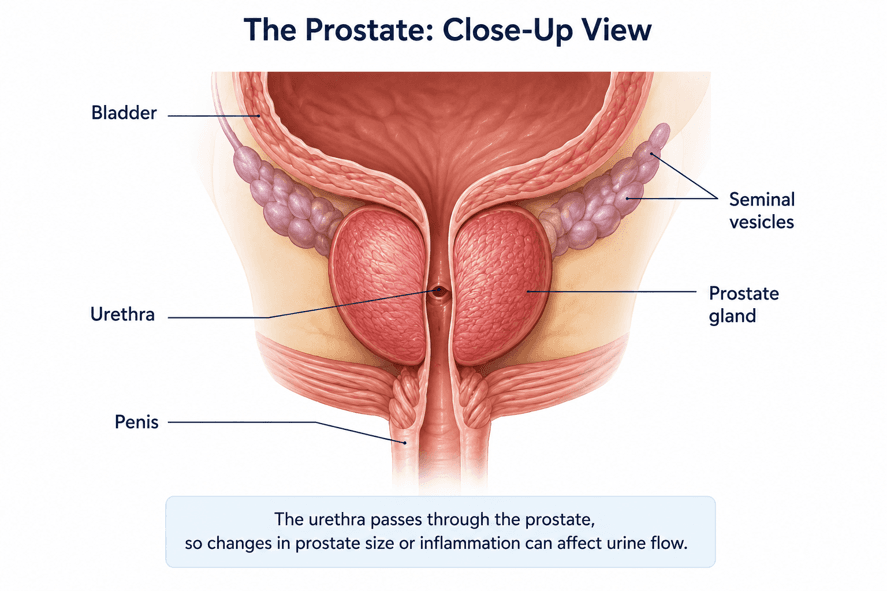
The prostate is a small gland that forms part of the male reproductive system. It sits just below the bladder and surrounds the urethra, which is the tube that carries urine from the bladder out through the penis.
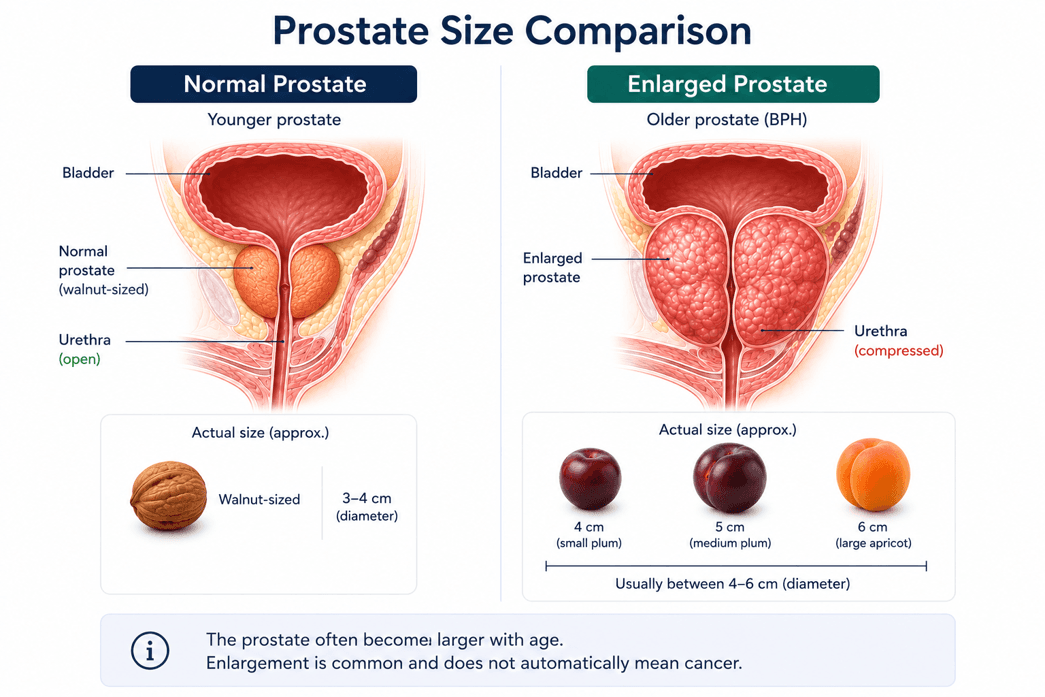
In younger adult men, the prostate is often described as being about the size of a walnut. However, the prostate commonly becomes larger with age.
Although the prostate is small, its position means it can have a noticeable effect on urinary, sexual and reproductive function. Because the urethra passes directly through the prostate, changes in the size or health of the prostate can sometimes affect the flow of urine.
This is one reason why men with prostate enlargement, inflammation or prostate cancer may experience urinary symptoms. However, it is important to understand that many men with early prostate cancer have no symptoms at all.
The prostate sits directly below the bladder and wraps around the urethra — one reason prostate conditions can affect urination.
Where Is the Prostate?
The prostate is located deep inside the pelvis. It sits:
below the bladder
in front of the rectum
around the upper part of the urethra
close to the seminal vesicles, which help produce semen
This position explains why doctors may examine the prostate through the rectum during a digital rectal examination, also known as a DRE. It also explains why prostate problems can sometimes affect urination, ejaculation or pelvic comfort.
The prostate is also close to important nerves and muscles involved in erectile function and urinary control. This becomes important when discussing prostate cancer treatment, because treatments such as surgery or radiotherapy may affect nearby structures.
What Does the Prostate Do?
The main role of the prostate is to help produce semen. Semen is the fluid that carries sperm during ejaculation.
The prostate produces fluid that mixes with sperm from the testicles and fluid from the seminal vesicles. This fluid helps support and protect sperm.
The prostate also contains muscle tissue that helps push semen into the urethra during ejaculation. This is why some prostate conditions, and some prostate cancer treatments, can affect ejaculation or sexual function.
Role of the prostate
What it means
Semen production
The prostate adds fluid to semen, helping support and transport sperm.
Ejaculation support
Muscle tissue in the prostate helps move semen into the urethra.
Urinary flow influence
Because the urethra passes through the prostate, prostate changes can affect urine flow.
Reproductive function
The prostate contributes to semen, but it is not needed for urination itself.
Why Can the Prostate Affect Urination?
The prostate surrounds the urethra. If the prostate becomes enlarged, inflamed or affected by disease, it can press on or narrow the urethra. This can make it harder for urine to pass normally.
Men may notice symptoms such as:
needing to urinate more often
waking at night to urinate
a weak urine stream
difficulty starting urination
stopping and starting while passing urine
dribbling after urination
feeling that the bladder has not emptied properly
needing to rush to the toilet
These symptoms are common as men get older and are often caused by benign prostate enlargement rather than cancer. However, they should still be assessed properly, especially if they are new, worsening, or affecting quality of life.
An enlarged or inflamed prostate can narrow the urethra, making it harder for urine to flow normally.
Why Urinary Symptoms Do Not Always Mean Prostate Cancer
Many men understandably worry that urinary symptoms may be a sign of prostate cancer. In reality, symptoms such as a weak urine stream, waking at night to pass urine, urgency, or difficulty starting urination are often caused by benign prostate enlargement rather than cancer.
Early prostate cancer often causes no symptoms. This is partly because many prostate cancers begin in the outer part of the prostate, away from the urethra. Urinary symptoms may only appear if the cancer becomes large enough to press on the urethra or has spread.
This means there are two important points to understand:
Situation
What it may mean
Urinary symptoms are present
Often caused by benign enlargement, inflammation or infection, but should still be assessed.
No urinary symptoms are present
Does not completely rule out prostate cancer, especially in men with risk factors.
This is why doctors look at the whole picture. Symptoms matter, but so do age, family history, ethnicity, PSA level, examination findings, MRI results and overall health.
Does the Prostate Change With Age?
Yes. The prostate often grows larger as men get older. This is common and does not automatically mean cancer.
A non-cancerous enlarged prostate is usually called benign prostate enlargement or benign prostatic hyperplasia, often shortened to BPH.
Prostate enlargement can sometimes press on the urethra and affect urinary flow. This may lead to symptoms such as getting up at night to pass urine, a weak stream, urgency, or feeling that the bladder has not emptied properly.
However, prostate size alone does not tell the whole story. Some men with a large prostate have few symptoms. Some men with a smaller prostate may have troublesome urinary symptoms. The effect depends on the position of the enlargement, the bladder, the urethra and other individual factors.
Age is also one of the main risk factors for prostate cancer. For this reason, it is sensible to seek medical advice if you develop new prostate-related symptoms or have concerns about your risk, particularly if you are over 50, have a family history of prostate cancer, or are in a higher-risk group.
The prostate typically grows larger with age — a common, usually benign change rather than a sign of cancer.
Key Patient Context: Prostate Enlargement and Age
Key point
Why it matters
Prostate enlargement becomes more common with age
This is one reason urinary symptoms are more common in older men.
Benign prostate enlargement is not prostate cancer
BPH is non-cancerous, although it can still cause troublesome symptoms.
Symptoms alone cannot reliably identify the cause
Similar symptoms can occur with enlargement, inflammation, infection or, less commonly, cancer.
A raised PSA is not automatically cancer
PSA can be raised for several reasons, including benign enlargement and inflammation.
No symptoms does not always mean no cancer
Early prostate cancer may not cause obvious urinary symptoms.
What Conditions Can Affect the Prostate?
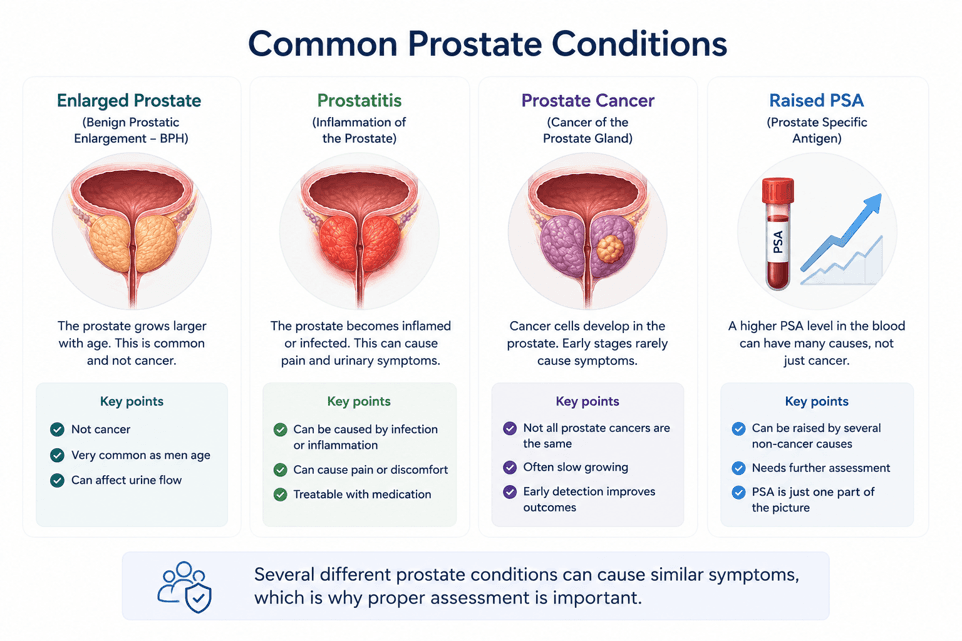
Several different conditions can affect the prostate. They can sometimes cause similar symptoms, which is why proper assessment matters.
Several different prostate conditions can produce similar symptoms, which is why a proper assessment matters before assuming the cause.
Condition
What it means
Is it cancer?
Benign prostate enlargement
Non-cancerous growth of the prostate, common with age.
No
Prostatitis
Inflammation or infection of the prostate.
No
Prostate cancer
Cancer cells growing in the prostate gland.
Yes
Raised PSA
A higher level of prostate specific antigen in the blood; this can have several causes.
Not necessarily
A raised PSA does not automatically mean prostate cancer. PSA can rise because of prostate enlargement, inflammation, infection, recent ejaculation, vigorous cycling, some medical procedures and other causes.
However, a raised PSA may need further investigation, depending on the level, age, symptoms, examination findings and overall risk profile.
Why Understanding the Prostate Matters
Understanding where the prostate is and what it does can make prostate cancer testing and treatment easier to understand.
PSA testing, MRI scans, biopsies and treatment options all relate back to the prostate’s position near the bladder, urethra, rectum, reproductive structures and surrounding nerves.
For example:
urinary symptoms may happen because the prostate surrounds the urethra
PSA is produced by prostate tissue, which is why it can be measured in a blood test
MRI scans are used to look for suspicious areas inside the prostate
biopsies take small samples of prostate tissue
surgery for prostate cancer usually involves removing the prostate gland
radiotherapy treats the prostate and sometimes surrounding areas, depending on the cancer stage
treatments may affect urination, erections or ejaculation because of the prostate's position near the bladder, urethra, nerves and reproductive structures
This does not mean that every man will experience side effects after treatment. It does mean that treatment decisions should be made carefully, with a clear understanding of the potential benefits and risks.
When Should You Seek Medical Advice?
You should speak to a GP or prostate specialist if you notice:
new or persistent urinary symptoms
blood in the urine
blood in the semen
pain when passing urine
unexplained pelvic discomfort
problems getting or keeping an erection
unexplained bone pain, weight loss or tiredness
concerns about your prostate cancer risk
You should also consider seeking advice if you have no symptoms but are worried because of your age, family history, ethnicity, previous PSA result or general health concerns.
Many prostate cancers do not cause obvious symptoms in the early stages, so relying on symptoms alone is not always enough.
Common Misconceptions About the Prostate
✕MISCONCEPTION
“Urinary symptoms usually mean prostate cancer.”
✓REALITY
Most urinary symptoms in older men are caused by benign prostate enlargement, bladder issues, inflammation or infection. However, symptoms should still be assessed.
✕MISCONCEPTION
“If I have no symptoms, I cannot have prostate cancer.”
✓REALITY
Early prostate cancer often causes no symptoms. Men with risk factors may still need advice or testing.
✕MISCONCEPTION
“A raised PSA means I definitely have cancer.”
✓REALITY
PSA can be raised for several non-cancerous reasons. A raised PSA is a reason to investigate further, not a diagnosis by itself.
✕MISCONCEPTION
“An enlarged prostate is the same as prostate cancer.”
✓REALITY
Benign prostate enlargement and prostate cancer are different conditions.
✕MISCONCEPTION
“A normal digital rectal examination rules out prostate cancer.”
✓REALITY
A DRE can provide useful information, but it cannot rule out prostate cancer on its own. PSA testing, MRI and biopsy may still be needed depending on the situation.
Key Takeaways
The prostate is a small but important gland that helps produce semen and sits in a position that can affect both urinary and sexual function. Enlargement, inflammation and prostate cancer can sometimes cause similar symptoms, which is why proper assessment matters rather than assumptions based on symptoms alone. A raised PSA does not automatically mean cancer, but it deserves careful interpretation. And because early prostate cancer may cause no symptoms at all, men with risk factors or concerns should not wait for something to feel wrong before seeking advice.
Questions about your own situation? Speak to a specialist urologist.
Prostate cancer is cancer that starts in the prostate gland. The prostate is a small gland below the bladder that helps produce semen and surrounds the urethra, the tube that carries urine out of the body.
Like all cancers, prostate cancer begins when cells start to grow and divide in an abnormal and uncontrolled way. Over time, these cells can form a tumour inside the prostate. Some prostate cancers grow very slowly and may never cause serious harm. Others can grow more quickly and may need active treatment.
This difference is important. A diagnosis of prostate cancer does not automatically mean that urgent treatment is needed, but it does mean the cancer should be assessed carefully. The aim is to understand how aggressive it appears to be, whether it is still within the prostate, and which treatment options are most appropriate for the individual patient.
For many men, prostate cancer is first suspected after a raised PSA blood test, an abnormal prostate examination, an MRI scan or a biopsy. Some men have urinary symptoms, but many men with early prostate cancer have no symptoms at all.
Key Patient Context
Point
Why it matters
Prostate cancer is one of the most common cancers in men in the UK
This is why awareness, risk assessment and appropriate testing matter, especially as men get older.
Early prostate cancer often has no symptoms
A man can feel well and still have prostate cancer, particularly in the early stages.
Not all prostate cancers behave the same way
Some may be suitable for active surveillance, while others need active treatment.
The most important question is not only "Is cancer present?"
Doctors also need to know how aggressive it is and whether it has spread beyond the prostate.
What Happens in Prostate Cancer?
The body is made up of cells. Normally, cells grow, divide and die in a controlled way. Cancer can develop when this process goes wrong and cells continue to grow when they should not.
In prostate cancer, abnormal cells develop inside the prostate gland. These cells may form a small tumour. In some men, the cancer grows slowly and remains within the prostate for many years. In others, the cancer may grow more quickly, invade nearby tissues, or spread to other parts of the body.
When prostate cancer spreads, it most commonly spreads to nearby lymph nodes or bones. This is called advanced or metastatic prostate cancer. However, many prostate cancers are found before they have spread, especially when investigated after PSA testing or MRI scanning.
Where Does Prostate Cancer Usually Start?
Many prostate cancers begin in the outer part of the prostate, known as the peripheral zone. This matters because the urethra passes through the central part of the prostate. A cancer growing in the outer part may not press on the urethra early on.
This is one reason early prostate cancer often does not cause urinary symptoms. Urinary problems such as a weak stream, waking at night to pass urine, urgency or difficulty starting urination are common in older men, but they are often caused by benign prostate enlargement rather than prostate cancer.
That does not mean urinary symptoms should be ignored. New, persistent or worsening urinary symptoms should be assessed. However, it also means that relying on symptoms alone is not a reliable way to rule out prostate cancer.
Prostate Cancer Is Not One Single Situation
One of the most important things to understand is that prostate cancer varies widely from one man to another.
Some prostate cancers are low-risk and slow-growing. These may be monitored carefully with active surveillance rather than treated immediately. Other prostate cancers are more aggressive and are more likely to need treatment such as surgery, radiotherapy, hormone therapy, or a combination of treatments.
The right approach depends on several factors, including PSA level, MRI findings, biopsy results, Gleason score or Grade Group, cancer stage, general health, age, life expectancy and personal priorities.
Type of situation
What it usually means
Possible approach
Low-risk localised prostate cancer
Cancer appears confined to the prostate and has features suggesting it may grow slowly.
Active surveillance may be suitable for some men.
Intermediate-risk prostate cancer
Cancer may still be confined to the prostate but has features that need closer consideration.
Options may include surgery, radiotherapy, focal therapy in selected cases, or surveillance in carefully chosen patients.
High-risk localised or locally advanced prostate cancer
Cancer has features suggesting a higher chance of growth or spread, or may extend beyond the prostate.
Treatment is usually recommended and may involve surgery, radiotherapy, hormone therapy or combined treatment.
Metastatic prostate cancer
Cancer has spread to distant sites, commonly bones or distant lymph nodes.
Treatment usually focuses on controlling the cancer, relieving symptoms and maintaining quality of life.
Localised, Locally Advanced and Metastatic Prostate Cancer
Doctors often describe prostate cancer according to how far it has spread. This helps guide treatment decisions.
Term
Meaning
Localised prostate cancer
The cancer appears to be contained within the prostate gland.
Locally advanced prostate cancer
The cancer has grown just outside the prostate or into nearby tissues.
Metastatic prostate cancer
The cancer has spread to distant parts of the body, such as bones or distant lymph nodes.
This classification is not based on one test alone. It usually depends on a combination of PSA blood test results, MRI scan findings, biopsy results and, in some cases, additional imaging scans.
A man with localised prostate cancer may have several treatment options. A man with metastatic prostate cancer usually needs a different treatment plan. This is why accurate diagnosis and staging are so important.
What Type of Cancer Is Prostate Cancer?
Most prostate cancers are adenocarcinomas. This means they start in the gland cells of the prostate, which are the cells involved in producing prostate fluid.
There are rarer types of prostate cancer, including small cell prostate cancer, neuroendocrine prostate cancer, transitional cell cancer and sarcoma. These are much less common and may behave differently from typical prostate adenocarcinoma.
For most patients, the key issue is not simply the type of prostate cancer, but its risk category. This is assessed using PSA, MRI, biopsy, Grade Group, stage and other clinical details.
How Is Prostate Cancer Usually Found?
Prostate cancer may be suspected in several ways. Some men have a raised PSA blood test. Some have an abnormal prostate examination. Some have urinary symptoms that lead to further tests. Others are investigated because they have a family history or are in a higher-risk group.
A diagnosis of prostate cancer is usually confirmed by a biopsy, where small samples of prostate tissue are taken and examined under a microscope. Before biopsy, many men now have an MRI scan to look for suspicious areas in the prostate and help guide the next steps.
Step
Purpose
Risk assessment
Considers age, symptoms, family history, ethnicity and general health.
PSA blood test
Measures prostate specific antigen, which can be raised in prostate cancer but also in non-cancerous conditions.
Digital rectal examination
Allows a doctor to feel part of the prostate for enlargement, firmness or irregularity.
MRI scan
Looks for suspicious areas in the prostate and may help guide whether biopsy is needed.
Prostate biopsy
Confirms whether cancer cells are present and helps assess how aggressive they appear.
Staging tests, if needed
Help assess whether cancer has spread beyond the prostate.
What Doctors Need to Understand After Prostate Cancer Is Suspected
The aim of investigation is not only to find out whether prostate cancer is present. It is also to understand the behaviour of the cancer and the safest, most appropriate treatment plan.
The main questions are:
Is prostate cancer present?
If cancer is present, how aggressive does it appear to be?
Is the cancer contained within the prostate?
Has it grown just outside the prostate?
Has it spread to lymph nodes, bones or other areas?
What are the likely benefits and risks of each treatment option?
What matters most to the patient, including cancer control, urinary function, erectile function, recovery time and quality of life?
Common Misconceptions About Prostate Cancer
✕MISCONCEPTION
“Prostate cancer always causes urinary symptoms.”
✓REALITY
Early prostate cancer often causes no symptoms. Urinary symptoms are more commonly caused by benign prostate enlargement, but should still be assessed.
✕MISCONCEPTION
“A raised PSA means I definitely have prostate cancer.”
✓REALITY
PSA can be raised for several reasons, including enlargement, inflammation, infection, ejaculation, cycling or recent procedures. A raised PSA may need further investigation, but it is not a diagnosis by itself.
✕MISCONCEPTION
“All prostate cancers need immediate treatment.”
✓REALITY
Some low-risk prostate cancers can be safely monitored with active surveillance. Others need active treatment. The decision depends on the individual cancer and the patient.
✕MISCONCEPTION
“Prostate cancer is always slow-growing.”
✓REALITY
Some prostate cancers are slow-growing, but others can be aggressive. This is why biopsy results, Grade Group and staging are important.
Why Clear Information Matters
Prostate cancer decisions can be difficult because treatment is not only about removing or controlling cancer. It is also about balancing cancer control with side effects, recovery and long-term quality of life.
For example, surgery and radiotherapy can both be appropriate treatments for suitable patients, but they have different risks and recovery patterns. Active surveillance may be appropriate for some men with low-risk disease, but may not be suitable for more aggressive cancer.
This is why a proper discussion with a prostate cancer specialist is important. Patients should understand their diagnosis, their risk category, the realistic treatment options and the potential impact of each option before making a decision.
Key Points
Key point
Simple explanation
Prostate cancer starts in the prostate gland
It develops when prostate cells grow abnormally and form cancer.
Early prostate cancer may cause no symptoms
Many men feel well when prostate cancer is first suspected or diagnosed.
Not all prostate cancers behave the same way
Some are slow-growing; others are more aggressive.
PSA is useful but not diagnostic by itself
A raised PSA can have several causes and usually needs interpretation alongside other findings.
Biopsy confirms the diagnosis
A biopsy shows whether cancer cells are present and helps assess aggressiveness.
Treatment should be individualised
The best option depends on the cancer, the patient's health and personal priorities.
Key Takeaways
Prostate cancer is not one single disease; it can range from slow-growing to aggressive.
A man can have early prostate cancer without any urinary symptoms.
The main purpose of testing is to understand whether cancer is present, how aggressive it is and whether it has spread.
Some men may be suitable for active surveillance, while others may need active treatment.
Good treatment decisions depend on clear information, accurate staging and an honest discussion about benefits, risks and quality of life.
Prostate cancer is one of the most common cancers affecting men in the UK. It is also one of the cancers most likely to raise difficult questions, because being common does not mean that every case behaves in the same way.
Some prostate cancers are slow-growing and may never cause serious harm. Others are more aggressive and need prompt treatment. For patients, the most useful question is not only, ‘How common is prostate cancer?’ It is also, ‘What does my personal risk look like, and what should I do about it?’
According to Prostate Cancer UK, prostate cancer is now the most commonly diagnosed cancer in the UK. The charity reports that more than 64,000 men are diagnosed with prostate cancer each year, more than 12,000 men die from the disease each year, and around 540,000 men are living with or after prostate cancer.
These numbers are important, but they need to be understood carefully. Prostate cancer is common, particularly as men get older, but many men diagnosed with prostate cancer live for many years. Outcomes depend on several factors, including the stage of the cancer, how aggressive it appears under the microscope, PSA level, MRI findings, general health, treatment suitability and whether the cancer is found before it has spread.
Key UK Statistics
64,000+
men diagnosed each year (UK)
12,000+
deaths each year
540,000
living with or after prostate cancer
Lifetime risk of prostate cancer
Men overall — 1 in 8
Black men — 1 in 4
10-year survival has improved
1970s3 in 10
By 20188 in 10
The figures below give useful context for UK patients. Different organisations sometimes report slightly different numbers because they may use different years, countries within the UK, registration methods or statistical models. The overall message is consistent: prostate cancer is common, age-related, and a major cause of cancer diagnosis in men.
Statistic
What the data says
What it means for patients
Annual UK diagnoses
Prostate Cancer UK reports more than 64,000 men diagnosed with prostate cancer each year.
Prostate cancer is not rare. A large number of men and families are affected every year.
England diagnoses in 2023
NHS England cancer registration statistics recorded 58,137 new prostate cancer diagnoses in England in 2023, a 6% increase from 2022.
Recent official data shows high and rising numbers of diagnoses in England.
Lifetime risk
Prostate Cancer UK uses the headline estimate that around 1 in 8 men will be diagnosed with prostate cancer in their lifetime.
A man's individual risk may be higher or lower depending on age, ethnicity, family history and genetics.
Deaths each year
Prostate Cancer UK reports more than 12,000 deaths from prostate cancer each year.
Most men diagnosed with prostate cancer do not die from it, but the disease can be life-threatening, especially when aggressive or diagnosed late.
Living with or after prostate cancer
Prostate Cancer UK estimates that around 540,000 men are living with or after prostate cancer.
Prostate cancer is often a long-term condition, with many men needing follow-up and ongoing support.
Long-term survival improvement
Cancer Research UK reports that ten-year prostate cancer survival has improved substantially since the 1970s, from just over 1 in 5 to around 8 in 10 by 2018.
Survival has improved, but early and accurate diagnosis still matters.
Why Is Prostate Cancer So Common?
One of the main reasons prostate cancer is common is age. The prostate changes as men get older, and the risk of prostate cancer rises significantly with age. Most prostate cancers are diagnosed in men over 50, and Cancer Research UK reports that incidence rates are highest in men aged 75 to 79.
This does not mean younger men cannot develop prostate cancer. It means that the probability increases as men move through midlife and older age. This is why discussions around risk often begin from the age of 50, or earlier for men in higher-risk groups.
Another reason more cases are being recorded is that more men are being tested, investigated and diagnosed. PSA blood testing, MRI scanning and greater public awareness can all increase the number of cancers detected. Recent public awareness campaigns and high-profile diagnoses have also encouraged more men to ask about prostate cancer risk.
An increase in recorded diagnoses does not automatically mean that prostate cancer is biologically becoming more aggressive. It may partly reflect a growing and ageing population, increased testing, improved diagnostic pathways and more men coming forward. However, it still matters because every diagnosis needs to be assessed properly so that significant cancers are not missed and low-risk cancers are not overtreated.
Clinical Context: Common Does Not Always Mean Dangerous
The word ‘common’ can sound frightening, but it should not be interpreted as meaning that every prostate cancer is immediately dangerous. Prostate cancer covers a wide spectrum of disease.
At one end are low-risk cancers that may grow so slowly that immediate treatment is not needed. These may be monitored through active surveillance, which usually involves PSA testing, repeat MRI scans, clinical review and sometimes further biopsies. At the other end are high-risk or advanced cancers that can grow more quickly and may need treatment such as surgery, radiotherapy, hormone therapy, chemotherapy, newer systemic therapies, or a combination of treatments.
This is why diagnosis is only the first step. Once prostate cancer is found, doctors need to understand the risk category. That usually means looking at the PSA level, MRI scan, biopsy findings, Gleason score or Grade Group, cancer stage and the patient’s general health. Two men can both be diagnosed with prostate cancer but need very different management plans.
Who Is More Likely to Develop Prostate Cancer?
Every man has some risk of prostate cancer, but the level of risk is not the same for everyone. Some factors are strongly linked with a higher chance of developing the disease.
Did You Know?
Around 1 in 4 Black men will develop prostate cancer in their lifetime – approximately double the risk for men overall. Black men are also more likely to be diagnosed at a younger age. If you are a Black man, it is worth discussing prostate cancer risk with your GP from around age 45, even if you have no symptoms.
Risk factor
What is known
Practical meaning
Age
Risk increases as men get older. Prostate cancer mainly affects men over 50, with the highest incidence rates in older age groups.
Men over 50 should be more aware of their risk, even if they feel well.
Black ethnicity
Prostate Cancer UK reports that about 1 in 4 Black men will get prostate cancer in their lifetime, around double the headline risk for men overall.
Black men may need to discuss risk and PSA testing earlier, often from around age 45.
Family history
Risk is higher if a father, brother or close male relative has had prostate cancer, especially if diagnosed at a younger age.
Family history should be mentioned to a GP or prostate specialist when discussing testing.
Inherited gene changes
Cancer Research UK notes that inherited BRCA2 gene changes can increase prostate cancer risk and may be linked with faster-growing disease.
Men with known inherited cancer gene changes may need more individualised advice.
No symptoms
Early prostate cancer often causes no symptoms.
Absence of symptoms should not be used as the only reassurance, especially in higher-risk men.
Is Prostate Cancer Becoming More Common?
Recent UK data suggests that recorded prostate cancer diagnoses have increased. NHS England cancer registration statistics show that prostate cancer was the most diagnosed cancer in England in 2023, with 58,137 new diagnoses, a 6% increase from 2022. Prostate Cancer UK has also reported a sharp rise in UK diagnoses over the last decade.
There are several possible reasons for this. The population is ageing, and prostate cancer is more common in older men. More men are also aware of prostate cancer and are asking for PSA testing or specialist assessment. Diagnostic pathways have changed, with MRI now playing a much larger role before biopsy. These factors can increase the number of cancers found.
The Lancet Commission on prostate cancer, published in 2024, projected that global prostate cancer cases could rise from 1.4 million in 2020 to 2.9 million by 2040. This projection is driven largely by ageing populations worldwide and has important implications for healthcare planning. For individual patients in the UK, it reinforces a clear message: prostate cancer will become an even more significant health issue in the coming decades, making awareness, risk assessment and early diagnosis increasingly important.
For individual patients, this does not mean panic. It means awareness. Men should understand their personal risk, know when to ask about PSA testing, and seek advice if they develop concerning symptoms or have risk factors such as Black ethnicity, a strong family history or inherited cancer gene changes.
Why Early Diagnosis Matters
Prostate cancer is often more treatable when it is found before it has spread outside the prostate. Localised prostate cancer may be managed in several ways, including active surveillance, robotic prostate surgery, radiotherapy, brachytherapy or focal therapy in selected cases. Once prostate cancer has spread to distant parts of the body, treatment usually focuses on controlling the disease rather than curing it.
This is why prevalence statistics matter. A common cancer that often causes no early symptoms creates a difficult situation: many men feel perfectly well at the stage when testing may be most useful. Urinary symptoms, when present, are often caused by benign prostate enlargement rather than cancer. That means symptoms alone are not a reliable screening tool.
At the same time, testing has to be used sensibly. PSA testing can help identify men who need further investigation, but PSA is not a cancer-specific test. It can be raised by benign prostate enlargement, inflammation, infection, recent ejaculation, cycling and some medical procedures. A raised PSA is therefore not a diagnosis; it is a reason to interpret the result carefully and consider whether further assessment is needed.
Modern prostate cancer diagnosis increasingly relies on combining information rather than making decisions from one result alone. PSA level, PSA density, clinical examination, MRI findings, biopsy results and personal risk factors all help build a clearer picture.
Why There Is No Simple One-Size-Fits-All Screening Message
One of the most common questions is: if prostate cancer is so common, why is every man not automatically screened? The answer is that prostate cancer testing involves a balance of benefits and harms.
Testing can help detect prostate cancer earlier, including cancers that may become dangerous if not treated. However, it can also detect slow-growing cancers that may never have caused symptoms or shortened life. This is called overdiagnosis. Overdiagnosis can lead to anxiety, repeated tests and, in some cases, treatment that may not have been needed.
This is why UK practice places emphasis on informed decision-making. Men should be able to discuss the possible benefits and limitations of PSA testing, especially if they are over 50 or in a higher-risk group. For some men, testing may be sensible. For others, the decision may be less straightforward.
The key point is not that men should ignore prostate cancer risk. The key point is that testing should be thoughtful, informed and interpreted by clinicians who understand prostate cancer diagnosis.
Common Misconceptions About How Common Prostate Cancer Is
✕MISCONCEPTION
“Prostate cancer is rare.”
✓REALITY
It is common. Prostate Cancer UK reports more than 64,000 UK diagnoses each year, and NHS England recorded 58,137 diagnoses in England in 2023.
✕MISCONCEPTION
“If it is common, it must always be deadly.”
✓REALITY
No. Many men live for years after diagnosis, and survival has improved substantially. However, aggressive or late-stage prostate cancer can be life-threatening.
✕MISCONCEPTION
“Only very old men get prostate cancer.”
✓REALITY
Risk rises with age, but prostate cancer can affect men in their 50s and sometimes younger, especially in higher-risk groups.
✕MISCONCEPTION
“No symptoms means no prostate cancer.”
✓REALITY
Early prostate cancer often has no symptoms. Men can feel well even when prostate cancer is present.
✕MISCONCEPTION
“A raised PSA means cancer.”
✓REALITY
A raised PSA can have several causes. It needs careful interpretation and may lead to MRI or biopsy if appropriate.
✕MISCONCEPTION
“All prostate cancers need immediate treatment.”
✓REALITY
Some low-risk cancers may be monitored with active surveillance. Others need active treatment depending on risk and stage.
What This Means for Patients
The practical message is simple: prostate cancer is common enough that men should know their risk, but varied enough that decisions should be individualised.
Men over 50 should consider discussing prostate cancer risk with their GP or a prostate specialist, particularly if they are concerned about PSA testing or have urinary symptoms. Black men, men with a family history of prostate cancer, and men with known inherited cancer gene changes may need to start that conversation earlier.
Men should also understand that being diagnosed with prostate cancer does not automatically mean rushing into treatment. The first priority is to understand the cancer properly. Is it low-risk or higher-risk? Is it confined to the prostate? What does the MRI show? What does the biopsy show? What are the realistic treatment options? What are the likely effects on urinary control, erections and quality of life?
Good care is not just about finding prostate cancer. It is about identifying clinically significant prostate cancer, avoiding unnecessary harm where possible, and choosing the right approach for the right patient.
Key Takeaways
Prostate cancer is one of the most common cancers in the UK, with more than 64,000 diagnoses and 12,000 deaths recorded each year — yet most men diagnosed with it will live for many years, and survival rates have improved substantially over recent decades. Risk rises with age, but it is not evenly distributed: Black men, men with a family history of prostate cancer, and those with inherited gene changes such as BRCA2 face a meaningfully higher risk and should consider discussing testing earlier. Because early prostate cancer often causes no symptoms at all, a raised PSA or specialist referral should be seen not as cause for alarm, but as an opportunity to understand the picture properly. Some cancers will need treatment; others can be safely monitored. The most important step is an accurate, individualised assessment — and the right clinician to help interpret it.
Questions about your own situation? Speak to a specialist urologist.
What Causes Prostate Cancer and Can It Be Prevented?
There is rarely one single cause of prostate cancer. Like most cancers, it develops when changes occur inside cells, allowing them to grow and divide in an abnormal way. Over time, these abnormal cells can form a tumour in the prostate gland.
For most men, it is not possible to point to one clear reason why prostate cancer has developed. It is usually the result of a combination of factors, including age, inherited risk, ethnicity, hormones, biological processes and possibly lifestyle. Some of these factors cannot be changed. Others may be influenced by general health, body weight and activity levels.
This distinction matters. A man should not assume that prostate cancer is his fault, or that he could definitely have prevented it by eating differently or living differently. At the same time, understanding risk factors can help men make sensible decisions about when to speak to a doctor, when to consider PSA testing, and how to look after their wider health.
The most helpful way to think about this topic is not simply, ‘What caused it?’ but rather: ‘Am I at higher risk, and what can I do about that risk?’
Key Facts About Causes and Prevention
Question
Short answer
Do we know exactly what causes prostate cancer?
Not usually. Prostate cancer is usually linked to a combination of age, inherited risk, ethnicity, hormones, biology and possibly lifestyle factors.
Can prostate cancer always be prevented?
No. There is no guaranteed way to prevent prostate cancer. Some important risk factors cannot be changed.
Can lifestyle still matter?
Yes. Maintaining a healthy weight, staying active and eating a balanced diet may help reduce the risk of aggressive or advanced prostate cancer and supports overall health.
Who is at higher risk?
Men over 50, Black men, men with a family history of prostate cancer, and men with certain inherited gene changes may have a higher risk.
Does higher risk mean cancer is inevitable?
No. A higher risk means prostate cancer is more likely, but it does not mean a man will definitely develop it.
What Actually Causes Prostate Cancer?
Cancer begins when the instructions inside cells become damaged or altered. These instructions are carried in DNA. Normally, the body has systems to repair DNA damage or remove cells that are not behaving normally. Cancer can develop when these systems fail and abnormal cells keep growing.
In prostate cancer, this happens within cells of the prostate gland. Most prostate cancers are adenocarcinomas, meaning they start in glandular cells that help produce prostate fluid. The behaviour of these cancer cells can vary widely. Some grow slowly over many years, while others are more aggressive and more likely to spread.
Male hormones, especially androgens such as testosterone, are also involved in the biology of the prostate. Prostate cells rely on androgen signalling to grow and function. This does not mean that normal testosterone levels ‘cause’ prostate cancer, but it helps explain why hormone therapy can be used to treat some prostate cancers by reducing or blocking androgen activity.
In practical terms, most men will never know the exact biological trigger that started their prostate cancer. What doctors can assess more reliably is the man’s risk profile, PSA level, MRI findings, biopsy result, Grade Group and stage. These details are far more useful for making decisions than trying to identify one single cause.
Risk Factors You Cannot Change
Some of the strongest prostate cancer risk factors are not lifestyle choices. They are related to age, ancestry, family history and inherited genes.
Risk factor
What it means for patients
Age
Risk increases as men get older. The NHS says prostate cancer mainly affects men over 50. Prostate Cancer UK says men at higher risk may need to think about risk from age 45.
Black ethnicity
Black men have a higher lifetime risk of prostate cancer. Prostate Cancer UK states that about 1 in 4 Black men in the UK will get prostate cancer during their lifetime.
Family history
Having a father or brother with prostate cancer increases risk. Prostate Cancer UK states that a man is around two and a half times more likely to get prostate cancer if his father or brother has had it.
Inherited gene changes
Some inherited gene changes, especially BRCA2, can increase prostate cancer risk. Cancer Research UK and the NHS both highlight inherited genes as part of the risk picture.
Strong family history of linked cancers
A family history of prostate, breast, ovarian or pancreatic cancer, especially at a younger age, may suggest an inherited genetic risk.
Age and Prostate Cancer Risk
Age is one of the most important prostate cancer risk factors. Prostate cancer can occur in younger men, but it is much less common before the age of 50 unless there are additional risk factors such as Black ethnicity or a strong family history.
The reason age matters is that cell changes can accumulate over time. As men get older, the prostate has had more years of exposure to hormonal, genetic and biological changes. This does not mean every older man will develop prostate cancer, but it does mean risk rises with age.
This is why conversations about PSA testing often begin around age 50 for men at average risk, and earlier for some men at higher risk. A man’s age should always be considered alongside his family history, ethnicity, symptoms and personal concerns.
Family History and Genetic Risk
Family history is important because some prostate cancers are influenced by inherited genes. According to Cancer Research UK, inherited factors are estimated to explain around 5 to 9% of prostate cancers. That does not mean most prostate cancer is directly inherited, but it does mean family history should be taken seriously.
Risk may be higher if a close male relative, such as a father or brother, has had prostate cancer. Risk may be higher still if more than one close relative has been affected, or if relatives were diagnosed at a younger age. A family history of breast, ovarian or pancreatic cancer may also be relevant because some of these cancers can be linked through inherited gene changes such as BRCA2.
A BRCA2 gene change does not mean a man will definitely develop prostate cancer. However, it can increase risk and may be associated with more aggressive disease. In May 2026, following a full evidence review, the UK National Screening Committee published its recommendation for targeted prostate cancer screening for a specific high-risk group – a recommendation formally accepted by the UK Government on 2 June 2026.
CLINICAL UPDATE
UK Clinical Update — New Prostate Cancer Screening Recommendation (May 2026)
Following a 2025–2026 evidence review, the UK National Screening Committee (UK NSC) recommended a targeted prostate cancer screening programme, formally accepted by the UK Government on 2 June 2026. The programme applies to: Men aged 45 to 61 who have a confirmed pathogenic BRCA2 variant AND a family history of breast, ovarian, pancreatic or prostate cancer. These men will be offered PSA testing every two years. Rollout in England is expected to begin in 2027. The UK NSC did not recommend screening for the general population, or for men with a family history of prostate cancer alone without a confirmed BRCA2 variant. For Black men, the committee noted ongoing uncertainty about whether screening would cause more benefit than harm, and confirmed it will work closely with UK researchers — including the TRANSFORM trial — to address this. The next review is estimated for 2029 to 2030.
Men who are worried about a strong family history should discuss this with a GP, urologist or genetics specialist. Genetic testing is not needed for everyone, but it may be considered when the family pattern suggests an inherited cancer risk.
Ethnicity and Prostate Cancer Risk
Ethnicity is another important risk factor. Black men are more likely to develop prostate cancer than men from other ethnic groups, and may also be diagnosed at a younger age. Prostate Cancer UK states that about 1 in 4 Black men in the UK will get prostate cancer during their lifetime, compared with about 1 in 8 men overall.
The reasons for this increased risk are not fully understood. Genetics may play a role, but access to healthcare, awareness, social factors and differences in how early cancer is detected may also matter. It is important not to reduce this risk to one simple explanation.
For patients, the practical message is clear: Black men should be aware of their higher risk and should consider speaking to a GP or prostate specialist from the age of 45, or earlier if they have symptoms or a strong family history.
The 2026 UK NSC review acknowledged that, for Black men, there is ongoing uncertainty about whether the benefits of screening would outweigh the harms. The TRANSFORM trial — a major UK research programme — is actively working to generate the evidence needed to resolve this uncertainty, and the UK NSC has confirmed it will use findings from TRANSFORM to inform future screening decisions. This is an area where guidance is expected to evolve.
Can Lifestyle Affect Prostate Cancer Risk?
Lifestyle is more complicated. There is no single diet, supplement or exercise routine that can guarantee protection from prostate cancer. However, lifestyle may influence the risk of more aggressive or advanced disease, and it also affects general health, treatment fitness and recovery.
The World Cancer Research Fund’s evidence review on diet, nutrition, physical activity and prostate cancer found strong evidence that being overweight or obese increases the risk of advanced prostate cancer. Prostate Cancer UK also advises that a healthy diet and regular exercise are important for maintaining a healthy weight, which may help lower the risk of aggressive or advanced prostate cancer.
This does not mean that every man who is overweight will develop prostate cancer, or that a man of healthy weight cannot develop prostate cancer. It means body weight is one of the few potentially modifiable factors that may influence the risk of more serious prostate cancer.
Action
Why it may help
Maintain a healthy weight
Excess body fat is linked with a higher risk of advanced prostate cancer and can also affect general health, diabetes risk, heart health and treatment fitness.
Stay physically active
Regular activity supports weight control, cardiovascular health, energy levels and recovery from treatment. It may also help reduce the risk of aggressive or advanced disease.
Eat a balanced diet
A diet built around vegetables, fruit, wholegrains, pulses, healthy protein sources and limited highly processed foods supports overall health.
Avoid relying on supplements as prevention
There is no proven supplement that reliably prevents prostate cancer. Supplements can also interact with medicines or cause harm if taken inappropriately.
Do not smoke
Smoking is not usually presented as a main cause of prostate cancer, but stopping smoking reduces the risk of many serious diseases and improves surgical and general health outcomes.
Know your personal risk
Early conversations are especially important for men over 50, Black men, and men with a family history or known inherited gene change.
Can Prostate Cancer Be Prevented?
There is no guaranteed way to prevent prostate cancer. This is because some of the most important risk factors, such as age, ethnicity and inherited genes, cannot be changed.
That can be frustrating, but it is also important. Men should not blame themselves if they are diagnosed. Prostate cancer is common, and many men who develop it have lived healthy lives.
Prevention should therefore be understood in a realistic way. The aim is not to promise that prostate cancer can be avoided completely. The aim is to reduce avoidable risks where possible, support general health, and identify higher-risk men early enough for sensible testing and discussion.
For many men, the most practical steps are to keep a healthy weight, stay active, eat a balanced diet, understand their family history, and seek advice if they are in a higher-risk group. These steps may not prevent every case, but they can improve overall health and may reduce the risk of advanced or aggressive disease.
Prevention Is Not the Same as Early Detection
One common misunderstanding is to confuse prevention with early detection. Prevention means reducing the chance of developing a disease in the first place. Early detection means finding a disease at an earlier stage, when treatment may be more effective.
PSA testing, MRI scanning and biopsy do not prevent prostate cancer. They help assess whether cancer may already be present and how concerning it appears to be. This distinction matters because a man can live healthily and still develop prostate cancer, and a man can have no symptoms but still have early disease.
In the UK, there is not a universal prostate cancer screening programme for all men. The 2026 UK NSC review concluded that population-wide screening is more likely to cause harm than good, primarily because of the risks of overdiagnosis and unnecessary treatment — including incontinence and erectile dysfunction in men who may not have needed intervention. However, men can still speak to their GP about PSA testing, especially if they are over 50 or at higher risk. The decision should be informed and individual.
Does Diet Cause Prostate Cancer?
There is no good evidence that one ordinary food directly causes prostate cancer in a simple way. Claims that a single food either causes or prevents prostate cancer are usually too simplistic.
Research into diet and prostate cancer is difficult because people eat complex diets over many years, and lifestyle factors often overlap. For example, diet, body weight, physical activity, alcohol intake, smoking, social factors and access to healthcare can all interact.
The safest patient message is that a balanced diet supports overall health and weight management. It should not be sold as a guaranteed way to prevent prostate cancer. Men should be cautious about extreme diets, miracle foods, high-dose supplements, or online claims that promise cancer prevention.
Common Misconceptions About Causes and Prevention
✕MISCONCEPTION
“I must have done something to cause my prostate cancer.”
✓REALITY
Most men cannot identify one clear cause. Age, inherited risk, ethnicity and biology often matter more than anything a patient has done.
✕MISCONCEPTION
“If I eat well, I cannot get prostate cancer.”
✓REALITY
A healthy lifestyle may reduce some risks and support overall health, but it cannot guarantee prevention.
✕MISCONCEPTION
“Prostate cancer is always inherited.”
✓REALITY
Most prostate cancer is not directly inherited, although family history and certain gene changes can increase risk.
✕MISCONCEPTION
“Only older men need to think about prostate cancer.”
✓REALITY
Risk rises with age, but Black men and men with a strong family history may need to think about risk from age 45.
✕MISCONCEPTION
“Supplements can prevent prostate cancer.”
✓REALITY
No supplement has been proven to reliably prevent prostate cancer. Some supplements may be unnecessary or harmful if taken in high doses.
✕MISCONCEPTION
“A PSA test prevents prostate cancer.”
✓REALITY
A PSA test does not prevent prostate cancer. It can help identify men who may need further assessment.
When Should You Think About Your Risk?
It is sensible to think about prostate cancer risk if you are over 50, or over 45 and Black, or over 45 with a family history of prostate cancer. You should also seek advice if you have urinary symptoms, blood in the urine or semen, unexplained pelvic discomfort, new erectile problems, unexplained weight loss, bone pain, or any concern that something has changed.
Men with a strong family history of prostate, breast, ovarian or pancreatic cancer should also consider discussing risk with a doctor, particularly if relatives were diagnosed at younger ages. In some situations, a genetics referral may be appropriate. Men with a confirmed BRCA2 variant and a relevant family history should ask specifically about the new targeted screening programme and what it means for them.
The right approach depends on the individual. Some men may need reassurance and monitoring. Others may benefit from PSA testing, MRI scanning or specialist assessment. The important point is that risk should be discussed early enough for informed decisions, rather than waiting for symptoms to become severe.
Key Takeaways
Prostate cancer rarely has one identifiable cause — for most men it results from a combination of age, inherited risk, ethnicity and biology rather than anything they have done. The strongest risk factors are ones that cannot be changed: being over 50, being a Black man, having a family history of prostate cancer, or carrying an inherited BRCA2 gene change. In May 2026, following a full evidence review, the UK NSC recommended targeted PSA screening every two years for men aged 45 to 61 with a confirmed BRCA2 variant and a relevant family history — a recommendation formally accepted by the UK Government in June 2026, with rollout in England expected from 2027. For Black men, the evidence on screening remains under active investigation through the TRANSFORM trial, and guidance in this area is expected to evolve. Lifestyle cannot guarantee prevention, but maintaining a healthy weight, staying active and eating well may reduce the risk of more aggressive disease and supports overall health and treatment fitness. The most important step for any man is to understand his personal risk — and to have that conversation early enough to act on it.
Questions about your own situation? Speak to a specialist urologist.
A risk factor is something that increases the chance of developing a condition. In prostate cancer, risk factors are important because many men do not have symptoms in the early stages. Understanding personal risk can help men decide when to speak to a GP or prostate specialist, whether to consider a PSA blood test, and whether family history or inherited genes need further discussion.
Having one or more risk factors does not mean that you will definitely develop prostate cancer. Many men with risk factors never develop it. Some men with no obvious risk factors are diagnosed with it. Risk is not a diagnosis; it is a reason to be more informed and, where appropriate, more proactive.
According to Prostate Cancer UK, the three main prostate cancer risk factors are increasing age, having a family history of prostate cancer, and being Black. NHS guidance also highlights family patterns involving prostate, breast, ovarian or pancreatic cancer, because some of these cancers can be linked by inherited gene changes such as BRCA2.
Key Facts
The three main risk factors are age, Black ethnicity, and family history of prostate cancer.
Risk increases significantly after the age of 50 for most men, and from around 45 for men at higher risk.
Black men have approximately double the lifetime risk of prostate cancer compared with men overall.
Inherited gene variants, particularly BRCA2, can increase prostate cancer risk and may be linked with more aggressive disease.
Having a risk factor does not mean cancer is inevitable — but it is a reason to be better informed.
Age
Age is one of the most important risk factors for prostate cancer. NHS guidance states that prostate cancer risk increases with age and mostly affects men over 50. Prostate Cancer UK also notes that prostate cancer mainly affects men aged 50 or over, while Cancer Research UK reports that prostate cancer is most common in men aged 75 to 79 in the UK.
This does not mean younger men cannot get prostate cancer. They can, but it is much less common, especially in men under 50 who do not have other risk factors. For men with higher-risk features, such as Black ethnicity or a strong family history, discussions about risk may be relevant earlier, often from around age 45.
The reason age matters is that cancer usually develops after a series of genetic changes inside cells. These changes can build up over time. As men live longer, the chance of prostate cells developing abnormal changes increases. This is one reason prostate cancer is far more common in later life.
Age and Prostate Cancer Risk
Age is one of the most important prostate cancer risk factors. Prostate cancer can occur in younger men, but it is much less common before the age of 50 unless there are additional risk factors such as Black ethnicity or a strong family history.
The reason age matters is that cell changes can accumulate over time. As men get older, the prostate has had more years of exposure to hormonal, genetic and biological changes. This does not mean every older man will develop prostate cancer, but it does mean risk rises with age.
This is why conversations about PSA testing often begin around age 50 for men at average risk, and earlier for some men at higher risk. A man’s age should always be considered alongside his family history, ethnicity, symptoms and personal concerns.
Ethnicity
Ethnicity is another important risk factor. Prostate cancer is more common in Black men than in White men, and Cancer Research UK reports that it is least common in Asian men. Prostate Cancer UK estimates that about 1 in 4 Black men will develop prostate cancer in their lifetime, which is around double the risk for men overall.
The reasons for this increased risk are not fully understood. Genetics may play a role, but healthcare access, awareness, patterns of testing and wider social factors may also influence when prostate cancer is detected and how advanced it is at diagnosis.
This is clinically important because early prostate cancer may not cause symptoms. Prostate Cancer UK advises Black men over 45 to speak to their GP about their risk, even if they feel well. Men of mixed Black ethnicity may also have a higher risk, although the exact level of risk is less clear because there is less detailed data available.
The practical message is clear: Black men should not wait for symptoms before thinking about prostate cancer risk. A conversation with a GP or specialist can help decide whether PSA testing is appropriate and how often risk should be reviewed.
Family History
Family history can increase prostate cancer risk. This is especially relevant when a close male relative, such as a father or brother, has had prostate cancer. Prostate Cancer UK states that a man is around two and a half times more likely to develop prostate cancer if his father or brother has had it.
Risk may be higher if more than one close relative has had prostate cancer, or if a relative was diagnosed at a younger age, often considered below 60. A family pattern of breast, ovarian or pancreatic cancer may also matter, because some inherited gene changes can increase the risk of several cancer types in the same family.
Family history is not always straightforward. Some families are small, have few male relatives, or may not openly discuss cancer diagnoses. In other families, the exact type of cancer may not be known. If there is uncertainty, it is still worth mentioning any family cancer history to a doctor, particularly if diagnoses occurred at a young age or involved several relatives.
Inherited Genes and BRCA Variants
Most prostate cancers are not caused by a single inherited gene fault. However, inherited gene changes can be important in some families. The best-known examples are BRCA1 and BRCA2 — genes that normally help repair DNA damage. If a person inherits a harmful variant in one of these genes, their cells may be less able to repair certain types of DNA damage, which can increase cancer risk.
BRCA2 is particularly important in prostate cancer. Prostate Cancer UK states that men with a BRCA2 gene variant have a higher lifetime risk of developing prostate cancer, and some research suggests these variants may be associated with disease that is more aggressive or diagnosed at a younger age. The evidence is stronger and clearer for BRCA2 than for BRCA1.
Inherited risk is not limited to BRCA genes. Other inherited cancer syndromes, including Lynch syndrome, may be relevant in some families. NHS England’s Genomics Education Programme notes that only a minority of prostate cancer cases are linked to inherited cancer predisposition syndromes, but identifying those families can be important because it may affect both the patient and their relatives.
People with Ashkenazi Jewish ancestry are more likely to carry a BRCA gene variant than the general UK population. NHS England has reported that around 1 in 40 people with Ashkenazi Jewish ancestry may carry a faulty BRCA gene, compared with much lower rates in the general population. This does not mean all Jewish men are at high risk of prostate cancer, but ancestry and family history may be relevant when considering genetic counselling or testing.
CLINICAL UPDATE
UK Clinical Update — New Targeted Screening Recommendation (May 2026)
Following a full evidence review, the UK National Screening Committee published its recommendation for targeted prostate cancer screening in May 2026, formally accepted by the UK Government on 2nd June 2026. The programme applies to men aged 45 to 61 who have a confirmed pathogenic BRCA2 variant and a relevant family history of breast, ovarian, pancreatic or prostate cancer. These men will be offered PSA testing every two years, with rollout in England expected from 2027.
The UK NSC did not recommend screening for men with a family history of prostate cancer alone, or for the general population. For Black men, evidence on screening remains under active investigation through the TRANSFORM trial, and guidance in this area is expected to evolve. The next review is estimated for 2029 to 2030.
Men who are concerned about a strong family history or a known gene variant should discuss this with their GP, urologist or a genetics specialist. Genetic testing is not appropriate for everyone, but it may be considered when the family pattern suggests an inherited cancer risk.
Body Weight, Diet and Lifestyle
Lifestyle is often where patients hope for a simple answer. Unfortunately, prostate cancer risk is not as straightforward as eating or avoiding particular foods. There is no guaranteed lifestyle change that prevents prostate cancer. However, lifestyle still matters.
Cancer Research UK and Prostate Cancer UK both explain that being overweight or obese is more clearly linked with advanced or aggressive prostate cancer than with prostate cancer overall. The World Cancer Research Fund has also concluded that excess body fat is linked with advanced prostate cancer. This distinction is important: a man should not assume that being a healthy weight removes his prostate cancer risk, but maintaining a healthy weight, exercising regularly and eating a balanced diet can support general health, improve resilience before treatment, and may reduce the risk of more aggressive disease.
A healthy lifestyle may also improve outcomes if prostate cancer is diagnosed. Men who are fitter and have better cardiovascular health tend to be better prepared for investigations, treatment and recovery. This is not about blame. It is about improving the factors that can be improved while recognising that many important risk factors cannot be changed.
When Should You Discuss Your Risk?
Risk is most useful when it leads to the right conversation at the right time. Men at average risk may start thinking about prostate cancer from the age of 50, particularly if they are considering a PSA blood test or have urinary concerns. Men at higher risk may need to start the discussion earlier.
If you are over 50, consider discussing prostate cancer risk and PSA testing with your GP, especially if you have any concerns.
If you are Black and over 45, speak to your GP about your risk even if you have no symptoms.
If your father or brother has had prostate cancer, tell your GP — include the relative's age at diagnosis if known.
If several relatives have had prostate, breast, ovarian or pancreatic cancer, ask whether genetic counselling or further risk assessment may be appropriate.
If you carry a confirmed BRCA2 gene variant, discuss prostate cancer risk, PSA testing and specialist advice — and ask about the new targeted screening programme.
If you have new urinary symptoms or blood in the urine or semen, seek medical advice rather than self-diagnosing.
Risk Factors Do Not Replace Proper Testing
Risk factors help identify who should be more aware and who may benefit from earlier discussion. They do not diagnose prostate cancer. A man with several risk factors may have a normal PSA and no cancer. A man with no obvious risk factors may still develop prostate cancer.
This is why doctors do not rely on risk factors alone. They usually consider age, symptoms, family history, ethnicity, PSA level, examination findings and, where needed, MRI or biopsy results. A risk factor is one part of the picture, not the whole picture.
It is also important not to rely on symptoms alone. Early prostate cancer often causes no symptoms. Conversely, urinary symptoms such as a weak stream, urgency or waking at night to pass urine are commonly caused by benign prostate enlargement rather than cancer. Risk assessment helps place these symptoms in context.
Why Risk Assessment Matters
Risk assessment matters because prostate cancer is not currently screened for in the UK in the same way as breast, bowel or cervical cancer. Instead, men often need to make an informed decision about whether to have a PSA blood test, usually after discussing the advantages and disadvantages with a healthcare professional.
For average-risk men, this discussion may happen later. For men at higher risk, it may need to happen earlier. That is why knowing your family history, understanding your ethnic risk and being aware of inherited gene variants can all be important.
A good risk discussion should not create panic. It should create clarity. The aim is to identify men who may benefit from earlier testing, closer follow-up or specialist advice, while avoiding unnecessary anxiety and unnecessary investigations for men who are unlikely to benefit. As prostate cancer diagnostic pathways continue to develop — with MRI, targeted biopsy and risk-based screening becoming more central — understanding personal risk will only become more important.
Common Misconceptions About Prostate Cancer Risk
✕MISCONCEPTION
“No one in my family has had prostate cancer, so I am not at risk.”
✓REALITY
Family history is important, but many men diagnosed with prostate cancer have no known family history.
✕MISCONCEPTION
“If I live healthily, I cannot get prostate cancer.”
✓REALITY
Healthy living is valuable, but it does not remove risk from age, ethnicity, family history or inherited genes.
✕MISCONCEPTION
“Only older men get prostate cancer.”
✓REALITY
It is much more common with age, but younger men can develop prostate cancer, especially if they have higher-risk features.
✕MISCONCEPTION
“Urinary symptoms mean I probably have prostate cancer.”
✓REALITY
Urinary symptoms are often caused by benign prostate enlargement or inflammation, but they should still be assessed.
✕MISCONCEPTION
“If I have no symptoms, I do not need to think about risk.”
✓REALITY
Early prostate cancer often has no symptoms. Men at higher risk may still need advice about PSA testing.
✕MISCONCEPTION
“A BRCA gene variant only matters for women.”
✓REALITY
BRCA variants can affect men as well as women and may increase the risk of prostate cancer, particularly BRCA2.
Key Takeaways
The main prostate cancer risk factors — age, Black ethnicity, family history and inherited gene variants such as BRCA2 — are ones that cannot be changed, which is why having a risk factor should never be a source of blame but should be a prompt for an earlier, better-informed conversation with a GP or specialist. Black men face approximately double the lifetime risk of prostate cancer compared with men overall and should consider discussing PSA testing from around age 45, even without symptoms. A close family history, particularly in a father or brother, meaningfully increases risk, and a pattern of breast, ovarian, pancreatic or prostate cancer across the family may warrant genetic counselling. In May 2026, the UK NSC recommended targeted PSA screening every two years for men aged 45 to 61 with a confirmed BRCA2 variant and a relevant family history — a significant development for higher-risk men. Lifestyle cannot prevent prostate cancer, but maintaining a healthy weight and staying active may reduce the risk of more aggressive disease and supports overall health. Risk assessment is not a diagnosis; it is a starting point for the right conversation at the right time.
Questions about your own situation? Speak to a specialist urologist.
Prostate cancer often causes no symptoms in its early stages. This is one of the most important things for patients to understand. A man can feel completely well, have no urinary problems, and still have prostate cancer that needs investigation.
This can feel surprising because many people assume prostate cancer should cause obvious problems with passing urine. In reality, early prostate cancer commonly develops in the outer part of the prostate, away from the urethra. The urethra is the tube that carries urine from the bladder out through the penis. If the cancer is not pressing on the urethra, it may not cause urinary symptoms at first.
The NHS, Prostate Cancer UK and Cancer Research UK all make the same important point: early prostate cancer often has no symptoms. When urinary symptoms do occur, they are often caused by non-cancerous prostate enlargement, bladder problems, inflammation or infection. However, symptoms should still be assessed properly, particularly if they are new, persistent, worsening, or associated with other risk factors.
It is also worth noting that for many men, prostate cancer is first suspected not through symptoms but through a PSA blood test taken as part of a health check or risk discussion. This is another reason why waiting for symptoms before seeking advice is not always the right approach, particularly for men over 50 or those with higher-risk features such as Black ethnicity or a family history of prostate cancer.
The purpose of this section is to explain which symptoms may be linked with prostate cancer, why symptoms can be misleading, and when a man should seek medical advice.
Key Facts
Early prostate cancer often has no symptoms.
Urinary symptoms are more commonly caused by benign prostate enlargement than prostate cancer.
A lack of symptoms does not rule out prostate cancer.
New, persistent or worsening urinary symptoms should still be checked.
For many men, prostate cancer is first suspected through a PSA blood test rather than symptoms.
Blood in the urine, unexplained bone pain, unexplained weight loss or a suspicious prostate examination should always be taken seriously.
Why Prostate Cancer May Not Cause Symptoms at First
The prostate sits below the bladder and surrounds the urethra. It is easy to assume that any prostate problem will quickly affect urination. But prostate cancer does not always behave in that way.
Many prostate cancers begin in the peripheral zone, which is the outer part of the prostate. Because this area is not usually pressing directly on the urethra, a tumour can develop without causing a weak stream, urgency, pain or difficulty passing urine. This is why prostate cancer can sometimes be found after a PSA blood test or MRI scan rather than because of symptoms.
By contrast, benign prostate enlargement often develops in a way that affects the urethra more directly. This is one reason urinary symptoms become common as men get older, even when cancer is not present.
This distinction matters. Urinary symptoms should not be ignored, but they should not be treated as proof of cancer either. The correct approach is to assess the symptom, understand the man’s risk profile, and decide whether tests such as urine analysis, PSA testing, digital rectal examination, MRI scanning or specialist referral are needed.
Possible Symptoms of Prostate Cancer
Some men with prostate cancer do develop symptoms. These may be urinary symptoms, sexual symptoms, pain, or more general symptoms if the cancer is advanced. The difficulty is that many of these symptoms can also be caused by other, more common conditions.
The table below summarises symptoms that should prompt medical advice. It is not a diagnostic checklist. Having one or more of these symptoms does not mean you definitely have prostate cancer, but it does mean proper assessment is sensible.
Symptom
What it may feel like
Why it should be checked
Passing urine more often
Needing to urinate more frequently during the day or night.
Often caused by benign enlargement or bladder irritation, but persistent change should be assessed.
Waking at night to pass urine
Getting up one or more times at night to urinate.
Common with age and prostate enlargement, but important if new or worsening.
Weak urine stream
A slower or weaker flow than usual.
May suggest narrowing or obstruction around the urethra.
Difficulty starting urination
Having to wait, strain or concentrate before urine starts.
Can occur with prostate enlargement, inflammation or other urinary problems.
Stopping and starting
Interrupted urine flow or dribbling afterwards.
May indicate bladder outlet obstruction or incomplete emptying.
Feeling the bladder has not emptied
Needing to go again soon after passing urine.
Can be linked with prostate enlargement or bladder function issues.
Blood in urine or semen
Visible blood or pink, red or brown discolouration.
Should always be checked. Men over 40 with blood in semen should seek specialist assessment regardless of whether it has happened more than once.
Pain or burning when passing urine
Discomfort, stinging or burning during urination.
Often linked to infection or inflammation, but still needs assessment if persistent.
New erection problems
A new or unexplained change in erectile function.
Usually has many possible causes, but NICE guidance includes erectile dysfunction as a reason to consider prostate assessment in the right context.
Urinary Symptoms: Important, but Not Specific
Urinary symptoms are one of the most common reasons men worry about their prostate. Symptoms such as a weak stream, frequent urination, urgency, dribbling or waking at night are often grouped together as lower urinary tract symptoms.
In many men, these symptoms are caused by benign prostate enlargement, also called BPH, rather than prostate cancer. They can also be caused by prostatitis, urinary tract infection, bladder overactivity, diabetes, medication, caffeine, alcohol or other health problems.
Cancer Research UK explains that urinary symptoms are much more likely to be caused by a non-cancerous condition than by prostate cancer. However, this does not mean they should be dismissed. New urinary symptoms can affect quality of life, and they may still need investigation to rule out more serious causes.
The safest message is balanced: urinary symptoms are not usually proof of prostate cancer, but they are a good reason to speak to a GP or prostate specialist if they are new, persistent, worsening or worrying.
Blood in the Urine or Semen
Blood in the urine is called haematuria. Blood in semen is called haematospermia. Both symptoms can be alarming, and both should be checked, even though they do not automatically mean prostate cancer.
Blood in the urine can come from several parts of the urinary tract, including the kidneys, bladder, prostate or urethra. It may be caused by infection, stones, inflammation, trauma, benign prostate enlargement, bladder cancer, kidney conditions or other causes. Because the possible causes vary, visible blood in the urine should not be ignored.
Blood in semen is often caused by inflammation or infection and, particularly in younger men or if it occurs only once, is commonly benign. However, NICE guidance recommends that men over 40 with blood in semen should be considered for specialist assessment regardless of frequency. If blood in the semen is persistent, recurrent, associated with pain, or occurs alongside a raised PSA or urinary symptoms, it should always be assessed promptly.
NICE suspected cancer guidance recommends considering PSA testing and digital rectal examination when someone has visible blood in the urine, lower urinary tract symptoms or erectile dysfunction in the appropriate clinical context. The important point for patients is not to self-diagnose, but to get the symptom checked.
Pain, Bone Symptoms and Advanced Prostate Cancer
Prostate cancer that is contained within the prostate often causes no symptoms. Symptoms are more likely if the cancer has grown locally or spread to other parts of the body. When prostate cancer spreads, it commonly spreads to bones or lymph nodes.
Advanced prostate cancer can sometimes cause symptoms such as persistent back pain, hip pain, pelvic pain, bone pain, unexplained tiredness, unexplained weight loss, reduced appetite, or swelling in the legs. Cancer Research UK and Prostate Cancer UK both describe bone pain and tiredness as possible symptoms when prostate cancer has spread.
Bone pain from advanced prostate cancer is usually persistent. It may not improve with rest in the way that a simple muscle strain often does. It may be felt in the back, hips, pelvis, ribs or other bones. However, back pain is very common and is usually not caused by prostate cancer. The reason to seek medical advice is when pain is persistent, unexplained, worsening, or occurs alongside other symptoms or risk factors.
In rare cases where prostate cancer has spread to the spine, symptoms such as back pain combined with leg weakness or loss of bladder or bowel control require urgent medical attention.
Early Symptoms vs Symptoms of Advanced Disease
Patients often ask whether there is a clear difference between early and advanced prostate cancer symptoms. The difficulty is that early prostate cancer usually does not cause symptoms, while many possible symptoms overlap with benign conditions.
This table gives a simple way to think about symptom patterns. It should not be used to diagnose prostate cancer, but it can help patients understand why assessment matters.
Situation
Symptoms may include
Patient context
Early or localised prostate cancer
Often no symptoms. Some men may have urinary symptoms, but these are not usually specific to cancer.
Risk awareness and appropriate testing matter because symptoms may be absent.
Benign prostate enlargement or bladder outlet obstruction
Common with age and often non-cancerous, but can still need treatment.
Prostatitis or urinary infection
Pain or burning when urinating, pelvic discomfort, fever, urinary frequency, sometimes raised PSA.
Usually inflammatory or infectious; may need urine testing and treatment.
Advanced prostate cancer
Persistent bone pain, fatigue, weight loss, urinary problems, leg swelling or symptoms depending on spread.
Needs prompt medical assessment and specialist care.
When Should You See a Doctor?
You should seek medical advice if you develop new, persistent or worsening urinary symptoms, especially if you are over 50, have a family history of prostate cancer, are Black, or have previously had a raised PSA result.
You should also speak to a doctor if you notice blood in the urine or semen, unexplained pelvic pain, new erection problems, persistent bone pain, unexplained weight loss or unusual tiredness.
In practical terms, it is sensible to arrange assessment if you notice any of the following:
A weaker urine stream than usual.
Needing to urinate more often, especially at night
Urgency or difficulty holding urine
Difficulty starting or stopping urination
A feeling that the bladder has not emptied properly
Blood in the urine or semen
Pain or burning when passing urine
New pelvic, back, hip or bone pain that does not settle
Unexplained weight loss, reduced appetite or marked tiredness
Concern about prostate cancer risk, even without symptoms
If you are unable to pass urine at all, or if back pain is associated with leg weakness, numbness or loss of bladder or bowel control, seek medical advice promptly rather than waiting for a routine appointment.
What Will a Doctor Usually Ask or Check?
Assessment usually starts with a discussion of symptoms and risk factors. A doctor may ask when symptoms started, whether they are getting worse, whether there is pain, whether there is blood in the urine, whether there is a family history of prostate cancer, and whether there are any general symptoms such as weight loss or bone pain.
Depending on the situation, assessment may include a urine test, PSA blood test, digital rectal examination, kidney function blood tests, or referral for further investigations. Many men with suspected prostate cancer now have an MRI scan before biopsy. If the MRI shows a suspicious area, a biopsy may be recommended to confirm whether cancer is present and to assess how aggressive it appears to be.
The aim is not simply to explain the symptom. The aim is to understand whether there is a benign cause, whether cancer needs to be ruled out, and whether specialist assessment is needed.
Why Symptoms Should Be Interpreted Alongside Risk
Symptoms are only one part of the picture. A man’s risk of prostate cancer is also influenced by age, family history, ethnicity and genetic factors. For example, Prostate Cancer UK advises that Black men and men with a family history of prostate cancer are at higher risk. This means the same symptom may need a different level of attention depending on the individual risk profile.
A 45-year-old man with a strong family history may need a different conversation from a 45-year-old man with no known risk factors. A man over 50 with persistent urinary symptoms may need PSA testing even if the symptoms are more likely to be benign. A man with no symptoms but a strong family history may still wish to discuss his risk and whether testing is appropriate.
This is why good prostate assessment is individualised. It should not rely on symptoms alone, and it should not rely on PSA alone. The safest approach is to combine symptoms, risk factors, examination findings and test results.
Common Misconceptions About Prostate Cancer Symptoms
✕MISCONCEPTION
“If I had prostate cancer, I would have symptoms.”
✓REALITY
Early prostate cancer often causes no symptoms. A man can feel well and still need investigation.
✕MISCONCEPTION
“Urinary symptoms usually mean prostate cancer.”
✓REALITY
Urinary symptoms are more commonly caused by benign enlargement, infection, inflammation or bladder problems.
✕MISCONCEPTION
“No urinary symptoms means my prostate is fine.”
✓REALITY
The absence of urinary symptoms does not rule out prostate cancer, especially in men at higher risk.
✕MISCONCEPTION
“Back pain means prostate cancer has spread.”
✓REALITY
Back pain is very common and usually has a non-cancerous cause, but persistent unexplained bone pain should be assessed.
✕MISCONCEPTION
“A normal urine flow means I do not need to think about prostate cancer risk.”
✓REALITY
Urine flow can be normal in early prostate cancer. Risk assessment and PSA discussion may still be relevant for some men.
✕MISCONCEPTION
“Blood in semen is only a concern if it keeps happening.”
✓REALITY
Men over 40 should seek specialist assessment for blood in semen regardless of frequency, in line with NICE guidance.
Key Takeaways
Early prostate cancer most commonly causes no symptoms at all, which is why feeling well is not sufficient reassurance for men with risk factors — for many, the first suspicion comes through a PSA blood test rather than anything they have felt. When symptoms do occur, they are more often caused by benign prostate enlargement, infection or inflammation than by cancer, but new, persistent or worsening urinary symptoms should still be assessed properly rather than assumed to be harmless. Blood in the urine or semen, persistent bone pain, unexplained weight loss, and any symptoms of spinal cord compression require prompt medical attention. The most reliable approach is to interpret symptoms alongside age, family history, ethnicity, PSA results, examination findings and overall risk — because no single factor tells the full story, and no symptom should be either dismissed or catastrophised without proper assessment.
Questions about your own situation? Speak to a specialist urologist.
If you are worried about prostate cancer, the safest answer is straightforward: speak to a doctor rather than waiting for symptoms to become severe.
Many men delay seeking help because they feel embarrassed, assume urinary symptoms are a normal part of ageing, or hope the problem will settle on its own. Sometimes symptoms do settle, especially if they are linked to infection, fluid intake, medication or benign prostate enlargement. However, new, persistent or worsening symptoms should be assessed properly.
It is also important to understand that early prostate cancer often causes no symptoms at all. NHS guidance explains that prostate cancer often has no symptoms at first because it commonly starts in the outer part of the prostate and may not press on the urethra until it has grown. This means that feeling well does not always rule out prostate cancer.
The purpose of seeing a doctor is not to assume the worst. It is to understand what is causing the symptoms, assess your personal risk and decide whether tests such as a urine test, PSA blood test, prostate examination, MRI scan or specialist referral may be appropriate.
Key Facts
Early prostate cancer often causes no symptoms — feeling well does not always rule it out.
Urinary symptoms are more often caused by benign prostate enlargement than cancer, but they should still be checked.
Men at higher risk should consider discussing PSA testing before symptoms develop.
A PSA test is not a diagnosis by itself — results need to be interpreted in context.
Good assessment is not about assuming cancer. It is about understanding the cause and deciding what to do next.
When Should You Make an Appointment?
You should arrange an appointment with a GP or prostate specialist if you notice new, persistent or worsening urinary symptoms, if you have blood in the urine or semen, or if you are worried about your risk of prostate cancer because of your age, ethnicity, family history or a previous PSA result.
New or worsening urinary symptoms — such as a weak stream, urgency, frequent urination or waking at night — are often caused by benign enlargement, but they should still be assessed.
Blood in the urine or semen can have several causes, including infection, stones, inflammation or cancer, and should not be ignored.
Pain when passing urine or recurrent urinary infections may suggest infection or inflammation, and can also affect PSA results.
Erectile dysfunction that is new or unexplained is common and often not caused by cancer, but NICE guidance includes it among symptoms where PSA testing and examination may be considered.
Back, hip or pelvic pain with unexplained weight loss can sometimes be a symptom of advanced prostate cancer or another serious condition and should be checked promptly.
No symptoms, but higher personal risk — men at higher risk may benefit from discussing PSA testing and risk assessment before symptoms develop.
Urinary Symptoms That Should Be Checked
Urinary symptoms are common in men as they get older. In many cases they are caused by benign prostate enlargement, bladder changes, infection, medication or other non-cancerous causes. However, it is still sensible to speak to a doctor if symptoms are new, persistent, worsening or affecting quality of life.
Symptoms worth discussing with a doctor include:
Difficulty starting urination
Straining to pass urine
A weak urine stream
Stopping and starting while passing urine
Needing to pass urine more often than usual
Waking at night to pass urine
Urgency — a sudden, strong need to rush to the toilet
Feeling that the bladder has not emptied properly
Dribbling after passing urine
Pain or burning when passing urine
These symptoms do not automatically mean prostate cancer. Cancer Research UK notes that symptoms of benign prostate enlargement do not mean you have prostate cancer, but they should be checked. The right approach is not to panic, but not to ignore them either.
When Symptoms May Need More Prompt Advice
Some symptoms should be assessed more promptly. If you cannot pass urine at all, have severe pain, feel very unwell with fever or chills, or see heavy bleeding or clots in the urine, you should seek advice the same day rather than waiting for a routine appointment. These symptoms may be caused by infection, urinary retention or another condition that needs prompt assessment.
If you have persistent back, hip or pelvic pain together with unexplained weight loss, loss of appetite or unusual tiredness, you should also arrange medical advice promptly. These symptoms do not necessarily mean prostate cancer, but they can sometimes occur when cancer has spread or when another serious condition is present.
Should You See a Doctor If You Have No Symptoms?
Yes — in some situations it is sensible to speak to a doctor even without symptoms. This is because early prostate cancer often causes no symptoms, and personal risk varies significantly from one man to another.
Prostate Cancer UK recommends that men should be aware of their risk from the age of 50, and from the age of 45 if they are Black or have a family history of prostate cancer. Men with known BRCA2 gene changes, or a strong family history of breast, ovarian, pancreatic or prostate cancer, may also need more personalised advice.
CLINICAL UPDATE
UK Clinical Update — Targeted Screening for Higher-Risk Men (May 2026)
In May 2026, the UK National Screening Committee recommended targeted PSA screening for men aged 45 to 61 with both a confirmed BRCA2 gene variant and a relevant family history of breast, ovarian, pancreatic or prostate cancer. The recommendation was formally accepted by the UK Government on 2 June 2026, with rollout in England expected from 2027. Men in this group should speak to their GP or specialist about what this means for them.
Higher-risk men who do not yet have symptoms should consider the following:
Men aged 50 or over can usually ask their GP about a PSA blood test, even if they feel well.
Black men aged 45 or over should discuss their risk with a GP — prostate cancer is more common in Black men and may occur at a younger age.
Men with a father or brother who has had prostate cancer have a meaningfully higher risk, especially if the diagnosis was at a younger age.
Men with a family history of prostate, breast, ovarian or pancreatic cancer in several relatives may benefit from genetic counselling.
Men with a previously raised PSA result should ensure it is being interpreted and monitored appropriately.
Men with anxiety about their risk can have a medical discussion to understand whether testing is appropriate and what the pros and cons are.
What Will the Doctor Ask?
A good appointment starts with a clear history. Cancer Research UK explains that your GP will usually ask about your general health, symptoms, medical history and family history. The aim is to build a picture of what may be going on before deciding which, if any, tests are needed.
It is helpful to tell the doctor:
What symptoms you have noticed, when they started, and whether they are getting better, worse or staying the same
How often you wake at night to pass urine
Whether you have seen blood in the urine or semen
Whether you have pain, fever, weight loss or bone pain
Whether anyone in your family has had prostate, breast, ovarian or pancreatic cancer, and at what age
Whether you have had a previous PSA test and what the result was
Which medications you take, including medicines for urinary symptoms or hair loss
This information matters because symptoms alone rarely give the full answer. The same urinary symptom can have several causes. A weak stream, for example, may be linked to benign prostate enlargement, urethral narrowing, medication, bladder function or, less commonly, prostate cancer.
What Tests Might Be Discussed?
Depending on your symptoms and risk profile, the doctor may discuss a urine test, PSA blood test, prostate examination or referral to a specialist. Not every man needs every test at the first appointment. The right approach depends on the whole clinical picture.
A urine test looks for signs of infection or blood in the urine, both of which may need further assessment.
A PSA blood test measures prostate specific antigen. PSA can be raised in prostate cancer but also in benign enlargement, inflammation and infection — so the result always needs clinical interpretation.
A digital rectal examination allows a doctor to feel part of the prostate for enlargement, firmness, irregularity or asymmetry.
A repeat PSA or monitoring period may be used when the result may have been temporarily affected by infection, recent ejaculation or cycling.
An MRI scan may be recommended if PSA, examination findings or risk profile suggest that further assessment is needed.
A specialist referral may be appropriate if the prostate feels abnormal, PSA is raised for age, MRI is suspicious or symptoms need specialist assessment.
Understanding the PSA Discussion
The PSA blood test can be useful, but it is not a perfect test. A raised PSA does not automatically mean prostate cancer, and a normal PSA does not completely rule it out. For this reason, PSA results should always be interpreted alongside age, symptoms, examination findings, family history, ethnicity and overall health.
Prostate Cancer UK advises that several things can affect PSA levels. A urine infection can raise PSA, and testing may need to wait until the infection has cleared. Vigorous exercise such as cycling and ejaculation can also temporarily raise PSA, so men are often advised to avoid these for 48 hours before a PSA test. Some medicines used for benign prostate enlargement, such as finasteride or dutasteride, can lower PSA and may make the result harder to interpret unless the doctor knows you are taking them.
If you are considering a PSA test but do not have symptoms, your doctor should explain the potential benefits and limitations. The possible benefit is finding a clinically important prostate cancer at an earlier stage. The possible downside is that PSA testing can also lead to false alarms, anxiety, further tests and sometimes diagnosis of prostate cancers that may never have caused harm. A balanced, informed discussion matters.
When to Seek a Specialist Opinion
A specialist opinion may be useful if your PSA is raised for your age, if your prostate examination is abnormal, if an MRI scan shows a suspicious area, if a biopsy has been recommended, or if you have already been diagnosed and want to understand your options clearly.
Some men also seek specialist advice because they are at higher risk and want a more detailed discussion than is possible in a short GP appointment. This may include men with a strong family history, Black men over 45, men with previous raised PSA results, or men who have received conflicting advice about whether they need further tests.
A specialist consultation does not automatically mean treatment is needed. It may simply help clarify your risk, review previous test results, decide whether MRI is appropriate, or confirm whether continued monitoring is safe and reasonable.
How to Prepare for Your Appointment
Before your appointment, it can help to write down your symptoms and any questions you want to ask. If you have had previous PSA tests, MRI scans, biopsies or prostate treatment, bring the results if you have them. If you are unsure about your family history, try to find out whether close relatives have had prostate, breast, ovarian or pancreatic cancer, and at what age they were diagnosed.
Useful questions to ask your doctor include:
Do my symptoms suggest a prostate problem or another urinary condition?
Should I have a urine test or PSA blood test?
Are there any reasons to delay PSA testing, such as infection or recent activity that could affect the result?
Would a prostate examination be useful in my case?
If my PSA is raised, what is the next step?
Do I need an MRI scan or specialist referral?
When and how will I receive my results?
What should I do if my symptoms get worse before the next appointment?
These questions are not about challenging the doctor. They are about making sure you understand the plan and know what to expect.
Common Misconceptions
✕MISCONCEPTION
“I only need to see a doctor if I have symptoms.”
✓REALITY
Early prostate cancer often causes no symptoms. Men at higher risk may need advice even when they feel well.
✕MISCONCEPTION
“Urinary symptoms mean I probably have prostate cancer.”
✓REALITY
Most urinary symptoms in older men are caused by benign enlargement or bladder issues, but they should still be checked.
✕MISCONCEPTION
“A PSA test gives a definite yes or no answer.”
✓REALITY
PSA is useful, but it is not diagnostic by itself. Results need clinical interpretation alongside other factors.
✕MISCONCEPTION
“If my symptoms come and go, they cannot be serious.”
✓REALITY
Some symptoms fluctuate. If they are new, persistent, worsening or worrying, they should still be discussed.
✕MISCONCEPTION
“A normal prostate examination means I definitely do not have prostate cancer.”
✓REALITY
A digital rectal examination can be helpful, but it does not rule out prostate cancer on its own.
Key Takeaways
The right time to see a doctor about prostate cancer is before uncertainty turns into delay — most urinary symptoms are not caused by prostate cancer, but they are still worth assessing properly, and early prostate cancer may cause no symptoms at all, which is why higher-risk men should not rely on feeling well as reassurance. Men aged 50 or over, Black men aged 45 or over, and men with a family history of prostate, breast, ovarian or pancreatic cancer should all consider discussing their risk with a GP, even without symptoms. A PSA blood test can be useful but is not a diagnosis by itself — it needs to be interpreted alongside age, examination findings, symptoms, family history and ethnicity. A good medical assessment is not about assuming the worst; it is about understanding the cause of symptoms, making an informed decision about further tests, and ensuring that any cancer that needs attention is not missed because of delay.
Questions about your own situation? Speak to a specialist urologist.
Getting tested for prostate cancer usually involves a step-by-step process rather than one single test. This is because no single test can confirm or rule out prostate cancer with complete certainty on its own.
A PSA blood test can show whether the level of prostate specific antigen in the blood is higher than expected, but it cannot diagnose prostate cancer by itself. A digital rectal examination can sometimes identify a prostate that feels abnormal, but it cannot rule out cancer if it feels normal. An MRI scan can show suspicious areas in the prostate, but it cannot always confirm whether cancer cells are present. A prostate biopsy is usually needed to confirm a diagnosis.
The purpose of testing is therefore not simply to ask, “Do I have prostate cancer?” It is to build a clearer picture of risk. Doctors need to understand whether prostate cancer is likely, whether further tests are needed, whether a biopsy should be performed and, if cancer is found, how aggressive it appears to be.
In the UK, testing may start with a GP appointment, a private prostate assessment, a routine health check, a raised PSA result, urinary symptoms, family history, or concern about personal risk. The pathway may vary depending on whether a man is being assessed in the NHS or privately, but the main principles are similar: risk assessment, PSA testing, examination where appropriate, MRI scanning, biopsy if needed and further staging tests in selected cases.
Key patient message:
Prostate cancer testing is about interpretation, not just ticking off tests. The most useful assessment combines symptoms, age, risk factors, PSA level, examination findings, MRI results and biopsy results where needed.
Is There a Routine Prostate Cancer Screening Programme in the UK?
Unlike breast, bowel and cervical cancer, the UK has not historically offered routine population screening for prostate cancer to all men in a certain age group. The main reason is that the PSA blood test is useful, but imperfect. It can help identify men who may need further investigation, but it can also be raised for non-cancer reasons and may miss some cancers.
Cancer Research UK explains that the UK National Screening Committee does not recommend screening all men for prostate cancer because PSA testing is not reliable enough as a population-wide screening test and because the balance of benefits and harms has not been strong enough for a universal programme.
In 2026, the UK National Screening Committee recommended targeted prostate cancer screening for a very specific higher-risk group: men aged 45 to 61 who have a pathogenic BRCA2 gene variant and a relevant family history of breast, ovarian, pancreatic or prostate cancer. Cancer Research UK reported that the UK government accepted the recommendation for targeted screening in England. This does not mean that all men are automatically invited for prostate cancer screening.
For most men, testing still usually begins because they have symptoms, a raised PSA, an abnormal examination, a family history, Black ethnicity, a known genetic risk, or personal concern after discussing the benefits and limitations of PSA testing with a doctor.
How Prostate Cancer Testing Usually Starts
There are several common routes into prostate cancer testing. Some men are investigated because they have urinary symptoms. Others have no symptoms, but ask for a PSA test because they are over 50, have a family history, are Black, or are worried about their risk. Some men are referred after a health check or insurance medical identifies a raised PSA.
It is important to understand that urinary symptoms do not automatically mean prostate cancer. Symptoms such as a weak urine stream, getting up at night to pass urine, urgency or difficulty starting urination are often caused by benign prostate enlargement. However, symptoms should still be assessed properly, especially if they are new, persistent or worsening.
It is also important to understand the opposite point: having no symptoms does not fully rule out prostate cancer. Early prostate cancer often causes no symptoms, which is why some men are first investigated after a PSA blood test or risk-based assessment rather than because they feel unwell.
Stage
What usually happens
What it helps decide
1. Risk assessment
A doctor asks about age, symptoms, family history, ethnicity, previous PSA results, general health and personal concerns.
Whether PSA testing, examination, referral or further assessment is appropriate.
2. PSA blood test
A blood test measures prostate specific antigen, a protein made by prostate cells.
Whether the PSA level is higher than expected and whether further investigation may be needed.
3. Digital rectal examination
A doctor may feel the prostate through the rectum to check for enlargement, firmness, asymmetry or hard areas.
Whether there are examination findings that increase concern, even if the PSA is not very high.
4. MRI scan
If referred to a specialist, many men now have an MRI scan before biopsy.
Whether there are suspicious areas in the prostate and whether a biopsy is needed or can be targeted.
5. Prostate biopsy
Small samples of prostate tissue are taken and examined under a microscope.
Whether cancer cells are present and how aggressive they appear to be.
6. Further staging tests, if needed
Some men may need scans such as CT, bone scan or PSMA PET-CT after diagnosis.
Whether the cancer appears contained within the prostate or has spread beyond it.
What Happens at the First Appointment?
Most men start with a GP or a specialist prostate consultation. The first appointment is usually about understanding risk and deciding whether tests are needed. This may include a discussion about symptoms, general health, medication, previous infections, urinary problems, sexual function, family history and any previous PSA results.
The doctor may ask whether close relatives have had prostate cancer, breast cancer, ovarian cancer or pancreatic cancer, because some inherited gene changes can increase prostate cancer risk. They may also ask about ethnicity, because Black men have a higher lifetime risk of prostate cancer than other ethnic groups in the UK.
A urine test may be arranged if infection is suspected. This matters because urine infection or prostatitis can raise PSA and cause urinary symptoms. If PSA is tested while infection or inflammation is present, the result may be harder to interpret.
A digital rectal examination may also be offered. This involves a doctor inserting a gloved, lubricated finger into the rectum to feel the back of the prostate. It is usually quick. It may feel uncomfortable or embarrassing, but it should not be painful. A DRE can sometimes detect a prostate that feels hard, irregular or asymmetrical. However, a normal-feeling prostate does not completely rule out prostate cancer.
The PSA Blood Test
The PSA blood test is often the first investigation used when checking for prostate cancer. PSA stands for prostate specific antigen. It is a protein made by prostate cells. A small amount of PSA normally enters the bloodstream, and levels tend to rise with age and prostate size.
A raised PSA may be a sign of prostate cancer, but it can also be caused by benign prostate enlargement, prostatitis, urine infection, recent ejaculation, vigorous cycling, recent catheterisation or procedures involving the prostate or bladder. Prostate Cancer UK explains that PSA testing alone cannot usually tell whether a man has prostate cancer; it is often the first step in deciding whether more tests, such as MRI, are needed.
Before having a PSA test, men should usually be given balanced information about the possible benefits and limitations. The benefit is that PSA testing may help detect prostate cancer earlier, when treatment may be more effective. The limitation is that PSA can lead to unnecessary anxiety, further tests, biopsy, or the diagnosis of a slow-growing cancer that may never have caused harm.
A PSA result should not be interpreted in isolation. Doctors consider the PSA level in context, including age, prostate size, symptoms, family history, ethnicity, examination findings and whether the PSA is changing over time.
What Each Test Can and Cannot Tell You
A common source of confusion is assuming that each test gives a simple yes-or-no answer. In reality, each test answers a different part of the question.
Test
What it can help show
What it cannot do on its own
PSA blood test
Whether PSA is higher than expected and whether further assessment may be needed.
It cannot diagnose prostate cancer by itself, and a normal result does not guarantee that cancer is absent.
Digital rectal examination
Whether the prostate feels enlarged, hard, irregular or abnormal.
It cannot see the whole prostate and cannot rule out cancer if the examination feels normal.
MRI scan
Whether there are suspicious areas in the prostate and whether a biopsy should be targeted.
It cannot always confirm whether cancer cells are present and may miss some cancers.
Prostate biopsy
Whether cancer cells are present and how aggressive they appear under the microscope.
It may still need to be interpreted alongside PSA, MRI and staging information.
Staging scans
Whether cancer may have spread beyond the prostate in selected cases.
They are not needed for every man and do not replace biopsy information about grade.
MRI Before Biopsy
If a man is referred to a prostate specialist because of concern about prostate cancer, an MRI scan is now a central part of the diagnostic pathway. The NHS says that if you are referred to a specialist because there is a chance you could have prostate cancer, the test usually given is an MRI scan. Cancer Research UK also explains that MRI helps doctors look for abnormalities in the prostate, decide whether biopsy is needed and guide where biopsy samples should be taken from.
For prostate cancer, the scan is often a multiparametric MRI, or mpMRI. Some centres may use biparametric MRI. The scan gives detailed images of the prostate and surrounding tissues. The report may include a score, often using PI-RADS or a Likert system, which helps estimate how suspicious an area looks.
MRI has changed prostate cancer diagnosis because it can reduce unnecessary biopsies in some men and help target biopsy samples more accurately when a suspicious area is seen. However, MRI is not perfect. A low-suspicion MRI can be reassuring, but if PSA remains high, PSA density is concerning, the PSA is rising quickly, there is a strong family history or examination findings are abnormal, further follow-up or biopsy may still be considered.
When Is a Prostate Biopsy Needed?
A prostate biopsy is usually the test that confirms whether prostate cancer is present. During a biopsy, small samples of prostate tissue are taken and examined by a pathologist under a microscope.
A biopsy may be recommended if the MRI shows a suspicious area, if PSA is significantly raised, if there is a concerning examination finding, or if the overall level of suspicion remains high despite an MRI that does not show an obvious tumour.
Biopsy results can show whether cancer cells are present. If prostate cancer is found, the report can also show information about the Grade Group or Gleason score, which helps indicate how aggressive the cancer appears to be. Later sections of this guide explain biopsy results, grading and staging in more detail.
Not every man with a raised PSA automatically needs a biopsy. The decision should be individualised. NICE guidance on prostate cancer diagnosis and management recommends that patients should be given information, support and adequate time to decide whether they wish to have an MRI or prostate biopsy, including a discussion of the potential benefits and risks.
Will Everyone Need Further Scans?
No. Further scans are not needed for every man being tested for prostate cancer. They are usually considered after prostate cancer has been diagnosed, particularly if there is concern that the cancer may be higher risk or may have spread beyond the prostate.
Depending on the situation, additional imaging may include CT, bone scan or PSMA PET-CT. These scans are used to look for cancer outside the prostate, such as in lymph nodes or bones. The need for staging scans depends on PSA level, Grade Group, MRI findings, cancer stage, symptoms and overall risk category.
For men with low-risk localised prostate cancer, extensive staging scans may not be necessary. For men with higher-risk features, staging information can be very important because it may change the treatment options.
How to Prepare for Prostate Cancer Testing
Before having tests, it is helpful to bring as much relevant information as possible. This is particularly important if you are seeking a second opinion or moving between NHS and private care.
Any previous PSA results, ideally with dates.
A list of urinary symptoms and how long they have been present.
Details of close relatives with prostate, breast, ovarian or pancreatic cancer.
A list of current medications and medical conditions.
Any previous prostate MRI reports or biopsy reports.
Copies of MRI images if they are available, not only the written report.
Questions about the benefits, risks and possible next steps.
If you are having a PSA test, ask whether there is anything you should avoid beforehand. Depending on the situation, a doctor may advise avoiding ejaculation, vigorous cycling or heavy exercise for a short period before the test, and delaying PSA testing if you have symptoms of a urine infection.
What Happens After the Tests?
The next step depends on the overall picture. A slightly raised PSA with a low-suspicion MRI may lead to repeat PSA testing and monitoring. A suspicious MRI may lead to a targeted prostate biopsy. A biopsy showing low-risk prostate cancer may lead to a discussion about active surveillance. A biopsy showing higher-risk cancer may lead to a discussion about active treatment options.
If tests do not show cancer, this can be reassuring, but it does not always mean that no follow-up is needed. PSA may be repeated after a period of time, especially if it remains raised or continues to rise. NICE guidance includes situations where repeat PSA testing after 3 to 6 months may be appropriate if there is a raised PSA and a low-suspicion MRI, particularly where clinical suspicion remains.
The key point is that prostate cancer testing is a pathway. Results are interpreted together. A single result rarely tells the whole story.
Can You Arrange Testing Privately or Ask for a Second Opinion?
Yes. Some men choose to have prostate cancer testing privately because they want quicker access to PSA testing, MRI, specialist review or a second opinion. Others seek a second opinion after having tests elsewhere, particularly if they are unsure whether they need a biopsy, surgery, radiotherapy, active surveillance or further monitoring.
A second opinion is most useful when the specialist can review the full set of information: PSA history, MRI images, MRI report, biopsy report, Grade Group, staging information and details of general health. The written MRI report is helpful, but the actual MRI images may be even more useful for review.
Private testing should still follow sensible clinical principles. More tests are not always better. The aim is to choose the right tests for the individual patient and to avoid both under-investigation of significant cancer and over-investigation of low-risk situations.
Common Misconceptions About Prostate Cancer Testing
✕MISCONCEPTION
“A PSA test tells you whether you have prostate cancer.”
✓REALITY
PSA is useful, but it is not diagnostic by itself. A raised PSA may lead to MRI or biopsy, but it can also be raised for non-cancer reasons.
✕MISCONCEPTION
“If my PSA is normal, I definitely do not have prostate cancer.”
✓REALITY
A normal PSA is reassuring but not perfect. Risk factors, symptoms, examination findings and PSA changes over time may still matter.
✕MISCONCEPTION
“An MRI scan replaces biopsy.”
✓REALITY
MRI can help decide whether biopsy is needed and guide biopsy, but biopsy is usually needed to confirm cancer cells are present.
✕MISCONCEPTION
“All men with a raised PSA need a biopsy.”
✓REALITY
Not always. The decision depends on PSA level, age, prostate size, MRI findings, symptoms, family history and overall risk.
✕MISCONCEPTION
“Testing is only needed if I have urinary symptoms.”
✓REALITY
Early prostate cancer often causes no symptoms, so risk-based discussion may still be appropriate for some men.
Key Takeaways
Prostate cancer testing usually involves a pathway, not one single test.
The PSA blood test is often the first step, but it cannot diagnose prostate cancer by itself.
MRI is now central to the specialist diagnostic pathway and can help decide whether biopsy is needed.
A prostate biopsy is usually needed to confirm whether prostate cancer cells are present.
Further staging scans are only needed in selected cases, usually after a diagnosis has been made.
Testing decisions should be based on the whole picture, including age, symptoms, PSA level, family history, ethnicity, examination findings and MRI results.
Good testing should reduce uncertainty, support early diagnosis where needed and avoid unnecessary investigation where possible.
Questions about your own situation? Speak to a specialist urologist.
A PSA test is a blood test that measures the level of prostate specific antigen in the blood. PSA is a protein made by normal prostate cells and also by prostate cancer cells. A small amount of PSA in the blood is normal, and PSA levels can rise gradually as the prostate becomes larger with age.
The PSA test is one of the most commonly used tests when assessing possible prostate cancer risk. It can sometimes help detect prostate cancer before symptoms develop, which is important because early prostate cancer often causes no symptoms. However, PSA is not a perfect cancer test. A raised PSA does not automatically mean prostate cancer, and a normal PSA does not completely rule it out.
For that reason, PSA should be understood as a risk marker rather than a diagnosis. It is most useful when interpreted alongside a man’s age, symptoms, family history, ethnicity, previous PSA results, prostate size, examination findings and, where appropriate, MRI scan results.
This section explains what the PSA test can and cannot tell you, when it may be appropriate, how to prepare for it, what can affect the result, and what usually happens if the PSA level is raised.
Key Patient Context
Points
Why it matters
PSA is prostate-specific, not cancer-specific
PSA comes from prostate tissue, so it can rise because of cancer, but also because of benign enlargement, inflammation, infection or recent activity affecting the prostate.
A raised PSA needs interpretation
The result should be considered alongside age, symptoms, risk factors, examination findings and sometimes MRI findings.
A normal PSA is reassuring, but not absolute proof
Cancer Research UK notes that some men with a normal PSA can still have prostate cancer, including cancers that need treatment.
PSA testing has benefits and limitations
The test can help identify possible cancer earlier, but it can also lead to false alarms, anxiety and further investigations that may not have been needed.
What Is PSA?
PSA stands for prostate specific antigen. It is a protein produced mainly by cells in the prostate gland. Its usual role is connected with semen, where it helps keep semen fluid. A small amount of PSA naturally enters the bloodstream, which is why it can be measured with a blood test.
Because PSA is made by prostate tissue, PSA levels can change when the prostate is enlarged, inflamed, infected, irritated or affected by cancer. This is why the PSA test is useful but also imperfect. It can point towards a possible prostate problem, but it cannot identify the cause on its own.
Why Is PSA Used in Prostate Cancer Testing?
PSA testing is used because many prostate cancers do not cause symptoms in the early stages. A raised PSA may be the first sign that further assessment is needed.
The NHS explains that men and anyone with a prostate can ask a GP about PSA testing, and that the benefits and risks should be discussed before deciding whether the test is right for them. The government’s Prostate Cancer Risk Management Programme also states that men aged 50 or over who request a PSA test can have one on the NHS after careful consideration of the implications.
PSA testing may also be used in men who already have prostate cancer. In that setting, PSA can help monitor active surveillance, assess response to treatment, and check for signs of recurrence after treatment. This page focuses mainly on PSA testing as part of the initial assessment for possible prostate cancer.
Who Should Consider a PSA Test?
There is no national population screening programme for prostate cancer in the UK. This is because PSA testing can detect some cancers early, but it can also miss some cancers, suggest cancer when there is none, and find slow-growing cancers that may never have caused harm during a man’s lifetime.
In 2026, the UK National Screening Committee recommended targeted PSA-based screening every two years for a specific high-risk group: men aged 45 to 61 who have a pathogenic BRCA2 gene variant and a relevant family history of breast, ovarian, pancreatic or prostate cancer. It did not recommend routine population screening for all men.
Even without a national screening programme, PSA testing may still be appropriate for individual men. Prostate Cancer UK highlights age, Black ethnicity and family history as key risk factors. Men over 50, Black men from around age 45, and men with a close family history of prostate cancer should consider discussing their personal risk and PSA testing options with a GP or prostate specialist.
A PSA test may also be considered if a man has urinary symptoms, blood in the urine or semen, unexplained pelvic discomfort, abnormal prostate examination findings, or other concerns that warrant prostate assessment.
Situation
Why PSA testing may be discussed
Age 50 or over
Prostate cancer risk increases with age, and men aged 50 or over can ask their GP about PSA testing after discussing benefits and risks.
Black men from around age 45
Black men have a higher risk of prostate cancer and may benefit from earlier risk discussion.
Family history of prostate cancer
Risk is higher if a father, brother or close male relative has had prostate cancer, especially at a younger age.
Known BRCA2 gene variant with relevant family history
The UK NSC has recommended targeted screening for some men in this higher-risk group.
New urinary symptoms or prostate concerns
Symptoms are often caused by benign conditions, but PSA may form part of an assessment.
How Do You Prepare for a PSA Test?
PSA testing is a simple blood test, but preparation matters because several temporary factors can raise PSA levels and make the result harder to interpret.
The NHS advises that, for 48 hours before a PSA test, men should avoid ejaculation, anal sex, vigorous exercise that leaves them out of breath, and cycling. These activities can temporarily affect PSA levels. You can usually eat and drink normally before the blood test.
A urine infection can also raise PSA. If you have a urine infection, the NHS advises waiting four to six weeks after the infection has cleared before having a PSA test. Prostate Cancer UK similarly explains that infection, inflammation, recent procedures and vigorous exercise can affect PSA results.
What Can Raise PSA Apart From Cancer?
This is one of the most important points for patients to understand. PSA is produced by prostate tissue, not just by prostate cancer. Many non-cancerous factors can raise it.
Benign prostate enlargement is a common reason for PSA to rise as men get older. Prostatitis, which means inflammation of the prostate, can also cause PSA to rise. A urinary infection, recent ejaculation, vigorous exercise, cycling, recent catheterisation, cystoscopy or prostate biopsy can all affect PSA levels.
Because of this, a single PSA result should not be looked at in isolation. Sometimes the correct next step is not immediate biopsy, but repeat testing after avoiding temporary triggers or treating an infection first. The right approach depends on the PSA level, symptoms, risk profile and clinical judgement.
Factor
How it can affect PSA interpretation
Benign prostate enlargement
A larger prostate can produce more PSA, even without cancer.
Prostatitis or inflammation
Inflammation can raise PSA and may need treatment or repeat testing.
Urinary infection
PSA may be unreliable until the infection has cleared and enough time has passed.
Ejaculation, anal sex, vigorous exercise or cycling
These can temporarily raise PSA, so they are usually avoided for 48 hours before testing.
Recent prostate or bladder procedures
Procedures such as biopsy, cystoscopy or catheterisation may affect PSA temporarily.
Prostate cancer
Cancer can raise PSA, although some prostate cancers may not cause a major PSA rise early on.
How Are PSA Results Interpreted?
PSA results are usually reported as a number, often in nanograms per millilitre. However, there is no single PSA number that perfectly separates men with cancer from men without cancer. Interpretation depends on context.
In general, PSA tends to rise with age because the prostate often becomes larger. A level that may be more concerning in a younger man may be less unusual in an older man with a large benign prostate. Doctors may also look at whether the PSA is rising over time, how quickly it is changing, and how it compares with the size of the prostate.
One useful calculation is PSA density. This compares the PSA level with the size of the prostate, usually measured on MRI or ultrasound. A larger prostate may produce more PSA, so PSA density can sometimes help distinguish between PSA elevation from prostate size and PSA elevation that may be more suspicious. PSA density is not used alone, but it can be helpful in deciding whether further investigation is needed.
Previous PSA results are also important. A single mildly raised PSA may lead to repeat testing, while a steadily rising PSA may need closer assessment. If you have had previous PSA tests, it is useful to bring those results to your appointment.
What Are the Benefits of a PSA Test?
The main benefit of PSA testing is that it can help detect prostate cancer before symptoms develop. This matters because early prostate cancer often causes no symptoms, and cancers found at an earlier stage may have more treatment options.
A PSA test can also help identify men who may benefit from MRI scanning or specialist review. Modern prostate cancer assessment is no longer based on PSA alone. PSA is usually one part of a wider pathway that may include risk assessment, examination, MRI and biopsy where needed.
For men at higher risk, such as Black men, men with a close family history, or men with relevant genetic risk factors, PSA testing can be an important starting point for a more informed discussion about prostate health.
What Are the Limitations of a PSA Test?
The PSA test is useful, but it is not definitive. Cancer Research UK notes that around 72 to 80% of people with a raised PSA do not have prostate cancer. This is known as a false positive result. It can cause anxiety and may lead to further tests such as MRI or biopsy.
Cancer Research UK also notes that around 7 to 15% of people with a normal PSA may have prostate cancer. This is known as a false negative result. This is one reason why a normal PSA should not be interpreted without considering symptoms, risk factors and clinical findings.
Another limitation is overdiagnosis. PSA testing can sometimes find slow-growing prostate cancers that may never have caused symptoms or shortened life. Detecting these cancers can lead to difficult decisions and, in some cases, unnecessary treatment. Active surveillance is one way of managing some low-risk cancers without immediate treatment, but the initial diagnosis can still cause anxiety.
This is why PSA testing should be based on informed discussion rather than treated as a simple yes-or-no screening test.
What Happens If Your PSA Is Raised?
A raised PSA does not mean you definitely have prostate cancer. The next step depends on how high the PSA is, whether it has been raised before, whether there are symptoms, whether there may be an infection, and whether you have higher-risk features such as family history or Black ethnicity.
In some situations, the doctor may repeat the PSA test after checking for infection or after ensuring that temporary factors such as ejaculation, cycling or vigorous exercise have been avoided. In other cases, especially if the PSA is clearly raised or risk is higher, referral to a specialist may be appropriate.
If you are referred to a specialist because there is a chance you could have prostate cancer, the NHS diagnostic pathway usually includes an MRI scan. MRI gives a clearer view of the prostate and can show whether further tests, such as biopsy, are needed. A biopsy is the test that confirms whether cancer cells are present.
Possible next step
Why it may be recommended
Repeat PSA test
May be useful if the result is borderline or could have been affected by infection, ejaculation, cycling or exercise.
Urine test
Checks for infection, which can raise PSA.
Digital rectal examination
Assesses prostate size, firmness or irregularity.
MRI scan
Looks for suspicious prostate areas and helps decide whether biopsy is needed.
Prostate biopsy
Confirms whether cancer cells are present and assesses aggressiveness.
Is PSA Used After Prostate Cancer Diagnosis?
Yes. PSA is not only used before diagnosis. It is also important after prostate cancer has been diagnosed.
For men on active surveillance, PSA is usually monitored over time alongside MRI scans, examinations and sometimes repeat biopsies. The aim is to watch low-risk prostate cancer carefully and identify any signs that it may be changing.
After treatment, PSA can help monitor response. After prostate removal surgery, PSA is expected to fall to a very low or undetectable level because the prostate gland has been removed. After radiotherapy, PSA usually falls more gradually. The exact interpretation depends on the treatment given and the individual clinical situation.
This is why men who have been diagnosed with prostate cancer should not compare PSA results casually with friends or online examples. PSA means different things before diagnosis, during surveillance, after surgery and after radiotherapy.
Private PSA Testing and Second Opinions
Some men choose to have PSA testing privately, either because they are concerned about risk, want faster access, or want a broader prostate assessment. A private PSA test can be useful, but the result still needs proper interpretation.
A PSA result by itself is not a complete prostate cancer assessment. A specialist may want to know your age, symptoms, ethnicity, family history, previous PSA results, urine test results, medications and whether anything may have affected the test. If the PSA is raised, MRI may be recommended before deciding whether biopsy is needed.
If you have had a PSA test elsewhere and are seeking a second opinion, it is helpful to bring the original result, the date of the test, any previous PSA results, MRI reports, biopsy reports and details of any urinary infection or prostate treatment.
Questions to Ask About a PSA Test
Before having a PSA test, it can be useful to ask what the result may mean and what the next steps would be if the result is raised. This helps avoid surprise and anxiety later.
Useful questions include:
Am I at higher risk because of my age, ethnicity, family history or genetics?.
Is now the right time to test, or could infection, exercise or recent sexual activity affect the result.
What PSA level would be considered concerning for me?
Would a raised PSA lead to repeat testing, MRI, referral, or biopsy?
How will my previous PSA results be considered?
If my PSA is normal, should it be checked again in the future?
Why Clear Information Matters
The PSA test is valuable, but it needs to be used thoughtfully. Its strength is that it can help identify possible prostate cancer before symptoms appear. Its weakness is that it is not specific enough to diagnose cancer by itself.
The best use of PSA is as part of a broader assessment. A well-interpreted PSA result can help decide whether reassurance, repeat testing, MRI, biopsy or specialist review is needed. A poorly interpreted PSA result can cause unnecessary worry or delay appropriate investigation.
For patients, the most important point is not to see PSA as a simple pass or fail test. It is a clue. That clue becomes more meaningful when it is considered in the context of the individual man.
Key Takeaways
A PSA test measures prostate specific antigen, a protein made by prostate cells.
A raised PSA does not automatically mean prostate cancer, and a normal PSA does not completely rule it out.
PSA can be affected by benign prostate enlargement, inflammation, infection, ejaculation, cycling, vigorous exercise and recent procedures.
The NHS advises avoiding ejaculation, anal sex, vigorous exercise and cycling for 48 hours before a PSA test, and waiting four to six weeks after a urine infection has cleared.
There is no routine population PSA screening programme in the UK, but men can discuss PSA testing with a GP, and targeted screening has been recommended for some men with a BRCA2 gene variant and relevant family history.
The most useful PSA result is one interpreted alongside age, symptoms, risk factors, previous PSA levels, prostate size, examination findings and MRI results where appropriate.
If PSA is raised, the next step may be repeat testing, urine testing, MRI, specialist review or biopsy, depending on the overall clinical picture.
Questions about your own situation? Speak to a specialist urologist.
A PSA result can be useful, but it is not always easy to interpret. Many men understandably focus on the number itself and ask: “Is this normal?” or “Does this mean I have prostate cancer?” The honest answer is that a PSA result should never be judged in isolation.
PSA stands for prostate specific antigen. It is a protein made by prostate cells. A small amount of PSA normally enters the bloodstream, so having some PSA in the blood is normal. PSA levels also tend to rise as men get older and as the prostate becomes larger.
A raised PSA can be a sign of prostate cancer, but it can also be caused by several non-cancerous conditions, including benign prostate enlargement, prostatitis, urine infection, recent ejaculation, vigorous cycling, recent urinary retention, catheterisation, or procedures involving the prostate or bladder.
Cancer Research UK explains that there is no single PSA reading that is considered normal for every man. The result varies from person to person and usually increases with age. Prostate Cancer UK also explains that a raised PSA may suggest a prostate problem, but not necessarily cancer.
The most useful question is not simply “Is my PSA high?” The more useful question is: “What does this PSA result mean for me, based on my age, symptoms, risk factors, prostate size, previous PSA results and examination findings?”
Key patient message:
A PSA result is a clue, not a diagnosis. It helps decide whether further assessment is needed, but it cannot confirm or rule out prostate cancer on its own.
What Is PSA Measuring?
PSA is produced by both normal prostate cells and prostate cancer cells. The PSA blood test measures how much PSA is present in the blood. Results are usually reported in nanograms per millilitre, written as ng/ml.
Because PSA comes from prostate tissue, anything that affects the prostate can sometimes affect the PSA level. This is why PSA is prostate-specific, but not cancer-specific. In other words, PSA is linked to the prostate, but it is not only linked to prostate cancer.
This distinction matters. A man with a raised PSA may not have prostate cancer. Equally, a man with prostate cancer may have a PSA that is not obviously raised for his age. This is why doctors interpret PSA alongside other information rather than treating the number as a simple yes-or-no answer.
What a PSA result may suggest
What it does not prove
The prostate may be enlarged, inflamed or irritated.
It does not prove that prostate cancer is present.
Further assessment may be sensible if the PSA is raised for age or rising over time.
It does not show the stage or grade of prostate cancer.
A low PSA may be reassuring in many situations.
It does not completely rule out prostate cancer.
A very high PSA may increase concern, especially with other risk factors or symptoms.
It does not replace MRI, biopsy or specialist assessment when these are needed.
What Is a Normal PSA Result?
There is no single PSA value that is “normal” for every man. PSA levels tend to increase with age, partly because the prostate often becomes larger over time. This means a PSA level that may be more concerning in a younger man may be less surprising in an older man with an enlarged prostate.
In the UK, doctors may use age-related PSA thresholds to help decide whether further investigation or referral is appropriate. These thresholds can vary between guidelines, laboratories and local pathways. They should therefore be used as a guide rather than as a complete answer.
Prostate Cancer UK notes that NICE suspected cancer referral guidance uses age-related PSA thresholds in men with possible prostate cancer symptoms. For example, the threshold is lower in younger men and higher in older men. Cancer Research UK also explains that most men have a PSA level below 3 ng/ml, but that a PSA above this may still be normal in some older men.
Age group
PSA level that may prompt further assessment in many UK pathways
Important context
40 to 49
Around 2.5 ng/ml or above
A lower PSA may be more significant in younger men, especially with symptoms or strong risk factors.
50 to 59
Around 3.5 ng/ml or above
Risk increases with age, so age, family history and ethnicity should be considered.
60 to 69
Around 4.5 ng/ml or above
Benign prostate enlargement becomes more common, but prostate cancer risk also rises.
70 to 79
Around 6.5 ng/ml or above
The result should be interpreted alongside health, symptoms, prostate size and personal priorities.
These figures are not a substitute for medical judgement. A man below these thresholds may still need assessment if there are concerning symptoms, an abnormal examination, a strong family history, Black ethnicity, a known genetic risk, or a rapidly rising PSA. A man above these thresholds may not have cancer, but should usually have the result reviewed properly.
Why the Same PSA Number Can Mean Different Things
Two men can have the same PSA result but a very different level of concern. This is because PSA has to be interpreted in context.
For example, a PSA of 4.0 ng/ml may be interpreted differently in a 48-year-old man with a family history of prostate cancer compared with a 76-year-old man with a very enlarged prostate and recent urinary symptoms from benign enlargement. The number is the same, but the clinical meaning may be different.
Doctors may consider several factors when interpreting PSA:
age
ethnicity
family history of prostate, breast, ovarian or pancreatic cancer
previous PSA results and whether the PSA is rising
urinary symptoms or other concerning symptoms
urine infection or prostatitis
digital rectal examination findings
prostate size, if known from imaging
whether the man has recently ejaculated, cycled heavily or had prostate stimulation
general health and life expectancy
personal preferences around further testing and treatment
This is why a PSA result should usually lead to a discussion rather than panic. The number matters, but so does the reason it was tested and the wider clinical picture.
What Can Cause a Raised PSA Apart from Cancer?
A raised PSA does not automatically mean prostate cancer. Several common and temporary factors can raise PSA. Identifying these can prevent unnecessary worry and may help decide whether the PSA should be repeated before moving to more invasive tests.
The NHS advises avoiding ejaculation, cycling and vigorous exercise for 48 hours before a PSA test because these can temporarily increase PSA. The NHS also advises waiting 4 to 6 weeks after a urine infection has cleared before having a PSA test, because infection can affect the result. Prostate Cancer UK gives similar preparation advice and explains that urine infection, ejaculation, vigorous exercise, prostate stimulation and recent biopsy can affect PSA levels.
Possible cause of raised PSA
Why it matters
Benign prostate enlargement
A larger prostate can produce more PSA, even when there is no cancer.
Prostatitis or inflammation
Inflammation of the prostate can raise PSA and may cause pain or urinary symptoms.
Urine infection
A urine infection can raise PSA, so testing may need to be delayed until after infection has cleared.
Recent ejaculation
This may temporarily raise PSA, so men are often advised to avoid ejaculation before testing.
Vigorous cycling or heavy exercise
Pressure or irritation around the prostate may affect PSA for a short period.
Recent prostate biopsy, catheterisation or urinary procedure
Procedures involving the prostate, bladder or urethra can temporarily increase PSA.
If there is an obvious temporary reason for a raised PSA, a doctor may recommend treating the underlying issue and repeating the PSA after an appropriate interval. However, if the PSA is very high, continues to rise, or is accompanied by concerning symptoms or examination findings, further assessment should not be delayed unnecessarily.
What If Your PSA Is Only Slightly Raised?
A slightly raised PSA can be frustrating because it often creates uncertainty. It may be caused by benign enlargement or inflammation, but it may also be an early sign that further assessment is needed.
In many cases, the next step is not an immediate biopsy. A doctor may check for urine infection, repeat the PSA test, perform a digital rectal examination, review risk factors and consider referral for prostate MRI. The decision depends on the level, the trend, the patient’s age, risk profile and symptoms.
A repeat PSA can be useful if the first result may have been affected by infection, ejaculation, cycling or another temporary factor. However, repeated testing should not become a reason to ignore a persistent abnormal result. If PSA remains raised or rises over time, specialist assessment may be needed.
What If Your PSA Is High?
A higher PSA result usually increases the need for careful assessment, but it still does not diagnose prostate cancer by itself. Some men with a high PSA have benign prostate enlargement or prostatitis. Some men with prostate cancer have only a modest PSA rise.
If PSA is clearly raised for age, if there are concerning symptoms, or if the prostate feels abnormal on examination, referral to a urologist may be recommended. Many men will then have a prostate MRI scan before biopsy. MRI can help identify suspicious areas in the prostate and guide whether biopsy is needed.
If cancer is found, PSA becomes one part of understanding the cancer’s risk category. It is considered alongside MRI findings, biopsy results, Gleason score or Grade Group, cancer stage and the man’s general health. PSA alone does not show whether the cancer is low-risk, intermediate-risk or high-risk.
Can a Normal PSA Result Rule Out Prostate Cancer?
No. A normal PSA can be reassuring, but it does not completely rule out prostate cancer.
Prostate Cancer UK explains that the PSA test can miss prostate cancer. It cites evidence showing that some men with a normal PSA can still have prostate cancer, and a smaller number may have a fast-growing cancer despite a normal PSA. Cancer Research UK also states that some men have prostate cancer even though their PSA is normal for their age.
This is why symptoms, risk factors and examination findings still matter. A man with a normal PSA but an abnormal-feeling prostate, strong family history, Black ethnicity, concerning symptoms or other red flags may still need further assessment.
The opposite is also true. A raised PSA does not automatically mean cancer. PSA is useful because it helps identify men who may need further investigation, but it is imperfect in both directions. It can produce false reassurance and false alarm.
PSA Trends: Why Previous Results Matter
One PSA result gives a snapshot. Several PSA results over time can show a trend. This can sometimes be more informative than a single number.
A PSA that has been stable for several years may be interpreted differently from a PSA that has risen steadily or suddenly. A rapid rise may increase concern, especially if there are no obvious temporary causes such as infection or recent prostate irritation.
NICE guidance on prostate cancer diagnosis and management refers to PSA velocity when assessing ongoing suspicion in some men, particularly after raised PSA and low-suspicion MRI or negative biopsy. PSA velocity means how quickly the PSA is rising over time. NICE uses a PSA velocity greater than 0.75 ng/ml per year as one example of a factor that may increase suspicion in this context.
This does not mean every small fluctuation is dangerous. PSA can vary naturally. The key is whether there is a consistent pattern, whether the rise is significant for the individual, and whether other risk factors are present.
PSA Density: Why Prostate Size Matters
PSA density is another useful concept in prostate assessment. It compares the PSA level with the size of the prostate, usually measured on MRI or ultrasound. A larger benign prostate may produce more PSA simply because there is more prostate tissue.
PSA density can help doctors decide whether the PSA is higher than expected for the size of the prostate. A man with a large prostate and a moderately raised PSA may have a different level of concern from a man with a small prostate and the same PSA level.
NICE guidance uses PSA density greater than 0.15 ng/ml/ml as one example of a factor that may increase suspicion in certain situations, such as raised PSA with low-suspicion MRI or negative biopsy. It should not be used alone, but it can help refine risk when combined with MRI, examination findings, family history and other details.
What Happens After a Raised PSA Result?
The next step depends on the result and the wider clinical picture. A raised PSA may lead to repeat testing, urine testing, examination, referral to a specialist, MRI scanning or biopsy. The aim is to avoid both extremes: ignoring a result that needs investigation, and rushing into invasive tests when a temporary or benign explanation is likely.
A typical pathway may include:
reviewing symptoms and risk factors
checking for urine infection or prostatitis
repeating PSA if a temporary cause is possible
performing or reviewing a digital rectal examination
arranging prostate MRI if referral is appropriate
considering biopsy if MRI or overall risk suggests clinically significant cancer may be present
using PSA, MRI and biopsy results together to guide treatment decisions if cancer is diagnosed.
NICE guidance states that in some situations, repeat PSA testing after 3 to 6 months may be appropriate when PSA is raised and MRI is low-suspicion, with biopsy considered if suspicion remains strong. This is an example of why specialist interpretation matters: the safest next step may be different for different men.
Understanding PSA After Prostate Cancer Treatment
PSA results are interpreted differently after prostate cancer treatment. Before diagnosis, PSA is used as part of risk assessment. After treatment, PSA is often used to monitor response and detect possible recurrence.
After radical prostatectomy, where the prostate gland is removed, PSA would usually be expected to fall to a very low or undetectable level. A rising PSA after prostate removal may suggest that prostate cells remain or that cancer has returned, although the exact interpretation depends on the timing, level and pattern of rise.
After radiotherapy, the prostate remains in the body, so PSA usually falls more gradually and may not become undetectable. Small changes can occur, and doctors look at the trend over time rather than reacting to every minor fluctuation. The PSA pattern after hormone therapy, focal therapy or active surveillance is different again.
For men already diagnosed or treated for prostate cancer, PSA should be interpreted according to the treatment received and the agreed follow-up plan.
Common Misconceptions About PSA Results
✕MISCONCEPTION
“A raised PSA means I definitely have prostate cancer.”
✓REALITY
A raised PSA can be caused by cancer, but also by benign enlargement, inflammation, infection and temporary factors. It needs interpretation.
✕MISCONCEPTION
“A normal PSA means I definitely do not have prostate cancer.”
✓REALITY
A normal PSA is reassuring but does not fully rule out prostate cancer, especially if risk factors or concerning findings are present.
✕MISCONCEPTION
“The higher the PSA, the more aggressive the cancer must be.”
✓REALITY
A higher PSA can increase concern, but aggressiveness is assessed using biopsy results, Grade Group, MRI and staging, not PSA alone.
✕MISCONCEPTION
“PSA should be judged against one universal normal range.”
✓REALITY
PSA varies with age, prostate size, symptoms, risk factors and clinical context.
✕MISCONCEPTION
“If PSA is only slightly raised, it can be ignored.”
✓REALITY
A slightly raised PSA may have a benign explanation, but it should be reviewed properly and sometimes repeated or investigated.
✕MISCONCEPTION
“PSA self-test results are enough on their own.”
✓REALITY
A PSA result needs professional interpretation and follow-up. A raised or worrying result should be discussed with a doctor.
What Should You Ask About Your PSA Result?
If you have had a PSA test, it is reasonable to ask clear questions. This can help you understand whether the result is reassuring, whether it should be repeated, or whether further tests are needed.
What is my PSA level in ng/ml?
Is this result raised for my age?
How does this compare with any previous PSA results?
Could infection, inflammation, ejaculation, cycling or recent procedures have affected the result?
Should I have a urine test or repeat PSA test?
Do I need a prostate examination?
Do my risk factors change how this result should be interpreted?
Should I be referred for MRI or specialist assessment?
If the result is normal, do I need any follow-up because of my personal risk?
Key Takeaways
A PSA result is not a diagnosis of prostate cancer.
There is no single PSA number that is normal for every man.
PSA usually rises with age and prostate size, but cancer can also raise PSA.
A raised PSA can be caused by benign enlargement, inflammation, infection, ejaculation, cycling or recent procedures.
A normal PSA can be reassuring, but it does not completely rule out prostate cancer.
Previous PSA results, PSA trend, PSA density, symptoms, family history, ethnicity and examination findings all affect interpretation.
A raised PSA may lead to repeat testing, MRI, biopsy or specialist review, depending on the overall picture.
The best next step should be based on individual risk rather than the PSA number alone.
Questions about your own situation? Speak to a specialist urologist.
MRI Scan for Prostate Cancer Diagnosis An MRI scan is now a central part of the modern prostate cancer diagnostic pathway. For many men, it is the next step after a raised PSA blood test, an abnormal prostate examination, or a specialist assessment suggesting that prostate cancer may be possible.
MRI stands for magnetic resonance imaging. It uses a strong magnetic field and radio waves to create detailed pictures of the prostate and the surrounding tissues. Unlike X-rays or CT scans, an MRI scan does not use ionising radiation.
The main purpose of a prostate MRI is not simply to look for cancer. It is to help doctors understand whether there are any suspicious areas within the prostate, how likely those areas are to represent clinically significant cancer, where they are located, and whether a biopsy is needed. If a biopsy is recommended, the MRI can also help guide where samples should be taken from.
NICE recommends multiparametric MRI as a first-line investigation for people with suspected clinically localised prostate cancer. In practical terms, this means that many men should have an MRI scan before a prostate biopsy, rather than going straight to biopsy based on PSA alone.
This is important because not every raised PSA is caused by cancer, and not every prostate cancer needs immediate treatment. MRI helps separate men who are more likely to need further investigation from those who may be able to avoid or delay biopsy after a careful discussion with their specialist.
Why Is MRI Used Before Prostate Biopsy?
In the past, many men with a raised PSA were offered a systematic prostate biopsy without an MRI scan first. This usually meant taking samples from different parts of the prostate, often through the rectum, even if there was no visible target.
Modern MRI has changed that pathway. A good-quality prostate MRI can identify suspicious areas that may need targeted biopsy. It can also help reduce unnecessary biopsies in men whose scan does not show a suspicious lesion and whose overall risk is low.
The PROMIS study, a major UK-led trial, found that using multiparametric MRI before biopsy could help some men avoid an unnecessary biopsy while improving detection of clinically significant prostate cancer. The PRECISION trial later showed that an MRI-led pathway detected more clinically significant cancers and fewer clinically insignificant cancers than standard biopsy alone in biopsy-naïve men.
For patients, this matters because the aim is not just to find any tiny prostate cancer. The more important goal is to identify cancers that are likely to matter clinically, while avoiding unnecessary procedures and overdiagnosis where possible.
What Does a Prostate MRI Look For?
A prostate MRI looks for areas within the prostate that appear different from normal prostate tissue. These areas may be suspicious because of their shape, density, blood flow, or how water molecules move through the tissue. Radiologists use these patterns to estimate how likely it is that a significant cancer is present.
The scan may also provide information about the size of the prostate, whether the prostate looks enlarged, whether there are signs of inflammation, and whether a suspicious area appears close to or beyond the edge of the prostate capsule.
A prostate MRI may help assess whether cancer appears confined to the prostate or whether there are signs that it may have grown outside the prostate, into the seminal vesicles, or towards nearby structures. However, MRI is not always enough on its own to assess distant spread. If there is concern about more advanced disease, additional scans such as CT, bone scan or PSMA PET-CT may be considered depending on the case.
What the MRI may assess
Why it matters
Suspicious areas within the prostate
Helps decide whether biopsy is needed and where samples should be taken.
Prostate size and shape
Can help interpret PSA level and PSA density.
Location of a suspicious lesion
Important for targeted biopsy and treatment planning.
Possible extension beyond the prostate
May affect staging and treatment options.
Seminal vesicle involvement
Can suggest more advanced local disease.
Nearby lymph nodes or surrounding tissues
May influence whether further staging scans are needed.
What Type of MRI Is Used for Prostate Cancer?
The most established scan used in prostate cancer diagnosis is called multiparametric MRI, often shortened to mpMRI. It combines different MRI sequences to give complementary information about the prostate.
A typical multiparametric MRI may include anatomical images, diffusion-weighted imaging and sometimes contrast-enhanced imaging. These elements help the radiologist assess the structure of the prostate, how suspicious areas behave, and whether there are features that could suggest clinically significant cancer.
Some centres also use biparametric MRI, which usually includes anatomical and diffusion-weighted imaging but does not use contrast dye. Research into shorter and more streamlined prostate MRI protocols is ongoing, partly because faster scans may improve access and reduce cost. However, the most appropriate MRI protocol depends on local expertise, scanner quality, patient factors and the clinical question being asked.
For the patient, the key point is that the scan should be high quality and interpreted by radiologists with experience in prostate MRI. A technically poor scan or an inexperienced interpretation can reduce the usefulness of the result.
MRI sequence or approach
What it helps show
Patient relevance
T2-weighted imaging
Detailed anatomy of the prostate and surrounding structures.
Helps show the size, zones and local anatomy of the prostate.
Diffusion-weighted imaging
How water molecules move through tissue.
Clinically significant cancers often restrict diffusion and may appear more suspicious.
Dynamic contrast-enhanced imaging
Blood flow pattern after contrast dye is given.
May help clarify suspicious areas in some cases.
Biparametric MRI
Usually uses T2 and diffusion sequences without contrast.
May be suitable in some settings, but depends on local practice and clinical need.
What Is a PI-RADS or Likert Score?
After the scan, a radiologist reviews the MRI images and gives suspicious areas a score. In the UK, reports may use a 5-point Likert scale or a PI-RADS score. Prostate Cancer UK explains that these scores estimate how likely it is that an area seen on MRI represents clinically significant cancer.
A score of 1 or 2 usually means that clinically significant cancer is unlikely. A score of 3 is indeterminate, meaning the result is uncertain. A score of 4 or 5 means that clinically significant cancer is more likely and a biopsy is usually considered.
The MRI score does not diagnose prostate cancer by itself. It helps guide the next step. The final diagnosis usually depends on a biopsy, where small samples of prostate tissue are examined under a microscope.
MRI score
General meaning
Possible next step
1 or 2
Clinically significant cancer is less likely.
Biopsy may be avoided in some men after discussing the risks and benefits.
3
Uncertain or indeterminate finding.
Decision depends on PSA, prostate size, risk factors and specialist judgement.
4 or 5
Clinically significant cancer is more likely.
MRI-targeted biopsy is usually considered.
What Happens During the Scan?
A prostate MRI is usually performed in a hospital or specialist imaging centre. You will normally lie on your back on a scanning table, which moves into the MRI scanner. The scanner is shaped like a large tube and can be noisy, so headphones or ear protection are usually provided.
The scan itself is not painful. You need to lie still so the images are clear. Some men find the scanner enclosed or uncomfortable, particularly if they are claustrophobic. If this applies to you, it is worth telling the imaging team before the appointment, as they may be able to offer reassurance, practical adjustments or, in selected cases, medication to help you tolerate the scan.
Some prostate MRI scans involve an injection of contrast dye into a vein. This is used to help assess blood flow in the prostate. Not every scan requires contrast. If contrast is planned, the imaging team may ask about kidney function, allergies and previous reactions to contrast agents.
A prostate MRI scan commonly takes around 30 to 45 minutes, although this can vary depending on the protocol used, the imaging centre and whether contrast is required. Shorter MRI protocols are being studied and may become more common, but the priority should always be diagnostic quality rather than speed alone.
How Should You Prepare for a Prostate MRI?
Preparation varies between hospitals and imaging centres, so patients should follow the instructions given with their appointment. These may include advice about eating and drinking, emptying the bladder, avoiding certain supplements or medicines, or using a small enema before the scan in some centres.
You will usually be asked about metal implants, pacemakers, artificial joints, surgical clips, hearing implants or other devices. Some implants are safe in MRI scanners and others are not. The imaging centre needs this information in advance so they can check safety properly.
You should also tell the team if you have kidney disease, previous reactions to contrast dye, severe claustrophobia, or difficulty lying still. These issues do not always prevent MRI, but they may change how the scan is planned.
Can MRI Show Whether Prostate Cancer Has Spread?
MRI can provide useful information about the prostate and nearby tissues. It may show whether a suspicious area appears close to the edge of the prostate, whether there are signs of extension beyond the prostate capsule, or whether the seminal vesicles look involved.
However, MRI is not a complete whole-body staging test. If the PSA is very high, the biopsy shows higher-risk cancer, or there are symptoms suggesting possible spread, further imaging may be needed. This may include CT, bone scan, whole-body MRI or PSMA PET-CT, depending on the clinical situation and local availability.
This distinction matters. A prostate MRI is excellent for local assessment of the prostate, but decisions about spread beyond the pelvis may need other tests.
Can a Normal MRI Rule Out Prostate Cancer?
A reassuring MRI result reduces the likelihood of clinically significant prostate cancer, but it does not always rule cancer out completely. Some cancers are small, difficult to see, or less obvious on MRI. MRI quality and reporting expertise also matter.
NICE guidance allows biopsy to be omitted in some people with a low MRI score, but only after discussing the risks and benefits and making a shared decision. In practice, the decision depends on the whole risk picture, including PSA level, PSA density, family history, ethnicity, prostate examination findings and whether PSA continues to rise over time.
If a man has a negative MRI but a persistently concerning PSA pattern or strong risk factors, follow-up may still be needed. This may involve repeat PSA testing, repeat MRI, specialist review or biopsy in selected cases.
How MRI Helps Guide a Biopsy
If the MRI shows a suspicious area, the scan can help guide a targeted biopsy. This means the doctor can take samples from the area of concern rather than relying only on random sampling of the prostate.
Cancer Research UK explains that doctors may take targeted samples from the suspicious area as well as systematic samples from other parts of the prostate, because not all prostate cancers are visible on MRI. This combined approach can improve the chance of identifying clinically significant cancer when it is present.
The MRI report can also help the specialist decide whether the biopsy should be transperineal, transrectal, targeted, systematic, or a combination. The biopsy approach depends on local practice, imaging findings, patient risk and specialist recommendation.
When Will You Get the Results?
The scan is not usually reported immediately while the patient is still in the MRI department. The images need to be reviewed by a radiologist with experience in prostate imaging. The report is then sent to the referring doctor or specialist team.
In the NHS, timescales vary depending on local pathways and urgency. In private practice, results may often be available more quickly, but the exact timing depends on the imaging centre, reporting radiologist and whether the case needs discussion with the wider clinical team.
The important point is that the MRI result should be interpreted in context. A report should not be viewed as an isolated result. It should be considered alongside PSA level, prostate size, examination findings, symptoms, family history and any previous test results.
Can You Get a Copy of Your MRI?
Yes. Patients can usually request a copy of their MRI images and report. The scan images are commonly provided digitally, and the written report explains the radiologist’s findings.
Having access to the MRI can be useful if you are seeking a second opinion, moving between NHS and private care, or being reviewed by a prostate cancer specialist at another hospital. A second-opinion specialist will usually want the actual MRI images, not just the written report, because reviewing the images directly can sometimes add useful detail.
If you are requesting a second opinion, it is sensible to gather your PSA results, MRI report and images, biopsy results if available, clinic letters and any staging scan reports. The more complete the information, the more useful the consultation is likely to be
What Are the Limitations of Prostate MRI?
MRI has improved prostate cancer diagnosis, but it is not perfect. It can sometimes miss clinically significant cancer. It can also show suspicious-looking areas that turn out not to be cancer. Inflammation, scarring, recent biopsy changes and benign prostate enlargement can sometimes complicate interpretation.
The quality of the scan and the experience of the radiologist are important. Prostate MRI is a specialist area, and interpretation can vary. This is one reason why second opinions can be helpful in selected cases, particularly when treatment decisions are significant or when results are uncertain.
Patients should avoid thinking of MRI as a pass-or-fail test. It is a powerful tool that helps guide decision-making, but it works best when combined with PSA, clinical assessment and, when needed, biopsy.
Common Misconceptions About Prostate MRI
✕MISCONCEPTION
“An MRI scan diagnoses prostate cancer by itself.”
✓REALITY
MRI can show suspicious areas, but cancer is usually confirmed by biopsy.
✕MISCONCEPTION
“A normal MRI means there is definitely no cancer.”
✓REALITY
A normal MRI is reassuring but does not rule out all cancers in every situation.
✕MISCONCEPTION
“If the MRI is abnormal, I definitely have cancer.”
✓REALITY
Some suspicious MRI findings are caused by non-cancerous changes such as inflammation or enlargement.
✕MISCONCEPTION
“MRI replaces PSA testing.”
✓REALITY
MRI and PSA provide different information and are usually interpreted together.
✕MISCONCEPTION
“All MRI scans are the same.”
✓REALITY
Scan quality, reporting expertise and protocol can affect how useful the MRI is.
Key Takeaways
MRI is now a central part of the prostate cancer diagnostic pathway and is often used before biopsy
NICE recommends multiparametric MRI as a first-line investigation for suspected clinically localised prostate cancer.
A prostate MRI can identify suspicious areas, help guide targeted biopsy and provide information about whether cancer appears contained within the prostate.
MRI results are often reported using a 5-point Likert or PI-RADS-style score, which estimates how suspicious an area looks.
A normal MRI is reassuring but does not always rule out prostate cancer completely.
MRI works best when interpreted alongside PSA level, PSA density, symptoms, family history, examination findings and overall risk
Patients can usually request a copy of their MRI images and report, which may be useful for second opinions or specialist review
Questions about your own situation? Speak to a specialist urologist.
A prostate biopsy is a test used to find out whether cancer cells are present in the prostate. It involves taking small samples of prostate tissue, called cores, so that they can be examined under a microscope by a specialist pathologist.
For many men, the word biopsy sounds worrying. That is understandable. A biopsy is more invasive than a blood test or an MRI scan, and patients often want to know whether it will hurt, what the risks are, how long recovery takes and what the results may show.
The purpose of a biopsy is not simply to say whether prostate cancer is present. If cancer is found, the biopsy also helps doctors understand how aggressive it appears to be. This information is then considered alongside the PSA result, MRI findings, prostate examination, age, general health and personal priorities when discussing treatment options.
Not every man with a raised PSA needs a biopsy straight away. In modern UK practice, many men have a prostate MRI before biopsy. NICE guidance recommends multiparametric MRI as a first-line investigation for suspected clinically localised prostate cancer. MRI can help identify suspicious areas, guide targeted biopsy and, in some men, reduce the chance of an unnecessary biopsy.
However, MRI does not replace biopsy in every situation. A biopsy remains the main way to confirm a diagnosis of prostate cancer and assess the microscopic appearance of the cancer cells. This is why the decision to have a biopsy should be based on the full clinical picture, not one test result alone.
Patient context:
You do not automatically need a biopsy simply because your PSA is raised. It is usually recommended when your PSA, MRI result, examination findings or overall risk profile suggest that prostate cancer needs to be confirmed or ruled out with more certainty.
When Might a Prostate Biopsy Be Recommended?
A biopsy may be recommended when there is enough concern that prostate cancer could be present and tissue confirmation is needed. This may happen after a raised PSA blood test, an abnormal digital rectal examination, a suspicious MRI scan, or a combination of risk factors such as age, family history or Black ethnicity.
The decision is not automatic. A mildly raised PSA may be repeated, especially if there is a possible temporary cause such as a urine infection, recent ejaculation, vigorous cycling or recent prostate manipulation. In other cases, the PSA level, PSA density (PSA adjusted for the size of the prostate), MRI score or family history may make biopsy more appropriate.
NICE guidance also recognises that men with a low-risk MRI may still have clinically significant cancer in some cases. For that reason, biopsy decisions should involve a clear discussion of the benefits and risks, especially if clinical suspicion remains high despite a reassuring MRI.
Reason biopsy may be considered
What it means for the patient
Raised PSA
PSA can be raised for several reasons, but if the level remains concerning, further investigation may be needed.
Suspicious MRI finding
MRI may show an area that looks more likely to contain clinically significant cancer. A targeted biopsy can sample this area.
Abnormal prostate examination
A firm, irregular or asymmetrical area may increase suspicion and influence the decision to biopsy.
Strong risk factors
Family history, Black ethnicity, inherited gene changes or a concerning PSA pattern may lower the threshold for further investigation.
Ongoing suspicion after previous tests
A repeat biopsy may be discussed if PSA, MRI or clinical risk remains concerning after an earlier negative biopsy.
What Happens During a Prostate Biopsy?
A prostate biopsy is usually performed by a urologist or a trained member of the urology team. The exact process depends on the type of biopsy being carried out, the hospital or clinic, the MRI findings and the patient’s individual situation.
Before the biopsy, the team should review your medical history, allergies and medications. It is particularly important to mention blood-thinning medicines such as warfarin, apixaban, rivaroxaban, clopidogrel or aspirin, as these may need special advice. You should not stop prescribed medication unless your medical team tells you to.
Most biopsies are performed using ultrasound guidance. An ultrasound probe is placed into the rectum to show the prostate on a screen. The biopsy needle is then guided into the prostate to take small samples. If you have had an MRI scan, suspicious areas seen on the MRI may be targeted during the biopsy.
Biopsies may be targeted, systematic, or a combination of both. A targeted biopsy samples the area that looked suspicious on MRI. A systematic biopsy takes samples from different regions of the prostate to reduce the chance of missing cancer elsewhere. Many modern prostate biopsy pathways use both approaches where appropriate.
Types of Prostate Biopsy
There are two main routes for prostate biopsy: transperineal and transrectal. The transperineal approach passes the biopsy needle through the skin between the scrotum and the back passage. The transrectal approach passes the needle through the wall of the rectum.
In the UK, transperineal biopsy has become increasingly common because it avoids passing the biopsy needle through the rectal wall and is associated with a lower infection risk. BAUS patient information describes transperineal biopsy as commonly performed under local anaesthetic as an outpatient procedure, although spinal or general anaesthetic may be used in selected cases.
A 2024 randomised clinical trial known as PREVENT compared transperineal and transrectal biopsy. The trial found no infections in the transperineal group compared with infections in the transrectal group, while detection of high-grade cancer was similar between the two approaches. For patients, the practical message is not that every man must have the same type of biopsy, but that the route and technique should be chosen carefully based on safety, accuracy and local expertise.
Biopsy approach
How it is done
Key patient points
Transperineal biopsy
The needle passes through the skin between the scrotum and back passage into the prostate.
Often used in modern UK practice. It may be done under local, spinal or general anaesthetic. Infection risk is generally lower than with transrectal biopsy.
Transrectal biopsy
The needle passes through the wall of the rectum into the prostate, guided by ultrasound.
Historically common and still used in some settings. Antibiotics are usually used because the needle passes through the rectal wall.
Targeted biopsy
Samples are taken from a specific area that looked suspicious on MRI.
Useful when MRI shows a clear lesion that needs focused sampling.
Systematic biopsy
Samples are taken from different areas of the prostate in a planned pattern.
Helps check areas beyond the MRI target and may reduce the chance of missing cancer elsewhere.
Template biopsy
A grid or template may be used to sample the prostate more extensively.
May be considered in selected cases, such as persistent suspicion after previous negative biopsy.
Is a Prostate Biopsy Painful?
Most men find prostate biopsy uncomfortable rather than severely painful, but experiences vary. The level of discomfort depends on the biopsy route, the number of samples taken, the anaesthetic used, anxiety levels and individual pain sensitivity.
For a transperineal biopsy under local anaesthetic, the anaesthetic injection may sting briefly before the area becomes numb. During the biopsy, some men feel pressure, pushing or a sharp tapping sensation as samples are taken. For a biopsy under general anaesthetic, the patient is asleep during the procedure.
Prostate Cancer UK notes that some men find biopsy painful, while others have only slight discomfort. Mild pain relief such as paracetamol may be recommended afterwards, but patients should follow the advice from their own clinical team, especially if they have other medical conditions or are taking medication.
It is worth being honest with the team if you are particularly anxious about pain. In many cases, reassurance, clear explanation, local anaesthetic and careful technique make the procedure manageable.
How Long Does a Prostate Biopsy Take?
The biopsy itself is usually relatively short, although the whole appointment may take longer because of preparation, consent, anaesthetic, observation and making sure you can pass urine before going home.
Prostate Cancer UK describes a transrectal biopsy as usually taking around 5 to 10 minutes, while a transperineal biopsy often takes around 20 to 40 minutes. BAUS patient information states that transperineal biopsy may take around 30 to 45 minutes to complete. Timings vary depending on the technique, anaesthetic and number of samples required.
If the procedure is done under local anaesthetic, many men go home the same day after a short period of observation. If it is done under general anaesthetic, recovery may take longer and the patient may need someone to take them home. Your clinic or hospital should give specific instructions before the procedure.
What Can the Biopsy Results Show?
Biopsy samples are examined under a microscope by a pathologist. The report may show no cancer, prostate cancer, inflammation, or changes that need further monitoring or investigation.
If cancer is found, the biopsy report helps describe how aggressive the cancer cells look. This is usually reported using a Gleason score or Grade Group. In simple terms, lower-grade cancers tend to look more like normal prostate tissue and may behave less aggressively. Higher-grade cancers look more abnormal and may be more likely to grow or spread.
The report may also describe how many biopsy cores contain cancer and how much cancer is present in each core. This helps doctors estimate the volume and pattern of disease within the prostate. The biopsy result is then interpreted alongside PSA, MRI and staging information.
Does a Negative Biopsy Rule Out Prostate Cancer?
A negative biopsy is reassuring, but it does not always rule out prostate cancer completely. A biopsy samples small areas of the prostate. If a cancer is very small, in a difficult location, or not sampled by the needle, it can occasionally be missed.
This is one reason MRI-targeted biopsy and systematic sampling are important. It is also why follow-up may still be recommended if suspicion remains. NICE guidance advises further review when risk remains after a negative biopsy, particularly if MRI findings, PSA density, PSA velocity (how quickly PSA is rising over time), examination findings or family history continue to raise concern.
For patients, the key point is that biopsy results should not be read in isolation. A negative result may mean no cancer was found in the sampled tissue, but your specialist may still advise monitoring, repeat PSA testing, repeat MRI or, in selected cases, another biopsy.
What Are the Side Effects and Risks of Prostate Biopsy?
Most side effects after prostate biopsy are temporary. However, it is still important to know what is expected and what should be treated as urgent.
Common after-effects include blood in the urine, blood in the semen, mild bruising, soreness or discomfort. Blood in the semen can look alarming because it may be red, brown or dark, but it is commonly reported after biopsy and may take several weeks to settle.
More serious problems are less common, but they can include infection, heavy bleeding or difficulty passing urine. Infection risk is one of the reasons transperineal biopsy is increasingly used. The PREVENT trial and BAUS guidance both support the point that transperineal biopsy has a low infection risk, although no medical procedure is risk-free.
Possible side effect or risk
What patients should know
Blood in urine, bowel motions or semen
A small amount of bleeding is common after biopsy. Blood in semen may last longer than blood in urine. Heavy bleeding or clots should be reported urgently.
Soreness or bruising
Discomfort can occur around the rectum, perineum, lower abdomen or underneath the penis depending on biopsy type. It usually improves with time.
Infection
Symptoms may include fever, chills, burning when passing urine, cloudy urine, worsening pain or feeling very unwell. Urgent medical advice is needed.
Difficulty passing urine
Swelling of the prostate after biopsy can sometimes make it hard to urinate. If you cannot pass urine, seek urgent medical help.
Temporary effect on sexual activity
Blood in semen and local discomfort can affect confidence temporarily. Follow the advice given by your clinical team about when to resume sexual activity.
When Should You Seek Urgent Help After a Biopsy?
You should follow the specific safety advice given by your hospital or clinic. In general, urgent medical advice is needed if you develop signs of infection, sepsis, heavy bleeding or inability to pass urine.
Contact your clinical team, GP, NHS 111 or attend A&E if you have a high temperature, shaking chills, confusion, fast breathing, severe pain, worsening urinary symptoms, heavy bleeding, large clots, or if you suddenly cannot urinate. These symptoms are not something to wait out at home.
How Should You Prepare for a Prostate Biopsy?
Preparation depends on the biopsy route and the type of anaesthetic being used. You should receive instructions from the hospital or clinic before the appointment.
You should tell the team about all medicines and supplements you take, especially blood thinners. You should also mention allergies, previous reactions to antibiotics or anaesthetic, heart valve problems, diabetes, immune system problems, previous urine infections or previous sepsis.
If antibiotics are prescribed, take them exactly as instructed. If you are having sedation or general anaesthetic, you may be told not to eat or drink for a period before the procedure and you may need someone to collect you afterwards.
What Happens After the Biopsy?
After the biopsy, you may be asked to wait until you have passed urine before going home. This helps confirm that the prostate has not swollen enough to block urine flow.
You may be advised to rest for the remainder of the day and avoid strenuous exercise for a short period. You should also follow any advice about driving, work, sexual activity, antibiotics and pain relief.
Results usually take several days to a couple of weeks, depending on the service and whether additional pathology review is needed. The results should be explained clearly, ideally in the context of the PSA level, MRI scan, examination findings and overall risk profile.
Why Biopsy Results Matter for Treatment Decisions
The biopsy result is central to treatment planning. It helps determine whether prostate cancer is present and, if so, whether it appears low-risk, intermediate-risk or high-risk.
A man with low-risk localised prostate cancer may be suitable for active surveillance, which means careful monitoring rather than immediate treatment. A man with higher-risk cancer may be advised to consider treatment such as surgery, radiotherapy, hormone therapy or combined treatment. In selected cases, focal therapy may also be discussed.
This is why a biopsy should not be seen only as a yes-or-no cancer test. It provides information about the biology of the disease. That information helps avoid both under-treatment of significant cancers and over-treatment of cancers that may be safely monitored.
Common Misconceptions About Prostate Biopsy
✕MISCONCEPTION
“A biopsy means the doctor already knows I have cancer.”
✓REALITY
Not necessarily. A biopsy is performed because cancer is suspected or needs to be ruled out. It may show cancer, but it may also show no cancer or a non-cancerous condition.
✕MISCONCEPTION
“A normal MRI means I definitely do not need a biopsy.”
✓REALITY
A normal or low-risk MRI is reassuring, but it does not completely rule out clinically significant cancer. The decision depends on the whole risk profile.
✕MISCONCEPTION
“A biopsy will spread the cancer.”
✓REALITY
There is no good evidence that standard prostate biopsy causes prostate cancer to spread. The purpose is to diagnose and grade the disease accurately.
✕MISCONCEPTION
“All biopsies are the same.”
✓REALITY
Biopsy route, anaesthetic, targeting method and number of samples can vary. MRI-targeted and transperineal techniques are now important parts of modern practice.
✕MISCONCEPTION
“If the biopsy is negative, I never need follow-up.”
✓REALITY
A negative biopsy is reassuring, but follow-up may still be needed if PSA, MRI findings or risk factors remain concerning.
Useful Questions to Ask Before a Prostate Biopsy
Before agreeing to a biopsy, it is reasonable to ask clear questions so you understand why it is being recommended and what to expect. Useful questions include:
Why do you recommend a biopsy in my case?
What did my MRI show?
Will the biopsy be transperineal or transrectal?
Will it be targeted, systematic, or both?
What type of anaesthetic will be used?
Do I need to stop or adjust any medication?
What side effects should I expect?
What symptoms after the biopsy would be urgent?
When will I receive my results?
Who will explain the results and treatment options to me?
Key Takeaways
A prostate biopsy is the main way to confirm whether prostate cancer cells are present.
Modern UK diagnostic pathways often use MRI before biopsy to identify suspicious areas and guide sampling.
Biopsies may be transperineal or transrectal, and may be targeted, systematic, or both.
Transperineal biopsy is increasingly used because it avoids passing the needle through the rectal wall and is associated with a lower infection risk.
Most side effects are temporary, but infection, heavy bleeding or inability to pass urine need urgent medical attention.
A negative biopsy is reassuring, but it does not always completely rule out prostate cancer if clinical suspicion remains high.
If cancer is found, the biopsy helps assess how aggressive it appears to be and supports personalised treatment planning.
The best next step should be based on individual risk rather than the PSA number alone.
Questions about your own situation? Speak to a specialist urologist.
A prostate biopsy result can be one of the most difficult medical reports for a patient to understand. It may include terms such as Gleason score, Grade Group, positive cores, cancer length, perineural invasion, atypia, PIN, cribriform pattern and staging. These words can sound alarming, especially when they arrive at a time when you may already be worried about cancer.
The purpose of the biopsy is to confirm whether prostate cancer is present and, if it is, to help assess how the cancer appears to behave under the microscope. This information is then interpreted alongside the PSA blood test, MRI scan, prostate examination, symptoms, age, general health and personal priorities.
A biopsy result should not usually be interpreted in isolation. Two men can both be told they have prostate cancer, but their results, risk level and treatment choices may be very different. One man may have a small amount of low-risk cancer that can be monitored carefully. Another may have higher-grade cancer that needs active treatment. The details in the biopsy report help doctors make that distinction.
NICE guidance recommends that men with newly diagnosed localised or locally advanced prostate cancer are assigned a risk category using the Cambridge Prognostic Group system. This uses biopsy grade, PSA and stage together, rather than relying on one result alone. Prostate Cancer UK also explains that a higher Gleason score or Grade Group usually means the cancer is more likely to grow and spread.
This guide works through each of these questions in turn: whether cancer is present, how abnormal the cells look, how much cancer was found, where it was found, and what it may mean for your next steps.
What a Prostate Biopsy Report Usually Shows
A biopsy report is written by a pathologist, a doctor who examines tissue samples under a microscope. The report describes whether cancer cells are present and, if so, what type of cancer they appear to be and how abnormal the cells look.
Most prostate cancers are adenocarcinomas. This means the cancer has started in the glandular cells of the prostate. Less common types of prostate cancer can occur, but for most men the main questions are the grade of the cancer, the amount of cancer found and whether the overall picture suggests low-risk, intermediate-risk or high-risk disease.
A modern prostate biopsy may include MRI-targeted samples, systematic samples, or both. MRI-targeted samples are taken from areas that looked suspicious on the MRI scan. Systematic samples are taken from standard areas of the prostate to reduce the chance of missing cancer elsewhere. This means the report may refer to different biopsy cores from different parts of the prostate.
Part of the report
What it means for the patient
Cancer present or absent
Confirms whether cancer cells were seen in the biopsy samples.
Type of cancer
Most prostate cancers are adenocarcinoma, but rarer types may be reported if present.
Gleason score / Grade Group
Describes how abnormal the cancer cells look and helps estimate how aggressive the cancer appears.
Number of positive cores
Shows how many biopsy samples contained cancer.
Cancer length or percentage involvement
Helps estimate how much cancer was found in each positive sample.
Location of positive cores
Shows where cancer was found within the prostate samples.
Other features
Some reports mention features such as perineural invasion, cribriform pattern, intraductal carcinoma, PIN or ASAP. These need interpretation by a specialist.
If the Biopsy Does Not Show Cancer
A negative biopsy means that cancer was not found in the tissue samples taken. This can be reassuring, but it does not always mean that prostate cancer is impossible. A biopsy samples selected areas of the prostate; it does not remove and examine the whole gland.
If the MRI was reassuring, the PSA level is stable and there are no strong risk factors, a negative biopsy may be followed by monitoring rather than immediate further investigation. If concern remains high, your specialist may recommend repeat PSA testing, review of the MRI, further imaging, or occasionally another biopsy.
NICE guidance recognises that some men remain at risk after a negative biopsy, especially if there are factors such as a persistently high PSA, high PSA density, rapid PSA rise, abnormal examination findings, high-grade PIN or atypical small acinar proliferation. This is why the follow-up plan should be individualised.
If the Biopsy Shows Prostate Cancer
If cancer is found, the biopsy report helps answer three important questions: how abnormal the cancer cells look, how much cancer was found, and where it was found. These details help estimate whether the cancer is likely to behave in a slow-growing or more aggressive way.
The word cancer understandably causes anxiety. However, prostate cancer can vary widely. Some prostate cancers grow very slowly and may be suitable for active surveillance. Others are more aggressive and need treatment. The biopsy result is one of the main pieces of information used to make that decision.
Understanding Gleason Score and Grade Group
The Gleason score is a grading system used to describe how prostate cancer cells look under the microscope. Cancer cells that look more like normal prostate cells usually behave less aggressively. Cancer cells that look very abnormal are more likely to grow or spread.
The pathologist looks for the main patterns of cancer cells in the biopsy. The two most common patterns are added together to create the Gleason score. For example, Gleason 3 + 4 = 7 is not the same as Gleason 4 + 3 = 7. In 3 + 4, most of the cancer pattern is grade 3, with a smaller amount of grade 4. In 4 + 3, most of the cancer pattern is grade 4, which usually suggests a higher-risk cancer.
Grade Group is a newer way of presenting the same information in a simpler 1 to 5 system. Grade Group 1 is the lowest grade; Grade Group 5 is the highest. Many reports include both the Gleason score and the Grade Group.
Gleason score
Grade Group
General meaning
3 + 3 = 6
Grade Group 1
Usually low-grade cancer. It often grows slowly and may be suitable for active surveillance in appropriate patients.
3 + 4 = 7
Grade Group 2
Usually favourable intermediate-grade cancer. It contains some pattern 4 cells, so it needs careful assessment.
4 + 3 = 7
Grade Group 3
Usually less favourable intermediate-grade cancer. More of the cancer is pattern 4, so it is generally considered higher risk than 3 + 4.
8
Grade Group 4
High-grade cancer. It is more likely to grow or spread and often needs active treatment.
9 to 10
Grade Group 5
Highest-grade cancer. It is usually considered aggressive and needs specialist treatment planning.
This table is a guide, not a full treatment plan. Grade is only one part of risk assessment. A small amount of Grade Group 2 cancer may be managed differently from more extensive Grade Group 2 cancer. A treatment recommendation also depends on PSA, MRI findings, cancer stage, prostate size, general health and patient priorities.
Cancer Research UK explains that UK clinicians commonly use the Cambridge Prognostic Group system to classify localised and locally advanced prostate cancer into risk groups. This combines the Gleason score or Grade Group with PSA and the clinical stage. That is why a biopsy result is important, but not the only piece of the puzzle.
What Do Positive Cores Mean?
A biopsy core is one small sample of tissue taken from the prostate. A report may say how many cores were taken and how many contained cancer. For example, a result might say that 3 out of 12 cores were positive.
The number of positive cores gives an indication of how much cancer was found in the sampled areas. It does not perfectly measure the total amount of cancer in the whole prostate, but it is useful when combined with MRI and PSA information.
Reports may also describe how much of each core contains cancer. This may be given as a length in millimetres, a percentage, or both. A core with a tiny focus of cancer may be interpreted differently from a core where most of the sample contains cancer.
Biopsy detail
What it can suggest
Important limitation
Few positive cores
May suggest a smaller volume of cancer, especially if MRI and PSA are also reassuring.
Cancer can still be clinically important depending on the Grade Group and location.
Several positive cores
May suggest more extensive cancer within the prostate.
Extent alone does not define aggressiveness; grade and stage still matter.
High percentage involvement
May suggest a greater amount of cancer in that sampled area.
It still needs to be interpreted with MRI findings and overall risk.
Targeted core positive
Shows that an MRI-visible suspicious area contained cancer.
A targeted result does not always show whether cancer exists elsewhere.
Systematic core positive
Shows cancer was found in a standard sampling area, sometimes away from the main MRI target.
This may change the overall risk assessment and treatment discussion.
Other Terms That May Appear in a Biopsy Report
Some biopsy reports include terms that are not straightforward for patients. These findings do not all mean the same thing, and they should be explained by a specialist in the context of the whole case.
High-grade prostatic intraepithelial neoplasia, often shortened to high-grade PIN or HGPIN, means abnormal prostate cells have been seen but invasive cancer has not been diagnosed in that sample. Atypical small acinar proliferation, known as ASAP, means the pathologist has seen suspicious small glands but cannot make a definite diagnosis of cancer from that tissue. These findings may lead to closer follow-up or further investigation, depending on PSA, MRI and clinical concern.
Perineural invasion means cancer cells have been seen tracking around or along a nerve within the biopsy tissue. This can sound worrying, but it does not automatically mean that cancer has spread outside the prostate. It is one detail among many and should be interpreted with MRI, PSA, Grade Group and stage.
Some reports may mention cribriform pattern or intraductal carcinoma. These are more technical pathology features. The European Association of Urology notes that the presence or absence of intraductal or invasive cribriform pattern should be reported, because it can be relevant to risk assessment. Patients should not try to interpret these terms alone; they need specialist explanation.
How Biopsy Results Fit With PSA, MRI and Staging
A biopsy tells doctors what the cancer looks like under the microscope. It does not, by itself, fully show whether the cancer is contained within the prostate or has spread. That is why biopsy results are combined with PSA level, MRI findings, examination findings and sometimes additional scans.
MRI can help show whether the cancer appears confined to the prostate, touching the capsule, extending outside the prostate or involving nearby structures. Staging scans may be considered in higher-risk cases to look for spread to lymph nodes or bones. NICE guidance says urological cancer multidisciplinary teams should assign a risk category to newly diagnosed localised or locally advanced prostate cancer. This is usually done after considering all the available information together.
For a patient, the key point is simple: the biopsy result is extremely important, but it is not the whole story. A proper treatment recommendation depends on the full picture.
Who Reviews the Biopsy Results?
In UK prostate cancer care, biopsy results are usually reviewed as part of a specialist pathway. The report may be discussed alongside MRI scans, PSA results and clinical information. In many cases, this happens through a multidisciplinary team, often called an MDT. This may include urologists, oncologists, radiologists, pathologists, specialist nurses and other healthcare professionals.
The aim is to make sure the diagnosis is accurate, the stage and risk category are understood, and the patient is offered appropriate treatment options. For private patients, this information can also support second opinions, especially if the diagnosis is complex or if different treatment options are being considered.
Patients are entitled to ask for a clear explanation of their biopsy results. It is reasonable to ask what the Grade Group is, how many cores were positive, whether the cancer appears low, intermediate or high risk, whether further scans are needed, and what treatment options are realistic.
Questions to Ask About Your Biopsy Results
Did the biopsy confirm prostate cancer?
What type of prostate cancer was found?
What is my Gleason score and Grade Group?
How many biopsy cores were taken, and how many contained cancer?
How much cancer was found in each positive core?
Was the cancer found in MRI-targeted samples, systematic samples, or both?
Does the result suggest low-risk, intermediate-risk or high-risk disease?
Does the cancer appear contained within the prostate on MRI?
Do I need any further scans before treatment is discussed?
Could active surveillance be appropriate, or is active treatment recommended?
What are the benefits and risks of each treatment option in my case?
Would a second opinion be useful before making a decision?
Common Misconceptions About Biopsy Results
✕MISCONCEPTION
“A positive biopsy means I need immediate treatment.”
✓REALITY
Not always. Some low-risk prostate cancers may be suitable for active surveillance. Others need active treatment. The decision depends on the full risk assessment.
✕MISCONCEPTION
“Gleason 6 means the cancer is halfway up a 1 to 10 scale.”
✓REALITY
No. Prostate cancer Gleason scores usually start at 6. Gleason 6 is generally Grade Group 1 and often behaves as low-grade cancer.
✕MISCONCEPTION
“Gleason 3 + 4 and 4 + 3 are the same because both add up to 7.”
✓REALITY
They are different. Gleason 4 + 3 usually suggests a higher-risk pattern than 3 + 4.
✕MISCONCEPTION
“A negative biopsy always rules out prostate cancer.”
✓REALITY
A negative biopsy is reassuring, but it does not always rule out cancer. Follow-up may be needed if PSA, MRI or risk factors remain concerning.
✕MISCONCEPTION
“More cancer in the biopsy always means the worst outlook.”
✓REALITY
The amount of cancer matters, but grade, PSA, MRI stage, overall health and treatment options all contribute to risk.
What Happens After You Receive Biopsy Results?
The next step depends on the result. If the biopsy is negative, you may be advised to continue PSA monitoring, have a repeat PSA test after a set period, or consider further investigation if clinical concern remains high.
If prostate cancer is found, your specialist will explain the grade, amount and likely stage of the cancer. You may need additional scans if the cancer appears higher risk or if there is concern that it may have spread beyond the prostate. Once the full picture is clear, treatment options can be discussed.
For some men, the most appropriate option may be active surveillance. This means monitoring the cancer closely with PSA tests, MRI scans, clinical review and sometimes repeat biopsies, with treatment offered if there are signs that the cancer is changing. For others, treatment such as robotic prostatectomy, radiotherapy, hormone therapy, brachytherapy, or a combination of treatments may be recommended.
The right decision should be individualised. It should consider cancer control, urinary function, erectile function, recovery time, general health, age, life expectancy and what matters most to the patient. NICE recommends that patients are given objective information about treatment options, risks and benefits, and that decisions take quality of life into account as well as survival.
When Might a Second Opinion Be Helpful?
A second opinion may be useful if the biopsy result is complex, if the cancer sits between risk categories, if different specialists have suggested different treatments, or if the patient wants to understand whether active surveillance, surgery, radiotherapy or another approach is most appropriate.
A second opinion is not about delaying care unnecessarily. It is about making a well-informed decision, especially when treatment could have long-term effects on urinary function, erections, ejaculation, fertility, bowel function and quality of life.
For a useful second opinion, patients should ideally bring their PSA history, MRI report, biopsy report, clinic letters and any available scan images. The specialist may also want the original pathology slides reviewed, particularly in more complex or borderline cases.
Key Takeaways
A prostate biopsy result confirms whether cancer cells were found in the tissue samples taken.
The Gleason score and Grade Group help show how aggressive the cancer appears under the microscope.
Gleason 3 + 4 and Gleason 4 + 3 are not the same, even though both add up to 7.
The number of positive cores and the amount of cancer in each core help estimate the volume of cancer sampled.
A negative biopsy can be reassuring, but follow-up may still be needed if PSA, MRI or clinical risk remains concerning.
Biopsy results should be interpreted together with PSA, MRI findings, staging information and the patient’s general health.
The result should lead to a clear discussion about realistic options, including active surveillance, surgery, radiotherapy, hormone therapy or other treatments where appropriate.
Questions about your own situation? Speak to a specialist urologist.
Being told that you have prostate cancer can feel overwhelming. Even when the cancer appears to be at an early stage, the diagnosis often brings a long list of unfamiliar terms, numbers and decisions.
You may hear about your PSA level, MRI findings, biopsy result, Gleason score, Grade Group, stage, risk group and treatment options. Each of these details matters, but no single result tells the whole story on its own.
Understanding your diagnosis means bringing these different pieces of information together. The aim is to understand whether prostate cancer is present, how aggressive it appears to be, whether it is still contained within the prostate, and what treatment options may be suitable for you.
This section explains the main parts of a prostate cancer diagnosis in plain English. It is designed to help you prepare for discussions with your specialist and understand why two men with prostate cancer may be offered very different treatment plans.
A Diagnosis Is More Than One Test Result
A prostate cancer diagnosis is usually based on a combination of tests. The NHS explains that men referred with suspected prostate cancer will usually have an MRI scan and may then need a biopsy if further information is required. Cancer Research UK also explains that diagnosis can involve PSA testing, examination, MRI, biopsy and, in some cases, additional scans.
The biopsy confirms whether cancer cells are present. However, the biopsy is not the only important result. Your PSA, MRI findings, stage, Grade Group and general health all help your specialist assess your overall risk and discuss the most appropriate next steps.
This is why it is possible for two men to both be diagnosed with prostate cancer but receive very different advice. One man may have a small, low-risk cancer that can be monitored carefully. Another may have a more aggressive cancer that needs active treatment.
Part of the diagnosis
What it helps show
Why it matters
PSA blood test
The level of prostate specific antigen in the blood.
A raised PSA may suggest a prostate problem, but it does not diagnose cancer by itself.
MRI scan
Whether there are suspicious areas in the prostate and whether the cancer appears contained.
MRI can help guide biopsy and staging decisions.
Biopsy result
Whether cancer cells are present and what they look like under the microscope.
This confirms the diagnosis and helps assess aggressiveness.
Grade Group / Gleason score
How abnormal the cancer cells look.
This helps estimate how likely the cancer is to grow or spread.
Stage
Whether cancer appears localised, locally advanced or metastatic.
Stage strongly influences which treatments may be suitable.
Risk group
A combined assessment using PSA, grade and stage.
This helps specialists compare options such as surveillance, surgery, radiotherapy or combined treatment.
Patient factors
Age, general health, other conditions and personal priorities.
Treatment decisions should be individualised, not based on the cancer alone.
What Your PSA Result Means in the Context of Diagnosis
PSA stands for prostate specific antigen. It is a protein made by prostate cells. A PSA blood test can be useful, but it is not a cancer test in the simple yes-or-no sense.
A raised PSA may be linked to prostate cancer, but it can also be caused by benign prostate enlargement, inflammation, infection, recent ejaculation, cycling, urine retention, or recent procedures involving the prostate or bladder. Equally, a PSA result within the expected range does not completely rule out prostate cancer.
When prostate cancer has already been diagnosed, PSA becomes more useful as part of the wider picture. A higher PSA may suggest a larger amount of prostate activity or a higher cancer burden, but it must be interpreted alongside MRI findings, biopsy results and staging information.
Your specialist may also consider PSA density, which compares the PSA level with the size of the prostate. A modestly raised PSA in a very large prostate may mean something different from the same PSA level in a small prostate. This is one reason why MRI and prostate volume can help interpret PSA more accurately.
What Your MRI Result Adds
MRI has become a central part of modern prostate cancer diagnosis. NICE guidance recommends multiparametric MRI as a first-line investigation for people with suspected clinically localised prostate cancer. MRI can help identify suspicious areas, guide biopsy decisions and provide information about whether the cancer appears confined to the prostate.
MRI reports often use a scoring system such as PI-RADS or Likert. A higher score means the scan appearance is more suspicious for clinically significant prostate cancer. However, MRI is not a final diagnosis by itself. A suspicious MRI does not automatically prove cancer, and a normal MRI does not completely exclude it.
MRI is especially useful because it helps specialists see where suspicious areas are located. This can guide targeted biopsy, which means samples can be taken from the area that looks abnormal rather than relying only on random sampling.
What the Biopsy Confirms
A biopsy is the test that confirms whether prostate cancer cells are present. Small samples of prostate tissue are examined under a microscope by a pathologist. If cancer is found, the pathology report provides important information about the type, grade and extent of the cancer in the samples taken.
The biopsy report may describe how many samples, or cores, contain cancer. It may also describe how much cancer is present in each core. This does not always show the full size of the cancer in the prostate, but it helps build a picture of how much disease has been sampled.
A biopsy can sometimes be negative even when suspicion remains. This may happen if the cancer is small, difficult to reach, or not sampled in the biopsy. In that situation, your specialist may recommend monitoring, repeat PSA testing, another MRI, or repeat biopsy depending on your overall risk.
Grade Group and Gleason Score: How Aggressive Does the Cancer Look?
If cancer is found, one of the most important parts of the biopsy report is the Grade Group. Cancer Research UK explains that Grade Group gives doctors an idea of how aggressive the cancer is, how it might behave and whether treatment may be needed.
The Grade Group is based on how abnormal the cancer cells look under the microscope. Grade Group 1 is the least aggressive category. Grade Group 5 is the most aggressive. You may also hear the older term Gleason score, which is still commonly used in conversations and reports.
The Grade Group does not decide treatment on its own. It must be considered alongside PSA, MRI findings, stage, cancer volume, patient health and personal priorities. However, it is one of the strongest clues about how the cancer is likely to behave.
Result area
Lower concern
Higher concern
PSA
Lower PSA or stable PSA in context.
Higher PSA, rising PSA, or high PSA density.
MRI
No suspicious lesion or low-suspicion findings.
A clearly suspicious lesion, possible capsule involvement or suspicious lymph nodes.
Biopsy grade
Grade Group 1, depending on the wider context.
Grade Group 4 or 5, or patterns suggesting more aggressive disease.
Cancer volume in biopsy
Small amount of cancer in limited cores.
Cancer in multiple cores or a larger proportion of sampled tissue.
Stage
Cancer appears contained within the prostate.
Cancer may extend outside the prostate or have spread to lymph nodes or bones.
Stage: Has the Cancer Spread?
The stage describes how far the cancer has grown. Prostate Cancer UK explains that the TNM system is commonly used: T describes the tumour in and around the prostate, N describes whether nearby lymph nodes are involved, and M describes whether there is spread to distant parts of the body.
In simpler terms, prostate cancer is often described as localised, locally advanced or metastatic. This distinction is important because it strongly influences the type of treatment that may be appropriate.
A man with localised prostate cancer may have several possible options, including active surveillance, surgery, radiotherapy or focal therapy in selected cases. A man with locally advanced disease may need more intensive treatment. A man with metastatic prostate cancer usually needs treatment aimed at controlling cancer throughout the body, often involving hormone therapy and other systemic treatments.
Term
What it means
Why it matters
Localised prostate cancer
The cancer appears contained within the prostate.
Several treatment options may be possible, depending on risk category and patient factors.
Locally advanced prostate cancer
The cancer may have grown just outside the prostate or into nearby tissues.
Treatment is usually more active and may involve combined approaches.
Metastatic prostate cancer
The cancer has spread to distant parts of the body, commonly bones or distant lymph nodes.
Treatment usually focuses on controlling the cancer throughout the body and maintaining quality of life.
Risk Group: Bringing the Main Results Together
Once the main results are available, your specialist may describe your cancer as low risk, intermediate risk or high risk. In the UK, Cancer Research UK explains that doctors may use the Cambridge Prognostic Group system, which divides prostate cancer into five risk groups by combining PSA, Grade Group and TNM stage.
Risk grouping helps doctors estimate how likely the cancer is to grow, spread or need treatment. It is also useful because it helps compare treatment options more sensibly. For example, active surveillance may be suitable for some men with low-risk disease, but it would not usually be appropriate for higher-risk disease.
Risk group is not a label that should be viewed in isolation. A patient’s age, general health, urinary symptoms, erectile function, personal preferences and life expectancy all matter. Good prostate cancer care is not just about treating a scan or a number; it is about treating the patient in front of the specialist.
Why Your Diagnosis May Not Lead Straight to Treatment
Many patients assume that a cancer diagnosis automatically means treatment should begin immediately. With prostate cancer, this is not always the case.
Some low-risk prostate cancers are slow-growing and may be suitable for active surveillance. This means the cancer is monitored carefully with PSA tests, MRI scans and sometimes repeat biopsies, with treatment offered if there are signs that the cancer is changing. The aim is to avoid or delay treatment side effects in men whose cancer may not cause harm in the short or medium term.
Other prostate cancers are more aggressive and need active treatment. This may include robotic prostatectomy, radiotherapy, hormone therapy, brachytherapy, focal therapy in selected cases, or a combination of treatments. The reason diagnosis matters is that it guides this choice rather than assuming that every cancer should be treated in the same way.
What Your Specialist Should Explain
A good diagnosis discussion should not simply tell you that cancer is present. It should help you understand what the results mean and what decisions now need to be made.
NICE guidance on prostate cancer includes recommendations on information and decision support. In practice, this means patients should be given clear information about their diagnosis, treatment options, possible benefits, possible side effects and the support available to them.
It is reasonable to ask your specialist to slow down, repeat information or explain medical terms in plain English. Many patients do not fully absorb everything during the first consultation, especially if they have only just been told they have cancer.
Is my cancer localised, locally advanced or metastatic? This helps you understand whether the cancer appears contained or has spread.
What is my Grade Group or Gleason score? This helps explain how aggressive the cancer appears under the microscope.
What was seen on the MRI? This helps explain where the suspicious area is and whether there are signs of spread outside the prostate.
How many biopsy samples contained cancer? This gives context about how much cancer was found in the sampled tissue.
What risk group am I in? Risk group helps guide whether surveillance or active treatment is more appropriate.
What are my realistic treatment options? Different treatments may offer similar cancer control but different side-effect profiles.
What are the risks to urinary control and erectile function? Quality of life should be discussed before treatment decisions are made.
Do I need any further scans or tests? Additional imaging may be needed in some men to complete staging.
Would a second opinion be useful? A second opinion can sometimes help when choices are complex or when patients feel uncertain.
Why Treatment Decisions Should Be Individualised
The same diagnosis can affect different men in different ways. A treatment plan that is right for one patient may not be right for another.
Factors such as age, fitness, other medical conditions, prostate size, urinary symptoms, sexual function, family priorities, work demands and attitude to risk can all influence decision-making. For example, one man may prioritise avoiding treatment side effects for as long as safely possible, while another may prefer active treatment if the cancer risk justifies it.
This is why prostate cancer decisions should be made through a careful discussion rather than a one-size-fits-all approach. The aim is to balance cancer control with urinary function, erectile function, recovery, long-term quality of life and the patient’s own priorities.
The Role of the Multidisciplinary Team
In many cases, prostate cancer results are discussed by a multidisciplinary team, often called an MDT. This usually includes specialists such as urologists, oncologists, radiologists, pathologists and specialist nurses.
The MDT approach helps ensure that the diagnosis is reviewed from different angles. The radiologist interprets imaging, the pathologist assesses biopsy tissue, the urologist considers surgical options, and the oncologist considers radiotherapy, hormone therapy and other non-surgical treatments.
For patients, the MDT can be valuable because prostate cancer often has more than one possible treatment route. A balanced discussion should consider the cancer itself and the likely impact of each option on the individual patient.
When Further Tests May Be Needed
Some men need additional scans after diagnosis. The NHS explains that if a man is told he has prostate cancer, further tests may include CT, MRI, PET or bone scans to help the specialist team decide what treatment is needed.
Further imaging is more likely when there is concern that the cancer may have spread beyond the prostate, when PSA is higher, when the Grade Group is higher, or when MRI or clinical findings suggest more advanced disease.
Not every patient needs every scan. Additional tests should be based on the risk category and clinical picture. Having more tests does not always mean the cancer has spread; sometimes it means the team needs to complete the staging process before recommending treatment.
Common Misconceptions About a Prostate Cancer Diagnosis
✕MISCONCEPTION
“A prostate cancer diagnosis always means urgent treatment.”
✓REALITY
Some low-risk prostate cancers may be suitable for active surveillance rather than immediate treatment.
✕MISCONCEPTION
“The PSA number tells me everything I need to know.”
✓REALITY
PSA is useful, but diagnosis and treatment decisions depend on PSA, MRI, biopsy, stage, Grade Group and patient factors.
✕MISCONCEPTION
“A low Grade Group means I can ignore the cancer.”
✓REALITY
Low-risk cancer may not need immediate treatment, but it still needs structured monitoring if active surveillance is chosen.
✕MISCONCEPTION
“If the cancer is localised, every treatment option is the same.”
✓REALITY
Different treatments can have different side effects, recovery patterns and suitability depending on the individual case.
✕MISCONCEPTION
“A normal MRI or negative biopsy always rules out cancer.”
✓REALITY
MRI and biopsy are powerful tools, but no test is perfect. Persistent concern may need follow-up.
✕MISCONCEPTION
“The most aggressive treatment is always the best treatment.”
✓REALITY
The best treatment is the one that balances cancer control, side effects, overall health and personal priorities.
Emotional Impact: Understanding More Than the Medical Terms
Understanding your diagnosis is not only a technical process. It is also emotional. Many men feel shocked, anxious or numb after hearing the word cancer, even if the specialist explains that the cancer appears treatable or low risk.
It can help to bring someone with you to important appointments, write down your questions and ask for copies of key results. Some patients find it useful to summarise their diagnosis in one page: PSA, MRI findings, biopsy result, Grade Group, stage, risk group and treatment options. This can make a complex situation feel more manageable.
You do not have to make every decision immediately. Some situations require prompt treatment, but many prostate cancer decisions allow time for careful discussion, further questions and, if appropriate, a second opinion.
Key Takeaways
Understanding a prostate cancer diagnosis means looking at the full picture, not one result in isolation.
PSA, MRI, biopsy findings, Grade Group, stage and risk group all help explain how the cancer may behave.
The biopsy confirms whether cancer cells are present, while Grade Group helps estimate how aggressive they appear.
Staging shows whether the cancer appears localised, locally advanced or metastatic.
Some low-risk prostate cancers may be suitable for active surveillance, while higher-risk cancers usually need active treatment.
Treatment decisions should consider cancer control, urinary function, erectile function, recovery, general health and personal priorities.
It is reasonable to ask your specialist to explain your diagnosis in plain English and to clarify what each result means for your treatment options.
Questions about your own situation? Speak to a specialist urologist.
Once prostate cancer has been diagnosed, one of the most important next steps is understanding how the cancer is described. Patients often hear terms such as stage, grade, Gleason score, Grade Group, PSA level, TNM stage and risk group. These terms can sound technical, but they are used for a practical reason: they help doctors estimate how the cancer is likely to behave and which treatment options may be most appropriate.
Staging and grading do not mean the same thing. Staging describes where the cancer is and how far it has spread. Grading describes how abnormal the cancer cells look under the microscope and how aggressive they may be. A man with prostate cancer usually needs both pieces of information, along with his PSA level, MRI findings, biopsy results and general health, before a treatment plan can be recommended.
In the UK, NICE recommends that newly diagnosed localised or locally advanced prostate cancer is assigned a risk category. This is commonly done using the Cambridge Prognostic Group system, which combines the Grade Group or Gleason score, PSA level and tumour stage. Cancer Research UK and Prostate Cancer UK also explain these same elements because they are central to understanding diagnosis and treatment decisions.
The aim of staging and grading is not to frighten patients with labels. It is to create a clearer picture of the cancer so that decisions are proportionate. Some prostate cancers are low-risk and may be suitable for active surveillance. Others have features that make active treatment more likely to be recommended. Understanding the language of staging and grading can make consultations easier and help patients ask better questions.
Staging and Grading: What Is the Difference?
The simplest way to think about it is this: stage is about location and spread; grade is about behaviour. Both are important, but they answer different questions.
Term
What it tells you
Main information used
Stage
Where the cancer is and whether it has spread beyond the prostate.
MRI scan, clinical examination, biopsy information and sometimes CT, bone scan or PET imaging.
Grade
How abnormal the cancer cells look and how aggressive they may be.
Biopsy samples examined by a pathologist.
PSA level
How much prostate specific antigen is in the blood. It does not diagnose stage or grade by itself, but it helps build the overall risk picture.
PSA blood test.
Risk group
A combined estimate of how likely the cancer is to grow or spread, based on stage, grade and PSA.
Usually PSA, T stage and Grade Group or Gleason score.
A low stage does not always mean the cancer is low grade. Equally, a high PSA does not automatically mean the cancer has spread. This is why doctors avoid relying on one result in isolation. The full picture matters.
What Does “Stage” Mean in Prostate Cancer?
The stage of prostate cancer describes how far the cancer appears to have grown. It helps answer questions such as: is the cancer contained within the prostate, has it grown just outside the prostate, has it reached nearby lymph nodes, or has it spread to distant parts of the body such as bones?
Doctors often use the TNM system. TNM stands for Tumour, Node and Metastasis. The T stage describes the tumour in and around the prostate. The N stage describes whether nearby lymph nodes are involved. The M stage describes whether the cancer has spread to distant parts of the body.
TNM Staging Explained
Part of TNM
What it describes
Patient-friendly explanation
T stage
The tumour in or around the prostate.
Whether the cancer appears to be inside the prostate or has grown outside it.
N stage
Nearby lymph nodes.
Whether cancer has been found in nearby lymph nodes.
M stage
Distant spread.
Whether cancer has spread to distant areas, commonly bones or distant lymph nodes.
A patient may hear terms such as T1, T2, T3 or T4. These are different levels of tumour stage. In broad terms, T1 and T2 usually mean the cancer appears to be within the prostate. T3 suggests the cancer has grown through the capsule of the prostate or into nearby structures such as the seminal vesicles. T4 means the cancer has grown into other nearby structures.
The N and M parts of staging are also important. N0 means there is no evidence of cancer in nearby lymph nodes. N1 means nearby lymph nodes appear to be involved. M0 means there is no evidence of distant spread. M1 means the cancer has spread to distant parts of the body.
This does not mean every patient needs every scan. The choice of investigations depends on the PSA level, biopsy result, MRI findings, symptoms and overall risk category. For example, NICE guidance does not recommend routine isotope bone scans for people with Cambridge Prognostic Group 1 or 2 localised prostate cancer, because the chance of detecting bone spread is usually low in that group.
Localised, Locally Advanced and Metastatic Prostate Cancer
Another way doctors describe prostate cancer is by grouping it into localised, locally advanced or metastatic disease. These descriptions are often easier for patients to understand than the individual TNM letters and numbers.
Description
What it usually means
Why it matters
Localised prostate cancer
The cancer appears to be contained within the prostate.
Treatment options may include active surveillance, surgery, radiotherapy or other options depending on grade, PSA and patient factors.
Locally advanced prostate cancer
The cancer has grown just outside the prostate or into nearby tissues.
Treatment is usually more active and may involve surgery, radiotherapy, hormone therapy or combined treatment.
Metastatic prostate cancer
The cancer has spread to distant parts of the body, such as bones or distant lymph nodes.
Treatment usually focuses on controlling the cancer, slowing progression, relieving symptoms and maintaining quality of life.
These categories are not chosen from symptoms alone. A man with localised prostate cancer may have no symptoms. A man with metastatic prostate cancer may sometimes first present with symptoms such as bone pain, weight loss, tiredness or urinary problems, but many diagnostic decisions rely on test results rather than symptoms alone.
What Does “Grade” Mean in Prostate Cancer?
The grade describes how the prostate cancer cells look under the microscope. A pathologist examines tissue taken during a prostate biopsy. The more abnormal the cancer cells look, the more likely the cancer may be to grow or spread.
Many patients still hear about a Gleason score. Increasingly, doctors also use Grade Groups, which are designed to make prostate cancer grading easier to understand. Cancer Research UK explains that Grade Group is now the common grading system, with Grade Group 1 being the least aggressive and Grade Group 5 being the most aggressive.
The Gleason score is made up of two numbers. These numbers describe the most common pattern of cancer cells and the next most important pattern seen in the biopsy sample. For example, Gleason 3 + 4 = 7 is not the same as Gleason 4 + 3 = 7. In both cases the total is 7, but the order matters. Gleason 4 + 3 usually suggests a more concerning pattern than Gleason 3 + 4 because the more aggressive pattern is more dominant.
Gleason Score and Grade Group
Gleason score
Grade Group
General meaning
3 + 3 = 6
Grade Group 1
Cancer cells look closer to normal prostate cells and are usually slow-growing.
3 + 4 = 7
Grade Group 2
Mostly lower-grade pattern, with some more abnormal cells. Often considered favourable intermediate risk when other factors are suitable.
4 + 3 = 7
Grade Group 3
More of the higher-grade pattern is present. This is usually treated as more concerning than 3 + 4.
8
Grade Group 4
Higher-grade cancer cells are present and the cancer may be more likely to grow or spread.
9 to 10
Grade Group 5
The highest grade group. The cancer cells look very abnormal and are more likely to behave aggressively.
This table is a guide only. Your own result must be interpreted with the rest of your diagnostic information. A Grade Group is important, but it is not the only factor. PSA level, MRI appearance, number of biopsy cores involved, T stage, general health and personal priorities all matter.
Why PSA Is Part of Risk Assessment
PSA is not a cancer stage or grade. It is a blood marker produced by prostate tissue. PSA can be raised for several reasons, including prostate cancer, benign prostate enlargement, inflammation, infection, recent ejaculation or recent prostate procedures. However, once prostate cancer has been diagnosed, PSA becomes one of the factors used to help understand risk.
A higher PSA can suggest a larger volume of cancer, more active cancer or a higher chance of spread, but it is not definitive by itself. Some men with aggressive prostate cancer may have only a modest PSA. Some men with very large benign prostates may have a high PSA without aggressive cancer. This is why PSA must be interpreted alongside the MRI, biopsy and staging information.
Cambridge Prognostic Groups: The UK Risk Group System
In the UK, doctors may use the Cambridge Prognostic Group system for localised and locally advanced prostate cancer. NICE recommends assigning a risk category for people with newly diagnosed localised or locally advanced prostate cancer. Cancer Research UK explains that the CPG system combines Grade Group or Gleason score, PSA level and T stage.
The Cambridge Prognostic Group system does not apply in the same way if the cancer has already spread to distant parts of the body. In that situation, the cancer is described as metastatic or advanced prostate cancer, and treatment decisions follow a different pathway.
Cambridge Prognostic Group
Broad meaning
Typical treatment direction
CPG 1
Lower-risk cancer. Usually Grade Group 1, PSA less than 10 and T1 to T2.
Active surveillance may be suitable for many men, depending on the full picture.
CPG 2
Favourable intermediate-risk features, such as Grade Group 2 or PSA 10 to 20 with T1 to T2 disease.
Active surveillance, surgery or radiotherapy may be discussed depending on individual factors.
CPG 3
Intermediate-risk features that need closer consideration, such as Grade Group 3 or a combination of Grade Group 2 and PSA 10 to 20.
Active treatment is often discussed, though selected men may still consider monitoring depending on circumstances.
CPG 4
High-risk feature such as Grade Group 4, PSA above 20 or T3 disease.
Treatment is usually recommended and may involve surgery, radiotherapy, hormone therapy or combined approaches.
CPG 5
Highest-risk features, such as multiple high-risk factors, Grade Group 5 or T4 disease.
Treatment planning is usually more intensive and individualised.
These groups are useful because they bring several test results together. They help reduce the risk of making decisions from a single number. For example, a PSA of 12 may mean different things depending on whether the biopsy shows Grade Group 1 or Grade Group 4 disease, and whether the MRI suggests cancer contained within the prostate or growing outside it.
How Staging and Grading Affect Treatment Decisions
Staging and grading matter because they influence the balance between cancer control and side effects. Treatment is not only about whether cancer is present. It is also about how likely the cancer is to cause harm, how much treatment is needed, and how treatment may affect urinary control, sexual function, bowel function, recovery and quality of life.
For some men with low-risk localised prostate cancer, immediate treatment may not be necessary. Active surveillance can monitor the cancer closely, with treatment introduced only if the cancer shows signs of becoming more concerning. This approach can help some men avoid or delay side effects from treatment.
For higher-risk localised or locally advanced prostate cancer, active treatment is more likely to be recommended. Options may include robotic prostatectomy, radiotherapy, brachytherapy, hormone therapy or combinations of treatments. The right recommendation depends on the cancer as well as the patient: age, general health, urinary symptoms, sexual function, personal priorities and willingness to accept different side effect profiles are all relevant.
For metastatic prostate cancer, the aim of treatment is different. Treatment may focus on controlling the disease, slowing progression, improving symptoms and maintaining quality of life. Hormone therapy, advanced hormone tablets, chemotherapy, radiotherapy to specific areas, targeted treatments or clinical trials may be considered depending on the situation.
What Tests Help Determine Stage and Grade?
No single test gives the whole answer. Staging and grading are usually built from several pieces of information.
PSA testing shows a level in the blood but cannot confirm stage or grade on its own. MRI can suggest whether cancer looks contained within the prostate, but it can occasionally miss cancers and does not replace biopsy. The biopsy confirms whether cancer cells are present and provides the Grade Group or Gleason score, though it only samples selected areas of the prostate. CT, bone scan or PET imaging may be used in selected higher-risk patients to look for spread beyond the prostate. A clinical examination can add useful information about prostate size or firmness, though it cannot rule prostate cancer in or out by itself. Bringing these results together, rather than relying on any single one, is what allows your specialist to build an accurate picture of your stage and grade.
Why Two Men With “The Same” Prostate Cancer May Be Treated Differently
Patients sometimes compare results with friends or relatives and wonder why they have been advised to follow a different pathway. This is understandable, but prostate cancer treatment is highly individualised. Two men may both have “Gleason 7” prostate cancer, but one may have Gleason 3 + 4, a low PSA, limited cancer on biopsy and a reassuring MRI, while another may have Gleason 4 + 3, a higher PSA and MRI evidence of cancer extending outside the prostate.
The same label can hide important differences. Treatment decisions also depend on life expectancy, other medical conditions, baseline urinary symptoms, erectile function, previous treatments, patient preferences and the level of confidence that the cancer has been fully assessed.
This is why a good consultation should not simply name the diagnosis. It should explain what the diagnosis means in your individual case.
Common Misconceptions About Staging and Grading
✕MISCONCEPTION
“Stage and grade are the same thing.”
✓REALITY
Stage describes where the cancer is and whether it has spread. Grade describes how aggressive the cancer cells look under the microscope.
✕MISCONCEPTION
“A higher PSA automatically means advanced cancer.”
✓REALITY
A high PSA can be caused by several factors. PSA is important, but it must be interpreted with MRI, biopsy and staging results.
✕MISCONCEPTION
“Gleason 3 + 4 and 4 + 3 are the same because both add up to 7.”
✓REALITY
They are different. Gleason 4 + 3 usually suggests a higher-risk pattern than 3 + 4.
✕MISCONCEPTION
“Low-risk prostate cancer means no follow-up is needed.”
✓REALITY
Low-risk prostate cancer may be suitable for active surveillance, but surveillance still involves structured monitoring.
✕MISCONCEPTION
“If the cancer is localised, treatment is always urgent.”
✓REALITY
Some localised cancers need treatment, but others may be safely monitored depending on grade, PSA, MRI findings and patient factors.
✕MISCONCEPTION
“If the cancer has spread, nothing can be done.”
✓REALITY
Metastatic prostate cancer is usually not treated in the same way as localised disease, but there are treatments that can control cancer, relieve symptoms and maintain quality of life.
Questions to Ask About Your Stage and Grade
It is reasonable to ask your specialist to explain your results in plain English. Useful questions include:
What is my Grade Group or Gleason score?
What is my T stage, and what does it mean?
Is there any evidence of cancer in lymph nodes or bones?
Is my cancer localised, locally advanced or metastatic?
What is my Cambridge Prognostic Group or risk category?
How do my PSA, MRI and biopsy results fit together?
Do I need any further scans before deciding on treatment?
Am I suitable for active surveillance, or is active treatment recommended?
What are the main treatment options for my stage and grade?
How might treatment affect urinary control, erections, bowel function and recovery?
Writing these questions down before your appointment can help you make better use of the consultation, especially if you feel anxious or overwhelmed after receiving the diagnosis.
Why Expert Interpretation Matters
Staging and grading are not just labels on a report. They influence real decisions about treatment, timing and follow-up. A prostate cancer specialist will interpret your results in context, including the quality of the MRI, biopsy method, pathology report, PSA trend, prostate size, urinary symptoms and general health.
This is particularly important when treatment choices are finely balanced. For example, a man with favourable intermediate-risk disease may have more than one reasonable option, while a man with high-risk features may need a more assertive treatment plan. In both cases, understanding the stage and grade helps avoid both under-treatment and over-treatment.
Patients should also feel able to ask for clarification if the language is confusing. Terms such as T stage, N stage, Grade Group and CPG are routine for specialists, but they are not routine for patients. A good discussion should make those terms understandable and relevant to the decision being made.
Key Takeaways
Staging and grading are different but equally important parts of understanding prostate cancer.
Stage describes where the cancer is and whether it has spread beyond the prostate.
Grade describes how abnormal and potentially aggressive the cancer cells look under the microscope.
The Grade Group system runs from 1 to 5, with Grade Group 1 usually being the least aggressive and Grade Group 5 the most aggressive.
Gleason 3 + 4 and Gleason 4 + 3 are not the same, even though both add up to 7.
In the UK, the Cambridge Prognostic Group system helps combine Grade Group, PSA and T stage into a risk category for localised and locally advanced prostate cancer.
Treatment decisions should not be based on one number alone. PSA, MRI, biopsy, stage, grade, general health and personal priorities all matter.
Understanding your stage and grade can help you have a clearer, more productive discussion about active surveillance, surgery, radiotherapy, hormone therapy or other treatment options.
Questions about your own situation? Speak to a specialist urologist.
Being told you have prostate cancer can be a difficult moment, even when the cancer appears to have been found early. Many men describe the first few days after diagnosis as confusing. You may hear new terms such as PSA, Gleason score, Grade Group, staging, risk group, active surveillance, radical prostatectomy, radiotherapy or hormone therapy, all before you have had time to process what the diagnosis means.
A prostate cancer diagnosis is important, but it is not the same as a complete treatment plan. The next step is to understand the details of the cancer: how aggressive it appears to be, whether it is contained within the prostate, whether further scans are needed, and which treatment options are appropriate for you.
This is why the period after diagnosis should be structured and carefully explained. A good consultation should help you understand your results, your level of risk, the likely treatment options, the potential side effects, and the questions you need to ask before making a decision.
For many men, there is time to make a considered decision. Some prostate cancers need active treatment. Others may be suitable for careful monitoring through active surveillance. The right next step depends on the individual cancer, your general health, your priorities and the advice of your specialist team.
The First Step: Understanding Exactly What Has Been Found
After prostate cancer is confirmed on biopsy, your specialist will look at several pieces of information together. No single result tells the whole story. PSA level, MRI findings, biopsy results, Grade Group, staging scans and your general health all help build a clearer picture.
The aim is not simply to answer the question, “Do I have cancer?” That has already been established. The more important questions are: how significant is the cancer, where is it, how likely is it to grow or spread, and what treatment approach is most suitable?
Cancer Research UK explains that UK doctors often use Cambridge Prognostic Groups to help assess prostate cancer risk. These groups are based on the tumour stage, Grade Group or Gleason score, and PSA level. This risk grouping can help guide discussions about monitoring, surgery, radiotherapy and other treatment options.
Information reviewed after diagnosis
What it helps show
PSA level
How much prostate specific antigen is in the blood. PSA can help assess risk, but it is not interpreted on its own.
MRI scan findings
Where the suspicious area is, whether the cancer appears contained within the prostate, and whether there are features suggesting spread nearby.
Biopsy result
Whether cancer cells are present, how many samples contain cancer, and how aggressive the cells look under the microscope.
Gleason score / Grade Group
How abnormal the cancer cells look and how aggressive the cancer may be.
Stage
Whether the cancer appears localised, locally advanced or metastatic.
Risk category
How the PSA, Grade Group and stage fit together to guide treatment decisions.
General health and priorities
Whether particular treatments are suitable and what matters most to the patient, such as recovery, continence, erectile function and quality of life.
A low stage does not always mean the cancer is low grade. Equally, a high PSA does not automatically mean the cancer has spread. This is why doctors avoid relying on one result in isolation. The full picture matters.
Your Case May Be Discussed by a Specialist Team
In UK prostate cancer care, treatment planning is often discussed by a multidisciplinary team, usually called an MDT. This team may include urologists, oncologists, radiologists, pathologists, specialist nurses and other clinicians involved in prostate cancer diagnosis and treatment.
The purpose of the MDT is to bring together the different findings and make sure the diagnosis and treatment options are considered carefully. For example, the radiologist may review the MRI scan, the pathologist may report the biopsy, and the urologist and oncologist may consider whether surgery, radiotherapy, active surveillance or another approach should be discussed.
NICE guidance emphasises that men with prostate cancer should be given clear information about treatment options and potential adverse effects. NICE quality standards also highlight the importance of access to a named specialist nurse, who can answer questions and help patients understand treatment choices and side effects.
A private consultation may allow more time to discuss these findings in detail, but the principle is the same: your diagnosis should be interpreted in context, not reduced to a single number or phrase.
Localised, Locally Advanced or Metastatic: Why This Matters
One of the most important parts of the post-diagnosis discussion is whether the cancer appears to be localised, locally advanced or metastatic.
Localised prostate cancer means the cancer appears to be contained within the prostate. Locally advanced prostate cancer means it may have grown just outside the prostate or into nearby tissues. Metastatic prostate cancer means it has spread to distant parts of the body, such as bones or lymph nodes.
This distinction matters because treatment options can be very different. A man with low-risk localised prostate cancer may be suitable for active surveillance. A man with higher-risk localised cancer may be advised to consider active treatment such as surgery or radiotherapy. A man with metastatic prostate cancer will usually need systemic treatment, often involving hormone therapy and, in some cases, other drug treatments.
Do You Need Treatment Straight Away?
Not always. One of the most important messages after diagnosis is that prostate cancer is not one single situation. Some prostate cancers are slow-growing and may be monitored carefully rather than treated immediately. Others are more aggressive and need active treatment.
NHS information on prostate cancer treatment explains that prostate cancer does not always need treatment straight away. If the cancer has not spread, the care team may suggest monitoring the cancer to see whether it is growing. When doctors understand how the cancer is behaving, they can advise which treatment is most appropriate.
This can be reassuring, but it should not be misinterpreted as a reason to ignore the diagnosis. Active surveillance is not “doing nothing”. It is a structured monitoring approach that may include regular PSA tests, repeat MRI scans, clinical review and sometimes repeat biopsy. It is only suitable for carefully selected patients.
If the cancer has features suggesting a higher risk of growth or spread, treatment may be recommended. The decision should be based on the balance between cancer control and the possible impact of treatment on urinary, sexual and bowel function.
Treatment Options That May Be Discussed
The treatment options discussed after diagnosis depend on the stage and risk category of the cancer. Not every option is suitable for every patient, and some men will be offered a choice between several reasonable approaches.
Cancer Research UK and NHS patient guidance both describe surgery, radiotherapy and hormone therapy as main treatment approaches for prostate cancer, while some men with lower-risk disease may be monitored rather than treated immediately. In selected cases, brachytherapy or focal therapy may also be discussed.
Option
When it may be discussed
Important considerations
Active surveillance
Often considered for selected men with low-risk localised prostate cancer.
Requires structured monitoring. Treatment may be recommended later if the cancer shows signs of progression.
Robotic radical prostatectomy
May be considered when cancer appears localised or in selected locally advanced cases.
Involves removing the prostate. Discussion should include cancer control, urinary continence, erectile function and recovery.
External beam radiotherapy
May be used for localised or locally advanced disease, sometimes with hormone therapy.
Treatment is delivered over a course of sessions. Side effects may include urinary, bowel, sexual and fatigue-related symptoms.
Brachytherapy
May be suitable for some men with localised prostate cancer, depending on risk group and prostate factors.
Involves placing radiation close to or inside the prostate. Suitability depends on individual assessment.
Hormone therapy
Often used alongside radiotherapy for higher-risk disease or as part of treatment for advanced prostate cancer.
Lowers or blocks testosterone. Side effects may include hot flushes, fatigue, sexual changes, mood changes and bone or metabolic effects.
Focal therapy
May be discussed in selected cases where the cancer is limited to a specific area.
Not suitable for all patients. Long-term evidence and suitability should be discussed carefully with a specialist.
Systemic treatments
Usually considered when cancer has spread or in higher-risk situations.
May include hormone therapy, chemotherapy, targeted treatments or newer drug therapies depending on the cancer and patient factors.
How Quickly Do You Need to Decide?
A diagnosis of prostate cancer can make men feel that they must decide immediately. In many cases, particularly with localised prostate cancer, there is usually time to understand the diagnosis properly and discuss the options. This is important because treatment decisions can have long-term effects.
However, “there is time to decide” does not mean the diagnosis should be left unresolved. Higher-risk or more advanced prostate cancer may need more urgent planning. Your specialist should explain whether your situation is low risk, intermediate risk, high risk, locally advanced or metastatic, and what that means for timing.
If you feel rushed, confused or unsure, ask your specialist to explain which options are suitable, which are not, and why. It can also help to bring a partner, family member or friend to the appointment, as there may be a lot of information to take in.
Questions to Ask After Diagnosis
Good questions can make the consultation more useful. You do not need to know all the medical terminology before your appointment, but you should leave with a clearer understanding of your diagnosis and next steps.
What is my Gleason score or Grade Group?
What stage is the cancer?
Is the cancer localised, locally advanced or metastatic?
What is my risk group or Cambridge Prognostic Group?
Do I need any further scans before treatment decisions are made?
Is active surveillance suitable for me?
If treatment is recommended, what are my realistic options?
What are the likely benefits and risks of each option?
How might treatment affect urinary control, erections, ejaculation, bowel function and energy levels?
How much time do I have to make a decision?
Can I have copies of my PSA results, MRI report, biopsy report and clinic letters?
Would a second opinion be useful in my situation?
Should You Get a Second Opinion?
Many men seek a second opinion after a prostate cancer diagnosis, especially when they have been offered more than one treatment option or when they are unsure whether surgery, radiotherapy or surveillance is best for them.
A second opinion is not a sign that you distrust your doctor. It can be a sensible way to understand whether the diagnosis has been interpreted consistently and whether all appropriate treatment options have been considered. This may be particularly helpful if you have complex disease, conflicting advice, concerns about side effects or a strong preference for a particular approach.
If you are arranging a second opinion, try to bring or request copies of your PSA history, MRI images and report, biopsy pathology report, staging scan reports, clinic letters and medication list. The quality of the second opinion depends on having the full diagnostic picture, not just a summary of the diagnosis.
Thinking About Side Effects and Quality of Life
Treatment decisions in prostate cancer are not only about removing or controlling cancer. They also involve balancing treatment benefit against possible side effects. This is why prostate cancer decision-making can feel difficult, even when the cancer is treatable.
Surgery and radiotherapy can both be effective for suitable patients, but they have different side effect profiles. Surgery may involve recovery from an operation and can affect urinary continence and erections. Radiotherapy may affect urinary and bowel symptoms and is often combined with hormone therapy in higher-risk cases. Hormone therapy can affect sexual function, energy, mood, body composition and bone health.
These effects vary from one patient to another. Your age, general health, cancer features, baseline urinary and sexual function, and the experience of the treating team can all influence likely outcomes. The aim is not to frighten patients, but to make sure decisions are made with a realistic understanding of both benefits and risks.
NICE guidance highlights the importance of discussing the potential longer-term adverse effects of prostate cancer treatment. A good consultation should include both cancer control and quality-of-life issues, because both matter.
The Emotional Impact of Diagnosis
It is normal to feel shocked, anxious, angry or overwhelmed after a prostate cancer diagnosis. Some men want to read everything immediately. Others prefer to take information in gradually. There is no single “correct” reaction.
Prostate cancer can also affect partners and families. Decisions about treatment may involve concerns about work, recovery time, sexual function, continence, travel, finances and long-term health. It can help to write down questions before appointments and ask for explanations in plain English if anything is unclear.
If anxiety is affecting sleep, concentration or day-to-day life, it is worth telling your healthcare team. Emotional support is part of cancer care, not an afterthought. Specialist nurses, cancer support services, counselling, peer support and clear information can all help patients feel less alone during this stage.
Preparing for Your Treatment Discussion
Before a treatment discussion, it can be useful to organise the information you already have. This helps you compare options more clearly and makes the appointment more productive.
Ask for your PSA result and any previous PSA results if available.
Ask for a copy of your MRI report and, if possible, the MRI images.
Ask for your biopsy report, including Gleason score or Grade Group.
Ask whether your cancer has been assigned a risk category or Cambridge Prognostic Group.
Write down your main priorities, such as cancer control, recovery time, urinary control, erectile function, travel plans or work commitments.
Bring someone with you if you feel it would help you remember the discussion.
Make a list of questions and put the most important ones first.
Common Misconceptions After a Prostate Cancer Diagnosis
✕MISCONCEPTION
“Cancer means I need treatment immediately.”
✓REALITY
Some prostate cancers need prompt treatment, but others may be suitable for active surveillance. The decision depends on the stage, grade, PSA, risk group and individual factors.
✕MISCONCEPTION
“If I feel well, the diagnosis cannot be serious.”
✓REALITY
Early prostate cancer often causes no symptoms. How you feel does not always reflect the cancer risk category.
✕MISCONCEPTION
“Surgery is always the best option.”
✓REALITY
Surgery is an important treatment for suitable patients, but radiotherapy, surveillance or other options may be more appropriate in some cases.
✕MISCONCEPTION
“Radiotherapy is only for older men.”
✓REALITY
Radiotherapy may be suitable for men of different ages depending on cancer stage, risk group, health and preferences.
✕MISCONCEPTION
“Active surveillance means ignoring the cancer.”
✓REALITY
Active surveillance is structured monitoring for selected lower-risk cancers. It is different from doing nothing.
✕MISCONCEPTION
“A second opinion will offend my doctor.”
✓REALITY
Second opinions are common in cancer care and can help patients make informed decisions, especially when there are several treatment options.
✕MISCONCEPTION
“The highest-tech treatment is automatically the best.”
✓REALITY
Technology matters, but appropriate patient selection, clinical judgement, surgeon or oncologist experience, and careful follow-up are just as important.
Key Takeaways
A prostate cancer diagnosis is the starting point for detailed assessment, not the whole treatment plan.
After diagnosis, doctors need to understand the PSA level, MRI findings, biopsy result, Grade Group, stage and risk category.
Some prostate cancers are suitable for active surveillance, while others need active treatment such as surgery, radiotherapy, hormone therapy or combined treatment.
Many men have time to consider their options, but the appropriate timing depends on the cancer risk group and whether the cancer has spread.
Treatment decisions should consider both cancer control and quality of life, including urinary, sexual, bowel and emotional wellbeing.
It is reasonable to ask questions, request copies of your results and seek a second opinion if you are unsure about the recommended plan.
A good consultation should leave you with a clearer understanding of what has been found, what it means and what the realistic next steps are.
Questions about your own situation? Speak to a specialist urologist.
Being diagnosed with prostate cancer does not automatically mean there is one obvious treatment that every man should have. Prostate cancer varies widely. Some cancers grow slowly and may be safely monitored for a period of time. Others are more aggressive and are more likely to need active treatment. The best option depends on the cancer, the patient’s general health, life expectancy, priorities and the possible effect of treatment on quality of life.
This overview explains the main treatment options used for prostate cancer, how they differ, and why the same diagnosis can lead to different recommendations for different patients. It is designed to help you understand the broad treatment landscape before reading the more detailed chapters on active surveillance, focal therapy, robotic surgery, radiotherapy, brachytherapy and hormone therapy.
NICE guidance for prostate cancer emphasises that treatment should be based on the stage and risk category of the cancer, as well as the patient’s preferences and overall health. The NHS also explains that prostate cancer does not always need immediate treatment, particularly when it is localised and appears slow-growing. This is why a careful discussion with a prostate cancer specialist is so important.
The Main Aim of Treatment
The aim of treatment depends on the type and stage of prostate cancer.
For localised prostate cancer, where the cancer appears to be contained within the prostate, treatment may aim to cure the cancer or monitor it safely if immediate treatment is not needed. For locally advanced cancer, treatment often aims to control the cancer and reduce the risk of spread. For metastatic prostate cancer, where cancer has spread to distant parts of the body, treatment usually focuses on controlling the disease, slowing progression, relieving symptoms and maintaining quality of life.
This distinction matters because prostate cancer treatment is not just about whether cancer is present. It is about how the cancer is behaving, how likely it is to cause harm, and what the benefits and side effects of treatment are likely to be for the individual patient.
Situation
What it means
Main treatment aim
Low-risk localised prostate cancer
Cancer appears confined to the prostate and has features suggesting it may grow slowly.
Monitor carefully or treat if there are signs of progression.
Intermediate-risk localised prostate cancer
Cancer appears confined to the prostate but has features that need closer assessment.
Consider active treatment or, in selected cases, active surveillance.
High-risk localised or locally advanced prostate cancer
Cancer has higher-risk features or may have extended just outside the prostate.
Treat actively to control the cancer and reduce the risk of spread.
Metastatic prostate cancer
Cancer has spread to distant sites such as bones or lymph nodes.
Control the cancer, reduce symptoms, prolong life and support quality of life.
What Factors Influence Treatment Choice?
Treatment decisions are usually based on several pieces of information rather than one test alone. A raised PSA, MRI scan, biopsy result, Grade Group or staging scan can each provide part of the picture, but treatment planning depends on how these findings fit together.
Your specialist will usually consider whether the cancer is contained within the prostate, how aggressive it looks under the microscope, the PSA level, how much cancer was found on biopsy, and whether scans show any spread. They will also consider your age, other medical conditions, urinary function, erectile function, personal priorities and willingness to accept different side effects.
This is why two men with prostate cancer may be offered different treatments. One man may be advised to have active surveillance, while another may be advised to have surgery, radiotherapy or hormone therapy. The difference is usually not preference alone; it is the biology and risk profile of the cancer, combined with the patient’s personal circumstances.
Active Surveillance
Active surveillance is a structured way of monitoring prostate cancer rather than treating it immediately. It is most commonly considered for men with low-risk localised prostate cancer and, in selected cases, some favourable intermediate-risk cancers.
The purpose of active surveillance is to avoid or delay treatment and its side effects in men whose cancer may never cause serious harm. Monitoring usually involves repeat PSA tests, MRI scans, clinical review and sometimes repeat biopsy. If there are signs that the cancer is changing or becoming more concerning, active treatment can then be recommended.
Prostate Cancer UK describes active surveillance as a way to monitor slow-growing localised prostate cancer with the aim of avoiding or delaying unnecessary treatment and side effects. NICE guidance also supports active surveillance for appropriate low-risk patients, while advising against active surveillance for higher-risk cancers where immediate treatment is usually more appropriate.
The important point is that active surveillance is not the same as doing nothing. It is planned, monitored care. It can be a very sensible option for the right patient, but it requires follow-up and a clear understanding of when treatment might become necessary.
Watchful Waiting
Watchful waiting is different from active surveillance. It is usually considered for men who may not benefit from curative treatment because of age, frailty, other serious health conditions, or limited life expectancy.
The aim is not to monitor the cancer intensively with the intention of switching to curative treatment. Instead, the focus is on treating symptoms if they develop and maintaining quality of life. This may be appropriate when the cancer is unlikely to cause problems during the patient’s lifetime, or when the side effects of radical treatment would outweigh the likely benefit.
The distinction between active surveillance and watchful waiting is important. Active surveillance aims to preserve the option of curative treatment if the cancer changes. Watchful waiting is usually a more conservative approach focused on symptom control rather than cure.
Robotic Surgery and Radical Prostatectomy
Surgery for prostate cancer usually means a radical prostatectomy. This involves removing the prostate gland and seminal vesicles. In some cases, nearby lymph nodes may also be removed to check whether cancer has spread.
For many suitable men with localised prostate cancer, surgery is offered with the aim of removing the cancer. Radical prostatectomy can be performed using different surgical approaches, but in the UK it is commonly carried out with robotic assistance in specialist centres. Robotic surgery does not mean the robot performs the operation independently. The surgeon controls the instruments from a console, using magnified 3D vision and highly precise movements.
Surgery may be considered when the cancer appears contained within the prostate or, in selected cases, when there is limited local extension and long-term cancer control is thought possible. It may be particularly relevant for men who want the cancer removed and who are fit enough for an operation.
Important possible side effects include urinary leakage, erectile dysfunction, changes in ejaculation, infertility and the usual risks of surgery and anaesthetic. The chance of these side effects depends on several factors, including age, baseline function, cancer position, nerve-sparing suitability, surgical technique and recovery.
External Beam Radiotherapy
External beam radiotherapy uses carefully targeted radiation to treat cancer in the prostate. It may be used for localised or locally advanced prostate cancer and is often combined with hormone therapy for higher-risk disease.
Radiotherapy does not remove the prostate. Instead, it damages the cancer cells so they can no longer divide and grow. Treatment is planned using imaging so that radiation can be aimed at the prostate while limiting exposure to surrounding tissues as much as possible.
Prostate cancer radiotherapy has also become increasingly precise. Some centres now offer stereotactic ablative radiotherapy (SABR), a more concentrated form of treatment that can reduce the number of hospital visits needed, sometimes to as few as five sessions instead of around twenty, for suitable patients. Not every patient is suitable for SABR, and availability varies between centres, but it reflects a broader trend towards shorter, more precisely targeted radiotherapy schedules.
Possible side effects of radiotherapy may include urinary irritation, bowel changes, tiredness, erectile problems and, in some cases, longer-term bladder or bowel effects. Side effects vary according to the treatment plan, dose, use of hormone therapy, baseline function and individual patient factors.
Brachytherapy
Brachytherapy is a type of internal radiotherapy. Instead of radiation being delivered from outside the body, the treatment is delivered from inside or very close to the prostate.
There are different types of brachytherapy. Low-dose-rate brachytherapy involves placing tiny radioactive seeds into the prostate. High-dose-rate brachytherapy involves temporarily placing radioactive sources into the prostate for a short period, usually as part of a planned treatment procedure.
Brachytherapy may be an option for some men with localised prostate cancer. It can also be used in combination with external beam radiotherapy for selected higher-risk cases. Suitability depends on cancer risk, prostate size, urinary symptoms, previous procedures, general health and the expertise available.
Like other prostate cancer treatments, brachytherapy has potential side effects. These can include urinary symptoms, temporary discomfort, erectile changes and, less commonly, bowel symptoms. The suitability and risks should be discussed carefully with a prostate cancer specialist.
Focal Therapy
Focal therapy aims to treat only the area of cancer within the prostate rather than the whole prostate gland. Examples include high-intensity focused ultrasound, cryotherapy and other energy-based treatments used in selected centres.
The attraction of focal therapy is that it may reduce side effects by avoiding treatment to the whole prostate. However, prostate cancer can be multifocal, meaning more than one area of cancer may be present. This makes careful patient selection essential.
Focal therapy is not suitable for every man. It is usually considered only when the cancer is clearly localised to a limited area and the patient understands the need for follow-up. In some cases, further treatment may be needed later if cancer is found elsewhere in the prostate or if the treated area changes.
For patients considering focal therapy, it is important to ask whether the treatment is being recommended as standard care, within a clinical trial, or as a carefully selected option based on individual imaging and biopsy findings.
Hormone Therapy
Hormone therapy, also called androgen deprivation therapy, lowers or blocks testosterone. Prostate cancer cells often rely on testosterone to grow. Reducing the effect of testosterone can slow or control the cancer.
Hormone therapy may be used in several situations. It is commonly used alongside radiotherapy for some intermediate-risk, high-risk or locally advanced prostate cancers. It is also a major treatment for advanced or metastatic prostate cancer. Sometimes it is used before radiotherapy to shrink or control the cancer and make treatment more effective.
Hormone therapy can be very effective, but it can also cause side effects. These may include hot flushes, reduced libido, erectile dysfunction, fatigue, weight gain, mood changes, loss of muscle, bone thinning and metabolic changes. The exact side effects depend on the type and duration of treatment.
Current research is looking at how to maintain cancer control while reducing the burden of side effects for patients receiving longer-term hormone therapy. This is an important area because quality of life matters, especially when treatment continues for months or years.
Chemotherapy, Targeted Treatments and Advanced Prostate Cancer
When prostate cancer has spread beyond the prostate, treatment is usually different from treatment for localised disease. The aim is often to control the cancer for as long as possible, reduce symptoms, delay progression and maintain quality of life.
For metastatic prostate cancer, treatment may include hormone therapy, newer hormone-targeting drugs, chemotherapy, radiotherapy to specific areas, bone-strengthening treatment, targeted treatments for selected genetic changes, or radioligand therapy in some advanced cases. The right plan depends on where the cancer has spread, previous treatment, symptoms, general health, blood tests, genetic information and patient priorities.
Cancer Research UK explains that treatment for metastatic prostate cancer can help control symptoms, improve wellbeing and help men live longer. This is an area of rapid progress, with increasing focus on personalised treatment based on disease behaviour, imaging findings and molecular features.
Comparing the Main Treatment Options
Option
When it may be considered
Key points to understand
Active surveillance
Usually low-risk localised prostate cancer, and selected favourable intermediate-risk cases.
Avoids immediate treatment and side effects, but requires regular monitoring and may lead to treatment later.
Watchful waiting
Often older or less fit patients where curative treatment may not be appropriate.
Focuses on symptom control rather than intensive monitoring for cure.
Robotic surgery / radical prostatectomy
Suitable localised or selected locally advanced cancers where removal may provide long-term control.
Removes the prostate; possible urinary and erectile side effects need careful discussion.
External beam radiotherapy
Localised or locally advanced prostate cancer; often combined with hormone therapy in higher-risk disease.
Does not remove the prostate; possible urinary, bowel, fatigue and erectile side effects.
Brachytherapy
Selected localised cancers, or combined with external radiotherapy in selected higher-risk cases.
Internal radiotherapy; suitability depends on prostate size, urinary symptoms and cancer features.
Focal therapy
Highly selected localised cancers in limited areas of the prostate.
May reduce side effects for selected patients, but requires careful follow-up and is not suitable for all cancers.
Hormone therapy
Often used with radiotherapy, or for advanced/metastatic disease.
Controls cancer by reducing testosterone effect; side effects can affect energy, sexual function, mood, weight and bones.
Evidence That Treatment Decisions Should Be Individualised
One of the most important studies in localised prostate cancer is the UK ProtecT trial. The 15-year results, published in the New England Journal of Medicine, compared active monitoring, surgery and radiotherapy in men with localised prostate cancer. Prostate cancer-specific mortality was low across all three groups after 15 years, although cancer spread and disease progression were more common in the active monitoring group.
This does not mean that treatment choices do not matter. It means that for many men with localised prostate cancer, there is time to make a careful decision. It also shows why the details of risk, grade, stage and patient preference are so important. Some men may safely avoid or delay treatment. Others may benefit from active treatment to reduce the risk of progression.
The ProtecT study is useful because it supports shared decision-making. It reminds patients and clinicians that treatment decisions should consider cancer control, side effects, life expectancy and quality of life, rather than assuming that the most aggressive treatment is always the best option.
Understanding Side Effects and Quality of Life
Treatment choice is not only about cancer control. It is also about the possible effect on urinary function, erections, bowel function, energy, hormones, fertility and emotional wellbeing.
This is one of the hardest parts of prostate cancer decision-making. Many treatments can be effective, but they do not affect the body in the same way. Surgery is more likely to cause early urinary leakage and erectile problems, although many men improve over time. Radiotherapy may cause urinary or bowel irritation and can also affect erections, sometimes gradually. Hormone therapy can affect libido, erections, mood, weight, energy and bone health. Active surveillance avoids treatment side effects initially, but it also means living with regular monitoring and some uncertainty.
There is no perfect option for every patient. The goal is to choose the option where the likely benefit justifies the likely burden for that patient’s cancer and circumstances.
Possible concern
Why it should be discussed before treatment
Urinary leakage
Most relevant after surgery, but urinary symptoms can also occur with radiotherapy or existing prostate enlargement.
Erectile function
Can be affected by surgery, radiotherapy, hormone therapy, age, diabetes, vascular health and baseline function.
Bowel symptoms
More relevant to radiotherapy, especially rectal irritation, urgency or bleeding in some patients.
Fatigue and energy
Can occur with radiotherapy, hormone therapy, advanced cancer treatment or emotional stress.
Fertility and ejaculation
Surgery removes the prostate and seminal vesicles; radiotherapy and hormone therapy can also affect fertility and sexual function.
Emotional impact
Some men feel anxious choosing treatment, waiting on surveillance, or adapting to side effects. Support and clear information matter.
How a Treatment Decision Is Usually Made
A good treatment decision should be based on a clear explanation of the diagnosis, the realistic options and the trade-offs involved. Patients should not feel rushed into a decision unless there is a clear medical reason for urgency.
In many cases, prostate cancer is discussed by a multidisciplinary team. This may include urologists, oncologists, radiologists, pathologists and specialist nurses. The aim is to review the test results together and consider the most appropriate options.
After that, the patient should have a discussion with the specialist team. This discussion should cover what the cancer is, what risk group it falls into, what treatments are available, what side effects are possible, and what follow-up would involve.
Confirm the diagnosis and risk category using PSA, MRI, biopsy, Grade Group and staging information.
Establish whether the cancer is localised, locally advanced or metastatic.
Identify which treatment options are medically suitable.
Discuss likely benefits, side effects and recovery for each option.
Consider the patient's age, health, priorities, baseline urinary and sexual function, and personal attitude to risk.
Agree a treatment plan, monitoring plan or referral for further specialist opinion if needed.
Questions to Ask Before Choosing Treatment
Patients often feel more confident when they know what to ask. It can be helpful to bring a written list of questions to the consultation and, if possible, bring a partner, relative or friend who can help remember the discussion.
Useful questions include:
What is my cancer stage and Grade Group?
Is my cancer low, intermediate or high risk?
Is the cancer contained within the prostate?
Do I need treatment now, or is active surveillance a safe option?
What are the pros and cons of surgery in my case?
What are the pros and cons of radiotherapy in my case?
Would hormone therapy be needed, and for how long?
What are the risks to urinary control, erections, bowel function and energy levels?
How much experience does the team have with this treatment?
What happens if the first treatment does not work or the cancer returns?
How quickly do I need to decide?
Would a second opinion be useful?
Common Misconceptions About Prostate Cancer Treatment
✕MISCONCEPTION
“All prostate cancers need immediate treatment.”
✓REALITY
Some low-risk cancers can be safely monitored with active surveillance. Others need active treatment. The decision depends on risk, stage and patient factors.
✕MISCONCEPTION
“Surgery is always better because it removes the prostate.”
✓REALITY
Surgery can be very effective for suitable patients, but radiotherapy or surveillance may be more appropriate for others.
✕MISCONCEPTION
“Radiotherapy is only for men who cannot have surgery.”
✓REALITY
Radiotherapy is a major curative treatment option for many men with localised or locally advanced prostate cancer.
✕MISCONCEPTION
“Active surveillance means doing nothing.”
✓REALITY
Active surveillance is structured monitoring with PSA tests, MRI scans, reviews and sometimes repeat biopsy.
✕MISCONCEPTION
“The most aggressive treatment is always safest.”
✓REALITY
More treatment can also mean more side effects. The safest approach is the one that best matches the cancer risk and the patient's priorities.
Key Takeaways
Prostate cancer treatment depends on the cancer's stage, Grade Group, PSA level, MRI findings, biopsy results and overall risk category.
Not all prostate cancers need immediate treatment. Active surveillance may be appropriate for some men with low-risk localised disease.
The main curative treatments for suitable localised prostate cancer are radical prostatectomy and radiotherapy, with brachytherapy or focal therapy considered in selected cases.
Hormone therapy is often used with radiotherapy for higher-risk disease and is also a central treatment for advanced prostate cancer.
Treatment choice should consider cancer control, urinary function, erectile function, bowel function, recovery, general health and personal priorities.
The UK ProtecT trial showed why treatment decisions should be individualised: prostate cancer mortality was low across monitoring, surgery and radiotherapy after 15 years, but the risk of progression differed.
A good treatment decision should be made after clear discussion with a specialist team, with enough time to understand the realistic benefits, risks and trade-offs.
Active surveillance is a way of closely monitoring some prostate cancers instead of treating them immediately. It is most often considered for men with low-risk localised prostate cancer, and sometimes for carefully selected men with favourable intermediate-risk disease.
The aim is simple: to avoid or delay treatment side effects when the cancer appears unlikely to cause harm in the short term, while still keeping a close watch so that treatment can begin if the cancer shows signs of becoming more active.
This is not the same as ignoring prostate cancer. Active surveillance is a structured management plan. It usually involves regular PSA blood tests, clinical reviews, MRI scans and, in some cases, repeat biopsies. The purpose is to monitor the cancer carefully and act if there are signs of progression.
For the right patient, active surveillance can be a very sensible option. Prostate cancer is not one single disease. Some cancers grow slowly and may never cause symptoms or shorten life. Others are more aggressive and need active treatment. The challenge is identifying which situation applies to each individual man.
According to NICE, active surveillance is one of the recognised management options for suitable men with localised prostate cancer. Prostate Cancer UK also describes active surveillance as a way of monitoring early prostate cancer rather than treating it straight away. The important point is that suitability depends on the cancer features, the patient’s overall health and the patient’s preferences.
Why Might Active Surveillance Be Recommended?
Treatment for prostate cancer can be effective, but it can also cause side effects. Surgery and radiotherapy may affect urinary control, erectile function, bowel function, ejaculation, energy levels and quality of life. These side effects matter, especially if a cancer appears unlikely to cause harm for many years.
Active surveillance exists because some prostate cancers are found at an early, low-risk stage. Treating every prostate cancer immediately would mean that some men experience treatment side effects for a cancer that may never have caused them serious problems.
Active surveillance aims to balance two priorities: avoiding unnecessary treatment and not missing the point at which treatment becomes advisable. It is a way of buying time safely, not a way of pretending the diagnosis does not matter.
The 2023 15-year results from the UK ProtecT trial are often discussed in this context. The trial found that prostate cancer-specific mortality was low across active monitoring, surgery and radiotherapy after 15 years. However, men in the active monitoring group had higher rates of disease progression and metastases than those who had surgery or radiotherapy. This is why modern surveillance must be properly structured, and why careful follow-up is essential.
It is also worth noting that modern active surveillance is not identical to older active monitoring approaches. MRI scanning, targeted biopsy and more detailed risk assessment now play a much larger role in deciding who is suitable and when treatment should be reconsidered.
Who May Be Suitable for Active Surveillance?
Active surveillance is usually considered when prostate cancer appears to be localised and low risk. This means the cancer seems to be contained within the prostate and has features suggesting it is less likely to grow or spread quickly.
Suitability is not based on one result alone. A specialist will usually consider the PSA level, MRI findings, biopsy results, Grade Group or Gleason score, cancer stage, the amount of cancer found in biopsy samples, prostate size, PSA density, age, general health and personal priorities.
Some men feel reassured by a surveillance approach because it allows them to avoid immediate treatment. Others find the idea of living with untreated cancer emotionally difficult, even when the medical risk appears low. Both reactions are understandable. A good consultation should address both the clinical facts and the patient’s feelings about uncertainty.
Factor
Why it matters
Cancer risk category
Active surveillance is most commonly used for low-risk localised prostate cancer and may be considered in selected favourable intermediate-risk cases.
Grade Group / Gleason score
Lower Grade Group cancers are generally less aggressive, although the full biopsy report must be considered.
PSA level and PSA density
A PSA result is interpreted alongside prostate size and other findings. PSA density can help estimate whether the PSA level is proportionate to the prostate volume.
MRI findings
MRI can help show whether there is a suspicious area, whether the cancer appears confined to the prostate, and whether repeat assessment is needed.
Amount of cancer in the biopsy
The number of positive cores and the amount of cancer in each sample can influence whether surveillance is appropriate.
General health and life expectancy
The balance between monitoring and treatment depends partly on overall health and the likelihood that the cancer would cause problems during the patient's lifetime.
Patient preference
Some men strongly prefer to avoid treatment side effects unless treatment becomes clearly necessary; others prefer active treatment earlier.
What Active Surveillance Usually Involves
Active surveillance is not a single test or appointment. It is a follow-up plan. The exact schedule varies between hospitals and specialists, and it should be tailored to the patient’s risk profile.
A typical active surveillance programme may include PSA blood tests every few months at first, repeat clinical reviews, MRI scans at intervals, and repeat biopsy if there are concerning changes or if the original assessment needs confirmation. Some men may need closer follow-up than others.
NICE guidance recognises the role of active surveillance and recommends structured follow-up for men managed in this way. The details should be explained clearly before surveillance begins, including what tests are planned, how often they are likely to happen and what changes would trigger a discussion about treatment.
Part of surveillance
What it is used for
PSA blood tests
Track PSA levels over time. A rising PSA does not automatically mean treatment is needed, but it may prompt further review.
Clinical review
Allows the specialist team to review symptoms, PSA trends, health changes, scan results and patient concerns.
MRI scan
Helps assess whether there are changes in the prostate or suspicious areas that need closer investigation.
Repeat biopsy
May be recommended if there are changes in PSA, MRI findings or risk assessment, or to confirm that the cancer has not been under-sampled.
Treatment discussion
If the cancer appears to progress, treatment options such as surgery, radiotherapy or focal therapy may be reconsidered.
How Often Are Tests Needed?
There is no single schedule that applies to every patient. Some men need closer monitoring, particularly in the first year after diagnosis. Others may move to a less intensive schedule if their PSA, MRI and clinical findings remain stable.
As a general principle, surveillance is usually more intensive at the beginning. This is because the specialist team wants to confirm that the original diagnosis is accurate, that the cancer has not been underestimated, and that there are no early signs of change.
Patients should be told what their individual plan is. This matters because active surveillance can feel worrying if the patient does not know when the next test will happen or what the results mean. A clear timetable helps reduce uncertainty.
What Changes Might Lead to Treatment?
Active surveillance is designed to detect change. If the cancer remains stable, treatment may continue to be avoided or delayed. If the cancer appears to become more active, treatment can be discussed.
A decision to move from surveillance to treatment is usually based on the overall pattern rather than one isolated result. For example, a single PSA rise may be caused by inflammation, infection, recent ejaculation, urinary retention or other factors. However, a consistent PSA rise, a concerning MRI change or biopsy upgrading may change the risk assessment.
The purpose is not to wait until the cancer becomes advanced. The purpose is to identify signs that the cancer risk has changed while there is still an opportunity to treat with curative intent when appropriate.
Possible trigger
What it may suggest
Rising PSA over time
May suggest increased cancer activity, although PSA can rise for non-cancer reasons and needs interpretation.
Increase in PSA density
May suggest the PSA level is becoming less proportionate to the prostate size.
MRI change
A new or larger suspicious area may lead to repeat biopsy or treatment discussion.
Biopsy upgrading
A higher Grade Group or Gleason pattern may suggest the cancer is more aggressive than first thought.
More cancer in biopsy samples
An increase in the number of positive cores or cancer length may alter the risk category.
Patient preference changes
Some men decide they no longer feel comfortable continuing surveillance, even if the cancer appears stable.
Benefits of Active Surveillance
The main benefit of active surveillance is that it can help suitable men avoid or delay treatment side effects. This can be important for quality of life, particularly when the cancer appears low risk.
For some men, surveillance means they may never need surgery or radiotherapy. For others, it delays treatment until there is stronger evidence that treatment is needed. This can preserve urinary, sexual and bowel function for longer.
Active surveillance also allows decisions to be made using repeated information over time. Instead of making a major treatment decision based only on the first set of results, the specialist team can observe how the cancer behaves.
Risks and Limitations of Active Surveillance
Active surveillance is not risk-free. The main concern is that the cancer may grow or become more aggressive between assessments. This is why follow-up must be structured and why patients need to attend their appointments and tests.
There is also a possibility that the original biopsy may not have captured the most aggressive part of the cancer. MRI and targeted biopsy have improved assessment, but no test is perfect. Repeat imaging or repeat biopsy may be recommended to reduce uncertainty.
Another important limitation is emotional. Some men feel anxious knowing that cancer is being monitored rather than treated. For some, this anxiety reduces as they understand the plan and see stable results. For others, it remains difficult. Emotional comfort is a legitimate part of decision-making.
Active Surveillance Is Not the Same as Watchful Waiting
Active surveillance and watchful waiting are sometimes confused, but they are not the same thing.
Active surveillance is usually used when the cancer is localised and potentially curable, but immediate treatment may not be necessary. The intention is to monitor closely and offer curative treatment if the cancer shows signs of progression.
Watchful waiting is usually less intensive and is often used when curative treatment is not suitable or not wanted, perhaps because of age, frailty or other health conditions. The aim is usually to control symptoms if they develop rather than to cure the cancer.
How to Decide Whether Active Surveillance Is Right for You
The decision should be individual. Two men with similar test results may make different choices because their priorities, health, age, work, relationships and feelings about risk are different.
Some men prioritise avoiding side effects for as long as safely possible. Others prioritise removing or treating the cancer immediately, even if the statistical benefit is uncertain. Neither approach is automatically right for everyone.
A useful conversation with a specialist should cover the cancer risk category, what the surveillance schedule would involve, what would trigger treatment, what treatment options remain available and what side effects may be avoided by not treating immediately.
Questions to Ask Your Specialist
Why do you think active surveillance may be suitable for me?
What is my Grade Group, Gleason score, PSA level, PSA density and cancer stage?
How much cancer was found in the biopsy samples?
What did the MRI show?
How often would I need PSA tests, MRI scans or repeat biopsies?
What changes would make you recommend treatment?
Would surgery or radiotherapy still be possible later if needed?
What are the risks of treating now compared with monitoring?
Who should I contact if I become anxious or develop new symptoms?
Common Misconceptions About Active Surveillance
✕MISCONCEPTION
“Active surveillance means doing nothing.”
✓REALITY
It is a structured monitoring plan involving PSA tests, reviews, MRI scans and sometimes repeat biopsies.
✕MISCONCEPTION
“If cancer is present, it must always be treated immediately.”
✓REALITY
Some low-risk prostate cancers can be monitored safely, depending on the individual situation.
✕MISCONCEPTION
“Surveillance means treatment will not be available later.”
✓REALITY
Treatment can usually be offered if the cancer shows signs of progression and the patient remains suitable.
✕MISCONCEPTION
“A rising PSA always means the cancer is getting worse.”
✓REALITY
PSA can rise for several reasons. Trends need to be interpreted alongside MRI, biopsy and clinical findings.
✕MISCONCEPTION
“Active surveillance is only about avoiding side effects.”
✓REALITY
Avoiding unnecessary side effects is important, but the goal is also to maintain cancer safety through careful monitoring.
✕MISCONCEPTION
“Everyone with low-risk prostate cancer should choose surveillance.”
✓REALITY
Surveillance may be suitable for many men, but the decision depends on clinical findings and patient preference.
Living With Active Surveillance
Living with active surveillance can take some adjustment. Some men feel relieved that they can avoid immediate treatment. Others feel unsettled by the idea that cancer is still present. These feelings are normal and should be discussed openly.
It can help to understand the purpose of each follow-up test. PSA looks for changes in a blood marker over time. MRI helps assess whether the appearance of the prostate has changed. Biopsy can provide tissue confirmation if the risk picture changes. Together, these tools help the specialist team decide whether surveillance remains appropriate.
It is also helpful to keep a record of appointments, PSA results and questions. Patients should know who to contact if they have concerns between appointments. Active surveillance works best when the patient and specialist team both understand the plan.
Lifestyle During Active Surveillance
No lifestyle change can guarantee that prostate cancer will not progress. However, general health still matters. Maintaining a healthy weight, staying physically active, eating a balanced diet, reducing smoking risk and managing other health conditions can support overall wellbeing and may help a man remain fit for treatment if treatment is needed in the future.
Patients should be cautious about supplements, online claims or extreme diets that promise to control prostate cancer. There is no reliable evidence that these approaches can replace medical monitoring or treatment. If you are taking supplements or alternative remedies, it is sensible to tell your doctor, as some can interact with medicines or affect test results.
When Active Surveillance May No Longer Be the Best Option
Active surveillance may no longer be recommended if the cancer appears to become more aggressive, if MRI or biopsy findings change, or if the risk category increases. It may also no longer be the preferred option if the patient becomes uncomfortable with continued monitoring.
A change in the plan does not mean that surveillance has failed. It may mean that surveillance has done exactly what it was designed to do: identify the point at which treatment should be reconsidered.
If treatment is recommended, the options may include robotic prostate surgery, radiotherapy, brachytherapy, focal therapy in selected cases, hormone therapy or a combination of treatments. The most appropriate option depends on the updated diagnosis, the patient’s health and personal priorities.
Key Takeaways
Active surveillance is a structured way of monitoring suitable prostate cancers rather than treating them immediately.
It is most commonly considered for low-risk localised prostate cancer and sometimes for selected favourable intermediate-risk cases.
The aim is to avoid or delay treatment side effects while still keeping the cancer under close review.
Surveillance usually involves PSA blood tests, specialist reviews, MRI scans and sometimes repeat biopsies.
A decision to move to treatment is usually based on the overall pattern of PSA, MRI, biopsy and clinical findings, not one result alone.
Active surveillance is different from watchful waiting because it is usually intended to preserve the option of curative treatment if the cancer changes.
The best decision depends on the cancer risk, the patient's health and how comfortable the patient feels with monitoring rather than immediate treatment.
Focal therapy is a treatment approach for selected men with prostate cancer where only the area of the prostate containing the cancer is treated, rather than treating or removing the whole prostate gland.
The aim is to control the cancer while reducing damage to nearby healthy prostate tissue, nerves, urinary structures and sexual function where possible. This makes focal therapy an attractive idea for some patients, particularly men who want to understand whether there is a middle ground between active surveillance and whole-gland treatment such as radical prostatectomy or radiotherapy.
However, focal therapy is not suitable for everyone. It is not a shortcut, a guaranteed low-risk option, or a replacement for careful diagnosis. The decision depends on the exact position, size, grade and risk category of the cancer, whether the disease appears to be confined to the prostate, MRI findings, biopsy results, PSA level, prostate anatomy and the patient’s priorities.
NICE has issued guidance on several focal treatment approaches, including high-intensity focused ultrasound, cryoablation and irreversible electroporation. These treatments may be considered in specialist settings, but patients should understand the uncertainties, the need for follow-up, and the possibility that further treatment may still be needed later.
For this reason, focal therapy should be discussed as part of a balanced prostate cancer consultation. The key question is not simply whether focal therapy is available. The more important question is whether it is an appropriate and safe option for the individual patient’s cancer.
What Is Focal Therapy?
Focal therapy treats a targeted area of cancer inside the prostate. This differs from radical prostatectomy, which removes the prostate gland, and from whole-gland radiotherapy, which treats the whole prostate and sometimes nearby tissues.
The idea is similar to treating the “index lesion”, meaning the main visible or clinically important area of cancer. In carefully selected cases, the treatment is directed at that cancerous area plus a safety margin. The rest of the prostate is left in place.
Focal therapy can be delivered using different forms of energy. Some techniques use heat, some use cold, and others use electrical pulses. The method used is less important than whether the cancer has been accurately mapped and whether the patient is genuinely suitable for a targeted approach.
A low stage does not always mean the cancer is low grade. Equally, a high PSA does not automatically mean the cancer has spread. This is why doctors avoid relying on one result in isolation. The full picture matters.
This is where modern MRI and targeted biopsy are important. Focal therapy depends on knowing where the cancer is, how significant it appears to be, and whether there is important cancer elsewhere in the prostate. If the cancer is multifocal, high-risk, poorly localised, or likely to have spread beyond the prostate, focal therapy may not be the right choice.
In simple terms, focal therapy is an active treatment. It is not the same as active surveillance, where the cancer is monitored without immediate treatment. It is also not the same as radical treatment, where the whole prostate is removed or treated. It sits between these approaches for selected patients where the cancer appears suitable for targeted treatment.
Types of Focal Therapy
The main focal therapy techniques discussed in prostate cancer care include high-intensity focused ultrasound, cryotherapy and irreversible electroporation. Different centres may offer different options, and availability varies across the UK.
Type of focal therapy
How it works
Patient-friendly explanation
High-intensity focused ultrasound (HIFU)
Uses focused ultrasound energy to heat and destroy cancer cells.
A probe delivers ultrasound energy to the targeted part of the prostate. The heat damages the cancerous tissue.
Cryotherapy / cryoablation
Uses extreme cold to freeze and destroy cancer cells.
Thin needles are placed into the prostate and the cancerous area is frozen under imaging guidance.
Irreversible electroporation (IRE / NanoKnife)
Uses electrical pulses to damage cancer cells while aiming to reduce heat-related damage to nearby structures.
Needles are placed around the target area and electrical pulses are delivered to disrupt the cancer cells.
Cancer Research UK explains that HIFU uses high-frequency sound waves to heat and destroy prostate cancer cells, and that it may be used for cancer contained within the prostate or for cancer that has returned in the prostate after previous treatment. Prostate Cancer UK also notes that HIFU is generally available in specialist centres or as part of clinical trials because longer-term evidence is still developing.
Cryotherapy uses freezing rather than heat. Cancer Research UK describes cryotherapy as a treatment that uses extreme cold to destroy prostate cancer cells. In focal cryotherapy, the aim is to freeze the part of the prostate containing the cancer, rather than treating the whole gland.
Irreversible electroporation, sometimes known by the brand name NanoKnife, is another focal technique. NICE published interventional procedures guidance on irreversible electroporation for prostate cancer in 2023. Like other focal approaches, it should be considered carefully in the context of individual cancer risk, anatomy, expected benefits and uncertainties.
Who Might Be Suitable for Focal Therapy?
Focal therapy is usually considered for selected men with localised prostate cancer. This means the cancer appears to be within the prostate and has not spread to distant parts of the body.
Suitability depends on whether the cancer can be clearly identified and targeted. A man with a single dominant area of cancer seen on MRI and confirmed on biopsy may be more suitable than a man with several significant areas of cancer across both sides of the prostate. The grade of the cancer, the size of the lesion, the position of the tumour and the patient’s overall risk category all matter.
Focal therapy may be discussed in some men with intermediate-risk disease, particularly where the cancer is visible, localised and appears suitable for targeted treatment. It may also be considered in some cases where prostate cancer has returned in the prostate after radiotherapy, known as salvage focal therapy. This is a more specialist situation and requires careful assessment.
It is important to be honest about the limitations. Some men hope for focal therapy because they want to avoid the side effects of surgery or radiotherapy. That is understandable. However, if focal therapy is unlikely to control the cancer adequately, choosing it could increase the risk of needing further treatment later. The safest decision is based on cancer biology, not preference alone.
Factor
Why it matters for focal therapy
MRI findings
The cancer usually needs to be clearly visible and targetable.
Biopsy results
The Grade Group, number of positive cores and cancer location help confirm whether disease is suitable for focal treatment.
Cancer location
Tumours close to the urethra, nerves, rectum or prostate edge may affect treatment planning and risk.
When Focal Therapy May Not Be Suitable
Focal therapy is not usually appropriate if the cancer has spread outside the prostate to distant sites. It may also be unsuitable if there is significant cancer in several areas of the prostate, if the disease is high risk, if the tumour cannot be clearly mapped, or if the patient’s anatomy makes safe targeting difficult.
A normal-looking area of the prostate on MRI does not guarantee there is no cancer there. This is one reason biopsy mapping and expert interpretation are important. Focal therapy leaves part of the prostate behind, so patients need to accept that continued monitoring is essential.
A patient who wants the highest chance of removing or treating all prostate tissue may prefer whole-gland treatment. A patient who strongly prioritises reducing urinary or sexual side effects may be interested in focal therapy, but only if the cancer characteristics make that reasonable.
What Are the Potential Advantages?
The potential appeal of focal therapy is that it may reduce the risk of some side effects compared with whole-gland treatment. Because only part of the prostate is treated, there may be less impact on urinary control, erectile function and recovery time in carefully selected patients.
Potential advantages may include less treatment to healthy prostate tissue, a lower risk of some urinary and sexual side effects, shorter recovery for some patients, and the possibility of repeat treatment in some cases. Focal therapy may also preserve future treatment options, although this depends on the original treatment, the cancer behaviour and what is found during follow-up.
The 2018 multicentre European Urology study led by Guillaumier reported encouraging five-year outcomes in selected men treated with focal HIFU, including low rates of urinary incontinence. A larger UK-based experience published in European Urology in 2022 by Reddy and colleagues reported good medium-term cancer control after focal HIFU in selected men, while also noting that longer-term data are still needed.
These studies are important because they show why focal therapy is taken seriously. However, they should not be interpreted as proof that focal therapy is right for every man. Patient selection, imaging quality, biopsy accuracy, clinical expertise and follow-up protocols all influence outcomes.
What Are the Limitations and Risks?
Focal therapy also has limitations. Because the prostate is not removed and not all prostate tissue is treated, there is a risk that untreated cancer may remain or that cancer may develop or be found later in another part of the gland.
Follow-up is therefore not optional. Patients usually need PSA monitoring, repeat MRI scans, clinical review and sometimes repeat biopsy. A falling PSA after focal therapy can be reassuring, but PSA interpretation is different from after prostate removal because normal prostate tissue remains and continues to produce PSA.
Possible side effects depend on the technique used and the area treated. They may include urinary symptoms, urinary retention, infection, blood in the urine or semen, erectile dysfunction, discomfort, and, rarely, more serious complications. The risk profile is usually discussed in relation to the individual treatment plan.
Another important limitation is the relative lack of very long-term randomised evidence compared with surgery and radiotherapy. Radical prostatectomy and radiotherapy have decades of follow-up data. Focal therapy has growing evidence, including medium-term results and newer studies, but it remains a more selected and evolving treatment approach.
Focal Therapy and Recurrent Prostate Cancer After Radiotherapy
Focal therapy may also be used in selected men whose prostate cancer returns within the prostate after radiotherapy. This is called salvage focal therapy. It is different from using focal therapy as the first treatment for newly diagnosed localised prostate cancer.
This is an active area of ongoing research. Specialist centres, including some in the UK with a particular interest in focal therapy, are studying whether salvage focal therapy using HIFU or cryotherapy can treat selected men with fewer complications and less impact on quality of life than salvage radical prostatectomy in this setting. Early findings are of interest, but this remains a developing area without the long-term evidence base that exists for salvage surgery.
This is an important area of current research, but it is specialist territory. Men with recurrent prostate cancer after radiotherapy need careful staging, imaging, biopsy confirmation and discussion with clinicians experienced in recurrence treatment.
What Happens Before Focal Therapy?
Before focal therapy is considered, the cancer needs to be accurately assessed. This usually includes PSA testing, MRI, targeted biopsy and review of the pathology results. Some patients may also need staging scans, depending on risk level and clinical findings.
The treatment team will need to understand the exact location of the cancer, whether there is more than one significant area, whether the disease appears confined to the prostate, and whether the tumour is close to structures that could affect safety or outcomes.
Patients should ask whether the cancer has been mapped clearly enough to justify treating only part of the prostate. They should also ask what follow-up will involve and what treatment options remain if focal therapy does not fully control the cancer.
What Follow-up Is Needed After Focal Therapy?
Follow-up after focal therapy is essential. Because part of the prostate remains, the aim is to monitor both the treated area and the rest of the gland. Follow-up usually involves PSA testing, MRI scans and sometimes repeat biopsy.
Patients should not assume that a successful focal treatment means no further monitoring is required. The untreated prostate tissue still needs surveillance. If PSA rises, MRI changes develop, or symptoms or biopsy findings raise concern, further assessment may be needed.
In some cases, the next step may be continued monitoring. In others, a patient may need repeat focal therapy, surgery, radiotherapy, hormone therapy or another treatment depending on the findings.
Follow-up element
Why it may be used
PSA testing
Tracks changes over time, although PSA remains detectable because prostate tissue is still present.
MRI scan
Looks at the treated area and checks for suspicious changes elsewhere in the prostate.
Repeat biopsy
May be needed to confirm whether cancer remains or has returned.
Clinical review
Allows symptoms, side effects, recovery and future treatment options to be discussed.
Common Misconceptions About Focal Therapy
✕MISCONCEPTION
“Focal therapy is suitable for most men with prostate cancer.”
✓REALITY
It is only suitable for selected patients after careful assessment of MRI, biopsy, grade, stage and cancer location.
✕MISCONCEPTION
“Focal therapy is the same as active surveillance.”
✓REALITY
Active surveillance means monitoring without immediate treatment. Focal therapy actively treats a targeted area of cancer.
✕MISCONCEPTION
“If focal therapy treats the visible tumour, no follow-up is needed.”
✓REALITY
Follow-up is essential because the rest of the prostate remains and cancer may persist, recur or develop elsewhere.
✕MISCONCEPTION
“Focal therapy is always better than surgery or radiotherapy.”
✓REALITY
The best treatment depends on the individual cancer and patient. Whole-gland treatment may be more appropriate for higher-risk or more extensive disease.
✕MISCONCEPTION
“A lower-impact treatment must be the safest choice.”
✓REALITY
A treatment that preserves function is only safe if it is also suitable for controlling the cancer.
Questions to Ask Your Specialist
If focal therapy is being discussed, useful questions include:
Is my cancer clearly visible and suitable for targeted treatment?
Is there any evidence of significant cancer elsewhere in the prostate?
What focal therapy technique is being recommended and why?
What are the realistic benefits compared with active surveillance, surgery or radiotherapy?
What side effects are possible in my specific case?
How will my PSA be interpreted after treatment?
Will I need repeat MRI or biopsy after focal therapy?
What happens if the cancer comes back or is not fully treated?
Would focal therapy affect my future options for surgery or radiotherapy?
How much experience does the treating team have with this technique?
Key Takeaways
Focal therapy treats only the area of the prostate containing cancer, rather than treating the whole gland.
The main aim is to control selected localised prostate cancers while reducing damage to nearby healthy tissue where possible.
Focal therapy may involve HIFU, cryotherapy or irreversible electroporation, depending on the case and the centre offering treatment.
It is not suitable for every patient and should only be considered after careful MRI, biopsy, staging and risk assessment.
The potential advantages include lower rates of some functional side effects in selected men, but side effects and recurrence can still occur.
Follow-up is essential because part of the prostate remains after treatment.
Evidence for focal therapy is growing, but long-term data are still less mature than for surgery and radiotherapy.
The right decision depends on cancer control, quality of life, the patient's values and the judgement of an experienced prostate cancer specialist.
Robotic surgery for prostate cancer is a form of radical prostatectomy. This means the prostate gland is removed with the aim of treating prostate cancer, usually when the cancer appears to be contained within the prostate or nearby tissues and the patient is suitable for surgery.
The operation is commonly called robot-assisted radical prostatectomy or robotic prostatectomy. The term can sometimes sound as though a robot is performing the surgery independently, but this is not the case. The operation is carried out by a surgeon, who controls the robotic instruments throughout the procedure.
The robotic system gives the surgeon a magnified three-dimensional view inside the pelvis and allows very precise movements using small instruments. This can help with delicate parts of the operation, including removing the prostate, preserving important structures where safe, and reconnecting the bladder to the urethra after the prostate has been removed.
For patients, the most important question is not simply whether surgery is robotic. The more important questions are whether surgery is the right treatment for their cancer, whether nerve-sparing is safe and appropriate, what side effects may occur, and what experience the surgeon has with this type of operation.
NICE includes radical prostatectomy as one of the main treatment options for suitable men with localised prostate cancer. The decision should be based on the cancer stage, Grade Group, PSA level, MRI and biopsy findings, the patient’s general health, and a careful discussion of benefits, risks and alternatives.
What Is Robotic Prostate Surgery?
Robotic prostate surgery removes the whole prostate gland. The seminal vesicles, which are small glands that contribute fluid to semen, are usually removed as well. In some cases, nearby lymph nodes may also be removed to check whether cancer has spread.
The operation is performed through several small cuts in the lower abdomen rather than one large incision. Through these small openings, the surgeon places a camera and fine surgical instruments. The surgeon sits at a console and controls the robotic arms, while the robotic system translates the surgeon’s hand movements into precise movements inside the body.
The goal of surgery is to remove the prostate cancer while trying to preserve urinary control and sexual function as much as safely possible. However, these outcomes can never be guaranteed. The prostate sits close to the urethra, bladder, urinary sphincter and nerves involved in erections, so side effects need to be discussed honestly before treatment.
Feature
What it means for the patient
Main aim
To remove the prostate and cancer within it, with the intention of treating localised or selected locally advanced prostate cancer.
How it is performed
Through small keyhole incisions using robotic instruments controlled by the surgeon.
What is removed
The prostate gland and usually the seminal vesicles; nearby lymph nodes may also be removed in selected cases.
Hospital stay
Many patients stay in hospital for a short period, but this varies depending on the operation, recovery and hospital protocol.
Catheter
A urinary catheter is usually left in place temporarily while the join between the bladder and urethra heals.
Main issues to discuss
Cancer control, urinary continence, erectile function, recovery time, fertility, pathology results and follow-up PSA monitoring.
Who May Be Suitable for Robotic Prostate Surgery?
Robotic prostatectomy is most commonly considered for men with prostate cancer that appears to be confined to the prostate. It may also be considered for selected men with locally advanced prostate cancer, depending on the extent of disease, general health, life expectancy and treatment goals.
Suitability is not based on one test alone. A specialist will usually consider the PSA level, MRI scan, biopsy results, Grade Group, staging information, prostate size, urinary symptoms, existing erectile function, other medical conditions and the patient’s own priorities.
Surgery may be more suitable for some men than others. For example, a fit man with localised intermediate-risk prostate cancer may have several options, including surgery or radiotherapy. A man with low-risk prostate cancer may be able to consider active surveillance. A man with more advanced disease may need combined treatment or a different approach altogether.
The best decision is made by matching the treatment to both the cancer and the individual patient. Surgery should not be recommended simply because it is technically possible. It should be recommended when the expected benefits justify the risks and when the patient understands the likely recovery process.
What Happens During Robotic Prostate Surgery?
During robotic prostatectomy, the patient is under general anaesthetic. The surgeon removes the prostate gland from its position below the bladder and in front of the rectum. The seminal vesicles are usually removed at the same time. If lymph node assessment is needed, selected lymph nodes may also be removed.
Once the prostate has been removed, the bladder is reconnected to the urethra. This join is called an anastomosis. A catheter is placed to drain urine while this area heals. The removed prostate is sent to a pathology laboratory so it can be examined in detail.
The pathology report after surgery can provide important information, including the final cancer grade, whether the cancer was confined to the prostate, whether the surgical margins are clear, and whether any removed lymph nodes contain cancer. This information helps guide follow-up and whether any further treatment may be needed.
Robotic Surgery, Open Surgery and Laparoscopic Surgery
Radical prostatectomy can be performed in different ways. Open surgery uses a larger incision. Conventional laparoscopic surgery uses keyhole instruments controlled directly by the surgeon. Robotic surgery is a keyhole procedure using robotic instruments controlled from a console.
In the UK, many radical prostatectomies are now performed robotically. Robotic surgery may offer practical advantages such as smaller incisions, less blood loss and a shorter hospital stay compared with traditional open surgery. However, patients should avoid assuming that the robot itself guarantees better cancer control, continence or erectile function.
A 2018 randomised trial published in The Lancet Oncology found that robot-assisted laparoscopic prostatectomy and open radical prostatectomy had similar functional outcomes at 24 months. This does not mean the robotic approach has no value. It means patients should pay close attention to surgeon experience, careful technique, cancer risk, and realistic expectations rather than focusing only on the technology.
Approach
How it is performed
Important patient point
Open radical prostatectomy
Surgery through a larger incision in the lower abdomen.
Still effective in experienced hands, but usually involves a larger incision.
Laparoscopic radical prostatectomy
Keyhole surgery using long instruments controlled directly by the surgeon.
Less common in many centres now that robotic systems are widely used.
Robot-assisted radical prostatectomy
Keyhole surgery using robotic instruments controlled by the surgeon from a console.
Can help with precision and visualisation, but outcomes still depend heavily on patient factors and surgeon expertise.
What Are the Potential Benefits of Robotic Surgery?
Robotic surgery is designed to allow precise surgery in a narrow and complex area of the pelvis. The magnified three-dimensional view and fine instrument control can help the surgeon work around important structures such as the bladder neck, urethra, rectum and nerves involved in erections.
For many patients, robotic surgery may be associated with smaller incisions, reduced blood loss, less need for transfusion, shorter hospital stay and a quicker early recovery compared with traditional open surgery. BAUS patient information describes robotic-assisted radical prostatectomy as a keyhole operation carried out through several small puncture incisions, with the instruments under the control of the surgeon.
However, it is important to be balanced. Robotic surgery is not automatically the best option for every man. It is one method of performing radical prostatectomy. The quality of the surgery, the patient’s cancer characteristics, nerve-sparing decisions, baseline urinary and erectile function, and the surgeon’s experience all matter.
Nerve-Sparing Robotic Prostatectomy
One of the most important questions before prostate surgery is whether nerve-sparing is possible. The nerves involved in erections run close to the prostate. If the cancer appears to be away from these nerves, the surgeon may be able to preserve one or both nerve bundles. This is called nerve-sparing surgery.
Nerve-sparing can improve the chance of erectile function recovery, but it is not suitable for every patient. If cancer is close to the edge of the prostate or appears to involve the area near the nerves, wider removal may be needed to reduce the risk of leaving cancer behind.
This is one of the key judgement calls in prostate cancer surgery. The decision should balance cancer control with functional outcomes. A surgeon may use the MRI scan, biopsy results, examination findings and intraoperative findings to decide how much tissue can safely be preserved.
Recent UK research has also focused on ways to improve nerve-sparing decisions. One example is the NeuroSAFE technique, in which tissue near the nerves is checked during surgery, using frozen-section analysis, to help guide how much tissue can safely be preserved. Research into this approach, including work known as the NeuroSAFE PROOF study, has explored whether it can improve erectile function recovery and continence after robotic prostatectomy. This is a promising area of research, but the evidence is still developing, and it does not mean every patient is suitable for this technique or that side effects can be eliminated.
Term
What it means
Why it matters
Bilateral nerve-sparing
Both nerve bundles are preserved where it is safe to do so.
May give the best chance of erectile function recovery, but only if cancer control is not compromised.
Unilateral nerve-sparing
One nerve bundle is preserved and the other side is removed more widely.
May be used when cancer is closer to one side of the prostate.
Non-nerve-sparing surgery
The nerves are removed or not deliberately preserved.
May be necessary when cancer control requires wider removal. Erectile function recovery is usually more difficult.
NeuroSAFE-guided surgery
Tissue near the nerves is checked during the operation in selected settings.
May help guide nerve preservation, but availability and suitability vary.
Possible Side Effects After Robotic Prostate Surgery
Robotic prostatectomy can be an effective treatment for suitable men, but it is major surgery. Side effects should be discussed before treatment so that patients understand both the potential benefits and the possible impact on quality of life.
The main side effects patients usually worry about are urinary leakage and erectile dysfunction. These are real and important issues. The risk varies depending on age, general health, weight, baseline urinary function, baseline erectile function, cancer stage, whether nerve-sparing is possible, and surgical technique.
NHS and Cancer Research UK patient information both highlight urinary leakage and erection problems as possible complications after radical prostatectomy. Prostate Cancer UK also explains that a catheter is normally used temporarily after the operation while the area heals. These issues should be discussed openly and managed proactively rather than treated as embarrassing or secondary concerns.
Possible issue
Why it can happen
How it may be managed
Urinary leakage
The prostate sits close to the urinary sphincter and urethra. Surgery can temporarily or sometimes persistently affect urinary control.
Pelvic floor exercises, specialist physiotherapy, time, pads during recovery and further treatment if leakage persists.
Erectile dysfunction
The nerves involved in erections run close to the prostate and may be bruised, stretched or removed depending on cancer position.
Nerve-sparing where safe, tablets, vacuum devices, injections, penile rehabilitation and specialist support.
Dry orgasm and infertility
The prostate and seminal vesicles are removed, so semen is no longer produced during orgasm.
This is expected after radical prostatectomy. Fertility preservation should be discussed before treatment if relevant.
Change in orgasm
Orgasm may feel different after surgery because ejaculation no longer occurs.
Discussion before surgery helps set expectations; sexual function support may help.
Shortening or change in penile appearance
Some men notice a change after surgery, related to anatomy, nerve recovery and reduced erections.
Penile rehabilitation and early support may help some men.
What Is Recovery Like After Robotic Prostate Surgery?
Recovery varies from patient to patient. Some men recover quickly, while others need more time. The early recovery period usually involves managing tiredness, wound healing, the urinary catheter, bowel changes, urinary leakage and gradual return to activity.
The catheter is usually temporary. It drains urine while the bladder-to-urethra join heals. Many men find the catheter uncomfortable or inconvenient, but it is an important part of early recovery. The timing of catheter removal depends on the surgeon’s protocol and the individual case.
After catheter removal, urinary leakage is common at first. For many men this improves over time, especially with pelvic floor exercises and appropriate support. Erectile function usually takes longer to recover than general physical recovery, particularly if erections were already reduced before surgery or nerve-sparing was not possible.
Patients should be given clear instructions about wound care, activity, driving, lifting, returning to work, pelvic floor exercises, catheter care, and when to seek urgent medical advice. Recovery is not just about leaving hospital; it is about getting back to normal life safely and understanding what is expected along the way.
Stage
What patients commonly need to know
Immediately after surgery
Pain control, early mobilisation, fluids, monitoring and catheter care are usually the main priorities.
First 1-2 weeks
The catheter is usually still in place for part of this period. Patients may feel tired and should follow activity restrictions.
After catheter removal
Some urine leakage is common. Pelvic floor exercises and patience are important.
First few months
Urinary control often improves gradually. Erectile function recovery may be slower and may need active support.
Long-term follow-up
PSA monitoring is used to check for signs of recurrence. Some men may need further treatment depending on pathology and PSA results.
What Happens to the Prostate After It Is Removed?
After the operation, the prostate is examined by a specialist pathologist. This provides more detailed information than the biopsy alone. The final pathology report may confirm the Grade Group, whether the cancer was fully contained within the prostate, whether it had reached the edge of the removed tissue, and whether lymph nodes contained cancer if they were removed.
A clear margin means no cancer cells are seen at the edge of the removed tissue. A positive surgical margin means cancer cells are seen at the edge. This does not automatically mean the cancer will return, but it may influence follow-up and whether further treatment is considered.
PSA is also monitored after surgery. Because the prostate has been removed, PSA is expected to fall to a very low or undetectable level. A rising PSA after surgery may need further assessment. Follow-up schedules vary depending on the pathology results and individual risk.
How Robotic Surgery Compares With Radiotherapy
Many men who are suitable for robotic prostatectomy may also be suitable for radiotherapy. These treatments work differently and have different side effect patterns. Surgery removes the prostate. Radiotherapy treats the prostate with radiation, often with hormone therapy depending on risk group.
Surgery has the advantage of removing the prostate and providing a full pathology report. It also means PSA should fall to an undetectable or near-undetectable level, which can make follow-up easier to interpret. However, surgery involves an operation, anaesthetic, catheter, recovery time, and risks such as urinary leakage and erectile dysfunction.
Radiotherapy avoids an operation, but treatment takes place over a period of time and may involve bowel, bladder, urinary, sexual and fatigue-related side effects. Some patients also need hormone therapy, which has its own potential effects. The right choice depends on the cancer and the patient’s priorities, not on a simple assumption that one treatment is always better.
Why Surgeon Experience Matters
Robotic technology is only a tool. The surgeon’s experience, judgement and technique remain central to the outcome. This is especially important in prostate cancer surgery because the operation involves balancing cancer control with urinary and sexual function.
Published research has found a volume-outcome relationship in radical prostatectomy, meaning higher surgical volume is generally associated with improved outcomes. This does not mean that volume is the only factor, but it supports a common-sense point: complex cancer surgery should ideally be performed by specialists who do it regularly.
Patients considering robotic prostatectomy should feel able to ask about the surgeon’s experience, their approach to nerve-sparing, expected recovery, continence and erectile function support, complication management, pathology review and follow-up care. A good consultation should allow time for these questions.
Common Misconceptions About Robotic Prostate Surgery
✕MISCONCEPTION
“The robot does the surgery.”
✓REALITY
The surgeon performs the operation. The robotic system is controlled by the surgeon and assists with vision and precision.
✕MISCONCEPTION
“Robotic surgery guarantees no side effects.”
✓REALITY
Robotic surgery may offer technical advantages, but urinary leakage and erectile dysfunction can still occur.
✕MISCONCEPTION
“Everyone with prostate cancer should have surgery.”
✓REALITY
Some men are better suited to active surveillance, radiotherapy, focal therapy, hormone therapy or combined treatment.
✕MISCONCEPTION
“Nerve-sparing is always possible.”
✓REALITY
Nerve-sparing depends on cancer position and safety. Cancer control must come first.
✕MISCONCEPTION
“If the prostate is removed, no further follow-up is needed.”
✓REALITY
PSA monitoring remains important after surgery to check for any sign of recurrence.
✕MISCONCEPTION
“Recovery is the same for everyone.”
✓REALITY
Recovery varies depending on age, fitness, baseline function, cancer features, nerve-sparing, complications and rehabilitation.
Questions to Ask Before Robotic Prostate Surgery
Before choosing surgery, it can help to prepare a clear list of questions. This is not about challenging the surgeon; it is about making sure you understand the decision properly.
Is my cancer suitable for surgery, and why?
What are the alternatives, including radiotherapy, active surveillance or focal therapy?
Is nerve-sparing likely to be possible in my case?
What are my realistic chances of urinary control recovery?
What are my realistic chances of erectile function recovery?
Will lymph nodes need to be removed?
How long will I have a catheter?
What does recovery usually involve?
When will my pathology results be available?
What PSA follow-up will I need after surgery?
What support is available for continence and erectile function after treatment?
Key Takeaways
Robotic prostate surgery is a form of radical prostatectomy, which removes the prostate gland and usually the seminal vesicles.
The robot does not operate independently; the surgeon controls the robotic instruments throughout the procedure.
Robotic surgery may offer practical advantages such as small incisions, precision and reduced blood loss, but outcomes still depend heavily on the cancer, the patient and the surgeon's experience.
Nerve-sparing can improve the chance of erectile function recovery, but it is only appropriate when it can be done safely from a cancer-control point of view.
Urinary leakage and erectile dysfunction are important possible side effects and should be discussed openly before treatment.
The removed prostate is examined after surgery, and the final pathology report helps guide follow-up and any need for further treatment.
PSA monitoring remains important after surgery because a rising PSA can be an early sign that further assessment is needed.
The best treatment decision is individualised and should compare surgery with all suitable alternatives, not assume that robotic surgery is automatically right for every man.
Preparing for robotic prostate surgery can make the whole experience feel less uncertain. Once surgery has been recommended, many men want to know what they should do beforehand, what will happen in hospital, how long recovery may take, and what practical arrangements they should make at home.
Robotic prostate surgery, also called robot-assisted radical prostatectomy, is an operation to remove the prostate gland and usually the seminal vesicles. It may be recommended for some men with localised or locally advanced prostate cancer when surgery is considered an appropriate treatment option. The operation itself is covered in more detail elsewhere in this guide. This section focuses on preparation.
Good preparation does not remove every risk, and it cannot guarantee a particular outcome. However, it can help you arrive for surgery better informed, physically better prepared, and clearer about what to expect during the early recovery period.
The most important point is that preparation should be individualised. Your age, general health, medications, cancer stage, urinary function, erectile function, fitness level and personal priorities all matter. Your surgical team should give you specific instructions based on your situation.
Area to prepare
Why it matters
What to check
General health and fitness
Surgery and anaesthetic put strain on the body.
Pre-assessment, blood tests, ECG or other checks may be needed.
Medication review
Some medicines can increase bleeding risk or affect anaesthetic planning.
Ask which medicines to continue, pause or adjust before surgery.
Pelvic floor preparation
Pelvic floor strength may help early recovery of urinary control.
Ask whether you should see a specialist physiotherapist before surgery.
Home planning
You may go home with a catheter and need help with daily tasks at first.
Arrange transport, support at home and time away from work.
Expectations
Understanding recovery reduces anxiety and prevents avoidable surprises.
Ask about catheter care, activity limits, follow-up and warning signs.
Pre-assessment Before Surgery
Before robotic prostate surgery, you will usually have a pre-assessment. This is designed to check that you are fit enough for surgery and anaesthetic, and to identify any issues that need to be managed before the operation.
Pre-assessment may include questions about your medical history, previous operations, allergies, medication, heart and lung health, mobility, smoking, alcohol intake and support at home. You may also have blood tests, urine tests, blood pressure checks, an ECG or further investigations depending on your health and hospital policy.
This stage is not just an administrative step. It is an opportunity to make surgery safer. If you have diabetes, high blood pressure, heart disease, breathing problems, anaemia, kidney problems or take blood-thinning medication, your team may need to plan your care more carefully.
Bring an up-to-date list of your medicines, including prescribed medication, over-the-counter tablets, supplements and herbal remedies. Some supplements can affect bleeding risk or interact with medication, so they should not be dismissed as irrelevant.
Medication, Blood Thinners and Supplements
Do not stop prescribed medication unless your medical team tells you to. However, it is important to ask clearly which medicines you should take on the morning of surgery and whether any need to be paused beforehand.
Blood-thinning medicines are particularly important. These may include warfarin, apixaban, rivaroxaban, dabigatran, clopidogrel or aspirin, depending on why they have been prescribed. Stopping them without advice can be risky, but continuing them inappropriately can also increase surgical bleeding risk. The decision needs to be made by your clinical team based on your individual circumstances.
If you take medication for diabetes, blood pressure, heart rhythm, pain, mental health, steroids or immune conditions, make sure this is discussed at pre-assessment. The same applies to vitamins, fish oils, herbal remedies and gym supplements.
Medication or product
Why it needs review
What to do
Blood thinners
May increase bleeding risk if not managed correctly.
Ask your team for clear written instructions.
Diabetes medication
May need adjustment if you are fasting before surgery.
Follow pre-assessment advice carefully.
Blood pressure or heart medication
Some medicines are continued, others may need review.
Do not stop unless advised.
Painkillers and anti-inflammatory medication
Some can affect bleeding, kidneys or anaesthetic planning.
Tell your team what you take, including occasional use.
Supplements and herbal remedies
Some can affect bleeding or interact with medicines.
List them at pre-assessment and ask whether to pause them.
Pelvic Floor Preparation
One of the most useful things many men can do before prostate surgery is learn how to use their pelvic floor muscles correctly. These muscles help support urinary control. After the prostate is removed, urinary control can be affected while the body heals and adapts.
Pelvic floor exercises are not a magic fix, and they cannot guarantee continence. However, they may help some men recover urinary control more quickly. A 2023 systematic review and meta-analysis reported that preoperative pelvic floor muscle exercise can improve urinary incontinence at three months after radical prostatectomy, although the long-term benefit was less clear. A BAUS consensus document also supports pelvic floor muscle training with a healthcare practitioner before radical prostatectomy, as it may help early continence recovery.
The key is doing the exercises correctly. Some men accidentally tighten their buttocks, abdomen or thighs rather than the pelvic floor. For this reason, many patients benefit from seeing a pelvic health physiotherapist before surgery, especially if they already have urinary symptoms, leakage, constipation, previous pelvic surgery, obesity or reduced fitness.
After surgery, you should follow your clinical team’s advice about when to restart pelvic floor exercises. Prostate Cancer UK advises that men should not do pelvic floor exercises while a catheter is in place and can usually start again once the catheter has been removed, unless their clinical team advises otherwise.
Useful preparation may include learning the correct technique, starting before surgery if advised, avoiding overtraining, following catheter advice after the operation, and asking for physiotherapy support if you are unsure whether you are doing the exercises correctly.
Improving Fitness Before Surgery
You do not need to become an athlete before surgery. However, being as fit as reasonably possible can help with anaesthetic recovery, mobility, fatigue and confidence after the operation.
If you already exercise regularly, ask your team whether you can continue your normal routine before surgery. If you are less active, gentle walking, light activity and improving general stamina may be helpful, provided it is safe for you. Do not suddenly start intense exercise without advice, especially if you have heart, breathing, joint or balance problems.
Smoking is particularly important. Stopping smoking before surgery can reduce anaesthetic and wound-healing risks. If you smoke, ask for support as early as possible rather than waiting until the week of surgery. Alcohol intake should also be discussed honestly, as it can affect anaesthetic planning, sleep, blood pressure and recovery.
Constipation is another practical issue that matters more than many patients expect. Straining after prostate surgery can be uncomfortable and may worsen urinary leakage. Staying hydrated, eating enough fibre and discussing bowel habits before surgery can make recovery easier.
Planning for the Catheter
Most men go home with a urinary catheter after robotic prostate surgery. A catheter is a thin tube that drains urine from the bladder while the join between the bladder and urethra heals. It can feel awkward at first, but patients are usually shown how to manage it before leaving hospital.
Your hospital team should explain how long the catheter is expected to stay in place, how to look after the catheter bag, how to empty it, how to sleep with it, and what warning signs to watch for. The exact timing of catheter removal varies between patients and surgical teams.
It is sensible to plan clothing and home arrangements around the catheter. Loose trousers, tracksuit bottoms or comfortable shorts are often easier than tight clothing. You may also want to think about where you will sleep, how you will manage stairs, and who can help you with shopping, meals or transport while you are adjusting.
You should ask your team what to do if the catheter stops draining, if urine becomes heavily blood-stained, if you develop fever or chills, or if you have increasing pain. Having clear instructions before discharge can prevent unnecessary anxiety.
Preparing for Time Off Work and Daily Life
Recovery varies. Some men feel well quite quickly, while others need longer than expected. The type of work you do matters. Desk-based work, physically demanding work, driving, travel and caring responsibilities all need different planning.
Before surgery, ask how long you are likely to need away from work and whether there are restrictions on lifting, driving, exercise and sex. Do not assume that feeling better means you should immediately return to normal activity. Internal healing takes time even when the small external wounds look neat.
If you live alone, arrange help for the first few days after discharge if possible. If you care for someone else, make alternative arrangements in advance. If you drive, ask your team when it is safe to restart and whether your insurance provider requires any notification after surgery.
Practical preparation may include stocking food, arranging transport home, preparing comfortable clothing, putting essential items within easy reach, and ensuring you have contact numbers for the hospital or surgical team.
Practical issue
Useful preparation
Transport home
Arrange for someone to take you home after discharge. Do not plan to drive yourself.
Work
Discuss expected time off based on your job and recovery plan.
Clothing
Choose loose, comfortable clothes that work with a catheter.
Home support
Arrange help with shopping, meals, pets, stairs or caring responsibilities.
Contact details
Keep hospital and emergency contact numbers easy to find.
Recovery space
Set up a comfortable place to rest without needing to keep getting up unnecessarily.
Sexual Function, Fertility and Personal Priorities
Before surgery, it is important to discuss erectile function, ejaculation and fertility honestly. Radical prostatectomy usually means that ejaculation will no longer occur because the prostate and seminal vesicles are removed. This also means natural fertility is usually no longer possible after the operation.
If future fertility matters to you, ask about sperm storage before surgery. This conversation should happen before treatment, not afterwards. It may feel awkward, but it is an important part of informed decision-making for some men.
Erectile function after surgery depends on several factors, including age, erections before surgery, diabetes, vascular health, smoking, cancer position, whether nerve-sparing surgery is possible, and surgical technique. Nerve-sparing surgery may reduce the risk of erectile dysfunction in suitable patients, but it is not always oncologically appropriate and does not guarantee recovery.
A useful preparation step is to have an open conversation about what matters most to you: cancer control, urinary control, erections, recovery time, work, relationships, confidence, and quality of life. These priorities can influence treatment decisions and recovery support.
Understanding Risks Before You Consent
Informed consent means understanding the purpose of surgery, the likely benefits, the alternatives and the risks. This should include both general surgical risks and prostatectomy-specific risks.
General risks may include bleeding, infection, blood clots, anaesthetic complications and wound problems. Prostatectomy-specific risks may include urinary leakage, erectile dysfunction, changes to orgasm, loss of ejaculation, infertility, narrowing at the bladder-urethra join, lymphocele if lymph nodes are removed, and the possibility that further treatment may be needed depending on final pathology and PSA follow-up.
The final pathology report after surgery can sometimes show information that was not fully clear before the operation, such as whether the cancer was more extensive than expected or whether cancer cells are close to a surgical margin. This does not mean the preoperative assessment was wrong. It reflects the fact that removing and examining the prostate provides more complete information than scans and biopsies alone.
Good preparation means asking enough questions that you understand the realistic best-case, expected and worst-case scenarios.
Questions to Ask Before Robotic Prostate Surgery
It is easy to forget questions during an appointment, especially when discussing cancer treatment. Writing them down beforehand can help you make better use of the consultation.
Questions you may want to ask include:
Why is surgery being recommended in my case?
What are the alternatives, including radiotherapy, active surveillance or focal therapy if relevant?
Is nerve-sparing surgery possible for me?
Will lymph nodes need to be removed?
How long am I likely to stay in hospital?
How long will I need a catheter?
When can I walk, drive, work, exercise and have sex again?
What side effects are most relevant to my situation?
What can I do before surgery to improve recovery?
Who should I contact if I have problems after going home?
How will my PSA be monitored after surgery?
What happens if the final pathology shows higher-risk features?
Common Misconceptions About Preparing for Surgery
✕MISCONCEPTION
“The robot does the operation.”
✓REALITY
The robotic system is controlled by the surgeon. It does not operate independently.
✕MISCONCEPTION
“Preparation does not matter because the surgery is the main event.”
✓REALITY
Preparation can make a meaningful difference to confidence, safety planning and early recovery.
✕MISCONCEPTION
“Pelvic floor exercises guarantee continence.”
✓REALITY
They may help early recovery for some men, but outcomes vary and exercises must be done correctly.
✕MISCONCEPTION
“If I feel well, I can return to normal activity immediately.”
✓REALITY
Internal healing takes time even if external wounds look small. Activity should increase gradually according to medical advice.
✕MISCONCEPTION
“A catheter means something has gone wrong.”
✓REALITY
A catheter is a normal part of recovery after radical prostatectomy while the urinary join heals.
✕MISCONCEPTION
“Erectile function can only be discussed after surgery.”
✓REALITY
Sexual function, nerve-sparing suitability and fertility should be discussed before treatment wherever relevant.
When to Seek Help After Going Home
Before leaving hospital, make sure you know who to contact if you have concerns. You should not have to guess whether a symptom is normal.
Seek medical advice urgently if you develop fever, chills, increasing pain, calf swelling, chest pain, shortness of breath, heavy bleeding, a catheter that stops draining, severe abdominal swelling, worsening redness around wounds, or you feel suddenly unwell. Your team should give you clear discharge instructions that apply to your hospital and situation.
Some bruising, mild discomfort, tiredness, blood-tinged urine and changes in bowel habits may occur after surgery, but symptoms that are severe, worsening or concerning should be checked rather than ignored.
Key Takeaways
Preparing for robotic prostate surgery is about more than turning up on the day of the operation.
Pre-assessment helps identify medical issues, medication risks and practical needs before surgery.
Pelvic floor preparation may support early continence recovery, especially when taught correctly by a healthcare professional.
Medication, blood thinners and supplements should be reviewed carefully before surgery.
Most men should expect a catheter after surgery and should understand how it will be managed.
Planning time off work, transport, home support and activity restrictions can make early recovery less stressful.
Sexual function, fertility, nerve-sparing surgery and quality-of-life priorities should be discussed before treatment.
Good preparation does not guarantee a particular outcome, but it can help you make informed decisions and recover with more confidence.
Robotic prostate surgery is a type of keyhole operation used to remove the prostate gland in selected men with prostate cancer. The operation is called a robot-assisted radical prostatectomy. “Radical” means that the whole prostate is removed, rather than only part of the gland.
For many men, the idea of prostate surgery is unsettling because it is difficult to picture what actually happens in the operating theatre. Some patients imagine that the robot performs the operation by itself. Others worry about what is removed, whether the nerves can be preserved, why a catheter is needed, and what they will wake up with after surgery.
The purpose of this section is to explain the operation in clear, practical terms. It is not intended to replace a surgical consultation, because the details of the operation vary depending on the cancer, anatomy, previous surgery, general health and the surgeon’s assessment. However, understanding the main steps can make the process feel less mysterious and help patients ask better questions before treatment.
According to BAUS patient information on robotic radical prostatectomy, the procedure involves removal of the prostate gland and seminal vesicles, and sometimes the draining lymph glands. BAUS also makes clear that the robotic instruments are under the control of the surgeon; the robot assists and mimics the surgeon’s movements rather than operating independently.
What Is the Aim of the Operation?
The main aim of robotic prostate surgery is to remove the prostate cancer while preserving urinary control and sexual function as much as safely possible. These aims need to be balanced carefully. Cancer control comes first, but modern prostate surgery also pays close attention to quality of life after treatment.
In suitable men with localised prostate cancer, surgery can remove the prostate and the cancer inside it. Once removed, the prostate is sent to the laboratory for detailed examination by a pathologist. This can provide important information about the final cancer stage, grade, surgical margins and whether any further treatment or closer follow-up may be needed.
Prostate Cancer UK explains that radical prostatectomy aims to remove the whole prostate and cancer cells within it, while keeping the chance of side effects as low as possible. NICE describes radical prostatectomy as surgery to remove the entire prostate gland and lymph nodes, which can be carried out using an open, laparoscopic or robotically assisted laparoscopic approach.
What Happens Before the Surgery Starts?
Robotic prostate surgery is performed under general anaesthetic, so you are asleep throughout the operation and do not feel pain during the procedure. Before the operation begins, the anaesthetic team checks your identity, medical history, allergies, medications and the planned procedure. You may receive medication to reduce the risk of infection, sickness or blood clots, depending on your individual situation.
Once you are asleep, a urinary catheter is usually passed into the bladder. This helps the surgical team identify and drain the bladder during the operation and remains in place afterwards while the new join between the bladder and urethra heals.
The theatre team positions you carefully on the operating table. Robotic prostate surgery is usually performed with the patient tilted so the pelvis is positioned to give the surgeon the best access. Padding and supports are used to protect pressure points, nerves and joints. The skin is cleaned, sterile drapes are applied, and the surgical team completes safety checks before starting.
How the Robotic System Is Used
During robot-assisted surgery, the surgeon makes several small keyhole incisions in the lower abdomen. Through these small openings, narrow tubes called ports are inserted. A camera and surgical instruments are then placed through the ports.
Carbon dioxide gas is used to create working space inside the abdomen and pelvis. This allows the surgeon to see the prostate and surrounding structures more clearly. The camera provides a magnified three-dimensional view, and the robotic instruments allow precise movements in a small space deep inside the pelvis.
The surgeon sits at a console and controls the robotic instruments using hand and foot controls. The movements are translated into very fine movements inside the body. The surgical assistant and theatre team remain beside the patient throughout the operation.
This distinction matters: robotic surgery is not automated surgery. The surgeon is responsible for every surgical decision and movement. The robotic system is a tool that can support precision, visibility and access, but it does not replace surgical judgement or experience.
The Main Steps During Robotic Prostate Surgery
The exact order and technique may vary between surgeons, but most robot-assisted radical prostatectomies follow the same broad principles. The operation is carefully planned around the location of the cancer, the anatomy of the prostate, the position of the bladder and urethra, and whether nerve-sparing or lymph node removal is appropriate.
Step
What usually happens
Why it matters
1. Keyhole access is created
Several small incisions are made in the lower abdomen and ports are inserted for the camera and instruments.
This allows the operation to be performed without one large open incision.
2. The prostate is exposed
The surgeon carefully works through the tissues around the bladder, prostate and pelvis to identify the relevant structures.
Clear identification of anatomy is essential for safety and precision.
3. The prostate is separated from surrounding tissues
The prostate is freed from nearby structures, including the bladder neck, urethra and tissue planes around the gland.
This step must balance complete cancer removal with preservation of nearby structures where safe.
4. Nerve-sparing is considered
The surgeon may preserve one or both nerve bundles if this is judged safe from a cancer-control perspective.
Nerve preservation can support erectile function recovery, but is not suitable for every patient.
5. Seminal vesicles are removed
The seminal vesicles behind the prostate are usually removed with the prostate.
This is part of a radical prostatectomy and helps ensure the cancer is treated appropriately.
6. Lymph nodes may be removed
In selected patients, pelvic lymph nodes are removed and sent for analysis.
This can help stage the cancer and identify whether microscopic spread is present.
7. The bladder is reconnected to the urethra
After the prostate is removed, the bladder neck is joined to the urethra with stitches.
This new join allows urine to pass once healing is complete.
8. A catheter is left in place
A catheter drains urine from the bladder while the internal join heals.
This protects the repair and allows urine to drain safely after surgery.
What Is Removed During the Operation?
A radical prostatectomy usually removes the whole prostate gland and the seminal vesicles. The seminal vesicles are small glands behind the prostate that contribute fluid to semen. Because the prostate and seminal vesicles are removed, men do not ejaculate semen after surgery. This also means natural fertility is lost after the operation.
In some patients, pelvic lymph nodes are also removed. This is not necessary for every man. The decision depends on the stage, grade, PSA level, MRI findings, biopsy results and estimated risk that cancer may have spread to the lymph nodes.
Structure
Usually removed?
Why
Prostate gland
Yes
The prostate is the organ containing the cancer and is removed during radical prostatectomy.
Seminal vesicles
Usually yes
These sit behind the prostate and are commonly removed as part of the operation.
Pelvic lymph nodes
Sometimes
Removed in selected patients if there is a meaningful risk of microscopic spread.
Nerve bundles beside the prostate
Preserved where safe
These may be spared if cancer control allows, but may need to be removed or partially removed if cancer is close.
Bladder
No
The bladder is preserved and reconnected to the urethra after the prostate is removed.
Testicles
No
The testicles are not removed during robotic radical prostatectomy.
What Does Nerve-Sparing Mean?
The nerves involved in erections run close to the outside of the prostate. During robotic prostate surgery, the surgeon considers whether these nerves can be preserved. This is called nerve-sparing surgery.
Nerve-sparing is not a single yes-or-no decision. It may be possible on both sides, one side, partly, or not at all. The decision depends on where the cancer is located, whether there is concern that cancer is close to the edge of the prostate, preoperative erectile function, patient priorities and the surgeon’s judgement during the operation.
The safest operation is not always the most nerve-preserving operation. If the cancer is very close to the nerve bundle, removing more tissue may be necessary to reduce the risk of leaving cancer behind. This is why nerve-sparing should always be discussed in the context of cancer control, not just sexual function.
Nerve-sparing approach
What it means
When it may be considered
Bilateral nerve-sparing
Nerves are preserved on both sides of the prostate.
May be possible when cancer appears well away from both nerve bundles and erectile function preservation is a priority.
Unilateral nerve-sparing
Nerves are preserved on one side only.
May be considered when cancer is closer to one side of the prostate.
Partial nerve-sparing
Some nerve tissue may be preserved, but not as fully as in complete nerve-sparing.
May be used when there is a need to balance preservation with cancer clearance.
Non-nerve-sparing surgery
Nerve tissue is removed because preservation is not considered safe or appropriate.
May be needed when the cancer is close to or involving the area around the nerves.
The NeuroSAFE technique, sometimes studied under the name NeuroSAFE PROOF, is an important recent UK-based development in this area. It involves checking tissue during the operation, using frozen-section analysis, to help guide nerve-sparing decisions. Early research into this approach has explored whether it can improve patient-reported erectile function and short-term continence compared with standard surgery. However, the evidence is still developing, this does not mean every patient is suitable for NeuroSAFE, and it does not guarantee erectile recovery. It is best understood as an example of how surgical techniques continue to develop to balance cancer clearance with quality-of-life outcomes.
Why Might Lymph Nodes Be Removed?
Lymph nodes are small glands that form part of the immune system. Prostate cancer can sometimes spread to nearby pelvic lymph nodes, even when this is not visible on scans. Removing selected lymph nodes during surgery can provide more accurate staging information.
Not every man needs lymph node removal. If the cancer is low risk and the chance of lymph node involvement is very small, removing lymph nodes may not be necessary. If the cancer has higher-risk features, the surgeon may recommend pelvic lymph node dissection as part of the operation.
Lymph node removal may slightly increase the complexity of the operation and can have additional risks, such as fluid collections or lymph drainage problems. The decision should therefore be individualised rather than automatic.
How Is the Bladder Reconnected?
Once the prostate has been removed, there is a gap between the bladder and the urethra. The surgeon joins the bladder neck to the urethra using fine stitches. This join is called the vesicourethral anastomosis.
This part of the operation is important because it allows urine to pass from the bladder through the urethra after healing. A catheter is left in place to drain urine while this internal join settles. The catheter also helps avoid pressure on the new join in the early healing period.
Patients often worry about the catheter, but it is a normal and expected part of recovery after radical prostatectomy. Cancer Research UK explains that the catheter usually stays in for around 7 to 10 days, though some hospitals and surgeons may advise a slightly different timeframe depending on the individual case.
What Happens at the End of the Operation?
At the end of the operation, the prostate and any other removed tissue are placed in a protective bag and removed through one of the small incisions, which may be slightly enlarged. The tissue is sent to the pathology laboratory for detailed analysis.
The surgeon checks for bleeding, confirms the catheter is draining, and may place a temporary drain in some cases. The small incisions are then closed with stitches, glue, clips or dressings, depending on local practice and the surgeon’s preference.
After the operation, you are taken to the recovery area while the anaesthetic wears off. Nurses monitor your blood pressure, oxygen levels, pain control, catheter drainage and general condition. You may have a drip in your arm, an oxygen mask or nasal oxygen for a short time, and dressings over the small wounds.
What Will I Wake Up With?
Waking up with tubes and monitoring equipment can feel unsettling if you are not expecting it. Knowing what is normal can make this easier.
What you may notice
Why it is there
Urinary catheter
Drains urine while the bladder-to-urethra join heals.
Drip in the arm
Gives fluids or medication until you are drinking and eating normally.
Small abdominal wounds
These are the keyhole incision sites used for the camera and instruments.
Pain relief medication
Helps keep you comfortable and able to move around.
Possible drain
Sometimes used to remove fluid from the operation area, depending on the case.
Compression stockings or blood clot prevention measures
Help reduce the risk of blood clots after surgery.
Most patients are encouraged to start moving relatively soon after surgery, once it is safe to do so. Early mobilisation can help reduce the risk of blood clots, support breathing, and begin the recovery process. Cancer Research UK notes that many patients are encouraged to get up and walk around within hours after surgery, depending on their condition and hospital protocol.
How Long Does the Operation Take?
The length of robotic prostate surgery varies. It depends on the patient’s anatomy, whether lymph nodes are removed, whether nerve-sparing is possible, previous abdominal or pelvic surgery, body shape, prostate size and whether there are any unexpected technical challenges. Many operations take several hours from anaesthetic start to recovery, but the exact time is less important than doing the operation carefully and safely.
Patients should avoid comparing operation length too closely with someone else’s experience. A longer operation does not automatically mean something has gone wrong, and a shorter operation does not automatically mean it was easier. The surgeon and anaesthetic team will focus on safety, cancer control and careful reconstruction.
What Happens to the Removed Prostate?
After the operation, the removed prostate is examined by a pathologist. This is an important part of the treatment pathway. The pathology report can confirm the final grade and stage, whether the cancer was close to or at the edge of the removed tissue, whether the seminal vesicles were involved, and whether any removed lymph nodes contain cancer cells.
This final pathology can sometimes give more detailed information than the biopsy or MRI. In some cases, the final result confirms that no additional treatment is needed immediately. In other cases, it may show features that mean closer PSA monitoring or further treatment should be discussed.
Common Misconceptions About Robotic Prostate Surgery
✕MISCONCEPTION
“The robot does the operation.”
✓REALITY
The surgeon performs the operation using robotic instruments. The robotic system assists the surgeon's movements but does not operate independently.
✕MISCONCEPTION
“Robotic surgery means there are no risks.”
✓REALITY
Robotic surgery is still major surgery. It can reduce some recovery burdens compared with open surgery, but risks and side effects still exist.
✕MISCONCEPTION
“Nerve-sparing is always possible.”
✓REALITY
Nerve-sparing depends on the cancer location, stage, MRI, biopsy results and intraoperative judgement. Cancer control must come first.
✕MISCONCEPTION
“If the prostate is removed, no further follow-up is needed.”
✓REALITY
PSA monitoring is still needed after surgery to check for any sign of recurrence.
✕MISCONCEPTION
“The catheter means something has gone wrong.”
✓REALITY
A catheter is a normal part of recovery after radical prostatectomy and helps the internal join heal safely.
✕MISCONCEPTION
“All men recover erections and bladder control in the same way.”
✓REALITY
Recovery varies between patients and depends on age, baseline function, cancer features, nerve-sparing, rehabilitation and individual healing.
Questions to Ask Your Specialist Before Surgery
Before robotic prostate surgery, it is reasonable to ask clear and practical questions. Good questions can help you understand the proposed operation and what to expect afterwards.
Am I suitable for robotic radical prostatectomy?
Is my cancer likely to be contained within the prostate?
Will lymph nodes need to be removed?
Is nerve-sparing likely to be possible on one side, both sides or not at all?
What are the main risks in my individual case?
How long should I expect to stay in hospital?
How long will I need a catheter?
What should I expect when the catheter is removed?
When will the final pathology results be available?
How will my PSA be monitored after surgery?
What support is available for continence and erectile function recovery?
Key Takeaways
Robotic prostate surgery is a keyhole operation to remove the prostate gland, usually along with the seminal vesicles.
The robot does not operate by itself. The surgeon controls the robotic instruments throughout the procedure.
The operation aims to remove the cancer while preserving urinary control and sexual function as much as safely possible.
Nerve-sparing may help support erectile function recovery, but it is only appropriate when it does not compromise cancer control.
Pelvic lymph nodes may be removed in selected patients to help stage the cancer more accurately.
After the prostate is removed, the bladder is reconnected to the urethra and a catheter is left in place while healing occurs.
The removed prostate is analysed in the laboratory, and the final pathology report helps guide follow-up and any further treatment decisions.
Robotic prostate surgery is a major operation, so patients should understand both the cancer-control goals and the possible effects on continence, erections and recovery.
Radiotherapy is one of the main treatments for prostate cancer. It uses carefully planned doses of radiation to damage cancer cells and stop them from growing. For suitable men, radiotherapy can be used with the aim of controlling or curing prostate cancer while avoiding an operation to remove the prostate.
Radiotherapy may be offered for cancer that appears to be contained within the prostate, cancer that has grown just outside the prostate, or prostate cancer that has spread and needs treatment to control symptoms or slow progression. The exact role of radiotherapy depends on the stage and risk category of the cancer, the PSA level, MRI and biopsy findings, general health, urinary symptoms, previous treatments and personal priorities.
NICE describes radical radiotherapy as one of the key treatment options for localised and locally advanced prostate cancer. Cancer Research UK, the NHS and Prostate Cancer UK also explain that radiotherapy may be used alone, after surgery in selected cases, with hormone therapy, or as part of treatment for more advanced disease.
For many patients, the most important question is not simply whether radiotherapy works, but whether it is the right treatment for their individual cancer and their quality-of-life priorities. Radiotherapy can be very effective, but like all prostate cancer treatments, it has possible side effects. These should be discussed clearly before treatment begins.
What Is Radiotherapy?
Radiotherapy treats cancer by directing radiation at the prostate and, in some cases, nearby areas. The radiation damages the DNA inside cancer cells. When cancer cells are damaged in this way, they are less able to divide and grow. Over time, the treated cancer cells may die or stop multiplying.
The aim is to give enough radiation to control the cancer while keeping the dose to nearby healthy tissues as low as possible. In prostate cancer, the nearby structures that need careful protection include the bladder, rectum, bowel, urethra and nerves involved in sexual function.
Modern radiotherapy is highly planned. Before treatment starts, scans are used to map the prostate and surrounding organs. The treatment team then designs a plan so that the radiation is shaped and delivered as accurately as possible. This planning stage is one reason radiotherapy does not usually begin immediately after the first consultation.
Types of Radiotherapy Used for Prostate Cancer
The word radiotherapy can describe several different approaches. The right option depends on the type of prostate cancer, how far it has spread, and what the treatment is trying to achieve.
Type of radiotherapy
What it involves
When it may be considered
External beam radiotherapy
Radiation is delivered from outside the body using a machine that targets the prostate.
Commonly used for localised or locally advanced prostate cancer, often with hormone therapy depending on risk category.
SABR / stereotactic radiotherapy
A highly focused form of external radiotherapy given in fewer, larger doses, often over about five sessions for selected patients.
May be suitable for some men with low-risk or intermediate-risk localised prostate cancer, depending on clinical assessment and local availability.
Brachytherapy
Radiation is delivered from inside the prostate using radioactive seeds or temporary radioactive sources.
Used for selected men with localised prostate cancer. This is covered separately in the brachytherapy section of the guide.
Radiotherapy after surgery
Radiotherapy is given after prostate removal if there are signs that cancer may remain or has returned.
May be considered if PSA rises after surgery or if pathology findings suggest a higher risk of recurrence.
Palliative radiotherapy
Radiotherapy is used to control symptoms, such as pain from cancer spread to the bones.
Used in some men with advanced or metastatic prostate cancer to relieve symptoms and improve quality of life.
External Beam Radiotherapy
External beam radiotherapy is the most common form of radiotherapy used for prostate cancer. It is delivered using a radiotherapy machine that directs radiation beams at the prostate from outside the body.
The treatment itself does not usually hurt. You lie still on the treatment table while the machine moves around you. The radiographers position you carefully, check the setup and deliver the treatment. Each appointment may take longer than the actual radiation delivery because accurate positioning is essential.
External beam radiotherapy is usually given as a course of treatment over several days or weeks. NICE recommends hypofractionated radiotherapy for people having radical external beam radiotherapy for localised prostate cancer. Hypofractionated treatment means giving a slightly higher dose per session over fewer sessions than older, longer schedules.
The CHHiP trial, a major UK-led study, helped support shorter radiotherapy schedules by showing that appropriately planned shorter-course radiotherapy could achieve similar cancer control to longer conventional schedules, with acceptable side-effect profiles. For patients, this matters because it can reduce the number of hospital visits while maintaining effective treatment.
SABR and Shorter Radiotherapy Schedules
SABR stands for stereotactic ablative radiotherapy. It is also sometimes called stereotactic body radiotherapy or SBRT. It delivers a highly focused dose of radiation to the prostate in a small number of treatment sessions.
Prostate cancer radiotherapy has become increasingly precise, and some centres now offer SABR, a more concentrated form of treatment that can reduce the number of sessions needed, sometimes to as few as five instead of around twenty, for suitable patients. This does not mean every man is suitable for SABR. Suitability depends on the cancer, prostate size, urinary symptoms, anatomy, imaging, previous treatment and the judgement of the specialist team.
The PACE-B trial is an important study in this area. It compared five-session stereotactic radiotherapy with standard radiotherapy schedules in men with low-risk and intermediate-risk prostate cancer. The trial supports SABR as a viable option for selected patients, although careful planning, accurate targeting and appropriate patient selection remain essential.
For patients, the appeal of SABR is obvious: fewer visits and a shorter treatment course. However, the decision should not be based only on convenience. The key question is whether it is oncologically appropriate and safe for the individual patient.
When Is Radiotherapy Used?
Radiotherapy can be used in several different prostate cancer situations. It is not only one treatment for one stage of disease. The purpose of treatment may be curative, preventative, controlling or symptom-relieving depending on the diagnosis.
For localised prostate cancer, radiotherapy may be offered as an alternative to surgery for suitable men. For locally advanced prostate cancer, it is often combined with hormone therapy. For some men who have had surgery, radiotherapy may be considered later if the PSA rises or if pathology suggests a higher risk that cancer cells remain. For advanced disease, radiotherapy may be used to treat symptoms such as bone pain.
Situation
How radiotherapy may be used
Patient context
Localised prostate cancer
May be used with the aim of curing or controlling cancer within the prostate.
Often considered alongside surgery, active surveillance or focal therapy depending on risk category.
Intermediate-risk prostate cancer
May be used with or without hormone therapy depending on the precise risk features.
The decision depends on PSA, Grade Group, MRI stage, number of biopsy cores and overall health.
High-risk or locally advanced prostate cancer
Often used with hormone therapy, and sometimes other systemic treatments, to improve cancer control.
Treatment is usually planned by a specialist multidisciplinary team.
After prostate surgery
May be used if PSA rises or if there is concern about residual disease.
This is sometimes called salvage radiotherapy when used after a PSA recurrence.
Advanced or metastatic prostate cancer
May be used to control symptoms, such as pain from bone metastases.
The aim may be symptom relief rather than cure.
Radiotherapy and Hormone Therapy
Radiotherapy is often used with hormone therapy for intermediate-risk, high-risk or locally advanced prostate cancer. Hormone therapy lowers or blocks testosterone, which prostate cancer cells often use to grow. This can make radiotherapy more effective in some patients.
The length of hormone therapy varies. Some men may need a short course, while others with higher-risk disease may be advised to continue for longer. The recommendation depends on the risk category, stage, PSA level, Grade Group and wider treatment plan.
The STAMPEDE trial programme has also influenced treatment for higher-risk prostate cancer by showing benefits from adding systemic treatments such as abiraterone in selected groups. This is not relevant for every patient having radiotherapy, but it shows how prostate cancer treatment is increasingly tailored according to risk and disease biology.
Hormone therapy has its own possible side effects, including hot flushes, tiredness, reduced libido, erectile difficulties, mood changes, weight gain, muscle loss and effects on bone health. If hormone therapy is recommended with radiotherapy, these effects should be discussed separately and managed proactively where possible.
What Happens Before Radiotherapy Starts?
Radiotherapy usually involves a planning phase before the first treatment session. This is done to make sure the treatment is targeted accurately and safely. The planning process may include a CT planning scan, MRI information, bladder and bowel preparation instructions, and sometimes small marker seeds or other localisation methods depending on the centre.
Patients are usually given instructions about bladder filling and bowel emptying. This is because the prostate sits close to the bladder and rectum. Changes in bladder or bowel position can slightly alter the position of the prostate. Keeping the setup consistent helps the treatment team deliver radiation accurately.
You may also meet members of the radiotherapy team, such as a clinical oncologist, therapeutic radiographers and specialist nurses. This is an opportunity to ask questions about the treatment schedule, side effects, work, travel, exercise, sexual function and follow-up.
Stage
What usually happens
Why it matters
Specialist review
Your diagnosis, scans, biopsy results and treatment options are discussed.
Confirms whether radiotherapy is appropriate and whether hormone therapy is needed.
Planning scan
A CT scan, often supported by MRI information, helps map the prostate and nearby organs.
Allows the team to design an accurate treatment plan.
Bladder and bowel preparation
You may be asked to follow instructions about drinking fluids or emptying your bowel.
Helps keep the prostate position consistent between treatments.
Treatment planning
The radiotherapy team calculates the dose and how it should be delivered.
Aims to treat the cancer while reducing radiation to nearby healthy tissues.
Treatment sessions
You attend scheduled appointments for radiation delivery.
The treatment is usually painless, but accurate positioning is important each time.
What Is the Treatment Like?
During each external beam radiotherapy session, you will usually lie on a treatment couch in a fixed position. The radiographers will help position you correctly and may use imaging before treatment to check alignment. You need to stay still, but you are not radioactive afterwards and can usually go home after each session.
The machine does not touch you and treatment is not normally painful. Many men are surprised that the actual delivery feels uneventful. The impact of radiotherapy is usually felt gradually over the course of treatment and in the weeks afterwards, rather than immediately during each session.
Some men continue working during radiotherapy, while others reduce their workload because of fatigue, travel or urinary and bowel symptoms. This depends on the individual, the schedule, the distance travelled and the type of work.
Possible Side Effects of Radiotherapy
Radiotherapy can cause short-term and long-term side effects. These vary from person to person. Some men have mild symptoms, while others find side effects more disruptive. Side effects can depend on the treatment dose, technique, prostate size, baseline urinary symptoms, bowel health, use of hormone therapy and individual sensitivity.
Cancer Research UK, the NHS and Prostate Cancer UK describe urinary, bowel, fatigue and sexual side effects as common areas to discuss before prostate radiotherapy. These side effects are not guaranteed, but they should be understood before treatment begins.
Possible side effect
What a patient may notice
Important context
Urinary symptoms
Passing urine more often, urgency, burning, slower flow or needing to urinate at night.
Often temporary, but men with pre-existing urinary symptoms should discuss this before treatment.
Bowel symptoms
Looser stools, urgency, rectal discomfort, mucus or occasional bleeding.
Usually improves after treatment, but persistent bleeding or bowel change should be assessed.
Fatigue
Tiredness that builds during treatment or continues for a period afterwards.
Fatigue is common and may be made worse by hormone therapy, travel and poor sleep.
Erectile difficulties
Difficulty getting or maintaining erections, sometimes developing gradually after treatment.
Risk depends on age, baseline erections, hormone therapy, vascular health and treatment factors.
Ejaculation changes
Reduced semen volume, dry ejaculation or discomfort with ejaculation.
Fertility is often affected, so men who may want children should discuss sperm storage before treatment.
Hormone therapy side effects
Hot flushes, reduced libido, mood changes, weight gain or loss of muscle strength.
These are related to hormone therapy rather than radiotherapy alone, but often occur when treatments are combined.
Will Radiotherapy Affect Sex, Erections or Fertility?
Radiotherapy can affect sexual function. Some men notice erection problems after treatment, and these may develop gradually rather than immediately. The risk depends on several factors, including age, erections before treatment, diabetes, heart and blood vessel health, smoking history, hormone therapy and the radiation dose to nearby tissues.
Ejaculation can also change. Semen volume may reduce significantly, and some men have little or no fluid during orgasm after treatment. Fertility may be affected because radiotherapy can damage sperm production or ejaculation. If future fertility is important, sperm storage should be discussed before treatment starts.
Sexual side effects can be difficult to talk about, but they are medically important. Men should be given realistic information before treatment and support afterwards if problems develop. Options may include tablets, vacuum devices, injections, specialist sexual rehabilitation advice or referral to an appropriate service.
Radiotherapy Compared With Surgery
Radiotherapy and surgery can both be effective treatments for suitable men with localised prostate cancer. They work in different ways and have different side-effect patterns. Surgery removes the prostate, while radiotherapy treats the prostate inside the body. Surgery provides a full pathology report after the prostate is removed. Radiotherapy avoids an operation, but the prostate remains in place and PSA monitoring is interpreted differently afterwards.
The ProtecT trial is often discussed when comparing treatment options. Its long-term results showed low prostate cancer-specific mortality across active monitoring, surgery and radiotherapy groups after 15 years, but higher progression and metastasis rates in the monitoring group. This supports the principle that treatment decisions should be individualised rather than based on a single “best” option for everyone.
The right choice depends on cancer risk, urinary function, bowel health, erectile function, other medical conditions, personal priorities and how the patient feels about surgery, radiotherapy and monitoring. A balanced discussion should include both cancer-control aims and quality-of-life considerations.
Question
Radiotherapy
Surgery
Is the prostate removed?
No. The prostate remains in the body and is treated with radiation.
Yes. The prostate is surgically removed.
Is a hospital operation needed?
Usually no operation is needed for external beam radiotherapy.
Yes. Surgery requires an operation and anaesthetic.
How is PSA followed afterwards?
PSA usually falls gradually and may take time to reach its lowest level.
PSA is expected to fall to a very low or undetectable level after removal of the prostate.
What side effects are most discussed?
Urinary irritation, bowel symptoms, fatigue, erectile changes and hormone therapy effects if used.
Urinary leakage, erectile changes, catheter recovery and surgical risks.
Can further treatment be needed?
Yes. Further treatment may be needed if cancer recurs or progresses.
Yes. Radiotherapy or other treatment may be needed if PSA rises after surgery.
What Happens After Radiotherapy?
After radiotherapy, patients usually have follow-up appointments and PSA blood tests. PSA does not usually become undetectable after radiotherapy because the prostate remains in the body and normal prostate cells can still produce PSA. Instead, doctors look at the PSA trend over time.
PSA often falls gradually after radiotherapy. It may take many months or longer to reach its lowest point. In some men, there can be a temporary PSA rise known as a PSA bounce, which does not necessarily mean the cancer has returned. However, a consistent PSA rise may need further investigation.
Follow-up is also an opportunity to discuss urinary, bowel, sexual, emotional and hormone-related side effects. Men should not assume they simply have to tolerate symptoms. Many side effects can be improved with the right advice, medication, pelvic health input or specialist support.
Common Misconceptions About Radiotherapy
✕MISCONCEPTION
“Radiotherapy is only for men who cannot have surgery.”
✓REALITY
Radiotherapy is a major treatment option in its own right and may be suitable for many men with localised or locally advanced prostate cancer.
✕MISCONCEPTION
“Radiotherapy makes you radioactive.”
✓REALITY
External beam radiotherapy does not make you radioactive. You can usually be around other people after treatment.
✕MISCONCEPTION
“Shorter treatment must be weaker treatment.”
✓REALITY
Shorter schedules can use higher doses per session. Trials such as CHHiP and PACE-B support shorter schedules in selected patients when properly planned.
✕MISCONCEPTION
“Radiotherapy has no side effects because there is no operation.”
✓REALITY
Radiotherapy avoids surgery, but it can still affect urinary, bowel, sexual and general wellbeing.
✕MISCONCEPTION
“A normal appointment means the cancer has gone immediately.”
✓REALITY
Radiotherapy works over time. PSA monitoring after treatment is used to assess response.
✕MISCONCEPTION
“Everyone can have five-session SABR.”
✓REALITY
SABR can be very useful for selected men, but suitability depends on clinical factors and specialist assessment.
Questions to Ask Your Specialist
Before choosing radiotherapy, it can be useful to ask clear questions so that you understand not only the treatment itself, but also why it is being recommended for you.
Is radiotherapy being recommended with curative intent, symptom control, or another aim?
What type of radiotherapy is being considered for my cancer?
Am I suitable for a shorter-course treatment such as SABR?
Will I need hormone therapy as well, and for how long?
What are the likely urinary, bowel and sexual side effects in my case?
How might my existing urinary symptoms affect treatment planning?
What will happen if my PSA rises after radiotherapy?
How often will I need follow-up PSA tests?
How could radiotherapy affect work, travel, exercise and everyday life?
What support is available if I develop side effects after treatment?
Key Takeaways
Radiotherapy is one of the main treatments for prostate cancer and may be used with the aim of curing, controlling or relieving symptoms depending on the stage of disease.
External beam radiotherapy treats the prostate from outside the body and is carefully planned using scans to target the cancer while reducing radiation to nearby healthy tissues.
Shorter radiotherapy schedules, including SABR for selected men, are increasingly important in prostate cancer treatment, but suitability must be assessed individually.
Radiotherapy is often combined with hormone therapy for intermediate-risk, high-risk or locally advanced prostate cancer.
Possible side effects include urinary symptoms, bowel changes, fatigue, erectile difficulties and hormone therapy effects if hormone treatment is used.
Radiotherapy and surgery can both be effective for suitable men, but they differ in treatment process, recovery, PSA follow-up and side-effect patterns.
The best treatment choice should consider cancer control, general health, urinary function, bowel health, sexual function, recovery priorities and personal preferences.
Brachytherapy is a type of internal radiotherapy used to treat prostate cancer. Instead of directing radiation at the prostate from outside the body, brachytherapy places a radioactive source directly inside, or very close to, the prostate gland. This allows a high dose of radiation to be delivered to the prostate while limiting the dose received by nearby tissues such as the bladder and rectum.
For suitable men, brachytherapy can be an effective treatment for localised prostate cancer. It may be used on its own in selected lower-risk cases, or it may be combined with external beam radiotherapy and hormone therapy in men with intermediate-risk or higher-risk disease. The most appropriate approach depends on the stage and grade of the cancer, PSA level, MRI findings, prostate size, urinary symptoms, general health and personal priorities.
Brachytherapy is not suitable for every patient. It is also not a single treatment technique. There are different types of prostate brachytherapy, and each has different practical implications for treatment, recovery and side effects. Understanding the basics can help patients have a more informed discussion with their specialist team.
What Is Brachytherapy?
The word brachytherapy comes from the Greek word “brachys”, meaning short. In cancer treatment, it refers to radiotherapy delivered from a short distance, close to the cancer itself.
In prostate cancer, this usually means placing radioactive material into the prostate using fine needles or tubes. The radiation treats cancer cells in the prostate by damaging their DNA, making it harder for the cells to grow and divide. Over time, the treated cancer cells die or lose the ability to multiply.
Cancer Research UK describes brachytherapy as internal radiotherapy, because the radioactive source is placed inside the body rather than delivered from an external machine. Prostate Cancer UK explains that brachytherapy may be given as permanent seed brachytherapy or as high-dose-rate temporary brachytherapy, depending on the patient and treatment plan.
Type of brachytherapy
What it means
How it is usually used
Low-dose-rate (LDR) brachytherapy
Tiny radioactive seeds are permanently placed inside the prostate. They release radiation gradually over time.
Often considered for selected men with localised prostate cancer, especially lower-risk disease.
High-dose-rate (HDR) brachytherapy
Temporary tubes are placed into the prostate and a radioactive source is passed through them for a short period, then removed.
May be used as a boost alongside external beam radiotherapy, particularly in some intermediate-risk or higher-risk cases.
Brachytherapy boost
Brachytherapy is used in addition to external beam radiotherapy to intensify the radiation dose to the prostate.
May be considered when a higher prostate dose is needed while still trying to protect nearby tissues.
How Is Brachytherapy Different From External Beam Radiotherapy?
External beam radiotherapy treats the prostate from outside the body using a radiotherapy machine. Brachytherapy treats the prostate from within. Both are forms of radiotherapy, but the delivery method is different.
The key idea behind brachytherapy is precision. Because the radioactive source is placed inside or very close to the prostate, the radiation dose falls away sharply outside the prostate. This can make it possible to deliver a concentrated dose to the area being treated while reducing exposure to nearby organs. However, precision does not mean there are no side effects. The bladder, urethra, rectum and nerves involved in sexual function may still be affected, depending on the treatment and individual anatomy.
For some men, brachytherapy may be more convenient than several weeks of external beam radiotherapy. For others, external beam radiotherapy, surgery, active surveillance or another approach may be more appropriate. The decision should be made after careful review of the cancer and the patient’s wider health and priorities.
Feature
External beam radiotherapy
Brachytherapy
Where the radiation comes from
A machine outside the body directs radiation beams at the prostate.
A radioactive source is placed inside or very close to the prostate.
Treatment pattern
Usually delivered over several sessions, depending on the treatment schedule.
May be a one-off seed implant, one or more temporary HDR treatments, or a boost combined with external radiotherapy.
Main advantage
Can treat the prostate and surrounding areas according to the treatment plan.
Can deliver a concentrated dose directly to the prostate.
Main considerations
Requires planning scans and repeated treatment visits.
Requires a procedure, usually under anaesthetic, and is not suitable for every prostate size or urinary situation.
Palliative radiotherapy
Radiotherapy is used to control symptoms, such as pain from cancer spread to the bones.
Used in some men with advanced or metastatic prostate cancer to relieve symptoms and improve quality of life.
Low-Dose-Rate Seed Brachytherapy
Low-dose-rate brachytherapy, often called permanent seed brachytherapy, involves placing tiny radioactive seeds into the prostate gland. These seeds stay in the prostate permanently, but their radioactivity gradually reduces over time.
The seeds are usually placed through the skin between the scrotum and the anus, known as the perineum. Imaging is used to guide placement so that the seeds are distributed according to a treatment plan. The aim is to deliver an effective dose to the prostate while limiting unnecessary radiation to nearby tissues.
LDR brachytherapy is most commonly considered for selected men with localised prostate cancer. It may be more suitable when the cancer appears confined to the prostate and the prostate is not too large. Existing urinary symptoms are important, because brachytherapy can temporarily worsen urination. Men who already have significant problems passing urine may need careful assessment before this treatment is considered.
After seed brachytherapy, patients may be given temporary radiation safety advice. This does not mean they are dangerous to others, but sensible precautions may be recommended for a period of time, particularly around prolonged close contact with pregnant women or young children. Patients should follow the specific advice given by their treatment centre.
High-Dose-Rate Temporary Brachytherapy
High-dose-rate brachytherapy is different. Instead of leaving radioactive seeds inside the prostate, the specialist places temporary tubes or catheters into the prostate. A radioactive source is then passed through these tubes under computer control to deliver treatment. Once treatment has been delivered, the radioactive source is removed.
Cancer Research UK explains that once the temporary radioactive pellets or source are removed, the patient is not radioactive. Prostate Cancer UK describes HDR brachytherapy as delivering a high dose of radiation directly to the prostate, often as a boost alongside external beam radiotherapy.
HDR brachytherapy may be considered for some men with intermediate-risk or high-risk prostate cancer, usually as part of a combined treatment plan. It may be given with external beam radiotherapy and sometimes hormone therapy. The exact plan depends on the risk category, cancer extent, prostate size, urinary function and local treatment expertise.
Because HDR brachytherapy is technically complex, it is usually delivered by specialist teams with experience in prostate brachytherapy planning and delivery. The quality of imaging, planning, catheter placement and dose calculation all matter.
Question
LDR seed brachytherapy
HDR temporary brachytherapy
Does the radioactive material stay in the body?
Yes. Tiny seeds remain in the prostate, but their radioactivity reduces over time.
No. The radioactive source is removed after treatment.
Is it usually one procedure?
Often performed as a single implant procedure, although follow-up is still required.
May involve one or more treatment sessions, depending on the plan.
Is radiation safety advice needed afterwards?
Usually yes, for a limited period, according to the treatment centre's advice.
Usually no ongoing radioactivity once the source is removed.
When might it be used?
Selected localised prostate cancer, often lower-risk disease.
Often as a boost with external radiotherapy in selected intermediate-risk or higher-risk cases.
Who May Be Suitable for Brachytherapy?
Suitability for brachytherapy depends on more than the diagnosis of prostate cancer. The specialist team needs to understand the cancer, the prostate and the patient.
Factors that may influence suitability include the PSA level, Gleason score or Grade Group, MRI findings, whether the cancer appears contained within the prostate, prostate volume, urinary symptoms, previous prostate surgery, bowel health, general fitness for anaesthetic and whether the patient is also likely to need external beam radiotherapy or hormone therapy.
Men with a smaller prostate and limited urinary symptoms may be more suitable for seed brachytherapy than men with a very large prostate or significant obstruction. In some cases, hormone therapy may be used before radiotherapy to reduce prostate size, but this depends on the individual treatment plan.
Brachytherapy may not be appropriate if the cancer has spread widely outside the prostate, if urinary symptoms are severe, if the anatomy makes implantation difficult, or if another treatment would give a better balance of cancer control and side effects.
Factor considered
Why it matters
Cancer risk group
Low-risk, intermediate-risk and high-risk cancers may need different treatment approaches.
Prostate size
A very large prostate can make seed placement or treatment planning more difficult.
Urinary symptoms
Brachytherapy can temporarily worsen urinary flow, urgency or frequency.
MRI and staging results
Treatment suitability depends on whether the cancer appears confined to the prostate or has spread.
General health and anaesthetic risk
Brachytherapy involves a procedure, often under anaesthetic.
Patient priorities
Some men prioritise avoiding surgery; others prefer surgery, surveillance or external radiotherapy depending on their situation.
What Happens Before Brachytherapy?
Before brachytherapy, the specialist team will review the diagnosis carefully. This usually includes PSA results, MRI findings, biopsy results, Grade Group, cancer stage and general health. Some patients may need further imaging before treatment planning is finalised.
The treatment team may also assess urinary function. This can include questions about urine flow, frequency, urgency, night-time urination and whether the bladder empties properly. This matters because brachytherapy can cause short-term swelling and irritation in the prostate, which may temporarily make urinary symptoms worse.
Patients may have a planning scan, sometimes using ultrasound, CT or MRI depending on the treatment centre and technique. The aim is to map the prostate accurately and plan where the radiation should be delivered. For LDR treatment, this helps determine the number and position of seeds. For HDR treatment, it helps plan catheter positions and the time the radioactive source should spend in different parts of the prostate.
Medication review is also important. Patients should tell their team about blood thinners, diabetes medication, urinary medication, supplements and any allergies. Instructions about eating, drinking and medication before the procedure should come from the treatment centre.
What Happens During the Procedure?
Brachytherapy is usually performed in hospital by a specialist team. Patients typically have an anaesthetic, although the exact type varies. The procedure usually involves positioning the patient so that the prostate can be accessed through the perineum, the area between the scrotum and anus.
For LDR seed brachytherapy, fine needles are used to place radioactive seeds into the prostate. Imaging is used during the procedure to guide accurate placement. The seeds remain in the prostate after the procedure and release radiation gradually.
For HDR brachytherapy, temporary catheters are placed into the prostate. A radioactive source is then delivered through the catheters according to the treatment plan. The source is controlled by a machine and does not stay in the body. After the planned treatment has been delivered, the source and catheters are removed.
The patient will be monitored after the procedure. Some men go home the same day, while others may stay in hospital depending on the type of brachytherapy, anaesthetic, urinary function and local practice. The treatment centre will provide individual instructions about activity, medication, catheter care if relevant, and when to seek help.
What Side Effects Can Brachytherapy Cause?
All prostate cancer treatments can cause side effects. With brachytherapy, side effects are often related to the bladder, urethra, bowel and sexual function.
Urinary symptoms are common after brachytherapy. Men may need to pass urine more often, feel urgency, wake at night, notice a weaker stream or experience burning when passing urine. In some cases, swelling can make it difficult to pass urine, and temporary catheterisation may be needed.
Bowel symptoms are less common than urinary symptoms but can occur. Some men experience rectal discomfort, looser stools, urgency or bleeding. Erectile function may also be affected, sometimes gradually over time rather than immediately. The risk depends on age, baseline erectile function, other health conditions, hormone therapy use and the treatment plan.
Cancer Research UK notes that long-term side effects of prostate brachytherapy can include urinary problems and difficulty getting an erection. Prostate Cancer UK also describes urinary, erection and less common bowel problems as potential side effects. These risks should be discussed before treatment, not discovered afterwards.
Possible side effect
What patients may notice
Important context
Urinary frequency or urgency
Needing to pass urine more often or more suddenly.
Often improves with time, but should be discussed if severe or persistent.
Weak urine flow
Difficulty starting, slower stream or incomplete emptying.
Existing urinary symptoms should be assessed before treatment.
Urinary retention
Being unable to pass urine.
May need urgent assessment and sometimes temporary catheterisation.
Bowel irritation
Looser stools, rectal discomfort, urgency or bleeding.
Less common than urinary symptoms, but should be reported.
Erectile dysfunction
Difficulty achieving or maintaining erections.
Can develop gradually and may be influenced by age, baseline function and hormone therapy.
Fatigue
Feeling more tired than usual.
May be related to radiotherapy, hormone therapy or the wider treatment process.
How Effective Is Brachytherapy?
Brachytherapy is an established treatment for selected men with localised prostate cancer. Its effectiveness depends on choosing the right patients, accurate treatment planning and careful delivery by an experienced team.
NICE has issued guidance on low-dose-rate brachytherapy for localised prostate cancer, and European GEC-ESTRO ACROP guidance describes prostate brachytherapy as an established and evolving treatment technique for non-metastatic prostate cancer. These sources support brachytherapy as part of recognised prostate cancer care when used appropriately.
For some higher-risk patients, brachytherapy may be used as a boost in addition to external beam radiotherapy. The ASCENDE-RT trial is often discussed in this context. It showed improved biochemical control with a brachytherapy boost compared with external beam radiotherapy boost, but it also showed a higher risk of some urinary side effects. This is a good example of why treatment decisions should consider both cancer control and quality of life.
No treatment is best for every man. Brachytherapy may be a very good option for some patients, but active surveillance, surgery, external beam radiotherapy, focal therapy or hormone-based treatment may be more appropriate for others.
How Does Brachytherapy Affect Recovery and Daily Life?
Recovery varies depending on the type of brachytherapy and the patient’s general health. Many men recover relatively quickly from the procedure itself, but urinary irritation can continue for weeks or months. Patients should ask their treatment team what to expect based on the specific technique being used.
After LDR seed brachytherapy, patients may be advised to avoid heavy lifting or strenuous activity for a short period. They may also receive radiation safety advice. After HDR brachytherapy, there is usually no remaining radioactive source in the body once treatment is complete, but recovery from the procedure and anaesthetic still matters.
Men who are working should ask when they can return to work, especially if their job involves heavy lifting, long travel, driving, or limited access to toilets. Planning ahead can reduce stress in the first few weeks after treatment.
Sexual activity, fertility and ejaculation should also be discussed. Radiotherapy to the prostate can affect semen production and fertility. Men who may want children in the future should ask about sperm storage before treatment.
Brachytherapy, Hormone Therapy and Combination Treatment
Some men have brachytherapy on its own. Others have it as part of a combined treatment plan. This may include external beam radiotherapy and hormone therapy.
Hormone therapy lowers or blocks testosterone, which prostate cancer cells often use to grow. It may be recommended before, during or after radiotherapy depending on the cancer risk group. It can also be used to shrink the prostate before treatment in selected cases.
The advantage of combination treatment is that it may improve cancer control in patients with a higher risk of recurrence. The disadvantage is that it can increase the overall side-effect burden. Hormone therapy can cause hot flushes, tiredness, sexual side effects, mood changes, weight changes, muscle loss and effects on bone health. These should be discussed before starting treatment.
The important question is not simply whether brachytherapy is available. It is whether brachytherapy, alone or in combination, offers the right balance of cancer control, side effects and convenience for that individual patient.
Common Misconceptions About Brachytherapy
✕MISCONCEPTION
“Brachytherapy is experimental.”
✓REALITY
Brachytherapy is an established treatment for selected men with localised or non-metastatic prostate cancer, although suitability depends on the individual case.
✕MISCONCEPTION
“Internal radiotherapy means I will be radioactive forever.”
✓REALITY
With LDR seed brachytherapy, seeds remain but radioactivity reduces over time. With HDR brachytherapy, the radioactive source is removed after treatment.
✕MISCONCEPTION
“Brachytherapy has no side effects because it is targeted.”
✓REALITY
It can reduce radiation exposure to some nearby tissues, but urinary, bowel and sexual side effects can still occur.
✕MISCONCEPTION
“Brachytherapy is suitable for every prostate cancer patient.”
✓REALITY
It is only suitable for selected patients. Cancer risk group, prostate size, urinary symptoms and general health all matter.
✕MISCONCEPTION
“If I have brachytherapy, I cannot have any other treatment.”
✓REALITY
Some men have brachytherapy as part of combined treatment. If cancer returns, further options depend on previous treatment, cancer location and overall health.
Questions to Ask Your Specialist
If brachytherapy is being discussed, it is reasonable to ask clear questions before making a decision. Useful questions include:
Am I being considered for low-dose-rate seed brachytherapy, high-dose-rate temporary brachytherapy, or a brachytherapy boost?
Why is brachytherapy suitable, or not suitable, for my prostate cancer?
How do my PSA, Grade Group, MRI findings and stage affect this decision?
Would I also need external beam radiotherapy or hormone therapy?
What side effects are most relevant in my case?
How might treatment affect urination, bowel function and erections?
What happens if I already have urinary symptoms?
How many brachytherapy procedures does the centre perform?
What follow-up will I need after treatment?
What would the alternatives be if I choose not to have brachytherapy?
Key Takeaways
Brachytherapy is internal radiotherapy that delivers radiation directly inside or close to the prostate.
The two main types are low-dose-rate permanent seed brachytherapy and high-dose-rate temporary brachytherapy.
Brachytherapy may be used alone in selected localised prostate cancers or as a boost with external beam radiotherapy in some higher-risk cases.
Suitability depends on cancer stage, Grade Group, PSA, MRI findings, prostate size, urinary symptoms, general health and patient priorities.
Brachytherapy can be effective for suitable patients, but it can still cause urinary, bowel and sexual side effects.
A brachytherapy boost may improve biochemical cancer control in some higher-risk patients, but this must be balanced against side effects.
Patients should ask whether brachytherapy is genuinely the best option for their situation, rather than assuming that one treatment is right for everyone.
Hormone therapy is an important treatment for many men with prostate cancer. It works by reducing the effect of testosterone on prostate cancer cells. Testosterone is a male hormone, or androgen, and many prostate cancers use it as a signal to grow. By lowering testosterone levels, or blocking testosterone from reaching cancer cells, hormone therapy can slow the growth of prostate cancer and help control the disease.
Hormone therapy is also called androgen deprivation therapy, or ADT. Some patients may hear terms such as hormone injections, hormone tablets, testosterone suppression, androgen blockade or anti-androgen treatment. These terms can sound complicated, but the principle is usually the same: the treatment is trying to reduce the cancer’s access to the hormones that help it grow.
Hormone therapy is not used in exactly the same way for every man. It may be given before, during or after radiotherapy. It may be used for locally advanced prostate cancer, high-risk localised prostate cancer, recurrent prostate cancer or metastatic prostate cancer that has spread beyond the prostate. In some cases, it is used for a short planned period. In other situations, particularly advanced or metastatic disease, it may be continued for much longer.
According to NICE guidance, hormone therapy can form part of treatment for selected men with localised or locally advanced prostate cancer, particularly when combined with radiotherapy in higher-risk disease. NICE also recommends considering continued androgen deprivation therapy for up to three years for some men with higher-risk localised or locally advanced prostate cancer receiving radical radiotherapy. The exact recommendation depends on the stage, grade, PSA level, risk category, treatment plan and individual circumstances.
This section explains why hormone therapy is used, the main types of treatment, what patients can expect, common side effects, and the questions worth discussing before starting treatment.
Key Patient Context
Point
Why it matters
Hormone therapy lowers or blocks testosterone
Many prostate cancers depend on testosterone signals to grow. Reducing this signal can slow or control the cancer.
It is often used with radiotherapy for higher-risk disease
Hormone therapy can make radiotherapy more effective for selected men with localised or locally advanced prostate cancer.
It may be long-term in advanced prostate cancer
For cancer that has spread, hormone therapy is often a central part of ongoing disease control.
Side effects are common but can often be managed
Planning ahead can help reduce the impact on energy, mood, sexual function, bones, heart health and quality of life.
Treatment plans are increasingly individualised
Newer drug combinations and risk-based treatment decisions mean patients should understand why hormone therapy is being recommended in their situation.
What Is Hormone Therapy?
Hormone therapy is treatment that reduces the effect of male hormones on prostate cancer cells. The main hormone involved is testosterone. Testosterone is mostly produced by the testicles, with a smaller amount made by the adrenal glands. In many prostate cancers, testosterone acts like fuel. It does not usually cause the cancer by itself, but it can help prostate cancer cells grow and survive.
How Does Hormone Therapy Work?
Hormone therapy works in two main ways. Some treatments reduce the amount of testosterone the body produces. Others block testosterone from attaching to prostate cancer cells. In some treatment plans, these approaches may be combined with newer hormone-targeting tablets.
The aim is not to remove testosterone completely from every part of the body in a simple sense. Rather, the aim is to reduce the androgen signal that prostate cancer cells use. This can shrink cancer, slow its growth, improve symptoms in advanced disease, and improve the effectiveness of other treatments such as radiotherapy.
Hormone therapy does not treat prostate cancer in the same way as surgery or radiotherapy. Surgery removes the prostate. Radiotherapy uses radiation to treat the prostate and sometimes surrounding tissues. Hormone therapy works throughout the body by changing hormone activity. This is why it can be particularly important when cancer has a higher risk of spread, has already spread, or is being treated in combination with radiotherapy.
When Is Hormone Therapy Used?
Hormone therapy can be used at different stages of prostate cancer. The reason for using it depends on whether the cancer is localised, locally advanced, recurrent or metastatic.
Situation
How hormone therapy may be used
Higher-risk localised prostate cancer
May be used with radiotherapy to improve cancer control. The length of treatment depends on the risk group and treatment plan.
Locally advanced prostate cancer
Often used with radiotherapy, sometimes for a longer period, to reduce the risk of the cancer progressing.
Before radiotherapy
May be used to shrink the prostate or reduce cancer activity before treatment starts.
During and after radiotherapy
May continue during and after radiotherapy to support longer-term cancer control in selected patients.
Cancer recurrence after previous treatment
May be used depending on PSA pattern, imaging results, previous treatment and whether local salvage treatment is possible.
Metastatic prostate cancer
Often used as a core treatment to control cancer throughout the body, commonly alongside other treatments in suitable patients.
Symptom control in advanced disease
Can help shrink or slow cancer and may improve symptoms such as bone pain in some men with advanced prostate cancer.
Not every man with prostate cancer needs hormone therapy. It is generally not used in the same way for low-risk disease as it is for high-risk or advanced disease. For example, men with low-risk localised prostate cancer may be suitable for active surveillance rather than immediate treatment. Men receiving radiotherapy for higher-risk disease may be advised to consider hormone therapy as part of a combined treatment plan.
Cancer Research UK explains that hormone therapy may be used with radiotherapy for prostate cancer that has not spread to distant parts of the body, depending on the Cambridge Prognostic Group and overall treatment plan. This is one reason patients should understand not only whether they have prostate cancer, but also their stage, grade and risk group.
Types of Hormone Therapy for Prostate Cancer
There are several forms of hormone therapy. Patients do not need to memorise every drug name, but it is helpful to understand the broad groups because they work in different ways and may have different side effects.
Type of treatment
How it works
How it is usually given
LHRH agonists
Reduce testosterone production by acting on hormone signals between the brain and testicles. Testosterone may briefly rise at the start before falling.
Usually given as injections or implants at regular intervals.
LHRH antagonists
Reduce testosterone more directly without the same initial testosterone flare seen with some LHRH agonists.
Usually given as injections, although some newer options may be tablets.
Anti-androgen tablets
Block testosterone from attaching to prostate cancer cells.
Usually taken as tablets, sometimes for a short period or in combination with other treatments.
Androgen receptor pathway inhibitors
More powerful hormone-targeting tablets that interfere with androgen signalling. Examples include drugs such as enzalutamide, apalutamide and darolutamide in suitable settings.
Usually taken as tablets alongside ongoing testosterone suppression when indicated.
Abiraterone with prednisolone
Reduces androgen production through a different pathway and is usually given with steroid treatment.
Taken as tablets with prednisolone in selected patients according to eligibility and commissioning criteria.
Surgical removal of the testicles
Permanently reduces testosterone production from the testicles.
An operation called orchidectomy. It is less commonly chosen now because injections and tablets are widely used.
The choice of treatment depends on the cancer situation, the aim of treatment, medical history, other medications, side-effect profile and patient preference. Some men may receive a simple course of injections for a defined period. Others may need a more intensive combination, especially in advanced or metastatic prostate cancer.
Why Hormone Therapy Is Often Combined With Radiotherapy
For some men with higher-risk localised or locally advanced prostate cancer, radiotherapy and hormone therapy are used together. This is because hormone therapy can reduce cancer activity and may improve the effectiveness of radiotherapy in selected patients.
Hormone therapy may be started before radiotherapy, continued during treatment and then carried on afterwards for a planned period. The total duration varies. Some men may have only a shorter course. Others with higher-risk features may be advised to have longer treatment.
This combined approach is not necessary for every patient. A man with low-risk prostate cancer may not need hormone therapy. A man with high-risk or locally advanced prostate cancer may be advised that hormone therapy is an important part of achieving the best possible cancer control. The decision should be based on the individual diagnosis, not simply on the fact that prostate cancer is present.
Hormone Therapy for Advanced or Metastatic Prostate Cancer
When prostate cancer has spread beyond the prostate, hormone therapy is often one of the main treatments. It can treat cancer cells in different parts of the body because it works systemically, meaning throughout the body rather than in one local area only.
Prostate Cancer UK explains that for most men with advanced or metastatic prostate cancer, hormone therapy is usually a long-term or lifelong treatment. It cannot usually cure cancer that has spread to distant parts of the body, but it can often control the cancer for a significant period and help manage symptoms.
Modern treatment for metastatic hormone-sensitive prostate cancer has changed significantly. Many suitable men are now offered hormone therapy together with additional treatments, such as chemotherapy or newer hormone-targeting tablets. NICE technology appraisals now include options such as darolutamide with androgen deprivation therapy in specific metastatic hormone-sensitive settings, including for some men for whom docetaxel chemotherapy is not suitable.
This is one reason why advanced prostate cancer treatment should be discussed with a specialist team. The best approach depends on where the cancer has spread, the burden of disease, symptoms, fitness for treatment, other health conditions, previous treatment and patient priorities.
Newer Hormone Treatment Combinations
Hormone therapy is no longer only about standard injections. Over the past decade, studies have shown that adding newer hormone-targeting drugs to standard hormone therapy can improve outcomes for selected men with higher-risk or advanced prostate cancer.
The STAMPEDE trial has been particularly influential in the UK. Results published in The Lancet showed that adding abiraterone to androgen deprivation therapy improved outcomes for men with high-risk non-metastatic prostate cancer. Abiraterone acetate and prednisolone are now routinely commissioned for eligible adults with high-risk, hormone-sensitive, non-metastatic prostate cancer within defined criteria in the UK.
For patients, the important point is not the name of any single study or drug. The important point is that prostate cancer treatment is becoming more risk-adapted. Some men need local treatment only. Some need local treatment plus hormone therapy. Some may benefit from more intensive hormone-based combinations. A specialist can explain whether any of these options are relevant to your diagnosis.
What Happens When You Start Hormone Therapy?
Before starting hormone therapy, your specialist should explain why it is being recommended, how long it is expected to continue, which type of treatment is planned, and what side effects to watch for. You may also have blood tests, a review of your general health and a discussion about bone health, heart health, diabetes risk, weight, exercise and sexual function.
If treatment is given as injections, these are usually administered at regular intervals, depending on the preparation. Some injections are monthly, while others last longer. If tablets are prescribed, your team should explain when to take them, whether they need to be taken with food, and whether monitoring blood tests are required.
Some types of hormone therapy can cause a temporary testosterone rise at the start of treatment. This is sometimes called a flare. In certain situations, doctors may prescribe anti-androgen tablets around the start of treatment to reduce this risk. Not every hormone treatment causes the same pattern, so your specialist should explain what applies to your specific treatment.
Common Side Effects of Hormone Therapy
Hormone therapy can be effective, but it can also affect quality of life. This is because testosterone has effects throughout the body, not only on the prostate. Lowering testosterone can affect energy, mood, sexual function, muscle, fat distribution, bones, metabolism and cardiovascular risk.
Possible side effect
What patients may notice
What may help
Hot flushes and sweats
Sudden feelings of heat, sweating or night sweats.
Layered clothing, reducing triggers, medication in selected cases and discussing persistent symptoms with the clinical team.
Tiredness and low energy
Fatigue, reduced stamina or feeling less able to exercise.
Regular gentle exercise, pacing, sleep support and checking for anaemia, mood changes or other contributing causes.
Reduced sex drive and erection changes
Lower libido, difficulty getting or keeping erections and changes in sexual confidence.
Early discussion, erectile dysfunction support, medication or devices where suitable, and honest counselling with a partner where relevant.
Weight gain and muscle loss
Increase in body fat, reduced muscle strength or changes in body shape.
Resistance exercise, walking, nutrition support and monitoring weight and waist size.
Mood changes
Low mood, irritability, anxiety, reduced motivation or emotional changes.
Speaking early with the clinical team, psychological support, exercise and involving family or trusted support.
Bone thinning
Increased risk of osteoporosis and fractures over time.
Bone health assessment, vitamin D/calcium advice if appropriate, weight-bearing exercise and medication in selected cases.
Breast tenderness or swelling
Tenderness, enlargement or discomfort in the breast area.
Discuss early, as preventative or treatment options may be available depending on the drug and situation.
Metabolic and heart health effects
Changes in cholesterol, blood sugar, blood pressure or cardiovascular risk.
Monitoring, lifestyle measures and coordination with GP or relevant specialists when needed.
Cancer Research UK and Prostate Cancer UK both highlight that common side effects can include hot flushes, tiredness, sexual changes, sleep disturbance, breast changes, weight change and effects on mood and bone health. Not every man experiences every side effect, and the severity varies considerably.
The aim should not be simply to warn patients about side effects, but to plan for them. Men should be encouraged to report problems early because many side effects can be reduced, monitored or managed. This is especially important when hormone therapy is expected to continue for months or years.
Can Side Effects Be Reduced?
Side effects cannot always be avoided, but their impact can often be reduced. Preparation matters. Before treatment starts, it is worth discussing fitness, weight, diet, alcohol, smoking, diabetes, heart health, bone health, mood, sleep and sexual function.
Exercise is one of the most useful supportive measures for many men on hormone therapy. A combination of aerobic exercise, such as walking or cycling, and resistance exercise, such as supervised weights or bodyweight training, may help maintain muscle strength, reduce fatigue, support mood and reduce some metabolic effects. Any exercise plan should be realistic and adapted to age, fitness, other health conditions and treatment side effects.
Bone health also deserves attention. Men on longer-term hormone therapy may be advised to have bone health assessment or monitoring, especially if they have other risk factors for osteoporosis. This may include lifestyle advice, vitamin D assessment, calcium intake review, weight-bearing exercise and medication in selected cases.
Sexual side effects should not be brushed aside. Hormone therapy can reduce libido and erections, but there may still be ways to support intimacy, sexual confidence and erectile function depending on the situation. Some men find this difficult to raise, but it is a legitimate medical concern and should be discussed openly.
Can Hormone Therapy Affect Fertility?
Yes. Hormone therapy can affect sperm production and sexual function. For men who may want children in the future, fertility preservation should be discussed before treatment starts. This may include sperm banking in suitable cases.
This is particularly important for younger men or men who have not completed their families. It can be harder to deal with fertility questions after treatment has already started, so this should be raised early, even if it feels awkward or unexpected.
How Long Does Hormone Therapy Last?
The length of hormone therapy varies widely. Some men may have a short course before and during radiotherapy. Others may have treatment for several months, two to three years, or longer. Men with advanced or metastatic prostate cancer may remain on hormone therapy long-term.
The planned duration should be explained clearly before treatment begins. If the treatment is temporary, patients should understand when it is likely to stop and how recovery of testosterone may be monitored. If treatment is long-term, patients should understand what follow-up and side-effect support will be in place.
Testosterone recovery after stopping hormone therapy can vary. It may take months and, in some men, recovery may be incomplete, especially after longer treatment or in older age. Symptoms may gradually improve after treatment stops, but the pattern differs between patients.
Monitoring During Hormone Therapy
Monitoring is an important part of hormone therapy. PSA levels are usually checked to assess how well the cancer is responding. Testosterone may also be checked in some situations, particularly if the response is unclear or if doctors need to confirm that testosterone has been adequately suppressed.
Follow-up should also include side-effect monitoring. This may involve asking about hot flushes, fatigue, mood, sexual function, urinary symptoms, weight, exercise tolerance, bone health and general wellbeing. Blood pressure, blood sugar, cholesterol and other health markers may also be relevant, especially in men on longer-term treatment or with existing cardiovascular or metabolic risk factors.
Does Hormone Therapy Cure Prostate Cancer?
Hormone therapy can be part of curative treatment when used with radiotherapy in selected men with localised or locally advanced prostate cancer. In that setting, it is used to improve the effectiveness of local treatment and reduce the risk of cancer returning.
In advanced or metastatic prostate cancer, hormone therapy is usually used to control the cancer rather than cure it. Many men respond well for a period of time, but prostate cancer can eventually adapt and grow despite low testosterone levels. This is sometimes called castration-resistant prostate cancer.
If cancer becomes resistant to standard hormone therapy, other treatments may still be available. These can include newer hormone-targeting drugs, chemotherapy, radiopharmaceutical treatment, targeted treatment for specific genetic changes, or clinical trials, depending on the situation. The key point is that a rising PSA on hormone therapy should be assessed carefully rather than assumed to mean that there are no further options.
Common Misconceptions About Brachytherapy
✕MISCONCEPTION
“Hormone therapy is the same as chemotherapy.”
✓REALITY
Hormone therapy and chemotherapy work in different ways. Hormone therapy changes androgen signalling, while chemotherapy attacks rapidly dividing cells.
✕MISCONCEPTION
“Hormone therapy is only used when cancer has spread.”
✓REALITY
It can be used in advanced disease, but it is also commonly used with radiotherapy for selected men with localised or locally advanced prostate cancer.
✕MISCONCEPTION
“If my PSA falls, the cancer has definitely gone.”
✓REALITY
A falling PSA is encouraging, but it does not always mean the cancer has been cured. PSA response must be interpreted in context.
✕MISCONCEPTION
“Side effects are just something I have to put up with.”
✓REALITY
Side effects are common, but many can be managed or reduced with early support, monitoring and practical measures.
✕MISCONCEPTION
“Hormone therapy works forever.”
✓REALITY
Hormone therapy can control prostate cancer for a long time in some men, but some cancers eventually become resistant and need other treatment approaches.
✕MISCONCEPTION
“All hormone therapy drugs are the same.”
✓REALITY
Different drugs work in different ways, have different side-effect profiles and are used in different clinical situations.
Questions to Ask Your Specialist
Before starting hormone therapy, it is reasonable to ask clear questions. This can help you understand why the treatment is being recommended and what to expect.
Why is hormone therapy being recommended in my case?
Is it being used to improve radiotherapy, control advanced disease, or manage recurrence?
Which type of hormone therapy am I being offered?
How long is treatment expected to continue?
What side effects are most likely with this specific treatment?
How will my PSA and testosterone be monitored?
Do I need bone health assessment or heart/metabolic monitoring?
What can I do before starting treatment to reduce side effects?
Will treatment affect erections, sex drive or fertility?
Are newer hormone-targeting treatments relevant to my diagnosis?
Who should I contact if side effects become difficult?
Why the Treatment Plan Should Be Individualised
Hormone therapy is not a one-size-fits-all treatment. The same drug or duration is not suitable for every man. Decisions should take account of the cancer risk category, whether the cancer has spread, planned radiotherapy or other treatments, PSA response, imaging results, general health and patient priorities.
For some men, the priority is maximising long-term cancer control with combination treatment. For others, the balance between benefit and side effects may be more complex, particularly if they have other health conditions or a lower-risk cancer. A good consultation should explain both the potential benefits and the trade-offs.
Hormone therapy can be a powerful and important part of prostate cancer care, but it should be used thoughtfully. Patients should understand the purpose of treatment, how success will be measured, what side effects to expect, and what support is available along the way.
Key Takeaways
Hormone therapy, also called androgen deprivation therapy, reduces or blocks the effect of testosterone on prostate cancer cells.
It may be used with radiotherapy for selected men with higher-risk localised or locally advanced prostate cancer.
For advanced or metastatic prostate cancer, hormone therapy is often a central long-term treatment to control cancer throughout the body.
Newer hormone-targeting drugs, including treatments such as abiraterone, enzalutamide, apalutamide and darolutamide in specific settings, have changed treatment for some higher-risk and advanced prostate cancers.
Side effects can include hot flushes, tiredness, sexual changes, mood changes, weight gain, muscle loss, bone thinning and metabolic effects.
Many side effects can be monitored, reduced or managed, especially when patients discuss symptoms early.
The length of hormone therapy varies from a short planned course to long-term treatment, depending on the cancer and treatment aim.
Patients should understand why hormone therapy is being recommended, how long it is expected to continue and what follow-up support will be provided.
Choosing treatment for prostate cancer can feel overwhelming. Many men expect there to be one obvious answer, but prostate cancer treatment is often more nuanced than that. The right choice depends on the cancer, the patient, the likely benefits of treatment, the possible side effects and what matters most to the individual man.
Some prostate cancers are slow-growing and may be suitable for active surveillance. Others need active treatment because they have features suggesting a higher risk of growth or spread. Some men may be offered more than one reasonable option, such as surgery or radiotherapy, and the decision then becomes a careful balance between cancer control, recovery, side effects and personal priorities.
A good treatment decision should not be rushed, but it should also not be avoided. The aim is to understand the diagnosis clearly, consider the realistic options, ask the right questions and make a decision that is medically appropriate and personally acceptable.
NICE guidance for prostate cancer in the UK emphasises risk assessment and shared decision-making. This means treatment should be guided by clinical factors such as PSA, MRI findings, biopsy results, Grade Group and stage, but also by the patient’s preferences and the possible effect of treatment on urinary, sexual and bowel function.
There Is Not Always One “Best” Treatment
One of the most important things to understand is that prostate cancer treatment is not the same for every patient. Two men may both be diagnosed with prostate cancer, but have very different treatment recommendations because their cancers behave differently.
A man with low-risk prostate cancer that appears confined to the prostate may be advised to consider active surveillance. This means monitoring the cancer carefully rather than treating it immediately. A man with higher-risk disease may be advised to consider active treatment, such as robotic prostatectomy, radiotherapy, brachytherapy, hormone therapy or a combination of treatments.
In some situations, more than one treatment may offer good cancer control. The decision then becomes less about finding a single perfect answer and more about understanding the trade-offs. Surgery, radiotherapy and surveillance can each be appropriate in the right situation, but they have different implications for daily life, recovery and long-term side effects.
What Doctors Consider Before Recommending Treatment
Treatment recommendations are usually based on a combination of clinical information. No single test tells the whole story. The PSA level, MRI scan, biopsy result and cancer stage all help build a clearer picture of risk.
Factor
Why it matters
PSA level
PSA can help estimate prostate cancer risk and is used alongside other findings. A higher PSA may suggest a greater need for investigation or treatment, but PSA does not tell the full story by itself.
MRI findings
MRI helps show where suspicious areas are, whether the cancer appears confined to the prostate and whether there are signs of local spread.
Biopsy result
The biopsy confirms whether cancer is present and shows how aggressive the cancer cells look under the microscope.
Grade Group or Gleason score
This helps estimate how likely the cancer is to grow or spread. Higher Grade Groups usually suggest a higher-risk cancer.
Cancer stage
Staging describes whether the cancer appears contained within the prostate, has grown nearby, or has spread elsewhere.
General health and life expectancy
Treatment should be appropriate for the patient's health, fitness, other medical conditions and likely long-term benefit.
Patient priorities
Concerns about cancer control, urinary function, erections, bowel symptoms, recovery time and peace of mind all matter.
How Risk Category Influences Treatment Choice
After diagnosis, prostate cancer is often grouped into risk categories. These help guide which treatments are likely to be appropriate. The exact terminology may vary, but doctors generally consider whether the cancer is low-risk, intermediate-risk, high-risk, locally advanced or metastatic.
Risk category does not automatically dictate one single treatment. It narrows the realistic options and helps patients understand why one approach may be safer or more suitable than another.
Cancer situation
Treatment approach often considered
Low-risk localised prostate cancer
Active surveillance is often considered. Some men may still choose treatment after discussion, but immediate treatment is not always necessary.
Intermediate-risk localised prostate cancer
Options may include surgery, radiotherapy, brachytherapy, focal therapy in selected cases, or surveillance in carefully chosen men. The details of the biopsy and MRI are important.
High-risk localised prostate cancer
Active treatment is usually recommended. Options may include surgery or radiotherapy, often with additional treatments depending on the individual case.
Locally advanced prostate cancer
Treatment may involve radiotherapy with hormone therapy, surgery in selected cases, or combined approaches depending on extent and suitability.
Metastatic prostate cancer
Treatment usually focuses on controlling the cancer throughout the body. Hormone therapy, newer hormone tablets, chemotherapy, radiotherapy or other systemic treatments may be considered.
The Main Treatment Options
The main prostate cancer treatment options include active surveillance, surgery, external beam radiotherapy, brachytherapy, focal therapy, hormone therapy and systemic treatments for more advanced disease. The aim of this section is not to repeat each treatment chapter in detail, but to help explain how patients and specialists compare the options.
Treatment option
What it usually involves
Key decision point
Active surveillance
Careful monitoring with PSA tests, MRI scans and sometimes repeat biopsies.
Suitable for some men with low-risk or carefully selected favourable intermediate-risk prostate cancer.
Robotic prostatectomy
Surgical removal of the prostate, usually with robotic assistance.
May be considered when the cancer appears treatable with surgery and the patient is fit for an operation.
External beam radiotherapy
Radiotherapy delivered from outside the body, often over several sessions, sometimes with hormone therapy.
May be suitable for localised or locally advanced prostate cancer and can be an alternative to surgery.
Brachytherapy
Radiotherapy delivered from inside or close to the prostate using radioactive sources.
May be suitable for selected men depending on prostate size, urinary symptoms, cancer risk and treatment plan.
Focal therapy
Treatment aimed at a defined area of cancer within the prostate, such as HIFU, cryotherapy or irreversible electroporation.
May be considered only in selected cases and is not suitable for all prostate cancers.
Hormone therapy
Treatment that lowers or blocks testosterone, which many prostate cancers use to grow.
Often used with radiotherapy or for more advanced prostate cancer; not usually a standalone curative treatment for localised disease.
Balancing Cancer Control and Quality of Life
For many men, the most difficult part of choosing treatment is balancing cancer control against possible side effects. This is not a minor issue. Prostate cancer treatments can affect urinary control, erections, ejaculation, bowel function, energy levels and emotional wellbeing.
The ProtecT trial, a major UK study comparing active monitoring, surgery and radiotherapy for localised prostate cancer, is often discussed in this context. The 15-year results showed that prostate cancer-specific mortality was low across the groups, but the risks of disease progression and treatment side effects differed. In simple terms, some men can safely avoid or delay treatment, but monitoring is not the same as ignoring the cancer, and some cancers do need active treatment.
NICE also highlights the importance of discussing urinary, sexual and bowel side effects when comparing treatment options. These effects vary between individuals, and the figures from trials may not predict exactly what will happen to one person. However, they help patients understand the kinds of trade-offs that should be discussed before treatment begins.
Question
Why it matters
How important is immediate cancer removal or treatment?
Some men feel strongly that they want active treatment. Others prefer monitoring if their cancer is low-risk and suitable for surveillance.
How concerned am I about urinary leakage?
Surgery can carry a higher short-term risk of urinary leakage, although many men improve with time and pelvic floor rehabilitation.
How concerned am I about erectile function?
Surgery, radiotherapy and hormone therapy can all affect erections, but in different ways and with different timing. Baseline function matters.
How concerned am I about bowel side effects?
Bowel symptoms are more commonly associated with radiotherapy than surgery, although modern techniques aim to reduce risk.
How do I feel about ongoing monitoring?
Active surveillance avoids immediate treatment side effects, but some men find the uncertainty difficult.
How quickly do I need to return to work or normal activities?
Recovery time differs between treatments. This may matter for work, caring responsibilities or personal plans.
Would I accept more treatment later if needed?
Some choices may leave different options available if the cancer changes or returns. Salvage treatment can be more complex.
The Role of Age, Fitness and Other Health Conditions
Age matters, but it should not be considered in isolation. A fit man in his seventies may be a better candidate for some treatments than a much younger man with significant medical problems. Doctors usually consider overall fitness, life expectancy, existing urinary symptoms, erectile function, bowel health and other medical conditions.
For example, a man with significant urinary symptoms before treatment may need a different discussion about radiotherapy or brachytherapy. A man with inflammatory bowel disease may need careful discussion before pelvic radiotherapy. A man taking blood thinners or with heart or lung disease may need additional review before surgery.
The safest approach is not to assume that one treatment is automatically right or wrong based on age alone. The decision should be individualised.
Why Personal Priorities Matter
Two men with similar cancer results may make different treatment choices. That does not necessarily mean one is wrong. It may mean they have different priorities.
One man may prioritise removing the prostate and obtaining detailed pathology after surgery.
Another may prefer to avoid an operation and choose radiotherapy if it offers a suitable cancer-control option.
Another may choose active surveillance because his cancer appears low-risk and he wants to avoid treatment side effects for as long as it is safe to do so.
Another may prioritise urinary function, sexual function, recovery time or the ability to continue working.
A good specialist consultation should make space for these priorities. The aim is not simply to tell the patient what can be done, but to explain what is suitable, what is not suitable, and why.
Should You Get a Second Opinion?
A second opinion can be useful if you have been offered more than one treatment, if you are unsure about the recommendation, or if you want to understand whether another approach may be suitable. This is particularly common in prostate cancer because different specialists may focus on different treatment methods.
A second opinion should not be seen as a sign of distrust. It is a reasonable step when the decision is important and the treatment may have lifelong implications. It can also help confirm that the original recommendation is appropriate.
If you are seeking a second opinion, try to bring or request copies of your PSA history, MRI report, biopsy report, clinic letters and any staging scan results. The more complete the information, the more useful the discussion will be.
Questions to Ask Before Choosing Treatment
Before making a decision, it can help to write down the questions that matter most to you. Useful questions include:
What risk category is my prostate cancer?
Is the cancer contained within the prostate?
Do I need treatment now, or is active surveillance an option?
What are the realistic treatment options in my case?
What are the chances of needing additional treatment later?
How could each treatment affect urinary control?
How could each treatment affect erections and ejaculation?
How could each treatment affect bowel function?
How long is the likely recovery or treatment course?
What happens if the cancer returns after this treatment?
How much experience does the team have with the treatment being recommended?
What would you recommend if I were your relative, and why?
Common Misconceptions About Choosing Treatment
✕MISCONCEPTION
“The most aggressive treatment is always the safest choice.”
✓REALITY
More treatment is not always better. Some low-risk cancers can be monitored safely, avoiding or delaying side effects.
✕MISCONCEPTION
“If I choose active surveillance, I am doing nothing.”
✓REALITY
Active surveillance is structured monitoring. It involves follow-up tests and treatment if the cancer shows signs of becoming more concerning.
✕MISCONCEPTION
“Surgery is always better than radiotherapy.”
✓REALITY
Surgery and radiotherapy can both be effective in suitable patients. The right choice depends on cancer features, health, anatomy and personal priorities.
✕MISCONCEPTION
“Radiotherapy is only for men who cannot have surgery.”
✓REALITY
Radiotherapy is a major treatment option in its own right and may be recommended for localised, locally advanced or higher-risk disease.
How to Make a Confident Decision
A confident decision does not mean feeling no anxiety. It means understanding why a treatment is being recommended, what the alternatives are, what the main risks are, and what the likely follow-up will involve.
It may help to think about the decision in three layers. First, what does the cancer require medically? Second, which options are realistic and evidence-based? Third, which option best fits your values, priorities and tolerance of risk?
In prostate cancer, the decision is often not only about survival. It is also about living well after treatment. Urinary control, erectile function, bowel health, energy levels, recovery time and emotional wellbeing all matter. These should not be treated as afterthoughts.
You should also feel able to ask your specialist to explain the recommendation in plain English. If the explanation is unclear, ask again. A good treatment decision should leave you better informed, not more confused.
Key Takeaways
Choosing treatment for prostate cancer depends on the cancer risk category, stage, PSA, MRI findings, biopsy results, general health and personal priorities.
There is not always one single best treatment for every patient. In some cases, more than one option may be medically reasonable.
Active surveillance may be suitable for some low-risk cancers, while higher-risk cancers usually need active treatment.
Surgery, radiotherapy, brachytherapy, focal therapy and hormone therapy have different benefits, limitations, recovery patterns and side-effect profiles.
The ProtecT trial showed that long-term prostate cancer-specific mortality was low across monitoring, surgery and radiotherapy for localised prostate cancer, but progression and side-effect patterns differed.
A good treatment decision should consider cancer control and quality of life, including urinary, sexual and bowel function.
Second opinions can be helpful, especially when more than one treatment option is available or when the decision feels difficult.
Patients should feel able to ask clear questions and take time to understand the recommendation before agreeing to treatment.
When a man is considering prostate cancer surgery, it is natural to focus on the technology. Robotic surgery is often described as precise, minimally invasive and advanced. Those things matter, but they are only part of the picture.
The robot does not perform the operation by itself. During robot-assisted radical prostatectomy, the surgeon controls the instruments from a console and makes the surgical decisions throughout the procedure. The technology can provide magnified vision, fine instrument movement and access through small incisions, but the outcome still depends heavily on surgical judgement, technique, preparation and experience.
This matters because prostate cancer surgery is not simply about removing the prostate. The aim is to remove the cancer safely while protecting important nearby structures wherever possible, including the urinary sphincter, bladder neck, urethra, nerves involved in erectile function and, when appropriate, lymph nodes.
No surgeon can guarantee a particular result. Outcomes after prostate cancer surgery depend on many factors, including cancer stage, cancer position, prostate size, age, general health, pre-existing urinary function, pre-existing erectile function and whether nerve-sparing is safe. However, evidence from UK and international studies suggests that surgeon experience and surgical volume can influence important outcomes after radical prostatectomy.
Key point
Why it matters for patients
Robotic surgery is surgeon-controlled
The robotic system helps the surgeon perform precise movements, but it does not make decisions or operate independently.
Radical prostatectomy is technically complex
The prostate sits close to the bladder, urethra, rectum, urinary sphincter and erectile nerves.
Cancer control and quality of life both matter
A good operation aims to remove the cancer while reducing avoidable urinary and sexual side effects where possible.
Experience can influence outcomes
Studies have linked higher surgical volume and greater experience with differences in complications, margins and functional recovery.
Individual factors still matter
Even with an experienced surgeon, outcomes depend on the cancer, anatomy, health, age and baseline function of the patient.
What Does “Surgeon Experience” Mean?
Surgeon experience is not just the number of years a doctor has been qualified. In prostate cancer surgery, it can include how often the surgeon performs radical prostatectomy, how many similar cases they have performed, their specialist training, their familiarity with robotic systems, their experience with nerve-sparing surgery and their ability to manage different cancer patterns safely.
A surgeon who regularly performs prostate cancer surgery is likely to have seen a wider range of situations. These may include different prostate sizes, previous abdominal surgery, challenging anatomy, higher-risk cancer, cancer close to the edge of the prostate, and cases where the decision about nerve-sparing is finely balanced.
Experience also includes judgement. For example, a surgeon must decide whether it is safe to preserve the nerves beside the prostate, whether lymph nodes should be removed, how to manage the bladder neck, how to reconnect the bladder to the urethra, and how to respond if the findings during surgery differ from what was expected from the MRI or biopsy.
In other words, experience is not just about technical movement. It is about recognising risk, making good decisions and applying the right technique to the right patient.
Why Radical Prostatectomy Is a Specialist Operation
A radical prostatectomy involves removing the whole prostate gland and usually the seminal vesicles. In some men, nearby lymph nodes are also removed to check whether cancer has spread. After the prostate is removed, the bladder is reconnected to the urethra so urine can pass normally again once healing has taken place.
The operation takes place in a small and anatomically complex area of the pelvis. The prostate is close to the urinary sphincter, which helps control urine, and the neurovascular bundles, which are involved in erectile function. It also sits near the rectum and important blood vessels.
This is why prostate cancer surgery involves a balance. If cancer is close to the edge of the prostate, the priority may be to remove a wider margin of tissue to reduce the risk of leaving cancer behind. If the cancer appears safely away from the nerves, nerve-sparing surgery may be considered to improve the chance of erectile recovery. These decisions are highly individual.
The most appropriate operation is not always the most aggressive or the most nerve-sparing. It is the operation that gives the best balance between cancer control and quality of life for that particular man.
What Outcomes Can Surgeon Experience Affect?
The outcome of prostate cancer surgery is usually considered in several ways. The first is cancer control: whether the cancer has been removed completely and whether PSA becomes undetectable after surgery. Another is surgical safety: whether complications occur during or after the operation. A third is functional recovery: how well urinary control and erectile function recover over time.
These outcomes overlap, but they are not identical. A surgeon must not protect erections at the expense of cancer control. Equally, where cancer control allows it, careful technique may help reduce avoidable damage to structures involved in continence and sexual function.
Research on surgeon volume and experience has repeatedly suggested that surgeons who perform more radical prostatectomies tend to have better outcomes in some important areas. A UK analysis based on the British Association of Urological Surgeons Complex Operations Database found that higher-volume surgeons had fewer peri-operative and post-operative complications and better surgical and disease-free outcomes than lower-volume surgeons. The study also suggested that outcomes improved beyond approximately 20 cases per year, with a trend towards further improvement at higher volumes.
A systematic review of the volume-outcome relationship for radical prostatectomy also found that higher surgeon or hospital volume was often associated with better outcomes, although the exact threshold varied between studies. This does not mean that volume is the only thing that matters, but it supports the common-sense point that a technically demanding operation should be performed by surgeons with relevant specialist experience.
Outcome area
Why experience may matter
Cancer control
Experience may influence dissection around the prostate, surgical margin rates and decisions about nerve-sparing or wider excision.
Complication risk
Experienced teams may be better prepared to prevent, recognise and manage surgical or post-operative complications.
Urinary continence
Careful handling of the bladder neck, urethra and continence structures may support recovery in suitable patients.
Erectile function
Nerve-sparing judgement and technique can affect the chance of erectile recovery where nerve preservation is oncologically safe.
Recovery experience
A familiar surgical team and clear post-operative pathway can help patients know what to expect after discharge.
Surgical Margins and Cancer Control
One important measure after prostate cancer surgery is the surgical margin. A positive surgical margin means cancer cells are seen at the edge of the removed tissue under the microscope. This does not automatically mean that cancer will return, but it may increase the risk of needing further treatment or closer monitoring.
Surgical margin risk is influenced by the cancer itself. A tumour that is larger, higher grade or close to the capsule of the prostate may be more difficult to remove with clear margins. However, surgical technique and judgement may also play a role.
Research looking at robotic radical prostatectomy has found that increasing surgeon experience can be associated with lower positive surgical margin rates, even after adjustment for case mix. A 2023 multi-institutional study on anterior robot-assisted radical prostatectomy reported a significant relationship between greater surgical experience and lower probability of positive surgical margins.
For patients, the practical message is not to look at one number in isolation, but to understand how the surgeon thinks about cancer control. Important questions include whether the cancer appears close to the edge of the prostate, whether nerve-sparing is safe, and what the plan would be if the final pathology shows a positive margin.
Nerve-Sparing Surgery Requires Judgement
Many men worry about erectile dysfunction after prostate cancer surgery. This is understandable. The nerves involved in erections run very close to the prostate, so they can be bruised, stretched, removed or affected during surgery.
Nerve-sparing surgery aims to preserve these nerves where it is safe to do so. However, nerve-sparing is not appropriate for every patient. If cancer is close to the nerves or appears to have extended beyond the prostate, removing more tissue may be safer from a cancer-control point of view.
This is where surgeon judgement matters. The decision is not simply ‘spare the nerves’ or ‘do not spare the nerves’. The surgeon must consider MRI findings, biopsy results, PSA level, cancer location, Grade Group, side of the prostate involved, baseline erectile function and what is seen during the operation.
Modern research continues to refine this area. Research into the NeuroSAFE technique, including work known as the NeuroSAFE PROOF study, has explored whether assessing tissue near the nerves during the operation can help guide nerve-sparing decisions and support erectile function recovery. Early findings have been of interest, but the evidence is still developing, and this does not mean every man should have NeuroSAFE, or that erectile recovery can be guaranteed, but it shows why surgical technique and intra-operative decision-making matter.
Continence Recovery and Surgical Technique
Urinary leakage is common after the catheter is removed following prostate cancer surgery. For many men it improves gradually over weeks and months, but the speed and degree of recovery vary.
Continence recovery depends on several factors, including age, weight, general fitness, previous urinary symptoms, prostate size, pelvic floor strength and the exact surgical findings. However, surgical technique may also influence recovery. Careful preservation of the urinary sphincter, urethral length and supporting structures may help where anatomy and cancer control allow.
This is another reason why the surgeon’s experience is relevant. The operation is not only about removing the prostate; it is also about reconstructing the urinary connection carefully and reducing avoidable trauma to the structures involved in continence.
Patients should be cautious about any promise that leakage will not happen. A more responsible discussion is about expected recovery, pelvic floor preparation, follow-up support, and what treatments are available if leakage persists.
Area to discuss
Useful questions to ask
Surgical volume
How often do you perform robotic radical prostatectomy?
Cancer control
Based on my MRI and biopsy, is the cancer close to the edge of the prostate or the nerves?
Nerve-sparing
Is nerve-sparing likely to be safe in my case, and on one side or both sides?
Continence recovery
What should I realistically expect after catheter removal and during the first few months?
Erectile recovery
What factors affect my chance of erectile recovery after surgery?
Lymph nodes
Do I need lymph node removal, and why?
Follow-up plan
How will my PSA and pathology results be reviewed after surgery?
The Whole Team Matters Too
Although the surgeon is central, prostate cancer surgery is not delivered by one person alone. Outcomes also depend on the wider team and pathway. This may include anaesthetists, theatre staff, radiologists, pathologists, specialist nurses, physiotherapists and administrative staff who coordinate follow-up.
For example, high-quality MRI reporting helps plan surgery. Accurate pathology helps determine the final stage and margin status. Specialist nursing can support catheter care, continence advice and early recovery questions. Pelvic floor physiotherapy can help men prepare for and recover after surgery.
A strong surgical pathway should therefore include more than the operation itself. Patients should know what will happen before surgery, during the hospital stay, after catheter removal, when results will be discussed and how follow-up PSA testing will be arranged.
Experience Does Not Mean Guarantees
It is important to be realistic. Even very experienced surgeons cannot guarantee continence, erectile function, clear margins or freedom from further treatment. Prostate cancer surgery is affected by biology as well as technique.
A man with cancer close to the edge of the prostate may need wider removal of tissue. A man who already has erectile dysfunction before surgery may have a lower chance of strong erectile recovery afterwards. A man with significant urinary symptoms before surgery may recover differently from a man with excellent baseline urinary control.
The value of experience is not that it removes risk. The value is that it may improve the quality of decision-making, reduce avoidable problems and help tailor the operation to the individual patient.
How to Think About Surgeon Experience Without Being Misled
Patients often search online for the ‘best’ surgeon. This is understandable, but it can be difficult to compare surgeons fairly. Marketing claims, online reviews and isolated statistics do not always tell the full story.
A surgeon who takes on more complex cases may appear to have different outcomes from someone treating only low-risk cases. A centre that reports outcomes honestly may look less polished than one that publishes only selected success stories. A single complication story online may not reflect a surgeon’s overall practice.
The best approach is to ask clear, practical questions and listen to the quality of the answers. A good specialist should be able to explain why surgery is or is not suitable, what the realistic risks are, how nerve-sparing decisions are made, what recovery may involve, and what happens if the final pathology shows a higher-risk feature.
Misconception
Reality
The robot performs the surgery.
The surgeon controls the robotic instruments throughout the operation. The robot is a tool, not an independent operator.
All robotic surgery is the same.
The technology may be similar, but planning, judgement, technique and experience vary between surgeons and teams.
The most nerve-sparing operation is always best.
Nerve-sparing is valuable when safe, but cancer control must come first if the tumour is close to the nerves.
A high-volume surgeon can guarantee no side effects.
Experience may improve decision-making and outcomes, but no surgeon can guarantee continence, erections or cancer control.
The only thing that matters is the hospital.
The hospital, team and pathway matter, but individual surgeon experience and case volume are also important.
Online reviews are enough to choose a surgeon.
Reviews may be useful, but they should not replace careful discussion about experience, approach, risks and outcomes.
What Patients Should Look For
A patient does not need to become a surgical expert before choosing treatment. However, it is reasonable to understand who will perform the operation, how they approach decision-making and what support is available before and after surgery.
Useful signs include clear explanations, realistic discussion of side effects, willingness to discuss alternatives such as radiotherapy or active surveillance where appropriate, and careful attention to the patient’s priorities. The consultation should not feel like a rushed sales conversation. It should feel like a structured medical discussion about the safest and most appropriate option.
A surgeon’s confidence is not enough on its own. Patients should look for clarity, honesty and experience. If the surgeon can explain the reasoning behind the recommendation in plain English, including the risks and trade-offs, that is often a good sign.
What to look for
Why it matters
Clear explanation of your cancer risk
Treatment should be based on your PSA, MRI, biopsy, stage, Grade Group and general health.
Discussion of alternatives
Surgery should be compared fairly with other suitable options, not presented in isolation.
Realistic discussion of side effects
Good advice should include continence, erections, catheter care, recovery and possible further treatment.
Experience with similar cases
A surgeon who regularly treats similar cancers may be better placed to manage difficult decisions.
Clear follow-up pathway
Patients need to know when pathology results, PSA checks and recovery support will happen.
Questions to Ask Before Choosing Treatment
Before making a decision, it can help to write down the questions that matter most to you. Useful questions include:
What risk category is my prostate cancer?
Is the cancer contained within the prostate?
Do I need treatment now, or is active surveillance an option?
What are the realistic treatment options in my case?
What are the chances of needing additional treatment later?
How could each treatment affect urinary control?
How could each treatment affect erections and ejaculation?
How could each treatment affect bowel function?
How long is the likely recovery or treatment course?
What happens if the cancer returns after this treatment?
How much experience does the team have with the treatment being recommended?
What would you recommend if I were your relative, and why?
Common Misconceptions About Choosing Treatment
✕MISCONCEPTION
“The most aggressive treatment is always the safest choice.”
✓REALITY
More treatment is not always better. Some low-risk cancers can be monitored safely, avoiding or delaying side effects.
✕MISCONCEPTION
“If I choose active surveillance, I am doing nothing.”
✓REALITY
Active surveillance is structured monitoring. It involves follow-up tests and treatment if the cancer shows signs of becoming more concerning.
✕MISCONCEPTION
“Surgery is always better than radiotherapy.”
✓REALITY
Surgery and radiotherapy can both be effective in suitable patients. The right choice depends on cancer features, health, anatomy and personal priorities.
✕MISCONCEPTION
“Radiotherapy is only for men who cannot have surgery.”
✓REALITY
Radiotherapy is a major treatment option in its own right and may be recommended for localised, locally advanced or higher-risk disease.
Key Takeaways
Choosing treatment for prostate cancer depends on the cancer risk category, stage, PSA, MRI findings, biopsy results, general health and personal priorities.
There is not always one single best treatment for every patient. In some cases, more than one option may be medically reasonable.
Active surveillance may be suitable for some low-risk cancers, while higher-risk cancers usually need active treatment.
Surgery, radiotherapy, brachytherapy, focal therapy and hormone therapy have different benefits, limitations, recovery patterns and side-effect profiles.
The ProtecT trial showed that long-term prostate cancer-specific mortality was low across monitoring, surgery and radiotherapy for localised prostate cancer, but progression and side-effect patterns differed.
A good treatment decision should consider cancer control and quality of life, including urinary, sexual and bowel function.
Second opinions can be helpful, especially when more than one treatment option is available or when the decision feels difficult.
Patients should feel able to ask clear questions and take time to understand the recommendation before agreeing to treatment.
29Section 4 · Recovery & Living With Prostate Cancer
Life After Prostate Cancer Treatment
Finishing prostate cancer treatment can bring relief, but it can also raise new questions. Many men expect life to return to normal immediately, only to find that recovery is more gradual. Others feel physically well but anxious about PSA tests, side effects, relationships, work, sex, continence or the possibility of the cancer returning.
Life after prostate cancer treatment is different for every patient. It depends on the stage and grade of the cancer, the treatment received, age, general health, urinary and sexual function before treatment, and whether further treatment is needed. Recovery after robotic prostatectomy is different from recovery after radiotherapy, brachytherapy, hormone therapy or focal therapy.
The aim after treatment is not only to monitor cancer control. It is also to help patients recover physically, manage side effects, regain confidence and understand what to expect in the months and years ahead.
NICE recommends ongoing PSA monitoring after radical treatment for prostate cancer. In practice, follow-up may involve PSA blood tests, review appointments, management of side effects, and further investigations if the PSA pattern raises concern. The exact follow-up plan should be individualised.
Life After Treatment: The Main Priorities
After treatment, most men want to know two things: has the cancer been controlled, and how quickly can I return to normal life? Both questions matter. Cancer monitoring is important, but so is quality of life.
Priority after treatment
What it means for patients
Cancer monitoring
PSA tests and follow-up help check whether treatment appears to be working and whether further assessment is needed.
Physical recovery
Recovery may involve wound healing, catheter removal, fatigue, urinary control, bowel changes or gradual improvement in day-to-day energy.
Managing side effects
Urinary leakage, erectile dysfunction, bowel irritation, fatigue or hormone-related symptoms may need active support rather than simply waiting.
Emotional adjustment
Many men feel anxious after treatment, especially around PSA tests, recurrence risk, relationships and confidence.
Returning to normal activities
Work, exercise, sex, travel and social life may return gradually, depending on treatment type and recovery.
PSA Monitoring After Treatment
PSA monitoring is one of the most important parts of follow-up after prostate cancer treatment. PSA stands for prostate specific antigen. It is a protein made by prostate tissue and is measured with a blood test.
How PSA behaves after treatment depends on the type of treatment received. After prostate removal surgery, the prostate gland has been removed, so PSA is expected to fall to a very low or undetectable level. After radiotherapy or brachytherapy, the prostate remains in the body, so PSA usually falls more gradually over time rather than disappearing immediately.
NICE recommends checking PSA no earlier than six weeks after radical treatment, then at least every six months for the first two years, and at least once a year after that. Some patients may need a different schedule depending on their cancer risk, treatment type, PSA pattern and individual circumstances.
A single PSA result is rarely interpreted in isolation. Doctors usually look at the trend over time. A small change may not always mean recurrence, particularly after radiotherapy, where PSA can sometimes fluctuate. A clear or persistent rise may need further assessment.
Treatment type
What usually happens to PSA afterwards
Important patient point
Robotic radical prostatectomy
PSA is expected to fall to a very low or undetectable level because the prostate has been removed.
A detectable or rising PSA may need careful review, but interpretation depends on the result, timing and pattern.
External beam radiotherapy
PSA usually falls gradually over months or years because the prostate remains in place.
The lowest PSA level may take time to reach, and occasional PSA fluctuations can occur.
Brachytherapy
PSA usually falls gradually. Some men may experience a temporary PSA bounce.
A PSA bounce does not always mean the cancer has returned, but your team will review the pattern.
Hormone therapy
PSA often falls while testosterone is suppressed, but ongoing monitoring is needed.
PSA changes may guide decisions about continuing, changing or adding treatment.
Active surveillance or monitoring after treatment
PSA is followed over time as part of a wider assessment.
PSA is useful, but it must be considered alongside symptoms, scans and clinical findings when needed.
What Does Recovery Feel Like?
There is no single recovery experience after prostate cancer treatment. Some men recover quickly and feel ready to return to normal activities within a few weeks. Others need longer, especially if they have had major surgery, radiotherapy, hormone therapy, or a combination of treatments.
It is common to feel impatient during recovery. Men often compare themselves with others, but this is not always helpful. Recovery depends on the treatment, pre-treatment fitness, age, other medical conditions, and whether side effects such as leakage, fatigue or erectile dysfunction are present.
For many men, recovery happens in stages. The first stage is getting through treatment and the early physical recovery. The next stage is regaining strength and routine. The longer-term stage is adapting to changes in urinary, sexual, bowel or emotional health, if they occur.
Area of recovery
What may happen
What can help
Energy and fatigue
Tiredness can occur after surgery, radiotherapy, hormone therapy or the emotional strain of diagnosis and treatment.
Gradual activity, rest, good nutrition, gentle exercise and reporting persistent fatigue.
Urinary control
Some men experience leakage, urgency, frequency or changes in urinary flow, depending on treatment.
Pelvic floor exercises, continence support, medication in selected cases and specialist review if symptoms persist.
Sexual function
Erections, libido, ejaculation and sexual confidence may change after treatment.
Early discussion, erectile dysfunction treatments, penile rehabilitation, relationship support and realistic expectations.
Bowel function
Some men have bowel urgency, looseness, bleeding or rectal irritation after pelvic radiotherapy.
Reporting symptoms early, dietary advice, medication and specialist assessment if symptoms continue.
Emotional wellbeing
Anxiety around recurrence, PSA tests, masculinity, relationships or uncertainty is common.
Talking to the clinical team, partner support, counselling, peer support or psychological support if needed.
Urinary Control After Treatment
Urinary side effects are one of the most common concerns after prostate cancer treatment. The type of urinary problem depends partly on the treatment received.
After radical prostatectomy, some leakage is common at first because the prostate has been removed and the urinary sphincter and pelvic floor need time to recover. Many men improve over time, especially with pelvic floor exercises and appropriate continence support. Recovery varies, and some men may need further treatment if leakage remains troublesome.
After radiotherapy, urinary symptoms may include needing to pass urine more often, urgency, discomfort when passing urine, or a weaker stream. These symptoms may improve after treatment, but some men experience longer-term urinary irritation or late side effects.
The most important point is that urinary symptoms should not simply be accepted as inevitable. Help is available, and earlier discussion can make it easier to put a management plan in place.
Erectile Function and Sexual Health
Sexual recovery is often one of the most sensitive parts of life after prostate cancer treatment. Some men worry about erections, libido, ejaculation, orgasm, penis length, confidence or how to talk to a partner about sex after treatment.
Robotic prostatectomy can affect erections because the nerves involved in erectile function run close to the prostate. Where it is safe and appropriate, nerve-sparing surgery may help reduce the risk, but it cannot guarantee recovery. Age, pre-treatment erectile function, diabetes, vascular health, smoking history, medications and cancer location all affect recovery.
Radiotherapy can also affect erectile function, often more gradually over time. Hormone therapy may reduce libido and make erections more difficult while testosterone is suppressed. Some men also notice changes in mood, body composition and confidence.
The ProtecT trial patient-reported outcomes showed that urinary, bowel and sexual side effects differ between monitoring, surgery and radiotherapy. This is why treatment discussions should include quality of life as well as cancer control.
Erectile dysfunction after prostate cancer treatment can often be treated or supported. Options may include tablets, vacuum erection devices, injections, urethral treatments, penile rehabilitation programmes or specialist sexual health support. The right approach depends on the individual patient and the treatment received.
Bowel Changes After Radiotherapy
Bowel changes are more commonly associated with radiotherapy or brachytherapy than surgery, although individual experiences vary. The prostate sits close to the rectum, so radiation can sometimes irritate nearby bowel tissue.
Possible symptoms include needing to open the bowels more urgently, looser stools, rectal discomfort, mucus, bleeding or a change in bowel habit. Some symptoms settle after treatment, while others may appear later.
Bowel symptoms should be reported, especially rectal bleeding, persistent diarrhoea, pain, weight loss or a significant change from your usual bowel pattern. Do not assume that bowel symptoms are simply something to tolerate after treatment. They may need assessment and can often be managed.
Fatigue and Fitness After Treatment
Fatigue after prostate cancer treatment is not just ordinary tiredness. It can feel like low energy, reduced stamina, poor concentration or a lack of motivation. It may be caused by treatment, sleep disruption, anxiety, hormone therapy, anaemia, pain, reduced activity or the emotional impact of diagnosis.
Gentle exercise can be helpful for many men, but recovery should be gradual. Walking, light resistance work and rebuilding routine may help, depending on your treatment and medical advice. Men recovering from surgery should follow their surgeon’s guidance on lifting, driving, exercise and returning to work.
If fatigue is severe, worsening, or continues longer than expected, it should be discussed with your clinical team. It may be helpful to check for treatable causes such as anaemia, thyroid problems, low testosterone in the context of hormone therapy, sleep problems or mood changes.
Emotional Wellbeing and PSA Anxiety
Many men find that the emotional impact of prostate cancer becomes more noticeable after treatment. During diagnosis and treatment, there are appointments and decisions to focus on. Afterwards, when the schedule becomes quieter, uncertainty can become more obvious.
PSA anxiety is common. Waiting for a PSA result can bring back the worry of diagnosis, even when previous results have been reassuring. Some men feel well in daily life but become anxious before every follow-up test.
This does not mean that a patient is not coping. It is a normal response to a serious diagnosis. It can help to understand the follow-up plan, know who to contact with concerns, and ask your specialist what PSA changes would require action. If anxiety is affecting sleep, work, relationships or daily life, psychological support may be valuable.
Relationships, Sex and Communication
Prostate cancer treatment can affect relationships as well as the patient. Partners may be relieved that treatment has been completed, but still worried about cancer recurrence, intimacy, mood changes, fatigue or sexual side effects.
Some men avoid talking about sexual problems because they feel embarrassed or do not want to worry their partner. Some partners avoid asking questions because they do not want to put pressure on recovery. This silence can make the problem feel larger.
It can help to separate intimacy from performance. Sexual recovery may take time, and intimacy can include touch, closeness and communication while erections are recovering or treatment is being explored. Where sexual side effects are causing distress, specialist support can be part of recovery rather than an afterthought.
Returning to Work, Exercise and Normal Activities
Returning to normal life should usually be gradual. Some men want to get back to work quickly because routine helps them feel normal again. Others need more time because of fatigue, catheter recovery, urinary leakage, bowel symptoms or emotional adjustment.
After robotic prostate surgery, your surgeon will usually advise when it is safe to drive, lift, exercise and return to work. Men with physically demanding jobs may need longer than men working at a desk. After radiotherapy, some men continue working throughout treatment, while others need adjustments because of fatigue or urinary and bowel symptoms.
There is no prize for rushing recovery. A realistic plan is better than pushing too hard and then needing to step back. If work, travel or caring responsibilities are important, discuss them early so your clinical team can help you plan.
When Should You Contact Your Medical Team?
You should not wait for the next routine follow-up if you develop concerning symptoms or side effects. Some issues are expected during recovery, but others need medical advice.
Symptom or concern
Why it matters
Fever, chills or feeling very unwell after surgery or a procedure
This may suggest infection and should be assessed promptly.
Heavy bleeding, worsening pain or inability to pass urine
These symptoms may need urgent medical review.
New or worsening bone pain, unexplained weight loss or marked fatigue
These symptoms should be discussed, especially if persistent or progressive.
Persistent urinary leakage, urgency or burning
Support is available, and symptoms may need assessment or treatment.
Rectal bleeding or persistent bowel change after radiotherapy
Bowel symptoms should not simply be ignored after treatment.
Low mood, anxiety, relationship strain or loss of confidence
Emotional and sexual wellbeing are valid parts of recovery and can be supported.
A PSA result that concerns you
Ask your team to explain the result in context rather than trying to interpret it alone.
Common Misconceptions About Life After Treatment
✕MISCONCEPTION
“Once treatment is finished, recovery should be immediate.”
✓REALITY
Recovery often happens gradually. Physical, sexual, urinary and emotional recovery can all take time.
✕MISCONCEPTION
“If the PSA is being monitored, nothing else matters.”
✓REALITY
PSA monitoring is important, but side effects, wellbeing and quality of life also need attention.
✕MISCONCEPTION
“Urinary leakage after surgery means something has gone wrong.”
✓REALITY
Some leakage is common after prostate removal. Many men improve over time, especially with pelvic floor support, but persistent leakage should be reviewed.
✕MISCONCEPTION
“Erectile dysfunction cannot be treated after prostate cancer treatment.”
✓REALITY
Many men can be helped with medication, devices, injections, rehabilitation or specialist support, depending on their situation.
✕MISCONCEPTION
“Radiotherapy side effects always happen straight away.”
✓REALITY
Some effects occur during treatment, while others may appear months or years later. Ongoing follow-up matters.
✕MISCONCEPTION
“Feeling anxious after treatment means you are not coping.”
✓REALITY
Anxiety, especially around PSA tests, is common and understandable. Support is available if it affects daily life.
Questions to Ask Your Specialist
After treatment, it can be helpful to ask clear, practical questions so that you understand both cancer monitoring and recovery support.
How often will my PSA be checked?
What PSA result or pattern would concern you?
Who should I contact if I develop side effects between appointments?
What urinary symptoms are expected, and what symptoms should be reviewed?
When should I start or continue pelvic floor exercises?
What support is available for erectile dysfunction or sexual recovery?
How long might fatigue last, and when should it be investigated?
When can I return to driving, exercise, travel or work?
Do I need further treatment, or is follow-up monitoring enough for now?
How will my treatment plan change if the PSA rises in the future?
Key Takeaways
Life after prostate cancer treatment involves both cancer monitoring and recovery of quality of life.
PSA follow-up is important, but PSA behaves differently after surgery, radiotherapy, brachytherapy and hormone therapy.
Urinary, sexual, bowel and fatigue-related side effects vary between treatments and between patients.
Side effects should not simply be tolerated in silence. Support and treatment options are available.
Emotional recovery matters. PSA anxiety, changes in confidence and relationship concerns are common and valid.
The best follow-up plan is individualised according to treatment type, cancer risk, PSA pattern, side effects and personal priorities.
Patients should contact their medical team if they develop worrying symptoms, persistent side effects or uncertainty about PSA results.
Questions about your own situation? Speak to a specialist urologist.
30Section 4 · Recovery & Living With Prostate Cancer
Recovering from Robotic Prostate Surgery
Recovery after robotic prostate surgery is a gradual process. Many men are able to return home quickly and build back their normal activities over the following weeks, but the body still needs time to heal internally. The early recovery period is not only about the small wounds on the skin. It also involves healing where the prostate has been removed, where the bladder has been reconnected to the urethra, and where tissues around the prostate have been treated.
Robotic prostate surgery, also known as robot-assisted radical prostatectomy, is usually performed to remove the prostate gland and seminal vesicles when prostate cancer appears suitable for surgical treatment. Although the operation is carried out through small keyhole incisions, it is still major surgery. A good recovery plan helps reduce avoidable problems, supports urinary control, and gives patients a clearer idea of what is normal and what should be checked.
Recovery is not identical for every man. It can be affected by age, general fitness, other medical conditions, the stage and position of the cancer, whether nerve-sparing surgery was possible, whether lymph nodes were removed, and how the body responds after the operation. Some men recover quickly. Others take longer, especially with urinary control, fatigue or erectile function.
Cancer Research UK explains that men usually wake up after prostate cancer surgery with a urinary catheter in place, and that the catheter commonly remains for around 7 to 10 days. Prostate Cancer UK explains that the catheter is often removed around one to two weeks after surgery, depending on the individual case and local practice. These timeframes vary, so patients should follow the specific instructions given by their surgical team.
Area of recovery
What patients commonly want to know
Catheter
A catheter drains urine while the bladder and urethra heal. It is usually temporary and removed after the surgical team confirms it is appropriate.
Pain and wounds
Pain is usually manageable with prescribed medication, but internal healing takes longer than the small skin wounds suggest.
Urinary control
Leakage is common after the catheter is removed. Pelvic floor rehabilitation and time are important parts of recovery.
Bowel function
Constipation can happen after surgery, anaesthetic and pain relief. Fluids, walking and diet often help, but advice should be sought if symptoms are severe.
Erections and sexual function
Recovery depends on nerve-sparing, age, pre-surgery erections and individual healing. It can take months or longer.
Follow-up
The removed prostate is examined by a pathologist and PSA is monitored after surgery to assess cancer control.
What Happens Immediately After Surgery?
After the operation, you will wake up in the recovery area before being transferred to the ward. You may feel drowsy, tired or slightly disorientated at first because of the anaesthetic. The team will monitor your blood pressure, pulse, oxygen levels, pain control, urine output and wounds.
You will usually have a urinary catheter. This is a thin tube that drains urine from the bladder into a bag. The catheter is needed because the bladder has been reconnected to the urethra after the prostate has been removed. It allows urine to drain while this internal join heals.
Some men also have a small wound drain for a short time. This drains fluid from the area where the prostate was removed. Not every patient will need one, and if used, it is usually removed before leaving hospital or according to the team’s instructions.
You may notice some blood in the catheter urine, especially at first. This can be expected after surgery, although the team will monitor the amount and colour. You may also feel bloated or have shoulder-tip discomfort from the gas used during keyhole surgery. This usually improves as the gas is absorbed and as you begin to move around.
Pain after robotic surgery is often less than after traditional open surgery, but it should still be taken seriously. You should tell the nurses if pain is not controlled, because good pain relief helps you breathe deeply, walk safely, sleep better and avoid unnecessary strain.
Going Home After Robotic Prostate Surgery
Many men go home within one or two days after robotic prostate surgery, although this depends on the hospital, the operation, your recovery on the ward and your general health. You should not compare your discharge timing too closely with another patient’s. The important point is that you are safe to go home, able to mobilise, able to manage your catheter, and clear about what to do if you have concerns.
Before you leave hospital, your team should explain how to care for the catheter, how to manage the catheter bag, what pain relief to take, whether you need blood-thinning injections or stockings, how to look after your wounds, and when your follow-up appointments are expected. You should also be told who to contact if you develop symptoms such as fever, worsening pain, increasing redness around wounds, heavy bleeding, catheter problems or difficulty passing urine after catheter removal.
It is sensible to arrange help at home for the first few days. You may be able to move around the house, but you should avoid heavy lifting, straining and overexertion. Recovery is often better when patients walk little and often rather than trying to do too much too soon.
Typical Recovery Timeline
The timeline below is a general guide. Your own surgeon or clinical team may give different instructions based on your operation, health, wound healing, catheter plan and follow-up arrangements.
Time after surgery
What may happen
Patient focus
First 24 to 48 hours
Monitoring after anaesthetic, pain control, early walking, catheter care and wound checks.
Rest, drink fluids if advised, walk gently with support, and ask questions before discharge.
First week at home
Tiredness, catheter management, mild wound discomfort, bloating, constipation or blood-stained urine may occur.
Avoid heavy lifting, follow catheter instructions, take medication as prescribed and walk short distances regularly.
Catheter removal period
The catheter is usually removed once the team is satisfied healing is appropriate, often around 1 to 2 weeks.
Expect possible urinary leakage after removal. Use pads if advised and follow pelvic floor guidance.
Weeks 2 to 6
Energy gradually improves. Wounds continue to settle. Urinary control may begin improving, but leakage can still be common.
Build activity gradually, avoid heavy strain, follow exercise and driving advice, and attend follow-up.
6 weeks and beyond
PSA monitoring usually begins no earlier than 6 weeks after radical treatment, in line with NICE guidance.
Urinary and sexual recovery may continue. Some men improve steadily over months rather than weeks.
Continue rehabilitation, report concerns, and keep follow-up appointments.
Recovering With a Catheter
The catheter is often the part of recovery men worry about most before going home. It may feel awkward, but it has an important job: keeping the bladder empty while the internal join between the bladder and urethra heals.
You will normally be shown how to empty the catheter bag, change between day and night drainage bags if needed, keep the catheter secure, and reduce the risk of pulling or kinking the tube. You should avoid tugging on the catheter and should keep the drainage bag below bladder level so urine can drain properly.
Some bladder spasms, leakage around the catheter, or discomfort at the tip of the penis can occur. However, severe pain, a blocked catheter, no urine draining, heavy bleeding, fever, or feeling very unwell should be reported urgently according to the advice given by your team.
Pelvic floor exercises are important for recovery, but Prostate Cancer UK advises that men should not perform pelvic floor muscle exercises while the catheter is still in place unless specifically instructed otherwise. Once the catheter is removed and the clinical team confirms it is appropriate, pelvic floor exercises can support urinary control.
Urinary Control After Catheter Removal
It is common to have some urinary leakage after the catheter is removed. This does not mean the operation has failed. During surgery, the prostate is removed from around the urethra and the bladder is reconnected. The urinary sphincter and pelvic floor muscles then need time to recover and adapt.
Leakage is often worse during movement, coughing, standing up, walking, or when tired. Some men mainly notice small leaks. Others need pads more regularly in the early weeks. Improvement can be gradual, and recovery patterns vary.
Pelvic floor muscle exercises are one of the main ways men can support urinary recovery. Prostate Cancer UK notes that doing pelvic floor exercises before surgery may help men recover more quickly from urinary problems after surgery. A pelvic health physiotherapist can be especially helpful if leakage is significant, technique is uncertain, or progress is slower than expected.
It is also important to be realistic. Continence recovery is not always immediate. Some men improve within weeks, while others continue improving over months. Ongoing leakage should be discussed at follow-up, particularly if it is not improving or is affecting quality of life.
Pain, Wounds and Movement
Robotic surgery usually involves several small incisions rather than one large incision. These wounds may feel bruised, tight or tender in the first days after surgery. You may also feel internal pulling or discomfort when changing position, coughing or getting out of bed.
You should take pain relief as advised rather than waiting until the pain becomes severe. Good pain control helps you move, breathe deeply and avoid unnecessary strain. If pain suddenly worsens, becomes severe, or is associated with fever, swelling, redness or discharge from a wound, you should seek medical advice.
Gentle movement is usually encouraged soon after surgery. Walking helps circulation, reduces the risk of clots, supports bowel recovery and helps confidence return. However, heavy lifting, intense exercise and abdominal straining should be avoided until your surgical team advises that it is safe.
Bowel Function and Constipation
Constipation is common after surgery. It can be caused by anaesthetic, reduced movement, pain medication, changes in diet, dehydration or simply the stress of the operation. Constipation matters because straining can be uncomfortable and may put pressure on the pelvic area while it is healing.
You may be advised to drink fluids, eat fibre-containing foods, walk regularly and use a stool softener or laxative if recommended. Do not strain heavily to open your bowels. If you develop severe abdominal pain, vomiting, an increasingly swollen abdomen, or you cannot open your bowels or pass wind, you should seek medical advice.
Erections and Sexual Recovery
Erectile function often changes after robotic prostate surgery. This is because the nerves involved in erections run close to the prostate. In some men, nerve-sparing surgery may be possible. In others, the cancer position or safety margins mean that one or both nerve bundles cannot be preserved fully.
Even when nerve-sparing surgery is performed, erections do not usually return immediately. The nerves can be bruised or stunned, and recovery may take months or longer. Age, erection quality before surgery, diabetes, cardiovascular health, smoking, medications and the exact surgery performed can all influence recovery.
Men should also understand that ejaculation changes after radical prostatectomy. Because the prostate and seminal vesicles are removed, semen is no longer produced in the same way. Orgasms may still be possible, but they are usually dry. Fertility is also affected, so men who may want children in the future should discuss sperm banking before surgery.
Some men are offered penile rehabilitation, which may include tablets, vacuum devices, injections or other treatments. The aim is to support erectile tissue health and sexual recovery where appropriate. Sexual recovery is a medical issue, not just a lifestyle issue, and should be discussed openly during follow-up.
Pathology Results and PSA Follow-Up
After the prostate is removed, it is examined by a pathologist. The pathology report gives more detailed information about the cancer than the biopsy alone. It may describe the Grade Group, whether the cancer was fully contained within the prostate, whether there was extracapsular extension, whether the seminal vesicles were involved, whether lymph nodes were affected if removed, and whether there were positive surgical margins.
A positive surgical margin means cancer cells are seen at the edge of the removed tissue. This does not automatically mean the cancer will return, but it may affect follow-up discussions and PSA monitoring.
PSA is also used after surgery. Because the prostate has been removed, PSA is expected to fall to a very low or undetectable level. NICE recommends checking PSA after radical treatment no earlier than six weeks after treatment, at least every six months for the first two years, and then at least once a year after that. Your own follow-up schedule may be adjusted according to your pathology, PSA result, recovery and specialist advice.
When Can You Return to Normal Activities?
Returning to normal activities should be gradual. Many men feel better on the outside before healing is complete on the inside. This is why it is important not to rush heavy lifting, gym training, cycling, golf, running or physically demanding work.
Driving should only restart when you are safe to control the vehicle, can perform an emergency stop, are no longer affected by painkillers that impair driving, and have been cleared according to your team’s advice and insurance requirements. Desk-based work may be possible earlier than manual work, but fatigue and catheter timing should be considered.
Sexual activity should also be discussed with your surgical team. Even when sexual desire returns, erectile function may take time and support. Men should not feel embarrassed raising this. It is one of the most common and important areas of recovery after prostate cancer treatment.
Activity
General recovery principle
Walking
Usually encouraged early, starting gently and increasing gradually.
Stairs
Often possible carefully, but avoid rushing and use support if needed.
Driving
Only restart when safe, comfortable, not impaired by medication and in line with medical and insurance advice.
Desk work
May be possible after a shorter recovery period, depending on fatigue, catheter removal and comfort.
Manual work
Usually needs a longer recovery period because lifting and straining can affect healing.
Exercise and gym
Build up gradually and avoid heavy lifting or abdominal strain until cleared.
Sexual activity
Discuss timing and erectile rehabilitation with your specialist. Recovery varies between men.
When Should You Seek Medical Advice During Recovery?
Most recovery symptoms are manageable, but some should be checked promptly. Your hospital team should give you specific contact details and instructions before discharge. If you are unsure whether a symptom is normal, it is better to ask than to ignore a potentially important problem.
Symptom or concern
Why it matters
Fever, chills or feeling very unwell
Could suggest infection and should be assessed promptly.
Catheter stops draining urine
A blocked catheter needs urgent advice because urine must drain while healing.
Severe or worsening abdominal or pelvic pain
May need assessment, especially if sudden or associated with other symptoms.
Heavy bleeding or large clots in the urine
Some blood can occur, but heavy bleeding should be checked.
Increasing redness, swelling, discharge or heat around wounds
Could suggest wound infection.
Pain or swelling in the calf, chest pain or breathlessness
Could suggest a clot or other urgent problem. Seek emergency help if severe.
Unable to pass urine after catheter removal
This needs urgent advice because urinary retention can occur after catheter removal.
Ongoing leakage that is not improving over time
Not usually an emergency, but should be discussed at follow-up and may benefit from specialist support.
Emotional Recovery After Surgery
Recovery is not only physical. Some men feel relieved that the operation is over. Others feel anxious while waiting for pathology results or the first PSA test. Some worry about leakage, erections, returning to work, relationships or whether the cancer has been fully treated.
These reactions are understandable. Prostate cancer treatment can affect confidence, masculinity, intimacy and everyday routines. It can also be difficult for partners and family members. Good follow-up should include space to discuss both physical recovery and emotional wellbeing.
If anxiety, low mood, sleep problems or relationship strain continue, support is available. This may include the surgical team, a specialist nurse, GP, psychosexual therapist, pelvic health physiotherapist or cancer support service. Seeking support is not a sign of weakness; it is part of recovering properly.
Common Misconceptions About Recovery
✕MISCONCEPTION
“Robotic surgery is minor surgery because the cuts are small.”
✓REALITY
The skin wounds are small, but radical prostatectomy is still major internal surgery. Healing takes time.
✕MISCONCEPTION
“The catheter means something has gone wrong.”
✓REALITY
A catheter is a normal part of recovery after prostate removal and helps the bladder connection heal.
✕MISCONCEPTION
“Leakage after catheter removal means I will be incontinent permanently.”
✓REALITY
Leakage is common early on and often improves gradually. Ongoing problems should be reviewed and supported.
✕MISCONCEPTION
“If nerve-sparing surgery is done, erections should return immediately.”
✓REALITY
Nerve recovery can take months or longer, even when nerves are preserved. Some men need erectile rehabilitation.
✕MISCONCEPTION
“A low PSA after surgery means no further follow-up is needed.”
✓REALITY
PSA monitoring remains important after surgery, even when the first result is reassuring.
✕MISCONCEPTION
“I should push through recovery to get fit faster.”
✓REALITY
Gentle activity helps, but heavy lifting and overexertion too soon can slow recovery or cause problems.
Questions to Ask Your Specialist
How long do you expect my catheter to stay in?
When should I restart pelvic floor exercises after catheter removal?
What level of urinary leakage is expected in the first few weeks?
When should I call the hospital or seek urgent help?
When will my pathology results be available?
When will my first PSA test be checked?
When can I drive, return to work, exercise and lift heavier items?
Was nerve-sparing surgery possible in my case?
What support is available for erections and sexual recovery?
Should I see a pelvic health physiotherapist?
Key Takeaways
Recovery after robotic prostate surgery is gradual, even though the skin incisions are small.
A urinary catheter is a normal part of early recovery and is usually temporary.
Some urinary leakage after catheter removal is common and often improves over time.
Pelvic floor exercises can support continence recovery, but they should usually restart only after catheter removal and according to clinical advice.
Erectile recovery varies widely and may take months or longer, especially depending on nerve-sparing, age and pre-surgery erection quality.
The pathology report and first PSA result are important parts of follow-up after surgery.
NICE recommends PSA monitoring after radical treatment no earlier than six weeks after treatment, then at regular intervals.
Patients should seek prompt advice for fever, catheter blockage, heavy bleeding, worsening pain, wound infection signs, chest pain, breathlessness or calf swelling.
Good recovery includes physical healing, urinary rehabilitation, sexual recovery, emotional support and clear follow-up.
Questions about your own situation? Speak to a specialist urologist.
31Section 4 · Recovery & Living With Prostate Cancer
Urinary Continence After Prostate Cancer Treatment
Urinary continence means being able to control when you pass urine and avoid unwanted leakage. For many men, this is one of the biggest concerns when considering treatment for prostate cancer, especially surgery.
It is a very personal issue. Even small amounts of leakage can affect confidence, work, sleep, exercise, travel and relationships. Some men worry about needing pads, smelling of urine, being caught short, or losing the independence they had before treatment.
The important point is that urinary problems after prostate cancer treatment are common, they are not something to be embarrassed about, and they can often be improved with the right support. Recovery varies from one man to another, and the pattern of symptoms depends on the treatment received.
Surgery, radiotherapy, brachytherapy and hormone therapy can all affect urinary function in different ways. Radical prostatectomy is more closely associated with stress urinary incontinence, while radiotherapy is more commonly linked with bladder irritation, urgency, frequency, burning, or later urinary changes. Some men have very few urinary symptoms after treatment. Others need a structured recovery plan.
According to NICE guidance on prostate cancer, men with troublesome urinary symptoms after treatment should have access to specialist continence services for assessment, diagnosis and conservative treatment. This may include coping strategies, pelvic floor muscle re-education, bladder retraining and medication where appropriate.
What Types of Urinary Problems Can Happen?
Urinary symptoms after prostate cancer treatment are not all the same. Understanding the type of problem matters because the best way to manage leakage after surgery may be different from the best way to manage urgency or bladder irritation after radiotherapy.
Urinary problem
What it means
When it may happen
Stress urinary incontinence
Leakage when you cough, sneeze, laugh, lift, stand up, exercise or move suddenly.
Most commonly after prostate surgery, especially in the early recovery period.
Urgency
A sudden strong need to pass urine that is difficult to delay.
Can occur after radiotherapy, after surgery, or in men who had bladder symptoms before treatment.
Frequency
Needing to pass urine more often than usual.
Can happen during or after radiotherapy, or where the bladder is irritated.
Nocturia
Waking at night to pass urine.
May relate to bladder changes, fluid intake, age, sleep, medication or pre-existing urinary symptoms.
Urinary retention
Difficulty passing urine or being unable to pass urine.
Can happen because of swelling, scarring or narrowing of the urinary passage. Sudden inability to pass urine needs urgent assessment.
Urethral stricture or bladder neck narrowing
A narrowing in the urinary passage that can slow or block urine flow.
Can occur after surgery or radiotherapy, although it is not experienced by most men.
Why Can Prostate Cancer Treatment Affect Bladder Control?
The prostate sits below the bladder and surrounds the urethra, which is the tube that carries urine out of the body. The prostate is also close to the urinary sphincter, pelvic floor muscles and nerves involved in urinary control.
When the prostate is removed during radical prostatectomy, the anatomy around the bladder outlet changes. The prostate is no longer there, and the bladder has to be joined back to the urethra. The urinary sphincter and pelvic floor then play a particularly important role in helping regain control.
Immediately after surgery, the body is still healing. It is common to have a catheter for a short period. Once the catheter is removed, some leakage is expected for many men. This does not mean recovery has failed. It usually means the bladder, urethra, sphincter and pelvic floor need time to adapt.
Radiotherapy affects continence differently. Instead of removing the prostate, radiotherapy treats cancer cells using carefully targeted radiation. The bladder lining and urethra can become irritated, leading to urinary frequency, urgency, discomfort when passing urine, or sometimes a slower stream. In some men, urinary effects can appear later, months or years after treatment.
How Does Continence Differ After Surgery and Radiotherapy?
Different treatments have different urinary side-effect patterns. This is one reason treatment decisions should include a careful discussion about existing urinary symptoms, cancer risk, treatment goals and personal priorities.
Treatment
Typical urinary pattern
Important patient context
Robotic radical prostatectomy
Leakage is common after catheter removal. Stress incontinence is the typical pattern.
Most men improve over time, especially with pelvic floor support, but recovery varies. A smaller number may need further continence treatment.
External beam radiotherapy
Urgency, frequency, burning or bladder irritation may occur during or after treatment.
Leakage is generally less common than after surgery, but urinary irritation and later urinary changes can still affect quality of life.
Brachytherapy
Urinary frequency, urgency, burning and difficulty passing urine may occur, especially in the early period after treatment.
Men with significant pre-existing urinary symptoms may need careful assessment before brachytherapy.
Hormone therapy
Hormone therapy itself is not usually the main cause of leakage, but it may be used alongside radiotherapy and can affect energy, weight and muscle strength.
Maintaining general fitness and pelvic floor strength can still support recovery and quality of life.
The ProtecT trial is useful because it followed men with localised prostate cancer and reported patient-reported outcomes over time. In the 12-year ProtecT patient-reported outcomes analysis, pad use for urinary leakage was higher after prostatectomy than after radiotherapy or active monitoring. This does not predict an individual man’s outcome, but it does show why urinary function should be discussed before treatment, not only afterwards.
What Is Normal After Robotic Prostate Surgery?
After robotic prostate surgery, it is common to leave hospital with a urinary catheter. The catheter drains urine while the join between the bladder and urethra heals. Cancer Research UK explains that a catheter is commonly in place for one to two weeks after prostate surgery, although exact timing depends on the individual patient and the treating team.
When the catheter is removed, leakage is common. Some men leak only a small amount. Others need pads for a period of time. Leakage is often worse when standing, coughing, sneezing, walking quickly, lifting, climbing stairs, or becoming tired later in the day.
Cancer Research UK advises that most men regain better bladder control within three to six months after surgery, although for some men recovery can take one to two years. A small number of men have longer-term urinary problems and may need specialist continence treatment.
These figures should be used as a guide, not a promise. Recovery depends on many factors, including age, pre-treatment urinary function, cancer stage, surgical complexity, nerve-sparing possibility, pelvic floor strength, general health and whether further treatment such as radiotherapy is needed.
What Affects the Chance of Regaining Continence?
No surgeon can guarantee continence recovery. However, several factors can influence the likelihood and speed of improvement.
Factor
Why it may matter
Urinary function before treatment
Men with significant urinary symptoms before treatment may recover differently from men who had strong bladder control beforehand.
Age and general health
Younger, fitter men may recover pelvic floor function more quickly, although this varies.
Pelvic floor strength and technique
Doing the correct exercises before and after surgery can support recovery, but technique matters.
Cancer location and stage
Cancer close to important structures may affect what can safely be preserved during surgery. Cancer control remains the priority.
Surgical experience and technique
Careful dissection, preservation of relevant structures where safe, and high-volume specialist practice may influence functional outcomes.
Need for further treatment
Salvage radiotherapy or additional treatment after surgery may affect urinary recovery in some men.
Bladder behaviour
Urgency, overactive bladder symptoms or bladder irritation may require different management from stress leakage.
How Can the Risk of Leakage Be Reduced?
Some factors cannot be changed, such as cancer stage or where the cancer sits in the prostate. However, some practical steps may reduce the risk or severity of urinary problems and support recovery.
Pelvic floor muscle exercises are one of the most important parts of preparation and recovery. These exercises strengthen the muscles that help support urinary control. The aim is not simply to do as many contractions as possible, but to learn how to contract and relax the correct muscles properly.
Prostate Cancer UK and Cancer Research UK both advise that pelvic floor exercises can help reduce urine leakage after prostate cancer treatment. In practice, many men benefit from being taught by a specialist physiotherapist or continence nurse, because it is easy to do the exercises incorrectly or to over-tense other muscles.
A 2023 meta-analysis of pelvic floor muscle exercise after radical prostatectomy found evidence that pelvic floor muscle training can improve continence recovery, although the best programme may vary between patients. The key message for patients is that pelvic floor work is not a minor extra. It is an active part of recovery.
Practical steps that may help
Learn pelvic floor exercises before surgery, ideally with professional guidance.
Restart exercises after catheter removal only when your surgical team advises it is safe.
Avoid straining, heavy lifting and constipation during early recovery.
Use pads confidently while recovery is still improving; this is a support tool, not a failure.
Stay hydrated rather than severely restricting fluids.
Consider reducing bladder irritants such as caffeine, fizzy drinks and alcohol if they worsen urgency.
Ask for continence support early if leakage is affecting daily life or confidence.
Pelvic Floor Exercises: Why Technique Matters
Pelvic floor exercises are often described simply as “squeezes”, but good technique is important. The aim is to gently contract the muscles around the back passage and urinary passage, then fully relax them. Holding your breath, clenching your buttocks, tightening your stomach strongly, or doing constant exercises throughout the day may be counterproductive.
Some men find pelvic floor exercises straightforward. Others struggle to identify the right muscles. A specialist physiotherapist can assess technique, explain the correct pattern, and tailor the programme to the patient’s stage of recovery.
There is also a difference between strength and control. Some men need help with endurance, some with quick contractions, and some with relaxation if the pelvic floor has become overactive or tense. This is why a personalised approach is usually more helpful than a generic instruction sheet.
Urinary Symptoms After Radiotherapy
Radiotherapy can irritate the bladder lining and urethra. Cancer Research UK describes this as radiation cystitis, which can cause symptoms such as passing urine more often, burning or soreness when passing urine, and urgency.
These symptoms may build up during treatment and gradually settle afterwards. In some men, urinary symptoms can develop later. Radiotherapy can also contribute to narrowing of the urethra in some cases, which may make it harder to pass urine.
If you have burning, cloudy or smelly urine, fever, worsening pain, or feel unwell, infection may need to be considered. Not every urinary symptom after radiotherapy is caused by treatment irritation alone, so new or worsening symptoms should be discussed with the clinical team.
When Should You Ask for Help?
You should not feel you have to tolerate urinary problems in silence. Leakage is common after prostate cancer treatment, but help is available, and early advice can make recovery easier to manage.
Situation
What to do
Leakage is expected after catheter removal but gradually improving
Continue the recovery plan and pelvic floor exercises as advised. Mention progress at follow-up.
Leakage is heavy, distressing or stopping you from leaving home
Ask for referral to a continence service, specialist nurse or pelvic floor physiotherapist.
Leakage is not improving over several months
Ask for a review. You may need assessment of the type of leakage, bladder function and pelvic floor technique.
Urgency, frequency or burning after radiotherapy is troublesome
Speak to your treatment team. Bladder irritation, infection or other causes may need assessment.
You cannot pass urine
Seek urgent medical help. Acute urinary retention should not wait for a routine appointment.
There is blood in the urine, fever, severe pain or you feel very unwell
Seek prompt medical advice, as infection or another complication may need treatment.
What Treatments Are Available if Continence Does Not Recover?
Many men improve with time, pelvic floor exercises and conservative management. However, if urinary leakage remains significant, further options may be available. The right option depends on the type and severity of symptoms.
NICE recommends that men with troublesome urinary symptoms after prostate cancer treatment should have access to specialist continence services. Conservative treatment may include pelvic floor muscle re-education, bladder retraining, coping strategies and medication where appropriate.
For men with intractable stress incontinence after prostate cancer treatment, NICE recommends referral to a specialist surgeon for consideration of an artificial urinary sphincter. This is not needed by most men, but it is important for patients to know that persistent severe leakage can be assessed and treated.
Management option
When it may help
Pelvic floor physiotherapy
Useful for improving technique, strength, endurance and coordination after surgery.
Bladder training
May help urgency and frequency by gradually increasing the time between toilet visits.
Lifestyle adjustments
Fluid timing, caffeine reduction, constipation management and planned toilet access may reduce symptoms.
Medication
May be considered for urgency, frequency, overactive bladder symptoms or bladder irritation, depending on the cause.
Continence products
Pads, sheaths or other products can support confidence while recovery continues or while treatment is planned.
Surgical continence procedures
May be considered for persistent significant stress incontinence after specialist assessment.
The Emotional Impact of Urinary Leakage
Urinary leakage is not only a physical side effect. It can affect confidence, mood, masculinity, sexual relationships and willingness to return to normal activities. Some men plan their day around toilets. Others avoid travel, social events, exercise or intimacy because they fear an accident.
These feelings are understandable. However, leakage after treatment is not a personal failure. It is a recognised effect of treatment for some men, and it deserves practical support. Talking to a specialist nurse, continence adviser, physiotherapist or urologist can be helpful, particularly if leakage is affecting daily life.
Partners may also need support and clear information. Many men try to hide urinary symptoms because they feel embarrassed. In reality, honest discussion often makes coping easier and can help the clinical team provide more useful advice.
Common Misconceptions About Continence After Prostate Cancer Treatment
✕MISCONCEPTION
“If I leak after catheter removal, something has gone wrong.”
✓REALITY
Leakage after catheter removal is common after prostate surgery and often improves with time.
✕MISCONCEPTION
“Pelvic floor exercises are only useful after surgery.”
✓REALITY
Learning the exercises before surgery can help you practise the correct technique before recovery begins.
✕MISCONCEPTION
“Wearing pads means I am not recovering.”
✓REALITY
Pads are a practical support while healing and continence recovery continue. They do not mean recovery has failed.
✕MISCONCEPTION
“Radiotherapy does not affect urination.”
✓REALITY
Radiotherapy can cause urgency, frequency, burning or later urinary changes in some men.
✕MISCONCEPTION
“If leakage continues, nothing can be done.”
✓REALITY
Specialist continence services can assess the problem and offer conservative, medical or surgical options depending on the cause and severity.
✕MISCONCEPTION
“Doing more pelvic floor exercises is always better.”
✓REALITY
Technique, timing and relaxation matter. Overdoing exercises or using the wrong muscles may not help and can sometimes worsen symptoms.
Questions to Ask Your Specialist
What is my personal risk of urinary leakage after treatment?
How does my current urinary function affect my treatment decision?
Should I start pelvic floor exercises before treatment?
Can I be referred to a pelvic floor physiotherapist or continence nurse?
What should I expect when the catheter is removed?
How much leakage is normal in the first few weeks?
When should I contact the team if leakage is not improving?
Could radiotherapy affect my bladder in the short or long term?
What options are available if urinary symptoms persist?
Key Takeaways
Urinary continence is a major quality-of-life issue after prostate cancer treatment and should be discussed before treatment begins.
Leakage is common after radical prostatectomy, especially after catheter removal, but often improves over time.
Radiotherapy more commonly causes bladder irritation, urgency, frequency or burning, although leakage can occur in some men.
Pelvic floor exercises can help recovery, but correct technique and professional guidance are important.
Recovery varies between men and depends on pre-treatment urinary function, age, general health, cancer factors, treatment type and the need for further treatment.
Troublesome urinary symptoms should not be ignored. NICE recommends access to specialist continence services for men with urinary problems after prostate cancer treatment.
If severe stress incontinence persists, specialist surgical options such as an artificial urinary sphincter may be considered in selected men.
Urinary leakage can affect confidence and emotional wellbeing, but support is available and patients should not feel embarrassed about asking for help.
Questions about your own situation? Speak to a specialist urologist.
32Section 4 · Recovery & Living With Prostate Cancer
Erectile Dysfunction After Prostate Cancer Treatment
Erectile dysfunction is one of the most common and understandable concerns men have before and after prostate cancer treatment. It can affect confidence, relationships, intimacy and overall quality of life. For some men, it is one of the hardest parts of the diagnosis to talk about.
Erectile dysfunction means difficulty getting or keeping an erection firm enough for sex. After prostate cancer treatment, this can happen for several reasons, including changes to the nerves, blood vessels, hormones, pelvic tissues and emotional wellbeing. The risk depends on the type of treatment, the cancer itself, the man’s age, his erectile function before treatment, his general health and whether nerve-sparing treatment is possible.
The most important point is that erectile dysfunction after prostate cancer treatment is not a personal failure and it is not something men should be expected to simply accept without support. NICE recommends that people who have had radical treatment for prostate cancer should have access to specialist erectile dysfunction services. That matters because there are practical treatments and rehabilitation strategies that may help, even when recovery takes time.
This section explains why erectile dysfunction can happen after prostate cancer treatment, how different treatments may affect erections, what can be done to reduce risk, and what support is available if erections do not return as expected.
Why Erectile Dysfunction Can Happen After Prostate Cancer Treatment
Erections depend on a delicate combination of nerve signals, blood flow, hormones and psychological arousal. The nerves involved in erections run very close to the prostate. They are often described as neurovascular bundles because they include important nerves and blood vessels near the outer surface of the prostate.
When prostate cancer is treated, the priority is to control or remove the cancer safely. Because the prostate sits close to the nerves, bladder, urethra and pelvic floor, treatment can sometimes affect sexual function. This can happen after surgery, radiotherapy, brachytherapy, hormone therapy, or combinations of treatments.
After surgery, erectile dysfunction may occur because the nerves that help produce erections are bruised, stretched or removed if they are too close to the cancer. Even when nerve-sparing surgery is possible, the nerves may take months or longer to recover. After radiotherapy, erectile dysfunction may develop more gradually because radiation can affect blood vessels and surrounding tissues over time. Hormone therapy can reduce testosterone, which often lowers sex drive and can make erections more difficult.
Cause
How it can affect erections
Nerve disturbance
Surgery may bruise, stretch or remove nerves involved in erections, depending on the position and extent of the cancer.
Reduced blood flow
Radiotherapy and other pelvic treatments can affect blood vessels that help fill the penis with blood.
Lower testosterone
Hormone therapy reduces testosterone, often affecting libido, energy, mood and erection quality.
Pelvic tissue changes
Treatment can cause inflammation, scarring or changes around the prostate, bladder neck and pelvic floor.
How Common Is Erectile Dysfunction After Treatment?
Erectile dysfunction is common after prostate cancer treatment, but exact rates vary widely between studies. This is because men start treatment at different ages, with different levels of pre-treatment erectile function, different cancer stages and different treatment plans. Studies also measure erectile function in different ways, which can make simple comparisons misleading.
The UK ProtecT trial, which compared active monitoring, surgery and radiotherapy for localised prostate cancer, is often used in treatment discussions because it followed men over many years and included patient-reported quality-of-life outcomes. The trial showed that sexual function was affected most sharply after prostatectomy, while radiotherapy and hormone therapy also affected sexual function, often in a different pattern over time. The lesson for patients is not that one treatment is always best, but that side effects should be discussed honestly before treatment decisions are made.
Cancer Research UK and Prostate Cancer UK both emphasise that sexual side effects can occur after prostate cancer treatment and that men should be offered information and support. Erectile function after treatment is highly individual. Some men recover useful erections, some need medication or devices, and some need more advanced treatments such as injections or implants.
Treatment
Typical pattern of erectile changes
Robotic radical prostatectomy
Erection problems may be immediate after surgery. Recovery can be gradual and may take many months. Nerve-sparing surgery can improve the chance of recovery in suitable men.
External beam radiotherapy
Erectile problems may develop more gradually after treatment, sometimes months or years later. The risk may be higher when hormone therapy is also used.
Brachytherapy
Erectile dysfunction can occur, although the pattern and risk vary depending on the patient, cancer risk group and whether other treatments are combined.
Hormone therapy
Often reduces sex drive and may cause erection difficulties because testosterone is lowered. Effects may improve after treatment stops, but recovery varies.
Active surveillance
Does not directly treat the prostate, so it usually avoids treatment-related erectile side effects while surveillance continues. Sexual function may still change with age or anxiety.
Why Nerve-Sparing Surgery Matters
During radical prostatectomy, the prostate gland is removed. The nerves involved in erections run very close to the prostate surface, so the surgeon must balance two priorities: removing the cancer safely and preserving function where it is oncologically safe to do so.
Nerve-sparing surgery means the surgeon aims to preserve one or both neurovascular bundles. This may be possible when the cancer appears to be away from the nerves and there is a low risk of leaving cancer behind. If the cancer is close to the edge of the prostate or appears more aggressive, the surgeon may need to remove tissue more widely to prioritise cancer control.
This is why two men having robotic prostatectomy can have different expected erectile outcomes. One man may be suitable for bilateral nerve-sparing surgery, where both sides are preserved. Another may be suitable for nerve-sparing on one side only. Another may not be suitable for nerve-sparing if cancer control would be compromised.
Recent UK research has also looked at ways to improve nerve preservation. The NeuroSAFE technique involves checking tissue during surgery to help surgeons decide whether nerve-sparing is safe. UK research into the NeuroSAFE approach, including work known as the NeuroSAFE PROOF study, has explored whether this technique can support better erectile function recovery compared with standard surgery. Early findings have been of interest, showing potential benefits for erectile recovery when used appropriately, although the evidence is still developing and the technique is not suitable for all men. This shows why surgical technique, patient selection and specialist experience matter.
What Affects the Chance of Recovery?
There is no single recovery timeline that applies to every man. Erectile recovery depends on several factors, some of which can be assessed before treatment and some of which only become clearer afterwards.
One of the strongest predictors is erectile function before treatment. Men who had strong erections before surgery or radiotherapy generally have a better chance of recovery than men who already had significant erectile dysfunction. Age, diabetes, smoking, cardiovascular disease, high blood pressure, obesity and medication use can also affect erection quality because they influence nerves and blood vessels.
The cancer itself also matters. If the cancer is close to the nerves, higher risk, or extending outside the prostate, preserving erectile nerves may not be safe. In these situations, the correct treatment decision may still be surgery or radiotherapy, but expectations about erectile recovery need to be realistic.
Factor
Why it matters
Erections before treatment
Men with good erectile function before treatment generally have a better chance of useful recovery.
Age and general health
Erectile function is affected by blood vessel health, diabetes, heart disease, smoking, weight and fitness.
Cancer position and stage
If cancer is close to the nerves, wider tissue removal may be needed to prioritise cancer control.
Nerve-sparing possibility
Preserving one or both nerve bundles can improve the chance of recovery, but it must be safe from a cancer perspective.
Treatment combination
Surgery plus radiotherapy, or radiotherapy plus hormone therapy, may increase the risk of sexual side effects.
Rehabilitation and support
Early advice, appropriate medication, devices and follow-up can help men manage recovery more effectively.
What Happens to Erections After Robotic Prostate Surgery?
After robotic prostate surgery, erections are often weaker or absent at first. This can be true even after successful nerve-sparing surgery. The nerves involved in erections are delicate and can be temporarily stunned by surgery. They may not work normally straight away, even when they have been preserved.
Recovery can take months and sometimes longer. Some men notice gradual improvement during the first year. Others continue to improve into the second year. Some men need ongoing support to achieve erections suitable for sex. A realistic recovery plan should therefore include both patience and proactive support.
Surgery also changes ejaculation. Because the prostate and seminal vesicles are removed during radical prostatectomy, men no longer produce semen. This means orgasm can still be possible, but ejaculation is usually dry. Fertility is also affected, so men who may want children in the future should discuss sperm storage before treatment. NICE recommends explaining the potential loss of ejaculation and fertility before radical treatment and offering sperm storage where appropriate.
How Radiotherapy Can Affect Erections
Radiotherapy can affect erections differently from surgery. Some men are able to have erections during and shortly after treatment, but changes may develop gradually over months or years. This can happen because radiotherapy can affect the small blood vessels, nerves and tissues involved in erections.
The risk of erectile dysfunction after radiotherapy may also be influenced by whether hormone therapy is used. For intermediate-risk, high-risk or locally advanced prostate cancer, hormone therapy is often combined with radiotherapy. This can improve cancer control in suitable patients, but it can also reduce testosterone, lower libido and make erections more difficult while treatment is ongoing.
Some men find that sexual desire improves after hormone therapy stops and testosterone begins to recover. However, recovery varies and may depend on the duration of hormone therapy, age, general health and baseline sexual function.
Hormone Therapy, Libido and Sexual Confidence
Hormone therapy works by lowering testosterone or blocking its effect. Because testosterone plays an important role in sex drive, energy, mood and erections, hormone therapy can have a major impact on sexual wellbeing.
Men on hormone therapy may notice reduced interest in sex, fewer spontaneous erections, difficulty getting an erection, fatigue, mood changes, weight gain or loss of muscle. These effects can feel very personal, especially if they are unexpected. They can also affect relationships, self-image and confidence.
It is important to separate erectile function from desire. Some men can want sex but struggle with erections. Others lose interest in sex because testosterone is low. Some experience both. The support needed may therefore be different depending on whether the main issue is erections, libido, fatigue, confidence, relationship adjustment, or a combination of these.
Can Erectile Dysfunction Be Reduced or Treated?
Erectile dysfunction after prostate cancer treatment can often be managed. The right approach depends on the cause, severity, treatment history, medical fitness, relationship circumstances and personal preference. Some men want to restore erections suitable for penetrative sex. Others are more focused on intimacy, confidence, orgasm, or adjusting to a new sexual normal.
Treatment may involve tablets, vacuum erection devices, penile injections, urethral treatments, counselling, psychosexual support or, in selected men with persistent severe erectile dysfunction, penile implant surgery. Not every option is suitable for every man, and some treatments should only be used after proper medical assessment, especially in men with heart disease or those taking nitrate medication.
Penile rehabilitation is a term used for strategies that aim to support erectile tissue and sexual recovery after treatment, particularly after prostatectomy. It may include medication, vacuum devices and specialist follow-up. Evidence varies on the best programme, but the practical principle is important: men should not be left alone to work it out after treatment. Early discussion and a clear plan can make recovery less confusing.
Support option
How it may help
PDE5 inhibitor tablets
Medicines such as sildenafil or tadalafil may improve blood flow to the penis. They work best when some nerve function remains and must be safe with other medication.
Vacuum erection device
A pump draws blood into the penis and may help with erections for sex or as part of rehabilitation. A constriction ring may be used for intercourse.
Penile injections
Medication injected into the penis can produce an erection without relying fully on natural nerve signals. This may help when tablets are not enough.
Psychosexual support
Can help with anxiety, confidence, relationship communication, changed body image and adjustment after cancer treatment.
Penile implant surgery
May be considered for persistent severe erectile dysfunction when other treatments have not worked or are not acceptable.
The Role of Communication and Relationships
Erectile dysfunction after prostate cancer treatment does not only affect the body. It can affect identity, confidence and relationships. Some men avoid talking about it because they feel embarrassed, disappointed or worried about letting their partner down. Others feel pressure to recover quickly, even when their body needs time.
Open communication can help, but it is not always easy. Partners may also feel uncertain about what to say or how to offer support. For some couples, sex and intimacy change after treatment. This does not mean intimacy has to end, but it may need patience, honest conversation and sometimes professional support.
Men without a partner can also be affected. Concerns about dating, confidence, masculinity and future relationships are real and should not be dismissed. Sexual recovery should be treated as part of quality-of-life care, not as an optional extra.
When Should You Ask for Help?
You do not need to wait for a year before mentioning erectile problems. It is reasonable to discuss sexual function before treatment, soon after treatment and during follow-up. If erections are important to you, say so clearly. Your healthcare team should be able to explain what recovery may look like and what support is available.
You should ask for help if you are worried about erections, have no clear recovery plan, are unsure whether medication is safe, are struggling with libido after hormone therapy, or feel that sexual changes are affecting your confidence or relationship. It is also worth asking for help if treatment has technically controlled the cancer but the side effects are making life difficult.
A specialist erectile dysfunction service can assess the likely cause of the problem, review medication safety, explain treatment options and support rehabilitation. NICE specifically recommends access to specialist erectile dysfunction services after radical treatment for prostate cancer.
Common Misconceptions About Erectile Dysfunction After Prostate Cancer Treatment
Misconception
Reality
Erectile dysfunction means the surgery or treatment has failed.
Erectile dysfunction is a possible side effect of successful prostate cancer treatment. It does not mean the cancer treatment has failed.
Robotic surgery means erections will definitely recover.
Robotic surgery can help precision, but erectile recovery depends on nerve-sparing suitability, cancer position, age, health and pre-treatment function.
If erections do not return quickly, they never will.
Recovery after prostatectomy can take many months and sometimes longer. Early support can still be useful.
Nothing can be done if tablets do not work.
Other options may include vacuum devices, injections, psychosexual support and, in selected cases, penile implant surgery.
Hormone therapy only affects erections.
Hormone therapy can also affect libido, energy, mood, muscle, weight and confidence because it lowers testosterone.
Sexual side effects are not important compared with cancer control.
Cancer control is the priority, but sexual wellbeing is still an important part of quality of life and should be discussed openly.
Questions to Ask Your Specialist
How is my planned treatment likely to affect erections and libido?
Am I suitable for nerve-sparing surgery? If not, why not?
Is the cancer close to the nerves involved in erections?
What are my realistic chances of erectile recovery based on my age, health and current function?
When should I start erectile rehabilitation after treatment?
Which treatments are safe for me, considering my heart health and medication?
What should I do if tablets do not work?
Can I be referred to a specialist erectile dysfunction or psychosexual service?
Will treatment affect orgasm, ejaculation or fertility?
How might hormone therapy affect my sex drive, mood and energy?
Key Takeaways
Erectile dysfunction is a common and important side effect of prostate cancer treatment, but support is available.
Surgery can affect erections because the erection nerves run very close to the prostate; nerve-sparing may help when it is safe from a cancer-control perspective.
Radiotherapy can affect erectile function more gradually, while hormone therapy may lower libido because it reduces testosterone.
Recovery varies according to age, pre-treatment erections, general health, cancer position, treatment type and access to rehabilitation.
After prostatectomy, orgasm may still be possible, but ejaculation is usually dry because the prostate and seminal vesicles have been removed.
Treatment options may include tablets, vacuum devices, injections, psychosexual support and, in selected cases, penile implant surgery. Sexual side effects should be discussed before treatment and during follow-up, not treated as an afterthought.
Questions about your own situation? Speak to a specialist urologist.
33Section 4 · Recovery & Living With Prostate Cancer
Follow-up Care and PSA Monitoring
Follow-up care is an important part of prostate cancer treatment. Even after treatment has finished, regular monitoring helps your clinical team check how you are recovering, look for signs that the cancer is controlled, manage side effects and decide whether any further treatment or support is needed.
For most men, the most important test during follow-up is the PSA blood test. PSA stands for prostate specific antigen. Because PSA is produced by prostate cells, changes in PSA after treatment can give useful information about whether prostate cancer may still be active or has returned.
Follow-up does not mean that your doctor expects the cancer to come back. It is a safety system. It allows small changes to be picked up early, supports recovery, and gives you a structured way to discuss urinary symptoms, erectile function, bowel changes, fatigue, emotional wellbeing and any other concerns after treatment.
The exact follow-up plan depends on the treatment you had, your original cancer stage and grade, your PSA level, your pathology or radiotherapy details, your general health and whether you are having ongoing treatment such as hormone therapy. Follow-up after robotic prostatectomy is different from follow-up after radiotherapy, brachytherapy, focal therapy, active surveillance or treatment for advanced prostate cancer.
NICE recommends that people who have had radical treatment for localised or locally advanced prostate cancer should have PSA checked no earlier than six weeks after treatment, at least every six months for the first two years, and at least once a year after that. In practice, some specialists may recommend a more frequent plan for individual patients, especially where there are higher-risk features or where the PSA pattern needs closer interpretation.
Why Follow-up Care Matters
Follow-up is not only about looking for recurrence. It is also about recovery, rehabilitation and quality of life. A good follow-up plan should help answer the questions that commonly arise after treatment.
Research area
What changed
PSA monitoring
Checks whether PSA is falling, stable or rising after treatment.
Cancer control
Helps identify possible signs of recurrence or progression.
Side effect management
Allows urinary, sexual, bowel or hormone-related side effects to be reviewed.
Recovery support
Helps guide return to normal activities, work, exercise and sexual rehabilitation.
Emotional reassurance
Gives patients a structured opportunity to ask questions and discuss anxiety about results.
Planning next steps
Helps decide whether further scans, medication, radiotherapy or specialist support may be needed.
What Happens to PSA After Prostate Cancer Treatment?
PSA behaves differently depending on the treatment you have had. This is one of the most important points to understand. A PSA result that is expected after one treatment may be interpreted differently after another.
After surgery to remove the prostate, PSA is expected to fall to a very low or undetectable level because most PSA-producing prostate tissue has been removed. After radiotherapy or brachytherapy, the prostate usually remains in the body, so PSA may fall more gradually and may not become completely undetectable. After hormone therapy, PSA can fall because testosterone is being suppressed, but the interpretation depends on whether hormone therapy is being used alone, with radiotherapy, or for advanced disease.
For this reason, patients should avoid comparing their PSA number with someone else’s unless they have had the same treatment and similar clinical circumstances. The trend over time is often more important than one isolated result.
Treatment
Typical PSA pattern
Important patient context
Radical prostatectomy
PSA usually falls to a very low or undetectable level after the prostate is removed.
A detectable or rising PSA after surgery may need further assessment, but your specialist will interpret the result in context.
External beam radiotherapy
PSA usually falls gradually over months and sometimes years.
The prostate remains in the body, so PSA may not become undetectable. A slow fall can be normal.
Brachytherapy
PSA may fall gradually and can sometimes fluctuate.
Some men experience a temporary PSA bounce, which does not always mean the cancer has returned.
Focal therapy
PSA usually falls, but may not become undetectable because untreated prostate tissue remains.
Follow-up may include PSA, MRI and sometimes repeat biopsy, depending on the treatment plan.
Hormone therapy
PSA often falls while testosterone is suppressed.
The PSA trend is interpreted alongside testosterone level, symptoms, scans and treatment aim.
Active surveillance
PSA is monitored over time rather than expected to disappear.
A rising PSA may prompt repeat MRI, biopsy or treatment discussion, but PSA alone is not the whole picture.
How Often Will PSA Be Checked?
Your follow-up schedule should be personalised. However, most men who have had treatment with the aim of curing or controlling localised prostate cancer will have regular PSA tests for several years.
The first PSA test is often arranged several weeks after radical treatment. NICE advises that PSA should not be checked earlier than six weeks after radical treatment. Testing too early may be misleading because the body needs time to settle after treatment.
After that, follow-up is usually more frequent in the first few years, when changes in PSA pattern are particularly important. If PSA remains stable and recovery is progressing well, the interval between checks may become longer. Some men may eventually have follow-up shared between the hospital specialist team and their GP, depending on local arrangements and individual risk.
Follow-up stage
What commonly happens
Why it matters
First post-treatment PSA
Usually arranged no earlier than six weeks after radical treatment.
Provides an early baseline after treatment.
First two years
PSA is commonly checked at least every six months, and sometimes more often depending on risk.
Allows close monitoring during early recovery and cancer follow-up.
After two years
If PSA is stable, checks may continue at least annually.
Long-term monitoring remains important because recurrence can occur later.
Higher-risk situations
Follow-up may be more frequent and may involve additional scans or specialist review.
Closer monitoring may be needed if there were high-risk features, positive margins or a rising PSA.
Ongoing treatment
Men on hormone therapy or treatment for advanced disease may need PSA, testosterone, blood tests and symptom review.
Follow-up monitors treatment response, side effects and overall health.
What Is the Doctor Looking for in PSA Monitoring?
Doctors are not only looking at whether a PSA result is high or low. They are interested in the pattern. A single PSA result can be affected by timing, laboratory variation and the type of treatment you had. A rising trend over repeated tests is often more meaningful than one small change.
After surgery, because the prostate has been removed, PSA is expected to be very low. If PSA becomes detectable or rises over time, your specialist may discuss whether this could represent biochemical recurrence, also called biochemical relapse. This does not always mean that cancer is visible on a scan or that symptoms will occur immediately, but it may prompt further discussion, repeat testing or additional treatment.
After radiotherapy, PSA interpretation is different. Cancer Research UK and European Association of Urology guidance describe that doctors often use a rise of 2 ng/ml above the lowest PSA reached after radiotherapy as a sign of biochemical recurrence. This is sometimes called the Phoenix definition. However, your own team will interpret PSA in the context of your treatment, PSA trend, symptoms and overall risk.
After brachytherapy, PSA can sometimes rise temporarily before falling again. This is often called a PSA bounce. It can be worrying, but it does not always mean the cancer has returned. The timing, size and pattern of the rise matter, which is why repeat testing and specialist interpretation are important.
What Happens If PSA Starts to Rise?
A rising PSA after prostate cancer treatment can be worrying, but it does not automatically mean that urgent treatment is needed. The first step is usually to confirm the result and look at the overall pattern. Your doctor may repeat the PSA test, review your original cancer features, check whether there are symptoms and consider whether imaging is needed.
If recurrence is suspected after surgery and there is no evidence of distant spread, further treatment may sometimes involve radiotherapy to the prostate bed, with or without hormone therapy. NICE recommends offering radical radiotherapy to the prostate bed for people with biochemical relapse after radical prostatectomy and no known metastases.
If PSA rises after radiotherapy, the options depend on where the recurrence appears to be, whether it is localised, whether there is spread elsewhere, what treatment you have already had and your general health. Further imaging may be used to help locate recurrence, although very low PSA levels can sometimes be difficult to localise on scans.
The important point is that PSA recurrence and clinical recurrence are not always the same thing. PSA can rise before anything is visible on imaging or before symptoms develop. That is exactly why regular monitoring is useful. It can create an opportunity to act early when further treatment may still be possible.
Will I Need Scans During Follow-up?
Not every follow-up appointment requires scans. Many men are monitored mainly with PSA blood tests and clinical review, especially when PSA is stable and there are no concerning symptoms.
Scans may be recommended if PSA rises, if symptoms develop, or if your original cancer features suggest a higher risk of recurrence. The type of scan depends on the situation. It may include MRI, CT, bone scan or PSMA PET-CT in selected cases. PSMA PET-CT can sometimes help locate recurrent prostate cancer at low PSA levels, but whether it is appropriate depends on your clinical circumstances and local availability.
It is sensible to ask your specialist what change in PSA would trigger further tests in your case. This can reduce uncertainty and help you understand the purpose of each blood test.
What Else Should Be Reviewed After Treatment?
PSA monitoring is central, but follow-up care should not be reduced to a blood test. Prostate cancer treatment can affect different parts of life, and many side effects are treatable or manageable when they are discussed openly.
Erections, ejaculation changes, libido, penile rehabilitation, tablets, injections, vacuum devices or specialist ED support.
Bowel symptoms
Loose stools, urgency, bleeding, discomfort or bowel changes after radiotherapy.
Hormone therapy effects
Hot flushes, fatigue, mood changes, weight gain, bone health, muscle loss, libido and metabolic health.
Emotional wellbeing
Anxiety before PSA tests, fear of recurrence, mood changes, relationship strain or adjustment after treatment.
General recovery
Energy levels, return to work, exercise, sleep, diet, wound healing or longer-term rehabilitation.
PSA Anxiety: Why Results Can Feel Difficult
Many men feel anxious before PSA tests. This is sometimes called PSA anxiety or ‘scanxiety’, even when no scan is involved. It is understandable. A small blood test can feel as though it carries a large emotional weight because it may influence whether you feel reassured, whether further testing is needed, or whether treatment decisions need to be revisited.
If you find PSA monitoring stressful, tell your clinical team. Some patients find it helpful to know exactly when results will be available, who will contact them, what level would be considered reassuring, and what would happen if the PSA changed. Having a clear plan can make follow-up feel less uncertain.
It may also help to remember that one PSA result is rarely interpreted in isolation. Doctors usually look at the wider pattern, your treatment history and your individual risk factors before deciding what a result means.
When Should You Contact Your Doctor Between Follow-up Appointments?
Do not wait for your next scheduled appointment if you develop symptoms that are new, worsening or worrying. Many symptoms will not mean the cancer has returned, but they should still be assessed properly.
Symptom or concern
Why you should seek advice
New bone pain that does not settle
Persistent or unexplained bone pain should be assessed, especially after prostate cancer treatment.
Blood in the urine or bowel bleeding
Bleeding can have several causes but should not be ignored.
Worsening urinary symptoms
New retention, worsening leakage, pain or recurrent infections may need treatment.
New leg weakness, numbness or severe back pain
These symptoms need urgent medical advice, particularly if they affect walking, bladder or bowel control.
Unexplained weight loss or significant fatigue
These symptoms may have many causes but should be reviewed.
Troublesome side effects
Urinary, sexual, bowel or hormone-related symptoms can often be improved with the right support.
Follow-up After Different Treatment Types
Follow-up is not identical for every treatment. A man recovering after robotic prostatectomy may be monitored differently from a man who has had radiotherapy and hormone therapy, or a man on active surveillance.
After surgery, PSA is often the clearest marker because the prostate has been removed. After radiotherapy, the prostate remains in place, so the PSA pattern usually falls more slowly and may fluctuate. After focal therapy, untreated prostate tissue remains, so PSA is only one part of monitoring and MRI or repeat biopsy may be considered. After hormone therapy, PSA response is important, but testosterone levels and treatment side effects may also need review.
This is why your follow-up plan should be explained in relation to the treatment you actually had, not as a generic prostate cancer schedule.
Common Misconceptions About PSA Follow-up
✕MISCONCEPTION
“If my PSA is low once, I no longer need follow-up.”
✓REALITY
A low PSA is reassuring, but continued monitoring is usually recommended because PSA trends over time matter.
✕MISCONCEPTION
“Any rise in PSA means the cancer has definitely returned.”
✓REALITY
A rising PSA may need assessment, but interpretation depends on treatment type, timing, size of rise and repeat results.
✕MISCONCEPTION
“PSA should always be undetectable after every treatment.”
✓REALITY
This is usually expected after prostate removal, but not necessarily after radiotherapy, brachytherapy or focal therapy because prostate tissue may remain.
✕MISCONCEPTION
“Scans are needed at every follow-up appointment.”
✓REALITY
Many men are monitored with PSA and clinical review. Scans are usually used when there is a reason, such as rising PSA or symptoms.
✕MISCONCEPTION
“If I feel well, the cancer cannot have returned.”
✓REALITY
Recurrence can sometimes be detected by PSA before symptoms occur. Feeling well is positive, but it does not replace monitoring.
✕MISCONCEPTION
“Follow-up is only about cancer.”
✓REALITY
Follow-up should also address recovery, continence, erections, bowel symptoms, fatigue, hormone effects and emotional wellbeing.
Questions to Ask Your Specialist
It can be useful to write down questions before your follow-up appointment. You may want to ask:
What should my PSA level be after the treatment I have had?
How often will my PSA be checked?
What PSA change would concern you in my situation?
Could my PSA fluctuate without the cancer returning?
When would you repeat the PSA test?
When would scans be recommended?
Who will contact me with my results?
Should my follow-up be with the hospital team, my GP, or both?
What symptoms should I report between appointments?
What support is available for urinary, sexual, bowel or emotional side effects?
Key Takeaways
Follow-up care after prostate cancer treatment is important for monitoring PSA, checking recovery and managing side effects.
PSA behaves differently after surgery, radiotherapy, brachytherapy, focal therapy, hormone therapy and active surveillance.
After radical prostatectomy, PSA is usually expected to fall to a very low or undetectable level, while after radiotherapy it usually falls more gradually.
NICE recommends PSA monitoring no earlier than six weeks after radical treatment, at least every six months for the first two years, and at least annually after that.
A rising PSA does not always mean urgent treatment is needed, but it should be interpreted carefully by a specialist.
Scans are not needed at every follow-up appointment, but may be recommended if PSA rises, symptoms develop or the original cancer features suggest higher risk.
Follow-up should also include support for urinary, sexual, bowel, hormone-related and emotional side effects.
If you develop new, persistent or worrying symptoms between appointments, you should seek medical advice rather than waiting for your next scheduled review.
Questions about your own situation? Speak to a specialist urologist.
34Section 4 · Recovery & Living With Prostate Cancer
Emotional Wellbeing After a Prostate Cancer Diagnosis
A prostate cancer diagnosis can affect far more than the prostate. It can affect how a man feels about his health, his future, his relationships, his work, his body and his identity. Some men feel shocked. Some feel numb. Some become anxious very quickly. Others stay practical at first, then find the emotional impact catches up with them later.
There is no single correct reaction. Prostate cancer can range from low-risk disease that may be monitored carefully to more aggressive cancer that needs active treatment. Even when the outlook is good, the word cancer can still be frightening. Waiting for results, comparing treatment options and thinking about side effects can all place pressure on emotional wellbeing.
This section explains some of the common emotional responses after a prostate cancer diagnosis, why they happen, and what can help. It is written for men with prostate cancer and for partners, family members and friends who want to support them.
Emotional wellbeing is not separate from medical care. When a patient understands his diagnosis, feels able to ask questions and has support around him, treatment decisions can become easier to manage. Good information does not remove every fear, but it can reduce confusion and help patients feel less alone.
Why Prostate Cancer Can Feel Emotionally Difficult
A diagnosis can be difficult because it often arrives in stages. A man may first be told that his PSA is raised. He may then wait for an MRI scan, a biopsy, biopsy results, staging information and a treatment discussion. At each stage, there may be uncertainty. That uncertainty can be emotionally draining.
Prostate cancer also involves parts of life that many men find difficult to discuss openly. Treatment decisions may involve urinary control, erections, ejaculation, sexual confidence, fertility, hormone changes, tiredness and body image. These are personal subjects. Some men worry about losing independence, becoming less active, or feeling different after treatment.
Prostate Cancer UK recognises that a diagnosis can affect emotions, relationships and day-to-day life. Macmillan Cancer Support also highlights that stress, anxiety and difficult feelings are common after a cancer diagnosis. This does not mean that a patient is coping badly. It means he is reacting to a major health event.
Common Emotional Reactions After Diagnosis
Men respond to prostate cancer in different ways. Some want to learn everything immediately. Others avoid information because it feels overwhelming. Some men tell family and friends straight away, while others need time before discussing it.
Common reactions can include anxiety, sadness, anger, irritability, sleep problems, difficulty concentrating, loss of confidence, or a sense of being disconnected from normal life. Some men feel guilty about the effect on their partner or family. Some worry more about treatment side effects than the cancer itself.
These feelings may be strongest at particular moments: after hearing the diagnosis, while waiting for scan results, before surgery or radiotherapy, during hormone therapy, or when waiting for the first PSA result after treatment. Many patients describe this as an emotional rollercoaster rather than a single event.
Emotional response
What it may feel like
What may help
Shock or numbness
Feeling detached, unable to take in information, or unsure what questions to ask.
Ask for information in stages, bring someone to appointments, and write down questions before consultations.
Anxiety
Worrying about results, treatment decisions, recurrence, side effects or the future.
Clarify the next step, understand the timescale, and avoid repeatedly searching online without guidance.
Low mood
Feeling flat, tearful, withdrawn, hopeless or less interested in normal activities.
Speak to your GP, specialist nurse or healthcare team, especially if the feeling persists or affects daily life.
Anger or frustration
Feeling that the diagnosis is unfair, resenting delays, or becoming impatient with others.
Recognise anger as a common stress response and discuss concerns openly rather than carrying them alone.
Embarrassment
Finding it hard to discuss urination, erections, sex or intimacy.
Remember that these are routine medical topics for prostate cancer teams and are important to quality of life.
Decision fatigue
Feeling overwhelmed by treatment choices, statistics and possible side effects.
Ask the specialist to explain the main options, what is recommended and why, and what trade-offs matter most.
The Waiting Period Can Be One of the Hardest Parts
Many patients find the waiting period more difficult than expected. Waiting for MRI results, biopsy results, staging scans or a treatment plan can create constant background worry. Even when the waiting time is medically reasonable, it can feel much longer emotionally.
During this period, the mind often fills in the gaps. Patients may imagine the worst-case scenario, search for survival statistics, compare themselves with other men, or become overwhelmed by stories online. Some information may be helpful, but too much unfiltered information can increase anxiety.
One practical approach is to focus on what is known now, what is not yet known, and what the next test or appointment is intended to clarify. This can help turn uncertainty into a step-by-step process. It may also help to ask your specialist what level of urgency applies to your situation. Prostate cancer is important, but not every case requires an immediate decision within days.
Why Clear Information Can Reduce Anxiety
NICE prostate cancer guidance recommends that people with prostate cancer are offered information and support, including advice about support services and cancer information resources. In practical terms, this means patients should not be left to interpret a diagnosis on their own.
Anxiety often increases when patients have a label but not an explanation. Words such as PSA, Gleason score, Grade Group, staging, active surveillance, radical prostatectomy and hormone therapy can feel intimidating until they are explained clearly.
Good information should help a patient understand what has been found, how serious the cancer appears to be, what treatment options are realistic, what side effects need to be considered, and what happens next. It should also be honest about uncertainty. A patient does not need false reassurance; he needs clear, balanced information that helps him make good decisions.
Talking to Partners, Family and Friends
A prostate cancer diagnosis rarely affects only the patient. Partners, children, relatives and close friends may also feel anxious, protective, confused or frightened. Some patients want to talk openly. Others prefer privacy. Both reactions are understandable.
It can help to decide who needs to know, what you want to share, and whether you would like someone to attend appointments with you. Having another person present can be useful because they may remember details that are difficult to absorb during a stressful consultation.
Partners may also need support. They may worry about treatment, intimacy, recovery, finances, work, or how to be helpful without taking over. Honest conversation can reduce misunderstanding. For example, a man who becomes quiet may be trying to cope, while his partner may interpret silence as distance or rejection.
It is also reasonable to set boundaries. You do not have to provide constant updates to everyone. Some patients prefer to nominate one family member or friend to update others, so they do not have to repeat the same conversation many times.
Masculinity, Identity and Sexual Confidence
Prostate cancer can affect how men think about masculinity, ageing and sexual identity. This is not superficial. The prostate is linked to urinary function, ejaculation and erectile function, and some treatments can affect one or more of these areas.
Men may worry about erections, continence, changes in orgasm, loss of ejaculation, reduced libido, hormone therapy side effects, or how their partner will see them after treatment. These concerns should be taken seriously. They are not vanity. They are part of quality of life.
Some men find it easier to ask technical questions about survival and treatment than to ask about sex, confidence or relationships. However, these conversations are important. A specialist should be able to discuss likely side effects, recovery expectations and support options without embarrassment. In some cases, referral to erectile dysfunction services, continence specialists, psychosexual counselling or pelvic floor physiotherapy may be helpful.
Practical Ways to Support Emotional Wellbeing
Emotional wellbeing does not depend on pretending to be positive all the time. It is often more helpful to focus on stability, understanding and support. Small practical steps can make the diagnosis feel more manageable.
Patients may benefit from writing down questions, keeping medical letters together, bringing someone to appointments, limiting late-night internet searching, maintaining gentle physical activity where appropriate, and keeping some normal routines in place. Sleep, diet, movement and social contact are not cures for anxiety, but they can reduce the feeling of losing control.
It can also help to separate medical decision-making from emotional processing. A patient may need facts from his specialist, but he may need emotional support from a partner, friend, counsellor, GP, specialist nurse or support organisation. These are different needs, and both matter.
Write down questions before appointments so important concerns are not forgotten.
Bring someone you trust to consultations if you want another person to listen, take notes or help you reflect afterwards.
Ask your specialist to explain medical terms in plain English and relate them to your own diagnosis.
Limit unstructured online searching if it increases fear or confusion.
Keep normal routines where possible, including walking, work, social contact and sleep habits.
Raise concerns about continence, erections, sex, intimacy and confidence early, because support may be available.
When Emotional Distress Needs Extra Support
Feeling worried after a diagnosis is normal. However, there are times when additional support is important. You should speak to your GP, specialist nurse, cancer team or another healthcare professional if anxiety or low mood is persistent, worsening, or affecting sleep, work, relationships, appetite or daily functioning.
Support may involve better information, a further conversation with your specialist, counselling, psychological support, peer support, medication for anxiety or depression in selected cases, or referral to another service. Asking for help is not a sign of weakness. It is a sensible part of cancer care.
If you ever feel unable to keep yourself safe, feel at risk of harming yourself, or feel that you cannot cope in the immediate moment, seek urgent medical help. In the UK, this may mean calling 999, attending A&E, contacting NHS 111, or speaking to your GP urgently depending on the severity and immediacy of the situation.
Sign
Why it matters
Suggested action
Persistent low mood
Feeling low for days or weeks can affect decision-making, relationships and recovery.
Speak to your GP, specialist nurse or cancer care team.
Severe anxiety or panic
Anxiety can become physically and mentally exhausting, especially around results and treatment.
Ask for support and clarification about your treatment pathway.
Sleep problems that continue
Poor sleep can worsen anxiety, fatigue and concentration.
Mention this to your healthcare team rather than trying to manage indefinitely.
Withdrawing from people
Isolation can make fear feel larger and reduce practical support.
Consider speaking to someone you trust or asking about support groups or counselling.
Difficulty making decisions
Treatment choices can feel overwhelming when emotions are high.
Ask for another consultation, bring someone with you, and request a clear explanation of options.
Thoughts of self-harm or feeling unsafe
This needs urgent support and should not be managed alone.
Seek urgent medical help through emergency or crisis services.
Support Groups, Peer Support and Specialist Services
Some men prefer one-to-one support. Others find it helpful to speak with someone who has been through a similar diagnosis. Prostate Cancer UK offers peer support and information services for people affected by prostate cancer, and Macmillan Cancer Support provides emotional and practical support for people living with cancer and their families.
Support groups are not right for everyone, but they can help some patients feel less isolated. Hearing from other men can make practical issues feel more manageable, especially around treatment decisions, recovery, continence, erectile function and life after treatment.
A specialist prostate cancer team may also include or refer to clinical nurse specialists, continence services, erectile dysfunction services, physiotherapists, psychologists, psychosexual therapists or counsellors. The right support depends on what the patient is finding most difficult.
How Loved Ones Can Help
Family and friends often want to help but may not know what to do. The most helpful support is not always dramatic. It may involve listening without immediately offering solutions, attending appointments, helping with transport, making notes, preparing meals, or simply keeping normal life going.
It is usually better to ask what the patient needs rather than assume. Some men want practical help. Some want company. Some want space. Some want someone to research options with them, while others find too much information overwhelming.
Loved ones should also look after their own emotional wellbeing. Supporting someone with cancer can be stressful, and partners or family members may need their own support. This is especially true when treatment affects intimacy, energy levels, mood, confidence or daily routines.
Listen without trying to fix every fear immediately.
Ask whether the patient wants practical help, emotional support, privacy or company.
Offer to attend appointments or help write down questions.
Avoid forcing constant positivity; a realistic, steady approach is often more useful.
Remember that emotional needs can change between diagnosis, treatment and recovery.
Common Misconceptions About Emotional Wellbeing
✕MISCONCEPTION
“If the cancer is treatable, I should not feel anxious.”
✓REALITY
Even when treatment options are available, a cancer diagnosis can still feel frightening and disruptive.
✕MISCONCEPTION
“Talking about emotions is a distraction from treatment.”
✓REALITY
Emotional wellbeing is part of cancer care and can affect decision-making, relationships and recovery.
✕MISCONCEPTION
“Men should just get on with it.”
✓REALITY
Many men cope well, but ignoring distress can make anxiety, low mood or relationship strain harder to manage.
✕MISCONCEPTION
“Only the patient needs support.”
✓REALITY
Partners and family members can also be affected and may need information or emotional support.
✕MISCONCEPTION
“Support is only needed after treatment starts.”
✓REALITY
Support may be helpful at any stage, including diagnosis, waiting for results, choosing treatment and follow-up.
✕MISCONCEPTION
“Asking for help means I am not coping.”
✓REALITY
Asking for support is a practical response to a difficult diagnosis, not a failure.
Questions to Ask Your Specialist
What does my diagnosis mean in plain English?
How urgent is my situation?
What are the realistic treatment options for my type of prostate cancer?
What side effects should I think about before making a decision?
Who can I contact if I feel anxious or confused after the appointment?
Is there a specialist nurse or support worker I can speak to?
What support is available for continence, erectile function, sexual health or relationships?
Can my partner or a family member attend appointments with me?
Would counselling, peer support or a support group be appropriate for me?
Key Takeaways
A prostate cancer diagnosis can affect emotional wellbeing, even when the cancer is treatable or the outlook is good.
Shock, anxiety, low mood, anger, sleep problems and decision fatigue are common responses and do not mean that a patient is coping badly.
The waiting periods around PSA results, MRI scans, biopsy results and treatment decisions can be especially difficult.
Clear information, written questions and supportive appointments can help reduce uncertainty and make treatment decisions easier.
Concerns about continence, erections, sex, confidence and relationships are valid parts of prostate cancer care.
Partners and family members may also need support, especially when treatment affects intimacy, recovery or daily life.
Persistent anxiety, low mood, sleep problems, withdrawal or difficulty coping should be discussed with a healthcare professional.
If someone feels unsafe or at risk of self-harm, urgent medical help should be sought immediately.
Questions about your own situation? Speak to a specialist urologist.
Common Myths and Misconceptions About Prostate Cancer
Prostate cancer is common, but it is also widely misunderstood. Many men arrive at a consultation having already read conflicting information online, heard different stories from friends, or formed assumptions based on a single PSA result, MRI scan, biopsy report or treatment outcome.
Some misconceptions can delay diagnosis. Others can make men more anxious than they need to be. Some can lead patients to rush into treatment before they fully understand their options, while others may cause men to avoid testing because they fear the consequences.
The aim of this section is to address common myths in a clear, balanced and medically responsible way. It is not designed to replace a consultation, but it can help you understand why prostate cancer assessment and treatment should be individualised.
A key message runs through all of these misconceptions: prostate cancer is not one single situation. It can range from low-risk disease that may be safely monitored to aggressive cancer that needs prompt treatment. Testing, diagnosis and treatment decisions should therefore be based on the whole clinical picture, not one symptom, one test result or one fear.
Key patient message:
Prostate cancer decisions are rarely based on one factor alone. Doctors usually consider age, symptoms, family history, ethnicity, PSA level, MRI findings, biopsy results, Grade Group, cancer stage, general health and personal priorities before recommending next steps.
Myths About Symptoms and Risk
One of the most common sources of confusion is the relationship between prostate cancer and symptoms. Many people assume that cancer must cause obvious warning signs. In prostate cancer, this is often not the case.
✕MISCONCEPTION
“Prostate cancer always causes symptoms.”
✓REALITY
Early prostate cancer often causes no symptoms. NHS patient information explains that prostate cancer does not usually have signs or symptoms at first. A man may feel entirely well and still need assessment because of a raised PSA, MRI finding, family history or other risk factor.
✕MISCONCEPTION
“If I can urinate normally, I do not have prostate cancer.”
✓REALITY
Normal urination does not rule out prostate cancer. Many prostate cancers start in the outer part of the prostate, away from the urethra, so they may not affect urine flow in the early stages.
✕MISCONCEPTION
“Urinary symptoms usually mean prostate cancer.”
✓REALITY
Urinary symptoms such as a weak stream, urgency or waking at night are often caused by benign prostate enlargement, inflammation or bladder problems rather than cancer. They should still be assessed, especially if they are new, persistent or worsening.
✕MISCONCEPTION
“Only elderly men get prostate cancer.”
✓REALITY
Risk increases with age, but prostate cancer can occur in younger men, particularly where there is a strong family history, a BRCA2 gene change or other risk factors. Age matters, but it is not the only factor.
✕MISCONCEPTION
“No family history means I am not at risk.”
✓REALITY
Many men diagnosed with prostate cancer have no known family history. Family history increases risk, but its absence does not remove the possibility of prostate cancer.
Cancer Research UK and Prostate Cancer UK both highlight age, family history and Black ethnicity as important risk factors. However, risk should not be reduced to a single category. A man without symptoms or family history can still develop prostate cancer, while a man with urinary symptoms may have a non-cancerous prostate condition.
Myths About PSA Testing
The PSA blood test is one of the most useful tools in prostate cancer assessment, but it is also one of the most misunderstood. PSA stands for prostate specific antigen, a protein made by prostate cells. PSA can be raised in prostate cancer, but it can also be raised for several non-cancerous reasons.
✕MISCONCEPTION
“A raised PSA means I definitely have prostate cancer.”
✓REALITY
A raised PSA is not a diagnosis. NHS and BAUS patient information both explain that PSA can be raised by benign prostate enlargement, inflammation, infection, recent ejaculation, vigorous cycling, urinary problems or recent prostate procedures.
✕MISCONCEPTION
“A normal PSA means I definitely do not have prostate cancer.”
✓REALITY
A normal PSA result reduces concern in many situations, but it does not completely rule out prostate cancer. Some prostate cancers produce relatively little PSA, and risk assessment may still matter if there are other concerns.
✕MISCONCEPTION
“The PSA test is useless because it is not perfect.”
✓REALITY
PSA testing is not perfect, but that does not make it useless. It is best understood as part of a wider assessment, alongside symptoms, risk factors, examination findings, MRI and sometimes biopsy.
✕MISCONCEPTION
“Every man in the UK is automatically screened for prostate cancer.”
✓REALITY
There is currently no universal NHS prostate cancer screening programme for all men. Targeted screening for men at higher genetic risk, including those with a pathogenic BRCA2 variant and a relevant family history, has been under active review by the UK National Screening Committee, but this is not the same as population-wide screening.
✕MISCONCEPTION
“If my PSA is raised once, I should panic.”
✓REALITY
A single raised PSA result often needs careful interpretation. In some cases, a repeat test, urine check, MRI scan or specialist review may be recommended before deciding what the result means.
The safest way to think about PSA is this: it is a useful warning sign, not a final answer. A raised PSA should be interpreted in context. A normal PSA is reassuring, but it is not absolute proof that nothing is wrong.
Myths About MRI Scans and Biopsy
Modern prostate cancer diagnosis often uses MRI before biopsy. This has improved the pathway for many men, helping doctors identify suspicious areas and, in some cases, avoid unnecessary biopsy. However, MRI and biopsy each have limitations.
✕MISCONCEPTION
“A normal MRI means I definitely do not have prostate cancer.”
✓REALITY
A reassuring MRI reduces the chance of clinically significant prostate cancer, but it does not completely rule it out. NICE guidance recognises that decisions after MRI should take account of the whole clinical picture, including PSA and individual risk.
✕MISCONCEPTION
“MRI replaces biopsy in all cases.”
✓REALITY
MRI can guide decision-making, but biopsy may still be needed to confirm whether cancer cells are present and to assess how aggressive the cancer appears. A biopsy remains the test that confirms the diagnosis.
✕MISCONCEPTION
“A biopsy will make prostate cancer spread.”
✓REALITY
This is a common fear. Prostate biopsy is used because it provides essential tissue information. BAUS describes biopsy as the most reliable way to check the prostate for cancer. Needle-track spread is not regarded as a practical concern in standard prostate biopsy decision-making.
✕MISCONCEPTION
“If the biopsy is negative, I can forget about it completely.”
✓REALITY
A negative biopsy is reassuring, but it may not always be the end of follow-up. If PSA remains high, MRI findings are concerning or risk factors are present, further monitoring or repeat investigation may be recommended.
✕MISCONCEPTION
“If cancer is found in only one or two biopsy samples, it cannot matter.”
✓REALITY
Small-volume cancer may be low risk, but the Grade Group, PSA, MRI findings and tumour position still matter. Some small cancers can be suitable for surveillance, while others need closer assessment.
The PROMIS and PRECISION studies helped establish the importance of MRI in the modern diagnostic pathway. In patient terms, this means doctors are now better able to target suspicious areas and reduce some unnecessary biopsies. It does not mean MRI is perfect or that biopsy is never needed.
Myths About the Seriousness of Prostate Cancer
Some people describe prostate cancer as “slow-growing” or “not something men die from”. Others assume that any cancer diagnosis automatically means urgent treatment. Both views are too simplistic.
✕MISCONCEPTION
“Prostate cancer is always slow-growing.”
✓REALITY
Some prostate cancers grow slowly and may never cause serious harm. Others are aggressive and can spread. This is why Grade Group, PSA, MRI findings, stage and biopsy results are so important.
✕MISCONCEPTION
“All prostate cancers need immediate treatment.”
✓REALITY
Some men with low-risk localised prostate cancer may be suitable for active surveillance, which involves structured monitoring rather than immediate surgery or radiotherapy.
✕MISCONCEPTION
“Active surveillance means doing nothing.”
✓REALITY
Active surveillance is not the same as ignoring cancer. It is a planned monitoring strategy using PSA tests, clinical review, MRI and sometimes repeat biopsy, with treatment recommended if the cancer shows signs of becoming more concerning.
✕MISCONCEPTION
“If prostate cancer has not spread, the treatment decision is simple.”
✓REALITY
Even localised prostate cancer can involve complex choices. Surgery, radiotherapy, brachytherapy, focal therapy in selected cases, or active surveillance may all need careful discussion depending on the risk category.
✕MISCONCEPTION
“If the cancer has spread, nothing can be done.”
✓REALITY
Advanced or metastatic prostate cancer is usually treated differently from localised cancer, but treatment can often control the disease, relieve symptoms and help maintain quality of life. Options may include hormone therapy, radiotherapy, chemotherapy, targeted treatments or combinations of treatment.
The 2023 ProtecT trial results are useful because they show why individualised decision-making matters. The study compared active monitoring, surgery and radiotherapy in men with localised prostate cancer. Prostate cancer-specific mortality was low across the groups after 15 years, but progression and metastasis were more common in the monitoring group. For patients, the lesson is not that one option is always best. The lesson is that cancer control, side effects and personal priorities all need to be weighed together.
Myths About Robotic Surgery, Radiotherapy and Treatment Choice
Treatment decisions are often influenced by strong opinions. One person may say surgery is always best because the prostate is removed. Another may say radiotherapy is easier because there is no operation. In reality, the best treatment depends on the cancer and the patient.
✕MISCONCEPTION
“The robot performs robotic prostate surgery.”
✓REALITY
The robotic system does not operate by itself. BAUS patient information explains that the robotic instruments are controlled by the surgeon. Robotic surgery is still surgeon-led surgery.
✕MISCONCEPTION
“Removing the prostate is always better than radiotherapy.”
✓REALITY
Surgery can be an excellent option for suitable men, but it is not automatically better for every patient. Radiotherapy may be more appropriate in some situations, especially depending on cancer stage, general health and personal priorities.
✕MISCONCEPTION
“Radiotherapy is always easier because there is no operation.”
✓REALITY
Radiotherapy avoids an operation, but it still requires planning, treatment sessions and follow-up. It can also cause urinary, bowel, sexual and fatigue-related side effects, sometimes developing gradually.
✕MISCONCEPTION
“Focal therapy is suitable for anyone who wants fewer side effects.”
✓REALITY
Focal therapy may be suitable for selected men, but not for all prostate cancers. Cancer position, MRI findings, biopsy mapping, Grade Group and risk category all matter. NICE has advised that some focal treatments require careful governance and evidence collection.
✕MISCONCEPTION
“A second opinion means you do not trust your doctor.”
✓REALITY
A second opinion can be a sensible part of decision-making, especially when treatment options have different side-effect profiles. It should be about clarity, not conflict.
NICE guidance emphasises shared decision-making for localised prostate cancer. This means patients should understand the likely benefits and risks of each suitable option, including the possible effects on urinary function, erectile function, bowel function, recovery time and long-term follow-up.
Myths About Side Effects and Recovery
Fear of side effects is one of the biggest reasons men feel anxious after diagnosis. That fear is understandable. However, side effects are often discussed in an all-or-nothing way, which is not helpful.
✕MISCONCEPTION
“Surgery always causes permanent incontinence.”
✓REALITY
Urinary leakage is common in the early recovery period after prostate surgery, but many men improve over time. Some men have persistent leakage and may need specialist continence support. Outcomes vary depending on the patient, the cancer, surgical factors and recovery.
✕MISCONCEPTION
“Erectile dysfunction after treatment cannot be treated.”
✓REALITY
Erectile dysfunction can happen after surgery, radiotherapy or hormone therapy, but support options are available. These may include tablets, vacuum devices, injections, penile rehabilitation approaches or specialist sexual function support.
✕MISCONCEPTION
“If the nerves are spared, erections will definitely return.”
✓REALITY
Nerve-sparing surgery can help preserve the possibility of erectile recovery in suitable men, but it does not guarantee normal erections. Age, erections before treatment, cancer position, surgical technique and healing all influence recovery.
✕MISCONCEPTION
“Radiotherapy has no sexual side effects.”
✓REALITY
Radiotherapy can affect erections, ejaculation and sexual confidence. Changes may develop gradually over time, rather than immediately after treatment.
✕MISCONCEPTION
“Once treatment is finished, everything should go back to normal straight away.”
✓REALITY
Recovery is a process. Physical, sexual, urinary and emotional recovery may take weeks, months or longer. Follow-up is important so that side effects and PSA changes are monitored properly.
Prostate Cancer UK, Cancer Research UK and NICE all recognise that side effects after prostate cancer treatment can affect urinary, bowel, sexual and emotional wellbeing. The important point is that support exists. Men should not assume they simply have to put up with symptoms after treatment.
Myths About Follow-Up and Recurrence
Follow-up after prostate cancer treatment is not just a formality. PSA monitoring helps doctors assess whether treatment appears to have controlled the cancer and whether further assessment is needed.
✕MISCONCEPTION
“If my prostate has been removed, I do not need PSA tests anymore.”
✓REALITY
PSA monitoring is still important after prostate removal. After radical prostatectomy, PSA is expected to fall very low. A rising PSA may need further assessment.
✕MISCONCEPTION
“Any PSA after radiotherapy means treatment has failed.”
✓REALITY
After radiotherapy, PSA usually falls more gradually and may not become undetectable. Some men also experience a temporary PSA bounce. Interpretation depends on the pattern over time.
✕MISCONCEPTION
“If the first follow-up PSA is good, I am cured forever.”
✓REALITY
A reassuring PSA is good news, but long-term monitoring is still recommended. NICE advises PSA follow-up after radical treatment, with timing and frequency depending on the stage of follow-up and individual situation.
✕MISCONCEPTION
“Worrying about recurrence means I am not coping properly.”
✓REALITY
Anxiety around PSA tests and follow-up is common. It does not mean someone is weak. Clear information, planned follow-up and knowing when to ask for help can make monitoring easier to manage.
Why Misconceptions Matter
Misconceptions are not just harmless misunderstandings. They can change how men behave.
A man who believes prostate cancer always causes symptoms may delay asking about PSA testing. A man who believes a biopsy spreads cancer may avoid a test that could confirm a diagnosis. A man who believes all prostate cancers need urgent treatment may feel pressured into treatment before understanding whether surveillance is reasonable. A man who believes side effects cannot be helped may suffer in silence after treatment.
Good prostate cancer care depends on replacing assumptions with accurate, personalised information. That means understanding the role of PSA, MRI, biopsy, Grade Group, staging, treatment options, side effects and follow-up in context.
Questions to Ask Your Specialist
If you are unsure whether something you have heard is accurate, it is reasonable to ask your specialist directly. Useful questions include:
Does my PSA level need repeating or further investigation?
How do my MRI findings affect the next step?
Do I need a biopsy, and if so, what type?
What is my Grade Group and risk category?
Is active surveillance a safe option in my situation?
Which treatments are suitable for me, and why?
What are the likely urinary, sexual and bowel side effects of each option?
How will my PSA be monitored after treatment?
When would a second opinion be useful?
Key Takeaways
Early prostate cancer often causes no symptoms, so feeling well does not always rule it out.
Urinary symptoms are commonly caused by benign prostate enlargement, but new or persistent symptoms should still be assessed.
A raised PSA does not automatically mean prostate cancer, and a normal PSA does not completely rule it out.
MRI has improved prostate cancer diagnosis, but biopsy may still be needed to confirm cancer and assess how aggressive it is.
Prostate cancer is not always slow-growing; some cancers can be safely monitored, while others need active treatment.
Active surveillance is structured monitoring, not ignoring cancer.
Robotic surgery is controlled by the surgeon; the robot does not operate independently.
Side effects such as urinary leakage and erectile dysfunction vary between patients and can often be supported or treated.
Follow-up PSA monitoring remains important after treatment.
The best decisions are based on accurate diagnosis, risk assessment, realistic discussion of side effects and the patient's own priorities.
Questions about your own situation? Speak to a specialist urologist.
Landmark Research That Changed Prostate Cancer Care
Prostate cancer care has changed significantly over the past few decades. Many of the tests and treatment discussions that are now considered routine were shaped by major studies that asked difficult questions: who should be tested, when is a biopsy needed, which cancers can be monitored, when is treatment necessary, and how can treatment be made safer?
For patients, research can feel remote or academic. In reality, high-quality research affects everyday decisions. It helps doctors decide whether an MRI scan should be performed before biopsy, whether active surveillance is reasonable for a low-risk cancer, whether shorter radiotherapy courses can be used safely, and when hormone therapy or newer drug combinations may improve outcomes.
This section explains some of the most important prostate cancer studies and clinical developments in plain English. It is not intended to be a detailed academic review. The aim is to show how evidence has changed the way prostate cancer is diagnosed, staged and treated, and why modern care should be individualised rather than based on one single test or one standard treatment for every man.
Research is important, but it does not replace clinical judgement. A trial can tell us what happened to groups of patients, but your own treatment plan should still take account of your PSA level, MRI findings, biopsy results, stage, Grade Group, general health, age, priorities and personal preferences.
Why Landmark Research Matters
A landmark study is not simply a large study. It is research that changes how doctors think or practise. Some landmark studies confirm that a treatment works. Others show that more treatment is not always better. Some highlight harms, such as overdiagnosis or unnecessary treatment, that may not be obvious when looking only at cancer detection rates.
In prostate cancer, this matters because the disease can behave in very different ways. Some cancers are slow-growing and may never cause harm during a man’s lifetime. Others are aggressive and need active treatment. Good research helps separate these situations more accurately.
The strongest prostate cancer care now combines several ideas: early detection in men who may benefit from investigation, better imaging, targeted biopsy, risk grouping, shared decision-making, treatment tailored to cancer risk, and careful attention to side effects such as urinary leakage, erectile dysfunction, bowel symptoms, fatigue and emotional wellbeing.
Key Research Areas That Changed Prostate Cancer Care
Research area
What changed
Why it matters for patients
PSA screening trials
Large screening trials showed both potential benefits and real harms, including overdiagnosis.
Testing decisions should consider age, risk factors and personal preferences, not PSA alone.
MRI before biopsy
Studies such as PROMIS and PRECISION helped establish MRI as an important step before many prostate biopsies.
MRI can help identify suspicious areas and may reduce unnecessary biopsies in selected men.
Targeted biopsy
MRI-targeted biopsy improved detection of clinically significant cancers compared with older untargeted approaches in important trials.
Biopsy can be directed more accurately towards suspicious areas.
Active surveillance
Long-term studies showed that some lower-risk prostate cancers can be monitored safely with structured follow-up.
Not every diagnosis means immediate treatment is needed.
Radiotherapy trials
Trials such as CHHiP and PACE-B supported shorter, more precise radiotherapy courses for selected men.
Some patients may need fewer hospital visits than in the past.
Systemic treatment trials
STAMPEDE changed treatment for men with higher-risk or more advanced disease by testing treatment combinations.
Some men benefit from adding drugs such as abiraterone or chemotherapy to hormone therapy.
Surgical technique research
Research into nerve-sparing, surgical experience and techniques such as NeuroSAFE has focused on reducing side effects while maintaining cancer control.
The quality of surgery and patient selection can affect recovery and functional outcomes.
Research area What changed Why it matters for patients
PSA screening trials Large screening trials showed both potential benefits and real harms, including overdiagnosis. Testing decisions should consider age, risk factors and personal preferences, not PSA alone.
MRI before biopsy Studies such as PROMIS and PRECISION helped establish MRI as an important step before many prostate biopsies. MRI can help identify suspicious areas and may reduce unnecessary biopsies in selected men.
Targeted biopsy MRI-targeted biopsy improved detection of clinically significant cancers compared with older untargeted approaches in important trials. Biopsy can be directed more accurately towards suspicious areas.
Active surveillance Long-term studies showed that some lower-risk prostate cancers can be monitored safely with structured follow-up. Not every diagnosis means immediate treatment is needed.
Radiotherapy trials Trials such as CHHiP and PACE-B supported shorter, more precise radiotherapy courses for selected men. Some patients may need fewer hospital visits than in the past.
Systemic treatment trials STAMPEDE changed treatment for men with higher-risk or more advanced disease by testing treatment combinations. Some men benefit from adding drugs such as abiraterone or chemotherapy to hormone therapy.
Surgical technique research Research into nerve-sparing, surgical experience and techniques such as NeuroSAFE has focused on reducing side effects while maintaining cancer control. The quality of surgery and patient selection can affect recovery and functional outcomes.
PSA Screening Research: Why Testing Is More Complicated Than It Looks
One of the longest-running debates in prostate cancer is whether men should be routinely screened with PSA blood tests. PSA testing can help detect prostate cancer earlier, but it can also identify cancers that may never have caused symptoms or shortened life. This can lead to anxiety, further tests and sometimes unnecessary treatment.
Two major screening studies shaped this debate. The European Randomized Study of Screening for Prostate Cancer, often called ERSPC, showed that PSA screening can reduce prostate cancer deaths over long-term follow-up. The American PLCO trial did not show the same mortality benefit, partly because many men in the comparison group had PSA testing outside the trial. Together, these studies showed that PSA testing can be useful, but that population screening is not straightforward.
The UK position reflects this balance. The UK National Screening Committee does not recommend routine population screening for all men. It has been reviewing a targeted screening approach for men with a disease-causing BRCA2 variant and a relevant family history, given their significantly higher lifetime risk. Any such approach would be narrow, but it reflects the principle that screening is most useful when aimed at men whose risk is high enough for the benefits to outweigh the harms.
For patients, the lesson is not that PSA testing is good or bad. The lesson is that PSA results need context. Age, family history, ethnicity, symptoms, prostate size, previous PSA results and overall health all matter. A PSA test can be an important starting point, but it should not be treated as a diagnosis by itself.
PROMIS and PRECISION: MRI Changed the Diagnostic Pathway
Historically, many men with a raised PSA went straight to a systematic prostate biopsy. This meant taking multiple samples from the prostate without first using MRI to identify where a suspicious area might be. That approach could miss clinically significant cancers and could also detect small, low-risk cancers that may not need treatment.
The PROMIS trial was particularly influential because it helped show the value of multiparametric MRI before biopsy. It supported the idea that MRI could help identify men who were more likely to have clinically significant prostate cancer and those who might avoid immediate biopsy if the scan was reassuring and the overall risk was low.
The PRECISION trial then strengthened the case for an MRI-led pathway. In men with suspected prostate cancer who had not had a previous biopsy, an MRI-targeted approach detected more clinically significant cancers and fewer clinically insignificant cancers than standard biopsy. Some men in the MRI pathway avoided biopsy altogether when their MRI did not show suspicious areas.
These studies helped move prostate cancer diagnosis away from a one-size-fits-all biopsy approach and towards a more targeted pathway. In current UK practice, NICE recommends offering multiparametric MRI as a first-line investigation for suspected clinically localised prostate cancer. MRI findings can then help guide whether biopsy is needed and where samples should be taken.
MRI is not perfect. A normal MRI does not completely rule out cancer, and biopsy may still be recommended in some men depending on PSA, risk factors and clinical judgement. However, PROMIS and PRECISION changed the conversation: prostate biopsy is now more often guided by imaging, rather than performed blindly.
proPSMA: Better Imaging for Higher-Risk Disease
For men with higher-risk prostate cancer, one of the most important questions is whether the cancer is still within the prostate or has spread. Traditional staging often used CT scans and bone scans. These tests remain important in many settings, but they can miss small areas of prostate cancer spread.
The proPSMA trial compared PSMA PET/CT with conventional imaging in men with high-risk prostate cancer before planned curative treatment. PSMA PET/CT was more accurate than conventional imaging for detecting spread. This was important because more accurate staging can change treatment decisions, such as whether surgery, radiotherapy, systemic treatment or combined treatment is most appropriate.
PSMA PET/CT is not needed for every man with prostate cancer. It is usually most relevant in higher-risk disease, suspected recurrence, or situations where knowing whether cancer has spread would change the treatment plan. Research in this area is still developing, but proPSMA helped establish PSMA PET/CT as one of the most important advances in prostate cancer imaging.
ProtecT: Why Treatment Decisions Should Be Personalised
The ProtecT trial is one of the most important prostate cancer treatment studies for UK patients. It compared active monitoring, surgery and radiotherapy in men with localised prostate cancer detected after PSA testing. The 15-year results, published in the New England Journal of Medicine in 2023, showed low prostate cancer-specific mortality across all three groups.
That finding was reassuring, but it does not mean treatment choice does not matter. Men in the active monitoring group had higher rates of progression and metastases than those treated with surgery or radiotherapy. Surgery and radiotherapy also had different side-effect profiles, affecting urinary, sexual and bowel function in different ways.
The most useful message from ProtecT is that treatment decisions should not be made in panic. For some men with lower-risk disease, active surveillance may be a sensible option. For men with more aggressive features, active treatment may be needed. The decision depends on the cancer risk, the patient’s health and the trade-offs the patient is prepared to accept.
ProtecT also reinforced the importance of shared decision-making. Two treatments may both be medically reasonable, but they may affect a patient’s life differently. Some men place the highest priority on removing the prostate. Others want to avoid urinary or sexual side effects if surveillance is safe. Good care should support informed decisions rather than simply pushing every patient towards the same option.
Surgery Trials: Learning Who Benefits Most from Radical Treatment
Older surgery trials also shaped modern prostate cancer care. The Scandinavian Prostate Cancer Group Study Number 4, known as SPCG-4, compared radical prostatectomy with watchful waiting in men with early prostate cancer. It showed that surgery could reduce death from prostate cancer, particularly in some groups of men, although the results need to be understood in the context of the era in which the study was performed.
The PIVOT trial, conducted in the PSA testing era, compared radical prostatectomy with observation for localised prostate cancer. Its findings were more nuanced. Surgery did not significantly reduce all-cause or prostate cancer mortality overall through the reported follow-up, although some higher-risk men appeared more likely to benefit.
Together, these trials helped move care away from the assumption that every localised prostate cancer must be treated immediately. They also helped emphasise risk stratification. The key question is not simply whether cancer is present, but whether the cancer is likely to threaten life or quality of life if left untreated.
Radiotherapy Research: Shorter Treatment Without Losing Precision
Radiotherapy has also changed considerably. In the past, external beam radiotherapy often involved many weeks of daily treatment. Research has helped show that, for selected men, shorter schedules can be safe and effective.
The CHHiP trial was a major UK-led study of hypofractionated radiotherapy. It supported shorter courses of radiotherapy for prostate cancer, helping reduce the number of treatment visits while maintaining cancer control in suitable patients.
More recent research has supported even shorter treatment schedules using stereotactic ablative radiotherapy, often called SABR. The PACE-B trial showed that five-fraction stereotactic body radiotherapy was a valid option for selected men with localised prostate cancer. Based on this evidence, NHS services have been expanding access to precision SABR radiotherapy, which can reduce treatment for some patients from around 20 sessions to five.
The patient benefit is practical as well as clinical. Fewer sessions can mean less disruption to work, family life and travel. However, shorter treatment is not automatically right for everyone. Suitability depends on cancer risk, prostate size, urinary symptoms, anatomy, previous treatments and the specialist team’s assessment.
STAMPEDE: Changing Treatment for Higher-Risk and Advanced Prostate Cancer
STAMPEDE is one of the most influential prostate cancer research programmes in the world. It is a UK-led platform trial, which means it has tested several treatment strategies over time rather than answering only one narrow question.
STAMPEDE has changed care for men with higher-risk and advanced prostate cancer by showing that adding treatments to standard hormone therapy can improve outcomes in selected groups. The trial has helped shape the use of docetaxel chemotherapy, abiraterone and other treatment combinations in men whose cancer is more advanced or has higher-risk features.
One major change relates to abiraterone. STAMPEDE evidence showed that adding abiraterone to standard treatment can improve outcomes for some men with high-risk prostate cancer. This evidence has informed NHS commissioning decisions, with abiraterone acetate and prednisolone now available for certain adults with high-risk, hormone-sensitive, non-metastatic prostate cancer within defined criteria.
For patients, this shows how research can change not only what doctors recommend, but also what treatments become available through healthcare systems. It also shows why high-risk prostate cancer is often managed with a combination approach rather than one treatment alone.
NeuroSAFE PROOF: Research Focused on Quality of Life After Surgery
Modern prostate cancer research is not only about survival. It is also about reducing treatment side effects. This is particularly important after prostate surgery, where urinary continence and erectile function can be major concerns.
The NeuroSAFE PROOF trial was a UK multicentre randomised trial assessing whether the NeuroSAFE technique during robot-assisted radical prostatectomy could improve erectile function recovery compared with standard robotic prostatectomy in selected men. The technique involves checking tissue during the operation to help guide whether nerve-sparing can be performed safely.
The study is important because it reflects a wider direction in prostate cancer surgery: improving precision while protecting quality of life wherever it is safe to do so. It does not mean that erectile function can be guaranteed after surgery. Recovery still depends on age, pre-treatment erectile function, cancer location, nerve-sparing suitability, surgical findings and individual healing. However, it highlights why surgical planning, technique and experience matter.
How These Studies Changed the Patient Journey
Part of care
Older approach
Modern evidence-informed approach
Testing
PSA sometimes interpreted in isolation.
PSA considered alongside age, risk factors, symptoms, examination and repeat testing where appropriate.
Diagnosis
Many men proceeded straight to systematic biopsy.
MRI is often used before biopsy to identify suspicious areas and guide decision-making.
Biopsy
Untargeted sampling was common.
MRI-targeted biopsy and transperineal approaches are increasingly used where appropriate.
Risk assessment
Cancer presence was often the main focus.
Grade Group, stage, PSA, MRI, biopsy findings and patient factors are considered together.
Low-risk cancer
More men were treated immediately.
Active surveillance is now a recognised option for selected men.
Radiotherapy
Longer courses were common.
Shorter, more precise schedules may be suitable for selected patients.
High-risk disease
Hormone therapy alone or single-modality treatment was more common in some settings.
Combination treatment may be recommended where evidence shows improved outcomes.
Surgery
Cancer removal was the dominant focus.
Cancer control is still central, but continence, erectile function and nerve-sparing are also key planning issues.
What This Means If You Are Making a Treatment Decision
Landmark research can help guide decisions, but it cannot make the decision for you. A study may show that two options have similar survival outcomes for a broad group of men, but those options may still differ in recovery time, side effects and emotional impact.
If you have localised prostate cancer, research may help you understand why active surveillance, surgery or radiotherapy might all be discussed. If you have higher-risk disease, research may help explain why your team talks about combined treatment, staging scans or hormone therapy. If you are considering robotic surgery, research may help frame questions about nerve-sparing, continence recovery and surgeon experience.
The most important practical point is to ask how the evidence applies to your own situation. Your risk category, cancer location, Grade Group, PSA, MRI, biopsy pattern, urinary symptoms, sexual function, general health and personal priorities all influence what the research means for you.
Questions to Ask Your Specialist About Research and Evidence
Which studies or guidelines are most relevant to my situation?
Is my cancer low, intermediate or high risk?
Would active surveillance be safe in my case, or is treatment recommended?
How do surgery, radiotherapy and other options compare for my risk group?
What are the likely side effects of each option for someone like me?
Does the evidence support MRI, PSMA PET/CT or additional staging tests in my case?
If hormone therapy is recommended, what evidence supports using it and for how long?
Are there newer techniques or trials that may be relevant to me?
How do my personal priorities affect the treatment recommendation?
Common Misconceptions About Prostate Cancer Research
✕MISCONCEPTION
“The newest treatment is always the best treatment.”
✓REALITY
Newer does not automatically mean better. A treatment should be supported by good evidence and should be suitable for the individual patient.
✕MISCONCEPTION
“If a study says treatment can wait, nobody needs treatment.”
✓REALITY
Some men can be monitored safely, but men with higher-risk or aggressive features may need active treatment.
✕MISCONCEPTION
“Research proves there is one best treatment for everyone.”
✓REALITY
Prostate cancer varies widely. The best treatment depends on the cancer and the patient.
✕MISCONCEPTION
“A normal MRI means there is definitely no cancer.”
✓REALITY
MRI is very useful, but it can miss some cancers. PSA, risk factors and clinical judgement still matter.
✕MISCONCEPTION
“PSA screening research means PSA testing is pointless.”
✓REALITY
PSA testing can be useful when used appropriately. The debate is about who should be tested and how results should be interpreted.
✕MISCONCEPTION
“Side effects are unavoidable and cannot be reduced.”
✓REALITY
Side effects cannot be eliminated, but careful patient selection, technique, planning and rehabilitation can reduce risk and support recovery.
✕MISCONCEPTION
“A trial result applies exactly to every patient.”
✓REALITY
Trials describe groups of patients. Your own care should be based on your individual risk, health and priorities.
Key Takeaways
Landmark research has changed almost every stage of prostate cancer care, from PSA testing and MRI scanning to biopsy, treatment selection and follow-up.
PSA screening research showed that early detection can save lives in some settings, but can also lead to overdiagnosis and unnecessary treatment.
PROMIS and PRECISION helped establish MRI as an important step before biopsy for many men with suspected prostate cancer.
ProtecT showed why treatment decisions for localised prostate cancer should be individualised, balancing cancer control with side effects and quality of life.
Radiotherapy trials have supported shorter, more precise treatment schedules for selected patients.
STAMPEDE changed treatment for higher-risk and advanced prostate cancer by showing the value of adding treatments to hormone therapy in selected groups.
Recent surgical research, including NeuroSAFE PROOF, reflects the growing focus on preserving quality of life as well as treating the cancer.
Research should inform your care, but your treatment plan should still be based on your individual diagnosis, risk level, health and priorities.
Questions about your own situation? Speak to a specialist urologist.
Prostate cancer can raise many questions, especially when you are waiting for test results, trying to understand a new diagnosis, or comparing treatment options. It is common to feel unsure about what a PSA result means, whether an MRI scan is enough, whether a biopsy is necessary, or how treatment may affect urinary control, erections, recovery and quality of life.
This FAQ section brings together common questions men and families often ask about prostate cancer. The answers are written for UK patients and are intended to explain the main issues clearly, without replacing an individual medical consultation. Your own situation may depend on your age, symptoms, PSA level, MRI findings, biopsy results, cancer stage, general health and personal priorities.
Where useful, this section refers to recognised UK guidance and patient information, including NHS, NICE, Cancer Research UK, Prostate Cancer UK and BAUS guidance. Source names are included for context, but the purpose of this page is to provide practical, easy-to-understand information in one place.
If you are wondering about...
Start by understanding...
A raised PSA
PSA can be raised for several reasons and is not a cancer diagnosis by itself.
An MRI scan
MRI helps identify suspicious areas and may guide whether biopsy is needed.
A biopsy result
The key details are the Grade Group or Gleason score, how much cancer is present, and whether it appears contained.
Treatment choices
The right option depends on cancer risk, overall health, side effects and personal priorities.
Recovery and side effects
Urinary, sexual, bowel and emotional effects vary, and specialist support may help.
General Questions About Prostate Cancer
1. What is prostate cancer?
Prostate cancer is cancer that starts in the prostate gland. The prostate is a small gland below the bladder that helps produce semen and surrounds the urethra, the tube that carries urine out of the body.
Cancer develops when cells grow in an abnormal and uncontrolled way. Some prostate cancers grow slowly and may never cause serious harm. Others are more aggressive and can grow or spread more quickly. This is why diagnosis is not only about whether cancer is present, but also about understanding how the cancer appears to be behaving.
2. How common is prostate cancer in the UK?
Prostate cancer is one of the most common cancers in men in the UK. Prostate Cancer UK has described it as the most commonly diagnosed cancer in the UK, and Cancer Research UK reports that tens of thousands of men are diagnosed each year.
The risk increases with age, particularly after 50. Risk is also higher in Black men and in men with a strong family history of prostate cancer. Common does not mean harmless, but it also does not mean every prostate cancer is immediately life-threatening. Many prostate cancers are found at an early stage and can be managed effectively.
3. Does prostate cancer always cause symptoms?
No. Early prostate cancer often causes no symptoms. NHS guidance explains that prostate cancer does not usually cause symptoms at first, because it often develops in a part of the prostate that does not press on the urethra early on.
Urinary symptoms such as a weak stream, getting up at night to pass urine, urgency or difficulty starting urination are common in older men. They are often caused by benign prostate enlargement rather than cancer. However, new, persistent or worrying symptoms should still be assessed.
4. Can prostate cancer be prevented?
There is no guaranteed way to prevent prostate cancer. Some risk factors, such as age, ethnicity, family history and inherited gene changes, cannot be changed.
However, general health still matters. Maintaining a healthy weight, staying physically active, eating a balanced diet and managing other health conditions may support overall wellbeing. Cancer Research UK and Prostate Cancer UK both advise that evidence around diet and prostate cancer risk is complex, so it is better to focus on healthy, sustainable habits rather than relying on one specific food, supplement or diet to prevent prostate cancer. Risk and When to Seek Advice
5. Who is at higher risk of prostate cancer?
The main risk factors include age, Black ethnicity, family history and inherited genetic factors. Prostate cancer is more common as men get older. Black men have a higher lifetime risk than men from other ethnic groups, and men with a father or brother who has had prostate cancer are also at higher risk.
Inherited gene changes, including BRCA2, can increase risk in some families. The UK National Screening Committee has been reviewing targeted screening for a specific higher-risk group: men with a pathogenic BRCA2 variant and a family history of breast, ovarian, pancreatic or prostate cancer.
6. When should I speak to a doctor about prostate cancer?
You should speak to a GP or prostate specialist if you have new or persistent urinary symptoms, blood in the urine or semen, unexplained pelvic pain, unexplained bone pain, or concerns about your risk.
You should also seek advice if you have no symptoms but are worried because of age, ethnicity, family history or a previous PSA result. You do not need to wait until symptoms become severe before asking for guidance.
7. Should Black men ask about prostate cancer earlier?
Yes, it is reasonable for Black men to discuss prostate cancer risk earlier, often from around age 45. Prostate Cancer UK states that Black men have a higher risk of developing prostate cancer, and NHS information also recognises Black ethnicity as an important risk factor.
This does not mean every Black man will develop prostate cancer. It does mean that earlier risk discussion and informed PSA testing may be appropriate, especially if there is also a family history.
8. Does family history matter?
Yes. A family history of prostate cancer, especially in a father or brother, can increase your risk. Risk may be higher if several close relatives have had prostate cancer, if a relative was diagnosed at a younger age, or if there is a family history of related cancers such as breast, ovarian or pancreatic cancer.
Family history does not mean you definitely have or will develop prostate cancer. It is a reason to discuss your personal risk and whether PSA testing or further assessment may be appropriate.
PSA Testing and MRI
9. What is a PSA test?
A PSA test is a blood test that measures prostate specific antigen, a protein made by prostate cells. PSA can be raised in prostate cancer, but it can also rise for non-cancerous reasons such as benign prostate enlargement, prostatitis, urine infection, ejaculation, vigorous cycling or recent prostate procedures.
The PSA test is useful, but it is not perfect. A raised PSA does not automatically mean cancer, and a normal PSA does not completely rule it out.
10. What PSA level is considered abnormal?
There is no single PSA number that applies perfectly to every man. PSA tends to rise with age, and interpretation depends on age, prostate size, symptoms, infection, medication, examination findings and previous PSA results.
In UK practice, age-related PSA thresholds are often used to guide whether further assessment may be needed. However, the number should not be interpreted in isolation. A specialist may also consider PSA density, PSA trend over time, MRI findings and overall risk.
11. Can PSA be raised without cancer?
Yes. This is one of the most common sources of anxiety. PSA can be raised because of benign prostate enlargement, inflammation, infection, recent ejaculation, vigorous cycling or recent procedures involving the prostate, bladder or urethra.
This is why doctors may repeat the PSA test, check for infection, ask about recent activity, and interpret the result alongside other information before deciding whether MRI or specialist referral is needed.
12. Is there a national prostate cancer screening programme in the UK?
There is currently no general national screening programme for all men in the UK. The reason is that PSA-based screening can detect cancers that may never cause harm, while also missing some significant cancers. It can also lead to unnecessary anxiety, biopsies and treatment.
However, the UK National Screening Committee has been reviewing targeted screening for men with a pathogenic BRCA2 variant and a family history of certain cancers. Men outside this group can still discuss PSA testing with a doctor, particularly if they have symptoms or risk factors.
13. What does an MRI scan show?
A prostate MRI scan looks for areas within the prostate that appear suspicious for clinically significant cancer. It can help identify whether a biopsy is needed and can guide where biopsy samples should be taken.
An MRI can also provide information about whether a cancer appears contained within the prostate or whether there are signs it may have grown beyond the prostate. However, MRI is not perfect, and some cancers may still be missed.
14. Can a normal MRI rule out prostate cancer?
A normal MRI is reassuring, but it does not completely rule out prostate cancer. NICE guidance supports MRI before biopsy in many men with suspected localised prostate cancer, but decisions still depend on the overall clinical picture.
If PSA remains concerning, PSA density is high, examination findings are abnormal, or risk factors are significant, a specialist may still discuss follow-up, repeat PSA testing or biopsy despite a reassuring MRI.
Biopsy and Results
15. What is a prostate biopsy?
A prostate biopsy involves taking small samples of prostate tissue so they can be examined under a microscope. It is the test that confirms whether cancer cells are present.
Biopsies are now often guided by MRI findings. Samples may be taken from suspicious areas seen on MRI and from other parts of the prostate, depending on the clinical situation.
16. Is a prostate biopsy painful?
A prostate biopsy may cause discomfort, pressure or brief sharp sensations, but local anaesthetic is used to reduce pain. Some men find it easier than expected; others find it uncomfortable.
The experience depends on the biopsy route, the number of samples taken, the anaesthetic used and individual sensitivity. You should be told what to expect beforehand and what aftercare is needed.
17. What are the side effects of a prostate biopsy?
Common short-term effects include blood in the urine, semen or from the back passage, mild discomfort, bruising, and temporary urinary symptoms. Blood in semen can sometimes last for several weeks and may look alarming, but it is often expected after biopsy.
Less common but important risks include infection, difficulty passing urine, significant bleeding or feeling unwell after the procedure. You should seek medical advice urgently if you develop a high temperature, shaking, worsening pain, inability to pass urine or heavy bleeding.
18. What does Gleason score or Grade Group mean?
Gleason score and Grade Group describe how abnormal the cancer cells look under the microscope. They help estimate how aggressive the cancer appears to be.
Grade Group 1 usually suggests lower-risk disease, while higher Grade Groups suggest a greater chance that the cancer may grow or spread. The Grade Group is only one part of the picture. Doctors also consider PSA, MRI findings, stage, number of positive biopsy samples and overall health.
19. What does it mean if my biopsy is negative?
A negative biopsy means cancer was not found in the samples taken. This can be reassuring, but it does not always mean cancer is impossible. A biopsy samples parts of the prostate, not every cell in the gland.
If PSA remains raised, MRI findings are suspicious, or risk remains concerning, your specialist may recommend further monitoring, repeat MRI or another biopsy in selected cases.
20. What does “localised”, “locally advanced” or “metastatic” mean?
Localised prostate cancer appears to be contained within the prostate. Locally advanced prostate cancer has grown just outside the prostate or into nearby tissues. Metastatic prostate cancer has spread to distant parts of the body, commonly bones or lymph nodes.
These terms are important because they help guide treatment. Localised cancer may have several treatment options, while metastatic cancer usually needs systemic treatment to control cancer throughout the body.
Term
Patient-friendly meaning
Grade Group
How aggressive the cancer cells look under the microscope.
Gleason score
An older scoring system still commonly used alongside Grade Group.
Stage
How far the cancer appears to have grown or spread.
PSA level
A blood marker that helps assess risk and monitor after treatment.
Risk group
A combined judgement using PSA, Grade Group, stage and other findings.
Treatment Questions
21. Do all prostate cancers need immediate treatment?
No. Some low-risk prostate cancers may be monitored carefully with active surveillance rather than treated immediately. Active surveillance is not ignoring cancer. It involves regular PSA tests, MRI scans and sometimes repeat biopsies so treatment can be offered if the cancer shows signs of becoming more concerning.
Other prostate cancers are more aggressive and are more likely to need active treatment. The decision depends on the cancer and the patient, not simply on the word “cancer”.
22. What are the main treatment options for prostate cancer?
Treatment options may include active surveillance, surgery, external beam radiotherapy, brachytherapy, hormone therapy, focal therapy in selected cases, chemotherapy, targeted treatments or combinations of treatments.
The right option depends on whether the cancer is localised, locally advanced or metastatic, as well as PSA level, Grade Group, MRI findings, general health, age and personal priorities.
23. Is surgery better than radiotherapy?
Not automatically. Surgery and radiotherapy can both be effective for suitable men with localised prostate cancer, but they differ in how they are delivered, recovery pattern and side effects.
The ProtecT trial, a major UK study, has helped show why treatment decisions should be individualised. It found low prostate cancer-specific mortality across monitoring, surgery and radiotherapy at long-term follow-up, but there were differences in disease progression and side effects. The best treatment for one man may not be the best treatment for another.
24. What is robotic prostate surgery?
Robotic prostate surgery usually refers to robotic-assisted radical prostatectomy, an operation to remove the prostate gland and seminal vesicles. The surgeon controls robotic instruments from a console. The robot does not operate on its own.
Robotic surgery can allow precise movements through small incisions. However, outcomes still depend heavily on cancer factors, anatomy, nerve-sparing suitability, surgical experience and recovery support.
25. What is nerve-sparing surgery?
Nerve-sparing surgery aims to preserve the nerves involved in erections where it is safe to do so. Whether nerve-sparing is possible depends on the position and extent of the cancer, MRI findings, biopsy results and the need for complete cancer removal.
Nerve-sparing may improve the chance of erectile function recovery, but it cannot guarantee it. Cancer control remains the priority, and nerve preservation must be balanced against the risk of leaving cancer behind.
26. What is focal therapy?
Focal therapy aims to treat only the cancer-containing part of the prostate rather than the whole gland. Treatments may include high-intensity focused ultrasound, cryotherapy or irreversible electroporation in selected cases.
Focal therapy may appeal to men who want to reduce the risk of some side effects, but it is not suitable for everyone. Cancer Research UK and NICE describe focal treatments as options used in specific circumstances, selected centres or research contexts, depending on the technique and patient group.
27. What is hormone therapy?
Hormone therapy, also called androgen deprivation therapy, reduces the effect of testosterone on prostate cancer cells. Testosterone can stimulate prostate cancer growth, so reducing or blocking it can help control the cancer.
Hormone therapy may be used with radiotherapy for some localised or locally advanced cancers, or as part of treatment for advanced or metastatic prostate cancer. It can cause side effects such as hot flushes, tiredness, loss of libido, erection problems, weight changes, mood changes and bone thinning.
Recovery, Side Effects and Follow-up
28. Will prostate cancer treatment affect urinary control?
It can. Urinary effects vary depending on treatment type and individual factors. After prostate surgery, leakage is common early on and often improves over time, especially with pelvic floor rehabilitation. Some men have longer-term leakage and may need specialist continence support.
Radiotherapy can cause urinary frequency, urgency, discomfort passing urine or slower flow. These effects may improve, but some men develop longer-term symptoms. NICE recommends access to specialist support for troublesome urinary symptoms after treatment.
29. Will treatment cause erectile dysfunction?
Erectile dysfunction is a common concern after prostate cancer treatment. Surgery can affect erections because the erection nerves run close to the prostate. Radiotherapy can also affect erections gradually over time, and hormone therapy often reduces libido and erectile function.
The risk depends on erections before treatment, age, other health conditions, cancer position, nerve-sparing suitability and treatment type. NICE recommends access to specialist erectile dysfunction services after radical treatment.
30. Can men still ejaculate after prostate cancer treatment?
After radical prostatectomy, the prostate and seminal vesicles are removed, so men no longer produce semen in the same way. This means orgasm may still be possible, but ejaculation is usually dry. Fertility is affected because semen is no longer ejaculated.
Radiotherapy and hormone therapy can also affect ejaculation, libido and fertility. Men who may want children in the future should discuss sperm storage before treatment.
31. How is PSA used after treatment?
PSA is used to monitor for signs that prostate cancer may have returned or become active again. After prostate removal, PSA is expected to fall to a very low or undetectable level. After radiotherapy, PSA usually falls more gradually because the prostate remains in the body.
NICE recommends PSA follow-up no earlier than six weeks after radical treatment, at least every six months for the first two years, and then at least once a year after that. The exact schedule may vary depending on treatment and individual risk.
32. What does biochemical recurrence mean?
Biochemical recurrence means PSA has risen in a way that suggests prostate cancer may have become active again after treatment. It does not always mean symptoms are present, and it does not automatically mean cancer has spread widely.
The definition differs after surgery and radiotherapy. If PSA rises, your specialist may recommend repeat testing, imaging or further treatment depending on the pattern and level of the PSA rise.
33. Is feeling anxious after diagnosis normal?
Yes. Anxiety, low mood, anger, uncertainty and difficulty sleeping are common after a prostate cancer diagnosis. Men may also worry about treatment decisions, side effects, relationships, work, masculinity and the future.
NICE guidance recognises the importance of information, support and specialist nursing input. Emotional wellbeing is not separate from cancer care. If anxiety or low mood is affecting daily life, it is reasonable to ask for support.
34. Should I get a second opinion?
A second opinion can be useful if you are uncertain about your diagnosis, treatment options, side-effect risks or whether active surveillance is appropriate. It may also help if you have been offered different treatment options and want to understand the trade-offs more clearly.
A second opinion does not mean you distrust your doctor. It can help you make a more informed decision, especially when choices may have long-term effects on urinary, sexual and quality-of-life outcomes.
35. What should I bring to a prostate cancer consultation?
It is helpful to bring or request copies of your PSA results, MRI report, biopsy report, clinic letters, medication list and any relevant medical history. If you have had imaging, the scan images themselves may be useful, not just the written report.
You may also want to write down your main questions before the appointment. Many men feel overwhelmed during consultations, so having notes can help you leave with the information you need.
Concern
Useful question to ask
Diagnosis
What is my Grade Group, stage and risk category?
Treatment choice
Which options are suitable for me, and why?
Cancer control
What are the likely benefits and limitations of each option?
Side effects
How could treatment affect urinary control, erections, bowels and energy?
Recovery
What should I expect in the weeks and months after treatment?
Follow-up
How will my PSA be monitored after treatment?
36. When should I seek urgent medical help?
You should seek urgent medical advice if you have symptoms such as inability to pass urine, heavy bleeding, fever or shaking after a biopsy or procedure, severe pain, sudden weakness, or new severe back pain with leg weakness or problems controlling bladder or bowel function.
If symptoms feel severe or you think it may be an emergency, call 999 or attend A&E. For urgent but non-life-threatening concerns, NHS 111 can advise on the most appropriate service.
37. What is the most important thing to remember?
The most important point is that prostate cancer is not one single situation. Some prostate cancers can be safely monitored. Others need active treatment. The right decision depends on accurate diagnosis, careful risk assessment and a proper discussion of benefits, risks and personal priorities.
Clear information helps patients make better decisions. If you are unsure what your results mean, whether you need further tests, or which treatment option is most appropriate, ask your specialist to explain your diagnosis in plain English and show how each recommendation relates to your individual situation.
Key Takeaways
Early prostate cancer often causes no symptoms, so symptoms alone cannot rule it out.
A raised PSA does not automatically mean prostate cancer, and a normal PSA does not completely rule it out.
MRI can help identify suspicious areas and guide biopsy decisions, but it is not perfect.
A biopsy confirms whether cancer cells are present and helps assess how aggressive they appear.
Treatment decisions should be based on PSA, MRI, biopsy results, stage, Grade Group, health and personal priorities.
Not all prostate cancers need immediate treatment; active surveillance may be suitable for some low-risk cancers.
Surgery, radiotherapy, brachytherapy, hormone therapy and focal therapy each have different benefits, risks and recovery patterns.
Urinary, sexual, bowel and emotional effects should be discussed before treatment, not only afterwards.
PSA monitoring after treatment is an important part of long-term follow-up.
Questions about your own situation? Speak to a specialist urologist.