



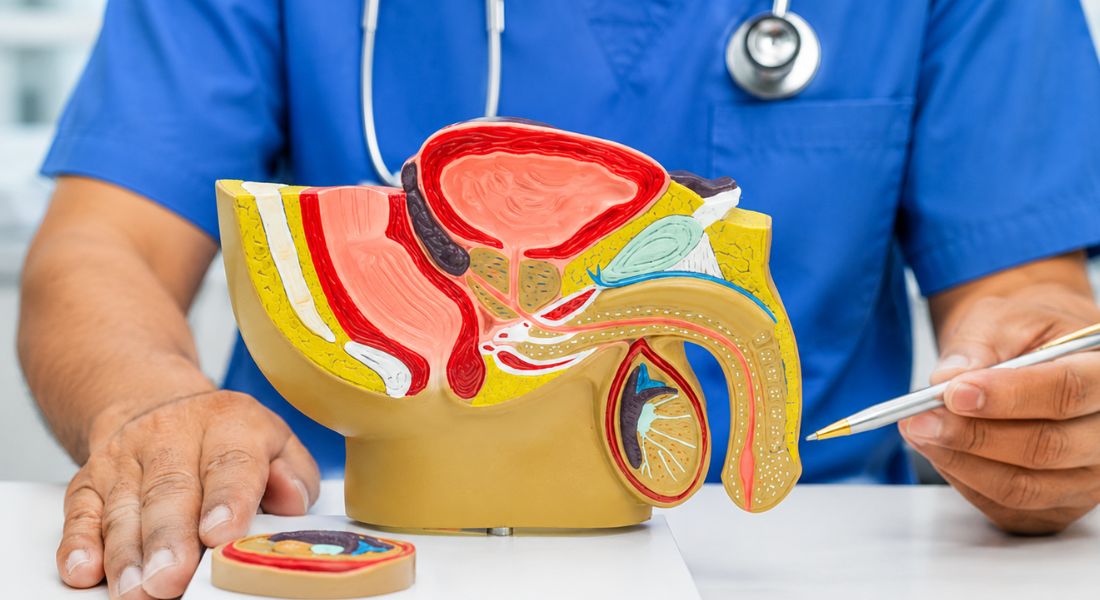
Benign Prostatic Hyperplasia, often shortened to BPH, is a common condition where the prostate becomes enlarged. The word “benign” means it is not cancer. That is important to know from the start, because many men become worried when they hear they have an enlarged prostate.
BPH does not mean you have prostate cancer. Cleveland Clinic explains that BPH is not cancer and does not increase your risk of developing cancer, although the symptoms can sometimes feel similar to symptoms linked with other prostate conditions.
That said, BPH can still affect your daily life. It can make passing urine slower, weaker, more frequent, or more urgent, especially at night. If you are waking up several times to pass urine, planning journeys around toilets, or feeling as if your bladder never fully empties, BPH may be one possible reason.
What Is the Prostate?
The prostate is a small gland found in men and people assigned male at birth. It sits just below the bladder and surrounds the urethra, which is the tube that carries urine from the bladder out of the body.
When you are younger, the prostate is usually small. As you get older, it can gradually increase in size. This is a normal age-related change in many people.
As it enlarges, it can start to press on the urethra. When this happens, urine may not flow as freely as before, which is why conditions like benign prostate enlargement (BPH) often cause urinary symptoms rather than pain.
What Does BPH Mean?
BPH stands for Benign Prostatic Hyperplasia. “Benign” means non-cancerous. “Prostatic” refers to the prostate. “Hyperplasia” means an increase in the number of cells, which causes the prostate to become larger.
So, in simple terms, BPH means non-cancerous enlargement of the prostate. It is very common as men get older. NHS guidance describes an enlarged prostate as a common condition associated with ageing.
You may also hear it called benign prostate enlargement, enlarged prostate, or BPE. These terms are often used in similar ways, although doctors may use them slightly differently depending on the situation.
Why Does BPH Cause Urinary Symptoms?
The prostate sits in a very important position in your body. Because it surrounds the urethra, any enlargement can narrow the space urine passes through. A simple way to think about it is like gently squeezing a hosepipe water can still flow, but it becomes weaker and less smooth.
Something similar can happen when the enlarged prostate presses on your urethra. Your bladder then has to work harder to push urine out. Over time, this can lead to symptoms such as a weak urine flow, urgency, frequent urination, or waking up at night to pass urine.
This does not happen in exactly the same way for everyone. You might have a larger prostate with only mild symptoms, while someone else with a smaller enlargement can experience more noticeable urinary problems.
Common Symptoms of BPH
BPH symptoms usually affect the way you pass urine. You may notice that your urine stream is weaker than it used to be, or that you stand at the toilet waiting for the flow to start.
You may also feel like you need to pass urine again soon after going. Some men find they need to rush to the toilet quickly, while others wake up several times during the night, which can leave you feeling tired during the day.
The National Health Service lists common enlarged prostate symptoms such as difficulty starting urination, a weak flow, straining, stopping and starting, needing to urinate often, and waking frequently at night.
These symptoms may seem mild at first, but they can gradually become more disruptive if they are not assessed and managed properly.
BPH Symptoms Overview
| Symptom Type | What You May Notice | Impact on Daily Life |
| Weak urine flow | Slow or reduced stream | Longer time in toilet, frustration |
| Frequent urination | Needing to urinate more often | Disruption to work and travel |
| Nocturia | Waking up at night to urinate | Poor sleep, fatigue |
| Urgency | Sudden strong need to urinate | Anxiety about finding a toilet |
| Hesitancy | Difficulty starting urination | Delays and discomfort |
| Incomplete emptying | Feeling bladder is not empty | Repeated trips to toilet |
Storage Symptoms
Doctors often group urinary symptoms into different types, and “storage symptoms” relate to how your bladder holds urine.
You might notice that you need to pass urine more often than usual, or that you suddenly feel a strong urgency where you have to get to the toilet quickly. Another common symptom is waking up during the night to urinate, which is called nocturia.
These symptoms can sometimes have a real impact on daily life. People may start avoiding long journeys, meetings, cinema visits, travel, or social events because they worry about not being able to find a toilet in time.
If this sounds familiar, it’s important to know you don’t need to feel embarrassed. These symptoms are quite common, and they are definitely worth discussing with a doctor so the cause can be properly understood and managed.
Voiding Symptoms
Voiding symptoms are related to how urine comes out of the bladder. You might notice a weaker urine stream than before, or that you need to strain a little to start passing urine. Sometimes the flow may stop and start, rather than being steady. You may also find that urination takes longer overall, or that it doesn’t feel like your bladder has fully emptied afterwards.
These symptoms can be quite frustrating because something that used to feel simple and quick can start to feel slow or uncertain. It can also become uncomfortable if you feel you need to keep going back to the toilet or cannot empty properly.
If you are spending more time in the bathroom, waking up at night, or feeling that something has changed with your urine flow, it’s a good idea to get it checked. These symptoms are common, and understanding the cause is the first step toward managing them properly.
Post-Micturition Symptoms
Post-micturition symptoms are those that happen after you’ve finished passing urine. You may notice a small amount of dribbling after you think you’ve completed urination. Some people also find they need to stay at the toilet a bit longer because they are not sure whether more urine will come out. Others may feel as though the bladder has not fully emptied, even after going.
These symptoms can be irritating and, for some people, a little embarrassing, especially if they happen regularly or unexpectedly. Many men quietly put up with these changes, but you don’t have to. If these symptoms are affecting your sleep, work, travel, or confidence, it’s worth speaking to a doctor. In many cases, there are treatments or simple changes that can significantly improve quality of life.
Is BPH the Same as Prostate Cancer?
No, BPH is not the same as prostate cancer. BPH (benign prostatic hyperplasia) is a non-cancerous enlargement of the prostate gland. Prostate cancer, on the other hand, is when abnormal cancer cells grow within the prostate and can sometimes spread to other parts of the body.
The important thing to understand is that both conditions can cause similar urinary symptoms. This is why symptoms alone are not enough to tell the difference, and medical assessment is essential.
You shouldn’t assume urinary changes are only due to BPH without getting checked, but at the same time, you shouldn’t assume they mean cancer either. Our specialist will usually look at your symptoms, age, PSA blood test results, prostate examination findings, and other relevant factors to work out what is most likely and whether any further tests are needed.
Does BPH Increase the Risk of Prostate Cancer?
BPH on its own does not mean you will develop prostate cancer. It is a non-cancerous enlargement of the prostate, and having it does not directly increase your risk of cancer.
Cleveland Clinic explains that BPH is not cancer and does not cause or increase the likelihood of developing prostate cancer. However, both BPH and prostate cancer are more common as men get older, which means it is possible for someone to have both conditions at the same time purely by coincidence.
Because of this overlap, symptoms alone cannot reliably distinguish between the two conditions. That is why proper medical assessment is important if you notice urinary changes or other concerns.
If you have symptoms such as urinary problems, a raised PSA, blood in the urine, or other worrying signs, our specialist may recommend further investigations to understand the cause more clearly and ensure nothing important is missed.
What Causes BPH?
The exact cause of BPH is not always clear. Age is one of the biggest factors. As men get older, hormonal changes may affect prostate growth. The prostate often continues to grow throughout adult life. For some men, that growth becomes large enough to affect urine flow.
Family history, lifestyle, general health, and hormone-related changes may also play a role. You do not get BPH because you did something wrong. It is a common age-related prostate condition. That said, your symptoms can still be managed, and you should not feel you simply have to live with them.
Who Is More Likely to Get BPH?
BPH (benign prostatic hyperplasia) becomes more common as men get older. It is relatively uncommon in younger men, but the likelihood increases steadily from middle age onwards, as the prostate naturally tends to enlarge with age.
A family history of prostate enlargement may also make someone more likely to develop symptoms. In addition, other health and lifestyle factors such as obesity, diabetes, cardiovascular health, and overall physical activity may influence urinary symptoms and prostate health.
It is also important to consider any other medical conditions or regular medications. Some medicines can affect bladder function or worsen urinary symptoms, so it is important to mention these to our clinical team during assessment.
Ultimately, our specialist looks at the whole picture rather than just the prostate alone. Age, symptoms, general health, lifestyle, and medication history all help build a clearer understanding of what may be contributing to your symptoms.
When Should You See a Doctor?
You should speak to a doctor if your urinary symptoms are new, getting worse, or starting to affect your day-to-day life. Even gradual changes are worth mentioning, especially if they feel different from your normal pattern.
It’s also a good idea to seek medical advice if you are waking frequently at night to urinate, finding it difficult to start passing urine, noticing a weak flow, or feeling that your bladder is not fully empty after going. These symptoms are common, but they can have several possible causes that may need treatment or monitoring.
Mayo Clinic advises speaking to a healthcare provider about urinary symptoms even if they do not seem severe, because it is important to rule out underlying conditions and identify anything that can be managed early.
You should seek urgent medical attention if you are unable to pass urine at all. This is known as acute urinary retention, and it requires prompt assessment and treatment.
Symptoms That Need Urgent Attention
Some symptoms should not be ignored. If you cannot pass urine, you should seek urgent medical help. You should also get checked quickly if you have fever, severe lower abdominal pain, blood in the urine, repeated urinary infections, or worsening symptoms.
Mayo Clinic warns that untreated blockage of the urinary tract can become dangerous and that being unable to pass urine needs urgent medical help. These symptoms do not always mean something serious, but they do need proper assessment. It is always better to ask early than wait and become more uncomfortable.
How Is BPH Diagnosed?
BPH is usually diagnosed using a combination of your symptoms, a physical examination, and some basic tests rather than a single result. Our clinical team will typically ask about your urinary habits, such as how often you pass urine, whether you wake up at night, whether your urine flow feels weak, and whether you feel that your bladder empties properly. These details help build a clear picture of how your symptoms are affecting you.
They may also ask about your fluid intake, caffeine and alcohol use, current medications, general health, and any history of urinary tract infections. All of these factors can influence urinary symptoms and help identify possible causes.
In some cases, you may be asked to complete a symptom questionnaire. This helps measure how severe your symptoms are and how much they are affecting your daily life. Overall, diagnosis is not based on one single test, but on the full combination of information gathered during your assessment.
Prostate Examination
Our doctor may offer a prostate examination. This is sometimes called a digital rectal examination, or DRE. It involves gently feeling the prostate through the back passage with a gloved finger. It may feel embarrassing to think about, but it is usually quick.
The doctor checks whether the prostate feels enlarged, smooth, firm, tender, or irregular. A smooth enlarged prostate may fit with BPH, while an irregular or hard area may need further assessment. This examination is only one part of the assessment, but it can give useful information.
Urine Tests
A urine test may be used to check for infection, blood, or other signs that could explain your symptoms. This matters because urinary infections can cause urgency, frequency, discomfort, and sometimes a temporary rise in PSA.
If infection is found, it may need treatment before your symptoms are reassessed. Urine testing is usually simple and quick. It helps our doctor avoid assuming that all urinary symptoms are caused by BPH.
PSA Blood Test

Our specialist may discuss a PSA blood test. PSA stands for prostate-specific antigen. It is a protein made by prostate cells. PSA can be raised in BPH because a larger prostate may produce more PSA. But PSA can also rise with infection, inflammation, recent ejaculation, vigorous exercise, and prostate cancer.
This means PSA needs careful interpretation. A raised PSA does not automatically mean cancer, but it may lead to repeat testing, MRI, or specialist referral depending on your age, symptoms, risk factors, and examination findings.
Flow Test and Bladder Scan
Some men may be offered a urine flow test as part of their assessment. This test measures how quickly urine comes out when you pass urine into a special machine, helping doctors understand how strong or weak your urinary flow is.
You may also have a bladder scan after you have finished urinating. This is a simple, painless ultrasound test that checks how much urine is left in the bladder afterwards.
If a significant amount of urine remains, it may suggest that the bladder is not emptying as well as it should. This can sometimes be linked to blockage or reduced bladder function.
Together, these tests help our specialist understand how severe the problem might be and whether any treatment or further investigation is needed.
Watchful Waiting
Not every man diagnosed with BPH needs immediate treatment. If your symptoms are mild and not having much impact on your daily life, our specialist may suggest a “watchful waiting” approach.
This means actively monitoring your symptoms over time while making simple lifestyle changes, rather than starting medication or procedures straight away. It is a planned approach, not a passive one.
National Institute of Diabetes and Digestive and Kidney Diseases explains that BPH management may include watchful waiting, medication, or surgery depending on how severe the symptoms are and how much they affect quality of life.
Watchful waiting does not mean ignoring the problem. It means keeping track of any changes, attending follow-up appointments if needed, and knowing when to return to our specialist if symptoms worsen or new concerns develop.
Lifestyle Changes That May Help
Lifestyle changes can sometimes make BPH symptoms easier to manage. You may be advised to reduce drinks in the evening if night-time urination is a problem. Cutting down on caffeine and alcohol may also help, because both can irritate the bladder and increase urine production.
NHS guidance says there are things you can do to help enlarged prostate symptoms, including reducing fizzy drinks, alcohol, caffeine, and artificial sweeteners, drinking less in the evening, and remembering to empty your bladder.
You may also find it useful to plan toilet breaks, take your time when passing urine, and avoid rushing. Small changes can make a real difference, especially when symptoms are mild.
Medicines for BPH

If symptoms are more troublesome, medication may be recommended. Some medicines relax the muscles in the prostate and bladder neck, helping urine flow more easily. Others can shrink the prostate gradually by affecting hormone pathways involved in prostate growth.
Mayo Clinic explains that treatment choices for BPH can include medicines, surgery, and less invasive procedures, depending on prostate size, age, overall health, and symptom severity.
Our specialist will explain which medicine is suitable for you. You should also ask about possible side effects, how long the medicine may take to work, and when your symptoms should be reviewed.
Alpha-Blockers
Alpha-blockers are commonly used for BPH symptoms. They relax muscles around the prostate and bladder neck, which can make it easier to pass urine.
These medicines may help relatively quickly compared with medicines that shrink the prostate. However, they can cause side effects in some men, such as dizziness, tiredness, or changes in ejaculation.
Our specialist will decide whether an alpha-blocker is suitable based on your symptoms, blood pressure, other medicines, and overall health. Do not start or stop medication without medical advice.
5-Alpha Reductase Inhibitors
Another type of medication used for BPH is called a 5-alpha reductase inhibitor. These medicines work by helping to gradually shrink the prostate over time, and they are often considered when the prostate is significantly enlarged.
Unlike some other treatments, they do not usually provide quick relief. It can take several months before you notice any improvement in symptoms, so the benefits tend to build up slowly.
Some men may experience side effects, which can include reduced libido, erectile dysfunction, or changes in ejaculation. Not everyone gets these effects, but they are important to be aware of before starting treatment.
Our specialist should always explain both the potential benefits and the possible side effects so you can make an informed decision about whether this type of treatment is right for you.
Combination Treatment
Some men with BPH may be offered a combination of medications rather than a single treatment. This is because different medicines work in different ways and can sometimes complement each other.
For example, one medicine may help relax the muscles in the prostate and bladder neck to improve urine flow more quickly, while another works more gradually to reduce the size of the prostate over time.
This approach is usually considered when symptoms are moderate to severe, or when the prostate is significantly enlarged. However, it is not suitable or necessary for everyone.
Our specialist will take into account your symptoms, test results, prostate size, overall health, and personal preferences before recommending a combination treatment. You should always feel comfortable asking why a particular option has been suggested and how it may benefit you in your situation.
Minimally Invasive Procedures
Some men may not get enough relief from medication, or they may prefer not to take long-term tablets. In these situations, minimally invasive procedures may be discussed as an alternative option.
These treatments aim to improve urine flow by reducing the blockage caused by an enlarged prostate, without the need for major surgery. They are generally designed to be less invasive, with the goal of shorter recovery times and fewer complications compared with traditional surgical approaches.
Mayo Clinic notes that there are several treatment options for an enlarged prostate, including medicines, surgical procedures, and minimally invasive techniques that involve smaller, fewer, or sometimes no incisions.
The most suitable option depends on factors such as prostate size, symptom severity, overall health, and personal priorities. This may include considerations like recovery time, effectiveness, and the potential impact on sexual function.
Surgery for BPH

Surgery may be recommended if symptoms are severe, complications develop, or other treatments do not work well enough. Traditional surgery for BPH often involves removing or reducing the part of the prostate that blocks urine flow. There are different surgical options, and the best choice depends on prostate size, health, and local expertise.
Prostate Cancer UK explains that enlarged prostate treatment can include lifestyle changes, medicines, and surgery. Surgery can be very effective for some men, but it also has risks. Our specialist should explain benefits, recovery, side effects, and alternatives before you decide.
Possible Complications of Untreated BPH
BPH is not cancer, but severe or untreated symptoms can sometimes lead to complications. These may include urinary retention, repeated urinary infections, bladder stones, bladder damage, or kidney problems in more serious cases.
This does not happen to every man with BPH. Many men have mild symptoms that remain manageable. But if symptoms are getting worse, you should not ignore them. Proper assessment can help prevent problems and improve quality of life.
BPH and Night-Time Urination
Waking up at night to pass urine is one of the most frustrating symptoms of BPH. It can disrupt your sleep and leave you feeling tired, low in energy, irritable, or unable to concentrate during the day.
While BPH is a common cause of night-time urination, it is not the only possible reason. It can also be influenced by drinking fluids late in the evening, caffeine or alcohol intake, diabetes, sleep disorders, heart conditions, or certain medications.
Because of this, our clinical team may ask detailed questions about your lifestyle, health history, and symptoms to help identify the underlying cause. Night-time urination is not always caused by the prostate alone, so a full assessment is important. Understanding the true cause helps ensure you receive the most appropriate treatment, rather than focusing on just one possible explanation.
BPH and Quality of Life
BPH doesn’t just affect urination. For many men, it can also have a wider impact on everyday life, including sleep, energy levels, work, travel, exercise, and even confidence in social situations.
You might find yourself avoiding long meetings, journeys, or social plans because you are unsure when you’ll need a toilet. Waking up several times at night can leave you feeling tired and less focused during the day. Symptoms such as urgency or dribbling may also feel embarrassing or frustrating.
These are very real quality-of-life issues, and it’s important not to downplay them just because BPH is common. Even if the condition is not dangerous, its impact on your daily routine can still be significant.
If your symptoms are bothering you, they are absolutely worth discussing with a doctor. Help is available, and in many cases, treatment or simple changes can make a noticeable difference to how you feel day to day.
Can BPH Affect Sexual Function?
BPH itself, and some of the treatments used to manage it, can affect sexual function in certain men. This doesn’t happen to everyone, but it is something worth being aware of.
Some men with urinary symptoms may also notice changes such as erectile difficulties, reduced sexual confidence, or changes in ejaculation. These issues can be related to the condition itself, but they can also overlap with other health factors such as age, stress, or general wellbeing.
In addition, some medications used to treat BPH may cause sexual side effects in some men. Certain procedures or surgical treatments can also affect ejaculation, depending on the type of treatment used.
Because of this, it is important to have an open conversation with our specialist before starting any treatment. If maintaining sexual function is particularly important to you, make that clear, as it can help guide which treatment options are most appropriate for your situation.
Can BPH Raise PSA?
Yes, BPH can raise PSA levels. When the prostate becomes enlarged, it can produce more PSA, which may lead to a higher reading on a blood test. This can understandably feel worrying, especially because PSA is often associated with prostate cancer.
However, it is important to remember that PSA can rise for several non-cancer reasons as well, including BPH, infection, inflammation, or even recent physical activity or sexual activity. Because of this, a raised PSA on its own does not confirm a diagnosis.
If your PSA is raised, our specialist may suggest further steps depending on your individual situation. This could include repeating the test, urine tests, a prostate examination, MRI scans, or referral to a specialist for a more detailed assessment. The key point is not to assume the cause either way without medical advice. A raised PSA is a signal to investigate further, not a diagnosis on its own.
Living With BPH
Living with BPH often means getting to know your own symptoms and understanding what tends to make them better or worse. Over time, many men begin to notice clear patterns in how their bladder responds to certain foods, drinks, or daily habits.
For example, caffeine can sometimes increase urgency, and drinking fluids later in the evening may lead to more frequent night-time urination. Some men also find that slowing down at the toilet and giving themselves more time can help with more complete bladder emptying.
For some people, simple lifestyle adjustments are enough to keep symptoms under control. For others, medication or medical procedures may be needed to achieve better relief.
Ultimately, the goal isn’t just to improve test results or reduce symptoms on paper. It’s about helping you feel more comfortable in daily life, more confident in your routine, and more in control of your bladder health.
Speak to Our Specialist

If urinary symptoms are affecting your sleep, confidence, work, travel, or daily routine, speaking to a specialist can help. You may need advice about whether your symptoms are due to BPH, whether PSA testing is needed, or which treatment options are suitable.
A specialist can explain the difference between monitoring, lifestyle changes, medicines, minimally invasive procedures, and surgery. You do not have to keep adjusting your life around urinary symptoms without knowing what is causing them. Getting checked can give you clarity and a proper plan.
FAQs About BPH (Benign Prostatic Hyperplasia)
1. What is BPH in simple terms?
BPH is a non-cancerous enlargement of the prostate gland that commonly occurs as men age. It can press on the urethra and cause urinary symptoms such as a weak stream, frequent urination, and night-time urination.
2. Is BPH the same as prostate cancer?
No, BPH is not prostate cancer. It is a benign (non-cancerous) condition. However, both conditions can cause similar urinary symptoms, which is why medical assessment is important to tell them apart.
3. What are the most common symptoms of BPH?
Common symptoms include weak urine flow, difficulty starting urination, frequent urination, urgency, waking at night to urinate, and feeling that the bladder is not fully empty after passing urine.
4. What causes BPH?
The exact cause is not fully understood, but ageing is the main factor. Hormonal changes over time can lead to gradual prostate growth. Genetics and overall health may also play a role.
5. Can BPH go away on its own?
BPH does not usually go away completely, but symptoms can remain stable or improve with lifestyle changes or treatment. Many men manage it successfully with monitoring, medication, or procedures if needed.
6. How is BPH diagnosed?
BPH is diagnosed using symptoms, a medical history review, a physical prostate examination, urine tests, PSA blood tests, and sometimes flow tests or bladder scans. No single test confirms BPH alone.
7. Can BPH cause a raised PSA level?
Yes, BPH can raise PSA levels because a larger prostate may produce more PSA. However, PSA can also rise due to infection, inflammation, or other prostate conditions, so results must be interpreted carefully.
8. What is the first treatment for BPH?
Mild cases are often managed with lifestyle changes and watchful waiting. If symptoms worsen, medications such as alpha-blockers or 5-alpha reductase inhibitors may be prescribed.
9. When is surgery needed for BPH?
Surgery may be recommended if symptoms are severe, medications do not help, or complications occur such as urinary retention, bladder damage, or recurrent infections.
10. What lifestyle changes can help BPH symptoms?
Reducing caffeine and alcohol, limiting fluids in the evening, avoiding bladder irritants, staying active, and emptying the bladder fully can help improve symptoms in many men.
Final Thoughts on BPH (Benign Prostatic Hyperplasia)
Living with urinary symptoms can feel frustrating and, at times, worrying, especially when you are not sure what is causing the changes. The important thing to remember is that BPH (Benign Prostatic Hyperplasia) is very common, and in most cases it is not dangerous, even though it can have a real impact on your day-to-day comfort and confidence.
What matters most is not guessing the cause, but getting a proper assessment so your symptoms are understood in context. With the right evaluation, many men find reassurance, clarity, and a clear plan for managing their symptoms whether that involves simple lifestyle changes, monitoring, medication, or further investigation. If you are considering BPH treatment in London, you can get in touch with us for a consultation.
References:
- Ng, M., Leslie, S.W. & Baradhi, K.M. (2024) Benign Prostatic Hyperplasia (StatPearls) A comprehensive clinical review covering epidemiology, PSA relationship, symptoms, and management. Available at: https://www.ncbi.nlm.nih.gov/sites/books/NBK558920/
- Madersbacher, S. et al. (2008) Pathophysiology and therapy of benign prostatic hyperplasia Explains cellular changes, obstruction mechanism, and treatment pathways. Available at: https://pubmed.ncbi.nlm.nih.gov/28757771/
- Roehrborn, C.G. (2017) Benign prostatic hyperplasia: an overview of current management Explains treatment options including medication and surgery. Available at: https://www.sciencedirect.com/science/article/pii/S2214388217300553
- Murad, L. et al. (2023) Treating LUTS in men with benign prostatic obstruction: A review article. Drugs & Aging, 40(9), pp.815–836. Available at: https://pubmed.ncbi.nlm.nih.gov/37556075/
- Parsons, J.K. (2010) Benign prostatic hyperplasia and male lower urinary tract symptoms: epidemiology and risk factors. Current Bladder Dysfunction Reports. Available at: https://pmc.ncbi.nlm.nih.gov/articles/PMC3061630/