




When you visit a prostate clinic, one of the first things you may wonder is what kind of tests might be needed. You may find that this depends on your symptoms, medical history, and the initial clinical assessment carried out during your appointment.
Most prostate conditions cannot be confirmed by symptoms alone, because urinary changes and PSA variations can have several possible causes. You may notice that similar symptoms can sometimes be linked to different underlying conditions, which is why further investigation is often required.
Specialist clinics therefore use a combination of tests to understand what is happening more clearly. The aim is not to test everything for every patient, but to choose the most appropriate investigations for your specific situation. You may find that this tailored approach helps avoid unnecessary procedures while still ensuring accurate and reliable diagnosis.
Initial Clinical Assessment
Before any tests are carried out, the first step is usually a detailed consultation. You may find that this stage is focused on understanding your symptoms, concerns, and medical background in a structured way.
During this assessment, the specialist will ask about urinary symptoms, general health, and any previous prostate-related results. You may also be asked about how symptoms have changed over time, which helps build a clearer clinical picture.
This information helps guide which investigations are actually needed. In many cases, this initial discussion already provides important clues about the likely cause of symptoms, which can shape the next steps in your care.
Overview of Common Prostate Clinic Tests
| Test | What It Measures | Why It Is Done |
| PSA Blood Test | PSA protein levels in blood | Detects possible prostate issues (not cancer-specific) |
| Digital Rectal Examination (DRE) | Size and texture of prostate | Checks for enlargement or irregularities |
| Urine Test | Infection, blood, inflammation | Rules out UTI or urinary causes of symptoms |
| Flow Rate Test | Speed of urine flow | Assesses obstruction or weak bladder emptying |
| Post-Void Residual Scan | Remaining urine after urination | Checks bladder emptying efficiency |
| MRI Prostate Scan | Detailed prostate imaging | Identifies suspicious areas for further evaluation |
| Prostate Biopsy | Tissue samples | Confirms or rules out prostate cancer |
| Additional Blood Tests | Kidney function, infection markers | Checks overall health context |
PSA Blood Test
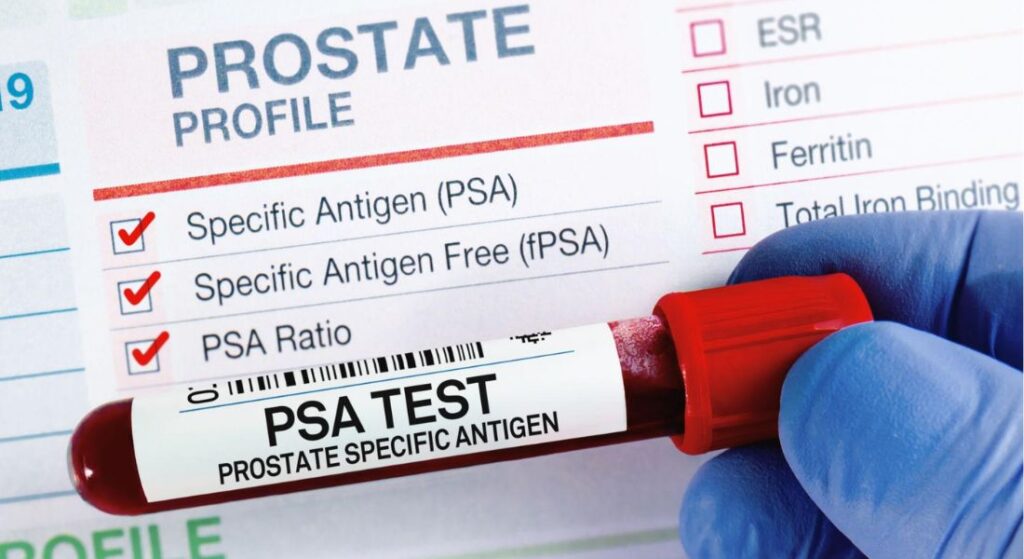
The PSA blood test is one of the first investigations used in a prostate assessment. It measures a protein produced by the prostate, which can be elevated for several reasons.
A raised PSA does not automatically indicate cancer. Levels may also increase due to benign prostate enlargement, infection, inflammation, or recent physical activity. For this reason, PSA is used as a screening marker rather than a diagnostic test.
Results are always interpreted alongside symptoms, examination findings, and further imaging where needed. This combined approach helps ensure accurate diagnosis while avoiding unnecessary procedures.
Understanding PSA Results
Waiting for answers can be stressful, especially when symptoms affect sleep or daily comfort. You may find that uncertainty feels more difficult when you are waiting for test results or specialist feedback over time, particularly if symptoms are ongoing.
The NHS may involve longer waiting periods at different stages of assessment and treatment. You may experience gaps between appointments depending on urgency, demand, and how busy local services are at the time, which can sometimes extend the overall timeline.
Private care often reduces waiting time, which can ease anxiety for some patients. You may find that quicker access to results and specialist review helps provide clearer answers sooner and reduces ongoing worry while you are still in the diagnostic process.
Digital Rectal Examination (DRE)
Alongside blood and urine tests, another quick and routine check is the digital rectal examination (DRE). You may find that it sounds uncomfortable, but it is a routine part of prostate assessment used in many clinics.
This involves the doctor gently feeling the prostate through the back passage to assess its size and texture. You may feel slight pressure, but the examination is usually quick and carried out with care and professionalism.
Although it may feel uncomfortable to think about, the examination is usually brief and provides useful clinical information. It helps identify whether the prostate feels enlarged, smooth, or irregular, which can support further decision-making about tests or treatment.
Urine Tests
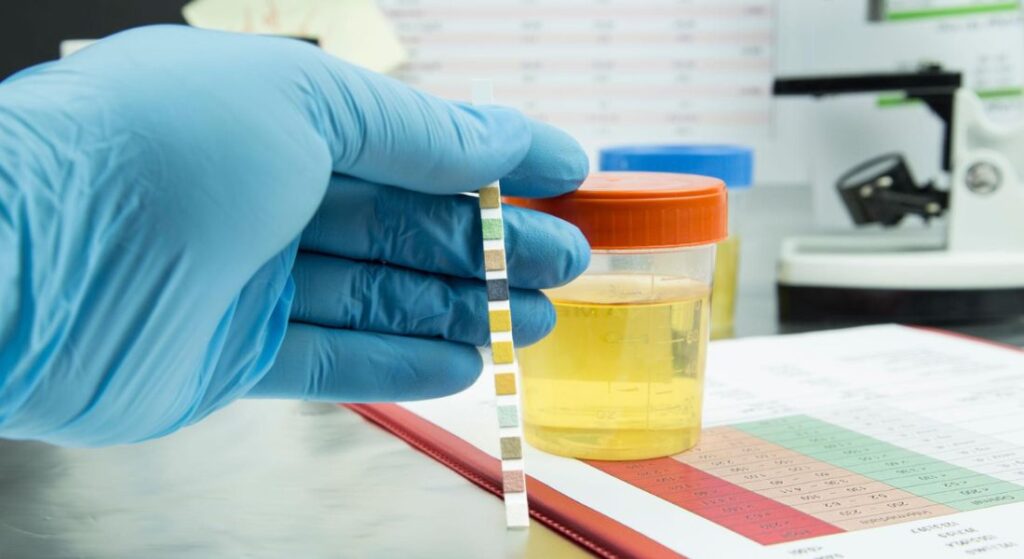
Urine tests are often used to check for infection, blood, or other abnormalities. You may find that this is one of the first investigations carried out when urinary symptoms are present, especially when the cause is not immediately clear.
These tests help rule out urinary tract infections, which can sometimes cause symptoms similar to prostate problems. You may also find that they provide useful clues when symptoms overlap between different conditions, helping narrow down possible causes.
They can also help identify inflammation or other urinary system issues. In many cases, urine testing is part of the initial investigation process to guide further assessment and ensure appropriate next steps in your care.
Flow Rate Test
A flow rate test measures how quickly urine leaves the bladder. You may find that it is a simple, non-invasive test used during a prostate assessment to understand urinary function more clearly.
You are usually asked to pass urine into a special device that records the speed and pattern of flow. You may find that this allows the specialist to see how your urinary stream behaves in real time and whether there are any abnormalities.
A slow or interrupted flow may suggest prostate enlargement or bladder outlet obstruction. The test helps assess how well urine is passing through the urinary system and can guide further investigation or treatment decisions based on your results.
Post-Void Residual Scan
After you pass urine, a bladder scan may be performed to check how much urine is left behind. You may find that this is a quick, painless ultrasound scan carried out on the lower abdomen.
This is called a post-void residual measurement. It helps the specialist understand how effectively your bladder is emptying after urination.
If a significant amount of urine remains, it may suggest that the bladder is not emptying properly. This information helps guide treatment decisions, especially in cases of benign prostate enlargement (BPH), where bladder emptying can be affected.
MRI Prostate Scan
An MRI scan is one of the most important imaging tests used in prostate assessment. You may find that it is recommended when more detailed information is needed after initial tests or examination.
It provides detailed images of the prostate gland and surrounding tissues. This helps you understand how the prostate is structured, and it allows the specialist to look closely for any areas that may need further attention.
MRI can help identify suspicious areas that may require additional investigation. You may find that it is often used before deciding whether a biopsy is needed, helping ensure the next steps are planned more accurately.
Why MRI Is So Useful
MRI helps doctors see whether there are any areas of concern within the prostate. You may find that this detailed imaging provides a clearer picture than blood tests or examination alone.
It can also help determine whether a biopsy is needed or whether monitoring is sufficient. You may find that this step helps avoid unnecessary invasive procedures when they are not required.
This reduces unnecessary procedures in patients who do not need them. It also improves accuracy in detecting significant prostate conditions, helping ensure that further investigation is targeted and appropriate.
Prostate Biopsy
A prostate biopsy is a test where small tissue samples are taken from the prostate for analysis. You may find that it is recommended when previous tests suggest that more detailed investigation is needed.
It is usually carried out if MRI or PSA results indicate a possible concern. You may find that the decision is made carefully, based on a combination of clinical findings rather than a single test result.
The samples are examined under a microscope to check for abnormal cells. This is the most definitive way to diagnose prostate cancer, as it allows specialists to confirm whether cancer is present and understand its nature.
How a Biopsy Is Performed
A biopsy is usually carried out using a thin needle guided by ultrasound or MRI. You may find that imaging guidance helps the specialist target specific areas of the prostate more accurately.
Local anaesthetic is often used to minimise discomfort during the procedure. You may feel some pressure, but the aim is to keep the process as comfortable as possible throughout.
The procedure is relatively quick, although some mild discomfort or temporary side effects can occur afterwards. Your specialist will explain everything in detail beforehand so you know what to expect and can feel prepared.
Blood Tests Beyond PSA
In some cases, additional blood tests may be recommended beyond PSA. You may find that these are used to look at your overall health and support a more complete assessment of your symptoms.
They may help assess general health or rule out other conditions that could be contributing to urinary changes. You may find that this is especially useful when symptoms are not clearly explained by prostate-related findings alone.
For example, kidney function or infection markers may sometimes be checked. These tests help build a full clinical picture rather than focusing only on the prostate, so decisions can be made with better context.
Imaging Beyond MRI
Although MRI is the main imaging tool for prostate assessment, other scans may occasionally be used depending on your symptoms and clinical findings. You may find that these are recommended when a broader view of the urinary system is needed.
These might include ultrasound scans or kidney and bladder imaging to check for other possible causes of symptoms. You may find that this helps the specialist understand whether issues are coming from the prostate alone or elsewhere in the urinary tract.
These additional scans help assess the wider urinary system. They are usually only recommended when clinically necessary, so that testing remains focused and appropriate to your situation.
When Not All Tests Are Needed

Not every patient will need every test during prostate assessment. Investigations are usually selected based on your individual symptoms and initial clinical findings, rather than applying a fixed set of tests for everyone. This helps ensure that testing is appropriate and targeted.
- Based on Symptoms and PSA: The type and number of tests depend on your symptoms, PSA levels, examination findings, and medical history.
- Simple Monitoring in Some Cases: Some men may only need PSA monitoring and a consultation without further immediate testing.
- More Detailed Evaluation When Needed: Other cases may require MRI scans, urine tests, or biopsy depending on clinical suspicion.
- Personalised Approach: Each patient’s pathway is tailored to ensure only necessary investigations are carried out for safe and accurate diagnosis.
Overall, prostate testing is not the same for everyone. Your specialist will decide which investigations are needed based on your individual situation. This helps avoid unnecessary tests while still ensuring that important conditions are not missed.
Step-by-Step Diagnostic Process
In many prostate clinics, testing follows a structured step-by-step pathway. You may find that the process begins with a detailed consultation, where symptoms, PSA history, and medical background are reviewed together. This allows the specialist to understand your situation clearly before deciding which investigations are actually necessary.
This is usually followed by basic tests such as PSA blood tests or urine analysis. You may find that these initial results help guide whether further investigation is needed, rather than moving straight to advanced testing. If required, imaging such as MRI may be added to provide more detail, and biopsy is only considered when there is a clear clinical reason based on all findings.
This stepwise approach helps ensure accuracy while avoiding unnecessary procedures. You may find that it provides reassurance, as each stage builds a clearer picture of your prostate health in a careful and structured way.
What You Should Expect During Testing
Most tests at a prostate clinic are outpatient procedures, meaning you can go home the same day. You may find that this makes the process more convenient, as it usually does not require an overnight stay or long recovery period.
Some tests may feel slightly uncomfortable, but they are generally well tolerated. You may experience mild pressure or brief discomfort depending on the type of investigation, although this is usually short-lived.
The clinic team will explain each step before it happens so you know what to expect. You may find that this helps reduce anxiety and makes the overall process feel more manageable, as the aim is to keep everything as smooth and clear as possible.
How Results Are Interpreted
Once tests are completed, results are reviewed by a specialist. You may find that this stage focuses on bringing together all available information rather than looking at each result separately.
They are not interpreted in isolation. You may find that PSA levels, imaging findings, examination results, and symptoms are all considered together to build a complete clinical picture.
Instead, the doctor combines all results to form a full understanding of your prostate health. This combined interpretation helps ensure an accurate diagnosis and supports appropriate treatment planning based on your individual situation.
Follow-Up After Testing

After your results are reviewed, you may be invited back for follow-up. You may find that this stage is used to explain findings in detail and ensure you understand what the results mean for your health.
This could involve discussing treatment options, monitoring plans, or reassurance if no significant issues are found. You may also find that the focus is on creating a clear plan so you know what happens next.
In some cases, repeat testing may be recommended over time. Follow-up helps ensure that any changes in prostate health are detected early and managed appropriately, giving you ongoing clarity and support.
Anxiety Around Testing
It is very common to feel anxious before or during prostate testing. You may find that worry builds around what PSA results, MRI findings, or biopsy outcomes could mean, especially when you are waiting for answers.
Many men share similar concerns about these investigations, particularly when symptoms are new or unclear. You may find that uncertainty is often the main cause of anxiety, rather than the tests themselves.
However, most tests are carried out to provide clarity rather than confirm something serious. Understanding the purpose of each test can help reduce anxiety significantly, as you may find it easier to focus on information rather than assumptions.
Role of Specialist Clinics
Specialist clinics focus entirely on prostate and urinary health, which allows for more detailed and efficient testing. You may find that this dedicated focus helps ensure symptoms are assessed in a more structured and targeted way.
Because all cases relate to the same area of health, investigations can often be coordinated more smoothly. You may also find that this reduces delays between tests, results, and specialist review.
This approach supports quicker understanding of your condition while maintaining clinical accuracy. You may find that having a focused specialist service helps bring clarity and confidence throughout the diagnostic process.
FAQs:
1. What is the first test usually performed at a prostate clinic?
The first step is usually a detailed consultation rather than a medical test. During this appointment, the specialist will discuss your symptoms, medical history, and any previous prostate-related results. This information helps determine which investigations, if any, are needed. In many cases, the consultation provides valuable clues about the underlying issue.
2. Does a high PSA level always mean prostate cancer?
No, a raised PSA level does not automatically mean you have prostate cancer. PSA levels can also increase due to benign prostate enlargement, infection, inflammation, or even recent physical activity. This is why PSA results are always interpreted alongside other findings. Further tests may be needed to understand the cause of an elevated result.
3. What happens during a digital rectal examination (DRE)?
A digital rectal examination involves the doctor gently examining the prostate through the back passage using a gloved finger. The procedure is usually quick and helps assess the size, shape, and texture of the prostate. Although some men may feel uncomfortable about the idea, it generally causes only mild discomfort. The information gained can be very useful in the diagnostic process.
4. Why might I need an MRI scan of the prostate?
An MRI scan provides detailed images of the prostate and surrounding tissues. It can help identify areas that may require further investigation and can improve the accuracy of diagnosis. In many cases, MRI is performed before deciding whether a biopsy is necessary. It also helps reduce unnecessary procedures for men with a lower risk of significant disease.
5. What is a prostate biopsy and when is it recommended?
A prostate biopsy involves taking small samples of prostate tissue for laboratory analysis. It is usually recommended when PSA levels, MRI findings, or other test results suggest that further investigation is needed. The samples are examined under a microscope to look for abnormal or cancerous cells. A biopsy remains the most reliable way to confirm a diagnosis of prostate cancer.
6. Are urine tests important in prostate assessment?
Yes, urine tests are commonly used as part of the assessment process. They can help identify infections, blood in the urine, or other urinary tract issues that may be causing symptoms. Some conditions can mimic prostate problems, so urine testing helps rule out alternative explanations. This allows for a more accurate diagnosis.
7. What does a flow rate test show?
A flow rate test measures how quickly and effectively urine leaves your bladder. You will be asked to pass urine into a specialised device that records the flow pattern and speed. Reduced flow may indicate prostate enlargement or an obstruction affecting the urinary tract. The results help specialists assess the severity of urinary symptoms.
8. Will I need every test available at a prostate clinic?
No, not every patient requires every available test. The investigations recommended will depend on your symptoms, examination findings, PSA levels, and medical history. Some men only need monitoring and routine follow-up, while others may require more detailed investigations. The approach is tailored to your individual situation.
9. Are prostate clinic tests painful?
Most tests performed at a prostate clinic are well tolerated and cause little or no pain. Procedures such as blood tests, urine tests, and scans are generally straightforward. More invasive tests, such as biopsies, are usually performed with anaesthetic to minimise discomfort. Your specialist will explain what to expect before any procedure takes place.
10. How are the results of prostate tests interpreted?
Results are not assessed individually in isolation. Instead, your specialist reviews all available information, including symptoms, examination findings, blood tests, scans, and any biopsy results. This combined approach provides a more accurate understanding of your prostate health. It also helps ensure that any treatment recommendations are based on the complete clinical picture.
Final Thoughts: Prostate Clinic Testing
Prostate clinics use a range of tests to build a clear and accurate picture of your prostate health. From PSA blood tests and urine analysis to MRI scans and biopsies, each investigation has a specific purpose and is only recommended when clinically appropriate. Rather than relying on a single result, specialists combine information from multiple sources to reach the most accurate diagnosis possible.
Not every patient will require the same tests, which is why assessment is always tailored to your symptoms, medical history, and individual risk factors. A structured, step-by-step approach helps ensure that significant conditions are identified while avoiding unnecessary procedures. This personalised process allows treatment and monitoring plans to be based on your specific needs.
Although prostate testing can sometimes feel worrying, most investigations are performed to provide clarity and reassurance. Understanding what each test involves can help reduce uncertainty and make the process easier to navigate. If you are experiencing urinary symptoms or changes in PSA, you can contact us at Prostate Clinic London to arrange a consultation and discuss your concerns with a specialist.
References:
- Kasivisvanathan, V., Rannikko, A.S., Borghi, M., et al. (2018) ‘MRI-targeted or standard biopsy for prostate-cancer diagnosis’, New England Journal of Medicine, 378(19), pp. 1767–1777. Available at: https://pubmed.ncbi.nlm.nih.gov/29552975/
- Murray, K.S. et al. (2026) ‘Current Evidence and Emerging Perspectives on Prostate Biopsy Techniques in the Era of MRI Pathways’, Diseases, 14(6), p. 217. Available at: https://www.mdpi.com/2079-9721/14/6/217
- Pellegrino, G., Arnone, F., Girlando, M.F., Berloco, D., Perazzo, C., Triggiani, S. and Carrafiello, G., 2026. Artificial Intelligence in Prostate MRI: Redefining the Patient Journey from Imaging to Precision Care. Applied Sciences, 16(2), p.893. Available at: https://www.mdpi.com/2076-3417/16/2/893
- Ahmed, H.U., El-Shater Bosaily, A., Brown, L.C., et al. (2017) ‘Diagnostic accuracy of multi-parametric MRI and TRUS biopsy in prostate cancer (PROMIS study)’, The Lancet, 389(10071), pp. 815–822. Available at: https://pubmed.ncbi.nlm.nih.gov/28110982/
- Wei et al. (2020) Biparametric prostate MRI and clinical indicators predict clinically significant prostate cancer in men with “gray zone” PSA levels. European Journal of Radiology, 127, p.108977. Available at: https://www.sciencedirect.com/science/article/abs/pii/S0720048X20301662