




Urine leakage is common after your robotic radical prostatectomy, particularly when your catheter is first removed. Your surgery changes the structures that support urinary control, and your urinary sphincter and pelvic floor need time to adapt and recover.
Your leakage will often improve gradually during the following weeks and months, although your recovery is individual. Correct pelvic floor exercises, appropriate bladder habits and specialist support can help you manage your symptoms while your continence improves.
Why Does Your Urine Leakage Happen?
Your prostate lies immediately beneath your bladder and close to the urinary sphincter and supporting structures involved in continence. When your prostate is removed, your urinary control depends more heavily on your remaining sphincter, pelvic floor and supporting tissues.
Your surgery can temporarily affect these structures through tissue manipulation, swelling and nerve or muscle disturbance. Your bladder may also behave differently during your early recovery, which can contribute to urgency or frequency as well as stress leakage.
Is Leakage Normal After Your Catheter Is Removed?
Yes. You are likely to experience some urine leakage when your catheter is first removed. Your leakage may range from occasional drops during coughing or movement to more substantial leakage requiring absorbent pads.
Your control should generally improve over time, although your progress may not be completely steady from one day to the next. Early heavy leakage does not automatically mean that you will have permanent incontinence.
What Is Stress Incontinence?
Your stress incontinence means that urine leaks when pressure inside your abdomen increases. You may notice this when you cough, sneeze, laugh, stand up, bend, walk quickly, exercise or lift something.
This is a common pattern after radical prostatectomy because your remaining urinary sphincter and pelvic floor must compensate for changes caused by your operation. Your symptoms often improve as these structures recover and your pelvic floor becomes stronger.
Can You Also Develop Urgency?
Yes. You may experience a sudden need to urinate, increased frequency or leakage before you can reach the toilet. Your urgency may occur alongside stress incontinence rather than instead of it.
You should discuss persistent or worsening urgency with your clinical team because your symptoms may require bladder training, assessment for infection or treatment for an overactive bladder rather than simply more pelvic floor exercises.
Why Is Leakage Often Worse During Activity?
You may notice more urine leakage when you walk, lift, cough or change position. These movements increase pressure on your bladder while your recovering urinary sphincter and pelvic floor are still regaining strength.
- Increased pressure: Walking, lifting, coughing or changing position can place additional pressure on your bladder
- Pelvic floor recovery: Your pelvic floor muscles may still be regaining strength and coordination after surgery
- Sphincter function: Your urinary sphincter may need time to recover its ability to control urine effectively
- Pelvic floor exercises: Tightening your pelvic floor muscles before activities can help provide additional support
- Regular practice: With consistent practice, activating your pelvic floor during movement can become more natural
Activity-related leakage can be a common part of urinary recovery after prostate surgery. As your pelvic floor and urinary sphincter become stronger, your bladder control may gradually improve.
Why Can Your Leakage Be Worse Later in the Day?

Your pelvic floor muscles can become fatigued during the day, particularly while they are still recovering and becoming stronger. You may therefore notice that your control is better in the morning than later in the afternoon or evening.
Your symptoms should generally improve as your strength and coordination recover. You should avoid responding by performing excessive numbers of pelvic floor contractions because tired muscles may temporarily make your leakage worse.
How Quickly Does Your Continence Improve?
Your continence recovery varies considerably. UCLH currently reports that around eight in ten men undergoing its robotic-prostatectomy pathway use either no pads or one pad per day three months after surgery.
You should understand that using one pad does not necessarily mean you have no leakage, and different hospitals may define continence differently. Your own recovery may therefore be faster or slower than published hospital figures.
Can Your Recovery Take a Year?
Yes. Your urinary control may continue improving throughout your first year after radical prostatectomy and sometimes beyond it. You should not assume that leakage during your first few months will necessarily become permanent.
Cambridge University Hospitals reports that around 90% of men in its pathway are dry after one year. This is a local outcome rather than a guarantee of your result, and your surgeon should explain how continence is defined when discussing outcome percentages with you.
What Affects Your Continence Recovery?
Your age, urinary control before surgery, bladder function, pelvic floor strength and individual anatomy can all influence your recovery. Your surgical technique, cancer extent and whether you have previously received treatments such as pelvic radiotherapy may also matter.
You should ask your surgeon about your personal risk rather than relying only on average percentages. Your recovery can differ considerably from another person having the same operation.
Do Your Pelvic Floor Exercises Help?
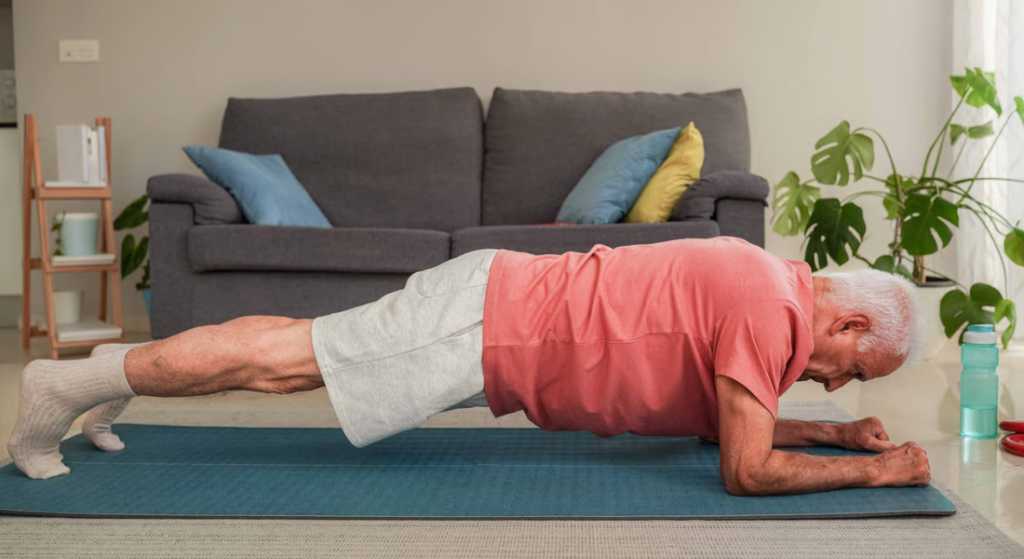
Yes. Your pelvic floor exercises strengthen muscles involved in supporting your bladder and controlling urine. Learning the correct technique before surgery may help you perform the exercises effectively once your postoperative recovery begins.
You can normally restart your exercises as soon as your catheter has been removed, following your clinical team’s instructions. If you continue to leak, you may benefit from assessment by a continence specialist or men’s health physiotherapist to make sure you are contracting the correct muscles.
Should You Exercise Your Pelvic Floor With Your Catheter In?
No. You should not normally perform pelvic floor muscle exercises while your urinary catheter remains in place after radical prostatectomy.
You can usually restart your exercises after your catheter has been removed. You should follow the instructions given by your surgeon, specialist nurse or physiotherapist if your individual postoperative plan differs.
Can You Overdo Your Pelvic Floor Exercises?
Yes. Your pelvic floor can become tired like other muscle groups, so repeatedly contracting it without enough relaxation may make your technique less effective and could temporarily increase your leakage.
You should focus on correct, controlled contractions and complete relaxation between them rather than performing as many repetitions as possible. Your specialist physiotherapist can give you an individual programme if you are unsure how often to exercise.
What Is the Knack?
The knack involves contracting your pelvic floor just before and during an activity that normally causes you to leak, such as coughing, sneezing, standing, bending or lifting.
Your aim is to provide additional support to your urethra when pressure increases. The technique becomes easier with practice and may help reduce your stress leakage during everyday activities.
Should You Wear Continence Pads?
Yes. Your continence pads can protect your clothing and help you continue everyday activities while your urinary control recovers. Products designed for male urinary leakage may provide a more secure fit than general absorbent products.
You may notice that you need fewer or lighter pads as your symptoms improve, but pad number alone is not a precise measure of continence because different products hold different amounts of urine.
Should You Drink Less to Stop Your Leakage?

No. You should not deliberately dehydrate yourself to reduce leakage. Concentrated urine can irritate your bladder and may worsen urgency, while inadequate fluid intake can contribute to dehydration and other problems.
Fluid Intake During Recovery
| Aspect | What It Means | What To Expect |
| Drinking enough | Supports hydration during recovery | Helps you avoid dehydration |
| Drinking too little | Can make urine more concentrated | May irritate your bladder and leave you feeling unwell |
| Urine leakage | Reducing fluids does not treat the underlying cause | Leakage may continue despite drinking less |
| Daily fluid intake | Cambridge University Hospitals advises around 1.5 to 2 litres in its postoperative guidance | Your individual needs may differ |
| Clinical advice | Your healthcare team can advise how much to drink | Follow their guidance based on your health and recovery |
Can Caffeine and Alcohol Make Your Leakage Worse?
Your caffeine and alcohol may increase urine production or aggravate bladder urgency and frequency. Fizzy drinks and some fruit juices may also irritate your bladder if it is particularly sensitive during recovery.
You may find it helpful to reduce these drinks temporarily and monitor whether your symptoms improve. You do not need to avoid every potential bladder irritant permanently if it does not cause symptoms for you.
When Should You Ask for Specialist Help?
You should tell your clinical team if your leakage is severe, is not showing gradual improvement or is significantly affecting your work, sleep, social activities or quality of life. You do not need to wait a full year before asking for continence support.
Current NICE guidance recommends supervised pelvic floor muscle training for your stress incontinence after prostatectomy and advises continuing this for at least three months before considering further options.
What If Your Leakage Continues Beyond 6 to 12 Months?
If your significant leakage continues despite appropriate pelvic floor rehabilitation, you should receive specialist assessment to establish whether you have stress incontinence, urgency incontinence, difficulty emptying your bladder or a combination of problems.
Your assessment may include a symptom history, bladder diary, examination and selected tests before further treatment is recommended. Persistent leakage does not mean that you have no further treatment options.
What Treatments Are Available for Your Persistent Leakage?

Your treatment depends on whether you have stress leakage, urgency or a combination of urinary problems. You may benefit from supervised pelvic floor rehabilitation, bladder training or medicines depending on the cause of your symptoms.
If your stress leakage remains troublesome despite conservative treatment, you should receive specialist assessment. Your options may include a male sling in selected circumstances or an artificial urinary sphincter, depending on your leakage severity, previous treatment and individual suitability.
When Do Your Urinary Symptoms Need Urgent Assessment?
You should seek prompt medical advice if you develop fever, worsening pelvic pain, burning when passing urine, cloudy or foul-smelling urine, significant bleeding or rapidly worsening urinary symptoms.
You should seek urgent assessment if you suddenly cannot pass urine, particularly if your lower abdomen becomes painful or swollen. Acute urinary retention requires prompt treatment.
UK Guidance Note
Current NICE guidance recommends supervised pelvic floor muscle training if you develop stress urinary incontinence after prostatectomy. You should continue your exercises for at least three months before further treatment options are considered, unless your clinical circumstances require earlier assessment.
If your leakage persists, you should receive specialist assessment rather than simply continuing pads indefinitely. Your treatment should be matched to whether you have stress leakage, urgency, impaired bladder emptying or a combination of symptoms.
Myth vs Fact
| Myth | What You Should Know |
| Your leakage after catheter removal means your surgery has gone wrong. | Your temporary leakage is common during recovery after radical prostatectomy. |
| Your urinary control should return immediately. | Your continence usually improves gradually over weeks and months. |
| Your one-pad result means you are completely continent. | Your definitions vary, and one-pad continence can still involve some leakage. |
| You should perform as many pelvic floor exercises as possible. | Your pelvic floor can become fatigued, so correct technique and recovery matter. |
| You should exercise your pelvic floor while your catheter is in. | You should normally wait until your catheter has been removed. |
| You should drink very little to prevent leakage. | Your dehydration can irritate your bladder and does not treat the underlying problem. |
| Your persistent leakage cannot be treated. | Your specialist can assess you for rehabilitation, bladder treatment or surgical options. |
| Every type of leakage needs the same treatment. | Your stress leakage and urgency may require different treatments. |
| You must wait a year before asking for help. | You should seek support earlier if your leakage is severe or affecting your quality of life. |
Key Takeaways
- Your urine leakage is common when your catheter is first removed.
- Your leakage may occur during coughing, walking, standing, lifting or other activities.
- Your urgency and frequency may occur alongside stress leakage.
- Your urinary control often improves during your first few months, but recovery can continue for a year or longer.
- Your pelvic floor exercises should normally restart after your catheter has been removed.
- Your pelvic floor muscles can become fatigued if you exercise them excessively.
- Your normal fluid intake should not be severely restricted simply to reduce leakage.
- Your caffeine, alcohol and fizzy drinks may worsen urgency or frequency in some circumstances.
- Your persistent leakage should be assessed rather than accepted without support.
- Your sudden inability to pass urine requires prompt medical assessment.
Frequently Asked Questions
1. Is urine leakage normal after your robotic prostate surgery?
Yes. Your urine leakage is common when your catheter is first removed because your urinary-control structures need time to recover after radical prostatectomy.
2. How long can your urine leakage last after prostate surgery?
Your leakage will often improve during your first few months, but your continence may continue improving for a year or longer. Your individual recovery can be faster or slower.
3. Why do you leak more when you cough or walk?
Your coughing, walking, standing or lifting increases pressure on your bladder. Your recovering urinary sphincter and pelvic floor may initially be unable to resist this pressure completely.
4. Can you have urgency as well as stress leakage?
Yes. You may experience urgency, frequency or leakage before reaching the toilet as well as leakage during activity. Your clinical team should assess persistent urgency because it may require different treatment.
5. Do your pelvic floor exercises help after prostate surgery?
Yes. Your pelvic floor exercises can strengthen the muscles involved in urinary control. You should use the correct technique and may benefit from supervised physiotherapy if your leakage continues.
6. Should you perform pelvic floor exercises while your catheter is in?
No. You should normally wait until your catheter has been removed before restarting your pelvic floor exercises, unless your surgical team has given you different individual instructions.
7. Can you perform too many pelvic floor exercises?
Yes. Your pelvic floor muscles can become fatigued if you exercise them excessively. You should focus on correct contractions and full relaxation rather than simply increasing your number of repetitions.
8. Should you drink less if you are leaking urine?
No. You should not deliberately dehydrate yourself to reduce leakage. Your concentrated urine may irritate your bladder, so you should maintain appropriate fluid intake according to your clinical advice.
9. When should you seek specialist help for your leakage?
You should ask for help if your leakage is severe, is not gradually improving or is significantly affecting your quality of life. You do not need to wait until a full year has passed before seeking continence support.
10. Can persistent urine leakage be treated?
Yes. Your treatment depends on whether you have stress leakage, urgency or another urinary problem. Your options may include specialist pelvic floor rehabilitation, bladder treatment and, in selected cases, procedures such as an artificial urinary sphincter or male sling.
Final Thoughts: Your Urine Leakage After Robotic Prostate Surgery
Urine leakage is common after robotic radical prostatectomy, particularly when your catheter is first removed. Your urinary sphincter and pelvic floor muscles need time to recover, and most men experience gradual improvement over the following weeks and months. Pelvic floor exercises, sensible bladder habits and support from your clinical team can help you regain urinary control.
If you are considering robotic prostate surgery in London, you can contact us at Prostate Clinic London to arrange a consultation and receive personalised advice about your treatment options, recovery and expected outcomes.
References
- Bhatt, N.R., Biers, S., Sahai, A., Belal, M., Kozan, A., Kujawa, M., MacLennan, S., Moore, J., Nadeem, M., Osman, N., Pakzad, M., Doherty, R. and Hashim, H. (2025) ‘British Association of Urological Surgeons (BAUS) consensus document on post-prostatectomy incontinence-stress urinary incontinence’, BJU International, 135(6), pp. 887–901. Available at:
https://pubmed.ncbi.nlm.nih.gov/40171684/ - Cambridge University Hospitals NHS Foundation Trust (2024) Robotic radical prostatectomy: pre- and post-operative information. Approved 10 May 2024. Available at:
https://www.cuh.nhs.uk/patient-information/robotic-radical-prostatectomy/ - Constable, L. et al. (2022) ‘Synthetic sling or artificial urinary sphincter for men with urodynamic stress incontinence after prostate surgery: the MASTER non-inferiority RCT’, Health Technology Assessment, 26(36), pp. 1–152. Available at:
https://pubmed.ncbi.nlm.nih.gov/35972773/ - Ficarra, V., Novara, G., Rosen, R.C., Artibani, W., Carroll, P.R., Costello, A., Menon, M., Montorsi, F., Patel, V.R., Stolzenburg, J.-U., Van der Poel, H., Wilson, T.G., Zattoni, F. and Mottrie, A. (2012) ‘Systematic review and meta-analysis of studies reporting urinary continence recovery after robot-assisted radical prostatectomy’, European Urology, 62(3), pp. 405–417. Available at:
https://pubmed.ncbi.nlm.nih.gov/22749852/ - National Institute for Health and Care Excellence (2010) Lower urinary tract symptoms in men: management. Clinical guideline CG97. Last updated 3 June 2015 and last reviewed 19 December 2024. Available at:
https://www.nice.org.uk/guidance/cg97 - National Institute for Health and Care Excellence (2019) Prostate cancer: diagnosis and management. NICE guideline NG131. Last updated 15 December 2021 and last reviewed 13 August 2025. Available at:
https://www.nice.org.uk/guidance/ng131 - NHS (2025) Urinary tract infections (UTIs). Available at:
https://www.nhs.uk/conditions/urinary-tract-infections-utis/ - University College London Hospitals NHS Foundation Trust (2026) Robotic prostatectomy. Page last updated 4 March 2026. Available at:
https://www.uclh.nhs.uk/patients-and-visitors/patient-information-pages/robotic-prostatectomy - Yang, J.-M., Ye, H., Long, Y., Zhu, Q., Huang, H., Xie, H.-Y., Luo, Y., Zhong, Y.-B., Chen, J. and Wang, M.-Y. (2023) ‘Effect of pelvic floor muscle training on urinary incontinence after radical prostatectomy: an umbrella review of meta-analysis and systematic review’, Clinical Rehabilitation, 37(4), pp. 494–515. Available at:
https://pubmed.ncbi.nlm.nih.gov/36305082/