




Grade Group 2 prostate cancer corresponds to a Gleason score of 3+4=7. It contains predominantly Gleason pattern 3 cancer with a smaller amount of higher-grade Gleason pattern 4 cancer.
Grade Group 2 can have a favourable outlook when the cancer is localised, but it should not automatically be described as favourable intermediate risk. Your PSA level, clinical stage, MRI findings, biopsy results and amount of pattern 4 help determine whether active surveillance, surgery or radiotherapy may be appropriate.
What Does Grade Group 2 Mean?
Grade Group 2 is the second of five prostate cancer Grade Groups and corresponds specifically to Gleason 3+4=7. It generally has a higher risk of growth or progression than Grade Group 1 but a lower risk than Grade Groups 3, 4 and 5.
Grade Group alone does not determine your overall prognosis or treatment. Your specialist will also consider your PSA level, clinical stage, MRI findings, amount of cancer in the biopsy, general health and personal priorities.
What Is the Gleason Score?
Grade Group 2 corresponds to Gleason 3+4=7. In a prostate needle biopsy, the first number generally represents the predominant cancer pattern, while the second represents the highest-grade additional pattern identified.
This means that pattern 3 forms most of the graded cancer and a smaller amount of pattern 4 is present. The amount and microscopic appearance of pattern 4 may provide additional information about how the cancer is likely to behave.
Why Does the Number Order Matter?
Gleason 3+4=7 and Gleason 4+3=7 contain the same pattern numbers, but the proportions are different. In Gleason 3+4, pattern 3 is predominant, while Gleason 4+3 contains predominantly pattern 4.
Gleason 3+4 is Grade Group 2, whereas 4+3 is Grade Group 3 and generally has a less favourable outlook. The order therefore provides clinically important information rather than simply producing a total score of seven.
Why Does the Amount of Pattern 4 Matter?
Grade Group 2 cancers can contain different amounts of pattern 4. A cancer with a very small pattern 4 component may behave differently from one in which pattern 4 forms a larger proportion of the tumour.
Your pathology report may also mention cribriform growth or intraductal carcinoma, which can be associated with less favourable behaviour. Ask your specialist what percentage of pattern 4 is present and whether either of these additional features was identified.
How Is Grade Group 2 Diagnosed?
Grade Group 2 prostate cancer is diagnosed when a pathologist examines prostate tissue collected during a biopsy and identifies predominantly Gleason pattern 3 cancer with a smaller amount of pattern 4. The microscopic growth patterns are combined to produce Gleason 3+4=7 and Grade Group 2.
Your pathology report may also state how many biopsy samples contain cancer, how much cancer is present and what percentage consists of pattern 4. These findings are considered alongside your PSA level, MRI and clinical stage when assessing your overall risk and treatment options.
Can an MRI Confirm the Grade?
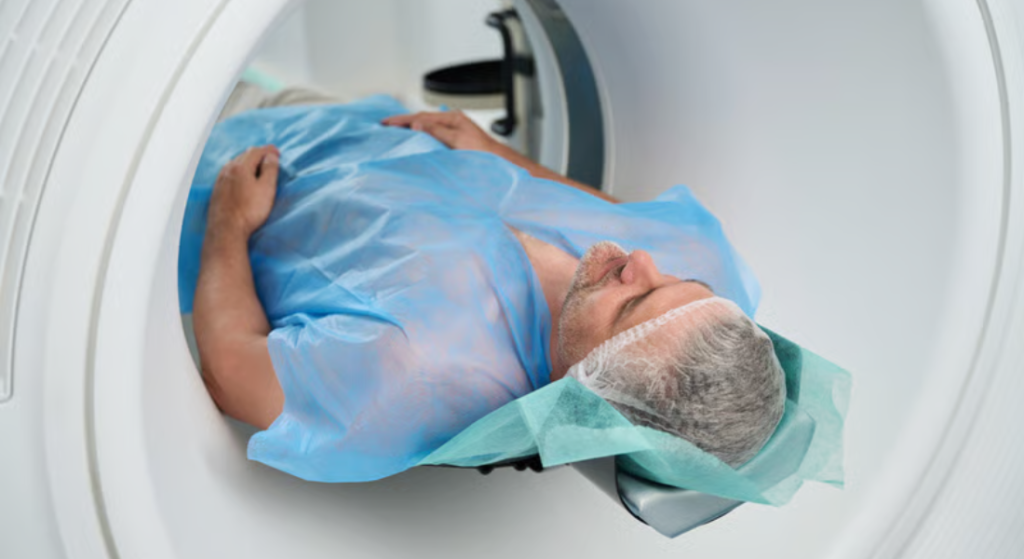
An MRI can provide important information about the prostate, but it cannot confirm the cancer grade by itself. The Grade Group is determined by microscopic examination of biopsy tissue, which allows a pathologist to assess the cancer’s glandular architecture and growth pattern.
| Test | Purpose | What It Shows | Can It Confirm Grade? |
| MRI scan | Identifies suspicious areas in the prostate | Location and appearance of possible cancer | No |
| Targeted biopsy | Collects tissue from an MRI-visible or otherwise suspicious area | Provides samples for microscopic examination | Not by itself |
| Pathology assessment | Examines the biopsy tissue under a microscope | Gleason patterns and Grade Group | Yes |
| PSA blood test | Measures prostate-specific antigen | Supports risk assessment and monitoring | No |
Is Grade Group 2 the Same as Stage 2?
Grade Group 2 and Stage 2 do not mean the same thing. Grade Group describes the cancer’s microscopic growth pattern and glandular architecture, while stage describes its extent, including whether it remains within the prostate or has spread.
You can have Grade Group 2 prostate cancer at different stages. Your healthcare team will consider both your Grade Group and cancer stage to decide on the most appropriate treatment plan.
Is Grade Group 2 Always Favourable?
Grade Group 2 does not automatically mean that every other feature of the cancer is favourable. Your risk also depends on your PSA level, clinical T stage, MRI findings, cancer volume and any additional concerning pathology features.
The term favourable intermediate risk is used in some classification systems, but UK treatment planning commonly uses the Cambridge Prognostic Group. Ask your specialist to explain your CPG rather than relying on Grade Group alone.
What Is the Cambridge Prognostic Group?
The Cambridge Prognostic Group combines Grade Group, PSA and clinical T stage. Grade Group 2 cancer that is stage T1 or T2 is generally CPG 2 when it is the only intermediate-risk feature.
If Grade Group 2 is combined with a PSA between 10 and 20 ng/ml at stage T1 or T2, it is classified as CPG 3. A more advanced clinical stage can place the cancer in a higher group.
What Is the Outlook?

The outlook for localised Grade Group 2 prostate cancer is often favourable, particularly when the PSA is lower, the cancer is confined to the prostate and only a small amount of pattern 4 is present.
The risk of progression is higher than for Grade Group 1, but an individual prognosis cannot be predicted from Grade Group alone. Your Cambridge Prognostic Group and complete clinical assessment provide a more useful picture.
Can Grade Group 2 Cancer Spread?
Yes, Grade Group 2 prostate cancer can grow or spread, but this does not happen in every case. The risk varies from person to person and depends on several clinical factors.
Your healthcare team will consider your PSA level, cancer stage, the amount of cancer found and the percentage of Gleason pattern 4 cancer. These results help determine your individual risk and guide the most appropriate treatment plan.
Is Active Surveillance an Option?
Active surveillance may be suitable for some men with localised Grade Group 2 prostate cancer. NICE recommends offering people with CPG 2 disease a choice between active surveillance, radical prostatectomy and radical radiotherapy when radical treatment is suitable.
The decision is more finely balanced than it is for Grade Group 1 cancer. The amount of pattern 4, biopsy cancer volume, PSA, MRI findings, clinical stage, general health and willingness to attend regular monitoring should all be considered.
What Happens During Active Surveillance?
Active surveillance involves regular tests to look for clinically important changes. Monitoring may include PSA tests, clinical reviews, MRI and repeat biopsy when PSA, examination or imaging findings raise concern.
The schedule varies between hospitals and may be tailored according to your individual risk and previous results. You should understand who will arrange each test, how results will be communicated and which findings would lead to further assessment.
When May Surveillance Be Less Suitable?

Active surveillance may be less suitable when the biopsy shows a larger proportion of pattern 4, extensive cancer across several samples, concerning MRI findings or a higher Cambridge Prognostic Group. The presence of invasive cribriform cancer or intraductal carcinoma is an adverse pathological finding and generally makes active surveillance less suitable.
Your general health, life expectancy, ability to attend follow-up and feelings about living with monitored cancer also matter. The decision should be made with your specialist after considering the complete clinical and pathological assessment rather than the Grade Group alone.
What Changes May Lead to Treatment?
Treatment may be discussed if a repeat biopsy shows Grade Group 3 or higher, substantially more cancer is found, or assessments suggest that the cancer is extending beyond the prostate.
A rising PSA or changing MRI result normally leads to further assessment rather than proving progression on its own. Your multidisciplinary team should consider the overall pattern before recommending surgery, radiotherapy or continued surveillance.
Is Prostate Cancer Surgery an Option?
Radical prostatectomy may be offered when Grade Group 2 cancer is localised and surgery is suitable for your health and overall risk. The operation removes the prostate and seminal vesicles, and the tissue is examined to provide a more complete grade and stage.
Possible long-term effects include urinary leakage, erectile dysfunction, dry orgasm and loss of natural fertility. Your surgeon should explain your individual chances of these outcomes rather than relying only on general averages.
Is Radiotherapy an Option?

Radical radiotherapy may be offered for localised Grade Group 2 prostate cancer when treatment with curative intent is appropriate. Options can include external beam radiotherapy or, for selected patients, brachytherapy. Suitability depends on your Cambridge Prognostic Group, prostate anatomy, urinary function, general health and personal priorities.
If radical external beam radiotherapy is chosen for CPG 2 or higher disease, NICE recommends six months of androgen deprivation therapy before, during or after radiotherapy. Your specialist should explain the timing, expected benefit and possible hormonal side effects, alongside the urinary, bowel and sexual side effects of radiotherapy.
How Do You Choose Between the Options?
Choosing between treatment options involves balancing the chance of controlling the cancer with the possible side effects. You should consider how each option may affect your urinary, sexual and bowel function, as well as your daily life.
Your age, overall health, cancer location and personal priorities are all important when making this decision. Your healthcare team can explain the benefits and risks of each option so you can choose the approach that best suits your needs.
Can the Grade Change Later?
A later biopsy may report a greater amount of Gleason pattern 4 or a higher Grade Group. This may mean that the cancer has changed over time or that a higher-grade area was already present but was not captured by the original biopsy.
If you undergo radical prostatectomy, the pathologist can examine the entire prostate rather than a limited number of samples. The surgical Grade Group may therefore confirm, upgrade or downgrade the original biopsy result because it is based on a more complete assessment of the cancer.
Myth vs Fact
| Myth | Fact |
| Grade Group 2 is the same as Grade Group 3. | Grade Group 2 is Gleason 3+4, while Grade Group 3 is Gleason 4+3 and contains more pattern 4. |
| Grade Group 2 is always favourable intermediate risk. | PSA, clinical stage, cancer volume and pathology features also affect the overall risk. |
| Active surveillance is never suitable for Grade Group 2. | NICE includes active surveillance as an option for suitable people with CPG 2 disease. |
| Active surveillance is always the safest option. | Monitoring and immediate treatment have different benefits and risks that must be assessed individually. |
| A rising PSA proves that treatment is needed. | PSA changes usually lead to repeat testing, MRI or biopsy before treatment is recommended. |
| MRI can confirm Grade Group 2. | MRI can identify suspicious areas, but tissue examination is required to determine the Grade Group. |
| Grade Group 2 means the cancer has spread. | Grade describes the microscopic growth pattern, while stage describes the cancer’s location and extent of spread. |
Key Takeaways
- Grade Group 2 corresponds to Gleason 3+4=7.
- Pattern 3 forms most of the graded cancer, while a smaller amount is pattern 4.
- Gleason 3+4 generally has a more favourable expected behaviour than Gleason 4+3, which is Grade Group 3.
- Grade Group 2 does not automatically determine your Cambridge Prognostic Group.
- The percentage and type of pattern 4 may influence prognosis and treatment decisions.
- Active surveillance may be suitable for some men with localised Grade Group 2 cancer.
- PSA or MRI changes usually lead to reassessment rather than automatic treatment.
Frequently Asked Questions
1. What is Grade Group 2 prostate cancer?
Grade Group 2 corresponds to Gleason 3+4=7. Pattern 3 forms most of the graded cancer, with a smaller amount of the higher-grade pattern 4.
2. Is Grade Group 2 prostate cancer considered aggressive?
Grade Group 2 generally has a higher risk of progression than Grade Group 1 but is less aggressive than higher Grade Groups. Its behaviour also depends on PSA, stage, cancer volume, MRI findings and the amount of pattern 4.
3. What is the difference between Gleason 3+4 and 4+3 prostate cancer?
Gleason 3+4 contains predominantly pattern 3 and is Grade Group 2. Gleason 4+3 contains predominantly pattern 4, is Grade Group 3 and generally carries a higher risk of progression.
4. How is Grade Group 2 prostate cancer diagnosed?
Grade Group 2 is diagnosed through a prostate biopsy. A pathologist examines the tissue under a microscope to identify the Gleason patterns and assign the correct Grade Group.
5. Can an MRI diagnose Grade Group 2 prostate cancer?
No. An MRI can help identify suspicious areas and guide a targeted biopsy, but the Grade Group can only be confirmed by examining prostate tissue under a microscope.
6. Is Grade Group 2 the same as Stage 2 prostate cancer?
No. Grade Group describes the cancer’s microscopic growth pattern and glandular architecture, while stage describes its extent and whether it has spread. You can have Grade Group 2 prostate cancer at different stages.
7. Can Grade Group 2 prostate cancer be managed with active surveillance?
Active surveillance may be suitable for selected men with localised Grade Group 2 cancer. NICE includes it as one of the options for CPG 2 disease, alongside surgery and radiotherapy.
8. What treatments are available for Grade Group 2 prostate cancer?
Treatment options may include active surveillance, radical prostatectomy or radiotherapy. The most suitable option depends on your PSA level, cancer stage, MRI findings, overall health and personal preferences.
9. Can Grade Group 2 prostate cancer spread?
Grade Group 2 prostate cancer can grow or spread, although the risk varies between individuals. Your healthcare team will assess factors such as PSA, tumour stage, biopsy results and the amount of Gleason pattern 4 to understand your risk.
10. What is the outlook for Grade Group 2 prostate cancer?
The outlook is often favourable when Grade Group 2 cancer remains confined to the prostate and other findings are reassuring. Your PSA, clinical stage, cancer volume and pathology details are needed to estimate your individual prognosis.
Final Thoughts: Making Informed Decisions About Grade Group 2 Prostate Cancer
Grade Group 2 prostate cancer is an intermediate-grade cancer that often has a very favourable outlook when it is diagnosed while still confined to the prostate. Although it carries a higher risk of progression than Grade Group 1, many men achieve very good long-term outcomes with appropriate monitoring or timely treatment. Understanding your Grade Group alongside your PSA level, MRI findings, cancer stage and Cambridge Prognostic Group can help you make informed decisions about your care.
If you are looking for expert advice about prostate cancer surgery in London, the team at Prostate Clinic London can assess your individual diagnosis, explain whether active surveillance, surgery or radiotherapy is the most appropriate option, and provide a personalised treatment plan tailored to your needs. With specialist care, careful follow-up and the right treatment approach, you can make confident decisions and achieve the best possible outcome.
References
- Ahdoot, M., Wilbur, A.R., Reese, S.E., Lebastchi, A.H., Mehralivand, S., Gomella, P.T. et al. (2020) ‘MRI-targeted, systematic, and combined biopsy for prostate cancer diagnosis’, The New England Journal of Medicine, 382(10), pp. 917–928. Available at: https://pubmed.ncbi.nlm.nih.gov/32130814/
- Baboudjian, M., Breda, A., Rajwa, P., Gallioli, A., Gondran-Tellier, B., Sanguedolce, F. et al. (2022) ‘Active surveillance for intermediate-risk prostate cancer: a systematic review, meta-analysis, and metaregression’, European Urology Oncology, 5(6), pp. 617–627. Available at: https://pubmed.ncbi.nlm.nih.gov/35934625/
- Cancer Research UK (2025) Cambridge prognostic groups and risk groups for prostate cancer. Last reviewed 22 May 2025. Available at: https://www.cancerresearchuk.org/about-cancer/prostate-cancer/stages/cambridge-prognostic-group-cpg
- Carlsson, S., Benfante, N., Alvim, R., Sjoberg, D.D., Vickers, A., Reuter, V.E. et al. (2020) ‘Risk of metastasis in men with Grade Group 2 prostate cancer managed with active surveillance at a tertiary cancer center’, The Journal of Urology, 203(6), pp. 1117–1121. Available at: https://pubmed.ncbi.nlm.nih.gov/31909690/
- Epstein, J.I., Egevad, L., Amin, M.B., Delahunt, B., Srigley, J.R. and Humphrey, P.A. (2016) ‘The 2014 International Society of Urological Pathology consensus conference on Gleason grading of prostatic carcinoma: definition of grading patterns and proposal for a new grading system’, The American Journal of Surgical Pathology, 40(2), pp. 244–252. Available at: https://pubmed.ncbi.nlm.nih.gov/26492179/
- Goel, S., Shoag, J.E., Gross, M.D., Al Hussein Al Awamlh, B., Robinson, B., Khani, F. et al. (2020) ‘Concordance between biopsy and radical prostatectomy pathology in the era of targeted biopsy: a systematic review and meta-analysis’, European Urology Oncology, 3(1), pp. 10–20. Available at: https://pubmed.ncbi.nlm.nih.gov/31492650/
- Mac Curtain, B.M., Daly, K., Calpin, G. et al. (2025) ‘Reclassification of prostate cancer on first confirmatory prostate biopsy in men under active surveillance: a systematic review and meta-analysis’, Central European Journal of Urology, 78(2), pp. 125–136. Available at: https://pubmed.ncbi.nlm.nih.gov/40873874/
- National Institute for Health and Care Excellence (2019) Prostate cancer: diagnosis and management. NICE guideline NG131. Last updated 15 December 2021 and last reviewed 13 August 2025. Available at: https://www.nice.org.uk/guidance/ng131
- NHS (2025) Treatment for prostate cancer. Last reviewed 31 July 2025. Available at: https://www.nhs.uk/conditions/prostate-cancer/treatment/
- Pekala, K.R., Bergengren, O., Eastham, J.A. and Carlsson, S.V. (2023) ‘Active surveillance should be considered for select men with Grade Group 2 prostate cancer’, BMC Urology, 23, article 152. Available at: https://pubmed.ncbi.nlm.nih.gov/37777716/
- Prostate Cancer UK (2023) What do my test results mean? Updated August 2023. Available at: https://prostatecanceruk.org/prostate-information-and-support/just-diagnosed/what-do-my-test-results-mean