




A Gleason score describes the microscopic growth patterns of prostate cancer in a tissue sample. It helps your medical team estimate how aggressively the cancer may behave and how likely it may be to grow or spread.
Your score is usually based on prostate tissue collected during a biopsy. It is also converted into a Grade Group from 1 to 5, which provides another way to explain the same grading information.
Why Is the Gleason Score Important?
Your Gleason score provides information about the likely behaviour of your prostate cancer. A lower score generally indicates more organised glandular patterns that are associated with less aggressive disease, while a higher score reflects less organised patterns associated with a greater risk of growth or spread.
The score does not determine your outlook or treatment by itself. Your specialist will consider it alongside your PSA level, cancer stage, MRI and other scan findings, the amount of cancer detected, your general health and your personal priorities.
How Is the Score Found?
A pathologist examines prostate tissue collected during a biopsy under a microscope. The pathologist assesses how the cancerous glands are arranged and how much their structure differs from that of normal prostate tissue.
One or more Gleason patterns may be identified in the samples. These patterns are used to calculate the Gleason score and assign the corresponding Grade Group.
What Are Gleason Patterns?
Gleason patterns describe the microscopic architecture and organisation of prostate cancer glands. Patterns 3, 4 and 5 are generally used in modern prostate cancer reporting, with higher numbers representing a greater loss of normal gland formation.
Pattern 3 forms separate, recognisable glands. Pattern 4 includes poorly formed, fused or cribriform glands, while pattern 5 shows little or no gland formation and represents the highest-grade microscopic pattern.
How Is the Gleason Score Calculated?

A Gleason score combines two microscopic growth-pattern grades. In a prostate needle biopsy, the first number generally represents the predominant cancer pattern and the second represents the highest-grade additional pattern identified by the pathologist.
The numbers are added to produce a score that usually ranges from 6 to 10. The order matters because Gleason 3+4=7 contains mainly pattern 3 cancer, whereas Gleason 4+3=7 contains mainly pattern 4 cancer and is assigned to a higher Grade Group.
How the Gleason Score Is Worked Out
| Step | What Happens | Example | Why It Matters |
| Biopsy examination | A pathologist examines the microscopic arrangement of the cancerous glands | Different Gleason patterns may be identified | Provides the information needed to calculate the score and Grade Group |
| Predominant pattern | The main cancer pattern is recorded first | Pattern 3 in Gleason 3+4 | Shows which pattern forms most of the graded cancer |
| Highest-grade additional pattern | The most aggressive additional pattern is recorded second on needle biopsy | Pattern 4 in Gleason 3+4 | Ensures that a clinically important higher-grade component is included |
| Score calculation | The two pattern grades are added together | 3+4=7 | Produces the Gleason score |
| Grade Group | The score is converted into a Grade Group from 1 to 5 | Gleason 3+4=7 is Grade Group 2 | Makes the grade easier to interpret |
| Risk assessment | Grade is considered with PSA and stage | Used within the Cambridge Prognostic Group | Helps guide monitoring and treatment discussions |
Why Does the Score Usually Start at 6?
The original Gleason system included patterns from 1 to 5, but patterns 1 and 2 are not generally assigned to prostate cancer diagnosed on a modern needle biopsy. The lowest score normally reported is therefore 3+3=6.
Although six may appear to be in the middle of a scale ending at ten, Gleason 3+3=6 represents the lowest Grade Group routinely diagnosed. Grade Group 1 helps communicate this more clearly.
What Does Gleason 3+3=6 Mean?
Gleason 3+3=6 means that the cancer identified in the graded tissue consists of pattern 3 without pattern 4 or 5 being reported. It corresponds to Grade Group 1, the lowest category in the current five-tier system.
Many localised Grade Group 1 cancers can be managed with active surveillance, but suitability also depends on PSA, clinical stage, MRI findings, cancer extent, general health and personal preferences.
What Does Gleason 3+4=7 Mean?
Gleason 3+4=7 means that pattern 3 is predominant and a smaller amount of pattern 4 is present. It corresponds to Grade Group 2 and generally has a more favourable outlook than Gleason 4+3=7.
The amount and type of pattern 4 may provide additional information. Some carefully selected men may be suitable for active surveillance, while others may be offered surgery or radiotherapy based on the complete risk assessment.
What Else Should You Ask About in the Pathology Report?

For cancers containing pattern 4, ask what percentage of the tumour is pattern 4 and whether cribriform growth or intraductal carcinoma was identified. These findings may provide additional information about cancer behaviour and suitability for active surveillance.
You can also ask how many biopsy samples contained cancer, how much cancer was present in each sample and whether the highest-grade finding was present in one area or several areas. Your multidisciplinary team will interpret these findings alongside your MRI results, PSA level and clinical stage.
What Does Gleason 4+3=7 Mean?
Gleason 4+3=7 means that pattern 4 is predominant and pattern 3 forms the smaller component. It corresponds to Grade Group 3 and generally carries a higher risk of progression than Gleason 3+4=7.
Active treatment is more commonly discussed, but the recommendation also depends on PSA, clinical stage, imaging, general health and personal priorities. A high grade does not by itself show that the cancer has spread.
What Does a Gleason Score of 8 Mean?
A Gleason score of 8 may consist of 4+4, 3+5 or 5+3 and corresponds to Grade Group 4. These combinations contain higher-grade microscopic patterns and are associated with a greater risk of growth, spread or recurrence than lower Grade Groups.
If the cancer is localised or locally advanced and long-term cancer control is considered possible, treatment may include radical prostatectomy in selected patients or radical radiotherapy, which is often combined with hormone therapy. If the cancer is metastatic, treatment is usually based on hormone therapy combined with other systemic treatments, and radical prostatectomy is not a routine treatment.
What Do Gleason Scores of 9 and 10 Mean?
Gleason scores of 9 or 10 include combinations such as 4+5, 5+4 or 5+5. These scores are placed in Grade Group 5, which is the highest Grade Group category. They contain the highest-grade microscopic growth patterns.
These cancers have a higher risk of growing, spreading or returning after treatment. However, treatment may still be effective, especially when the cancer is diagnosed before it has spread to distant parts of your body. Your treatment plan will depend on your stage, overall health and individual circumstances.
What Is the Grade Group System?
The Grade Group system places prostate cancer into five categories according to its Gleason score and microscopic growth patterns. Grade Group 1 is the lowest category normally diagnosed, while Grade Group 5 contains the highest-grade patterns.
You may see both the Gleason score and Grade Group in your pathology report. They describe the same grading information in different formats and should be considered alongside your PSA level, stage, imaging and other clinical findings.
How Do Gleason Scores Match Grade Groups?
Your Gleason score is converted into a Grade Group to make your prostate cancer risk level easier to understand. The Grade Group system simplifies the Gleason score and helps your healthcare team discuss how aggressive the cancer may be.
- Gleason 3+3=6: Corresponds to Grade Group 1 and is considered the lowest grade category
- Gleason 3+4=7: Corresponds to Grade Group 2 and contains mainly pattern 3 cancer with a smaller amount of pattern 4
- Gleason 4+3=7: Corresponds to Grade Group 3 and contains more pattern 4 cancer than pattern 3 cancer
- Gleason 8: Corresponds to Grade Group 4 and represents a higher-risk category
- Gleason 9–10: Corresponds to Grade Group 5, which is the highest grade category
The Grade Group system provides a clearer way to understand your Gleason score and helps your clinician assess the likely behaviour of your cancer. It is considered alongside other factors, such as PSA level and stage, to guide treatment decisions.
UK Guidance Note
NICE combines the Gleason score or Grade Group with the PSA level and clinical T stage to place localised and locally advanced prostate cancer into Cambridge Prognostic Groups from CPG 1 to CPG 5.
The CPG provides a broader assessment than the Gleason score alone and helps guide discussions about active surveillance, radical prostatectomy, radiotherapy and other treatments. Your specialist should explain both your Grade Group and CPG before treatment decisions are made.
Is the Gleason Score the Same as the Cancer Stage?
No. Your Gleason score describes the microscopic growth pattern and organisation of the cancer and helps estimate how aggressively it may behave. Your cancer stage describes where the cancer is located, its local extent and whether it has spread beyond the prostate.
A high-grade cancer can still be limited to the prostate. A lower-grade cancer also needs careful assessment using scans, PSA results and other clinical information to understand the full picture.
Can an MRI Show Your Gleason Score?
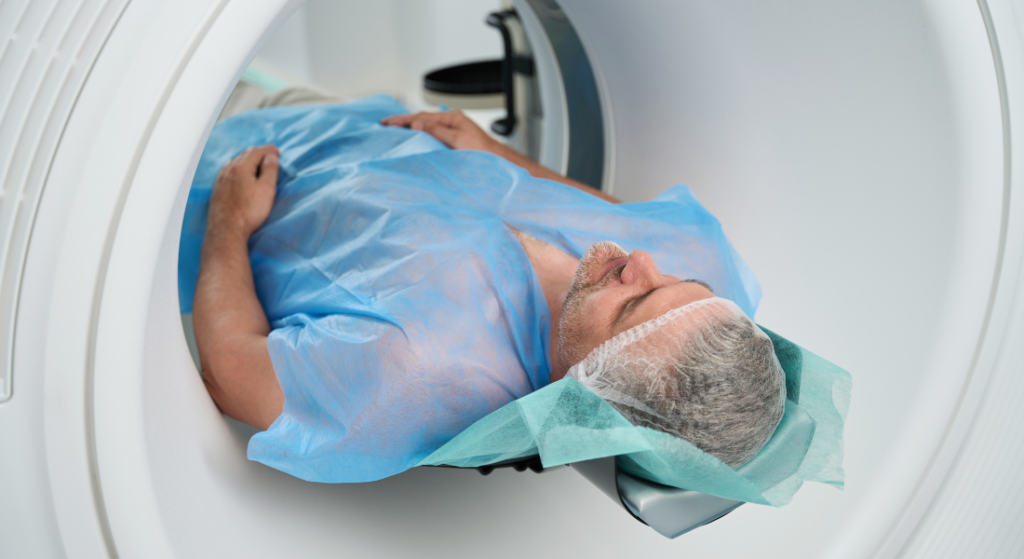
An MRI can help identify suspicious areas in your prostate and guide a targeted biopsy. However, it cannot provide your definitive Gleason score because the tissue needs to be examined by a pathologist.
MRI findings are still important because they help assess the location and size of the tumour. They can also provide information about whether the cancer may have extended beyond the prostate.
Can Different Biopsy Samples Have Different Scores?
Different biopsy samples can contain different Gleason patterns because prostate cancer may vary between separate areas of the gland. Your pathology report may provide a Gleason score or Grade Group for each positive core, biopsy site or MRI-targeted lesion and may also provide an overall assessment.
The scores are not simply averaged. Your multidisciplinary team will pay particular attention to the highest-grade finding while also considering how much cancer was found, which areas were involved, the percentage of pattern 4 or 5, your MRI findings, PSA level and clinical stage.
Can the Score Differ After Prostate Surgery?
The Grade Group reported after radical prostatectomy may differ from the biopsy result because the pathologist can examine the entire prostate rather than small samples. This usually reflects more complete tissue assessment rather than the cancer suddenly changing between biopsy and surgery.
The result may be upgraded if a more aggressive pattern is identified or downgraded if the overall cancer is less concerning than the biopsy suggested. The surgical pathology report also provides information about tumour stage, surgical margins, seminal vesicles and any removed lymph nodes.
Does a High Gleason Score Mean the Cancer Has Spread?
A high Gleason score indicates that the cancer contains higher-grade microscopic patterns, but it does not confirm that the cancer has spread outside the prostate. Grade describes likely biological behaviour, while stage describes the location and extent of the disease.
Your team may recommend staging investigations when clinically indicated, such as MRI, CT, PET imaging or a bone scan. In England, PSMA PET-CT may be used for selected people with high-risk primary or recurrent prostate cancer, depending on the clinical criteria and local availability.
How Does the Score Affect Treatment?

Lower-grade localised prostate cancer may be suitable for active surveillance when the overall risk assessment suggests that immediate treatment is unlikely to provide sufficient benefit. Surveillance involves planned PSA testing, clinical review, MRI and repeat biopsy when appropriate.
For higher Grade Groups, treatment depends on the cancer stage and complete risk assessment. Localised or locally advanced disease may be treated with radical prostatectomy in selected patients or radical radiotherapy, often combined with hormone therapy. Metastatic disease is generally treated with hormone therapy and other systemic treatments, and prostate-removal surgery is not routine. The treatment decision should never be based on the Gleason score alone.
Myth vs Fact
| Myth | Fact |
| A Gleason score of 6 is in the middle of the grading scale. | Gleason 3+3=6 is the lowest score normally assigned in modern prostate cancer diagnosis. |
| Gleason 3+4 and 4+3 mean the same thing. | They both total seven, but 4+3 contains more pattern 4 and belongs to a higher Grade Group. |
| A high Gleason score means the cancer has already spread. | The score describes microscopic growth patterns; staging tests assess the cancer’s location and extent. |
| MRI can provide the Gleason score. | MRI can identify suspicious areas, but tissue must be examined by a pathologist to determine the score. |
| The biopsy score is always final. | The Grade Group reported after surgery may differ because the pathologist can examine the whole prostate rather than limited biopsy samples. |
| Grade Group 1 always needs treatment. | Many localised Grade Group 1 cancers may be suitable for active surveillance, but the decision depends on the complete risk assessment. |
| The Gleason score alone decides treatment. | PSA, stage, imaging, pathology details, health and preferences are also important. |
Key Takeaways
- The Gleason score describes the microscopic growth patterns and glandular organisation of prostate cancer.
- Modern Gleason scores usually range from 6 to 10.
- The order of the numbers matters because Gleason 3+4=7 is generally less aggressive than Gleason 4+3=7.
- Gleason 3+3=6 is Grade Group 1, while Gleason scores 9 to 10 are Grade Group 5.
- A higher Gleason score suggests a greater risk of growth or spread but does not confirm that the cancer has already spread.
- MRI can identify suspicious areas, but a tissue sample is needed to determine the Gleason score.
- The Grade Group reported after surgery may differ when the whole prostate is examined.
- Treatment decisions also depend on PSA level, cancer stage, imaging results, general health and personal priorities.
Frequently Asked Questions
- What Is a Gleason Score in Prostate Cancer?
A Gleason score describes the microscopic growth patterns of prostate cancer in a tissue sample. It helps your medical team estimate how aggressively the cancer may behave, but it does not show how far the cancer has spread. - Why Is the Gleason Score Important?
The Gleason score helps estimate the likely behaviour of your prostate cancer. Your specialist considers it alongside your PSA level, stage, imaging, other pathology findings, general health and personal priorities when discussing monitoring or treatment. - How Is the Gleason Score Found?
A pathologist examines small samples of your prostate tissue under a microscope. These samples are usually collected during a prostate biopsy, allowing the pathologist to assess the microscopic growth patterns and organisation of the cancerous glands. - What Are Gleason Patterns?
Gleason patterns describe how the cancerous glands are arranged under a microscope. Patterns 3, 4 and 5 are normally used in modern reporting, with higher patterns showing a greater loss of normal glandular structure. - How Is the Gleason Score Calculated?
A pathologist combines two microscopic growth-pattern grades. In a prostate needle biopsy, the first generally represents the predominant pattern and the second represents the highest-grade additional pattern identified. - Why Does the Gleason Score Usually Start at 6?
Although the original Gleason system included patterns 1 to 5, patterns 1 and 2 are not usually used when diagnosing prostate cancer from a modern biopsy. This means the lowest score you are likely to receive is 3+3=6. - What Does a Gleason Score of 3+3=6 Mean?
Gleason 3+3=6 means that only pattern 3 cancer was identified in the graded tissue. It corresponds to Grade Group 1, but monitoring or treatment decisions still depend on the complete risk assessment. - What Does a Gleason Score of 3+4=7 Mean?
Gleason 3+4=7 contains mainly pattern 3 cancer with a smaller amount of pattern 4. It corresponds to Grade Group 2 and usually has more favourable features than Gleason 4+3=7. - What Does a Gleason Score of 4+3=7 Mean?
Gleason 4+3=7 means that your biopsy contains more pattern 4 cancer than pattern 3 cancer. This score corresponds to Grade Group 3 and is generally expected to behave more aggressively than Gleason 3+4=7. - What Do Gleason Scores of 8, 9 and 10 Mean?
Gleason score 8 corresponds to Grade Group 4, while scores 9 and 10 correspond to Grade Group 5. These cancers contain higher-grade patterns and have a greater risk of growth, spread or recurrence, but their stage must be assessed separately.
Final Thoughts: Understanding Your Gleason Score and Next Steps
Your Gleason score provides important information about the microscopic patterns and likely behaviour of your prostate cancer, but it is only one part of your diagnosis. Your Grade Group, PSA level, stage, imaging and other pathology findings should be considered together when assessing your risk and discussing treatment.
If you are looking for prostate cancer surgery in London, you can reach out to us to arrange a consultation and receive personalised advice about your diagnosis, treatment choices, and recovery.
References
- Ahdoot, M., Wilbur, A.R., Reese, S.E., Lebastchi, A.H., Mehralivand, S., Gomella, P.T. et al. (2020) ‘MRI-targeted, systematic, and combined biopsy for prostate cancer diagnosis’, The New England Journal of Medicine, 382(10), pp. 917–928. Available at: https://pubmed.ncbi.nlm.nih.gov/32130814/
- Berney, D.M., Beltran, L., Fisher, G., North, B.V., Greenberg, D., Møller, H., Soosay, G., Scardino, P. and Cuzick, J. (2016) ‘Validation of a contemporary prostate cancer grading system using prostate cancer death as outcome’, British Journal of Cancer, 114(10), pp. 1078–1083. Available at: https://pubmed.ncbi.nlm.nih.gov/27100731/
- Epstein, J.I., Egevad, L., Amin, M.B., Delahunt, B., Srigley, J.R. and Humphrey, P.A. (2016) ‘The 2014 International Society of Urological Pathology consensus conference on Gleason grading of prostatic carcinoma: definition of grading patterns and proposal for a new grading system’, The American Journal of Surgical Pathology, 40(2), pp. 244–252. Available at: https://pubmed.ncbi.nlm.nih.gov/26492179/
- Epstein, J.I., Zelefsky, M.J., Sjoberg, D.D., Nelson, J.B., Egevad, L., Magi-Galluzzi, C. et al. (2016) ‘A contemporary prostate cancer grading system: a validated alternative to the Gleason score’, European Urology, 69(3), pp. 428–435. Available at: https://pubmed.ncbi.nlm.nih.gov/26166626/
- Goel, S., Shoag, J.E., Gross, M.D., Al Hussein Al Awamlh, B., Robinson, B., Khani, F. et al. (2020) ‘Concordance between biopsy and radical prostatectomy pathology in the era of targeted biopsy: a systematic review and meta-analysis’, European Urology Oncology, 3(1), pp. 10–20. Available at: https://pubmed.ncbi.nlm.nih.gov/31492650/
- National Institute for Health and Care Excellence (2019) Prostate cancer: diagnosis and management. NICE guideline NG131. Last updated 15 December 2021 and last reviewed 13 August 2025. Available at: https://www.nice.org.uk/guidance/ng131
- Prostate Cancer UK (2023) What do my test results mean? Updated August 2023. Available at: https://prostatecanceruk.org/prostate-information-and-support/just-diagnosed/what-do-my-test-results-mean
- Prostate Cancer UK (2025) MRI scan. Updated June 2025. Available at: https://prostatecanceruk.org/prostate-information-and-support/prostate-tests/mri-scan/
- Prostate Cancer UK (2025) Prostate biopsy. Updated June 2025. Available at: https://prostatecanceruk.org/prostate-information-and-support/prostate-tests/prostate-biopsy
- van Leenders, G.J.L.H., van der Kwast, T.H., Grignon, D.J., Evans, A.J., Kristiansen, G., Kweldam, C.F. et al. (2020) ‘The 2019 International Society of Urological Pathology consensus conference on grading of prostatic carcinoma’, The American Journal of Surgical Pathology, 44(8), pp. e87–e99. Available at: https://pubmed.ncbi.nlm.nih.gov/32459716/
- Shah, R.B., Varma, M., Zhou, M., Paner, G.P., Amin, M.B., Berney, D.M. et al. (2026) ‘The Genitourinary Pathology Society and International Society of Urological Pathology joint expert consultation recommendations on intraductal carcinoma of the prostate’, Histopathology, 88(1), pp. 8–23. Available at: https://pubmed.ncbi.nlm.nih.gov/41384645/
- NHS England (2025) Prostate-Specific Membrane Antigen radiotracers in PET-CT imaging for individuals with high-risk primary or recurrent prostate cancer. Available at: https://www.england.nhs.uk/publication/psma-radiotracers-in-petct-imaging-for-individuals-with-high-risk-primary-or-recurrent-prostate-cancer/