




If you are preparing for prostate cancer surgery, you may have heard about the NeuroSAFE technique and wondered whether it could be suitable for you. This is a common question, particularly if preserving erectile function is an important part of your treatment goals. Urinary continence is also an important consideration after prostatectomy, although NeuroSAFE is primarily used to guide nerve-sparing and margin decisions rather than directly protect the urinary sphincter.
The NeuroSAFE technique is designed to help surgeons make more precise decisions during radical prostatectomy. It provides intraoperative information about whether cancer cells reach the surgical margin on the surface of the removed prostate adjacent to the neurovascular bundles. This can help determine whether the initially preserved nerve-adjacent tissue can remain or whether additional tissue should be removed.
However, NeuroSAFE is not suitable for every patient. Your eligibility depends on several factors, including the location of your cancer, MRI findings, biopsy results, PSA level, prostate examination, overall cancer risk, baseline erectile function, and whether nerve-sparing surgery can be performed safely in your individual case.
What Is the NeuroSAFE Technique?
The NeuroSAFE technique is used during prostate cancer surgery to help guide decisions about whether the nerves responsible for erectile function can be safely preserved. These nerves sit very close to the outer surface of the prostate, making it important to balance cancer removal with protecting normal function. The aim is to achieve effective cancer control while preserving quality of life whenever it is safe to do so.
During standard radical prostatectomy, your surgeon decides before and during the operation how much nerve tissue can be safely preserved based on information such as your MRI scan, biopsy results, cancer stage, prostate examination, and overall surgical assessment. This decision is made using the best available evidence before the prostate is removed. In some cases, preserving the nerves may not be possible if there is concern that the cancer is too close to them.
With NeuroSAFE, the surfaces of the removed prostate specimen adjacent to the neurovascular bundles are rapidly frozen, sectioned and examined by a pathologist while the operation remains underway. If cancer cells reach the nerve-adjacent surgical margin, your surgeon may remove additional tissue from the corresponding side.
Why Suitability Matters
You should understand that the NeuroSAFE technique is not simply an additional step that every patient should automatically receive. It is most useful when there is a realistic possibility of preserving one or both nerve bundles without compromising cancer control. Your suitability depends on the specific features of your prostate cancer rather than a routine decision.
If the cancer appears clearly away from the neurovascular bundles, standard nerve-sparing may already be considered appropriate and NeuroSAFE may be less likely to alter the operation. Whether it is still used will depend on the centre’s protocol and your surgeon’s assessment.
If there is clear or strongly suspected extraprostatic extension towards a neurovascular bundle, preserving that bundle may not be considered oncologically appropriate. Findings on the opposite side may still support a different nerve-sparing approach. In these circumstances, your surgeon may recommend removing more tissue to reduce the risk of leaving cancer behind. The priority is to choose an oncologically appropriate surgical approach while preserving function whenever this can be done safely.
The Main Aim: Balancing Cancer Control and Function
The main purpose of the NeuroSAFE technique is to help your surgeon achieve the right balance between removing the cancer and preserving important functions whenever it is safe to do so. Erectile function and urinary continence are both important after prostatectomy. However, NeuroSAFE mainly supports decisions about nerve preservation and nerve-adjacent surgical margins. Any continence benefit remains less established and should not be used as the main reason for recommending the technique.
Nerve-sparing surgery may improve your chances of recovering erectile function, but it should only be performed when it is oncologically safe. If nerve-sparing is attempted where cancer extends into the planned dissection plane, the risk of cancer cells being present at the cut surgical surface may increase. This is known as a positive surgical margin. Your surgeon must therefore carefully weigh the benefits of nerve preservation against the need for effective and oncologically appropriate cancer removal.
The NeuroSAFE technique helps by providing your surgeon with additional information during the operation. By examining the nerve-adjacent surfaces of the removed prostate specimen while the operation is still underway, NeuroSAFE can help determine whether the initially preserved tissue may remain or whether a secondary resection is needed. Although it cannot eliminate every risk, it helps make nerve-sparing decisions more informed and individualised.
Who May Be Suitable for NeuroSAFE?
NeuroSAFE may be considered if you have non-metastatic prostate cancer for which radical prostatectomy is an appropriate treatment and one or both neurovascular bundles may potentially be preserved. Suitability depends more on side-specific tumour location and the risk of extracapsular disease than on your overall risk category alone.
You may also be a suitable candidate if nerve-sparing surgery appears possible but the decision is not completely straightforward. For example, your MRI scan or biopsy may show cancer close to one side of the prostate without clearly indicating whether the nearby nerve bundle can be safely preserved. In these situations, NeuroSAFE can provide additional information during the operation.
During surgery, the NeuroSAFE technique allows tissue from the edge of the removed prostate to be examined immediately. If the examined margin is clear, the initially preserved nerve-adjacent tissue may remain. If cancer cells reach the margin, your surgeon may perform an immediate secondary resection from the corresponding side. This helps make nerve-sparing decisions more informed and tailored to your individual cancer.
Factors Used to Assess NeuroSAFE Suitability
| Factor | How It Supports the Decision | When It May Limit Benefit |
| Suitability for radical prostatectomy | NeuroSAFE can only be used as part of prostate removal surgery | Radical prostatectomy may not form part of the recommended treatment plan because of metastatic disease, general health, life expectancy or treatment preference |
| MRI findings | Helps assess tumour location and the side-specific risk of extraprostatic extension | Clear or strongly suspected extraprostatic extension towards a nerve bundle may make nerve preservation on that side inappropriate |
| Biopsy results | Provides information about Grade Group, the amount of cancer in sampled cores and the sites from which those cores were taken | Extensive higher-grade disease on one side may increase concern about attempting nerve-sparing on that side |
| Baseline erectile function | Good function may increase the potential benefit from nerve preservation | Existing erectile dysfunction may reduce expected functional improvement |
| Side-specific nerve-sparing plan | One side or both sides may potentially be preserved | NeuroSAFE adds little if both bundles clearly require removal |
| Patient priorities | Sexual-function goals can inform shared decision-making | Preferences cannot override the need for oncologically safe removal |
| Specialist resources | Experienced pathology and surgical teams are needed | The technique may not be available where rapid frozen-section support is lacking |
Clinical Note: Suitability Is Side-Specific
NeuroSAFE suitability is not always an all-or-nothing decision. Your surgeon may plan different approaches on the left and right sides according to the tumour location, MRI findings, biopsy results and estimated risk of extraprostatic extension on each side.
When Radical Prostatectomy Is Being Considered
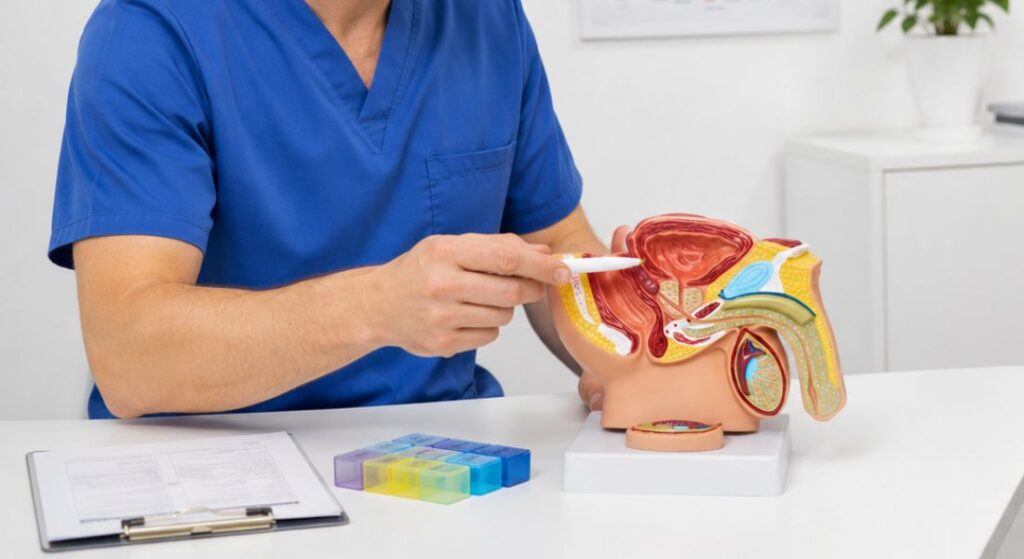
NeuroSAFE is most relevant when radical prostatectomy is being undertaken with curative intent and one or both neurovascular bundles may potentially be preserved. This may include localised disease and selected non-metastatic locally advanced or higher-risk cancers where surgery remains appropriate. If you have metastatic disease, surgery is not normally used as the main curative treatment, and your specialist will discuss systemic treatment, radiotherapy or other appropriate options.
Before recommending surgery, your specialist will assess your cancer and your overall health in detail. This assessment may include your MRI scan, biopsy grade, PSA level, cancer stage, age, general fitness, and personal treatment priorities. Looking at all of these factors together helps determine the most suitable treatment for you.
If surgery is considered appropriate and nerve-sparing may be possible, the NeuroSAFE technique may become part of your treatment discussion. It can provide additional information during the operation to help your surgeon decide whether preserving the nerves is safe while maintaining effective cancer control.
When Nerve-Sparing May Be Possible
The NeuroSAFE technique is mainly useful if nerve-sparing surgery is being considered as part of your radical prostatectomy. If your surgeon already knows that one or both nerve bundles need to be removed to achieve effective cancer control, NeuroSAFE may provide little additional benefit. Its greatest value is when preserving the nerves remains a realistic possibility.
The technique is often most helpful when there is uncertainty about whether the nerves can be safely preserved. For example, your MRI scan or biopsy results may suggest that the cancer is close to a nerve bundle, but not clearly involving it. In this situation, your surgeon may wish to preserve the nerve if it can be done without increasing the risk of leaving cancer behind.
During the operation, NeuroSAFE examines the nerve-adjacent surface of the removed prostate specimen. If the assessed margin is clear, no secondary resection may be required from that side, allowing the initially preserved nerve-adjacent tissue to remain. If cancer cells reach the margin, additional tissue may be removed.
Men With Good Erectile Function Before Surgery
If you have good erectile function before surgery, you may have more to gain from successful nerve preservation during radical prostatectomy. Although the NeuroSAFE technique does not guarantee the recovery of erections, preserving the nerves is one of the most important factors that can influence your outcome. Your suitability for nerve-sparing surgery will depend on whether it can be performed safely without compromising cancer control.
Your age, general health, diabetes status, circulation, smoking history, medication use, and baseline erectile function can all affect your recovery after surgery. Even when the nerves are preserved, recovery varies from person to person and may take time. Your specialist may also discuss penile rehabilitation as part of your recovery plan.
If maintaining erectile function is one of your main priorities, you should raise this during your consultation. An open discussion allows your specialist to explain whether nerve-sparing surgery and the NeuroSAFE technique may be appropriate in your individual case. This helps ensure that your treatment plan reflects both your cancer needs and your quality-of-life goals.
Good baseline erectile function may increase the functional benefit you could gain from nerve preservation, but it is not the only factor used to decide whether NeuroSAFE can be performed. The technique may still provide margin information in men with reduced erectile function, although the expected sexual-function benefit may be smaller.
When Intraoperative Findings Could Change the Surgical Plan
Some men are suitable for a standard nerve-sparing plan based on the information available before surgery. Others have findings that make the decision less clear, meaning your surgeon may prefer to adapt the surgical plan during the operation. This is where the NeuroSAFE technique may offer additional value.
If your case falls into this more uncertain group, NeuroSAFE can support real-time decision-making during your operation. Your surgeon may initially perform the planned nerve-sparing dissection but undertake a secondary resection if frozen-section analysis shows that cancer cells reach the nerve-adjacent surgical margin. This approach helps ensure that decisions are based on the most up-to-date information available during surgery.
For this reason, the NeuroSAFE technique is often described as a personalised approach to prostate cancer surgery. Rather than relying only on preoperative scans and biopsy results, it allows your surgeon to tailor the procedure to your individual cancer. The aim is to balance effective cancer control with preserving important functions whenever it is safe to do so.
When Cancer Is Close to a Potential Nerve-Sparing Plane
MRI and biopsy findings may suggest that cancer is close to the outer surface of the prostate or to a potential nerve-sparing plane. This can make surgical planning more complex because your surgeon must balance the potential functional benefit of nerve preservation against the risk of a positive surgical margin.
Where the risk is uncertain, NeuroSAFE may provide additional information by examining the nerve-adjacent surface of the removed prostate. If cancer cells do not reach the assessed margin, the initially preserved tissue may remain. If the margin is positive, your surgeon may perform a secondary resection from the corresponding side.
If MRI shows clear extraprostatic extension beside a neurovascular bundle, wider removal may already be considered necessary on that side. NeuroSAFE should not be used to justify nerve preservation where it is not considered oncologically appropriate.
When Only One Side May Be Suitable
You do not need both nerve bundles to be equally suitable for the NeuroSAFE technique. In some cases, one side of the prostate may be more suitable for nerve-sparing than the other. This depends on the location and extent of your cancer.
For example, if your cancer is mainly on the right side of the prostate, your surgeon may recommend wider tissue removal on that side. At the same time, nerve preservation may still be possible on the left side if it is considered safe.
In some situations, the NeuroSAFE technique may be used on one side or both sides during surgery. Your surgeon will base this decision on your anatomy, tumour location, and the overall surgical plan.
When NeuroSAFE May Not Be Suitable
The NeuroSAFE technique may not be suitable if your cancer appears to require a wide excision around the prostate. This can happen when your MRI scan, biopsy results, or prostate examination suggest a high risk that the cancer has extended beyond the prostate capsule. In these situations, preserving the nerves may not be the safest option.
If there is strong concern that cancer has extended into the area beside a nerve bundle, your surgeon may recommend wider tissue removal to support oncologically appropriate cancer removal. Although preserving function is important, achieving an appropriate cancer resection remains the main priority. Your treatment plan will always be based on what is considered oncologically safe.
Even if nerve-sparing surgery is not possible, your specialist will discuss your treatment options and expected recovery with you. You may also receive advice about rehabilitation and other supportive treatments that can help optimise your recovery after surgery.
High-Risk Prostate Cancer and NeuroSAFE
Having high-risk prostate cancer does not automatically mean the NeuroSAFE technique is unsuitable for you. Your eligibility depends on the side-specific location of the cancer and whether nerve preservation can be attempted safely. Each case is assessed individually rather than being based on your overall risk category alone.
Some men with higher-risk prostate cancer may still be suitable for partial or one-sided nerve-sparing surgery. Others may require a wider excision because the risk of cancer extending to the surgical margin is considered too high. Your surgeon will recommend the approach that offers the best balance between cancer control and preserving function.
The most important point is that suitability for NeuroSAFE is not determined by a single label such as “high risk.” Your surgeon will carefully assess your MRI findings, biopsy results, tumour location, and other clinical factors before deciding whether the technique is appropriate for your individual case.
MRI Findings Are Important

Your MRI scan provides important information when planning prostate cancer surgery. It helps your surgeon assess where the tumour is located, how close it is to the edge of the prostate and whether nerve-sparing surgery may be appropriate.
- Tumour location: MRI may show where the cancer is positioned and whether it lies close to a neurovascular bundle.
- Possible extraprostatic extension: Signs that cancer may have grown beyond the prostate can affect whether nerve-sparing is appropriate on that side.
- Nerve-sparing planning: Clear extension beside a neurovascular bundle may make wider tissue removal necessary.
- Uncertain findings: When MRI does not provide a definite answer, intraoperative margin assessment may provide additional information.
- Intraoperative assessment: NeuroSAFE examines the nerve-adjacent surface of the removed prostate specimen while surgery is underway.
MRI is highly valuable, but it cannot always show the full extent of prostate cancer with complete accuracy. In selected cases, NeuroSAFE may provide additional intraoperative information that helps refine the side-specific surgical plan.
Biopsy Results Also Matter
Your biopsy results help your surgeon understand how aggressive your prostate cancer appears to be. The Grade Group, Gleason score, number of positive biopsy cores, and where those cores were taken from all contribute to planning your surgery. This information helps assess whether nerve-sparing may be appropriate.
If your biopsy shows more aggressive cancer close to one side of the prostate, your surgeon may be more cautious about preserving the nerves on that side. If the cancer appears more limited, nerve-sparing may be a more realistic option. The final decision will depend on your overall cancer assessment.
The NeuroSAFE technique does not replace the information provided by your biopsy. Instead, it adds another layer of information by examining tissue during the operation. This helps your surgeon make more informed decisions about nerve preservation while maintaining effective cancer control.
PSA and Overall Risk Group
Your PSA level is an important part of the decision-making process when planning prostate cancer surgery. Although PSA alone does not determine whether the NeuroSAFE technique is suitable, it helps your specialist assess your overall cancer risk. It is always interpreted alongside other clinical findings.
Your specialist will combine your PSA level with your biopsy grade, MRI findings, prostate size, examination findings, and cancer stage. Looking at all of these factors together provides a more complete picture of your prostate cancer. This helps guide decisions about surgery and nerve preservation.
If radical prostatectomy is appropriate and one or both neurovascular bundles may potentially be preserved, NeuroSAFE may be considered. The decision is based on the complete side-specific assessment rather than PSA or any other individual result alone.
UK and European Guidance Note
Current EAU guidance recommends offering nerve-sparing surgery when the risk of extracapsular disease is low on the relevant side. It also discusses NeuroSAFE and the NeuroSAFE PROOF trial as part of the evidence informing the balance between functional recovery and surgical-margin risk.
NICE NG131 does not currently make a specific recommendation on NeuroSAFE. The technique should therefore be presented as a specialist intraoperative option that may be considered when nerve-adjacent margin information is likely to influence the surgical plan.
Your General Health and Fitness for Surgery
NeuroSAFE is a technique used during radical prostatectomy, so the first step is determining whether you are suitable for surgery itself. Your age, general fitness, heart and lung health, medications, and previous operations all play a role in this assessment. These factors help your specialist evaluate whether surgery can be performed safely.
If radical prostatectomy is not considered an appropriate treatment, NeuroSAFE will not be relevant to your care. Depending on your diagnosis, your specialist may discuss options such as active surveillance, radiotherapy, radiotherapy combined with hormone therapy or systemic treatment for more advanced disease. The recommended approach will depend on your cancer stage and risk group, general health, life expectancy and treatment priorities.
For this reason, suitability for NeuroSAFE is always considered after suitability for radical prostatectomy. Before discussing surgical techniques, your medical team must first determine whether surgery is the right treatment for you. This ensures that treatment decisions are based on your individual needs and circumstances.
Your Treatment Priorities Matter

Every man approaches prostate cancer treatment differently. Effective cancer treatment is the central goal of radical prostatectomy, but the effect on erectile function, continence and quality of life also matters. Different men may place different weight on these functional outcomes when comparing clinically appropriate treatment options.
A good consultation should include an open and honest discussion about your treatment priorities. While your preferences cannot override cancer safety, they should form an important part of the decision-making process. This helps ensure that the treatment plan reflects both your medical needs and personal goals.
If maintaining sexual function is important to you, NeuroSAFE may be worth discussing with your surgeon. The technique can be particularly relevant when nerve-sparing appears possible but there is some uncertainty about the safest approach. Your specialist can explain whether it is likely to offer benefits in your specific case.
NeuroSAFE Is Not a Guarantee
It is important to understand that NeuroSAFE does not guarantee erectile function after prostate cancer surgery. The technique provides your surgeon with additional information during the operation, but recovery still depends on many individual factors. These include your age, pre-operative erectile function, overall health, and the extent of nerve preservation.
Even when the nerves are preserved, they can be affected by the surgery itself. Nerve tissue may be stretched, bruised, or temporarily disrupted during the procedure, which can impact function in the short term. As a result, recovery often takes time and may require medication or rehabilitation support.
NeuroSAFE should be viewed as a tool that may improve the opportunity for safe nerve preservation in selected patients. It helps support surgical decision-making, but it cannot guarantee a specific outcome. Your surgeon should discuss the potential benefits and limitations based on your individual situation.
Myth vs Fact
| Myth | Fact |
| NeuroSAFE is suitable for everyone having prostate surgery. | It is mainly useful when radical prostatectomy is appropriate and nerve preservation remains a realistic possibility. |
| NeuroSAFE checks the nerves for cancer. | It examines the nerve-adjacent margins of the removed prostate specimen. |
| A clear frozen section guarantees that no cancer remains. | It applies only to the examined margins. Final pathology and PSA monitoring are still essential. |
| High-risk prostate cancer always rules out NeuroSAFE. | Higher-risk disease is not an automatic exclusion, but suitability must be assessed separately on each side. |
| NeuroSAFE guarantees that both nerve bundles will be preserved. | A positive margin may lead to additional tissue removal during the same operation. |
| NeuroSAFE guarantees normal erections after surgery. | It may improve the opportunity for nerve preservation, but recovery depends on many individual factors. |
| NeuroSAFE is proven to improve continence throughout long-term recovery. | The randomised trial showed an early three-month difference but no significant difference at six months. |
| A specialist technique is automatically the best option. | Standard nerve-sparing or wider tissue removal may be more appropriate depending on the side-specific cancer pattern. |
Why Cancer Control Comes First
Your surgeon’s first responsibility is to remove the cancer safely and effectively. If preserving a neurovascular bundle would create an unacceptable oncological risk, wider tissue removal should take priority. This principle guides every decision made during prostate cancer surgery.
It can be difficult if you are concerned about erectile function or other aspects of recovery. However, cancer at a surgical margin is associated with a higher risk of biochemical recurrence, although a positive margin does not mean that recurrence is certain.
NeuroSAFE is valuable because it can provide additional information during the operation. This may help your surgeon preserve nerve-adjacent tissue when the assessed margin is clear while allowing a secondary resection when the frozen section is positive. Long-term randomised cancer-control evidence is still developing.
What Happens During the Operation?
Your surgeon normally removes the prostate using the planned side-specific nerve-sparing approach. The surfaces of the removed prostate specimen adjacent to the neurovascular bundles are then carefully marked and sent for rapid frozen-section examination while you remain under anaesthetic.
The pathologist freezes the tissue, prepares thin sections and examines whether cancer cells reach the nerve-adjacent surgical margin. The findings are communicated to your surgeon while the operation is still underway.
If no cancer is identified at the examined margin, no secondary tissue removal may be required from that side. If the frozen section is positive, your surgeon may remove additional tissue beside the affected neurovascular bundle. The prostate and any secondary specimens still undergo detailed permanent-section pathology after surgery.
Why a Specialist Centre Matters
NeuroSAFE requires close coordination between your surgeon, the operating theatre team, and the pathology specialists. The frozen-section process must be completed accurately and efficiently while the operation is still taking place. This teamwork helps ensure that the results can be used effectively during surgery.
For this reason, NeuroSAFE is generally offered in specialist centres with the necessary experience, resources, and processes in place. Reliable delivery of the technique depends on both surgical and pathology expertise.
If you are considering specialist NeuroSAFE prostate surgery in London, it is worth asking how your suitability will be assessed. You should also understand how the technique is used, what benefits it may offer, and whether it is appropriate for your individual cancer situation.
Evidence Behind NeuroSAFE
The strongest current evidence includes the multicentre NeuroSAFE PROOF randomised trial. It found higher bilateral nerve-sparing rates and better patient-reported erectile-function scores at 12 months with NeuroSAFE-guided robotic prostatectomy than with standard robotic surgery. The trial enrolled men with good erectile function before treatment, so the functional results may not apply equally to every patient.
Continence scores favoured NeuroSAFE at three months but not at six months. Small positive margins were more frequent in the NeuroSAFE group, while large or multifocal margin rates were similar. The trial was designed primarily to assess functional outcomes, and longer follow-up is needed before firm conclusions can be made about long-term cancer control.
The most balanced way to understand NeuroSAFE is as a specialist intraoperative technique with encouraging functional evidence. If you are considering this approach, your surgeon should explain whether it is suitable for your specific cancer and treatment goals. It should be viewed as a tool to support decision-making rather than a solution for every patient.
Evidence Note
The NeuroSAFE PROOF trial provides randomised evidence of better patient-reported erectile-function scores at 12 months in selected men who had good erectile function before surgery. However, the trial did not establish a universal NeuroSAFE suitability checklist, and longer follow-up is required to assess long-term oncological outcomes.
Practical Factors That Can Affect Suitability
Even if you are clinically suitable for NeuroSAFE, practical factors may influence whether the technique can be offered. The centre needs access to trained pathology specialists who can rapidly prepare and assess the nerve-adjacent surfaces of the removed prostate specimen.
The surgical team also needs experience with the NeuroSAFE process and workflow. Not every hospital has the same facilities, systems, or specialist support available, so access to the technique can vary between centres. These factors are important when considering where you have your surgery.
Your surgeon should explain whether NeuroSAFE is available and appropriate for you. They can also discuss whether the technique is likely to add meaningful value based on your cancer characteristics and treatment priorities.
NeuroSAFE and Shared Decision-Making

Choosing prostate cancer treatment should be a shared decision between you and your medical team. Before agreeing to a surgical plan, you should understand the possible benefits, limitations, and potential trade-offs of each approach. This helps you make a decision that feels right for your situation.
NeuroSAFE can form part of this discussion if you are considering prostate surgery and nerve-sparing may be possible. Your surgeon should explain what they aim to achieve during the operation and how they would respond if the frozen-section results show a higher risk of cancer at the margin.
You should feel comfortable asking questions about your treatment and recovery. Understanding your options can help you feel more prepared for the decisions ahead. This is your health, your recovery, and your quality of life, so your priorities matter.
NeuroSAFE May Be Most Useful When the Nerve-Sparing Decision Is Uncertain
One way to understand NeuroSAFE is that it may be most useful when the decision about nerve-sparing is uncertain. If you have cancer that is clearly away from the nerves, your surgeon may already know that nerve preservation is likely to be safe. In this situation, additional assessment may not change the surgical approach.
If the cancer is clearly close to the nerves and wider removal is needed, NeuroSAFE may also not alter the safest plan. However, when the decision falls somewhere in between, the additional information from NeuroSAFE may help guide a more precise approach. This is where the technique may offer the greatest value.
For you, this means NeuroSAFE is not designed for every patient, but it can be particularly relevant in these uncertain cases. Your surgeon can assess your scans, biopsy results, and other factors to determine whether your case falls into the group in which intraoperative margin assessment is likely to influence the surgical plan.
When NeuroSAFE May Add Limited Value
Standard robotic radical prostatectomy remains appropriate for many men, with nerve-sparing planned according to MRI, biopsy findings, clinical assessment and surgical judgement. NeuroSAFE adds an intraoperative pathology process, but it may offer limited additional value when the planned dissection is already clear.
For example, if one or both neurovascular bundles can confidently be preserved, the frozen-section result may be unlikely to change the procedure. Conversely, if wider removal is clearly required because of side-specific extraprostatic extension, NeuroSAFE may also be unlikely to alter the safest plan.
The technique may offer the greatest value when nerve-sparing appears possible but the most appropriate side-specific dissection plane remains uncertain.
Key Takeaways
- NeuroSAFE is used during radical prostatectomy to examine the nerve-adjacent margins of the removed prostate.
- It may be considered when one or both nerve bundles could potentially be preserved.
- The technique may be particularly valuable when the safest side-specific nerve-sparing plan is uncertain.
- A clear frozen section may allow initially preserved nerve-adjacent tissue to remain.
- A positive nerve-adjacent frozen section may lead to an immediate secondary resection from the corresponding side.
- Higher-risk disease is not an automatic exclusion, but cancer location and the risk of extraprostatic extension remain critical.
- Good baseline erectile function may increase the functional benefit of successful nerve preservation.
- NeuroSAFE does not guarantee nerve preservation, erectile recovery, negative final margins or freedom from recurrence.
- In selected men with good erectile function before surgery, the NeuroSAFE PROOF trial found higher bilateral nerve-sparing rates and better erectile-function scores at 12 months.
- Long-term randomised cancer-control evidence is still developing.
- Specialist surgical and pathology experience is essential.
- NeuroSAFE does not replace final permanent-section pathology or postoperative PSA monitoring.
FAQs:
1. Who may be suitable for the NeuroSAFE technique?
You may be considered for NeuroSAFE if radical prostatectomy is an appropriate treatment and one or both neurovascular bundles may potentially be preserved. Your surgeon will assess your MRI, biopsy results, PSA, side-specific cancer location, general health and expected functional benefit.
2. Can you have the NeuroSAFE technique if your cancer is high risk?
Higher-risk prostate cancer does not automatically exclude NeuroSAFE. However, imaging, examination or other findings that suggest extraprostatic extension beside a neurovascular bundle may make nerve preservation inappropriate on that side.
3. Does your age affect whether you are suitable for NeuroSAFE?
Your age alone does not determine whether you can have the NeuroSAFE technique. Your overall health, life expectancy, cancer characteristics and expected benefits of nerve preservation are usually more important factors.
4. Will your MRI scan help decide if you are suitable?
Yes. Your MRI provides valuable information about the location and extent of your prostate cancer, helping your surgeon assess whether nerve-sparing surgery may be appropriate. It is one of several investigations used when planning your treatment. MRI cannot identify every microscopic area of cancer extension, so it is considered alongside biopsy, PSA and clinical findings.
5. Can previous prostate surgery affect your suitability?
Previous transurethral prostate surgery does not automatically exclude you from NeuroSAFE, but it can make radical prostatectomy more technically complex and may affect expected urinary or erectile-function outcomes. Your surgeon will need to review the type of previous procedure, your anatomy and whether the NeuroSAFE process is likely to add useful information in your case.
6. Is the NeuroSAFE technique suitable for every prostate cancer?
No. If side-specific findings indicate that wider tissue removal is oncologically appropriate, your surgeon may recommend a non-nerve-sparing or more limited nerve-sparing approach.
7. Can erectile function influence the decision to use NeuroSAFE?
Baseline erectile function can influence the potential benefit rather than determine eligibility by itself. Men with good erections before surgery generally have more function available to preserve, but cancer location and surgical safety remain the main considerations.
8. How will your surgeon decide if NeuroSAFE is right for you?
Your surgeon will review your PSA level, MRI findings, biopsy results, clinical stage and general health before recommending the most appropriate surgical approach. You should also discuss your personal priorities, including cancer control and quality of life.
9. Does choosing NeuroSAFE guarantee nerve preservation?
No. If cancer cells reach the nerve-adjacent frozen-section margin, your surgeon may need to remove additional tissue from that side. NeuroSAFE therefore helps guide nerve preservation but cannot guarantee it.
10. What should you ask if you are considering the NeuroSAFE technique?
You should ask whether your cancer is suitable for nerve-sparing surgery, how the NeuroSAFE technique may affect your treatment plan and what outcomes you can realistically expect. Understanding the potential benefits and limitations can help you make an informed decision with your specialist.
Final Thoughts: Is the NeuroSAFE Technique Right for You?
NeuroSAFE may be considered when radical prostatectomy is appropriate and one or both neurovascular bundles may potentially be preserved. Your suitability depends on side-specific tumour location, MRI findings, biopsy results, PSA, general health, baseline erectile function and whether intraoperative margin assessment is likely to influence the operation.
The technique primarily supports decisions about nerve preservation and nerve-adjacent surgical margins. It cannot guarantee erectile recovery, and it should not be presented as a proven method of improving long-term urinary continence or cancer control.
If you are considering NeuroSAFE prostate surgery in London, Prostate Clinic London can review your MRI, biopsy findings, cancer location, baseline erectile function and the proposed side-specific nerve-sparing plan with you.
References:
- National Institute for Health and Care Excellence (NICE) (2019, last updated 2021; reviewed 2025) Prostate cancer: diagnosis and management. NICE guideline NG131. Available at: https://www.nice.org.uk/guidance/ng131
- NHS (no date) Treatment for prostate cancer. Available at: https://www.nhs.uk/conditions/prostate-cancer/treatment/
- Prostate Cancer UK (no date) Surgery: radical prostatectomy. Available at: https://prostatecanceruk.org/prostate-information-and-support/treatments/surgery
- Cancer Research UK (no date) Problems after prostate cancer surgery. Available at: https://www.cancerresearchuk.org/about-cancer/prostate-cancer/treatment/surgery/problems-after-prostate-surgery
- European Association of Urology (EAU) (2026) EAU guidelines on prostate cancer: treatment. Available at: https://uroweb.org/guidelines/prostate-cancer/chapter/treatment
- Dinneen, E. et al. (2025) ‘Effect of NeuroSAFE-guided robot-assisted radical prostatectomy versus standard robot-assisted radical prostatectomy on erectile function and urinary continence in patients with localised prostate cancer: the NeuroSAFE PROOF phase 3 trial’, The Lancet Oncology, 26(4), pp.447–458. Available at: https://pubmed.ncbi.nlm.nih.gov/40147459/
- Kroon, L.J., van der Slot, M.A., van den Bergh, R.C.N., Roobol, M.J. and van Leenders, G.J.L.H. (2025) ‘Neurovascular structure-adjacent frozen-section examination during radical prostatectomy: a systematic review and meta-analysis’, European Urology Oncology, 8(5), pp.1365–1374. Available at: https://pubmed.ncbi.nlm.nih.gov/39730246/
- van der Slot, M.A. et al. (2022) ‘NeuroSAFE in radical prostatectomy increases the rate of nerve-sparing surgery without affecting oncological outcome’, BJU International, 130(5), pp.628–636. Available at: https://pmc.ncbi.nlm.nih.gov/articles/PMC9796592/
- Noël, J. et al. (2022) ‘NeuroSAFE robot-assisted radical prostatectomy: outcomes from 500 consecutive UK cases’, Journal of Robotic Surgery, 16, pp.951–956. Available at: https://pubmed.ncbi.nlm.nih.gov/34716876/