




Erectile function is one of the most important quality-of-life concerns for many men considering prostate cancer surgery. If you are facing treatment, it is natural to have questions about how surgery may affect erections, intimacy, confidence and your overall recovery. These concerns often play an important role when discussing treatment options with your surgeon.
The NeuroSAFE technique was developed to help surgeons make more precise nerve-sparing decisions during radical prostatectomy. During the operation, the surface of the removed prostate next to the neurovascular bundles is examined using rapid frozen-section pathology. This allows the pathology team to assess whether cancer cells reach the nerve-adjacent surgical margin and gives your surgeon real-time information to adjust the surgical approach if necessary.
Recent research has strengthened the evidence supporting NeuroSAFE in this area. A multicentre randomised trial found that NeuroSAFE-guided robotic prostatectomy resulted in better patient-reported erectile function scores at 12 months compared with standard robotic prostatectomy. These findings suggest that, for selected patients with good erectile function before surgery, NeuroSAFE may improve erectile-function outcomes. However, the trial was not designed to establish equivalent long-term cancer control, and its early surgical-margin and PSA findings require cautious interpretation. Longer follow-up is still needed to establish long-term cancer-control results from the randomised trial.
Why Erectile Function Can Be Affected by Prostate Surgery
The nerves involved in erections run very close to the prostate. During prostate removal, these delicate nerve bundles may be stretched, bruised, partially removed, or fully removed depending on where the cancer is located. If you are considering surgery, this is one reason erectile function can be affected afterwards.
Even when the nerves are preserved, they may not function normally straight away. Recovery often takes time, and you may need several months before seeing improvement. For some men, the effects can last longer.
This is why the surgical plan is so important. The more safely your surgeon can preserve the nerves, the better the conditions may be for recovery. However, cancer control must always remain the main priority.
What Are the Neurovascular Bundles?
The neurovascular bundles are structures that run along the sides of the prostate. They contain nerves and blood vessels that play an important role in erectile function. If you are discussing nerve-sparing surgery, these are the structures your surgeon is trying to protect where possible.
These bundles sit extremely close to the outer surface of the prostate. This creates a surgical challenge because cancer may also be located near the same area. As a result, your surgeon must carefully balance nerve preservation with cancer removal.
If too much tissue is removed, the chances of erectile recovery may be reduced. If too little tissue is removed near the cancer, there may be a risk of leaving cancer cells behind. This is why decisions around the neurovascular bundles are so important during prostate surgery.
What Is Nerve-Sparing Surgery?
Nerve-sparing surgery is an approach that aims to preserve one or both neurovascular bundles during a radical prostatectomy. Depending on your individual situation, the nerves may be preserved on one side, both sides, or only partially. The goal is to protect erectile function while still removing the cancer effectively.
The decision to perform nerve-sparing surgery is based on several factors. These include your cancer location, biopsy results, MRI findings, PSA level, examination findings, and baseline erectile function. Your surgeon will also consider your priorities and expectations regarding sexual function after treatment.
Nerve-sparing surgery is not suitable for every man. If the cancer appears too close to a nerve bundle, removing additional tissue may provide better cancer control. In these situations, your surgeon will recommend the approach that offers the safest balance between cancer treatment and functional preservation.
What Does NeuroSAFE Add to Nerve-Sparing?
NeuroSAFE provides your surgeon with real-time pathology information during the operation. Instead of relying only on scans, biopsy results, and pre-operative planning, the technique allows an immediate assessment of the surgical margin close to the nerves. This can provide additional guidance at a critical stage of the procedure.
After the prostate has been removed, the surface of the prostate specimen adjacent to the neurovascular bundles is rapidly processed and examined by a specialist pathologist. The pathologist determines whether cancer cells reach the nerve-adjacent surgical margin and reports the findings to the surgical team while the operation is still underway. This helps your surgeon assess whether the preserved nerve area appears free from cancer.
The extra information can increase confidence when preserving nerves. If cancer is present at the nerve-adjacent margin, your surgeon can remove additional tissue straight away. This allows important decisions to be made based on findings from the operation itself rather than predictions alone.
How Does NeuroSAFE Work During the Operation?
During robotic prostatectomy, the prostate is removed using the planned surgical and nerve-sparing approach. The nerve-adjacent surfaces of the specimen are then carefully marked, frozen, cut into thin sections, stained and examined by a pathologist while surgery remains underway.
If the examined margin is clear, no additional tissue may be required from that side. If cancer cells reach the margin, the surgeon can perform an immediate secondary resection beside the affected neurovascular bundle.
Why the Surgical Margin Matters
A surgical margin is the cut surface of tissue removed during an operation. If cancer cells are present at this surface, it is called a positive surgical margin. NeuroSAFE focuses on the surgical margin closest to the neurovascular bundles. This is the area where preserving erectile function and removing the cancer safely can sometimes come into conflict. The technique helps your surgeon assess this region more accurately during the operation.
How NeuroSAFE Helps Preserve Erectile Function
NeuroSAFE may help preserve erectile function by increasing the opportunity for safe nerve preservation during surgery. It provides your surgeon with additional information at the exact time important decisions are being made. This can make the nerve-sparing approach more precise.
If the margin next to the nerves is clear of cancer, your surgeon may be able to avoid removing extra tissue unnecessarily. Preserving more of the nerve tissue can help protect the structures involved in erections. For you, this may improve the conditions for erectile recovery after surgery.
The technique may be particularly useful when nerve-sparing appears possible but the safest surgical boundary is uncertain. It helps your surgeon avoid being overly cautious when nerve-sparing appears safe, while still allowing immediate action if cancer cells reach the nerve-adjacent surgical margin. This supports both functional preservation and cancer control.
What the NeuroSAFE PROOF Trial Showed
The NeuroSAFE PROOF trial was a multicentre, patient-blinded, randomised phase 3 study that compared NeuroSAFE-guided robotic prostatectomy with standard robotic prostatectomy. If you are researching treatment options, studies of this quality provide some of the strongest evidence available. The trial focused on men with localised prostate cancer and assessed outcomes such as erectile function and urinary continence.
The researchers reported improved patient-reported erectile function scores at 12 months in the NeuroSAFE group. The researchers also found better urinary continence scores at three months. However, there was no statistically significant difference between the groups at six months, so the trial did not establish a longer-term continence benefit.
However, this does not mean that every man will recover erections after NeuroSAFE. Your results will still depend on factors such as age, baseline erectile function, cancer characteristics, and the extent of nerve preservation. If you are considering surgery, it is important to discuss with your surgeon how these factors may affect your individual outcome.
Evidence Note: What Did the Trial Results Mean?
The NeuroSAFE PROOF trial recruited 407 men across five UK NHS hospitals, with 381 undergoing surgery and 344 providing the primary erectile-function outcome at 12 months. Participants entered the trial with good erectile function and were not relying on erectile dysfunction medication.
At 12 months, the average IIEF-5 score was 12.7 after NeuroSAFE-guided surgery compared with 9.7 after standard robotic prostatectomy. In an exploratory descriptive analysis, 39% of men in the NeuroSAFE group had no or mild erectile dysfunction at 12 months, compared with 23% in the standard-surgery group.
These findings show a meaningful improvement at group level, but they do not mean that erectile function returned to its preoperative level for every participant. The trial’s entry threshold was an IIEF-5 score of at least 22, while the average 12-month score remained below this level in both groups.
Why Patient-Reported Outcomes Matter

Erectile function is a personal aspect of recovery, which is why patient-reported outcomes are so important. Rather than relying only on technical surgical measures, researchers also ask men to describe their own experiences after treatment. If you are considering surgery, these results may provide a better understanding of what recovery can feel like in everyday life.
One commonly used tool is the International Index of Erectile Function (IIEF). This questionnaire helps assess erectile function in a consistent way and allows researchers to compare outcomes across different studies. It provides valuable information about how patients perceive their recovery.
This is important because the success of prostate cancer surgery is not measured solely by cancer control. How you function and live after treatment also matters. For many men, quality of life is a key part of a successful outcome.
Why Baseline Erections Matter
Your erectile function before surgery is one of the strongest predictors of recovery afterwards. Good erectile function before surgery is associated with a greater likelihood of recovery afterwards because it suggests healthier baseline nerve and vascular function. This can improve the potential for recovery in the months following surgery.
If you already have erectile dysfunction before surgery, NeuroSAFE may still help guide safe nerve-sparing decisions. However, your recovery expectations may be different, and improvements may be more limited. This is something your surgeon should discuss with you before treatment.
Having an honest conversation about your baseline function is important. Your healthcare team needs an accurate understanding of your situation so they can provide realistic advice and set appropriate expectations. This helps you make informed decisions about your treatment and recovery.
How Age Affects Recovery
Age can play an important role in erectile recovery after prostate surgery. Younger men often have a greater potential for nerve recovery, although this does not guarantee a full return of function. If you are discussing expected outcomes with your surgeon, age is one of several factors that will be considered.
Older men can still benefit from nerve-sparing surgery when it is safe to perform. However, recovery may take longer and may not be as complete as it is for some younger patients. Your overall health can also have a significant impact on recovery.
Factors such as diabetes, cardiovascular disease, smoking, medication use, testosterone levels, and vascular health can all affect erectile function. While NeuroSAFE may help your surgeon preserve more nerve tissue, it cannot eliminate the influence of these other factors. This is why your recovery is always shaped by more than the surgical technique alone.
Factors That Influence Erectile Function Recovery After NeuroSAFE-Guided Surgery
| Factor | Why It Matters | How It May Influence Recovery |
| Extent of nerve preservation | Preserving one or both neurovascular bundles gives the nerves involved in erections a better chance to recover | Bilateral nerve-sparing is generally associated with a higher likelihood of erectile recovery when oncologically appropriate |
| Baseline erectile function | Your baseline erections indicate the health of the nerves and blood vessels before treatment | Men with good pre-operative function often have better recovery potential |
| Age at surgery | Nerve healing and blood vessel function may change with increasing age | Younger men often recover more quickly, although recovery varies individually |
| Cancer location and extent | Tumours close to the nerves may require wider removal to achieve cancer control | Greater nerve removal may reduce the likelihood of erectile recovery |
| Cardiovascular health | Erections depend on healthy blood flow as well as nerve signals | Conditions such as diabetes, hypertension and vascular disease may affect recovery |
| Smoking and lifestyle factors | Smoking can damage blood vessels and affect erectile function | Stopping smoking and maintaining a healthy lifestyle may support recovery |
| Penile rehabilitation | PDE5 inhibitors, vacuum devices and injections can support erections while nerve recovery continues | Treatment may improve assisted erectile function and help maintain sexual activity, but evidence that a particular programme restores spontaneous erections remains uncertain |
| Surgical expertise and team experience | Careful nerve handling and coordinated NeuroSAFE pathology are important | Experienced teams may improve the chance of achieving the intended nerve-sparing plan |
Why Bilateral Nerve-Sparing Is Important
Bilateral nerve-sparing means preserving the neurovascular bundles on both sides of the prostate during surgery. When this can be done safely, it may offer the best opportunity for erectile function recovery after treatment. If you are suitable for bilateral nerve-sparing, it may improve the chances of maintaining function in the long term.
NeuroSAFE can sometimes help your surgeon perform bilateral nerve-sparing with greater confidence. Research has shown that NeuroSAFE may increase unilateral and bilateral nerve-sparing. Earlier observational evidence was broadly reassuring regarding surgical margins and biochemical recurrence, but equivalent long-term cancer-control outcomes have not yet been established in a randomised trial.
However, bilateral nerve-sparing is not appropriate in every case. If cancer is too close to one or both sides of the prostate, your surgeon may need to remove additional tissue to achieve safe cancer control. Achieving effective cancer removal and reducing the risk of recurrence remain the primary oncological goals of surgery.
How Unilateral Nerve-Sparing Can Still Help
Unilateral nerve-sparing involves preserving one neurovascular bundle while removing more tissue on the opposite side of the prostate. This approach may be considered when the cancer is mainly located close to one side of the gland. If you are not suitable for bilateral nerve-sparing, preserving one nerve bundle may still offer important functional benefits.
NeuroSAFE can help your surgeon assess whether the side chosen for preservation appears safe. If the frozen-section analysis shows a clear margin, no secondary tissue removal may be required from that side, allowing the initially preserved nerve-adjacent tissue to remain. If cancer cells reach the margin, your surgeon may perform an immediate secondary resection. This additional information can support more confident decision-making.
Even a single preserved nerve bundle may contribute to erectile recovery after surgery. However, the level of recovery can vary depending on your baseline erectile function, age, overall health, and how much nerve tissue is preserved. Your surgeon can help you understand what outcomes may be realistic in your situation.
Why NeuroSAFE Is Not a Guarantee
NeuroSAFE provides your surgeon with more information during the operation, but it does not guarantee erectile function after surgery. Even when the nerves are preserved, they can still be affected by surgical handling, swelling, inflammation, or changes in blood flow. These factors may influence how well the nerves recover.
Recovery can vary considerably from one person to another. Some men regain erections gradually over time, while others may need tablets, devices, injections, or other forms of support. If you are considering surgery, it is important to have realistic expectations about the recovery process.
It is best to view NeuroSAFE as a technique that may improve the conditions for erectile recovery. The goal is to support safer nerve preservation when possible. However, it cannot guarantee that your erections will return to the same level they were before surgery.
Myth vs Fact
| Myth | Fact |
| NeuroSAFE guarantees normal erections after surgery. | It improves the opportunity for safe nerve preservation, but recovery is not guaranteed. |
| A clear frozen section proves that no cancer remains anywhere. | It assesses specific nerve-adjacent margins. Final pathology and postoperative PSA monitoring remain essential. |
| NeuroSAFE is suitable for every man having prostatectomy. | It is most useful when nerve-sparing is possible but the safest approach is uncertain. |
| Nerve-sparing prevents all sexual changes. | Surgery still causes loss of ejaculation and prevents natural conception through intercourse, and orgasm may feel different. |
| Tablets always restore erections after surgery. | PDE5 inhibitors help some men, but other treatments may be needed and spontaneous recovery varies. |
How Long Erectile Recovery May Take
Erectile recovery after prostatectomy often takes time and can vary from one man to another. Some men notice improvement within the first few months, while others recover more gradually over a longer period. If you are preparing for surgery, it is important to understand that recovery is rarely immediate.
Even when the nerves are preserved, they may not function normally straight away. The nerves can become temporarily stunned by the surgery, which may affect their ability to transmit signals. As healing progresses, function may improve over time.
Your recovery plan may include discussions about erections, medication options, sexual rehabilitation, and emotional support. If you have concerns during recovery, your surgical team can advise you on the most appropriate next steps. Following the agreed recovery plan may help you access appropriate treatment and support while nerve recovery continues.
What Is Penile Rehabilitation?
Penile rehabilitation refers to treatments used after prostate surgery to support erections and provide options for sexual activity while recovery continues. Depending on your circumstances, this may include PDE5 inhibitors, vacuum erection devices, injections or other therapies. These treatments can improve assisted erectile function, but no rehabilitation programme can guarantee the return of spontaneous erections.
Sexual recovery after prostate cancer treatment can involve more than erections alone. The European Association of Urology notes that treatment may affect erectile function, orgasm, ejaculation, and other aspects of sexual health. If you are considering surgery, understanding these potential changes can help you prepare for recovery.
The most appropriate rehabilitation plan will depend on your individual circumstances. Factors such as your age, baseline erectile function, overall health, and treatment details all need to be considered. You should always discuss treatment options with your own clinician before starting, stopping, or changing any medication.
How Can Surgery Affect Orgasm, Ejaculation and Fertility?
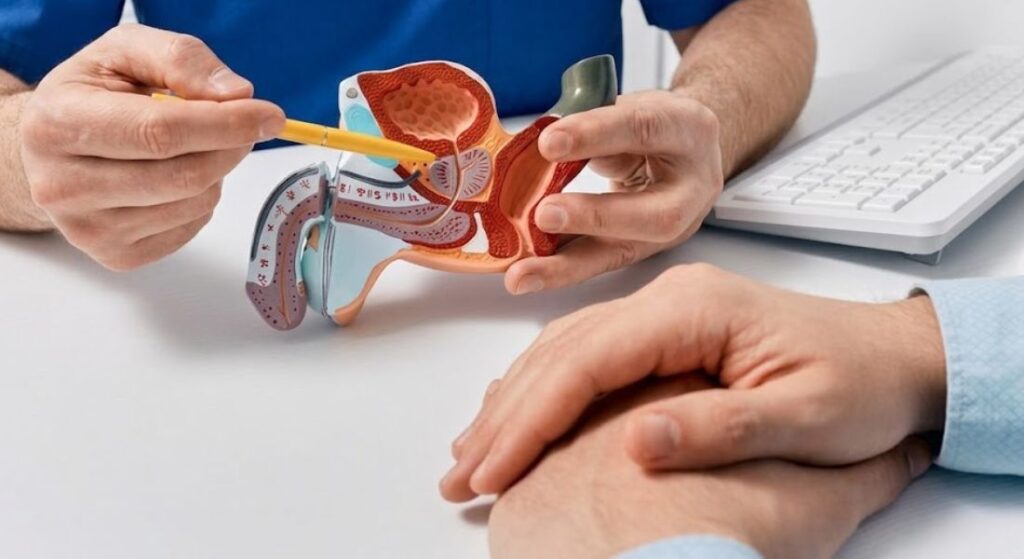
After radical prostatectomy, you will no longer ejaculate semen because the prostate and seminal vesicles have been removed and the reproductive pathway has been interrupted. You may still experience orgasm, but it will be dry, and the sensation may feel different from before surgery.
Natural conception through intercourse is no longer possible after radical prostatectomy because semen is not ejaculated and the reproductive pathway has been interrupted. If having biological children may be important to you in the future, discuss sperm storage before treatment. NeuroSAFE aims to support nerve preservation, but it does not prevent the loss of ejaculation or fertility caused by prostate removal.
NICE recommends explaining the effects of radical treatment on sexual experience, ejaculation and fertility before treatment and offering sperm storage where appropriate.
What Role Do PDE5 Inhibitors Have?
PDE5 inhibitors are medicines commonly used to treat erectile dysfunction. Examples include sildenafil and tadalafil, although not every treatment is suitable for every patient. If you are recovering from prostate surgery, your clinician may discuss whether these medicines could be appropriate for you.
The European Association of Urology describes PDE5 inhibitors as a first-line treatment for erectile dysfunction. They are often used after nerve-sparing surgery to support erectile recovery, although evidence for specific rehabilitation programmes remains mixed. Your response to treatment may depend on factors such as nerve preservation, overall health, and baseline erectile function.
These medicines are not suitable for everyone. If you take nitrates, have certain heart conditions, or have been advised to avoid sexual activity for medical reasons, they may not be appropriate. You should always seek advice from your own clinician before starting any treatment for erectile dysfunction.
UK Guidance Note
NICE recommends that people who have undergone radical prostate cancer treatment should have access to specialist erectile dysfunction services. NICE recommends offering PDE5 inhibitors to people who experience loss of erectile function after prostate cancer treatment, when clinically appropriate.
When PDE5 inhibitors are ineffective or unsuitable, other options may include vacuum erection devices, intraurethral treatment, penile injections or a penile prosthesis. Access and prescribing arrangements can vary, so your treatment plan should be discussed with your own urology or sexual-health team.
PDE5 inhibitors must not be taken with nitrate medicines, nitric oxide donors or nicorandil because the combination can cause a dangerous fall in blood pressure.
Why Cancer Safety Still Comes First
The goal of NeuroSAFE is not to preserve nerves at any cost. Instead, it helps your surgeon preserve nerve tissue only when the surgical findings suggest it is safe to do so. Cancer control remains the primary objective throughout the operation.
If cancer is found at the margin next to the nerves, your surgeon may decide to remove additional tissue from that area. Although this can reduce the amount of nerve preservation achieved, it is intended to address the positive nerve-adjacent margin and support oncologically appropriate cancer removal. These decisions are made to prioritise long-term cancer outcomes.
This is an important point to understand before surgery. NeuroSAFE helps balance the desire to preserve function with the need for effective cancer treatment. If you are considering this approach, it is important to remember that safe cancer removal will always come first.
What Happens If the Frozen Section Is Positive?
If frozen-section analysis shows that cancer cells reach the nerve-adjacent margin, your surgeon may remove additional tissue from that side during the same operation. This is known as a secondary resection.
In some cases, this may mean sacrificing part of the nerve tissue on the affected side. While this can reduce the potential for erectile recovery, it is intended to address the positive margin and support oncologically appropriate tissue removal. Your surgeon will make this decision based on what is considered safest for your treatment.
One of the main advantages of NeuroSAFE is that this information is available during surgery. Without the technique, the presence of cancer at the margin may only become apparent after the operation when the final pathology report is completed. This real-time feedback allows important decisions to be made without delay.
What Happens If the Frozen Section Is Clear?
If no cancer cells are identified at the nerve-adjacent frozen-section margin, no secondary resection may be required from that side. This may allow the nerve-adjacent tissue preserved during the initial dissection to remain, avoiding additional removal from that side when it is not considered necessary. For you, this may increase the opportunity to preserve structures involved in erectile function.
A clear result is reassuring for the specific margin that has been examined. However, it does not replace the final pathology report, which provides a more detailed assessment of the prostate and surrounding tissues after surgery. Additional information may still emerge from the final analysis.
Your follow-up care remains just as important after the operation. PSA testing and review of the final pathology results are essential parts of monitoring your recovery and long-term cancer control. These assessments help guide any further treatment or surveillance that may be needed.
What Reviews Say About NeuroSAFE and Function
A 2025 systematic review and meta-analysis associated NeuroSAFE with higher nerve-sparing and potency rates and a lower overall risk of positive surgical margins. However, the authors highlighted heterogeneity across studies, and much of the evidence was non-randomised.
These findings are encouraging, but they require cautious interpretation. The studies used different definitions and follow-up periods, and most of the non-randomised evidence had a serious risk of bias. Longer-term randomised follow-up remains necessary before firm conclusions can be made about cancer-control outcomes.
Why Surgeon Experience Matters

NeuroSAFE is designed to support surgical decision-making, but it does not replace surgical skill. Your surgeon still needs to operate carefully around the prostate and make informed decisions based on the findings during the procedure. The quality of the surgery remains a key factor in achieving good outcomes.
Robotic surgery provides magnified vision and precise instrument control, which can be helpful when working near delicate nerve structures. NeuroSAFE adds real-time pathology information that can help guide your surgeon’s decisions about nerve preservation and tissue removal.
This is why experience remains so important. If you are considering NeuroSAFE, it is reasonable to ask how often the technique is used and how the team manages the process. Understanding your surgeon’s experience can help you feel more informed and confident about your treatment.
Why the Pathologist Is Essential
The pathologist plays a vital role in the NeuroSAFE process. During your operation, tissue samples must be processed and examined quickly so that results can be returned while surgery is still underway. This allows important decisions to be made without delay.
For NeuroSAFE to work effectively, a coordinated workflow is essential. Your surgeon must correctly identify and orientate the tissue, while the pathology team must assess and report the surgical margin accurately. Each step contributes to the reliability of the result.
NeuroSAFE is therefore more than just a surgical technique. It is a team-based approach that depends on close collaboration between the operating theatre and pathology department. This teamwork helps ensure that your surgeon receives the information needed to guide treatment decisions during the operation.
Who Is Most Likely to Benefit?
NeuroSAFE may be particularly helpful when nerve-sparing appears possible but the safest surgical boundary is not completely clear. Your suitability depends on both your cancer characteristics and the level of erectile function you hope to preserve.
- Localised or non-metastatic cancer: NeuroSAFE may be considered when radical prostatectomy and nerve-sparing remain clinically appropriate.
- Uncertain nerve-sparing decisions: The technique may add value when your surgeon is unsure whether one or both neurovascular bundles can safely be preserved.
- Good baseline erectile function: Men with good erections before surgery are more likely to have meaningful function available to preserve.
- A possible bilateral nerve-sparing plan: Trial findings suggest the benefit may be greater when bilateral nerve-sparing would not otherwise have been planned.
- Cancer close to a potential nerve-sparing plane: Frozen-section findings may determine whether initially preserved tissue can remain or whether secondary resection is required.
NeuroSAFE may offer less benefit when imaging and biopsy findings already indicate that wider removal around the nerves is necessary. Cancer removal must remain the priority, regardless of your baseline erectile function or recovery goals.
Does NeuroSAFE Help If You Already Have Erectile Dysfunction?
NeuroSAFE may still be useful if you already have erectile dysfunction before surgery. The technique can help your surgeon make more informed decisions about nerve preservation and cancer control during the operation. However, the potential benefit for erectile recovery may be more limited when baseline erectile function is already reduced.
This does not mean that support for sexual recovery is unimportant. Men with pre-existing erectile dysfunction may still benefit from counselling, rehabilitation strategies, and treatment options after surgery. If you are in this situation, discussing these options before treatment can be helpful.
Your surgeon should provide realistic expectations about what NeuroSAFE may and may not achieve. The goal is to give you clear information based on your individual circumstances. This helps avoid both false reassurance and unnecessary pessimism when planning treatment and recovery.
How MRI and Biopsy Guide the Decision
MRI helps assess the location and apparent extent of the tumour, while biopsy provides information about cancer grade and the amount found within the sampled cores. Neither test can show every microscopic focus of cancer within the prostate.
NeuroSAFE does not replace MRI or biopsy findings. Instead, it provides additional information during surgery by assessing the margin closest to the nerves in real time. This helps your surgeon refine decisions based on what is found during the procedure.
The best surgical planning comes from combining multiple sources of information. This includes your PSA level, MRI findings, biopsy grade, tumour location, baseline erectile function, and personal priorities. Looking at all of these factors together helps create a treatment plan tailored to your situation.
What to Expect Emotionally
Changes in erectile function can affect confidence, relationships, and emotional wellbeing. If you are preparing for prostate cancer surgery, it is normal to feel anxious about how treatment may affect your sexual function and quality of life. Many men experience a range of emotions during both treatment and recovery.
You may also need time to adjust to changes in ejaculation, orgasm, and sexual confidence after prostate removal. These changes are common and should be discussed openly with your healthcare team before treatment. Understanding what to expect can help you feel better prepared.
Support is available throughout the recovery process. Depending on your needs, this may include medical treatment, psychosexual counselling, partner involvement, and realistic recovery planning. You do not have to manage these challenges on your own, and seeking support can be an important part of recovery.
Choosing Specialist NeuroSAFE Care

Because NeuroSAFE requires close coordination between robotic surgery and pathology teams, the experience of your clinical team is important. The technique should only be recommended when it is appropriate for your cancer and recovery goals. Choosing the right team can help ensure the process is delivered effectively.
If you are considering specialist NeuroSAFE prostate surgery in London, your consultation should include a detailed discussion about erectile function, nerve-sparing suitability, and cancer control. Your surgeon should also explain what recovery may realistically involve and how NeuroSAFE may influence your treatment plan.
A good consultation should provide a balanced view of the technique. It should explain the potential benefits as well as the limitations. This helps you make an informed decision based on your individual circumstances rather than expectations alone.
What Is the Main Message About NeuroSAFE and Erections?
The main way NeuroSAFE may help preserve erectile function is by supporting safer nerve-sparing during prostate cancer surgery. It provides your surgeon with real-time information about the surgical margin, helping determine whether nerves can be preserved without compromising cancer control. This allows important decisions to be made with greater confidence during the operation.
The strongest current evidence includes the NeuroSAFE PROOF randomised trial comparing NeuroSAFE-guided robotic prostatectomy with standard robotic prostatectomy. This trial reported improved patient-reported erectile function scores at 12 months.
However, NeuroSAFE does not guarantee erectile recovery and it is not suitable for every patient. Your outcome will still depend on factors such as cancer characteristics, baseline erectile function, age, and overall health. The value of NeuroSAFE lies in helping your surgical team make a more precise decision between two important goals: removing the cancer safely and preserving sexual function whenever possible.
Key Takeaways
- NeuroSAFE examines the nerve-adjacent surface of the removed prostate during surgery.
- A clear frozen section may allow the initially preserved nerve tissue to remain.
- A positive result may lead to immediate secondary tissue removal.
- The NeuroSAFE PROOF trial found better erectile-function scores at 12 months.
- The trial involved men with good erectile function before surgery, so results may not apply equally to everyone.
- NeuroSAFE cannot guarantee erections or prevent the loss of ejaculation and the ability to conceive naturally through intercourse.
- Earlier observational evidence was broadly reassuring, but the phase 3 trial reported more small positive margins with NeuroSAFE, while large or multifocal margin rates were similar.
- Specialist erectile dysfunction treatment and psychosexual support remain important parts of recovery.
FAQs:
1. What is the NeuroSAFE technique?
NeuroSAFE examines the nerve-adjacent surface of the removed prostate during radical prostatectomy. It provides rapid pathology results while the operation is underway and helps determine whether a secondary tissue resection is required.
2. Can NeuroSAFE guarantee erectile function after prostate surgery?
No, NeuroSAFE cannot guarantee that erectile function will return after surgery. It may improve the chances of preserving the nerves involved in erections, but recovery also depends on factors such as age, overall health and baseline erectile function.
3. Who is a suitable candidate for NeuroSAFE?
NeuroSAFE is generally considered for men with localised prostate cancer where nerve-sparing may be possible. Suitability depends on factors including MRI findings, biopsy results, tumour location and cancer grade.
4. How does NeuroSAFE differ from standard nerve-sparing surgery?
Standard nerve-sparing surgery relies on pre-operative assessment and surgical judgement. NeuroSAFE adds rapid examination of the nerve-adjacent margin after the prostate has been removed, helping the surgeon decide whether initially preserved tissue can remain or whether a secondary resection is required.
5. Does NeuroSAFE affect cancer control?
Earlier observational studies suggested that NeuroSAFE could increase nerve-sparing without worsening surgical-margin or biochemical-recurrence outcomes. However, the phase 3 trial found more small positive margins with NeuroSAFE, while large or multifocal margins were similar between the groups. Long-term cancer-control results are not yet established, so the technique should not be presented as guaranteeing equivalent long-term oncological outcomes.
6. How long does erectile recovery take after NeuroSAFE-guided surgery?
Erectile recovery may continue for many months and, in some men, for two years or longer. However, recovery is not guaranteed and the pattern varies considerably.
7. Can NeuroSAFE help if erectile dysfunction was present before surgery?
NeuroSAFE may still assist with surgical planning, but the potential improvement in erectile outcomes may be more limited if erectile dysfunction existed before treatment. Pre-operative erectile function remains one of the strongest predictors of recovery.
8. What happens if cancer cells reach the nerve-adjacent margin?
If cancer is identified at the nerve-adjacent margin, the surgeon may remove additional tissue from that area during the operation. This may reduce nerve preservation on that side but is intended to address the positive nerve-adjacent margin and support an oncologically appropriate resection.
9. Can you still have an orgasm after radical prostatectomy?
Many men can still experience orgasm after prostate removal, but no semen will be ejaculated, so the orgasm will be dry. The sensation, intensity and timing may also change, and some men experience discomfort or urine leakage during orgasm.
10. Does NeuroSAFE eliminate the need for erectile dysfunction treatment after surgery?
No, some men may still need support after surgery even when nerves are preserved. Treatments such as PDE5 inhibitors, vacuum erection devices or other rehabilitation strategies may be recommended as part of recovery.
Final Thoughts: NeuroSAFE and Protecting Erectile Function After Surgery
NeuroSAFE provides surgeons with real-time information about the nerve-adjacent surgical margins during radical prostatectomy. The NeuroSAFE PROOF trial found better patient-reported erectile-function outcomes at 12 months than standard robotic surgery among men who had good erectile function before treatment.
However, the technique cannot guarantee erectile recovery, and cancer removal must remain the priority. Your outcome will also depend on your age, baseline function, general health, cancer characteristics, the extent of nerve preservation and access to appropriate sexual rehabilitation.
If you are exploring treatment options, discussing whether NeuroSAFE prostate surgery in London may be appropriate for your situation can help you understand the potential benefits and limitations. While NeuroSAFE cannot guarantee erectile function recovery, it offers an additional level of precision that can support more personalised surgical decision-making and quality-of-life outcomes after prostate cancer surgery.
References:
- National Institute for Health and Care Excellence (NICE) (2019, last updated 2021; reviewed 2025) Prostate cancer: diagnosis and management. NICE guideline NG131. Available at: https://www.nice.org.uk/guidance/ng131
- NHS (no date) Treatment for prostate cancer. Available at: https://www.nhs.uk/conditions/prostate-cancer/treatment/
- Prostate Cancer UK (no date) Surgery: radical prostatectomy. Available at: https://prostatecanceruk.org/prostate-information-and-support/treatments/surgery
- Cancer Research UK (no date) Problems after prostate cancer surgery. Available at: https://www.cancerresearchuk.org/about-cancer/prostate-cancer/treatment/surgery/problems-after-prostate-surgery
- Cancer Research UK (no date) Sex and erection problems after treatment for prostate cancer. Available at: https://www.cancerresearchuk.org/about-cancer/prostate-cancer/practical-emotional-support/sex-relationships/difficulty-getting-erection
- European Association of Urology (EAU) (2026) EAU guidelines on prostate cancer: treatment. Available at: https://uroweb.org/guidelines/prostate-cancer/chapter/treatment
- European Association of Urology (EAU) (2026) EAU guidelines on sexual and reproductive health: management of erectile dysfunction. Available at: https://uroweb.org/guidelines/sexual-and-reproductive-health/chapter/management-of-erectile-dysfunction
- Dinneen, E. et al. (2025) ‘Effect of NeuroSAFE-guided robot-assisted radical prostatectomy versus standard robot-assisted radical prostatectomy on erectile function and urinary continence in patients with localised prostate cancer: the NeuroSAFE PROOF phase 3 trial’, The Lancet Oncology, 26(4), pp.447–458. Available at: https://pubmed.ncbi.nlm.nih.gov/40147459/
- Kroon, L.J. et al. (2025) ‘Neurovascular structure-adjacent frozen-section examination during radical prostatectomy: a systematic review and meta-analysis’, European Urology Oncology, 8(5), pp.1365–1374. Available at: https://pubmed.ncbi.nlm.nih.gov/39730246/
- van der Slot, M.A. et al. (2022) ‘NeuroSAFE in radical prostatectomy increases the rate of nerve-sparing surgery without affecting oncological outcome’, BJU International, 130(5), pp.628–636. Available at: https://pmc.ncbi.nlm.nih.gov/articles/PMC9796592/
- Schlomm, T. et al. (2012) ‘Neurovascular structure-adjacent frozen-section examination increases nerve-sparing frequency and reduces positive surgical margins in open and robot-assisted laparoscopic radical prostatectomy: experience after 11,069 consecutive patients’, European Urology, 62(2), pp.333–340. Available at: https://pubmed.ncbi.nlm.nih.gov/22591631/
- Nicolai, M. et al. (2021) ‘Penile rehabilitation and treatment options for erectile dysfunction following radical prostatectomy and radiotherapy: a systematic review’, Frontiers in Surgery, 8, article 636974. Available at: https://pmc.ncbi.nlm.nih.gov/articles/PMC7961076/