




Before robotic prostate cancer surgery, you will undergo a series of pre-operative assessments to confirm that the procedure can be performed safely. These assessments commonly include blood tests, imaging scans, and a detailed review of your medical history and current medications. If you are preparing for surgery, this stage helps ensure that the clinical team has all the information needed to plan your treatment effectively.
The results of these investigations allow the surgeon and anaesthetist to assess your overall health and identify any factors that may influence the procedure. This careful preparation supports a personalised surgical plan tailored to your specific needs. For you, these assessments are an important step in promoting both safety and optimal outcomes.
You will also receive practical instructions before the day of surgery. These may include guidance on fasting, medication management, and pre-operative hygiene measures. Following these recommendations carefully can help ensure that your surgery proceeds smoothly and that you are well prepared for recovery.
Admission to the Hospital
On the day of your robotic prostate surgery, you will usually be admitted to the hospital several hours before the procedure begins. This allows the healthcare team enough time to complete final preparations and ensure everything is in place for a safe operation. If you are feeling nervous, arriving early also provides an opportunity to settle in and ask any remaining questions.
During admission, staff will confirm your personal details, review consent forms, and check important medical information. Vital signs such as blood pressure, pulse, and temperature may also be assessed before surgery. For you, these checks help ensure that all aspects of your care plan are accurate and up to date.
This preparation period is designed to support both safety and reassurance before the operation. You may also meet members of the surgical and anaesthetic teams who will explain the next steps and answer any last-minute concerns. Being informed and prepared can help reduce anxiety and make the experience feel more manageable.
Anaesthesia Administration
Robotic prostate cancer surgery is performed under general anaesthesia, meaning you will be fully asleep throughout the operation. This ensures that you remain comfortable and unaware of the procedure while the surgical team carries out the treatment. If you have concerns about anaesthesia, these can be discussed before surgery.
Before the operation begins, an anaesthetist will explain the anaesthetic process and review your medical history, medications, and any previous experiences with anaesthesia. This assessment helps ensure that the anaesthetic plan is appropriate for your individual needs. For you, this consultation provides an opportunity to ask questions and understand what to expect.
Once the anaesthetic has been administered, the anaesthetist continuously monitors your vital signs throughout the procedure. Heart rate, blood pressure, oxygen levels, and breathing are carefully observed to maintain safety at all times. This close monitoring continues until the surgery is complete and you begin recovering from the anaesthetic.
Patient Positioning
Once you are under general anaesthesia, the surgical team will carefully position you on the operating table before the procedure begins. This positioning is planned to provide the surgeon with the best possible access to the prostate while maintaining patient safety. If you are preparing for surgery, it is helpful to know that this is a routine and important part of the operation.
Special supports, padding, and securing devices are used to keep you stable throughout the procedure. These measures help protect pressure points, joints, and other areas that could be affected during a lengthy operation. For you, this careful preparation reduces the risk of positioning-related discomfort after surgery.
Proper positioning also plays a key role in allowing precise robotic dissection. By creating optimal access to the surgical area, the surgeon can work more effectively around delicate nerves, blood vessels, and surrounding tissues. This contributes to both surgical accuracy and overall safety during the procedure.
Insertion of Catheter and Ports
Before the main part of the robotic prostate surgery begins, a urinary catheter is usually inserted to manage bladder drainage during and after the procedure. The catheter helps keep the bladder empty and supports healing following surgery. If you are undergoing treatment, it is typically placed while you are under anaesthesia, so you will not be aware of the process.
The surgeon then creates several small incisions in the abdomen, known as ports. These openings are carefully positioned to allow the insertion of a camera and specialised robotic instruments. For you, the use of small ports is one of the key features that makes robotic surgery a minimally invasive procedure.
Once the ports are in place, the robotic arms can be connected and used to perform the operation with a high degree of precision. The small size of the incisions helps minimise tissue disruption compared with traditional open surgery. This approach can contribute to reduced postoperative discomfort and a smoother recovery.
Docking the Robot
After the ports have been placed, the Da Vinci robotic system is connected to them in a process known as docking. This is a carefully controlled step that prepares the robotic instruments for the operation. If you are learning about robotic surgery, docking simply refers to positioning and attaching the robotic arms to the surgical ports.
During docking, each robotic arm is aligned precisely to allow optimal access to the prostate and surrounding structures. The system is configured so that the surgeon can control the instruments from the robotic console with a high degree of accuracy. For you, this setup is an important part of ensuring that the procedure can be performed safely and effectively.
Once docking is complete, the robotic system provides a stable platform for the operation. The combination of precise instrument positioning and enhanced visualisation supports delicate dissection around nerves, blood vessels, and other sensitive tissues. This accuracy is one of the key advantages of robotic prostate surgery.
Surgeon Console Control

From the surgeon’s console, your surgeon controls the robotic arms and instruments throughout the procedure. Although robotic technology is used, every movement is directed by the surgeon in real time, ensuring complete control during your operation.
The system provides a magnified 3D view of the surgical field along with highly flexible wristed instruments. This allows your surgeon to perform delicate manoeuvres with greater precision than is possible with many traditional surgical techniques.
For you, this enhanced visualisation and control can help preserve important nerves and surrounding tissues where appropriate. This precision supports the goal of maintaining urinary and sexual function while achieving effective cancer treatment.
Step-by-Step Overview of Robotic Prostate Surgery
| Stage | Description | Patient Notes |
| Pre-Operative Assessment | Blood tests, imaging, medical history review | Ensures surgery is safe and tailored to the patient |
| Admission & Checks | Identity verification, vital signs, consent confirmation | Opportunity to ask last-minute questions |
| Anaesthesia Administration | General anaesthesia applied | Patient is asleep; monitored continuously by anaesthetist |
| Patient Positioning | Secured on operating table with padding | Optimises surgical access and prevents pressure injuries |
| Catheter & Port Insertion | Urinary catheter placed, small abdominal incisions made | Minimally invasive entry points for robotic instruments |
| Docking the Robot | Robotic arms connected to ports | Surgeon gains precise control via console |
| Surgeon Console Control | Surgeon operates robotic instruments with magnified 3D view | Every movement directly controlled by surgeon |
| Prostate Dissection | Prostate carefully separated from surrounding tissues | Nerve-sparing techniques may be applied when safe |
| Lymph Node Assessment | Nearby lymph nodes evaluated or removed if necessary | Helps assess potential cancer spread |
| Control of Blood Vessels | Small vessels identified, sealed | Minimises blood loss and complications |
| Prostate Removal | Prostate extracted using robotic system | Performed through keyhole incision with minimal tissue trauma |
| Reconstruction & Closure | Bladder reconnected to urethra; incisions closed | Urinary catheter remains in place temporarily for healing |
| Immediate Recovery | Monitored in recovery area for vital signs and pain | Usually 1–2 hours before transfer to hospital ward |
| Transfer to Ward & Hospital Stay | Continued monitoring, mobility guidance, catheter care | Typical stay 1–3 days; early mobilisation encouraged |
| Follow-Up Care | Regular appointments for PSA, continence, and sexual function | Structured plan supports optimal recovery and long-term outcomes |
Prostate Dissection
During robotic prostate cancer surgery, your surgeon carefully separates the prostate from the surrounding tissues. This step is performed with great precision to ensure that the prostate is fully removed while protecting nearby structures whenever it is safe to do so. If you are undergoing this procedure, this is one of the most delicate stages of the operation.
Nerve-sparing techniques may be used during this process to help preserve the nerves responsible for erectile function. Your surgeon will work closely around these neurovascular bundles where oncologically appropriate. For you, this approach aims to balance effective cancer removal with the preservation of important functional outcomes.
Careful and controlled dissection also plays a key role in maintaining urinary continence after surgery. By minimising unnecessary tissue trauma, the robotic approach may support a smoother recovery. This precision is one of the main advantages of robotic prostate surgery for patients like you.
Lymph Node Assessment
During robotic prostate cancer surgery, your surgeon may assess or remove nearby lymph nodes if this is clinically indicated. This step is not required for every patient and is only performed when there is a risk that cancer may have spread beyond the prostate. If you are undergoing surgery, your specialist will explain beforehand whether lymph node assessment is likely in your case.
Examining or removing lymph nodes helps determine whether the cancer has extended beyond the prostate gland. This information is important for staging the disease and planning any further treatment if needed. For you, this can provide a clearer understanding of the extent of the cancer and guide your long-term care plan.
The decision to perform lymph node assessment is based on pre-operative imaging, biopsy results, and your overall risk profile. Your surgical team carefully reviews these factors before and during surgery. This ensures that any additional procedures are only carried out when they are necessary and beneficial for your treatment.
Control of Blood Vessels
During robotic prostate cancer surgery, your surgeon can carefully control and seal small blood vessels with a high level of precision. This is an important part of the procedure because the prostate is surrounded by many delicate vascular structures that need to be managed safely during removal.
The robotic system provides enhanced visualisation and steady instrument control, which helps reduce bleeding during the operation. This allows your surgeon to maintain a clearer surgical field throughout the procedure, making it easier to identify important structures and work accurately. For you, this precision contributes to a safer and more controlled operation.
By minimising blood loss, the body is placed under less physiological stress, which can support a smoother postoperative recovery. Reduced bleeding may also lower the likelihood of needing a blood transfusion. This careful vascular control is one of the key advantages of robotic-assisted prostate surgery.
Prostate Removal
Once your surgeon has completed the dissection around the prostate, the prostate gland, and usually the seminal vesicles, are carefully removed from the body. This is done using the robotic system, which allows precise control during the final stage of the operation. If you are undergoing this procedure, this step represents the main goal of the surgery.
The prostate is typically placed into a small retrieval bag and extracted through one of the existing keyhole incisions. Because the operation is minimally invasive, there is no need for a large surgical cut. For you, this means the removal process is carried out in a way that aims to reduce trauma and support a smoother recovery.
This stage is critical for achieving complete cancer removal while still considering the preservation of surrounding structures. Your surgeon works carefully to ensure oncological safety is maintained throughout the procedure. This balance is essential for both effective cancer treatment and optimal long-term outcomes.
Reconstruction and Closure
After the prostate has been removed, your surgeon reconnects the bladder to the urethra in a careful reconstruction process. This step is essential for restoring normal urinary flow and ensuring the surgical site heals properly. If you are undergoing robotic prostate surgery, this reconstruction is one of the most important stages for long-term recovery.
Any necessary tissue repairs are also completed at this point to support healing and stability in the pelvic area. The robotic system allows precise suturing, which helps align tissues accurately. For you, this precision is important in supporting good functional outcomes such as urinary continence.
Once reconstruction is finished, the small keyhole incisions are closed using sutures or surgical glue. A urinary catheter is left in place to allow the bladder and surgical connection to heal without pressure. This temporary support helps protect the repair and assists your recovery in the days following surgery.
Immediate Postoperative Recovery
After your robotic prostate cancer surgery is completed, you are transferred to a recovery area where specialist staff closely monitor your vital signs. This ensures that you are waking safely from anaesthesia and that your condition remains stable. If you are recovering from surgery, this stage is a routine but important part of your care.
During this period, your care team focuses on pain management, hydration, and close observation for any early signs of complications. Medications may be given to keep you comfortable and help manage any nausea or discomfort. For you, this careful monitoring helps ensure a safe and supported transition out of surgery.
This initial recovery phase typically lasts between one and two hours, although it may vary depending on individual circumstances. Once you are stable and fully awake, you will be moved to a hospital ward for continued recovery. This structured approach helps ensure that your postoperative care begins in a safe and controlled environment.
Transfer to Ward
After your initial recovery period, you are transferred from the recovery area to a hospital ward where your ongoing postoperative care continues. If you are recovering from robotic prostate surgery, this step marks the beginning of your inpatient recovery phase.
On the ward, nursing staff closely monitor your urinary output, catheter function, and overall comfort. They will also check your vital signs regularly and assess your pain levels to ensure that you are recovering as expected. For you, this continuous monitoring helps provide reassurance and early detection of any issues.
You will also receive guidance on mobility, diet, and activity levels during this stage of recovery. Early movement is often encouraged to support circulation and healing, while specific instructions help protect the surgical repair. This structured care ensures that you are supported safely as you begin to regain independence.
Typical Hospital Stay
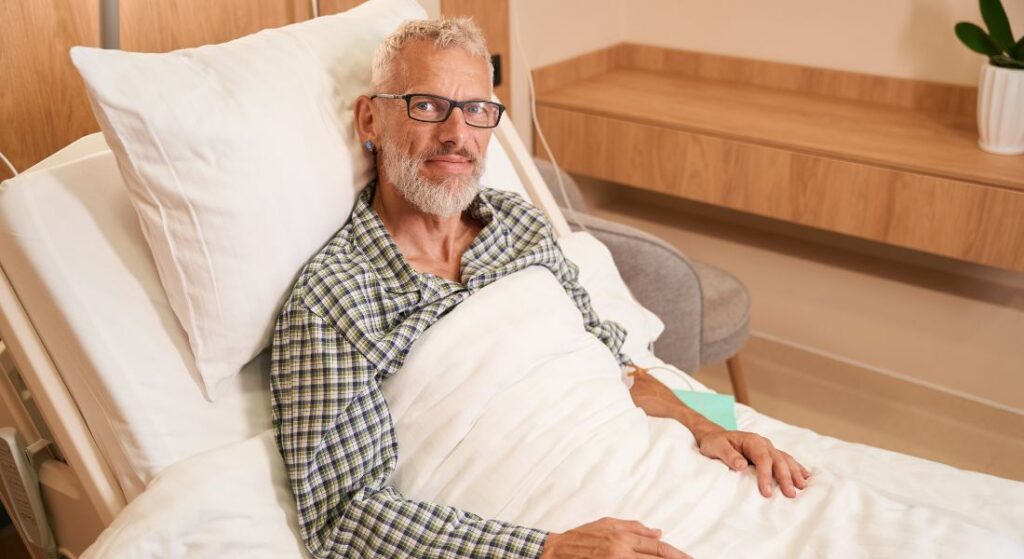
After robotic prostate cancer surgery, most patients stay in hospital for around one to three days. If you are undergoing this procedure, your length of stay may vary depending on how quickly you recover and how well your body responds after surgery.
Several factors influence when you are ready for discharge. These include your pain control, mobility, catheter management, and overall recovery progress. For you, the medical team will assess these areas daily to ensure it is safe for you to return home.
Early mobilisation is usually encouraged soon after surgery, along with support from nursing staff and physiotherapy if needed. This helps improve circulation, reduce complications, and support a smoother recovery. Once you are stable and comfortable, your team will plan your discharge with appropriate follow-up care.
Catheter Care
After robotic prostate cancer surgery, your urinary catheter will usually remain in place for around one to two weeks. If you are recovering from this procedure, this is a normal part of the healing process and is designed to support safe recovery of the bladder and surgical site.
The catheter allows urine to drain freely so that the connection between the bladder and urethra can heal without pressure or strain. This helps protect the surgical repair during the early stages of recovery. For you, it plays an important role in ensuring that healing occurs correctly and comfortably.
Before you leave hospital, your specialist team will provide detailed guidance on how to care for the catheter at home. This includes advice on hygiene, managing the drainage bag, and recognising any potential issues. Clear instructions and planned follow-up ensure that the catheter is removed safely at the appropriate time.
Pain and Comfort Management
Robotic prostate cancer surgery is generally associated with less postoperative pain compared with traditional open surgery because it is performed using small keyhole incisions rather than a large abdominal cut. If you are recovering from this procedure, you may find that discomfort is more manageable than expected in the early stages.
Pain is usually controlled with oral medications prescribed by your medical team. These are adjusted according to your needs and gradually reduced as your recovery progresses. For you, this step-by-step approach helps ensure that you remain comfortable while avoiding unnecessary medication once your pain improves.
It is also normal to experience mild soreness or discomfort around the incision sites during the first few days after surgery. This typically improves steadily as healing continues. Following your postoperative instructions and staying gently mobile can help support a smoother and more comfortable recovery.
Early Mobilisation
After robotic prostate cancer surgery, you will usually be encouraged to start gentle movement and light walking soon after your operation. If you are recovering from this procedure, early mobilisation is an important part of your postoperative care plan.
Getting you moving early helps improve blood circulation, supports bowel function, and reduces the risk of complications such as blood clots. For you, even short walks around the ward can make a meaningful difference to your overall recovery and comfort.
Your healthcare team will guide you on safe activity levels during your hospital stay, ensuring that you do not overexert yourself. While rest is still important, gradual and controlled movement helps speed up recovery and supports a smoother return to normal daily activities.
Continence Recovery
After robotic prostate cancer surgery, urinary control typically returns gradually rather than immediately. If you are recovering from this procedure, it is normal to experience some degree of leakage in the early weeks as your body heals and adjusts.
Pelvic floor exercises are commonly recommended to help strengthen the muscles that support bladder control. These exercises, when performed consistently, can play an important role in improving continence recovery over time. For you, following the guidance provided by your specialist or physiotherapist can help support better long-term outcomes.
Most men experience significant improvement within a few months, although full recovery can take up to a year in some cases. Recovery varies depending on individual factors such as age, baseline bladder function, and surgical details. Regular follow-up ensures your progress is monitored and additional support can be provided if needed.
Erectile Function Recovery
If nerve-sparing techniques are used during your robotic prostate cancer surgery, erectile function may gradually return over a period of several months. This recovery is often slow and depends on how well the nerves heal after surgery. If you are going through this process, it is important to understand that improvement can continue over time rather than happening immediately.
Your specialist may recommend a structured rehabilitation plan to support recovery. This can include medications, vacuum erection devices, or other therapies designed to promote blood flow and maintain tissue health. For you, following this guidance consistently may help optimise long-term functional outcomes.
Recovery timelines vary widely between individuals and are influenced by factors such as age, overall health, and preoperative erectile function. While some men notice early improvements, others may take a year or longer to see significant recovery. Regular follow-up allows your care team to monitor progress and adjust treatment as needed.
Follow-Up Appointments

After robotic prostate cancer surgery, you will have regular follow-up appointments to monitor your recovery and long-term health. These visits are an essential part of your care and help ensure that both cancer control and functional recovery are progressing as expected.
During follow-up, your specialist will check PSA levels, assess urinary and sexual function, and review wound healing. If you are recovering from surgery, these assessments help track your progress and identify any areas that may need additional support or treatment.
Your rehabilitation plan may be adjusted based on how you are recovering. This could include changes to pelvic floor exercises, medications, or other supportive therapies. Consistent follow-up also ensures that any complications or concerns are detected and managed early, helping you achieve the best possible outcome.
Complex or Extended Procedures
In some cases, robotic prostate cancer surgery may take longer than usual if additional steps are required during the operation. These can include procedures such as lymph node removal, which may be performed when there is a risk that cancer has spread beyond the prostate. If you are undergoing surgery, your specialist will explain in advance whether any additional procedures are likely in your case.
The overall duration of surgery can also be influenced by individual factors such as your anatomy, tumour location, and the complexity of the cancer. More complex cases may require additional time to ensure that the procedure is carried out safely and effectively. For you, the priority is always thorough cancer removal while maintaining precision and safety.
Your surgeon will discuss the expected length of your operation during pre-operative counselling so that you know what to expect on the day. This helps you prepare mentally and practically for the procedure. While timing can vary, the focus remains on achieving the best possible surgical outcome rather than speed.
Benefits of Robotic Surgery
Robotic prostate cancer surgery offers a minimally invasive approach with advanced robotic technology, allowing your surgeon to operate through small incisions rather than a large open cut. This can make your recovery easier and less uncomfortable. The system provides magnified 3D vision and precise instrument control, enabling delicate movements around nerves and blood vessels.
- Enhanced Precision: Robotic instruments allow accurate dissection while protecting important structures, supporting better functional outcomes.
- Reduced Tissue Damage: Precision and minimally invasive techniques help minimise trauma to surrounding tissues.
- Less Pain and Quicker Recovery: Smaller incisions often result in less postoperative pain, reduced blood loss, and faster initial recovery.
- Shorter Hospital Stay: Many patients are able to leave the hospital sooner than with traditional open surgery, depending on individual factors.
Overall, robotic surgery combines precise cancer removal with a less invasive approach to support recovery, reduce complications, and help maintain quality of life. These advantages aim to balance effective treatment with the best possible functional outcomes.
Patient Preparation and Education
When you understand the surgical process in advance, it can help reduce anxiety and make the experience feel more manageable. Knowing what will happen before, during, and after robotic prostate cancer surgery allows you to feel more prepared and confident about your treatment.
Before your operation, you will receive clear instructions about fasting, medication management, and any preoperative hygiene requirements. You may also be advised on how to prepare your home environment and arrange support for the first few days after discharge. For you, following these steps helps ensure your body is ready for surgery and your recovery begins smoothly.
Being well prepared also helps you plan practically for your recovery period, including transport, rest, and help with daily activities if needed. This preparation supports a smoother transition from hospital to home and can improve your overall recovery experience. The more informed you are, the more confidently you can approach each stage of the process.
Specialist Clinic Support

When you are undergoing robotic prostate cancer surgery, specialist clinics provide structured and coordinated care throughout your treatment journey. This includes support before surgery, care during the procedure, and follow-up after you leave hospital. If you are exploring treatment options, this continuity of care can make the entire process feel more organised and supported.
Before surgery, you will typically receive consultations, diagnostic assessments, and detailed explanations of your treatment plan. During surgery, your care is delivered by an experienced surgical and anaesthetic team using robotic technology. For you, this ensures that every stage of your treatment is managed by professionals with expertise in prostate cancer care.
After surgery, follow-up care is tailored to your recovery needs, including monitoring PSA levels, continence recovery, and overall wellbeing. For example, Prostate Clinic London offers comprehensive services covering consultation, robotic prostate surgery, and structured post-operative follow-up. This integrated approach helps support both your cancer treatment and your recovery outcomes.
FAQs:
1. What happens during robotic prostate cancer surgery?
Robotic prostate cancer surgery involves removing the prostate gland using robotic instruments controlled by a surgeon. Small incisions are made in the abdomen, allowing precise access to the prostate and surrounding tissues. The robotic system provides magnified 3D vision and enhanced dexterity during the procedure. This helps improve surgical precision while minimising tissue trauma.
2. Is robotic prostate surgery performed under general anaesthesia?
Yes, robotic prostate surgery is carried out under general anaesthesia. You will be fully asleep throughout the procedure and will not feel any pain during surgery. An anaesthetist continuously monitors your vital signs to ensure your safety. Most patients have no recollection of the operation itself.
3. How long does robotic prostate cancer surgery take?
The procedure typically takes between two and four hours, depending on individual circumstances. Factors such as prostate size, tumour location, and whether lymph nodes need to be removed can affect the duration. More complex cases may take longer. Your surgeon will discuss the expected operating time before treatment.
4. Why are small incisions used in robotic surgery?
Robotic surgery is a minimally invasive technique that uses several small incisions rather than one large incision. These small openings allow robotic instruments and a camera to enter the body with minimal disruption to surrounding tissues. As a result, patients often experience less pain, reduced blood loss, and quicker recovery. Smaller scars are another potential benefit.
5. Will my surgeon control the robot during the operation?
Yes, the surgeon remains in complete control throughout the procedure. The robotic system does not operate independently or make decisions on its own. Instead, it translates the surgeon’s hand movements into highly precise instrument movements. This allows for greater accuracy during delicate parts of the operation.
6. What is nerve-sparing robotic prostate surgery?
Nerve-sparing surgery aims to preserve the nerves responsible for erectile function whenever it is safe to do so. Whether this approach is suitable depends on the location and extent of the cancer. Preserving these nerves may improve the chances of recovering erectile function after surgery. Your surgeon will discuss whether nerve-sparing techniques are appropriate for your case.
7. Will I need a urinary catheter after surgery?
Yes, a urinary catheter is usually placed at the end of the procedure. The catheter allows urine to drain while the bladder and urethra heal following reconstruction. It generally remains in place for one to two weeks. Your healthcare team will provide detailed instructions on caring for the catheter at home.
8. How long will I stay in hospital after robotic prostate surgery?
Most patients stay in hospital for one to three days following surgery. The exact length of stay depends on your recovery, mobility, pain control, and overall health. Medical staff will ensure you are comfortable and recovering well before discharge. Early mobilisation often helps support a quicker return home.
9. How soon can I return to normal activities?
Light activities such as walking are usually encouraged shortly after surgery. However, strenuous exercise, heavy lifting, and physically demanding tasks should be avoided for several weeks. Recovery times vary between individuals. Your specialist will provide personalised advice based on your progress.
10. What follow-up care is required after robotic prostate surgery?
Regular follow-up appointments are essential after surgery. These visits monitor PSA levels, urinary continence, erectile function, and overall recovery. Your specialist will assess healing and provide guidance on rehabilitation if needed. Ongoing monitoring helps ensure the best possible long-term outcome.
Final Thoughts: What Happens During Robotic Prostate Cancer Surgery
Understanding what happens during robotic prostate cancer surgery can help you feel more prepared before treatment. From pre-operative checks and anaesthesia to prostate removal, reconstruction, catheter care, and follow-up, each stage is carefully planned to support both safety and recovery.
Robotic surgery allows the surgeon to work through small incisions using magnified 3D vision and precise instruments. For many patients, this can mean less pain, reduced blood loss, a shorter hospital stay, and a smoother early recovery compared with traditional open surgery.
If you are considering treatment at a specialist robotic prostate surgery clinic in London, seeking specialist advice can help you understand your options and choose the most appropriate approach for your individual circumstances.
References:
- Rinaldi, M. et al. (2025) ‘The role of robot-assisted radical prostatectomy in the management of prostate cancer and future perspectives’, Cancers, 17(19), p. 3122. Available at: https://www.mdpi.com/2072-6694/17/19/3122
- Kim, D.K. et al. (2025) ‘Comparison of robot-assisted, laparoscopic, and open radical prostatectomy outcomes: A systematic review and network meta-analysis from KSER update series’, Medicina, 61(1), p. 61. Available at: https://www.mdpi.com/1648-9144/61/1/61
- Huynh, L.M. and Ahlering, T.E. (2018) ‘Robot-assisted radical prostatectomy: A step-by-step guide’, Journal of Endourology, 32(S1), pp. S28–S32. Available at: https://pmc.ncbi.nlm.nih.gov/articles/PMC6071518/
- Kumar, A. et al. (2021) ‘Nerve-sparing robot-assisted radical prostatectomy: Current perspectives’, Asian Journal of Urology, 8(1), pp. 2–13. Available at: https://pmc.ncbi.nlm.nih.gov/articles/PMC7859364/
- Wang, J. et al. (2023) ‘Robot-assisted versus open radical prostatectomy: A systematic review and meta-analysis of prospective studies’, Journal of Robotic Surgery, 17, pp. 2617–2631. Available at: https://pubmed.ncbi.nlm.nih.gov/37721644/