




Prostate cancer surgery usually takes around two to four hours, although the exact duration can vary from person to person. This time generally refers only to the operation itself while the patient is in theatre. It does not include preparation before surgery or recovery afterwards.
Before and after the procedure, there are several important steps that also take time. These include anaesthetic preparation, positioning, recovery room monitoring, and the time needed to return to the ward. According to the Mayo Clinic, a prostatectomy typically lasts two to four hours in the operating room, but the full hospital process may take half a day or even a full day when everything is included.
If you are preparing for surgery, it is natural to want a clear and simple timeline. You may want to understand when you arrive, when the operation begins, how long your family might wait, when you wake up, and when you could potentially go home. Having this overview can help you feel more prepared and less uncertain.
The exact timing depends on several individual factors. These include the surgical approach used, prostate size, your anatomy, whether lymph nodes need to be removed, whether nerve-sparing is possible, any previous surgery, and the overall complexity of the case. While two to four hours is a helpful general guide, your surgeon will be able to give the most accurate estimate for your specific situation.
What Type of Prostate Cancer Surgery Is Usually Done?
The most common operation for prostate cancer is called a radical prostatectomy. In simple terms, this means the whole prostate gland is removed during surgery. In most cases, the seminal vesicles, which help produce fluid for semen, are also removed at the same time.
For some patients, the surgeon may also remove nearby lymph nodes during the operation. This is usually considered when there is a concern that the cancer may have started to spread beyond the prostate. Removing these lymph nodes can help give your medical team a clearer understanding of how advanced the cancer is and whether any further treatment may be needed.
There are different ways this surgery can be performed, depending on your hospital, your surgeon’s approach, and your individual situation. It may be carried out as an open operation, keyhole surgery, also known as laparoscopic surgery, or with robotic assistance, which is now widely used in many UK hospitals. Whatever method is used, the main aim is to remove the cancer safely while trying to protect important functions such as urinary control and sexual function as much as possible.
How Long Does Robotic Prostate Cancer Surgery Take?
Robotic prostate cancer surgery usually takes around two to four hours. This is the typical timeframe, although the operation can take longer in some cases depending on how complex it is. During the procedure, the surgeon removes the prostate gland and the seminal vesicles.
In some situations, the surgery may be completed more quickly. This can happen when your anatomy is straightforward and there is no need to remove nearby lymph nodes. However, the operation may take longer if the prostate is larger, the cancer is more complex, or there is scar tissue from previous surgery.
You should not feel worried if the operation takes longer than expected. A longer procedure does not automatically mean that something has gone wrong. In many cases, it simply means your surgeon is taking extra care to operate safely and achieve the best possible outcome.
Why Surgery Time Can Vary
The length of prostate cancer surgery can vary for several reasons. A larger prostate may take longer to remove because the surgeon may need more time to separate it safely from nearby tissues. Previous abdominal or pelvic surgery can also create scar tissue, which may make the operation more complex.
The procedure may also take longer if nearby lymph nodes need to be removed. If nerve-sparing surgery is being attempted, your surgeon may need extra time to work carefully around the nerves involved in erections. This careful approach can help reduce the risk of damage where preservation is possible.
The location of the cancer can also affect how long the operation takes. If the tumour is close to important structures, the surgeon may need to remove tissue more carefully or more widely to treat the cancer safely. The safest operation is not always the fastest one, and taking extra time can sometimes be the right approach.
Does Robotic Surgery Mean the Robot Operates Alone?
No, the robot does not operate by itself. Your surgeon is in full control throughout the procedure and uses the robotic system to guide the surgical instruments from a console. So, even though it is called robotic surgery, it is still your surgeon who performs the operation.
The robotic system helps by giving your surgeon a clear, magnified view of the prostate and the surrounding area. It also allows very precise movements through small cuts in the abdomen. This can be especially useful in prostate surgery because the surgeon is working close to important structures.
It is helpful to think of the robot as an advanced surgical tool, not as something that works independently. Your surgeon’s experience, judgement, and decision-making still matter throughout the operation. The robot does not replace the surgeon; it simply helps them carry out the surgery with greater control and precision.
What Happens Before the Operation Starts?
Your day does not begin when the surgeon makes the first cut. Before surgery, you will usually arrive at hospital, check in, meet nurses, confirm your details, and change into a hospital gown.
Your anaesthetist may speak with you again, especially about your medical history, medicines, allergies, fasting, and anaesthetic plan. The surgical team may confirm the procedure, consent, and any final details.
You may also have checks such as blood pressure, pulse, temperature, and sometimes blood tests depending on local practice. This preparation is part of the overall day, but it is not counted as the operation time itself.
Anaesthetic Time Is Separate From Surgery Time
Before prostate cancer surgery begins, you will have a general anaesthetic. This means you will be asleep during the operation and should not feel anything while the surgery is being carried out. This stage happens before the actual operation officially starts.
The anaesthetic team needs time to put you to sleep safely, secure your airway, position you correctly, and attach monitoring equipment. These steps are important because they help keep you stable and carefully monitored throughout the procedure. This preparation can add extra time before the surgeon begins the operation.
After the surgery is finished, the anaesthetic team also needs time to wake you safely and move you to the recovery area. Because of this, your family may notice that you are away from the ward for longer than the actual surgical time. This is normal and does not usually mean that the operation itself has taken longer than expected.
Positioning Can Take Time
For robotic prostate surgery, your body needs to be positioned very carefully before the operation begins. This helps your surgeon access the pelvis safely and allows the robotic instruments to move and work properly. This step is important because the surgery is performed in a specific position.
Positioning is done while you are asleep and under the care of the anaesthetic and theatre team. Your arms, legs, pressure points, and breathing are carefully protected throughout this stage. These checks help reduce the risk of discomfort, pressure injury, or strain while you are asleep.
Although you may not be aware of this part of the process, it is an important safety step. Robotic prostate surgery can take several hours, so your body needs to be supported properly from the beginning. This preparation may add extra time, but it helps the team carry out the operation as safely as possible.
What Happens During the Operation?
During the operation, your surgeon removes the prostate gland. The seminal vesicles are usually removed at the same time because they sit close to the prostate and are part of the same surgical area. If lymph node removal has been planned, this is also carried out during the same procedure.
After the prostate has been removed, the bladder is reconnected to the urethra, which is the tube that carries urine out of your body. A catheter is then placed to drain urine while this join heals. This catheter is inserted while you are asleep, so you will not feel it being put in.
The exact steps can vary slightly depending on the type of surgery you are having. For example, the approach may be conventional robotic surgery, Retzius-sparing robotic surgery, laparoscopic surgery, or open surgery. Your surgeon will choose the method based on your condition, anatomy, cancer details, and the safest way to carry out the operation.
Does Lymph Node Removal Add Time?
Yes, lymph node removal can add time to the operation. Pelvic lymph nodes may be removed if your specialist thinks there is a risk that cancer could have spread beyond the prostate. The decision is usually based on your PSA, biopsy grade, MRI findings, cancer stage, and risk assessment.
Removing lymph nodes can help with staging and treatment planning. If lymph node removal is part of your operation, your surgeon may explain that the procedure could take longer than a prostate removal alone. This is not unusual. It simply means more surgical work is being done.
Does Nerve-Sparing Add Time?
Nerve-sparing surgery can take extra time because it requires careful and delicate work. The nerves involved in erections run very close to the prostate, so your surgeon has to assess whether they can be safely preserved. If it is safe from a cancer-control point of view, the surgeon may try to protect these nerves during the operation.
There are two bundles of nerves attached to the prostate that help with erections. Whether these nerves can be saved depends on where the cancer is and how close it is to these structures. If nerve-sparing is possible, the surgeon may need more time to work slowly and precisely around this area.
However, nerve-sparing is not always suitable for every patient. If the cancer is close to the nerves, wider removal may be needed to reduce the risk of leaving cancer behind. In this situation, treating the cancer safely becomes the main priority, even if preserving the nerves is not possible.
Does Retzius-Sparing Surgery Take Longer?

Retzius-sparing robotic prostate surgery is a specialised approach. Instead of reaching the prostate from the front of the pelvis, the surgeon approaches it from behind. Because of this, the time can vary depending on your anatomy, the cancer location, the complexity of the case, and your surgeon’s experience with this technique.
In experienced hands, Retzius-sparing surgery may take a similar amount of time to conventional robotic prostate surgery. However, it can take longer in selected cases, especially if the anatomy is more complex or the cancer position needs extra care. This does not necessarily mean there is a problem; it may simply mean the surgeon is working carefully.
The most important point is that suitability matters more than speed. If your surgeon recommends Retzius-sparing surgery, it is reasonable to ask how long they expect the operation to take in your specific case. You can also ask whether any personal factors, such as prostate size, previous surgery, or cancer location, may make the procedure more complex.
Does Open Surgery Take Longer Than Robotic Surgery?
Open surgery and robotic surgery can both vary in how long they take. Open radical prostatectomy involves a larger incision, while robotic surgery is carried out through smaller cuts using robotic instruments. Because the approach is different, the time can depend on several personal and surgical factors.
The length of the operation depends more on your anatomy, prostate size, cancer features, lymph node removal, previous surgery, and the surgeon’s experience than on one simple rule. Robotic surgery may also involve extra setup time because the robotic system needs to be positioned and connected before the operation begins. This preparation is part of the overall theatre time, even though it is separate from the main surgical work.
Open surgery may involve different recovery considerations because the incision is larger. This does not automatically mean it is always quicker or slower than robotic surgery. Your surgeon can explain which approach is recommended for you and what timing you should expect in your individual case.
How Long Are You in Theatre Overall?
The total time in theatre is usually longer than the actual operation. This is because it includes preparation, anaesthesia, surgery, and recovery monitoring. Even a relatively short procedure can take much longer when all stages are included. Patients and families should understand that theatre time is a full process, not just the operation itself.
- Anaesthesia and Preparation: Before surgery starts, the team prepares the patient and administers anaesthesia. Monitoring and positioning also take time to ensure safety. This stage is essential for a smooth operation.
- Surgical Procedure Time: The actual surgery may only take a few hours depending on the case. However, it is performed carefully and step by step. Precision is more important than speed.
- Recovery After Surgery: After the operation, patients are monitored as they wake up from anaesthesia. Staff check vital signs before transfer to recovery. This ensures the patient is stable.
Overall, time spent in theatre includes several essential steps beyond the operation itself, all focused on safety and proper care. Preparation and recovery are just as important as the surgery in ensuring good outcomes. Because of this, the total duration may feel longer than expected, but it is part of a carefully managed process. A longer theatre time is normal and does not usually indicate any concern.
What Happens After Surgery Ends?
Once the surgery is complete, you are taken to the recovery area. Specialist nurses will monitor you closely while the anaesthetic gradually wears off. This helps make sure you are waking safely and that your body is stable after the operation.
During this time, the team will check your breathing, blood pressure, pulse, pain level, catheter, urine output, wounds, and general comfort. You may feel sleepy, cold, thirsty, sore, or slightly confused for a short time after waking up. This is common after a general anaesthetic and usually improves as you become more alert.
Once you are stable, you are usually transferred back to the ward. Your medical team will continue to monitor you and support you during the early stage of recovery. They will also help you start gentle movement and guide you on what to expect next.
Will You Be in Pain When You Wake Up?
You may feel sore or uncomfortable when you wake up after surgery, but pain relief will be available. You might notice discomfort around the small abdominal wounds, some bloating from the gas used during keyhole surgery, or irritation from the catheter. These feelings are common after this type of operation and can usually be managed with medication.
Some men also feel shoulder-tip discomfort after keyhole surgery. This can happen because gas is used during the operation to create space for the surgeon to work. The discomfort usually settles as the gas gradually leaves your body.
Your nurses will ask you about your pain and give you medication when needed. You should not try to be brave or stay silent if you are uncomfortable. Good pain control helps you breathe deeply, move safely, and recover more comfortably.
How Soon Can You Move After Surgery?
You will usually be encouraged to move gently soon after surgery. Cancer Research UK explains that nurses encourage movement as soon as possible, and many people may be sitting in a chair within two hours and walking around the ward after three or four hours if usually mobile.
This does not mean pushing yourself. It usually means gentle movement with support from nurses. Early movement helps reduce stiffness, support circulation, and lower the risk of complications such as blood clots. You should follow your own team’s advice, especially if you feel dizzy, weak, or in pain.
How Long Do You Stay in Hospital?
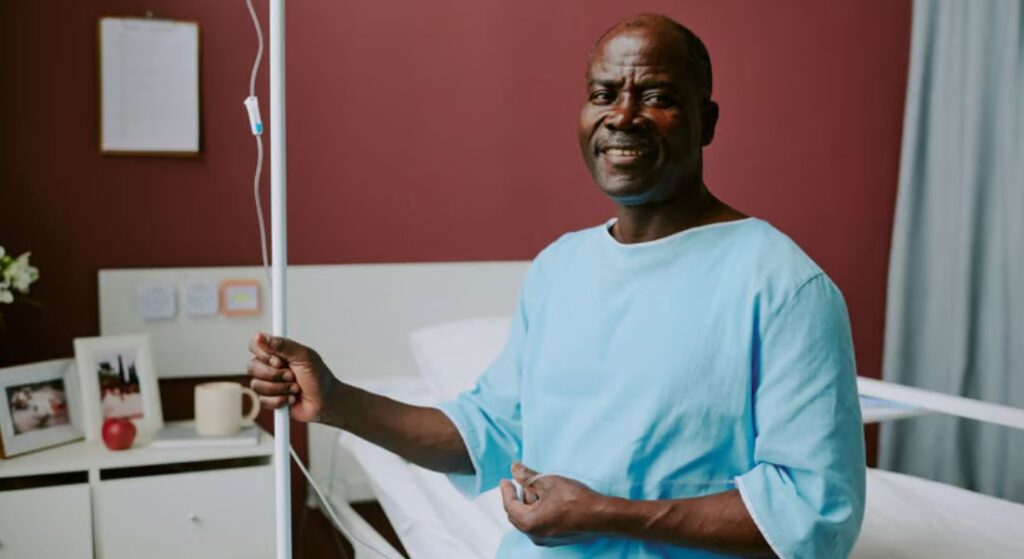
Your hospital stay can vary, but many patients stay for one night after robotic prostate cancer surgery. This gives your medical team time to monitor you after the operation and make sure you are recovering safely. Once you go home, you are usually encouraged to continue gentle activities, such as walking, as part of your early recovery.
Some patients may need to stay in hospital for longer. This may happen if you need extra monitoring, better pain control, help with moving around, or more support with your catheter. Open surgery may also involve a longer hospital stay in some cases because the incision is larger and recovery can be different.
Your own medical team will decide when it is safe for you to leave hospital. You should not feel that you need to rush home before you are ready. The aim is for you to leave when your recovery is stable and you feel supported with the next steps.
Typical Hospital Stay & Recovery Timeline
| Recovery Stage | Expected Timeline | What Happens |
| Hospital stay | 1–2 days (often 1 night) | Monitoring after surgery |
| Catheter use | 1–2 weeks | Bladder healing support |
| Light activity | Few days after discharge | Gentle walking encouraged |
| Return to work | 2–6 weeks | Depends on job type |
| Full recovery | 4–6 weeks+ | Gradual return to normal activity |
Will You Go Home With a Catheter?
Yes, most men go home with a catheter after prostate cancer surgery. The catheter drains urine from your bladder while the new join between the bladder and urethra heals. It is usually placed while you are asleep, so you will not feel it being inserted.
Before you leave hospital, your team will show you how to manage the catheter safely. They will explain how to empty the bag, keep the area clean, and look out for any problems. You may also be given a smaller leg bag for daytime use and a larger bag for night-time.
The catheter can feel strange at first, and it may take a little time to get used to it. However, it is usually only temporary and is removed once the healing has progressed enough. Your team will let you know when and how this will happen.
How Long Does the Catheter Stay In?
The catheter is usually kept in for a short period after surgery, often around one to two weeks depending on the surgeon’s protocol and healing. Different hospitals may follow slightly different routines. Your team will arrange a catheter removal appointment and explain what to expect.
After removal, you may notice urinary leakage at first. This can happen because the urinary control system needs time to recover after prostate removal. You may need pads temporarily. Your team may also advise pelvic floor exercises to support bladder control.
How Long Is the Whole Surgery Day?

For you as a patient, the whole surgery day may feel much longer than the actual operation. You may arrive early, wait for theatre, have pre-operative checks, and then go through anaesthetic preparation before the surgery begins. These steps are all part of making sure you are safe and ready for the procedure.
After the operation, you will also spend time in the recovery area while the anaesthetic wears off. Your team will monitor your breathing, blood pressure, pain levels, catheter, and general comfort before you return to the ward. This means the total time away from the ward can be longer than the surgery itself.
The overall process can sometimes take half a day to a full day, even though the operation itself usually takes around two to four hours. This is why you should not judge the day only by the operation time. The whole day is planned around safety, careful monitoring, and helping you start recovery properly.
What Should Your Family Expect While Waiting?
Your family or friend may need to wait several hours before they hear that you are back in recovery or on the ward. This waiting time can feel worrying, especially if they are only thinking about the operation time itself. It may help to explain beforehand that the full process often takes longer than the surgery alone.
The operation itself may take around two to four hours, but your total time away from the ward can be longer. This is because anaesthetic preparation, theatre setup, recovery monitoring, and transfer back to the ward all take time. These steps are normal parts of the surgery day and are there to keep you safe.
Your family should follow the hospital’s usual update process rather than assuming that a delay means something has gone wrong. Many delays are routine and logistical, such as theatre timing, recovery room availability, or the need for extra monitoring. Knowing this in advance can help them feel more prepared while they wait.
Why the Operation May Take Longer Than Expected
Sometimes prostate cancer surgery takes longer than originally planned. This can happen if there is scar tissue from previous surgery, a larger prostate, difficult anatomy, or bleeding that needs careful control. Extra time may also be needed if lymph nodes are being removed during the same operation.
The surgery may also take longer if your surgeon is working carefully around the nerves or around areas close to the cancer. These parts of the operation can require slow, precise movements to reduce risk and protect important structures where possible. Taking more time in these situations is often part of operating safely.
A longer operation can feel worrying for relatives who are waiting for updates. However, it often simply means the team is taking the time needed to complete the surgery properly and safely. Speed is not the goal; safe cancer removal and careful reconstruction are more important.
What Happens If Surgery Is More Complex?
If surgery is more complex than expected, the surgeon may take extra steps to complete the operation safely. In rare cases, a planned robotic or laparoscopic procedure may need to be converted to open surgery. This means the surgeon makes a larger incision to complete the operation safely.
Your surgeon should discuss this possibility with you before surgery, even though it is not common in experienced centres. The aim is always to choose the safest approach for your situation. If anything unexpected happens, your team will explain it afterwards.
How Long Does Recovery Take After the Operation?
Recovery after prostate cancer surgery happens in stages. The operation itself may only take a few hours, but your body needs weeks, and sometimes months, to heal properly. Most people gradually return to normal activities within around four to six weeks, although strenuous activity is usually avoided for about six weeks.
Some parts of recovery can take longer than your general physical healing. Urinary control may improve gradually, and erectile recovery can also take time depending on your surgery, nerve-sparing, age, health, and individual healing. Some men notice progress quite quickly, while others need more time and support.
You should not judge your whole recovery by how you feel in the first few days. It is normal to feel tired, sore, or slower than usual at the beginning. Recovery is usually a step-by-step process, and your medical team will guide you on what is safe at each stage.
Returning Home After Surgery
When you go home, your focus should be gentle recovery. You will usually be advised to walk regularly, avoid heavy lifting, drink fluids as advised, manage constipation, care for your wounds, and look after the catheter.
You may feel tired more easily than expected. This is normal after major surgery and anaesthetic. You should avoid strenuous activity until your team says it is safe. If you develop fever, worsening pain, heavy bleeding, catheter blockage, chest pain, breathlessness, calf swelling, or wound problems, seek medical advice promptly.
Returning to Work
Returning to work after prostate cancer surgery depends on your job and how your recovery is progressing. If you have a desk-based job, you may be able to return earlier than someone whose work involves lifting, long-distance driving, site work, or standing for long periods. Your return should be based on what your body can manage safely, not just the number of days since surgery.
You should also think about practical issues such as catheter timing, urinary leakage, tiredness, pain, follow-up appointments, and concentration. Some men feel physically better before they feel fully confident about going back to work. This is understandable, especially if you are still adjusting to changes in your routine or recovery.
It is best to ask your surgeon or specialist nurse what is realistic for your type of work. They can give guidance based on your operation, recovery, and any symptoms you are still managing. A gradual return may be helpful if your job allows it.
Will Surgery Time Affect Recovery?
Not always. A slightly longer operation does not necessarily mean your recovery will be slower. Recovery depends on many different factors, including your age, fitness, general health, surgical approach, blood loss, catheter plan, pain control, complications, and how your body heals.
A shorter operation is not automatically better if your surgery needed more careful work. Sometimes the surgeon may need extra time to operate safely around important structures, remove lymph nodes, or complete the reconstruction properly. In these situations, taking longer can be part of doing the operation safely.
The most important thing is that the surgery is done safely and properly. If your surgeon expects your case to take longer, it is sensible to ask why. Understanding the reason can help reduce worry and make you feel more prepared for the operation and recovery.
What Can You Do Before Surgery?
You can prepare for prostate cancer surgery in simple and practical ways. Follow your fasting instructions carefully, and only take or stop medicines exactly as your medical team advises. You should also arrange transport home, prepare loose clothing, keep simple meals ready, and make sure you know who to contact if you have concerns after discharge.
If your team teaches you pelvic floor exercises before surgery, try to practise them correctly. These exercises may help you feel more prepared for recovery, especially when it comes to urinary control. Gentle walking can also be helpful if you are well enough, as it keeps your body moving without putting it under too much strain.
Try to avoid last-minute extreme diets or intense exercise plans before your operation. This is not the time to push your body too hard or make sudden changes without medical advice. Good preparation is about staying steady, organised, and realistic.
Speak to Our Specialist

If you are preparing for prostate cancer surgery, it can help to discuss the full timeline before your operation day. You may want to understand how long the surgery may take, how long you may stay in hospital, and what usually happens before and after the procedure. Having this information in advance can make the experience feel less uncertain.
You may also want to ask whether robotic surgery is suitable for you and whether nerve-sparing may be possible in your case. These decisions depend on your diagnosis, cancer location, general health, and your surgeon’s assessment. Your specialist can explain what is realistic for your situation and what recovery may involve.
If you are looking for a prostate cancer treatment clinic in London, you can arrange a consultation to talk through your diagnosis, treatment options, operation timing, recovery expectations, and any concerns you have before surgery. This gives you space to ask questions and feel more prepared. Knowing what to expect can help you approach the day with more confidence and clarity.
Frequently Asked Questions
1. How long does prostate cancer surgery usually take?
Prostate cancer surgery usually takes around 2 to 4 hours in the operating theatre. This refers only to the time the surgeon is operating and does not include preparation before the procedure or recovery afterwards. The exact duration can vary depending on how complex the case is and which surgical approach is used.
2. Does the 2-4 hour time include preparation and recovery?
No, the 2-4 hour timeframe only covers the operation itself. Before surgery, there is anaesthetic preparation, patient positioning, and safety checks, all of which take additional time. After surgery, you will also spend time in recovery while the anaesthetic wears off and your condition is closely monitored.
3. Why can prostate cancer surgery take longer in some cases?
Surgery may take longer for several reasons, including a larger prostate, previous surgery causing scar tissue, or more complex anatomy. If lymph nodes need to be removed or nerve-sparing techniques are used, this can also increase the duration. A longer operation usually reflects careful surgical work rather than a problem.
4. Is robotic prostate surgery faster than open surgery?
Robotic and open surgery generally take a similar amount of time, usually within the same 2-4 hour range. The difference is not usually in speed but in technique and precision. Robotic surgery may require extra setup time, while open surgery involves a larger incision, but overall duration depends more on individual factors than the method itself.
5. Does robotic surgery mean the robot performs the operation?
No, the robot does not operate independently. The surgeon remains in full control at all times and uses a console to guide the robotic instruments. The system simply allows more precise movements and better visualisation. It should be seen as an advanced surgical tool rather than an autonomous machine.
6. What happens before the surgery starts?
Before the operation begins, you will go through several important steps including hospital admission, pre-operative checks, anaesthetic assessment, and consent confirmation. The anaesthetic team will prepare you safely for surgery, and you will be positioned carefully on the operating table. These steps are essential for ensuring everything is safe before the procedure starts.
7. Will I be asleep during prostate cancer surgery?
Yes, prostate cancer surgery is performed under a general anaesthetic, meaning you will be fully asleep throughout the procedure. You will not feel or remember the operation. The anaesthetic team continuously monitors your breathing, heart rate, and blood pressure to ensure you remain safe and stable during surgery.
8. How long will I stay in hospital after surgery?
Many patients stay in hospital for around one night after robotic prostate surgery, although this can vary. Some people may need a longer stay if they require extra monitoring, pain control, or assistance with mobility or catheter care. Your medical team will only discharge you when it is safe and appropriate.
9. Will I go home with a catheter?
Yes, most patients go home with a temporary urinary catheter after prostate cancer surgery. This helps drain urine while the connection between the bladder and urethra heals. The catheter is usually managed for you in hospital first, and you will be taught how to care for it before discharge.
10. Does a longer operation mean something went wrong?
Not usually. A longer operation does not automatically indicate a complication. It often means the surgeon is taking extra care to operate safely, especially when working near delicate structures or removing lymph nodes. The priority is always accuracy and safety rather than speed.
Final Thoughts: What to Expect From Prostate Cancer Surgery Timing
Understanding how long prostate cancer surgery takes can make the whole experience feel more manageable. While the operation itself usually lasts around two to four hours, the full hospital journey includes preparation, anaesthetic time, recovery monitoring, and early post-operative care. When everything is included, it is normal for the entire process to take most of the day.
It is also important to remember that a longer operation does not necessarily mean a complication. In many cases, it simply reflects careful, precise surgical work aimed at achieving the best possible outcome. Every patient’s situation is different, and factors such as surgical approach, anatomy, and cancer complexity all play a role in timing. If you are looking for prostate cancer treatment clinic in London and would like specialist advice, you can contact us to discuss your options and arrange a consultation tailored to your individual needs.
References:
- Hamdy, F.C., Donovan, J.L., Lane, J.A. et al. (2016) 10-Year outcomes after monitoring, surgery, or radiotherapy for localized prostate cancer, New England Journal of Medicine, 375, pp. 1415-1424. Available at: https://pubmed.ncbi.nlm.nih.gov/27626136/
- Van den Bergh, R.C.N., Briers, E. et al. (2021) EAU-EANM-ESTRO-ESUR-SIOG Guidelines on Prostate Cancer, European Urology, 79(2), pp. 243-262. Available at: https://pubmed.ncbi.nlm.nih.gov/33172724/
- Mottet, N. et al. (2021) EAU-EANM-ESTRO-ESUR-SIOG guidelines on prostate cancer 2020 update. Part 1: screening, diagnosis, and local treatment with curative intent, European Urology, 79(2), pp. 243-262. Available at: https://www.sciencedirect.com/science/article/pii/S0302283820307697
- Hughes, A. C., & Graham, L. S. (2026). Treatment approaches and future directions for neuroendocrine prostate cancer and other aggressive variant prostate cancers. Advances in Oncology, 6(1), 165-172. Available at: https://www.sciencedirect.com/science/article/pii/S2666853X26000123
- You, D.Z., Kim, C.S. and Jeong, I.G. (2010) Role of radical prostatectomy for high-risk prostate cancer, Korean Journal of Urology, 51(9), pp. 589-595. Available at: https://pmc.ncbi.nlm.nih.gov/articles/PMC2941806/