




Prostate cancer surgery can feel less frightening when you understand what actually happens. You may be worried about the anaesthetic, how the prostate is removed, whether you will wake up with a catheter, how long you will be in hospital, and what the first few days of recovery may feel like. These are very common concerns, especially when you are preparing for major cancer surgery.
Prostate cancer surgery is usually called a radical prostatectomy. This means the entire prostate gland is removed, usually along with the seminal vesicles. In some cases, nearby lymph nodes may also be removed if your specialist needs to check whether the cancer has spread beyond the prostate. Understanding these steps can help you feel more informed about what the operation is designed to achieve.
Today, many prostate cancer operations are performed using robotic or keyhole techniques, although open surgery may still be recommended in certain situations. The most suitable approach depends on several factors, including your cancer, anatomy, general health, and your surgeon’s assessment. Your specialist will explain why a particular technique is recommended for you.
This article explains what usually happens before, during, and immediately after prostate cancer surgery. By understanding the different stages of the process, you may feel more prepared and know what to expect on the day of your operation and during the early stages of recovery.
What Is Prostate Cancer Surgery?
Prostate cancer surgery is an operation to remove the prostate gland. The prostate sits below the bladder and surrounds the urethra, which is the tube that carries urine out of your body. Because of this position, the surgeon needs to work carefully around several important structures.
These structures include the bladder, urethra, urinary sphincter, nerves, blood vessels, and nearby tissues. The aim is to remove the prostate cancer safely while protecting urinary and sexual function as much as possible. This balance is an important part of planning and carrying out the operation.
Because the prostate is close to these important areas, some side effects can happen after surgery. These may include urinary leakage and erectile dysfunction, although the level of risk can vary from person to person. This is why careful planning, good surgical technique, and the right recovery support are all important.
Why Is the Whole Prostate Removed?
In prostate cancer surgery, the whole prostate is usually removed because the cancer is located within the prostate gland. This is different from surgery for benign prostate enlargement, where only the part of the prostate causing blockage may be removed to improve urine flow. The goals of these two operations are different, which is why the amount of tissue removed also differs.
With a radical prostatectomy, the main aim is to treat the cancer by removing the entire prostate gland. The seminal vesicles are usually removed at the same time because they sit close to the prostate and can be involved in the disease process. Removing the whole prostate helps reduce the risk of cancer being left behind.
After the operation, the removed tissue is sent to a laboratory for detailed examination. The pathology report provides important information about the cancer, including its grade, stage, margin status, and whether it appears to have been completely removed. This information helps your medical team decide whether any further treatment or monitoring may be needed.
What Happens Before the Day of Surgery?
Before surgery, your specialist team will confirm that surgery is suitable for your prostate cancer and your overall health. They will review your PSA result, MRI scan, biopsy findings, cancer grade, cancer stage, medicines, medical conditions, and previous operations. You may have a pre-assessment appointment before the operation.
This may include blood tests, urine tests, blood pressure checks, heart tracing, medication review, and an anaesthetic assessment. Your team may also discuss pelvic floor exercises, because these can help support urinary control recovery after surgery. You should use this time to ask questions about catheter care, hospital stay, side effects, recovery, work, exercise, and follow-up.
Arriving at Hospital
On the day of surgery, you will usually arrive at hospital before the operation time. You may be asked to stop eating and drinking for a set period before surgery. Follow the fasting instructions exactly because they are important for anaesthetic safety. A nurse will check your details, confirm the procedure, and help you prepare.
You may change into a hospital gown and have basic checks such as blood pressure, pulse, temperature, and oxygen levels. Your surgical and anaesthetic team may come to see you before theatre. They may confirm your consent, answer last-minute questions, and check that nothing has changed since your pre-assessment.
Meeting the Anaesthetic Team

Before the operation starts, you will meet the anaesthetic team. They will check your medical history, allergies, medicines, previous anaesthetic experiences, and any specific risks. Prostate cancer surgery is usually done under general anaesthetic, which means you are asleep and do not feel the operation.
The anaesthetic team monitors you throughout the procedure. They look after your breathing, heart rate, blood pressure, oxygen levels, fluids, and pain control. This is a major part of your safety during surgery, even though you may not remember much after going to sleep.
Going to Theatre
When it is time for surgery, you will be taken to the operating theatre or anaesthetic room. You may have a small plastic tube placed into a vein in your hand or arm. This is used to give medicines and fluids.
Monitoring equipment will be attached, such as blood pressure cuff, oxygen monitor, and heart monitor. The anaesthetic medicines are then given, and you will fall asleep. Once you are asleep, the team will position you safely for surgery. You will not feel the positioning, catheter insertion, or operation.
Positioning for Surgery
For robotic or laparoscopic prostate cancer surgery, your body needs to be positioned carefully. This helps the surgeon access the prostate inside the pelvis. The theatre team protects pressure points and checks your arms, legs, head, and body position.
This step can take time, but it is important. Correct positioning helps reduce pressure-related injury, supports breathing under anaesthetic, and allows the surgical team to work safely. It is one of the reasons the total time away from the ward may be longer than the operation time itself.
Robotic Prostate Cancer Surgery
Robotic prostate cancer surgery is also known as robot-assisted radical prostatectomy. During this procedure, your surgeon controls robotic instruments through small cuts in your abdomen. The robot does not operate by itself, and your surgeon remains in control throughout the operation.
The robotic system gives your surgeon a magnified view and allows very precise movements inside the pelvis. This can help them work carefully around important structures such as the bladder, urethra, nerves, and blood vessels. These areas are close to the prostate, so careful surgical control is important.
Robotic surgery is a type of keyhole surgery, which means the cuts are smaller than open surgery. However, it is still major surgery because the prostate is removed from inside the body. The smaller cuts may help with recovery, but the operation itself still needs careful planning and proper healing time.
Open Prostate Cancer Surgery
Some patients may have open radical prostatectomy to treat prostate cancer. This operation uses a larger cut, usually in the lower abdomen, so the surgeon can remove the prostate gland. It may be recommended in selected cases depending on your cancer features, anatomy, previous surgery, surgeon experience, or local hospital practice.
The aim of open surgery is the same as robotic surgery: to remove the prostate cancer safely. However, recovery may feel different because the incision is larger. You may need more time for wound healing, movement, and general comfort after the operation.
Your surgeon should explain why open surgery, robotic surgery, or another approach is recommended for you. The best surgical approach is not always the newest or quickest option. It is the one that is safest and most appropriate for your individual situation.
The First Surgical Step
Once you are asleep and positioned safely, the surgeon begins the operation. In robotic surgery, small cuts are made in your abdomen for the camera and surgical instruments. These small openings allow the surgeon to see and work inside the pelvis.
Your abdomen is gently inflated with gas to create enough working space. The robotic instruments are then placed through the small cuts and controlled by the surgeon. This helps the surgeon access the prostate with a clear view and precise movement.
In open surgery, the surgeon uses a larger incision to reach the prostate directly. The exact first steps can vary depending on the surgical approach being used. However, the overall aim is the same: to reach the prostate safely and begin separating it from the nearby structures.
Separating the Prostate
During the operation, the prostate is carefully separated from the surrounding tissues. This is a very precise part of the surgery because the prostate sits close to important structures such as the bladder, urethra, rectum, urinary sphincter, nerves, and blood vessels. Your surgeon needs to work slowly and carefully in this area to remove the prostate safely.
The surgeon also takes time to control any bleeding and reduce the risk of damage to nearby structures. If the cancer is close to the outer edge of the prostate, a slightly wider margin of tissue may need to be removed in that area. This helps improve the chance that the cancer is cleared as safely as possible.
In some cases, if the cancer is not close to the nerves, a nerve-sparing approach may be possible. This may help protect urinary and sexual function where it is suitable and safe. Every patient is different, so the operation is tailored to your anatomy, cancer position, and overall treatment needs.
Removing the Seminal Vesicles
The seminal vesicles are usually removed during radical prostatectomy. These are small glands that sit behind the prostate and help produce the fluid that forms part of semen. They are removed because prostate cancer can sometimes spread into them or close to this area.
Removing the seminal vesicles also forms part of a standard radical prostatectomy. After surgery, you will no longer ejaculate semen because the prostate and seminal vesicles have been removed. You may still be able to have an orgasm, but it will be a dry orgasm, meaning little or no fluid comes out.
This change also means your natural fertility will be affected after the operation. If having children in the future is important to you, it is best to discuss sperm storage before surgery. Your specialist can explain this before treatment begins, so you have time to understand your options and make a decision.
Nerve-Sparing During Surgery
The nerves involved in erections run very close to the prostate. If it is safe from a cancer-control point of view, your surgeon may try to preserve these nerves during the operation. This is called nerve-sparing surgery, and it is planned carefully based on where the cancer is located.
There are two bundles of nerves attached to the prostate that help with erections. Depending on your cancer position and surgical findings, nerve-sparing may be possible on both sides, one side, or not at all. Your surgeon will make this decision based on what gives you the safest cancer treatment.
If the cancer is close to the nerves, the surgeon may need to remove tissue more widely. This helps reduce the risk of leaving cancer cells behind. Preserving sexual function is important where possible, but cancer control always comes first.
Lymph Node Removal
Some men have nearby lymph nodes removed during prostate cancer surgery. This is usually considered when there is a higher chance that cancer may have spread beyond the prostate. Your specialist will decide whether this is necessary based on factors such as your PSA level, biopsy results, MRI findings, and overall cancer risk.
Removing lymph nodes can provide valuable information about how far the cancer has progressed. The results may help your medical team decide whether any additional treatment or closer follow-up is needed after surgery.
For you, this means lymph node removal is not automatically part of every operation. If it is recommended in your case, your surgeon should explain why it is being done and how it may affect the length of the procedure and your overall treatment plan.
Removing the Prostate
Once the prostate and surrounding structures have been carefully prepared, the prostate is removed. In robotic surgery, it is usually placed into a small surgical bag inside the body. It is then removed through one of the abdominal cuts, and sometimes one cut may be made slightly larger to allow this.
After removal, the prostate is sent to the laboratory for pathology testing. This gives your specialist more detailed information than a biopsy alone because the whole prostate can be examined. The report helps show how the cancer behaved inside the gland.
The pathology report may show whether the cancer was contained within the prostate, whether the margins are clear, and whether any removed lymph nodes contain cancer. These results are important because they guide your follow-up plan. They can also help your medical team decide whether you need monitoring only or any further treatment.
Reconnecting the Bladder and Urethra
After the prostate is removed, the bladder is reconnected to the urethra. This join is called an anastomosis. It is one of the most important steps in the operation because it allows urine to pass from the bladder through the urethra again.
The join needs time to heal. This is why a catheter is placed after surgery. The catheter helps drain urine continuously so the new join is not put under pressure while healing begins. You will not feel the catheter being placed because it is inserted while you are asleep.
Catheter Placement
A catheter is a soft tube that passes through the penis into the bladder. It drains urine into a bag. Cancer Research UK explains that after radical prostatectomy, you may wake up with a urinary catheter, and it usually stays in for 7 to 10 days. Before discharge, your nurse will show you how to look after it at home.
Prostate Cancer UK says the catheter is removed at hospital around one to two weeks after surgery, and the doctor or nurse will check that you can urinate before you go home. The catheter can feel strange or irritating, but it is an important part of healing.
Will You Have a Drain?
Some patients may have a surgical drain after prostate cancer surgery. A drain is a small tube that removes fluid from the operation area. Not every patient needs one, and practice varies between surgeons and hospitals.
If you have a drain, it is usually monitored by nurses and removed when it is no longer needed. Cambridge University Hospitals describes that after robotic radical prostatectomy, the drain may be removed the day after surgery if present. Your team will explain whether you have a drain and when it is likely to come out.
How Long Does the Operation Take?
Prostate cancer surgery often takes around two to four hours, but the exact time can vary from one person to another. Several factors can influence how long the procedure takes, including the size of the prostate, the complexity of the cancer, and the type of surgery being performed. Because every case is different, your surgeon can give the most accurate estimate for your situation.
The operation may take longer if lymph nodes need to be removed, nerve-sparing is more complex, there is scar tissue from previous surgery, or the anatomy is more difficult. These situations often require extra care and precision. Taking more time can be an important part of making sure the surgery is carried out safely.
It is also worth remembering that your total time in theatre is usually longer than the operation itself. This includes anaesthetic preparation, positioning, surgical setup, waking up after the procedure, and transfer to recovery. A longer operation does not automatically mean that something has gone wrong. In many cases, it simply means the surgeon is taking the time needed to work carefully and safely.
Waking Up After Surgery
After the operation, you are taken to the recovery area. Specialist nurses monitor you while the anaesthetic wears off. You may feel sleepy, cold, thirsty, sore, or confused at first. You may notice a catheter, drip, oxygen mask, dressings, and sometimes a drain.
Cancer Research UK explains that when you wake up, you may have several tubes, including a drip, urinary catheter, and oxygen mask, and knowing what they are for can help reduce fear. The recovery team will check your pain, breathing, blood pressure, wounds, and urine output before you return to the ward.
Pain Control After Surgery
You may feel sore after surgery, but pain relief will be provided. Pain can come from the abdominal cuts, internal healing, catheter irritation, or bloating from the gas used during keyhole surgery. Some men also feel shoulder-tip discomfort after laparoscopic or robotic surgery.
Tell your nurses if you are uncomfortable. Good pain control helps you breathe deeply, move gently, and recover more safely. You do not need to “put up with” pain silently. Your team can adjust medication if needed.
Returning to the Ward
Once you are stable in recovery, you will return to the ward. Nurses will continue to check your observations, wounds, catheter, pain, and fluid balance. You may be encouraged to drink fluids when safe and gradually start eating depending on how you feel.
You may feel tired or drowsy for the rest of the day. That is normal after anaesthetic and major surgery. Your team may encourage gentle movement when it is safe. Do not try to get up alone until staff say it is okay.
Getting Moving After Surgery
Gentle movement is usually encouraged soon after surgery. Cancer Research UK explains that nurses encourage you to get up and walk around as soon as possible, and many people are sitting in a chair within a couple of hours and walking around the ward after three or four hours if usually mobile.
This does not mean pushing yourself hard. It usually means short, supported movement to reduce stiffness and support circulation. Early walking can help reduce the risk of blood clots and support bowel recovery. If you feel dizzy, weak, or in pain, tell the nursing team.
Eating and Drinking After Surgery
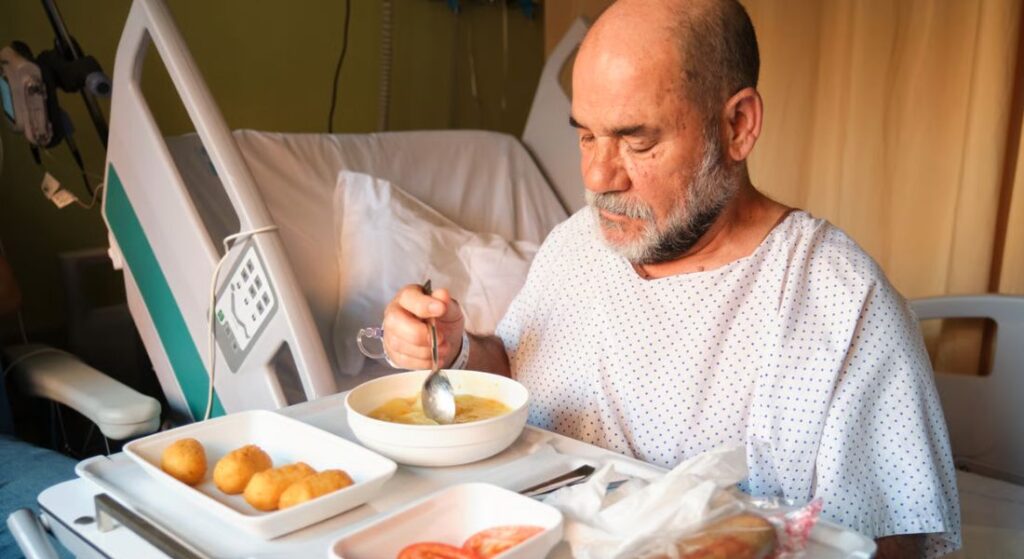
After surgery, you will usually start with small sips of water before gradually returning to normal eating and drinking. It is common for your appetite to be lower than usual during the first day or two. Your body is recovering from both the operation and the anaesthetic, so it may take a little time before you feel like eating normally again.
You may also feel bloated or gassy after surgery. This can happen because of the operation itself, the anaesthetic, or the gas used during keyhole surgery. Although it can feel uncomfortable, these symptoms usually improve gradually as your body recovers and you begin moving around more.
Your medical team may encourage you to drink plenty of fluids, especially while the catheter is in place. Good hydration can help keep your urine flowing and reduce the risk of certain catheter-related problems. If you experience nausea, vomiting, or severe bloating, let your nurses know so they can assess you and provide the appropriate support.
The Day After Surgery
The day after surgery, your team will usually check how you are recovering. You may have blood tests, wound checks, catheter checks, and mobility support. If you have a drain, it may be removed depending on the amount of fluid and your surgeon’s plan. You may also be taught how to care for the catheter before going home.
Cambridge University Hospitals describes that the day after robotic radical prostatectomy may include blood tests, catheter-care teaching, walking before discharge, drain removal if present, and discharge around midday in usual cases. Your own discharge timing may differ depending on your recovery and hospital pathway.
Going Home With a Catheter
Many men go home with a catheter after prostate cancer surgery. This can feel strange at first, but your nurse should show you how to manage it before you leave hospital. You may be given a leg bag for daytime use and a larger night bag while you sleep.
You will learn how to empty the bag, keep the area clean, and avoid pulling on the tube. Your team should also explain what is normal while the catheter is in place and what signs need medical advice. This can help you feel more confident when you are recovering at home.
You should contact your team if the catheter stops draining, falls out, or causes severe pain. You should also seek advice if you develop a fever, worsening abdominal pain, or heavy bleeding. Getting help early can prevent small catheter-related problems from becoming more serious.
Blood in the Urine After Surgery
Some blood staining in the urine can happen after surgery. It may be caused by healing tissues or catheter irritation. Prostate Cancer UK notes that some blood in the urine while the catheter is still in place or just after it is removed is quite common and usually stops on its own.
Cambridge University Hospitals explains that blood staining can occur as you become more mobile and the catheter irritates the bladder, but large clots or solid debris should prompt advice because they may block the catheter. If bleeding is heavy, painful, or linked with clots, seek medical advice.
Catheter Removal
Your catheter is usually removed after the new join between your bladder and urethra has had time to heal. This commonly happens around one to two weeks after surgery, depending on your surgeon’s plan. Your team will let you know when it is safe for the catheter to come out.
After the catheter is removed, your doctor or nurse will usually check that you can pass urine before you go home. You may notice some urine leakage at first, especially when you move, cough, or stand up. This can feel upsetting, but it is common after radical prostatectomy.
Pads and pelvic floor exercises may be recommended while your urinary control recovers. It can take time for the body to adjust after surgery, so try not to judge your recovery too early. Your team can guide you on what to expect and when to ask for further support.
Urinary Leakage After Catheter Removal
Urinary leakage can happen after your catheter is removed. You may notice leaking when you stand, cough, walk, bend, or lift something. This can feel frustrating, but it is common after prostate cancer surgery.
Some men improve quickly, while others need more time. This does not mean you have done anything wrong. The urinary control system has been affected by surgery, so it needs time to recover and adjust.
Pelvic floor exercises can help when they are done correctly and consistently. If the leakage is not improving, or if it affects your confidence and daily life, speak to your specialist nurse, doctor, or pelvic health physiotherapist. They can guide you with the right support and next steps.
Erectile Function After Surgery
Erectile dysfunction is a possible side effect after prostate cancer surgery. This happens because the nerves involved in erections run close to the prostate. If it is safe, your surgeon may try to preserve these nerves.
However, if cancer is close to the nerves, wider tissue removal may be needed. Erectile recovery depends on age, erections before surgery, nerve-sparing, cancer location, diabetes, blood vessel health, and time.
You should ask about erectile rehabilitation and treatment options if this is important to you. It is better to discuss sexual function before surgery and again during recovery.
Dry Orgasm and Fertility Changes
After prostate cancer surgery, you will not ejaculate semen. This is because the prostate and seminal vesicles are removed. You may still be able to have an orgasm, but it will be dry and may feel different.
Natural fertility is affected after surgery. If you may want children in the future, sperm storage should be discussed before treatment begins. This is an important conversation, even if it feels awkward. It cannot usually be solved after the prostate and seminal vesicles have been removed.
What Happens to the Removed Prostate?
After surgery, the removed prostate is sent to a laboratory where a specialist pathologist examines it in detail. Because the entire prostate can be analysed, this provides much more information than the original biopsy alone.
The pathology report helps your specialist understand exactly how the cancer behaved within the prostate. It can show the final cancer grade, whether the cancer was fully contained, whether any cancer cells were found near the edge of the removed tissue, and whether any removed lymph nodes contained cancer.
For you, these results help guide the next stage of care. In many cases, they provide reassurance that the cancer has been removed successfully, while also helping your specialist decide what follow-up monitoring may be needed.
PSA Testing After Surgery

After the prostate is removed, your PSA should fall to a very low or undetectable level. You will have follow-up PSA blood tests after surgery to check this. Your specialist will explain when these tests should happen and what result they expect to see.
PSA testing is an important part of your follow-up care after prostate cancer surgery. It helps your team check whether there are any signs of cancer activity after the prostate has been removed. These tests are usually done at planned intervals, so your progress can be monitored over time.
If your PSA remains detectable or rises later, it does not always mean immediate treatment is needed. Your team may recommend further monitoring, repeat tests, scans, or additional treatment depending on your situation. Regular PSA follow-up helps your specialist respond early if there are any concerns.
How Long Is Hospital Stay?
Hospital stay can vary. Many patients having robotic prostate cancer surgery stay in hospital for one night, but some may stay longer. Cancer Research UK says most people spend one night in hospital after prostate cancer surgery.
You may stay longer if you need extra pain control, mobility support, monitoring, or help with catheter management. Open surgery may involve a longer stay in some cases. Your team will decide when it is safe for you to go home.
Hospital Journey Timeline
| Timeframe | What Happens | What You Experience |
| Day of surgery | Operation takes place under general anaesthetic | Sleeping throughout procedure |
| First 24 hours | Recovery room + ward transfer | Tired, catheter in place, pain control given |
| Day 1 post-op | Mobilisation, blood tests, drain review | Gentle walking, gradual eating |
| Day 1–2 | Discharge planning begins | Catheter care training |
| 1–2 weeks after surgery | Catheter removal | First normal urination, possible leakage |
| 4–6 weeks | Early recovery phase | Gradual return to routine activities |
| 3+ months | Ongoing recovery | Improvement in urinary and sexual function |
What Happens in the First Week at Home?
The first week at home is usually focused on rest, gentle walking, catheter care, wound care, pain control, and avoiding constipation. You may feel tired more quickly than expected. You should avoid heavy lifting, strenuous activity, cycling, and driving until your team says it is safe.
Wear loose clothing so the catheter and wounds are more comfortable. Keep your hospital contact details nearby. If you feel feverish, unwell, short of breath, have calf swelling, heavy bleeding, catheter blockage, or worsening pain, seek medical advice.
Recovery Is a Process
The operation happens in one day, but your recovery takes longer. Even with robotic surgery, your body has still gone through major internal surgery. It is normal to need time, patience, and support as your body heals.
You may feel physically better within a few weeks, but some parts of recovery can take longer. Urinary control, sexual function, energy levels, and emotional adjustment may all improve at different speeds. Try not to compare your recovery too closely with someone else’s, because every patient heals differently.
Your recovery can be affected by your age, fitness, cancer features, surgery type, nerve-sparing status, bladder function, and general healing. The safest approach is to focus on steady progress rather than rushing. Keep communicating with your medical team, especially if something worries you or your symptoms are not improving.
Speak to Our Specialist

If you are preparing for prostate cancer surgery, it can help to understand the full process before your operation day. You may want to discuss the surgical approach, anaesthetic, nerve-sparing, lymph node removal, catheter care, recovery time, side effects, and follow-up. Having these conversations early can help you feel more prepared and less uncertain.
If you are looking for a prostate cancer treatment clinic in London, you can arrange a consultation to talk through your diagnosis, treatment options, surgical plan, and recovery expectations. This gives you space to ask questions and understand what may apply to your own situation. Your specialist can also explain what usually happens before, during, and after surgery.
Knowing what to expect can make the process feel less overwhelming. It can also help you plan practically for hospital stay, catheter care, time off work, and early recovery at home. With clear guidance, you can approach surgery with more confidence and a better understanding of the next steps.
Frequently Asked Questions
1. What actually happens during prostate cancer surgery?
During prostate cancer surgery, the surgeon removes the entire prostate gland along with the seminal vesicles. The operation is done either through robotic, laparoscopic, or open surgery. In some cases, nearby lymph nodes are also removed. After the prostate is taken out, the bladder is reconnected to the urethra, and a catheter is placed to allow healing.
2. How long does prostate cancer surgery take?
The operation usually takes around 2 to 4 hours, but this can vary depending on the complexity of the case. Factors like prostate size, lymph node removal, scar tissue, and nerve-sparing techniques can affect the duration. It is important to remember that anaesthetic preparation and recovery time are additional to the surgery itself.
3. What is radical prostatectomy?
A radical prostatectomy is the standard surgery for prostate cancer where the entire prostate gland is removed. The seminal vesicles are also usually removed. This approach aims to eliminate the cancer completely and reduce the risk of it remaining in the body. The removed tissue is later analysed in a laboratory for detailed cancer information.
4. Will I be awake during prostate cancer surgery?
No, you will not be awake. The surgery is performed under a general anaesthetic, meaning you are completely asleep throughout the procedure. The anaesthetic team continuously monitors your breathing, heart rate, blood pressure, and oxygen levels to ensure your safety at all times.
5. What happens immediately before the surgery?
Before surgery, you will undergo hospital admission checks, meet the anaesthetic team, and confirm consent. You will be asked to follow fasting instructions and may have basic tests like blood pressure, pulse, and temperature checks. The team will also review your medical history and prepare you safely for theatre.
6. How is the prostate removed during surgery?
In robotic or keyhole surgery, small incisions are made in the abdomen, and instruments are used to carefully separate and remove the prostate. In open surgery, a larger incision is made to access the prostate directly. In both methods, the goal is the same: safely remove the cancer while protecting nearby structures.
7. What is a catheter and why is it used?
A catheter is a soft tube placed into the bladder through the penis to drain urine. It is used because the bladder and urethra are rejoined after prostate removal and need time to heal. The catheter helps keep urine flowing without putting pressure on the healing area. It is usually temporary and removed after 1–2 weeks.
8. Will I go home with tubes or drains?
Most patients go home with a urinary catheter, and some may also have a small surgical drain, depending on the procedure. The catheter is essential for healing and is managed at home with guidance from the hospital team. Drains, if used, are often removed within a day or shortly after surgery depending on recovery.
9. What will recovery feel like after surgery?
In the first few days, it is common to feel tired, sore, bloated, or slightly uncomfortable. You may also notice the effects of the catheter and reduced energy levels. Gentle movement is encouraged early, but full recovery takes weeks. Most people gradually return to normal activities within 4–6 weeks.
10. What are the most common side effects after surgery?
Common side effects include urinary leakage, temporary difficulty with bladder control, erectile dysfunction, and changes in ejaculation (dry orgasm). Some men also experience fatigue and mild pain during early recovery. These effects vary between individuals and often improve over time with healing and rehabilitation.
Final Thoughts: Understanding Prostate Cancer Surgery and What Comes Next
Prostate cancer surgery is a structured and carefully planned procedure that moves through several key stages, from anaesthetic preparation and removal of the prostate to reconstruction of the bladder and urethra, followed by early recovery in hospital. Although the operation itself may take only a few hours, the overall process includes detailed planning, precise surgical work, and close post-operative monitoring to ensure safety and effective cancer control.
For you, understanding these stages can make the experience feel more manageable and less uncertain. Knowing what happens before, during, and after surgery can help you prepare for important aspects such as catheter care, mobility, hospital stay, and the first few weeks of recovery at home. While side effects like urinary leakage, changes in sexual function, and fatigue are possible, they are often part of the normal healing process and may improve gradually with time and support.
Recovery after prostate cancer surgery is a gradual journey, not an immediate event. With regular follow-up, PSA monitoring, and guidance from your specialist team, most patients are able to progress steadily through recovery with increasing confidence and clarity about what to expect next. If you are looking for a prostate cancer treatment clinic in London, you can reach out to us to arrange a consultation and receive personalised advice about your diagnosis, treatment choices, and recovery.
Reference:
- Hamdy, F.C., Donovan, J.L., Lane, J.A., Mason, M., Metcalfe, C., Holding, P. et al. (2016) 10-Year outcomes after monitoring, surgery, or radiotherapy for localized prostate cancer, New England Journal of Medicine, 375, pp. 1415-1424. Available at: https://pubmed.ncbi.nlm.nih.gov/27626136/
- Mottet, N., van den Bergh, R.C.N., Briers, E., Van den Broeck, T., Cumberbatch, M.G., De Santis, M. et al. (2021) Guidelines on Prostate Cancer, European Urology, 79(2), pp. 243-262. Available at: https://pubmed.ncbi.nlm.nih.gov/33172724/
- Hughes, A.C. and Graham, L.S. (2026) Treatment approaches and future directions for neuroendocrine prostate cancer and other aggressive variant prostate cancers. Advances in Oncology, 6(1), pp.165-172. Available at: https://www.sciencedirect.com/science/article/pii/S2666853X26000123
- Desai, A.N., Fleyshman, M., Lall, N. and Saraiya, B. (2026) Systemic treatments of castration-resistant prostate cancer. 53(2), pp.317-330. Available at: https://www.sciencedirect.com/science/article/pii/S0094014326000133
- Trone, J.-C., Ollier, E., Chapelle, C., Mismetti, P., Cucherat, M., Magné, N., Zuffrey, P.J. and Laporte, S. (2020) Assessment of non-inferiority with meta-analysis: example of hypofractionated radiation therapy in breast and prostate cancer. 10, 15415. Available at: https://pmc.ncbi.nlm.nih.gov/articles/PMC7508968/