




Nerve-sparing prostate surgery is a specialised technique used during prostate cancer surgery when it is considered safe to preserve the nerves involved in your erections. These nerves run very close to your prostate gland, which is why erectile dysfunction can be a major concern if you are preparing for surgery.
If you are worried about your sexual function after prostate cancer treatment, that is completely understandable. Many men want to know whether erections may recover after surgery and whether nerve-sparing may be possible in their situation.
Nerve-sparing surgery aims to protect these delicate nerves as much as possible while still removing your cancer effectively. However, the priority is always safe cancer control first. The goal is not simply to preserve the nerves at all costs, but to balance proper cancer removal with the best possible chance of preserving your erectile function.
Not every patient is suitable for nerve-sparing prostate surgery. Suitability depends on factors such as your cancer location, cancer grade, MRI findings, biopsy results, PSA level, prostate anatomy, erectile function before surgery, and your surgeon’s judgement. In some situations, preserving the nerves may not be safe if the cancer appears too close to them.
What Is Prostate Cancer Surgery?
Prostate cancer surgery is usually called a radical prostatectomy. This operation removes your whole prostate gland in order to treat prostate cancer. The seminal vesicles are usually removed as well, and nearby lymph nodes may sometimes be removed if there is concern that the cancer could have spread.
Your prostate sits below the bladder and surrounds the urethra, which is the tube that carries urine out of your body. It is also located very close to important nerves and blood vessels involved in erections, which is why surgery can affect both urinary control and sexual function.
Nerve-sparing surgery is a technique used to try to reduce the risk of erectile dysfunction after prostate removal. However, it is only performed when your surgeon believes it is safe from a cancer control point of view, because removing the cancer effectively always remains the priority.
What Does “Nerve-Sparing” Mean?
“Nerve-sparing” means your surgeon tries to preserve the nerve bundles that run alongside your prostate during prostate cancer surgery. These nerves play an important role in helping you achieve erections.
There are two main nerve bundles, one on each side of the prostate. Depending on where your cancer is located, your surgeon may be able to preserve both nerve bundles, one nerve bundle, or neither. Preserving both sides is called bilateral nerve-sparing surgery, while preserving only one side is called unilateral nerve-sparing surgery.
If your cancer is too close to the nerves, the surgeon may need to remove one or both nerve bundles to reduce the risk of leaving cancer behind. This is why nerve-sparing decisions must always be personalised and based on your cancer features, scan findings, and surgical safety.
Why Are These Nerves Important?
Your erections depend on a combination of nerves, blood flow, hormones, emotional wellbeing, and healthy tissue. The nerve bundles that run close to your prostate help send signals that increase blood flow into the penis during sexual arousal.
If these nerves are damaged, bruised, stretched, or removed during surgery, your erections may become weaker or may not happen naturally. Even when nerve-sparing surgery is performed, the nerves can still be temporarily affected by the operation itself.
This means recovery of erections often takes time. Some men notice gradual improvement over several months, while others may need support such as tablets, vacuum devices, injections, or other treatments to help with erectile recovery after surgery.
Does Nerve-Sparing Surgery Guarantee Erections?
No, nerve-sparing surgery does not guarantee erections after prostate cancer surgery. It may improve the chance of erectile recovery, but many factors influence the outcome.
Your age matters. Your erection quality before surgery matters. Your general health, diabetes, blood pressure, heart health, smoking status, and blood vessel health also matter. The extent of nerve preservation matters too.
If both nerve bundles are preserved and you had good erections before surgery, your chances of recovery may be better. If only one side can be preserved, recovery may still be possible, but it may be less predictable. If the nerves cannot be safely spared, natural erections are less likely to recover without support.
Why Cancer Safety Comes First
Nerve-sparing surgery is only appropriate if it does not compromise safe cancer removal. If your tumour is close to the edge of the prostate or near the nerve bundle, preserving the nerves may increase the risk of leaving cancer cells behind.
In this situation, your surgeon may recommend removing the nerve tissue on one side or sometimes both sides. This can understandably feel disappointing, especially if preserving sexual function is very important to you.
However, the main aim of prostate cancer surgery is to treat your cancer safely and effectively. A good surgeon will always try to preserve function wherever possible, but not at the expense of cancer control. This is why careful pre-operative planning with MRI scans, biopsy results, and surgical assessment is so important.
Who May Be Suitable for Nerve-Sparing Surgery?

You may be suitable for nerve-sparing prostate surgery if your cancer appears to be safely away from the nerve bundles that run alongside the prostate. Your specialist will usually review your MRI scan, biopsy results, PSA level, cancer grade, cancer stage, and prostate anatomy before making this decision.
You may also be more likely to benefit from nerve-sparing surgery if you had good erectile function before the operation. If you already had significant erectile dysfunction beforehand, nerve-sparing may still be considered, but the chance of natural erectile recovery after surgery may be lower.
Your surgeon will also consider your age, general health, and personal priorities when discussing the best approach for you. Suitability for nerve-sparing surgery is not based on one factor alone, but on the overall balance between safe cancer treatment and preserving function where possible.
Factors That Influence Suitability for Nerve-Sparing Prostate Surgery
| Factor | What Doctors Assess | How It Affects Nerve-Sparing Decision |
| MRI findings | Tumour location and proximity to prostate edge | Cancer close to nerves may limit or prevent nerve-sparing |
| Biopsy results (Gleason / Grade Group) | How aggressive the cancer appears | Higher-grade cancer may require wider removal |
| PSA level | Overall cancer activity indicator | Higher PSA may suggest higher risk disease |
| Cancer stage | Whether cancer is confined to prostate | Spread outside prostate may reduce nerve-sparing safety |
| Erectile function before surgery | Baseline sexual function | Better pre-op function improves recovery potential |
| Age | Natural recovery ability of nerves | Younger patients may have better recovery potential |
| Overall health | Diabetes, heart disease, smoking, vascular health | Poor vascular health may reduce erectile recovery |
| Tumour location | One side or both sides of prostate | May allow unilateral vs bilateral nerve-sparing |
| Surgeon judgement | Experience and intraoperative findings | Final decision may change during surgery |
Who May Not Be Suitable?
Nerve-sparing surgery may not be suitable if your cancer is very close to the nerves or appears to be growing outside the prostate gland. In these situations, preserving the nerves could increase the risk of leaving cancer cells behind.
It may also be less suitable if your cancer is higher grade, more extensive, or located in an area where wider tissue removal is needed for safer cancer control. Previous surgery, scarring, prostate size, or difficult anatomy may also affect the surgical plan and what can safely be preserved.
Not being suitable for nerve-sparing surgery does not mean your care is poor or that something has gone wrong. It may simply mean your surgeon is prioritising the safest possible cancer removal based on the position and behaviour of your cancer.
MRI Findings and Nerve-Sparing Decisions
MRI plays a very important role when planning nerve-sparing prostate surgery. It helps your surgeon see where the cancer is located within the prostate and whether it appears close to the capsule, which is the outer edge of the gland.
If your cancer is close to the edge of the prostate, your surgeon may be more cautious about preserving the nearby nerves. MRI can also help identify signs that the cancer may have extended outside the prostate, which may affect whether nerve-sparing surgery is considered safe.
This information helps your surgeon decide whether nerve-sparing may be possible on both sides, one side, or not at all. Your MRI is therefore not only a diagnostic scan, but also an important part of planning the safest and most appropriate surgical approach for you.
Biopsy Results and Cancer Grade

Biopsy results are another key part of the decision. The biopsy shows how aggressive the cancer cells look under the microscope. You may hear terms such as Gleason score or Grade Group. Lower-grade cancers may be more suitable for nerve-sparing if they are also located away from the nerve bundles.
Higher-grade cancers may need a wider surgical margin, especially if they are close to the prostate edge. The amount of cancer found in the biopsy also matters. If several biopsy samples contain cancer on one side, the surgeon may be more cautious about nerve-sparing on that side. Your biopsy results help your surgeon balance cancer control and function preservation.
PSA Level and Overall Risk
Your PSA level is also considered when planning prostate cancer surgery and deciding whether nerve-sparing may be appropriate. PSA stands for prostate-specific antigen, which is a protein made by prostate cells and can be raised in prostate cancer.
A higher PSA may suggest a larger cancer burden or more active disease, although PSA should always be interpreted alongside your MRI findings, biopsy results, prostate size, and overall clinical assessment. PSA on its own does not give the full picture.
If your overall cancer risk appears low or intermediate and the tumour is located away from the nerves, nerve-sparing surgery may be more likely to be considered. If your cancer risk is higher, your surgeon may recommend a more cautious surgical approach to prioritise safe cancer removal.
Unilateral vs Bilateral Nerve-Sparing
Nerve-sparing surgery is not always an all-or-nothing decision. If your cancer is close to the nerve bundle on one side of the prostate but safely away from the other side, your surgeon may preserve one nerve bundle while removing the other. This is called unilateral nerve-sparing surgery.
If both sides appear safe from a cancer-control point of view, your surgeon may attempt bilateral nerve-sparing surgery, which means preserving both nerve bundles. Bilateral nerve-sparing may offer a better chance of erectile recovery compared with preserving only one side.
However, preserving both sides is only appropriate if it can be done safely without increasing the risk of leaving cancer behind. Your surgeon should explain clearly whether they are planning to spare one side, both sides, or neither side, and the reasons for that decision in your specific case.
How Nerve-Sparing Surgery Is Performed
Nerve-sparing surgery is performed during a radical prostatectomy. During the operation, your surgeon carefully separates the prostate from the surrounding tissues while trying to preserve the nerve bundles that run alongside it.
This requires very delicate dissection because the nerves sit extremely close to the prostate gland. In robotic prostate surgery, the surgeon controls precise instruments through small cuts in the abdomen, and the robotic system provides a magnified view that can help with careful work around the nerves.
However, the robot does not perform the surgery by itself. Your surgeon’s experience, judgement, and technique remain the most important factors. Nerve-sparing surgery is therefore a surgical strategy and decision-making process, not simply a feature of robotic technology.
Robotic Nerve-Sparing Prostate Surgery
Robotic surgery is often used for nerve-sparing radical prostatectomy. The robotic system gives your surgeon a detailed 3D view and controlled movements within the narrow pelvic space, which can help when operating close to the nerves, bladder, urethra, and blood vessels.
However, robotic surgery does not automatically mean your nerves can be safely preserved. The decision still depends on where your cancer is located and whether nerve preservation can be performed without increasing the risk of leaving cancer behind.
In some situations, a robotic operation without nerve-sparing may actually be safer than trying to preserve nerves in a high-risk area. This is why you should ask your surgeon what is planned specifically in your case rather than assuming all robotic prostate surgery is nerve-sparing.
Open and Laparoscopic Nerve-Sparing Surgery
Nerve-sparing surgery can also be performed during open or laparoscopic radical prostatectomy. The core principle is the same in all approaches: your surgeon aims to preserve the nerve bundles where it is safe to do so, while still removing your cancer effectively.
The main difference between these techniques is how your surgeon accesses the prostate. Open surgery uses a single larger incision, laparoscopic surgery uses several small cuts with long instruments, and robotic surgery uses small cuts with robot-assisted, surgeon-controlled instruments that offer a magnified view.
The most appropriate approach for you depends on your cancer features, your anatomy, your surgeon’s experience, and the expertise available at your hospital. In practice, it is often more helpful to ask about your surgeon’s outcomes and your personal suitability for nerve-sparing than to focus only on whether the operation is labelled open, laparoscopic, or robotic.
Can Nerve-Sparing Surgery Reduce Erectile Dysfunction?
Nerve-sparing surgery may reduce the risk of erectile dysfunction after prostate cancer surgery. If your nerves are preserved and recover well, you may notice erections gradually returning over time.
However, recovery is not immediate for many men. Even when the nerves are not removed, they can still be temporarily affected, becoming bruised or “stunned” after surgery. This means your erections may be weak or absent at first, even if nerve-sparing was successful.
During the recovery period, changes in blood flow and penile tissue health can also occur, which may further affect erections. Because of this, erectile rehabilitation is often recommended after surgery. The aim is to support blood flow, nerve recovery, and your sexual confidence while your body continues to heal.
How Long Does Erectile Recovery Take?
Erectile recovery after prostate surgery can take time, often months and sometimes longer. Some men notice early signs of improvement within a few months, while others may take one to two years to reach their best level of recovery.
Your recovery will depend on whether both nerve bundles were spared, only one side was spared, or whether nerve-sparing was not possible at all. It also depends on factors such as your age, overall health, erections before surgery, diabetes, blood vessel health, smoking history, and whether you are using erectile rehabilitation treatments.
It is important not to judge your recovery too early. Erections often return gradually rather than suddenly, and the process can be emotionally challenging. This is why ongoing support, reassurance, and structured rehabilitation can make a meaningful difference during your recovery.
What Is Erectile Rehabilitation?
Erectile rehabilitation means using treatments and strategies to support erection recovery after surgery. This may include tablets such as sildenafil or tadalafil, vacuum erection devices, penile injections, or other options depending on your situation. The goal is not only to help with sex.
It may also help maintain blood flow and tissue health while the nerves recover. Your specialist will explain which options are suitable and when to start. Not every man needs the same plan. If erections are important to you, ask about rehabilitation before surgery so you understand what support may be available afterwards.
What If Erections Do Not Recover Naturally?
If your erections do not recover naturally after prostate surgery, there are still several treatment options available. These may include tablets, vacuum erection devices, penile injections, urethral treatments, or, in selected cases, penile implants.
Some men only need temporary support while their nerves continue to recover, while others may need longer-term treatment to help achieve satisfactory erections. The right option for you will depend on your recovery, overall health, and personal preferences.
Although this situation can feel emotionally difficult, it does not mean that intimacy is over. Sexual recovery after prostate cancer surgery often requires patience, support, and open communication with your healthcare team and partner. You should never feel embarrassed to ask for help, as erectile dysfunction after prostate surgery is very common and something your doctors are used to managing.
Does Nerve-Sparing Affect Urinary Control?
Nerve-sparing surgery is mainly designed to help support erectile function rather than urinary control. After prostate surgery, your ability to control urine depends on several structures, including the bladder, urethra, urinary sphincter, pelvic floor muscles, and surrounding support tissues.
Nerve-sparing may help preserve some nearby tissues and overall pelvic health, but it is not the main technique used to protect continence. This means that even if nerve-sparing surgery is performed, it does not guarantee immediate urinary control after the operation.
If urinary control is one of your main concerns, you should ask about pelvic floor exercises, surgical approach, and in some cases techniques such as Retzius-sparing surgery where appropriate. You may still need pads for a period after catheter removal. Urinary recovery and erectile recovery are linked to the same operation, but they involve different body systems and often recover on different timelines.
Does Nerve-Sparing Affect Cancer Control?
Nerve-sparing surgery should never be performed if it risks compromising cancer control. This is why your surgeon carefully assesses whether your cancer is safely away from the nerve bundles before deciding on a nerve-sparing approach.
When nerve-sparing is appropriate, it can help preserve function while still removing the cancer effectively. However, if the cancer is too close to the nerves and nerve-sparing is still attempted, there may be a higher risk of positive surgical margins.
A positive margin means cancer cells are found at the edge of the removed tissue. This does not always mean the cancer will return, but it may increase the need for closer follow-up or additional treatment such as radiotherapy.
Your surgeon should explain this balance clearly so you understand how they are weighing cancer safety against functional outcomes in your individual case.
What Are Surgical Margins?
After your prostate surgery, the removed prostate is sent to a laboratory where a pathologist examines it under a microscope. They carefully check whether any cancer cells are present right at the outer edge of the removed tissue.
If no cancer cells are seen at the edge, this is called a negative or clear margin, which is generally a reassuring result for you. If cancer cells are found at the edge, this is called a positive surgical margin.
Positive margins can occur after any prostate cancer surgery, but the risk may be higher if your cancer is close to the outer edge of the prostate or if tissue is preserved very close to the tumour during nerve-sparing surgery. This is why careful planning is needed, so your surgeon can balance complete cancer removal with preserving function wherever it is safely possible for you.
Can the Plan Change During Surgery?
Yes, the surgical plan can sometimes change during your operation. Your surgeon may plan nerve-sparing before surgery, but decide during the procedure that wider removal is safer for you.
This may happen if the tissues look different from what was expected on scans, or if there is concern that preserving the nerves could affect complete cancer removal. In some centres, techniques may be used to help assess surgical margins during the operation, although this is not available everywhere.
It is a good idea to ask your surgeon before surgery whether the nerve-sparing plan could change during the operation, and what factors would influence that decision. Understanding this in advance can help you feel more prepared and avoid surprises afterwards.
What Is NeuroSAFE?
NeuroSAFE is a technique used in some specialist centres to help guide nerve-sparing decisions during prostate cancer surgery. It involves checking tissue margins during the operation, which can help your surgeon decide whether nerve tissue can be safely preserved.
This approach may allow more personalised nerve preservation in selected patients, depending on what is found during surgery. In some cases, it can help surgeons make more informed real-time decisions about whether to spare the nerves or remove them for safety.
However, NeuroSAFE is not available in every hospital, and it may not be suitable or necessary for all patients. If you are interested in advanced nerve-sparing techniques, you should ask your surgeon whether they use intraoperative margin assessment and whether it would apply to your situation. The key principle remains the same: your cancer must always be removed safely and completely.
What Are the Risks of Nerve-Sparing Surgery?
The risks of nerve-sparing surgery are broadly the same as those associated with radical prostatectomy in general. These can include urinary leakage, erectile dysfunction, bleeding, infection, catheter-related problems, pain, blood clots, wound complications, dry orgasm, loss of natural fertility, and the possibility that you may need further treatment.
The specific concern with nerve-sparing surgery is whether preserving tissue close to the prostate could affect cancer clearance in cases where it is not suitable. This is why careful patient selection is so important before deciding on a nerve-sparing approach.
If your cancer is safely away from the nerves, nerve-sparing surgery may help preserve sexual function without affecting cancer outcomes. However, if your cancer is close to the nerve bundles, preserving them may not be worth the potential risk to complete cancer removal, and a wider excision may be recommended for your safety.
Dry Orgasm and Fertility Changes Still Happen
Nerve-sparing surgery does not prevent dry orgasm or preserve fertility. During radical prostatectomy, your prostate and seminal vesicles are removed, which means you will no longer ejaculate semen.
You may still be able to have an orgasm after surgery, but it will be “dry” and may feel different from what you are used to. This change can take some adjustment, both physically and emotionally.
Natural fertility is also affected because semen is no longer produced or released during orgasm. If you may want children in the future, it is important to discuss sperm storage before surgery takes place.
Nerve-sparing surgery can help with erections where possible, but it does not preserve ejaculation or natural fertility, so it is important to understand this difference clearly before your operation.
How to Prepare Before Nerve-Sparing Surgery
Preparation can help you feel more in control. Ask your surgeon whether nerve-sparing is planned on one side or both sides. Ask what your chance of erectile recovery may be based on your age, current erections, cancer location, and surgical plan. Ask whether erectile rehabilitation will be offered after surgery.
You may also want to improve general health before surgery where possible. Stopping smoking, managing diabetes, improving fitness, reducing excess alcohol, and maintaining a healthy weight can support recovery and sexual health. You do not need to make extreme changes. Small realistic steps can still help.
What If You Are Not Suitable for Nerve-Sparing?
If you are not suitable for nerve-sparing surgery, it can understandably feel upsetting. You may worry about your erections, intimacy, confidence, and relationships, and these concerns are completely valid.
However, in most cases this decision is made because your surgeon believes that wider cancer removal is the safest option for you. It does not mean that anything has gone wrong, but rather that cancer control is being prioritised in your situation.
Importantly, not being suitable for nerve-sparing surgery does not mean that nothing can be done for your sexual function afterwards. Erectile dysfunction treatments may still help, depending on your recovery and overall health. You can also ask for support from a sexual health specialist, an erectile dysfunction clinic, or your prostate cancer nurse to help you through recovery and rehabilitation.
Emotional Impact of Erectile Changes
Erectile dysfunction after prostate cancer surgery can affect more than just your sexual function. It can also influence your confidence, sense of masculinity, relationships, mood, and body image.
You may feel frustrated, embarrassed, or anxious about intimacy, and these feelings are completely understandable. Many men go through similar emotions after treatment, even if they do not always talk about it openly.
It can help to speak honestly with your partner, if you have one, and to ask your medical team for support early on. Sexual recovery is not always quick or straightforward, but you do not have to manage it alone. Nerve-sparing surgery may help improve outcomes for some men, but emotional support remains an important part of recovery for everyone.
Relationship and Intimacy Support
Intimacy can change after prostate cancer surgery, and this is something many men and their partners experience. Even if erections take time to recover, closeness, communication, touch, and emotional connection still remain important parts of your relationship.
Some couples need time to adjust to these changes. You may find that you avoid intimacy because you feel embarrassed, worried about performance, or afraid of things not working as before. If this is not talked about openly, it can sometimes create distance between you and your partner.
You may benefit from sexual counselling, couples support, or medical treatment for erectile dysfunction, depending on your situation. Asking for help is not a weakness. It is a practical and important part of your recovery after prostate cancer treatment.
Follow-Up After Nerve-Sparing Surgery
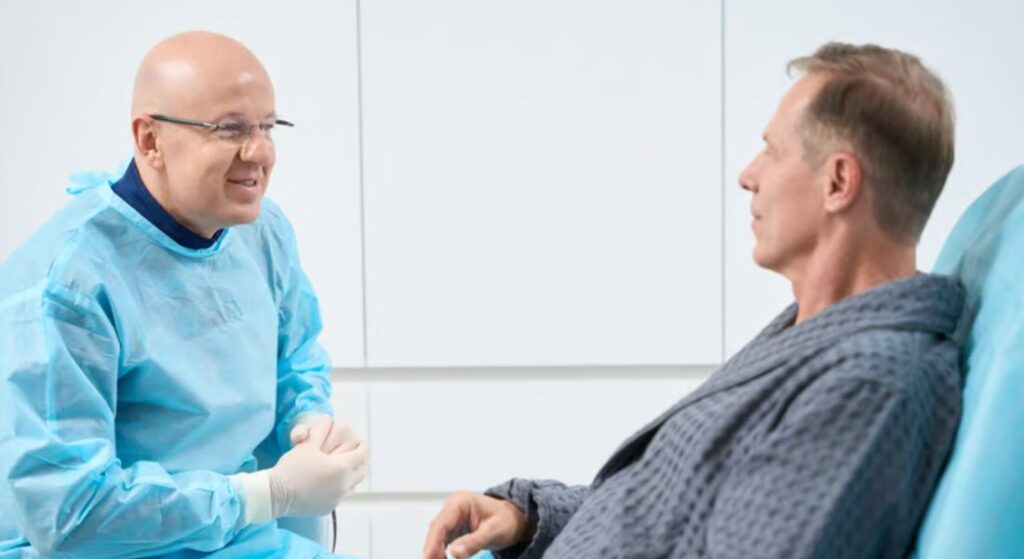
After nerve-sparing surgery, you will have regular follow-up appointments to monitor both your cancer control and your recovery. Your PSA will be checked, as it should fall to a very low or undetectable level once your prostate has been removed.
Your healthcare team will also ask about your urinary control, erections, pain levels, energy, wound healing, and emotional wellbeing. These reviews are an important part of making sure your recovery is progressing as expected.
If your erections are not returning, it is important to ask what support is available rather than waiting in silence. Sexual recovery is an important part of quality of life, and you should not feel embarrassed to raise it. Early discussion can help you access treatments and build a structured rehabilitation plan that supports your recovery.
How Nerve-Sparing Fits Into the Bigger Treatment Decision
Nerve-sparing is only one part of your overall prostate cancer treatment planning. Before you even reach that stage, you also need to consider whether surgery itself is the right treatment option for you.
Some men may be suitable for active surveillance instead of immediate treatment, especially if the cancer appears low risk. Others may be better suited to radiotherapy or another treatment approach, depending on their cancer features and personal circumstances.
If surgery is recommended for you, then nerve-sparing becomes part of the detailed surgical planning discussion. However, it should not be the only reason you choose surgery, because the main decision is how best to treat your cancer overall. The nerve-sparing decision sits within that wider, more important treatment plan for you.
Speak to Our Specialist

If you are considering prostate cancer surgery, it is important to understand whether nerve-sparing is suitable for you. You may want clear advice about your MRI findings, biopsy grade, cancer location, and whether nerve-sparing on one or both sides may be possible in your case.
You may also wish to discuss what this could mean for your erectile recovery, surgical margins, and any rehabilitation options after surgery. These details can help you make a more informed and realistic decision about your treatment.
If you are looking for nerve-sparing prostate surgery in London, you can arrange a consultation to explore whether this technique is appropriate for your diagnosis and recovery goals. A specialist can help you understand the balance between cancer control and preserving sexual function wherever it is safely possible for you.
FAQs
1. What is nerve-sparing prostate surgery?
Nerve-sparing prostate surgery is a specialised technique used during radical prostatectomy where the surgeon tries to preserve the nerve bundles responsible for erections, provided it is safe to do so from a cancer control perspective.
2. Does nerve-sparing surgery guarantee normal erections after prostate surgery?
No, it does not guarantee erections. While it may improve the chance of erectile recovery, many factors such as age, pre-surgery erectile function, health conditions, and nerve preservation all influence the outcome.
3. How do doctors decide if nerve-sparing is possible?
The decision is based on MRI scans, biopsy results, PSA level, cancer location, grade, stage, and how close the tumour is to the nerves. If the cancer is too close, nerve preservation may not be safe.
4. What is the difference between unilateral and bilateral nerve-sparing?
Unilateral nerve-sparing means only one nerve bundle is preserved, while bilateral nerve-sparing means both nerve bundles are preserved. The choice depends on cancer location and safety considerations.
5. Why are the nerves so important in prostate surgery?
The nerve bundles help control blood flow to the penis during sexual arousal, which is essential for erections. Damage or removal of these nerves can significantly affect erectile function.
6. Can nerve-sparing surgery reduce erectile dysfunction?
Yes, it may reduce the risk of erectile dysfunction, especially if both nerve bundles are preserved and you had good erections before surgery. However, recovery is still not guaranteed.
7. How long does recovery of erections take after surgery?
Recovery can take several months to up to 1–2 years. Erections often return gradually, and some men may need medications or other treatments to support recovery.
8. Does nerve-sparing surgery affect cancer control?
Cancer control always comes first. If preserving the nerves increases the risk of leaving cancer behind, the surgeon may remove them to ensure complete cancer removal.
9. What is erectile rehabilitation after nerve-sparing surgery?
Erectile rehabilitation involves treatments like tablets, vacuum devices, or injections to support blood flow and help recovery of erectile function after surgery while the nerves heal.
10. What happens if I am not suitable for nerve-sparing surgery?
If nerve-sparing is not safe, it does not mean treatment has failed. It simply means cancer control is being prioritised. Erectile dysfunction treatments are still available after surgery if needed.
Final Thoughts: Understanding the Role of Nerve-Sparing in Prostate Cancer Surgery
Nerve-sparing prostate surgery can play an important role in helping preserve erectile function after prostate cancer treatment, but it is always carefully balanced against the need for complete and safe cancer removal. The possibility of preserving nerves depends on many individual factors, including your MRI findings, biopsy results, PSA level, cancer location, and overall health. For some men, full nerve preservation is possible, while for others only partial or no nerve-sparing may be safely appropriate.
It is important to remember that nerve-sparing surgery does not guarantee erectile recovery, but it may improve the chances in suitable cases when combined with good pre-operative function and appropriate rehabilitation. Every decision is personalised, and your specialist will always prioritise effective cancer control first while preserving quality of life wherever it is safely possible. If you are considering nerve-sparing prostate surgery in London and would like specialist advice, you can contact us to discuss your options and arrange a consultation tailored to your individual needs.
References:
- Martini, A., Falagario, U.G., Sanguedolce, F., et al., 2021. Nerve-sparing radical prostatectomy: surgical technique, patient selection and functional outcomes. Cancers, 13(17), p.4251. Available at: https://www.mdpi.com/2072-6694/13/17/4251
- Walsh, P.C. and Donker, P.J., 1982. Impotence following radical prostatectomy: insight into etiology and prevention. Journal of Urology, 128(3), pp.492–497. Available at: https://www.sciencedirect.com/science/article/pii/S0022534701672513
- Montorsi, F. et al., 2008. Nerve-sparing radical prostatectomy and recovery of erectile function: predictive factors and outcomes. European Urology. Available at:https://pubmed.ncbi.nlm.nih.gov/18783876/
- Gandaglia, G. et al., 2012. Extended pelvic lymph node dissection does not affect erectile function recovery in patients treated with bilateral nerve-sparing radical prostatectomy. The Journal of Sexual Medicine. Available at: https://pmc.ncbi.nlm.nih.gov/articles/PMC3015835/
- Rossi, M.S. et al., 2016. Erectile function recovery after nerve-sparing radical prostatectomy for prostate cancer: is back to baseline status enough for patient satisfaction? Journal of Sexual Medicine. Available at: https://pubmed.ncbi.nlm.nih.gov/27045263/