




Robotic prostate surgery was not created by one surgeon, engineer or research team. It developed through contributions to prostate anatomy, open surgery, laparoscopy, surgical robotics, standardised operating techniques and specialist training.
The people discussed here represent some of the most influential contributors rather than a complete list. Their combined work helped make robot-assisted radical prostatectomy an established treatment option for suitable localised and locally advanced prostate cancer.
Why Were Pioneers Needed?
Your prostate lies deep within your pelvis near your bladder, urinary sphincter, rectum and the nerve bundles involved in erections. Removing it while controlling the cancer and protecting nearby structures requires careful dissection and reconstruction.
Different pioneers addressed different challenges. Some improved the understanding of pelvic anatomy, while others developed minimally invasive techniques, robotic instruments or methods for training and assessing surgical teams.
Patrick Walsh and Nerve-Sparing Surgery
Patrick Walsh’s anatomical research helped clarify the course of the cavernous nerves involved in erections. In 1982, he performed the first purposeful nerve-sparing radical prostatectomy.
The technique was developed for open surgery, but its anatomical principles remain relevant during laparoscopic and robot-assisted prostatectomy. Nerve preservation is considered only when it can be performed without compromising cancer treatment.
The Importance of Anatomical Prostate Surgery
Walsh’s work showed how a more detailed understanding of the anatomy around your prostate could help your surgeon control bleeding and preserve structures involved in urinary and erectile function.
Modern robotic prostatectomy continues to use these anatomical principles. Magnified three-dimensional vision and articulated instruments may support careful dissection, but they cannot guarantee negative surgical margins, urinary continence or recovery of your erections.
Guillonneau and Vallancien Advanced Laparoscopy

Bertrand Guillonneau, Guy Vallancien and their colleagues developed and standardised the Montsouris laparoscopic radical prostatectomy technique during the late 1990s. Their early series showed that prostate removal through small abdominal incisions could be feasible and reproducible.
This work established many of the minimally invasive steps later adapted for robot-assisted surgery. Conventional laparoscopy remained technically demanding, particularly when dissecting and suturing deep within your pelvis.
John Wickham’s Vision for Less Invasive Surgery
British urologist John Wickham was an early advocate of minimally invasive surgery. His work focused on developing approaches that could treat prostate conditions with less trauma than traditional open operations.
- Minimally invasive approach: Promoted techniques designed to reduce surgical impact compared with conventional open procedures
- Prostate treatment: Explored ways to remove obstructing prostate tissue while aiming to minimise patient trauma
- Medical engineering: Collaborated with engineers at Imperial College London to develop new surgical technology
- Robotic innovation: Helped contribute to the early development of robotic systems for urological procedures
- Future foundations: His work supported the progress of robotic technologies used in modern surgery
The partnership between medicine and engineering helped establish important foundations for the development of robotic surgery. These early innovations contributed to the advanced systems that surgeons may use today to perform complex procedures with enhanced visualisation, dexterity and instrument control.
Brian Davies and the Engineering of PROBOT
Professor Brian Davies led the engineering development of PROBOT with a multidisciplinary team. The system used ultrasound imaging and computer modelling to define an area of obstructing prostate tissue before carrying out programmed movements with a rotating cutting instrument.
John Wickham used PROBOT clinically in April 1991 to perform a robot-controlled transurethral resection for benign prostate obstruction. This was not a radical prostatectomy and was not a treatment for prostate cancer.
The Wider PROBOT Research Team
Published PROBOT research credited S. J. Harris, F. Arambula-Cosio, Q. Mei, R. D. Hibberd, Brian Davies, John Wickham, M. S. Nathan and B. Kundu.
Their work combined imaging, computer modelling, mechanical engineering and clinical supervision. It demonstrated the importance of collaboration between engineers, computer scientists and surgeons when developing safety-critical medical technology.
Why Was PROBOT Historically Important?

PROBOT was not designed to remove your entire prostate or treat prostate cancer. It performed part of a transurethral resection for benign prostate obstruction using movements programmed from the estimated dimensions of your prostate.
It demonstrated that a robotic device could actively remove human tissue under surgical supervision. However, its limitations included difficulty reconstructing the prostate accurately, the need for your surgeon to control bleeding manually and the absence of a commercially sustainable clinical system.
The First Robot-Assisted Prostatectomy Teams
In 2000, teams led by Jochen Binder and Wolfgang Kramer in Frankfurt and Claude Abbou in Créteil, near Paris, reported some of the earliest radical prostatectomies performed with the da Vinci system. Their reports showed that your prostate could be removed using instruments controlled by your surgeon from a console.
Historical publications do not label the first procedure consistently. Some identify the Frankfurt operation in May 2000 as the first performed, while others describe Abbou’s published French case as the first reported robot-assisted radical prostatectomy. It is therefore appropriate to recognise both teams as early pioneers while explaining the historical uncertainty.
Mani Menon and the Vattikuti Technique
From 2001, Professor Mani Menon and his team at the Vattikuti Urology Institute developed a structured method of robot-assisted radical prostatectomy known as the Vattikuti Institute Prostatectomy.
Their first published single-team series included 100 procedures performed between August 2001 and May 2002. Defining and reporting the operative steps helped other centres study, teach and adopt robot-assisted prostatectomy.
How Standardisation Supported Training
The Vattikuti team divided robot-assisted radical prostatectomy into defined stages and published detailed descriptions of its technique. This helped other surgical teams study the procedure, develop training programmes and compare their results.
Many of the stages are now common components of robotic prostatectomy rather than steps used only in the original Vattikuti technique. Their exact sequence and technical details can vary according to your anatomy, cancer location and your surgeon’s preferred approach.
Common Stages of Robot-Assisted Radical Prostatectomy

| Surgical stage | What may happen | Purpose | Important consideration |
| Pelvic access and exposure | Your surgeon positions the instruments and exposes the prostate | Provides access to the surgical area | The approach varies between surgical techniques |
| Bladder-neck dissection | Your prostate is separated from your bladder | Allows the prostate to be mobilised | Your bladder neck may be preserved or reconstructed when appropriate |
| Seminal-vesicle dissection | Your seminal vesicles and sperm-carrying ducts are identified and divided | Releases structures attached to the prostate | Careful dissection helps protect nearby tissues |
| Nerve preservation | One or both erection-related nerve bundles may be preserved | May improve the possibility of erectile recovery | Cancer control takes priority over nerve preservation |
| Apical and urethral dissection | Your prostate is separated from the urinary sphincter and urethra | Allows the prostate and seminal vesicles to be removed | Care is needed around the urinary sphincter |
| Bladder and urethra reconnection | Your bladder is joined to your urethra | Restores the pathway for urine | A catheter supports the connection while it heals |
| Lymph-node removal | Selected pelvic lymph nodes may be removed | Helps assess possible lymph-node involvement | It is performed according to your estimated cancer risk |
Vipul Patel and High-Volume Refinement
Professor Vipul Patel contributed to the refinement, documentation and teaching of robot-assisted radical prostatectomy. His publications have reported surgical, urinary, sexual and cancer-related outcomes from large patient series and helped document how the procedure evolved with experience.
Large retrospective series can show how patient selection, techniques and outcomes change with experience. They do not prove that a particular case volume or surgeon will guarantee a better result for you.
Alex Mottrie and Structured European Training
Professor Alex Mottrie was the founding chairman of the EAU Robotic Urology Section and contributed to the development of structured robotic training in Europe.
The ERUS curriculum uses methods including simulation, supervised operating, modular training and formal assessment. Its purpose is to help surgeons develop and demonstrate competence before completing robot-assisted prostatectomy independently.
Prokar Dasgupta and UK Robotic Urology
Professor Prokar Dasgupta contributed to the development of robotic urological surgery, research and simulation-based training at Guy’s Hospital and King’s College London.
His contribution should be understood as part of a wider UK effort involving surgeons, nurses, researchers, engineers and hospital teams.
Training Became Part of the Innovation
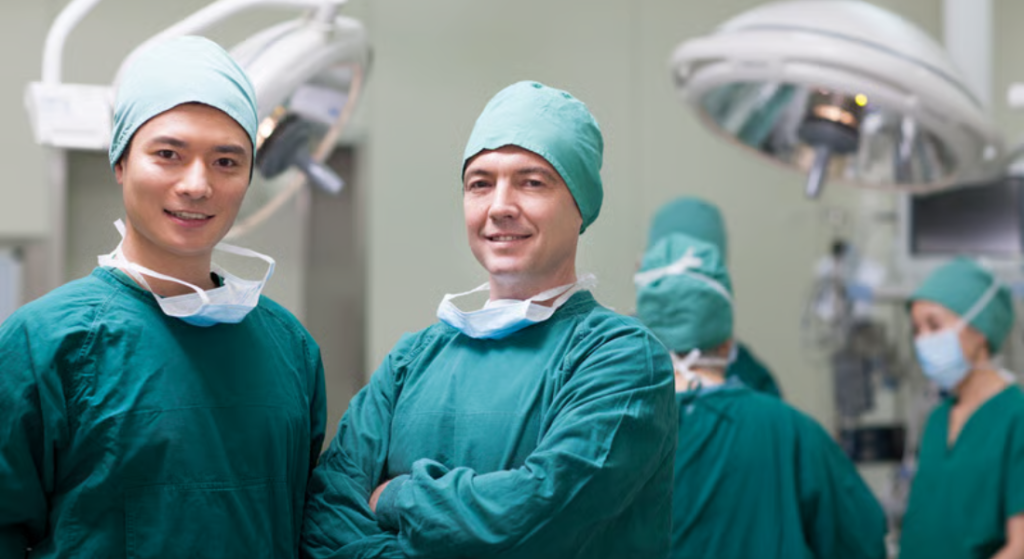
The development of robotic prostatectomy involved more than designing instruments or performing operations. Surgeons and educators divided procedures into teachable stages, developed simulations and created methods for assessing technical and non-technical skills.
Structured training can support consistency and preparedness, but it cannot eliminate risk. Safe care also depends on appropriate supervision, ongoing experience, team communication and monitoring of clinical outcomes.
Modern Progress Still Depends on Teams
During your robotic prostatectomy, the console surgeon works with a bedside assistant, anaesthetists, theatre nurses and other trained staff. Pathologists, specialist nurses, physiotherapists and sexual-health or continence teams may also contribute to your treatment and recovery.
The robotic platform is only one part of your care. Your outcome depends on patient selection, surgical planning, team experience, cancer characteristics and access to appropriate follow-up and rehabilitation.
Myth vs Fact
| Myth | Fact |
| One person invented robotic prostate surgery. | It developed through contributions from many surgeons, engineers and researchers. |
| Patrick Walsh developed robotic surgery. | He developed anatomical nerve-sparing principles during open prostatectomy. |
| PROBOT performed radical prostatectomy for cancer. | It removed obstructing tissue through the urethra for benign prostate enlargement. |
| PROBOT worked like a modern da Vinci system. | It carried out programmed cutting movements, while modern systems translate your surgeon’s movements continuously. |
| There is one universally agreed first robotic prostatectomy. | Early procedures were reported by teams in Paris and Frankfurt in 2000. |
| A high-volume surgeon guarantees a better outcome. | Experience matters, but your cancer, health, technique and wider team also affect results. |
| Completing a training curriculum removes surgical risk. | Training supports competence but does not eliminate complications. |
| Robotic technology is more important than the team. | Safe surgery depends on the surgeon, assistants, anaesthetists, nurses and follow-up services. |
Key Takeaways
- Robotic prostate surgery developed through the combined work of surgeons, engineers and researchers.
- Patrick Walsh’s anatomical work established the principles of purposeful nerve-sparing prostatectomy.
- Guillonneau and Vallancien helped standardise laparoscopic radical prostatectomy.
- John Wickham and Brian Davies contributed to the development of PROBOT.
- PROBOT performed programmed prostate-tissue resection under surgical supervision.
- Early robot-assisted radical prostatectomies were performed in Paris and Frankfurt in 2000.
- Mani Menon and his team helped standardise and expand robot-assisted prostatectomy.
- Large surgical series helped document how techniques and patient selection changed over time.
- Structured training programmes support surgeon assessment and supervised skill development.
- Your outcome still depends on your cancer, health, surgeon and wider clinical team.
Frequently Asked Questions
1. Who were the pioneers of robotic prostate surgery?
Robotic prostate surgery developed through the combined work of many surgeons, engineers and researchers. Influential contributors include Patrick Walsh, John Wickham, Brian Davies, Bertrand Guillonneau, Guy Vallancien, Claude Abbou, Jochen Binder, Wolfgang Kramer, Mani Menon, Vipul Patel, Alex Mottrie and Prokar Dasgupta.
2. How did Patrick Walsh influence robotic prostate surgery?
Patrick Walsh established purposeful nerve-sparing radical prostatectomy through anatomical research and open surgery. The principles he developed continue to guide nerve preservation during modern prostatectomy when it is safe for your cancer.
3. What was the importance of John Wickham’s work?
John Wickham promoted minimally invasive surgery and collaborated with engineers at Imperial College London to explore robotic technology for prostate procedures. His work helped establish the connection between surgical needs and engineering solutions.
4. What was PROBOT and why was it important?
PROBOT was an early active robotic system developed to remove obstructing prostate tissue through your urethra. It carried out programmed cutting movements under surgical supervision and demonstrated that a robot could actively remove prostate tissue during a clinical procedure.
5. Did PROBOT perform robotic prostate cancer surgery?
No. PROBOT treated benign prostate obstruction rather than prostate cancer. It did not remove the whole prostate or perform a radical prostatectomy.
6. How did laparoscopic pioneers contribute to robotic prostate surgery?
Bertrand Guillonneau, Guy Vallancien and their colleagues standardised laparoscopic radical prostatectomy. Their work demonstrated a reproducible minimally invasive approach and provided technical foundations later adapted to robotic surgery.
7. What was the Vattikuti technique?
The Vattikuti Institute Prostatectomy was a structured robot-assisted radical prostatectomy method developed by Mani Menon and his team. Their early published series helped other centres study and adopt the technique.
8. How did Vipul Patel contribute to robotic prostate surgery?
Vipul Patel contributed large surgical series, technical publications and teaching in robot-assisted prostatectomy. These studies documented the evolution of practice but do not guarantee an individual patient’s outcome.
9. Who helped expand robotic prostate surgery training in Europe and the UK?
Alex Mottrie contributed to structured European robotic training through ERUS. Prokar Dasgupta contributed to robotic urology, research and simulation-based training in the UK.
10. Why are these pioneers important to modern robotic prostate surgery?
These contributors advanced anatomy, minimally invasive surgery, engineering, standardisation and training. Modern results still depend on your individual cancer, surgeon, wider team and follow-up care.
Final Thoughts: The Pioneers Behind Robotic Prostate Surgery
Robotic prostate surgery developed through decades of work involving surgeons, engineers, researchers and educators. Their contributions improved anatomical understanding, established minimally invasive prostatectomy techniques, developed active and surgeon-controlled robotic systems and introduced more structured approaches to surgical training.
If you would like to discuss robotic prostate surgery in London, you can contact Prostate Clinic London to arrange a specialist consultation.
References
- British Association of Urological Surgeons (no date) Robotic-assisted radical prostatectomy (RARP). Available at: https://www.baus.org.uk/patients/information_leaflets/180/roboticassisted_laparoscopic_removal_of_prostate_for_cancer_rarp
- Brassetti, A. et al. (2023) ‘Robotic surgery in urology: history from PROBOT® to HUGO™’, Sensors, 23(16), article 7104. Available at: https://pmc.ncbi.nlm.nih.gov/articles/PMC10458477/
- Dasgupta, P., Hemal, A. and Rose, K., Guy’s and St Thomas’ Robotics Group (2005) ‘Robotic urology in the UK: establishing a programme and emerging role’, BJU International, 95(6), pp. 723–724. Available at: https://pubmed.ncbi.nlm.nih.gov/15794768/
- European Association of Urology (2023) ‘Milestone: 20 ERUS meetings’, 20 September 2023. Available at: https://erus.uroweb.org/milestone-20-erus-meetings/
- Frampton, S. and Kneebone, R.L. (2017) ‘John Wickham’s new surgery: “minimally invasive therapy”, innovation, and approaches to medical practice in twentieth-century Britain’, Social History of Medicine, 30(3), pp. 544–566. Available at: https://pmc.ncbi.nlm.nih.gov/articles/PMC5914418/
- Guillonneau, B. and Vallancien, G. (2000) ‘Laparoscopic radical prostatectomy: the Montsouris experience’, The Journal of Urology, 163(2), pp. 418–422. Available at: https://pubmed.ncbi.nlm.nih.gov/10647644/
- Harris, S.J., Arambula-Cosio, F., Mei, Q., Hibberd, R.D., Davies, B.L., Wickham, J.E.A., Nathan, M.S. and Kundu, B. (1997) ‘The PROBOT—an active robot for prostate resection’, Proceedings of the Institution of Mechanical Engineers, Part H: Journal of Engineering in Medicine, 211(4), pp. 317–325. Available at: https://pubmed.ncbi.nlm.nih.gov/9330543/
- Imperial College London (no date) PROBOT. Available at: https://www.imperial.ac.uk/a-z-research/mechatronics-in-medicine/research/completed-projects/probot/
- Lovegrove, C. et al. (2016) ‘Structured and modular training pathway for robot-assisted radical prostatectomy: validation of the RARP assessment score and learning-curve assessment’, European Urology, 69(3), pp. 526–535. Available at: https://pubmed.ncbi.nlm.nih.gov/26585582/
- Menon, M., Shrivastava, A., Sarle, R., Hemal, A. and Tewari, A. (2003) ‘Vattikuti Institute Prostatectomy: a single-team experience of 100 cases’, Journal of Endourology, 17(9), pp. 785–790. Available at: https://pubmed.ncbi.nlm.nih.gov/14642044/
- Menon, M., Tewari, A. and Peabody, J., VIP Team (2003) ‘Vattikuti Institute prostatectomy: technique’, The Journal of Urology, 169(6), pp. 2289–2292. Available at: https://pubmed.ncbi.nlm.nih.gov/12771773/
- National Institute for Health and Care Excellence (2019) Prostate cancer: diagnosis and management. NICE guideline NG131. Last updated 15 December 2021 and last reviewed 13 August 2025. Available at: https://www.nice.org.uk/guidance/ng131
- Onol, F.F., Ganapathi, H.P., Rogers, T., Palmer, K., Coughlin, G., Samavedi, S. et al. (2019) ‘Changing clinical trends in 10 000 robot-assisted laparoscopic prostatectomy patients and impact of the 2012 US Preventive Services Task Force’s statement against PSA screening’, BJU International, 124(6), pp. 1014–1021. Available at: https://pubmed.ncbi.nlm.nih.gov/31301265/
- Royal College of Surgeons of England (2025) Robotic-assisted surgery: a pathway to the future. Available at: https://www.rcseng.ac.uk/standards-and-research/standards-and-guidance/good-practice-guides/robotic-assisted-surgery/
- Thompson, S., Penney, G., Billia, M., Challacombe, B., Hawkes, D. and Dasgupta, P. (2013) ‘Design and evaluation of an image-guidance system for robot-assisted radical prostatectomy’, BJU International, 111(7), pp. 1081–1090. Available at: https://pubmed.ncbi.nlm.nih.gov/23379850/
- Walsh, P.C. and Donker, P.J. (1982) ‘Impotence following radical prostatectomy: insight into aetiology and prevention’, The Journal of Urology, 128(3), pp. 492–497. Available at: https://pubmed.ncbi.nlm.nih.gov/7120554/