



Benign prostate enlargement can be managed with lifestyle measures, medication or a procedure, depending on the severity of your symptoms, whether complications are present and how much the condition affects your daily life.
Benign prostate enlargement, abbreviated to BPE, is not prostate cancer and does not increase your risk of developing it. However, urinary symptoms still require appropriate assessment because infections, bladder conditions, certain medicines and prostate cancer can sometimes cause similar changes.
Understand What an Enlarged Prostate Is
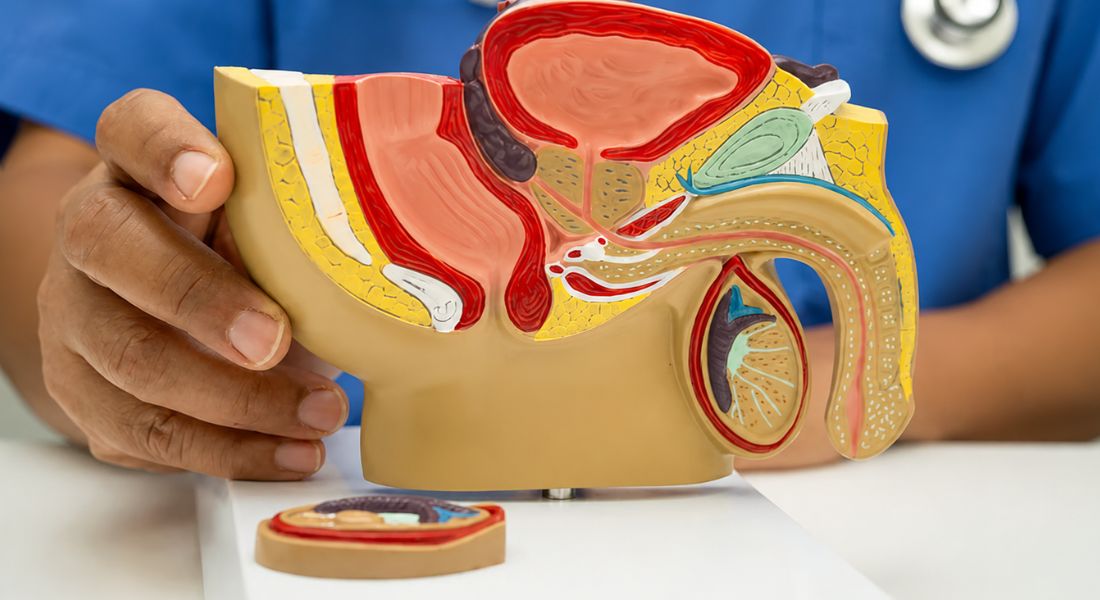
Your prostate sits just below your bladder and surrounds part of your urethra, so when it enlarges, it can press on the urinary channel and slow the flow of urine. This can make it harder for your bladder to empty properly.
You may notice symptoms such as a weak stream, difficulty starting, urgency, frequent urination, waking at night to pass urine and a feeling of incomplete emptying. These changes can vary in severity and may gradually worsen over time.
Arrange a Proper Assessment
You should not choose treatment based only on your symptoms, as similar urinary problems can have different causes. Your clinician may review your history, examine your prostate and arrange urine or PSA testing after explaining what the results may mean.
As part of a specialist assessment, you should normally be offered tests to measure your urine flow rate and the amount of urine remaining in your bladder after urination.
Base Treatment on How Much Symptoms Affect You
Prostate size does not always match symptom severity. Your clinician will consider how your symptoms affect daily life alongside your urine flow, bladder emptying, prostate size, medical history and risk of complications.
Treatment may also be recommended when tests show significant urine retention, recurrent infection, bladder stones or effects on bladder or kidney function, even if the symptoms themselves do not seem severe.
Monitor Mild Symptoms

If your symptoms are mild, uncomplicated and do not significantly affect your daily life, you may not need immediate treatment. Your clinician may recommend lifestyle measures and follow-up so that any changes can be reviewed.
Arrange another assessment if your symptoms become more troublesome, you find it increasingly difficult to empty your bladder or you develop pain, blood in your urine or repeated infections. A review can help determine whether your management plan needs to change.
Adjust When You Drink Fluids
You can reduce urgency and night-time urination by limiting fluids before bed, long journeys or important events. You should still drink enough fluids during the rest of the day to stay well hydrated.
You should not severely restrict fluids, as dehydration and concentrated urine can worsen discomfort. It may also increase the risk of urinary problems if your intake is too low.
Reduce Bladder Irritants
Alcohol and caffeine can increase urine production and may worsen frequency, urgency or night-time urination. Reducing these drinks may help, particularly if you notice a clear connection between them and your symptoms.
Change one habit at a time so that you can identify which adjustments are useful. Continue drinking enough non-alcoholic fluid during the day because severely restricting fluids can contribute to dehydration and urinary infection.
Improve Your Bladder Habits
Take your time when urinating and avoid pushing or straining. Waiting briefly after you finish and then trying again, known as double voiding, may help empty the bladder more completely.
Bladder training may help with urgency and frequency by gradually increasing the time between toilet visits. Ask a healthcare professional for advice if you have difficulty emptying your bladder, as bladder training may not be appropriate in every situation.
Manage Constipation and Your Weight
Constipation can put pressure on your bladder, while being overweight may be associated with more troublesome urinary symptoms. Regular physical activity, sufficient fibre, appropriate fluid intake and gradual weight loss where needed may support both bowel and bladder health.
Why This Matters
| Area | What Happens | Impact on Your Body | What You Can Do |
| Constipation | Infrequent or difficult bowel movements | Adds pressure on the bladder and urinary tract | Eat fibre-rich foods, stay active and drink enough fluids |
| Bladder pressure | Full bowel can press against the bladder | May worsen urgency, frequency or weak flow | Keep bowel movements regular to reduce strain |
| Physical activity | Low activity can slow digestion | Increases risk of constipation and weight gain | Aim for regular movement such as walking |
| Body weight | Being overweight may be associated with more troublesome urinary symptoms | Symptoms such as frequency or urgency may be harder to manage | Work towards gradual, sustainable weight loss where appropriate |
| Daily habits | Diet and lifestyle influence bowel and bladder health | Consistent habits may support bowel and bladder health | Make gradual changes that you can maintain |
Review Your Current Medicines

Some medicines can worsen urinary symptoms, including certain decongestants, antihistamines and antidepressants. You should tell your clinician about all prescription medicines, over-the-counter products and supplements you take. This helps identify anything that may be affecting your bladder function.
You should not stop regular medication on your own. Your doctor or pharmacist can review your treatment and decide whether an alternative is appropriate. Adjustments should always be made safely under professional guidance.
Consider Alpha-Blockers
Alpha-blockers such as tamsulosin, alfuzosin and doxazosin relax muscles around the prostate and bladder outlet, which can make it easier to pass urine. Alpha-blockers are commonly offered to men with moderate to severe urinary symptoms.
Possible side effects include dizziness, tiredness, low blood pressure and changes in ejaculation. Your response and any side effects should be reviewed after treatment begins.
Consider Medicines That Reduce Prostate Growth
Finasteride and dutasteride are 5-alpha-reductase inhibitors that gradually reduce prostate size and lower the risk of acute urinary retention or future surgery. They may be offered when the prostate is estimated to be larger than 30 g or the PSA level is above 1.4 ng/ml and the risk of progression is considered higher.
These medicines usually take several months to provide their full benefit and can affect sexual function. They also reduce PSA levels, so tell every clinician interpreting your PSA results that you are taking one.
Ask Whether Combination Treatment Is Suitable
A combination of an alpha-blocker and a 5-alpha-reductase inhibitor may be considered when symptoms are bothersome and moderate to severe and the prostate is estimated to be larger than 30 g or the PSA level is above 1.4 ng/ml.
The alpha-blocker may improve symptoms sooner, while the 5-alpha-reductase inhibitor works gradually to reduce progression risk. Combination treatment can also increase the likelihood of dizziness, erection difficulties and ejaculation changes.
Treat Urgency and Frequency Separately
If urgency, frequency or urge leakage remains troublesome, an antimuscarinic medicine may be considered to treat symptoms of an overactive bladder. A beta-3 agonist, such as mirabegron or vibegron, may be an option when antimuscarinic medicines are unsuitable, do not provide enough benefit or cause unacceptable side effects.
Your clinician will consider how well your bladder empties and whether significant obstruction or urinary retention is present. Report increasing difficulty urinating or worsening incomplete emptying promptly.
If mirabegron is being considered, tell your clinician if you have high blood pressure, heart problems or difficulty emptying your bladder. Mirabegron should not be used if you have severe uncontrolled high blood pressure. Your blood pressure should be checked before treatment and monitored during treatment because mirabegron can increase it.
Review Whether Treatment Is Working
You should not continue medication indefinitely without review. Your clinician should check whether your urine flow, urgency, night-time urination and overall quality of life have improved. Regular follow-up helps ensure the treatment is still appropriate.
You should report any side effects such as dizziness, sexual changes or constipation. These symptoms may indicate that adjustments are needed. A different dose, medicine or treatment approach may suit you better.
How Is Treatment Chosen in Practice?

If your urinary symptoms are mild and do not cause complications or significantly affect daily life, reassurance, lifestyle measures and follow-up may be sufficient. Medicines may be considered when symptoms are troublesome and conservative measures are not appropriate or have not provided enough benefit.
Treatment choices should take account of your symptoms, urine-flow and bladder-emptying results, prostate characteristics, general health, possible side effects and personal priorities. A decision-support tool may also help you compare medicines, minimally invasive procedures and surgical treatments.
Consider a Minimally Invasive Procedure
Procedures such as Rezūm and UroLift may be considered for selected people with moderate-to-severe urinary symptoms when a procedural treatment is appropriate. They may be options when medicines have not provided enough benefit, are unsuitable or cause unacceptable side effects, or when you prefer a procedural approach after discussing the alternatives.
Rezūm uses water vapour to reduce obstructing prostate tissue, while UroLift uses implants to hold prostate tissue away from the urethra. NICE recommends Rezūm for selected people with moderate-to-severe urinary symptoms and a prostate typically between 30 cm³ and 80 cm³. UroLift may be considered as an alternative to TURP or HoLEP for selected people aged 50 or older with a prostate volume between 30 ml and 80 ml. Prostate shape, urinary retention, general health, personal priorities and local expertise may also affect suitability.
These treatments may offer a shorter recovery and a lower likelihood of some sexual side effects than certain operations. However, they still have risks, and some people may require another treatment in the future.
Understand TURP
TURP is an established surgical option for urinary obstruction caused by prostate enlargement. Your clinician should explain the possible benefits, recovery, risk of bleeding or infection and the likelihood of changes in ejaculation so that you can decide whether it is a suitable option for you.
- Procedure approach: The prostate tissue is removed internally through the urethra without external cuts
- Symptom relief: May improve urine flow and reduce symptoms caused by obstruction
- When recommended: Often considered when symptoms are severe or medicines have not been effective
- Established treatment: TURP is an established procedure with well-described benefits and risks
- Possible effects: Possible risks include bleeding, infection, temporary urinary symptoms and retrograde ejaculation
TURP is a commonly used treatment option for urinary symptoms caused by prostate enlargement. Discussing the potential benefits and risks with your clinician can help you decide whether it is the right option for your situation.
Ask About HoLEP and Other Laser Treatments
Holmium laser enucleation of the prostate removes obstructing inner prostate tissue and can be considered across a range of prostate sizes, including larger prostates. Other laser procedures may vaporise or remove tissue to improve urine flow.
The appropriate procedure depends on prostate anatomy, general health, blood-thinning medication, priorities concerning ejaculation and the expertise available. Ask how the proposed option compares with TURP and other suitable procedures.
Know When Surgery May Be Recommended
Surgery may be considered when your symptoms remain severe despite other treatments. It may also be needed if complications develop, such as repeated urinary retention, infections or bladder stones. Concerns about bladder or kidney function can also influence this decision.
You should understand that the decision is based on your overall clinical picture rather than prostate size alone. Your symptoms, test results and general health are all important factors. A full assessment helps determine the most appropriate timing and type of treatment.
Recognise Symptoms That Need Urgent Help

Ask for an urgent GP appointment or contact NHS 111 if you notice visible blood in your urine or have pain when urinating. Fever, shivering, worsening pelvic pain or repeated urinary infections also require prompt medical assessment.
Seek immediate medical help if you suddenly cannot pass urine, particularly if your bladder feels painful, full or swollen. Contact NHS 111 or attend A&E. Acute urinary retention usually requires prompt catheter drainage, so you should not wait for the problem to resolve by itself.
Myth vs Fact
| Myth | Fact |
| Every enlarged prostate needs treatment. | Mild symptoms may only need monitoring and lifestyle changes. |
| A larger prostate always causes worse symptoms. | Prostate size and symptom severity do not always match. |
| Drinking as little as possible will improve symptoms. | Severe fluid restriction can cause dehydration and urinary infection. |
| Medicines work by shrinking every enlarged prostate. | Alpha-blockers relax muscles, while only certain medicines gradually reduce prostate size. |
| Surgery is the only option when medicines do not work. | Minimally invasive procedures may be suitable for some men. |
| Minimally invasive procedures have no sexual side effects. | Risks may be lower for some procedures, but sexual changes can still occur. |
| An enlarged prostate is prostate cancer. | Benign prostate enlargement is not cancer, although both conditions can occur together. |
Key Takeaways
- Mild symptoms may be managed with monitoring and lifestyle changes.
- Moderate or severe symptoms may require medication.
- Treatment depends on symptoms, prostate size, test results and complication risk.
- Do not severely restrict fluids or stop prescribed medicines without advice.
- Medicines can cause dizziness, sexual changes and other side effects.
- Procedures differ in recovery time, sexual effects and suitability.
- Visible blood or pain when urinating needs urgent medical advice.
- A sudden inability to pass urine requires immediate assessment.
Frequently Asked Questions
1. How Do You Deal With an Enlarged Prostate?
Management may include lifestyle changes, medicines, minimally invasive procedures or surgery. The most suitable approach depends on your symptoms, test results, prostate characteristics, complication risk and personal priorities.
2. Can Lifestyle Changes Help an Enlarged Prostate?
Reducing alcohol and caffeine, changing the timing of drinks, preventing constipation, maintaining a healthy weight and trying double voiding may help some symptoms. Do not severely restrict your fluid intake.
3. When Are Medicines Recommended?
Medicines may be offered when symptoms are moderate to severe, troublesome or have not improved sufficiently with conservative measures. The choice depends on whether the main problem is obstruction, prostate growth or bladder overactivity.
4. What Do Alpha-Blockers Do?
Alpha-blockers relax muscles around the prostate and bladder outlet, which may make it easier to pass urine. They do not shrink the prostate and may cause dizziness, low blood pressure or changes in ejaculation.
5. How Do Finasteride and Dutasteride Work?
Finasteride and dutasteride gradually reduce prostate growth and may lower the risk of urinary retention or surgery in selected men. They can take several months to work and may affect sexual function and PSA results.
6. Can You Take Two Prostate Medicines Together?
An alpha-blocker and a 5-alpha-reductase inhibitor may be used together when symptoms are bothersome and the prostate is enlarged or the risk of progression is higher. Combination treatment may also increase the likelihood of side effects.
7. What Minimally Invasive Treatments Are Available?
Options may include Rezūm water-vapour treatment or UroLift implants for clinically suitable patients. Suitability depends on factors such as prostate size and shape, urinary retention, general health and local availability.
8. When Is Surgery Needed?
Surgery may be considered when symptoms are severe, medicines have not provided enough benefit or complications such as urinary retention, recurrent infection, bladder stones or effects on bladder or kidney function develop.
9. When Does an Enlarged Prostate Become an Emergency?
A sudden inability to pass urine, particularly with lower abdominal pain or swelling, may be acute urinary retention and requires immediate medical help. Visible blood or pain when urinating also needs urgent assessment.
10. Does an Enlarged Prostate Mean You Have Cancer?
Benign prostate enlargement is not cancer and does not increase the risk of developing prostate cancer. However, urinary symptoms can have several causes, so persistent or worsening changes should be assessed.
Final Thoughts: Choosing the Right Approach for an Enlarged Prostate
Managing an enlarged prostate starts with understanding the cause and severity of your urinary symptoms. Mild symptoms may only require monitoring and lifestyle measures, while medicines, minimally invasive procedures or surgery may be considered when symptoms are troublesome or complications develop.
Treatment should reflect your symptoms, prostate characteristics, test results, general health and personal priorities.
If you are considering benign prostatic hyperplasia treatment in London and would like specialist advice, you can contact us to discuss your options and arrange a consultation tailored to your individual needs.
References
- British Association of Urological Surgeons (2023) Holmium laser enucleation of the prostate (HoLEP). Leaflet no. E23/095. Published July 2023. Available at: https://www.baus.org.uk/_userfiles/pages/files/Patients/Leaflets/HoLEP.pdf
- British Association of Urological Surgeons (2023) Transurethral resection of the prostate (TURP) for benign disease. Leaflet no. E23/109. Published July 2023. Available at: https://www.baus.org.uk/_userfiles/pages/files/Patients/Leaflets/TURP%20for%20benign.pdf
- National Institute for Health and Care Excellence (2010) Lower urinary tract symptoms in men: management. Clinical guideline CG97. Last updated 3 June 2015 and last reviewed 19 December 2024. Available at: https://www.nice.org.uk/guidance/cg97
- National Institute for Health and Care Excellence (2013) Lower urinary tract symptoms in men. NICE quality standard QS45. Updated December 2024. Available at: https://www.nice.org.uk/guidance/qs45
- National Institute for Health and Care Excellence (2013) Mirabegron for treating symptoms of overactive bladder. Technology appraisal guidance TA290. Available at: https://www.nice.org.uk/guidance/ta290
- National Institute for Health and Care Excellence (2020) Rezum for treating lower urinary tract symptoms secondary to benign prostatic hyperplasia. HealthTech guidance HTG545. Available at: https://www.nice.org.uk/guidance/htg545
- National Institute for Health and Care Excellence (2021) UroLift for treating lower urinary tract symptoms of benign prostatic hyperplasia. HealthTech guidance HTG578. Available at: https://www.nice.org.uk/guidance/htg578
- NHS (2023) About finasteride. Last reviewed 2 August 2023. Available at: https://www.nhs.uk/medicines/finasteride/about-finasteride/
- NHS (2025) Enlarged prostate. Last reviewed 8 April 2025. Available at: https://www.nhs.uk/conditions/enlarged-prostate/
- NHS (2025) Transurethral resection of the prostate (TURP). Last reviewed 12 June 2025. Available at: https://www.nhs.uk/tests-and-treatments/transurethral-resection-of-the-prostate-turp/
- NHS England (2023) Decision support tool: making a decision about enlarged prostate (BPE). Updated 1 July 2026. Available at: https://www.england.nhs.uk/publication/decision-support-tool-making-a-decision-about-enlarged-prostate-bpe/
- National Institute for Health and Care Excellence (2024) Vibegron for treating symptoms of overactive bladder syndrome. Technology appraisal guidance [TA999]. London: National Institute for Health and Care Excellence. Available at: https://www.nice.org.uk/guidance/ta999
- NHS (2023) Who can and cannot take mirabegron. Available at: https://www.nhs.uk/medicines/mirabegron/who-can-and-cannot-take-mirabegron/
- Medicines and Healthcare products Regulatory Agency (2015) Mirabegron (Betmiga): risk of severe hypertension and associated cerebrovascular and cardiac events. London: Medicines and Healthcare products Regulatory Agency. Available at: https://www.gov.uk/drug-safety-update/mirabegron-betmiga-risk-of-severe-hypertension-and-associated-cerebrovascular-and-cardiac-events