




One of the main reasons you may consider Retzius-sparing prostate surgery is the potential for earlier return of urinary control. If you are weighing up treatment options, concerns about leakage, pad use, and getting back to normal activities such as work, travel, and exercise are very common and completely understandable.
Retzius-sparing robotic prostate surgery is a specialised technique designed to remove the prostate while preserving key supporting structures at the front of the bladder. This approach may help some men regain continence sooner compared with standard robotic prostatectomy, although results can vary depending on individual circumstances and surgical factors.
Recovery is still highly individual, and you may find that continence improves quickly or takes more time, with some men needing pads, pelvic floor exercises, and ongoing support during healing. This article explains what recovery may look like, why outcomes differ between patients, and what may help you support your continence recovery after surgery.
What Does Continence Mean?
Continence simply means being able to control when you pass urine. After prostate surgery, this usually means looking at whether you leak urine during everyday movements such as standing, walking, coughing, sneezing, laughing, bending, or lifting.
You may see continence described in different ways. Some studies count a man as continent only if he uses no pads at all. Others may include men who use one small safety pad, even if leakage is very minor.
This is why continence results can sometimes look different from one report to another. For you, the most important question is usually not just what a study says, but how much leakage you may have, how quickly control may improve, and when you may feel confident again in daily life.
Why Urinary Leakage Happens After Prostate Surgery
Urinary leakage can happen after prostate surgery because the prostate sits very close to the bladder, urethra, pelvic floor muscles, and urinary sphincter, all of which are involved in controlling urine flow. When the prostate is removed during radical prostatectomy, the bladder is reconnected to the urethra, and this new connection needs time to heal and adjust.
After surgery, the surrounding muscles and support structures also need time to adapt to their new role. Once the catheter is removed, you may notice leakage when you move, especially when you stand up, walk quickly, cough, or laugh, and you may feel more aware of it in the early stages of recovery.
In many cases, you will see gradual improvement over time as healing continues. However, the speed of recovery can vary depending on several factors, including the surgical technique used and your individual healing response, so it is normal for progress to differ from person to person.
What Is Retzius-Sparing Prostate Surgery?
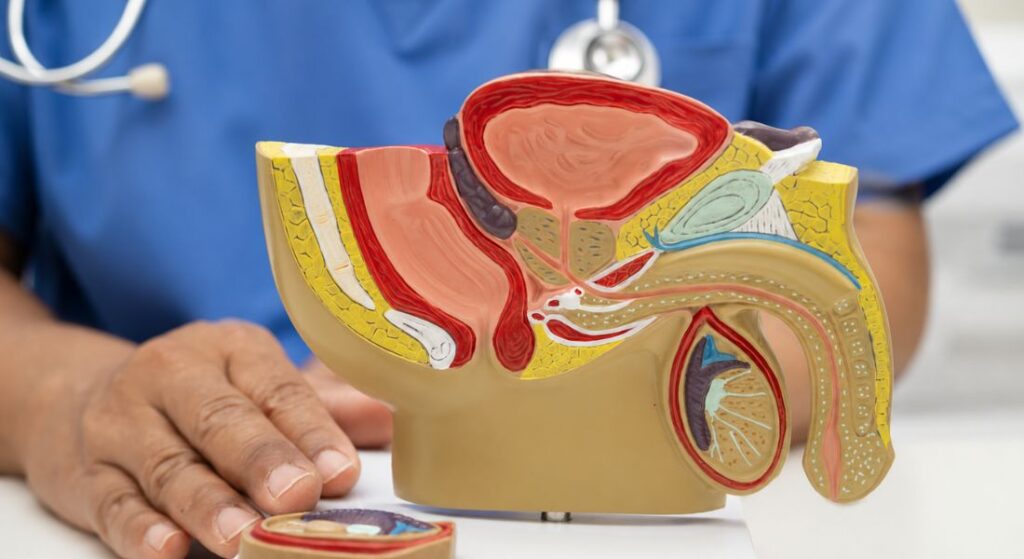
Retzius-sparing prostate surgery is a specialised type of robotic prostate cancer surgery. The aim is still to remove the prostate, but the surgeon uses a different route to reach it.
In standard robotic prostate surgery, the surgeon usually works through the space at the front of the bladder and prostate, called the space of Retzius. With the Retzius-sparing approach, the surgeon works from behind the prostate instead, helping to preserve some of the front support structures.
This matters because these support structures may play a role in early urinary control after surgery. Retzius-sparing surgery may help some men regain continence sooner, although it is not suitable for everyone and cancer control must always come first.
Why the Retzius Space Matters
The space of Retzius is the area at the front of the bladder and prostate. It contains support tissues that help keep the bladder and urethra stable, which can be important for urinary control after prostate surgery.
In standard prostate surgery, this area is usually opened during the operation. That does not mean the operation is wrong, but it can disturb some of the tissues that help support early bladder control.
Retzius-sparing surgery aims to avoid this area as much as possible. By preserving more of these support structures, some men may regain urinary control earlier after catheter removal. However, your suitability depends on your cancer, anatomy, and your surgeon’s judgement.
Why Continence May Recover Earlier
Retzius-sparing surgery may support earlier recovery of urinary continence because it preserves more of the natural support structures around the bladder and urethra. When these supporting tissues are less disturbed during surgery, the urinary control mechanism may start functioning more effectively in the early stages of recovery.
This does not mean you will have no leakage after surgery, but it may mean that you regain control more quickly compared with standard robotic prostatectomy. For you, the most noticeable difference is often in the first few weeks and months following the operation.
By around one year after surgery, continence outcomes between different surgical approaches may become more similar in many studies, although individual recovery can still vary depending on personal healing, surgical factors, and baseline function.
What Happens Immediately After Surgery?
Immediately after prostate surgery, you will usually have a catheter in place. This is a thin tube that drains urine from the bladder while the connection between the bladder and urethra heals, and during this time you are not actively testing bladder control in the usual way.
In the early recovery period, your focus will be on pain control, gentle movement, eating and drinking, wound care, and learning how to manage the catheter safely if you go home with it. You may also be recovering emotionally as well as physically, so it is normal to feel tired, sore, bloated, or unsettled in the first few days.
You will begin to get a clearer idea of your urinary control once the catheter is removed. At that stage, you may start to notice how your continence is improving and what level of support is needed during the next phase of recovery.
Catheter Removal and First Leakage
The catheter is usually removed after a short healing period, depending on your surgeon’s advice. This is often the point where you first begin to understand how much urinary leakage you may experience, as you are no longer relying on continuous bladder drainage.
Some men find they have very little leakage and are pleasantly surprised, while others notice more leakage than expected and may feel concerned. After Retzius-sparing surgery, you may regain control quite quickly, sometimes within the first few days or weeks after catheter removal, although this varies from person to person.
It is still normal to need pads in the early stages of recovery. If you are experiencing leakage in the first days after catheter removal, this does not mean your recovery is not progressing well, as bladder control often continues to improve gradually over the following weeks and months.
How Long Does Continence Recovery Take?
Continence recovery after Retzius-sparing prostate surgery can be quicker for some men, but there is no single timeline that applies to everyone. In the early stages, you may find that you are dry or nearly dry soon after catheter removal, while others notice gradual improvement over several weeks.
For many men, recovery continues over a few months as bladder control strengthens and confidence improves. A smaller number may experience longer-lasting leakage and require further assessment or additional support during their recovery journey.
It is helpful to think of continence recovery as a gradual process rather than an immediate change. Instead of moving from leakage to complete dryness overnight, you may notice steady improvements such as fewer leaks, lighter pad use, longer dry periods, better control when walking, and increasing confidence when you are out and about.
Typical Continence Recovery Timeline After Retzius-Sparing Prostate Surgery
| Recovery Stage | What You May Notice | What May Help |
| While catheter is in place | You will not be testing bladder control normally because urine drains through the catheter. | Focus on rest, gentle walking, catheter care, and following discharge advice. |
| First few days after catheter removal | Leakage may happen when standing, walking, coughing, laughing, or bending. Some men need pads at this stage. | Use pads as needed, avoid judging recovery too early, and follow your clinical team’s advice. |
| First week | Leakage may feel unpredictable while your bladder and pelvic floor adjust. Urgency may also occur. | Gentle pelvic floor exercises if advised, avoid straining, and track leakage patterns calmly. |
| First month | You may notice clearer patterns, such as leakage with activity or more leakage later in the day. | Continue pelvic floor exercises, manage fluid intake sensibly, and avoid heavy lifting. |
| Around three months | Many men notice fewer leaks, lighter pad use, and better confidence outside the home. | Keep up exercises and speak to your team if leakage remains troublesome. |
| Six to twelve months | Many men regain good bladder control, although some may still use a safety pad for exercise or travel. | Consider specialist review if leakage still affects quality of life. |
| Longer-term recovery | A smaller number of men may have persistent leakage. | Pelvic floor physiotherapy, bladder treatments, or specialist continence options may be discussed. |
Recovery in the First Week After Catheter Removal
The first week after catheter removal can feel unpredictable as your body adjusts to normal bladder function again. During this time, you may notice leakage when you stand up, cough, walk, bend, or climb stairs, as the urinary control system is still recovering.
You may also experience urgency, where you feel the need to reach the toilet quickly. Depending on the level of leakage, you may only need a small pad, or you may find that more absorbent pads are required in the early days.
This stage can sometimes feel emotionally challenging, as it is the first time you are managing without a catheter. However, it is important not to judge your long-term recovery based on this early period alone, as leakage often improves significantly over the following weeks.
Recovery in the First Month
The first month after catheter removal is often when you start to notice clearer patterns in your recovery. You may find that leakage is linked to specific activities such as movement, coughing, longer walks, or times when you feel more physically tired.
You might also observe differences throughout the day, with mornings often being better than evenings as the pelvic floor muscles can become more fatigued later on. This can help you understand how your bladder control is gradually responding as you recover.
After Retzius-sparing surgery, some men may already be using fewer pads during this stage, while others may still be in the early phase of recovery. Both experiences can be normal, and your surgeon or specialist nurse can help you understand whether your progress is within the expected range for you.
Recovery Over Three Months
By around three months after surgery, many men begin to notice clear progress in their recovery. You may find that you are using fewer pads, experiencing less leakage during daily activities, and feeling more confident when you are out of the home.
If you have had Retzius-sparing surgery, you may see earlier improvement compared with what is typically expected after standard prostatectomy. However, recovery is still individual, and some men may continue to need pads at this stage, which can feel frustrating but does not necessarily indicate that progress has stopped.
Continence can continue to improve beyond the three-month point, particularly with regular pelvic floor exercises and appropriate follow-up support. If leakage remains more significant than expected, your clinical team may recommend further assessment or referral to a continence specialist to support your ongoing recovery.
Recovery Over Six to Twelve Months
Continence recovery can continue for six to twelve months after prostate surgery. By this stage, many men have regained good bladder control and feel confident in most daily activities, although the pace of recovery can still vary from person to person.
Some men may still use a small safety pad in certain situations, such as during exercise, long journeys, travel, or when access to toilets is limited. A smaller group may continue to experience more troublesome leakage that affects daily comfort and confidence.
If leakage is still impacting quality of life after several months, it is important not to ignore it. Further support may be available, including pelvic floor physiotherapy, medication for urgency, or, in selected cases, surgical options for persistent stress incontinence. A proper review of your recovery can help ensure you are offered the most appropriate next steps.
What Counts as “Recovered”?
Recovery can mean different things to different men after prostate surgery. For some, it means being completely pad-free, while for others it may mean only needing a single small safety pad on long or active days.
You may feel recovered when you are able to return to work without worrying about leakage, whereas for others, recovery only feels complete when they can exercise, travel, and be intimate without thinking about bladder control.
Medical studies often measure recovery using pad counts or clinical definitions, but your own day-to-day experience is just as important. If leakage is still affecting your confidence or limiting your activities, it is worth discussing with your care team, even if it is described as “mild”.
Ultimately, recovery is not just about numbers on a chart. You should aim for practical confidence in daily life, where bladder control no longer feels like something that restricts what you want to do.
Why Recovery Varies Between Patients
Even when the same surgical technique is used, continence recovery can vary quite a bit between patients. Your age, weight, general fitness, bladder function, prostate size, cancer stage, and previous urinary symptoms can all play a role in how quickly you regain control.
You may find that pelvic floor strength before surgery, as well as any prior prostate treatments or procedures, also influence your recovery. Other health conditions such as diabetes, neurological issues, previous pelvic surgery, radiotherapy, or long-term catheter use can further affect the healing process.
This is why it is not possible for your surgeon to give an exact timeline for continence recovery. They can guide you on what is typically expected, but your body will still heal at its own pace, and your individual recovery experience may differ from others.
Age and Continence Recovery
Age can have an influence on how quickly continence returns after prostate surgery. You may find that younger men often regain urinary control more quickly, although this is not a strict rule and should not be viewed as a guarantee.
Older men can still achieve very good recovery, particularly if they are physically active, in good general health, and had strong urinary control before surgery. What often matters more than age alone is your overall fitness and how well your pelvic floor muscles are functioning.
If you are older, it can be especially important to follow pelvic floor exercises carefully and take advice from your specialist team. Age is just one of many factors affecting recovery, and it does not determine your outcome on its own.
Bladder Function Before Surgery
Your bladder function before surgery can have an impact on how your recovery feels afterwards. If you already experienced urgency, frequent urination, night-time urination, a weak urine flow, or a feeling of incomplete emptying before surgery, you may notice that recovery takes a slightly different pattern.
Some of these symptoms can be related to the prostate condition itself, while others may be linked to benign prostate enlargement or an overactive bladder. After the prostate is removed, your bladder may still need time to adjust, so changes in symptoms are not unusual in the early stages.
If urgency continues after surgery, it may not be the same as stress leakage that happens with movement or physical activity. This type of symptom may require a different approach, so it is important that you clearly explain to your care team what you are experiencing. This helps them guide you towards the most appropriate support for your situation.
Stress Leakage vs Urgency Leakage
Not all urine leakage after prostate surgery happens for the same reason. Stress leakage and urgency leakage are different problems, and some men may experience both during early recovery. Understanding the type of leakage helps your clinical team choose the most suitable treatment approach.
- Stress Leakage: This happens when urine leaks during movement or pressure, such as coughing, sneezing, laughing, standing, lifting, or walking.
- Urgency Leakage: This occurs when you suddenly feel a strong need to pass urine and cannot reach the toilet in time.
- Mixed Leakage: Some men may have both stress and urgency leakage, especially in the early stages after surgery.
- Different Treatments: Pelvic floor exercises often help stress leakage, while urgency symptoms may need bladder training, fluid advice, medication, or further assessment.
Overall, knowing the difference between stress leakage and urgency leakage is important after prostate surgery. Each type can happen for different reasons and may need a different management plan. If your symptoms are not improving, your specialist can assess the pattern and recommend the right support.
Pelvic Floor Exercises After Surgery
Pelvic floor exercises are an important part of recovery after prostate surgery. You may be taught how to do them before surgery so you are better prepared to start them again afterwards, and this early guidance can make a difference to your confidence during recovery.
These exercises help strengthen the muscles that support urinary control, but correct technique is essential. Simply tightening your buttocks, thighs, or stomach is not the same as properly engaging the pelvic floor muscles, so it is important to learn the right method.
If you are unsure whether you are doing the exercises correctly, it is worth asking for guidance. A pelvic health physiotherapist can be especially helpful if you are struggling with leakage or feel uncertain about the technique, as they can tailor advice to your specific recovery needs.
When Should Pelvic Floor Exercises Start?
Your surgeon or nurse will usually guide you on when to start or restart pelvic floor exercises after prostate surgery. You may be taught the exercises before surgery so you are familiar with the technique, and in many cases you will resume them after catheter removal, although recommendations can vary depending on your individual situation.
It is important not to force the exercises if they cause pain or if your medical team has advised you to wait. The focus should be on gentle, regular practice with correct technique, rather than strong or repeated squeezing.
Doing too much too early can lead to muscle fatigue and may make bladder control feel more difficult in the short term. A structured plan given by your care team is usually more effective than trying to guess the right routine on your own.
Pads During Recovery
Pads are often needed during continence recovery after prostate surgery, and using them does not mean the operation has not worked or that your recovery is failing. Instead, pads are a practical support that helps you stay active and manage daily life with more confidence while your bladder control improves.
At the beginning of recovery, you may need more absorbent pads, especially when leakage is more noticeable. As your control gradually improves, you may find that you can switch to lighter pads or reduce how often you need them.
It can also help you to keep spare pads and underwear with you when you are out of the house. This preparation can reduce worry about unexpected leakage and make it easier for you to return to normal activities step by step, without feeling restricted.
Returning to Work
Your return to work after prostate surgery will depend on both the type of job you do and how your recovery is progressing. If you work from home or have a desk-based role, you may be able to return sooner than someone whose job involves physical activity or heavy lifting.
Continence recovery is an important part of this decision, as you may need to consider factors such as toilet access, pad changes, commuting, sitting comfort, fatigue levels, and overall confidence when planning your return.
Many men find it helpful to return gradually, starting with reduced hours or remote working where possible. It is important to discuss timing with your surgeon or care team, especially if your job involves driving long distances, manual labour, or situations where regular toilet access may be limited.
Exercise and Continence Recovery

Gentle walking is usually encouraged soon after prostate surgery, as it helps circulation, mobility, and overall recovery. More strenuous exercise, however, should only be introduced when your surgeon confirms it is safe for you.
As you gradually increase your activity, you may notice some leakage during walking, using stairs, or lifting objects. This does not necessarily mean you should stop exercising, but it may indicate that your pelvic floor muscles are still rebuilding strength and need time to adapt.
It is important to avoid heavy lifting too early, as this can place extra pressure on healing tissues and the pelvic floor. A gradual, steady increase in activity, guided by your medical team, is usually the safest and most effective way to support continence recovery.
Coughing, Sneezing, and Leakage
Coughing and sneezing can sometimes trigger urinary leakage after prostate surgery. This happens because sudden pressure is placed on the bladder and pelvic floor muscles, which are still recovering and may not yet provide full support.
You may be shown a simple technique often called “the knack”, where you gently contract your pelvic floor muscles just before you cough, sneeze, or lift something. For some men, this can help reduce or control leakage during these moments of sudden pressure.
If you have a persistent cough, constipation, or any condition that regularly increases pressure in the abdomen, it is important to mention this to your doctor. Managing these issues can make continence recovery easier and help support better long-term bladder control.
Constipation Can Make Leakage Worse
Constipation can increase pressure on the bladder and pelvic floor muscles, which may make urinary leakage feel worse after prostate surgery. In the early recovery period, constipation is quite common and can be caused by anaesthetic effects, pain medication, reduced activity, dehydration, or changes in diet.
Straining on the toilet can also place unnecessary stress on the healing tissues, which is why it is important to manage bowel habits carefully during this time. Your care team may recommend increasing fluids, adding fibre to your diet, gentle walking, or using stool softeners if needed.
It is important not to ignore constipation while you are recovering. Keeping bowel movements soft and comfortable can help reduce pressure on the pelvic floor and support a smoother and more comfortable continence recovery overall.
Fluid Intake and Bladder Control
Some men try to reduce fluid intake after prostate surgery in an attempt to limit urinary leakage. However, drinking too little can sometimes have the opposite effect and may make symptoms feel worse.
When fluid intake is low, urine can become more concentrated, which may irritate the bladder and increase urgency or frequency. For this reason, you should follow the guidance given by your medical team rather than restricting fluids too much on your own.
It can help to spread your fluid intake evenly throughout the day and reduce large drinks in the evening if night-time urination is an issue. You may also notice that caffeine, alcohol, fizzy drinks, and artificial sweeteners can irritate the bladder in some men, so it may take some careful adjustment and discussion with your nurse or doctor to find what works best for you.
Does Retzius-Sparing Mean No Leakage?
Retzius-sparing surgery does not mean you will have no urinary leakage after the operation. It may increase the chance of earlier continence recovery in suitable patients, but leakage can still occur during the healing process.
It is important to have realistic expectations, as assuming complete dryness immediately can make normal recovery feel more worrying than it needs to be. You may still need to use pads after catheter removal, continue pelvic floor exercises, and experience days where leakage is more noticeable.
The main potential benefit of Retzius-sparing surgery is the possibility of earlier improvement in urinary control for some men, rather than a guarantee of perfect continence right away. Your surgeon should explain this clearly so you understand what is likely in your individual case before deciding on surgery.
Is Retzius-Sparing Suitable for Everyone?
Retzius-sparing prostate surgery is not suitable for every patient. Whether it is an option for you depends on several factors, including the location and stage of the cancer, prostate size, previous surgical history, your anatomy, and the surgeon’s experience with the technique.
If the cancer is positioned in a way that makes the Retzius-sparing approach less safe or less effective, you may be advised to have standard robotic prostate surgery instead. In this situation, the main priority is always complete and safe cancer removal.
While continence outcomes are an important part of recovery, they must never override cancer safety. Your surgeon will assess your individual case and explain whether Retzius-sparing surgery is appropriate for you, along with the reasons behind their recommendation, so you can make a well-informed decision.
Cancer Control Still Comes First
It is natural to focus on urinary recovery because it has an immediate impact on your daily life after surgery. However, prostate cancer surgery must always be planned with safe and complete cancer removal as the first priority.
Retzius-sparing surgery is only considered when it is suitable from an oncological perspective. Your surgeon will assess factors such as MRI findings, biopsy results, PSA levels, cancer grade and stage, prostate anatomy, and whether lymph node removal may be required in your case.
If the technique is appropriate for you, it may offer advantages in terms of functional recovery. If it is not suitable, another surgical approach may be recommended to ensure the safest possible cancer outcome. A well-informed decision always balances effective cancer treatment with quality-of-life considerations during recovery.
How Retzius-Sparing Compares With Standard Surgery
Both standard robotic prostatectomy and Retzius-sparing robotic prostatectomy are used to remove the prostate as part of prostate cancer treatment. The main difference is the route your surgeon uses to reach the prostate and which support structures are preserved during the operation.
Retzius-sparing surgery has been linked with faster early return of urinary control in suitable patients. This can be especially important in the first few weeks and months after catheter removal.
However, this does not mean it is automatically the best option for every man. Standard robotic surgery can also achieve strong continence and cancer control outcomes when performed by an experienced surgeon. The right approach depends on your cancer, anatomy, risk factors, and your surgeon’s assessment.
Why Surgeon Experience Matters

Retzius-sparing surgery is a technically demanding procedure, and the experience of your surgeon can play an important role in how the operation is performed. Because the approach uses a different anatomical route compared with standard robotic prostatectomy, familiarity with the technique is particularly important.
A surgeon who performs Retzius-sparing surgery regularly may be better able to advise you on whether it is suitable for your specific situation, as well as what risks, recovery patterns, and outcomes you might expect. Experience can also help guide decisions about cancer control and functional recovery in a balanced way.
It is reasonable for you to ask how often your surgeon carries out this type of surgery and what continence outcomes they typically see in their practice. As this is a major treatment decision, you should feel comfortable seeking clear and honest answers to help you make an informed choice.
Emotional Impact of Leakage
Urinary leakage after prostate surgery can affect far more than physical comfort. It can influence confidence in daily life, sleep quality, work routines, social plans, exercise habits, travel, and even intimacy, all of which may feel more sensitive during recovery.
You may find yourself worrying about things like odour, visible leakage, changing pads in public, or being away from a toilet for too long. These concerns can sometimes lead you to avoid activities you normally enjoy, especially in the early stages of recovery.
If this happens, it is important to speak to your care team, as leakage is a medical issue rather than something to feel embarrassed about. Support is available, and many men notice gradual improvement over time with the right guidance, reassurance, and ongoing management.
Tracking Your Progress
It can be helpful to track your continence recovery in a simple and gentle way. You may choose to note how many pads you use each day, whether they are lightly damp or mainly for reassurance, and when leakage tends to happen during your activities.
You might also notice patterns, such as certain movements or situations that trigger leakage more often. This information can be useful when you discuss your progress with your specialist, as it helps them understand how your recovery is evolving over time.
However, it is important not to become overly focused on every small change. Recovery is not always a straight or predictable process, and you may experience both better and worse days, particularly when you are more tired or physically active.
When Should You Seek Help?
You should contact your medical team if urinary leakage feels difficult to manage or is not improving as expected. You may also want to seek advice if you notice symptoms such as pain, fever, burning when passing urine, blood clots, difficulty passing urine, catheter problems, wound concerns, or a sudden worsening of your symptoms.
If you are still using several pads a day many months after surgery, it may be helpful to arrange a specialist review to better understand what is happening. Likewise, if urgency is a major ongoing issue, you may need specific bladder treatments or further assessment to support your recovery.
It is important not to simply accept ongoing leakage in silence or assume it is something you must live with permanently. There are often ways to help, and early discussion with your care team can make a meaningful difference to your recovery and quality of life.
What If Continence Does Not Recover Fully?
Most men experience improvement in continence after prostate surgery, but a small number may continue to have persistent urinary leakage. If this happens, it does not mean there are no further options, as additional treatments can often be considered depending on your situation.
You may be offered specialist pelvic floor physiotherapy, medications if urgency is a contributing factor, or surgical treatments such as a male sling or an artificial urinary sphincter in selected cases. These options are usually discussed only after allowing sufficient time for natural recovery to take place.
Your specialist will guide you on when further treatment is appropriate based on your progress and symptoms. Although ongoing leakage can be emotionally and physically challenging, it is important to know that support and effective treatment options are still available.
Preparing Before Surgery
Preparing before prostate surgery can help you feel more confident and in control of your recovery. You may be taught pelvic floor exercises before the operation so you are familiar with the correct technique, which can make it easier to restart them afterwards.
It can also help to have suitable pads ready in advance, so you are not arranging supplies during the early recovery period. Planning time off work and thinking ahead about toilet access in the first few weeks can make daily life more manageable.
You may also want to prepare loose clothing and comfortable underwear to reduce discomfort after surgery. It is useful to know who you can contact if you have concerns about the catheter or leakage, as having clear support in place can make the early stages of recovery feel less stressful.
Speak to Our Specialist

If you are considering Retzius-sparing prostate surgery, speaking with a specialist can help you understand whether this approach is suitable for your prostate cancer and recovery goals. You can discuss your MRI findings, biopsy results, cancer location, nerve-sparing options, continence recovery expectations, catheter removal process, and pelvic floor exercises, along with what the early recovery period may look like.
A specialist can also explain how Retzius-sparing surgery compares with standard robotic prostatectomy in your specific situation. This can help you understand the potential benefits and limitations of each approach in relation to both cancer control and functional recovery.
These discussions can make the decision-making process feel more structured and less uncertain. You should aim to feel clear about both your cancer treatment plan and the expected recovery pathway before moving forward with surgery.
FAQs:
1. How soon can continence return after Retzius-sparing prostate surgery?
Continence recovery varies from person to person, but some men notice improvement within days or weeks after catheter removal. Others may take several months to regain good control. Retzius-sparing surgery may support earlier recovery in some patients compared with standard techniques. However, full recovery still depends on individual healing factors.
2. Does Retzius-sparing surgery guarantee no need for pads?
No, it does not guarantee that you will be pad-free immediately after surgery. Many men still need pads during the early recovery period. The main potential benefit is earlier improvement in urinary control for some patients. Outcomes still vary depending on individual circumstances.
3. How long does urinary leakage usually last after surgery?
Leakage is usually most noticeable in the first few weeks after catheter removal. For many men, it gradually improves over a few months as the body heals. Some continue to recover for up to 6–12 months. A small number may experience longer-term leakage.
4. Why might continence improve faster with this technique?
Retzius-sparing surgery preserves more of the supportive structures around the bladder and urethra. This may help the urinary control mechanism work sooner after surgery. As a result, some men regain continence earlier than with standard robotic prostatectomy. However, it is not suitable for everyone.
5. When should pelvic floor exercises start?
Pelvic floor exercises are usually taught before surgery and restarted after catheter removal, but your surgeon will give specific advice. Doing them correctly is more important than starting too early or too aggressively. These exercises help strengthen muscles involved in urinary control. A physiotherapist can help if you are unsure about technique.
6. Is leakage immediately after catheter removal normal?
Yes, it is very common to experience leakage right after the catheter is removed. You may notice urine loss when standing, walking, or coughing. This early phase does not indicate long-term recovery outcome. Improvement often happens gradually over time.
7. What factors affect continence recovery?
Recovery depends on several factors including age, general health, bladder function, and pelvic floor strength. Surgical details and previous urinary symptoms also play an important role. Some men recover faster due to better pre-surgery bladder control. Each patient’s healing response is different.
8. Can I exercise during recovery?
Gentle walking is usually encouraged soon after surgery to support healing. Strenuous exercise should be avoided until your surgeon confirms it is safe. Increasing activity too quickly may temporarily worsen leakage. Gradual progression is best for recovery.
9. When should I seek medical advice about leakage?
You should seek advice if leakage is not improving or is affecting your daily life. Persistent or worsening symptoms may need further assessment. It is also important to report pain, infection signs, or urinary difficulty. Early support can help improve recovery outcomes.
10. What if continence does not fully return?
Most men improve over time, but some may have ongoing leakage. Treatment options can include physiotherapy, medication for bladder symptoms, or surgical procedures like slings or artificial urinary sphincters. These are usually considered only after giving enough time for natural recovery. Your specialist will guide you based on your situation.
Final Thoughts: Continence Recovery After Retzius-Sparing Prostate Surgery
Continence recovery after Retzius-sparing prostate surgery can be encouraging for many men, especially because this technique may help support an earlier return of urinary control in suitable patients. However, recovery is still individual, and it is normal for some men to need pads, pelvic floor exercises, and ongoing support while the body heals.
It is important to have realistic expectations. Retzius-sparing surgery may reduce early leakage for some men, but it does not guarantee immediate dryness. Your recovery can depend on your age, bladder function before surgery, pelvic floor strength, surgical details, and overall health.
If you are considering specialist care for Retzius-sparing robotic prostate surgery in London and would like specialist advice, you can contact us to discuss your options and arrange a consultation tailored to your individual needs.
References:
- Phukan, C., McLean, A., Nambiar, A., Mukherjee, A., Somani, B., Krishnamoorthy, R., Madaan, S., Rai, B.P. and Aboumarzouk, O.M. (2020) ‘Retzius sparing robotic assisted radical prostatectomy vs. conventional robotic assisted radical prostatectomy: a systematic review and meta-analysis’, World Journal of Urology, 38(5), pp.1123–1134. Available at: https://pubmed.ncbi.nlm.nih.gov/31089802/
- Qiu, X., Li, Y., Chen, M., Xu, L., Guo, S., Marra, G., Karnes, R.J., Tewari, A.K. and Sun, Y. (2020) ‘Retzius-sparing robot-assisted radical prostatectomy improves early recovery of urinary continence: a randomized, controlled, single-blind trial with a 1-year follow-up’, BJU International, 126(5), pp.633–640. Available at: https://pubmed.ncbi.nlm.nih.gov/32741099/
- Gong, W., Wang, L., Li, J. and Zhang, Y. (2025) ‘Comparison of efficacy of Retzius-sparing radical prostatectomy and conventional robot-assisted radical prostatectomy: a systematic review and meta-analysis’, World Journal of Surgical Oncology, 23, 150. Available at: https://pmc.ncbi.nlm.nih.gov/articles/PMC12120473/
- Fonseca, J., Nunes-Silva, I., Rosiello, G., et al. (2023) ‘Urinary continence recovery after Retzius-sparing robot-assisted radical prostatectomy in relation to surgeon experience’, Journal of Robotic Surgery, 17, pp.2795–2802. Available at: https://pmc.ncbi.nlm.nih.gov/articles/PMC10492722/
- Olivero, A., Fontana, M., Manfredi, M., Fiori, C. and Porpiglia, F. (2023) ‘Urinary Continence Recovery after Retzius-Sparing Robot-Assisted Radical Prostatectomy in Patients Receiving Adjuvant Radiation Therapy’, Cancers, 15(17), 4390. Available at: https://www.mdpi.com/2072-6694/15/17/4390