




A prostate biopsy removes small tissue samples from your prostate so they can be examined under a microscope. If cancer cells are found in the samples, the biopsy can confirm prostate cancer and help determine its grade.
If prostate cancer is suspected, you will usually have an MRI before your biopsy. The MRI helps your specialist decide whether you need a biopsy and which areas of your prostate should be sampled.
A negative biopsy means that cancer was not found in the samples taken, but it does not always rule out prostate cancer completely. Your specialist may recommend continued prostate-specific antigen (PSA) monitoring, further imaging or another biopsy if there is ongoing clinical concern.
Why Is a Prostate Biopsy Performed?
You may be offered a prostate biopsy when your PSA level, prostate examination, MRI or other test results suggest that prostate cancer could be present. A biopsy provides tissue that can be examined directly under a microscope.
The results can confirm whether cancer cells are present and provide important information about the cancer’s grade. This helps your healthcare team decide whether you need treatment or further monitoring.
Is a Biopsy Needed After a High PSA?
If you have a raised PSA level, you may not automatically need a prostate biopsy. PSA can increase for several reasons, so your healthcare team will usually consider your MRI findings, prostate examination and other clinical information first.
If these results suggest that cancer may be present, your specialist may recommend a biopsy to examine prostate tissue. You can also learn more about what happens after a high PSA result and how the next steps are decided.
Why Is MRI Usually Done First?
If you have suspected prostate cancer, you will usually have a multiparametric MRI before a biopsy. In UK practice, multiparametric MRI is usually performed before biopsy because it can help identify areas that may need further assessment.
If your MRI shows a suspicious lesion, your specialist can use the scan to guide the biopsy towards that area. This can make the tissue sampling more targeted and informative.
UK Guidance Note
NICE uses a 5-point Likert scale when clinically localised prostate cancer is suspected. MRI helps your healthcare team assess whether a biopsy is necessary and identify areas that may require targeted sampling. In some people whose MRI has a low suspicion score, biopsy may be avoided after individual risks and benefits have been considered.
What Is an MRI-Targeted Biopsy?
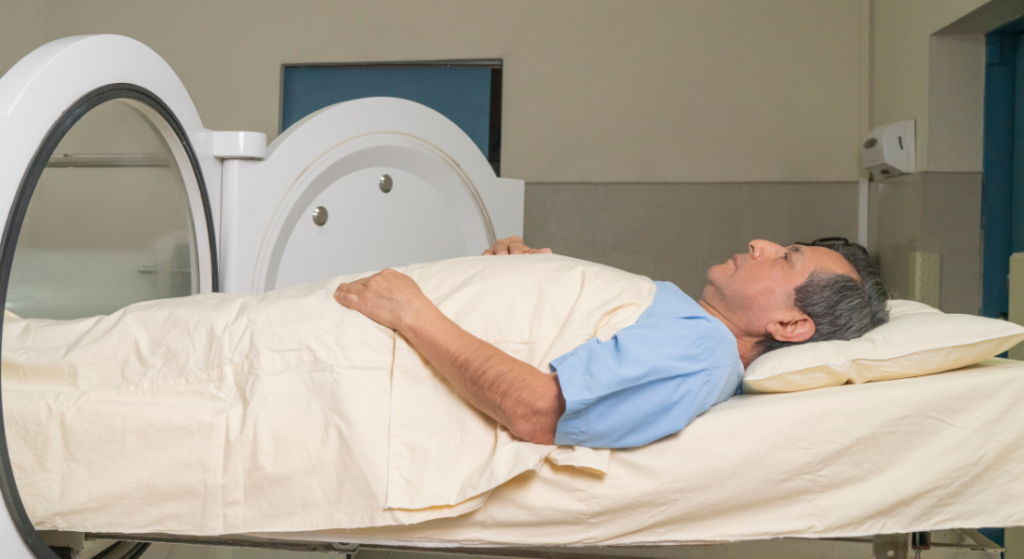
If your MRI shows a suspicious area, an MRI-targeted biopsy takes tissue samples specifically from that part of your prostate. Your specialist can use the MRI findings alongside ultrasound imaging to guide the biopsy needle accurately.
This approach helps your healthcare team sample areas that may contain clinically significant prostate cancer, meaning cancer that is more likely to grow, spread or require treatment. Your MRI report will describe how suspicious an area appears. NICE uses a 5-point Likert scale in its diagnostic pathway, although some centres may also use reporting systems such as PI-RADS.
What Is a Systematic Biopsy?
A systematic prostate biopsy collects tissue samples from several planned areas of your prostate rather than focusing only on a suspicious area seen on MRI. This allows your specialist to assess different parts of the gland for cancer.
Your specialist may combine systematic and MRI-targeted biopsies when this could provide more complete information. The approach depends on your MRI findings, previous biopsy results and overall clinical assessment.
What Is a Transperineal Prostate Biopsy?
If you have a transperineal prostate biopsy, the biopsy needle passes through the skin between your scrotum and anus, known as the perineum. Your doctor uses an ultrasound probe placed in your rectum to see the prostate and guide the needle accurately.
This approach allows your specialist to take tissue samples from specific areas of your prostate. It is commonly used because the needle does not pass through the rectal wall, which may reduce the risk of infection compared with a transrectal biopsy.
Why Is the Transperineal Approach Used?
One important advantage of the transperineal approach is that the biopsy needle does not pass through the rectal wall. This reduces exposure to bacteria from the rectum and can lower the risk of infectious complications.
Overall, the transperineal approach is generally associated with a lower risk of infectious complications than the transrectal route. Your specialist will consider your individual circumstances when deciding which biopsy method is most suitable for you.
Research Insight
Research comparing transperineal and transrectal biopsy supports the lower infectious risk associated with sampling through the perineal skin. In the final PREVENT randomised trial analysis, no infections occurred among participants undergoing transperineal biopsy, compared with 1.6% among those undergoing transrectal biopsy with targeted antibiotic prophylaxis. Individual risk still varies, and no biopsy technique is completely risk-free.
What Is a Transrectal Biopsy?
If you have a transrectal ultrasound-guided prostate biopsy, the biopsy needle is passed through the wall of your rectum to reach the prostate. This approach has been used widely in the past, although it carries a higher risk of infection because the needle passes through rectal tissue.
- How It Is Performed: The biopsy needle is guided through the rectum and into the prostate to collect small tissue samples.
- Ultrasound Guidance: An ultrasound probe helps your healthcare professional see the prostate and guide the needle accurately.
- Infection Risk: Because the needle passes through the rectal wall, bacteria from the bowel can enter the prostate or bloodstream, increasing the risk of infection.
- An Alternative Approach: Transperineal biopsy is another method in which the needle passes through the skin between the scrotum and anus, and it is increasingly used because of its lower infection risk.
Your urologist will explain which biopsy approach is most suitable for you, taking into account your individual circumstances and the potential benefits and risks of each method.
Are You Awake During the Biopsy?
If you have a transperineal prostate biopsy under local anaesthetic, you will usually remain awake while the area is numbed. You may feel some pressure or movement, but your healthcare team will aim to keep you as comfortable as possible.
In some circumstances, you may have sedation, spinal anaesthesia or general anaesthesia instead. Your specialist will discuss the most appropriate option with you before the procedure.
How Should You Prepare?

Before your prostate biopsy, your hospital will give you specific instructions about how to prepare. You should tell your healthcare team about all the medicines you take, especially blood-thinning medicines such as anticoagulants or antiplatelet medicines, as some may need to be adjusted temporarily.
Do not stop any blood-thinning medicine yourself. Your clinical team will tell you if a medicine needs to be paused, changed or continued before your biopsy.
What Happens During a Transperineal Prostate Biopsy?
If you are having a transperineal prostate biopsy, you will be positioned so your doctor can access the perineum, and local anaesthetic will usually be used if appropriate. An ultrasound probe helps your doctor see your prostate and guide the biopsy needles accurately.
Small tissue samples are then taken through the skin of your perineum. You may feel some pressure or brief discomfort during the procedure, but your healthcare team will monitor you throughout.
Does a Prostate Biopsy Hurt?
If you have a transperineal prostate biopsy, local anaesthetic is usually used to reduce discomfort. You may still feel pressure, brief sharp sensations or some discomfort while the tissue samples are taken.
If you feel uncomfortable during the procedure, tell your clinical team. They can assess whether you need additional pain relief or other support to keep you comfortable.
What Happens to the Tissue Samples?
After your prostate biopsy, the tissue samples are sent to a pathology laboratory for examination under a microscope. A specialist pathologist looks for cancer cells and assesses the characteristics of any cancer found.
If cancer is present, the results can help determine your Grade Group and provide information about how the cancer may behave. Your healthcare team will use these findings alongside your PSA, MRI and other results.
What Results Can a Biopsy Provide?

A biopsy can show whether prostate cancer was found, which samples contain cancer and its Gleason patterns or Grade Group. This information is combined with your PSA and imaging to guide risk assessment and treatment planning.
| Aspect | Key Information | What It Means for You | Why It Matters |
| Purpose | Can confirm prostate cancer if cancer cells are found | Tissue is examined under a microscope | Helps guide diagnosis and treatment |
| MRI Before Biopsy | Identifies suspicious prostate areas | Helps target the biopsy | May improve the detection of clinically significant cancer |
| Biopsy Routes | Transperineal and transrectal approaches | The needle reaches the prostate by different routes | Transperineal biopsy generally has a lower infection risk |
| Biopsy Results | Shows cancer, Gleason pattern and Grade Group | Helps determine how aggressive the cancer may be | Supports treatment planning |
Can a Biopsy Miss Prostate Cancer?
Yes, a prostate biopsy can occasionally miss cancer because only selected areas of your prostate are sampled. This means a small or difficult-to-reach cancer may not be captured in the tissue samples.
If your MRI shows a suspicious area, MRI-targeted biopsy can help your specialist direct samples towards it. Your healthcare team will consider your MRI, PSA and biopsy results together when deciding whether further assessment is needed.
Is Blood Normal Afterwards?
If you have a prostate biopsy, you may notice some blood in your urine or semen afterwards. You may also have temporary bruising, tenderness or discomfort around your perineum after a transperineal biopsy.
Small amounts of bleeding are usually temporary, but you should follow your hospital’s advice if the bleeding is heavy, does not settle or is accompanied by clots. If you are concerned about your symptoms, contact your clinical team for advice.
Can a Biopsy Cause Difficulty Urinating?
If you have a prostate biopsy, you may temporarily find it harder to pass urine because the prostate can become swollen. In some cases, urinary retention can occur and you may need a catheter until the swelling settles.
If you cannot pass urine after your biopsy, seek prompt medical advice. Your healthcare team can assess you and provide treatment if needed.
What Are the Main Risks?
If you have a prostate biopsy, possible complications include bleeding, bruising, discomfort, infection and temporary difficulty passing urine. Many common side effects are temporary, but complications can occasionally require further assessment or treatment. A transperineal biopsy has a lower infection risk than a biopsy where the needle passes through the rectal wall. However, no procedure is completely risk-free, so you should follow your hospital’s aftercare instructions.
When Should You Seek Medical Advice?

After your prostate biopsy, contact your medical team promptly if you develop heavy or persistent bleeding, large blood clots, difficulty passing urine, fever, shivering or other symptoms that could indicate an infection. If you cannot contact your clinical team and need urgent advice, contact NHS 111.
If you become severely unwell, confused, very breathless or develop other symptoms of possible sepsis, call 999 or go to A&E immediately.
Myth vs Fact
| Myth | Fact |
| A high PSA level always means you need a prostate biopsy. | A raised PSA does not automatically mean that you need a biopsy. Your specialist will usually consider your MRI findings, prostate examination and other clinical information before deciding whether tissue sampling is appropriate. |
| A negative prostate biopsy completely rules out prostate cancer. | A negative biopsy means that cancer was not found in the samples taken, but a biopsy can occasionally miss cancer because only selected areas of the prostate are sampled. Further PSA monitoring, imaging or another biopsy may sometimes be considered if concern remains. |
| Everyone with suspected prostate cancer has a biopsy immediately. | If prostate cancer is suspected, you will usually have an MRI first. The scan can help your specialist decide whether a biopsy is needed and which areas should be targeted. |
| All prostate biopsies are performed through the rectum. | Prostate tissue can be sampled using different approaches. A transperineal biopsy passes the needle through the skin of the perineum, while a transrectal biopsy passes through the rectal wall. |
| A prostate biopsy is always performed under general anaesthesia. | Many transperineal biopsies are performed under local anaesthetic while you remain awake. Sedation, spinal anaesthesia or general anaesthesia may be used in some circumstances. |
| Blood after a prostate biopsy always means something has gone wrong. | Small amounts of blood in your urine or semen can occur temporarily after a biopsy. However, heavy or persistent bleeding, large clots or other concerning symptoms should be discussed promptly with your medical team. |
| A prostate biopsy can tell you only whether cancer is present. | If cancer is found, biopsy results can also provide information about Gleason patterns and Grade Group, which your healthcare team considers alongside PSA, MRI and other findings when planning care. |
Key Takeaways
- A prostate biopsy removes small samples of prostate tissue so they can be examined under a microscope for cancer cells and, if cancer is found, grading information.
- A raised PSA does not automatically mean that you need a biopsy. Your MRI findings, prostate examination and wider clinical picture are also considered.
- Multiparametric MRI is usually performed before biopsy when prostate cancer is suspected and can help identify areas that may need targeted sampling.
- MRI-targeted and systematic biopsies sample the prostate in different ways and may sometimes be combined depending on your findings and clinical circumstances.
- Transperineal biopsy reaches the prostate through the skin of the perineum and generally has a lower infection risk than the transrectal approach.
- Local anaesthetic is commonly used for transperineal biopsy, although other forms of anaesthesia or sedation may sometimes be appropriate.
- Temporary bleeding, discomfort, bruising or difficulty passing urine can occur after biopsy, and your hospital should give you specific aftercare advice.
- A negative biopsy does not always completely exclude prostate cancer because only selected areas are sampled. Continued monitoring or further assessment may sometimes be recommended.
- Seek prompt medical advice if you develop heavy bleeding, large blood clots, difficulty passing urine, fever, shivering or significant illness after your biopsy.
Frequently Asked Questions
1. What is a prostate biopsy?
A prostate biopsy is a procedure that removes small samples of tissue from your prostate. The samples are examined under a microscope to check for prostate cancer and, if cancer is found, determine its grade.
2. Do you always need a biopsy after a high PSA?
No. A raised PSA does not always mean you have prostate cancer, so your specialist will usually consider your PSA level, MRI findings, prostate examination and other risk factors before recommending a biopsy.
3. Is an MRI needed before a prostate biopsy?
In most cases, an MRI is performed before a biopsy when prostate cancer is suspected. It can identify suspicious areas and help your specialist decide whether a biopsy is needed and where samples should be taken.
4. What is a transperineal prostate biopsy?
A transperineal biopsy takes samples through the skin between your scrotum and anus, known as the perineum. Ultrasound is used to guide the biopsy needle into the prostate, and this approach generally has a lower infection risk than a transrectal biopsy.
5. Does a prostate biopsy hurt?
You may feel pressure, brief sharp sensations or some discomfort during the procedure. Local anaesthetic is commonly used for transperineal biopsies to reduce pain, and your healthcare team can provide additional pain relief if needed.
6. Are you awake during a prostate biopsy?
Many transperineal biopsies are performed under local anaesthetic, so you remain awake. Depending on your circumstances and where the procedure is performed, sedation, spinal anaesthesia or general anaesthesia may also be used.
7. How long does it take to recover from a prostate biopsy?
Most people can return to their usual activities relatively quickly, although you may have temporary discomfort, bruising or blood in your urine or semen. Your hospital will give you specific advice about exercise, work and other activities after the procedure.
8. Can a prostate biopsy miss cancer?
Yes. A biopsy samples selected areas rather than examining the entire prostate, so cancer can occasionally be missed. MRI-targeted sampling can help your specialist take tissue from areas that appear suspicious on the scan.
9. What happens if cancer is found on the biopsy?
The pathology report can show which samples contain cancer and provide information such as the Gleason pattern and Grade Group. Your specialist will combine these results with your PSA, MRI findings and cancer stage to determine your overall risk and discuss the most appropriate treatment or monitoring options.
10. When should you seek medical help after a prostate biopsy?
You should contact your medical team if you develop heavy or persistent bleeding, large blood clots, difficulty passing urine or symptoms of infection. Fever, shivering or feeling significantly unwell after the biopsy should be assessed promptly.
Final Thoughts: Understanding Your Prostate Biopsy
A prostate biopsy is an important step when your PSA, MRI or other test results suggest that prostate cancer may be present. By examining small samples of prostate tissue under a microscope, your specialist can confirm whether cancer is present and, if it is, determine important details such as the Gleason pattern and Grade Group.
If you are looking for specialist assessment and guidance about a prostate biopsy in London, our team at Prostate Clinic London can explain why a biopsy may be recommended, which approach may be suitable for you and what you can expect before and after the procedure. With clear advice and personalised guidance, you can better understand your results and make informed decisions about the next steps in your care.
References:
- Rebez, G. et al. (2024) ‘Targeted Prostate Biopsy: How, When, and Why? A Systematic Review’, Diagnostics. Available at: https://www.mdpi.com/2075-4418/14/17/1864
- Giannakodimos, I. et al. (2025) ‘Fusion MRI/Ultrasound-Guided Transperineal Biopsy: A Game Changer in Prostate Cancer Diagnosis’, Journal of Clinical Medicine. Available at: https://www.mdpi.com/2077-0383/14/2/453
- Sheweita, M. et al. (2025) ‘Multicentre assessment of transperineal targeted prostate biopsy performed as part of a targeted and systematic biopsy diagnostic strategy in men without previous prostate biopsies’, BJUI Compass. Available at: https://pmc.ncbi.nlm.nih.gov/articles/PMC12000927/
- Fazekas, T. et al. (2024) ‘Magnetic Resonance Imaging in Prostate Cancer Screening: A Systematic Review and Meta-Analysis’, JAMA Oncology. Available at: https://pmc.ncbi.nlm.nih.gov/articles/PMC10998247/
- Hu, J.C. et al. (2024) ‘Transperineal vs Transrectal Prostate Biopsy—The PREVENT Randomized Clinical Trial’, JAMA Oncology. Available at: https://pubmed.ncbi.nlm.nih.gov/39298143/
- Suartz, C.V. et al. (2026) ‘Transperineal versus Transrectal Prostate Biopsy: A Systematic Review and Meta-Analysis of Randomized Controlled Trials’, Clinical Genitourinary Cancer. Available at: https://pubmed.ncbi.nlm.nih.gov/41385931/
- Stangl, F.P. et al. (2026) ‘Infectious Complications After Transrectal Versus Transperineal Prostate Biopsy: A Systematic Review and Meta-analysis’, European Urology Focus. Available at: https://www.sciencedirect.com/science/article/pii/S2405456925002093
- Wu, Q. et al. (2025) ‘Optimizing the strategies to perform prostate biopsy in MRI-positive patients: a systematic review and network meta-analysis’, eClinicalMedicine. Available at: https://www.sciencedirect.com/science/article/pii/S2589537025000963
- National Institute for Health and Care Excellence (2019, updated 2021) ‘Prostate cancer: diagnosis and management’, NICE guideline NG131. Available at: https://www.nice.org.uk/guidance/ng131
- University College London Hospitals NHS Foundation Trust (2025) Transperineal biopsy of the prostate. Available at: https://www.uclh.nhs.uk/patients-and-visitors/patient-information-pages/transperineal-biopsy-prostate