




Symptoms associated with an enlarged prostate may gradually become more troublesome if the underlying obstruction progresses. In some men, complications can include acute or chronic urinary retention, recurrent infections, bladder stones, bladder dysfunction or kidney problems.
However, not every enlarged prostate causes obstruction, and many men with mild symptoms remain stable without immediate treatment. Medical assessment is important if symptoms worsen, affect everyday life or suggest that the bladder is not emptying properly.
What Is an Enlarged Prostate?
Benign prostatic hyperplasia describes non-cancerous overgrowth of prostate tissue seen microscopically. Benign prostatic enlargement describes an increase in prostate size, while benign prostatic obstruction means that the prostate is restricting urine flow.
These terms are related but not interchangeable. A large prostate may cause few symptoms, while a smaller prostate can sometimes produce significant obstruction. Benign enlargement is not the same as prostate cancer.
Does It Always Need Treatment?
An enlarged prostate does not always require treatment. If your symptoms are mild, not troublesome and not associated with complications, reassurance, lifestyle measures and review if the symptoms change may be appropriate.
Medication may be offered when symptoms are bothersome and conservative measures have been unsuccessful or are unsuitable. Surgery or another procedure is generally considered when voiding symptoms are severe or when conservative measures and medication have not helped, are inappropriate or cannot be tolerated.
Can Chronic Retention Affect Bladder Function?
Long-standing urinary retention can stretch the bladder and may impair the ability of its muscle, known as the detrusor, to contract effectively. However, incomplete emptying can result from obstruction, reduced bladder-muscle function or a combination of both, and it does not develop in every man with prostate enlargement.
Bladder emptying may improve after the obstruction is relieved, but recovery is not always complete when significant bladder dysfunction has developed. Specialist assessment may include measurement of the urine left after urination and, in selected cases, bladder-function testing to help guide treatment.
Can Urinary Symptoms Gradually Worsen?

Symptoms such as a weak stream, hesitancy, incomplete emptying, urgency and night-time urination often develop gradually. Some men experience worsening symptoms, while others remain stable or notice that symptoms fluctuate.
Symptom severity does not always reflect prostate size or the degree of obstruction. New or worsening symptoms should be assessed rather than assumed to be a normal part of ageing.
What Is Chronic Urinary Retention?
Chronic urinary retention occurs when the bladder repeatedly fails to empty properly and a substantial amount of urine remains after urination. It often develops gradually and may initially cause little or no pain.
Possible signs include a weak stream, incomplete emptying, abdominal swelling, frequent small-volume urination and overflow leakage, including during the night. Some cases are detected only through examination, bladder scanning or kidney-function tests.
What Is Acute Urinary Retention?
Acute urinary retention occurs when you suddenly cannot pass urine at all. Your bladder can become painfully full, and this is a medical emergency.
Immediate treatment is needed to relieve the pressure, usually by inserting a catheter to drain your bladder.
Can the Bladder Muscle Become Damaged?
When urine remains in your bladder for long periods, the bladder wall can become stretched. Over time, the muscle may weaken and lose some of its ability to contract properly.
- Bladder stretching: Prolonged urine retention can cause the bladder wall to stretch beyond its normal capacity
- Muscle weakening: The bladder muscle may gradually lose strength, reducing its ability to contract effectively
- Incomplete emptying: Weak bladder contractions can lead to ongoing difficulty emptying the bladder fully
- Persistent symptoms: Problems may continue even after the original blockage has been treated
- Early management: Addressing urinary retention promptly may help reduce the risk of long-term damage
If bladder muscle function becomes impaired, recovery may take time and may not always be complete. Early assessment and treatment can help protect bladder function and reduce the likelihood of lasting problems.
Can It Cause Overflow Leakage?

When your bladder becomes overfilled, it may start leaking small amounts of urine. This is called overflow incontinence and can occur even though you still find it difficult to pass urine normally.
You may notice dribbling, damp clothing or leakage during the night. These symptoms suggest that your bladder is not emptying properly and may need medical assessment.
Can an Untreated Enlarged Prostate Cause Urinary Infections?
Incomplete bladder emptying can leave residual urine in which bacteria may grow, potentially increasing the likelihood of urinary tract infection. Recurrent or persistent infections require investigation because they may have causes other than prostate obstruction.
Symptoms can include burning when urinating, urgency, cloudy or unpleasant-smelling urine, fever or pain. Fever, shivering or feeling acutely unwell with urinary symptoms requires prompt medical advice.
Can Bladder Stones Develop?
Bladder stones may form when the bladder does not empty fully and minerals in retained urine collect into solid deposits. Benign prostatic obstruction is one possible cause.
Stones may cause lower abdominal pain, interrupted urine flow, urinary infection, difficulty urinating or visible blood. Larger stones normally require removal, and the cause of incomplete emptying may also need treatment.
Can an Enlarged Prostate Cause Blood in Urine?
Benign prostate enlargement can sometimes be associated with blood in the urine, but this should not be assumed to be the cause. Infection, stones and cancers of the urinary tract are among the other possibilities.
Visible blood in the urine requires urgent assessment, even if it occurs only once, there is only a small amount or no other symptoms are present.
Can It Damage Your Kidneys?
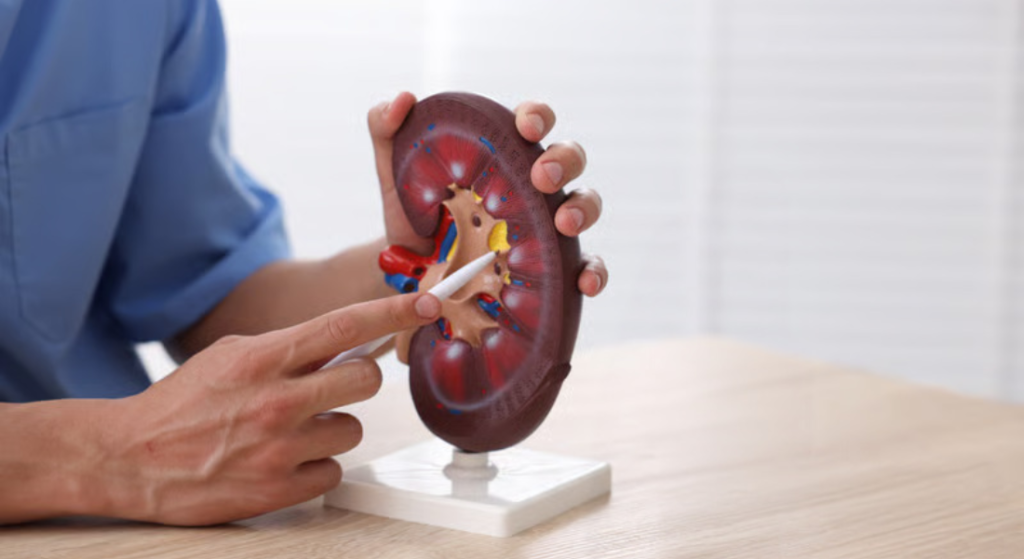
Kidney damage is uncommon in uncomplicated prostate enlargement. It is mainly a concern when severe or high-pressure chronic retention causes pressure to build within the urinary system.
This can lead to hydronephrosis and impaired kidney function. Men with substantial chronic retention may require kidney-function testing, urinary-tract imaging and catheter drainage when renal impairment or hydronephrosis is present.
What Is Hydronephrosis?
Hydronephrosis is swelling of one or both kidneys caused by impaired urine drainage. Severe bladder outlet obstruction and chronic urinary retention are possible causes.
Prompt drainage and treatment of the obstruction can often prevent lasting problems. Severe or untreated hydronephrosis can damage kidney function and, in rare cases, contribute to kidney failure.
Can It Affect Your Sleep and Daily Life?
Frequent or urgent urination may mean you need to stay close to a toilet, which can disrupt your daily routine and limit activities. Waking up repeatedly at night can interrupt sleep and leave you feeling tired, and over time these symptoms may affect work, travel, exercise and social life.
Impact on Daily Life
| Area | How It Can Affect You | Possible Result |
| Daily routine | Need for frequent bathroom access | Difficulty planning outings or long trips |
| Sleep | Waking multiple times at night (nocturia) | Poor sleep quality and daytime fatigue |
| Work | Interruptions during tasks or meetings | Reduced concentration or productivity |
| Exercise | Concern about toilet access | Avoiding physical activity |
| Social life | Worry about symptoms in public | Less participation in social events |
Does an Enlarged Prostate Become Prostate Cancer?
No. Benign prostatic hyperplasia does not turn into prostate cancer. Benign prostate enlargement is not cancer and does not increase your risk of developing prostate cancer.
However, both conditions can exist at the same time, and urinary symptoms may have different causes. This is why any persistent or changing symptoms should be properly assessed by a doctor.
Which Symptoms Need Routine Assessment?
You should arrange an appointment if you notice a weak stream, difficulty starting, frequent urination, urgency, dribbling or a feeling that your bladder is not fully empty.
You should also seek medical advice if your symptoms are getting worse or beginning to affect your sleep, daily activities or quality of life.
Which Symptoms Need Urgent Help?

Seek urgent help through an urgent GP appointment or NHS 111 if you cannot pass urine, have visible blood in your urine or develop pain when urinating. Sudden complete urinary retention requires immediate treatment.
Contact NHS 111 if urinary symptoms occur with a high temperature, shivering, severe lower abdominal pain or rapidly worsening illness. Call 999 or go to A&E if you become suddenly confused, have slurred speech or develop severe breathing difficulty, as these may be signs of sepsis.
How Is the Problem Assessed?
Initial assessment may include a medical and medication history, examination of the abdomen and genital area, a digital rectal examination and urine testing. You may be asked to complete a symptom questionnaire or a bladder diary, and the benefits and limitations of PSA testing should be discussed when appropriate.
Specialist assessment commonly includes measuring urine flow and checking how much urine remains after urination. Kidney-function testing, upper-tract imaging, cystoscopy or bladder-function testing are arranged when clinically indicated rather than routinely for every uncomplicated case.
Can Medication Prevent Complications?
Alpha blockers can relax muscle around the prostate and bladder neck, improving urine flow, but they do not shrink the prostate or prevent its natural growth. Other medicines may be used when urgency and frequency are prominent.
For selected men with a larger prostate or a higher risk of progression, a 5-alpha reductase inhibitor can reduce prostate volume over time and lower the likelihood of retention or surgery. Medication choice depends on symptoms, prostate assessment, other health conditions and possible side effects.
When May Surgery Be Recommended?
Surgery or another procedure may be considered when voiding symptoms are severe, or when conservative measures and medication have not helped sufficiently, are unsuitable or cannot be tolerated. The effect of your symptoms on your quality of life and your treatment preferences should also form part of the decision.
Specialist intervention may also be needed for recurrent urinary retention, chronic retention, bladder stones, recurrent infections associated with obstruction or recurrent bleeding attributed to benign prostate enlargement after other causes have been investigated. If chronic retention has caused hydronephrosis or impaired kidney function, catheter drainage is normally required before longer-term treatment is planned.
Myth vs Fact
| Myth | Fact |
| Every enlarged prostate eventually becomes dangerous. | Many men have stable or mild symptoms and never develop serious complications. |
| A large prostate always causes severe symptoms. | Prostate size and symptom severity do not always correspond. |
| All male urinary symptoms are caused by the prostate. | Bladder conditions, infection, medicines, diabetes and urethral disease can cause similar symptoms. |
| Chronic retention is always painful. | It can develop gradually with few symptoms. |
| A rising PSA proves that an enlarged prostate is worsening. | PSA can change for several reasons and requires clinical interpretation. |
| Blood in the urine can safely be blamed on BPH. | Visible blood must be assessed because several urinary conditions can cause it. |
| Benign prostate enlargement turns into prostate cancer. | It does not become cancer, although both conditions can occur together. |
| Surgery is required as soon as the prostate is enlarged. | Treatment depends on symptoms, obstruction, complications and individual preferences. |
Key Takeaways
- An enlarged prostate does not always cause urinary obstruction.
- Mild symptoms may remain stable and may not require immediate treatment.
- Acute urinary retention is a medical emergency.
- Chronic retention can develop gradually and may initially cause little pain.
- Persistent obstruction can affect bladder function.
- Recurrent infection, bladder stones and visible blood require assessment.
- Kidney complications are uncommon but may occur with high-pressure chronic retention.
- Medication can improve symptoms, while selected medicines may reduce progression risk.
- Surgery may be recommended for severe symptoms, unsuccessful medical treatment or complications.
- Urinary symptoms should not automatically be attributed to prostate enlargement.
Frequently Asked Questions
1. What happens if an enlarged prostate is left untreated?
Untreated symptoms associated with benign prostate obstruction may gradually worsen and can occasionally lead to retention, infection, bladder stones, bladder dysfunction or kidney problems. Many men with uncomplicated mild symptoms remain stable.
2. Does an enlarged prostate always need treatment?
No. If your symptoms are mild and not affecting your quality of life, your clinician may recommend monitoring and simple lifestyle changes rather than immediate treatment.
3. Can urinary symptoms get worse over time?
Urinary symptoms can gradually worsen, remain stable or fluctuate. Symptom severity does not always correspond to prostate size, so changes should be assessed in the wider clinical context.
4. What is urinary retention?
Urinary retention occurs when your bladder does not empty properly. Chronic retention develops gradually, while acute retention is a sudden inability to pass urine and requires urgent medical attention.
5. Can an untreated enlarged prostate damage your bladder?
Long-standing obstruction may affect bladder muscle function and lead to persistent incomplete emptying. This does not happen to every man, and bladder dysfunction can also have causes unrelated to prostate enlargement.
6. Can it cause urinary tract infections?
Residual urine may increase the likelihood of urinary infection, but infection is not always caused by an enlarged prostate. Recurrent infections require investigation for obstruction and other possible causes.
7. Can an enlarged prostate lead to kidney problems?
Kidney problems are uncommon in uncomplicated cases but may occur when high-pressure chronic retention causes hydronephrosis or impaired kidney function. This requires specialist assessment and treatment.
8. Does an enlarged prostate turn into prostate cancer?
Benign prostate enlargement does not turn into prostate cancer or appear to increase its risk. However, the two conditions can occur at the same time, and persistent or changing symptoms should be assessed.
9. When should you see a doctor about symptoms?
You should seek medical advice if you have symptoms such as a weak stream, difficulty starting urination, urgency, frequent urination or a feeling of incomplete emptying, especially if they are getting worse or affecting your daily life.
10. Which symptoms require urgent medical attention?
Seek urgent help through an urgent GP appointment or NHS 111 if you suddenly cannot pass urine, have visible blood in your urine or develop pain when urinating. Contact NHS 111 if urinary symptoms occur with a high temperature, shivering, severe lower abdominal pain or rapidly worsening illness. Call 999 or go to A&E for sudden confusion, slurred speech or severe breathing difficulty.
Final Thoughts: What Happens If an Enlarged Prostate Is Left Untreated?
Symptoms associated with benign prostate enlargement may remain stable, fluctuate or gradually become more troublesome. Some men develop complications such as urinary retention, recurrent infections, bladder stones, impaired bladder function or, less commonly, kidney problems, but an enlarged prostate does not inevitably progress or require immediate treatment.
If you are considering benign prostatic hyperplasia treatment in London and would like specialist advice, you can contact us to discuss your options and arrange a consultation tailored to your individual needs.
References
- Fitzpatrick, J.M. (2006) ‘The natural history of benign prostatic hyperplasia’, BJU International, 97(Suppl. 2), pp. 3–6; discussion pp. 21–22. Available at: https://pubmed.ncbi.nlm.nih.gov/16507045/
- Fusco, F., Creta, M., De Nunzio, C., Iacovelli, V., Mangiapia, F., Li Marzi, V. and Finazzi Agrò, E. (2018) ‘Progressive bladder remodeling due to bladder outlet obstruction: a systematic review of morphological and molecular evidences in humans’, BMC Urology, 18, article 15. Available at: https://pubmed.ncbi.nlm.nih.gov/29519236/
- Karavitakis, M., Kyriazis, I., Omar, M.I., Gravas, S., Cornu, J.-N., Drake, M.J., Gacci, M., Gratzke, C., Herrmann, T.R.W., Madersbacher, S., Rieken, M., Speakman, M.J., Tikkinen, K.A.O., Yuan, Y. and Mamoulakis, C. (2019) ‘Management of urinary retention in patients with benign prostatic obstruction: a systematic review and meta-analysis’, European Urology, 75(5), pp. 788–798. Available at: https://www.sciencedirect.com/science/article/pii/S0302283819300922
- Leeds Teaching Hospitals NHS Trust (2024) Prostate symptoms. Last reviewed 12 January 2024. Available at: https://www.leedsth.nhs.uk/services/urology/common-urological-conditions/prostate-symptoms/
- McConnell, J.D., Roehrborn, C.G., Bautista, O.M., Andriole, G.L. Jr, Dixon, C.M., Kusek, J.W., Lepor, H., McVary, K.T., Nyberg, L.M. Jr, Clarke, H.S., Crawford, E.D., Diokno, A., Foley, J.P., Foster, H.E., Jacobs, S.C., Kaplan, S.A., Kreder, K.J., Lieber, M.M., Lucia, M.S., Miller, G.J., Menon, M., Milam, D.F., Ramsdell, J.W., Schenkman, N.S., Slawin, K.M. and Smith, J.A. (2003) ‘The long-term effect of doxazosin, finasteride, and combination therapy on the clinical progression of benign prostatic hyperplasia’, The New England Journal of Medicine, 349(25), pp. 2387–2398. Available at: https://pubmed.ncbi.nlm.nih.gov/14681504/
- National Institute for Health and Care Excellence (2010) Lower urinary tract symptoms in men: management. Clinical guideline CG97. Last updated 3 June 2015 and last reviewed 19 December 2024. Available at: https://www.nice.org.uk/guidance/cg97
- NHS (2025) Enlarged prostate. Last reviewed 8 April 2025. Available at: https://www.nhs.uk/conditions/enlarged-prostate/
- NHS England (2023) Decision support tool: making a decision about enlarged prostate (BPE). First published 21 November 2023; webpage updated 1 July 2026. Main decision-support document updated 24 April 2024. Available at: https://www.england.nhs.uk/publication/decision-support-tool-making-a-decision-about-enlarged-prostate-bpe/