




Grade Group 3 prostate cancer corresponds to a Gleason score of 4+3=7. It contains predominantly Gleason pattern 4 cancer with a smaller amount of pattern 3.
It has a greater risk of progression than Grade Groups 1 and 2. However, Grade Group 3 cancer may still be confined to the prostate and suitable for treatment with curative intent.
What Does Grade Group 3 Mean?
Grade Group 3 is the middle category in the five-tier prostate cancer grading system. It contains predominantly Gleason pattern 4, which generally indicates a greater risk of growth, spread or recurrence than Grade Group 2.
Your Grade Group does not determine your prognosis or treatment on its own. Your PSA level, clinical stage, MRI findings, biopsy extent, general health and personal priorities must also be considered.
What Is the Gleason Score?
Grade Group 3 corresponds to a Gleason score of 4+3=7. In a prostate needle biopsy, the first number generally represents the predominant cancer pattern and the second represents the highest-grade additional pattern identified.
Gleason 4+3 means that pattern 4 forms most of the graded cancer, with a smaller amount of pattern 3. This generally has a less favourable outlook than Gleason 3+4=7, which is Grade Group 2.
How Is It Different From Grade Group 2?
Grade Groups 2 and 3 both have Gleason scores totalling seven, but the predominant pattern differs. Grade Group 2 is Gleason 3+4=7, while Grade Group 3 is Gleason 4+3=7.
Because pattern 4 is predominant in Grade Group 3, it generally carries a higher risk of progression and recurrence. This difference can influence whether active surveillance or immediate treatment is recommended.
What Other Pathology Features Matter?

Ask what percentage of the cancer is Gleason pattern 4 and whether invasive cribriform cancer or intraductal carcinoma was identified. These findings can provide additional information about how the cancer may behave.
Your pathology report may also describe how many biopsy samples contain cancer and how much cancer is present in each sample. These details should be interpreted alongside your MRI, PSA and clinical stage.
How Is Grade Group 3 Diagnosed?
Grade Group 3 prostate cancer is diagnosed when a pathologist examines prostate tissue collected during a biopsy and identifies predominantly Gleason pattern 4 with a smaller component of pattern 3. These microscopic growth patterns are combined to produce Gleason 4+3=7 and Grade Group 3.
Your pathology report may also describe how many biopsy samples contain cancer, how much cancer is present and the percentage of pattern 4. These findings are considered alongside your PSA level, MRI and clinical stage when assessing your overall risk and treatment options.
Can an MRI Confirm the Grade?
An MRI can provide important information about the prostate, but it cannot confirm the cancer grade by itself. The Grade Group is determined by microscopic examination of biopsy tissue, which allows a pathologist to assess the cancer’s glandular architecture and growth pattern.
| Test | Purpose | What It Shows | Can It Confirm Grade? |
| MRI scan | Identifies suspicious areas in the prostate | Location and appearance of possible cancer | No |
| Targeted biopsy | Collects tissue from a suspicious area | Provides samples for microscopic examination | Not by itself |
| Pathology assessment | Examines biopsy tissue under a microscope | Gleason patterns and Grade Group | Yes |
| PSA blood test | Measures prostate-specific antigen | Supports risk assessment and monitoring | No |
Is Grade Group 3 the Same as Stage 3?
Grade Group 3 and Stage 3 describe different features of prostate cancer. Grade Group describes the cancer’s microscopic growth pattern and glandular architecture, while stage describes its extent, including whether it remains within the prostate or has spread.
You can have Grade Group 3 prostate cancer that is still contained within the prostate. Your healthcare team will consider both your Grade Group and stage when assessing your risk and discussing treatment options.
What Is Cambridge Prognostic Group 3?

Grade Group 3 cancer that is stage T1 or T2 is generally classified as Cambridge Prognostic Group 3, provided that another feature does not place it in a higher group.
For example, a PSA level above 20 ng/ml or stage T3 disease would place the cancer in at least CPG 4. Your specialist should explain your exact CPG rather than estimating your overall risk from Grade Group alone.
Is Grade Group 3 Intermediate Risk?
Grade Group 3 has traditionally been included within intermediate-risk prostate cancer and is sometimes described as unfavourable intermediate risk. In UK practice, the Cambridge Prognostic Group provides a more precise assessment.
Your PSA, clinical stage and other findings may place you in CPG 3 or a higher group. Treatment planning should therefore be based on your full CPG and clinical assessment rather than the intermediate-risk label alone.
What Is the Outlook?
Localised Grade Group 3 prostate cancer may still have a favourable outlook when treatment with curative intent is appropriate. However, it has a greater risk of progression and recurrence than Grade Groups 1 and 2.
Your individual prognosis depends on your PSA level, clinical stage, cancer extent, pathology details, general health and response to treatment. Grade Group alone cannot predict an individual outcome.
Is Active Surveillance Suitable?
For CPG 3 localised prostate cancer, NICE recommends offering radical prostatectomy or radical radiotherapy when these treatments are clinically suitable. Active surveillance may also be considered, but radical treatment is generally favoured because CPG 3 carries a greater risk of progression and prostate-cancer-related mortality than CPG 2.
Surveillance may be discussed when you do not wish to have immediate radical treatment after considering its possible benefits and side effects. You would still need structured monitoring and continued assessment of whether treatment with curative intent remains appropriate.
Is Surgery an Option?
If your Grade Group 3 prostate cancer appears to be localised and you are fit enough for surgery, radical prostatectomy may be an option. This operation removes the prostate gland and allows the entire prostate to be examined by a pathologist.
Your specialist will discuss the possible benefits and risks before treatment. Possible long-term effects include urinary leakage, erection difficulties, dry orgasm and loss of natural fertility.
Is Radiotherapy an Option?
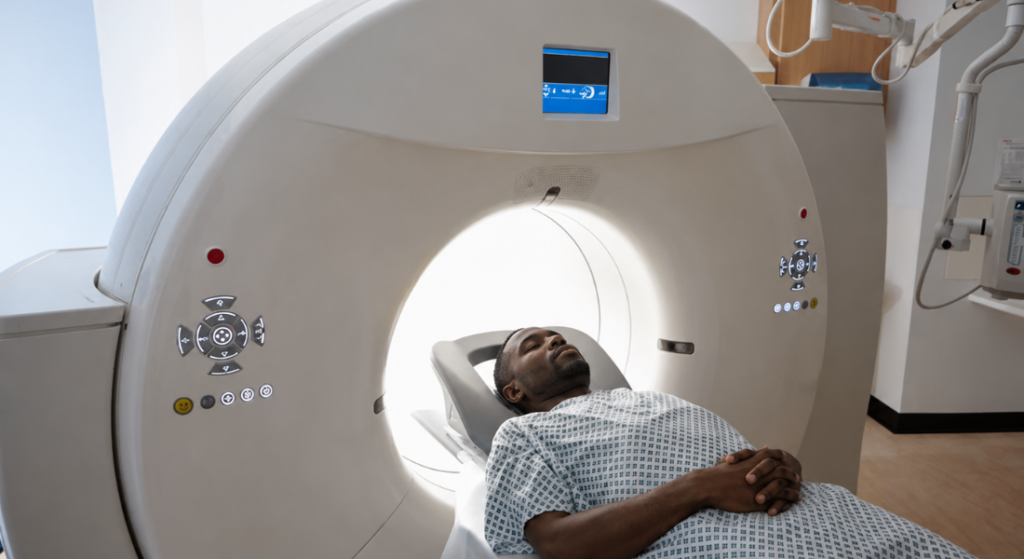
If you have localised Grade Group 3 prostate cancer, radical radiotherapy may be an effective treatment option. External beam radiotherapy targets the prostate and, in some cases, nearby tissues where cancer cells may be present.
Your healthcare team will discuss the potential benefits and risks before treatment. Possible side effects can include changes affecting urinary function, bowel habits and sexual function.
Will Hormone Therapy Be Needed?
If you have CPG 3 prostate cancer and choose radical external beam radiotherapy, NICE recommends combining radiotherapy with androgen deprivation therapy. For CPG 3 disease, six months of androgen deprivation therapy should be given before, during or after radiotherapy.
If your PSA level or clinical stage places you in CPG 4 or 5, longer androgen deprivation therapy may be considered. NICE advises discussing treatment for up to three years in CPG 4 and 5 disease, taking account of the potential benefits and side effects.
Androgen deprivation therapy reduces the levels or effects of hormones such as testosterone, which can stimulate prostate cancer growth. Possible side effects include hot flushes, tiredness, reduced sexual desire, erectile difficulties, loss of muscle strength, weight or body-composition changes and effects on bone health.
Your healthcare team should explain the timing and duration recommended for your individual CPG, along with the expected benefits, side effects and available support.
Can Brachytherapy Be Considered?
Brachytherapy may be considered in combination with external beam radiotherapy for CPG 3 prostate cancer. This is sometimes called a brachytherapy boost and delivers an additional radiation dose within the prostate.
Suitability depends on your prostate size, urinary function, previous prostate procedures, cancer extent, general health and local expertise. Your specialist should explain the expected benefits and the possible urinary, bowel and sexual side effects of combined brachytherapy and external beam radiotherapy.
How Do You Choose a Treatment?
Choosing a treatment for Grade Group 3 prostate cancer involves balancing effective cancer control with the possible side effects of each option. Your age, overall health, existing symptoms and personal priorities will all influence the decision.
You should have the opportunity to discuss surgery with a specialist surgeon and radiotherapy with a clinical oncologist. This allows you to understand the benefits, risks and expected outcomes of each approach before making a decision.
How Is the Cancer Monitored After Treatment?
After treatment for Grade Group 3 prostate cancer, your healthcare team will use PSA blood tests to monitor how well the cancer has responded. If you have surgery to remove the prostate, your PSA level should usually fall to a very low or undetectable level.
After radiotherapy, PSA levels usually decrease more slowly because the prostate remains in place. Your specialist will look at the pattern of PSA changes over time rather than relying on a single result.
Can Grade Group 3 Cancer Return?
If you have Grade Group 3 prostate cancer, there is a possibility that the cancer can return after treatment, especially if it has higher-risk features or has spread beyond the prostate. A rising PSA level is often the first sign that your healthcare team may need to investigate further.
If recurrence is suspected, your specialist will review your previous treatment and scan results. Further options may include radiotherapy, hormone therapy or other treatments depending on your individual situation.
Can the Grade Change After Surgery?

The Grade Group reported after radical prostatectomy may differ from the biopsy result because the pathologist can examine the entire prostate rather than selected tissue samples.
The cancer may be upgraded if a higher-grade pattern is found or downgraded if the overall findings are less concerning. This usually reflects more complete sampling rather than the cancer suddenly changing after the biopsy.
Myth vs Fact
| Myth | Fact |
| Grade Group 3 is the same as stage 3 cancer. | Grade describes the cancer’s microscopic growth pattern, while stage describes its location and extent of spread. |
| Gleason 4+3 and 3+4 mean the same thing. | Gleason 4+3 contains predominantly pattern 4 and belongs to a higher Grade Group. |
| Grade Group 3 means the cancer has already spread. | It may still be completely confined to the prostate. |
| Grade Group 3 cannot be treated with curative intent. | Localised disease may be treated with surgery or radical radiotherapy. |
| Active surveillance is always unsuitable. | It may be considered when someone with CPG 3 disease declines immediate radical treatment. |
| Radiotherapy is always given on its own. | NICE recommends combining radical external beam radiotherapy with six months of androgen deprivation therapy for CPG 3 disease. |
| A single PSA rise proves that the cancer has returned. | PSA trends and further investigations are needed to assess possible recurrence. |
| The biopsy grade can never change. | Examination of the whole prostate after surgery may result in upgrading or downgrading. |
Key Takeaways
- Grade Group 3 corresponds to Gleason 4+3=7.
- Pattern 4 forms most of the graded cancer.
- Grade Group 3 has a higher risk of progression than Grade Groups 1 and 2.
- Grade and stage describe different aspects of prostate cancer.
- Localised Grade Group 3 cancer may still be treated with curative intent.
- Grade Group 3 with stage T1–T2 is generally CPG 3 unless another feature places it in a higher group.
- Surgery and radiotherapy are the main treatment options for suitable localised CPG 3 disease.
- Hormone therapy is normally combined with radical external beam radiotherapy.
- Active surveillance is not usually preferred but may be considered when immediate radical treatment is declined.
- Follow-up after treatment normally includes regular PSA testing.
Frequently Asked Questions
1. What is Grade Group 3 prostate cancer?
Grade Group 3 prostate cancer corresponds to Gleason 4+3=7. Pattern 4 forms most of the graded cancer, with a smaller component of pattern 3, and this is associated with a higher risk of progression than Grade Groups 1 and 2.
2. Is Grade Group 3 prostate cancer aggressive?
Grade Group 3 contains predominantly higher-grade pattern 4 and therefore generally carries a greater risk of growth, spread or recurrence than Grade Groups 1 and 2. However, it may still be localised and suitable for treatment with curative intent.
3. What is the difference between Grade Group 2 and Grade Group 3 prostate cancer?
Grade Group 2 is Gleason 3+4=7 and contains predominantly pattern 3, while Grade Group 3 is Gleason 4+3=7 and contains predominantly pattern 4. Because the higher-grade pattern is predominant in Grade Group 3, it generally has a less favourable expected behaviour.
4. Can an MRI diagnose Grade Group 3 prostate cancer?
No. An MRI can identify suspicious areas and help guide a targeted biopsy, but Grade Group 3 can only be confirmed by examining prostate tissue under a microscope after a biopsy.
5. Is Grade Group 3 the same as Stage 3 prostate cancer?
No. Grade Group describes the cancer’s microscopic growth pattern and glandular architecture, while stage describes its extent and whether it has spread. You can have Grade Group 3 cancer that is still contained within the prostate.
6. Is Grade Group 3 prostate cancer considered intermediate risk?
Grade Group 3 has traditionally been included within intermediate-risk prostate cancer and is sometimes described as unfavourable intermediate risk. In UK practice, your Cambridge Prognostic Group provides a more precise assessment by combining your Grade Group with your PSA level and clinical T stage.
7. Can Grade Group 3 prostate cancer be cured?
If Grade Group 3 prostate cancer is diagnosed while it is still localised, treatment may be given with the aim of curing the cancer. The outlook depends on factors such as cancer stage, PSA level, overall health and response to treatment.
8. What treatments are available for Grade Group 3 prostate cancer?
Treatment options commonly include radical prostatectomy or radical radiotherapy. If radical external beam radiotherapy is used for CPG 3 disease, NICE recommends combining it with six months of androgen deprivation therapy. The recommended approach depends on your overall CPG, general health and personal preferences.
9. Is active surveillance suitable for Grade Group 3 prostate cancer?
Active surveillance is not usually the preferred option when radical treatment is clinically suitable because CPG 3 disease carries a greater risk of progression. NICE says it may be considered for people who choose not to have immediate radical treatment after discussing the potential benefits and risks.
10. Can Grade Group 3 prostate cancer come back after treatment?
Yes, there is a possibility of recurrence after treatment, particularly if the cancer has higher-risk features. Regular PSA monitoring helps your healthcare team identify any signs of recurrence early.
Final Thoughts: Understanding Your Grade Group 3 Prostate Cancer Diagnosis
Grade Group 3 prostate cancer contains predominantly Gleason pattern 4 and has a greater risk of progression than Grade Groups 1 and 2. However, it may still be confined to the prostate and treated with curative intent. Your PSA level, clinical stage, MRI, biopsy findings and Cambridge Prognostic Group provide a clearer assessment than the Grade Group alone.
For suitable people with CPG 3 localised disease, surgery or radical radiotherapy with hormone therapy will normally be discussed, while active surveillance may be considered in selected circumstances.
If you are looking for prostate cancer surgery in London, you can reach out to us to arrange a consultation and receive personalised advice about your diagnosis, treatment choices, and recovery.
References
- Ahdoot, M., Wilbur, A.R., Reese, S.E., Lebastchi, A.H., Mehralivand, S., Gomella, P.T. et al. (2020) ‘MRI-targeted, systematic, and combined biopsy for prostate cancer diagnosis’, The New England Journal of Medicine, 382(10), pp. 917–928. Available at: https://pubmed.ncbi.nlm.nih.gov/32130814/
- Berney, D.M., Beltran, L., Fisher, G., North, B.V., Greenberg, D., Møller, H., Soosay, G., Scardino, P. and Cuzick, J. (2016) ‘Validation of a contemporary prostate cancer grading system using prostate cancer death as outcome’, British Journal of Cancer, 114(10), pp. 1078–1083. Available at: https://pubmed.ncbi.nlm.nih.gov/27100731/
- Cancer Research UK (2025) Cambridge prognostic groups and risk groups for prostate cancer. Last reviewed 22 May 2025. Available at: https://www.cancerresearchuk.org/about-cancer/prostate-cancer/stages/cambridge-prognostic-group-cpg
- Cancer Research UK (2025) Temporary brachytherapy for prostate cancer. Last reviewed 2 July 2025. Available at: https://www.cancerresearchuk.org/about-cancer/prostate-cancer/treatment/radiotherapy/brachytherapy/temporary-brachytherapy
- Cancer Research UK (2025) Treatment options for prostate cancer. Last reviewed 18 June 2025. Available at: https://www.cancerresearchuk.org/about-cancer/prostate-cancer/treatment/decisions-about-your-treatment
- Epstein, J.I., Egevad, L., Amin, M.B., Delahunt, B., Srigley, J.R. and Humphrey, P.A. (2016) ‘The 2014 International Society of Urological Pathology consensus conference on Gleason grading of prostatic carcinoma: definition of grading patterns and proposal for a new grading system’, The American Journal of Surgical Pathology, 40(2), pp. 244–252. Available at: https://pubmed.ncbi.nlm.nih.gov/26492179/
- Goel, S., Shoag, J.E., Gross, M.D., Al Hussein Al Awamlh, B., Robinson, B., Khani, F. et al. (2020) ‘Concordance between biopsy and radical prostatectomy pathology in the era of targeted biopsy: a systematic review and meta-analysis’, European Urology Oncology, 3(1), pp. 10–20. Available at: https://pubmed.ncbi.nlm.nih.gov/31492650/
- National Institute for Health and Care Excellence (2019) Prostate cancer: diagnosis and management. NICE guideline NG131. Last updated 15 December 2021 and last reviewed 13 August 2025. Available at: https://www.nice.org.uk/guidance/ng131
- Prostate Cancer UK (2023) What do my test results mean? Updated August 2023. Available at: https://prostatecanceruk.org/prostate-information-and-support/just-diagnosed/what-do-my-test-results-mean
- Prostate Cancer UK (2024) Follow-up after prostate cancer treatment: What happens next? Updated March 2024. Available at: https://prostatecanceruk.org/prostate-information-and-support/treatments/follow-up-after-treatment
- Prostate Cancer UK (2024) Surgery: radical prostatectomy. Updated July 2024. Available at: https://prostatecanceruk.org/prostate-information-and-support/treatments/surgery
- Prostate Cancer UK (2025) MRI scan. Updated June 2025. Available at: https://prostatecanceruk.org/prostate-information-and-support/prostate-tests/mri-scan
- Prostate Cancer UK (2026) External beam radiotherapy. Updated March 2026. Available at: https://prostatecanceruk.org/prostate-information-and-support/treatments/external-beam-radiotherapy