




There are several types of prostate operations, and they are not all used for the same reason. Some are used to treat prostate cancer, while others are used for benign prostate enlargement, also called BPH. Some operations remove the whole prostate, while others only remove or reshape the inner part that is blocking your urine flow.
This is where things can become confusing. You may hear terms such as robotic prostatectomy, TURP, HoLEP, laser prostate surgery, UroLift, Rezūm, open prostatectomy, or focal therapy. They can all sound like “prostate surgery”, but they are very different procedures with different aims, recovery times, and possible side effects.
Before comparing treatments, it helps to ask what problem the operation is trying to treat. If you have prostate cancer, surgery may aim to remove the cancerous prostate gland or treat part of the cancer. If you have BPH, the aim is usually to improve urine flow and reduce urinary symptoms. Understanding this difference can help you ask better questions and feel more confident when discussing your options.
Why Different Prostate Operations Exist
Different prostate operations exist because the prostate can cause different health problems. The two most common reasons you may hear about prostate surgery are prostate cancer and benign prostate enlargement, also called BPH.
Surgery for prostate cancer is planned differently from surgery for BPH. Prostate cancer treatment focuses on removing or controlling cancer, while BPH surgery focuses on relieving blockage and improving urine flow. For example, you may need a radical prostatectomy for cancer, where the whole prostate is removed, while TURP or laser surgery may be used for BPH to treat only the inner part causing obstruction.
This difference matters because one operation cannot simply be swapped for another. The right procedure depends on your diagnosis, symptoms, test results, prostate size, cancer stage, general health, and personal priorities. Understanding the reason for surgery can help you make sense of the options being discussed.
The Prostate and Why It Causes Symptoms
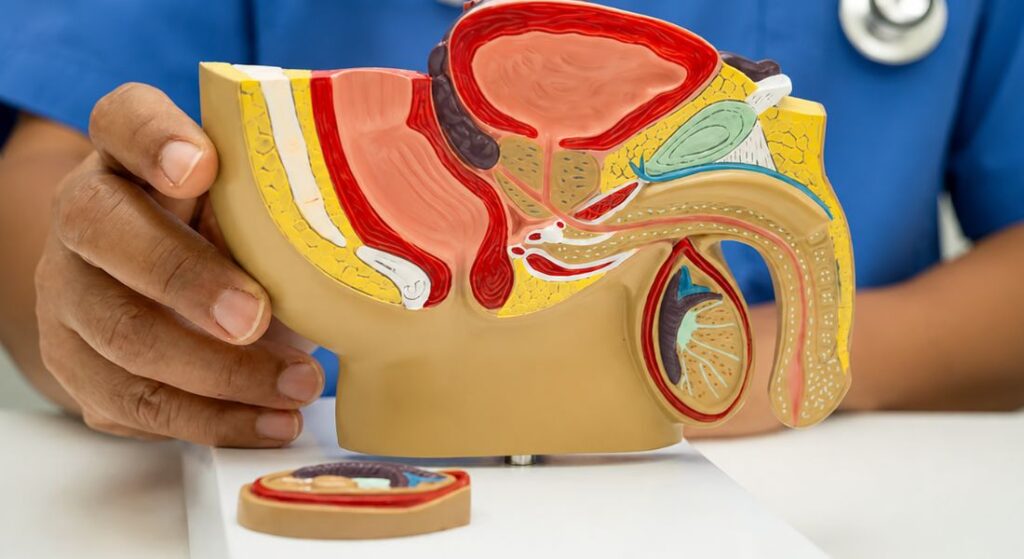
The prostate sits just below your bladder and surrounds the urethra, which is the tube that carries urine out of your body. Because of this position, changes in the prostate can affect the way you pass urine.
As you get older, the prostate may gradually enlarge. When this happens, it can press on the urethra and make it harder for urine to flow freely. You may notice a weaker stream, difficulty starting, dribbling, frequent urination, or needing to get up at night to pass urine.
The prostate can also develop cancer, although early prostate cancer often causes no symptoms at all. This is why tests such as PSA blood testing, MRI scans, biopsy results, and specialist assessment are so important when prostate cancer is suspected.
The prostate is also close to structures involved in urinary control and sexual function. For this reason, prostate surgery needs careful planning. Your specialist will consider not only how to treat the condition, but also how treatment may affect recovery, continence, erections, ejaculation, fertility, and long-term follow-up.
Operations for Prostate Cancer

Surgery for prostate cancer usually involves a procedure called radical prostatectomy, which removes the entire prostate gland. In some cases, nearby lymph nodes may also be removed if there is concern that cancer could have spread beyond the prostate.
The operation can be performed using robotic-assisted, laparoscopic, or open surgical techniques. If surgery is being considered for you, it is usually because the cancer appears to be localised to the prostate or is thought to be suitable for surgical treatment based on your test results and overall health.
Not every man with prostate cancer needs surgery. Depending on the characteristics of the cancer, you may be offered alternatives such as active surveillance, radiotherapy, hormone therapy, focal therapy, or other treatment approaches. If surgery is recommended, your specialist should explain why it is appropriate for you and discuss the potential benefits, risks, and available alternatives.
Radical Prostatectomy
Radical prostatectomy is an operation that involves removing the entire prostate gland to treat prostate cancer. The seminal vesicles, which are small glands located near the prostate and contribute to semen production, are also usually removed as part of the procedure.
Once the prostate has been removed, the bladder is reconnected to the urethra so that urine can continue to leave the body normally. If you are considering this operation, it is important to understand that it is major surgery and recovery can take time.
The procedure can affect several aspects of health, including urinary control, erectile function, ejaculation, fertility, and overall recovery. After surgery, you will no longer ejaculate semen, which means natural conception through sexual intercourse is no longer possible. If fertility is important to you, options for fertility preservation may be discussed before treatment. Radical prostatectomy can be performed using robotic-assisted, laparoscopic, or open surgical techniques, depending on your circumstances and the surgeon’s recommendation.
Robotic Radical Prostatectomy
Robotic radical prostatectomy is one of the most commonly used surgical treatments for localised prostate cancer. During the procedure, the surgeon controls robotic instruments from a specialised console, while the robotic system assists with precision and movement rather than operating independently.
The operation is performed through several small incisions instead of a single large cut. This allows the surgeon to work with a magnified three-dimensional view and highly precise instruments, which can be particularly helpful when operating around delicate structures that affect urinary control and erectile function. For you, this may help the surgeon perform delicate parts of the operation with greater precision while maintaining the aim of effective cancer treatment.
Although robotic surgery may help some patients recover more quickly than traditional open surgery, it remains a major operation. Before deciding on treatment, you should discuss the surgeon’s experience, whether nerve-sparing surgery is suitable in your case, expected continence and erectile recovery, catheter management, hospital stay, and the follow-up care that will be provided.
Laparoscopic Radical Prostatectomy
Laparoscopic radical prostatectomy is a form of keyhole surgery used to remove the prostate gland in the treatment of prostate cancer. During the procedure, the surgeon operates through several small incisions using long surgical instruments and a camera to access and remove the prostate.
Unlike robotic-assisted surgery, the instruments are controlled directly by the surgeon rather than through a robotic console. Although you may hear less about laparoscopic prostatectomy today, it is still performed in some centres and remains an established surgical option in certain circumstances.
The goal of the operation is the same as robotic radical prostatectomy: to remove the prostate and treat suitable prostate cancer. As with other forms of prostate surgery, you should be aware of potential side effects, including urinary leakage, erectile dysfunction, fertility changes, and the recovery period that follows catheter removal.
Open Radical Prostatectomy
Open radical prostatectomy is the traditional surgical approach for removing the prostate gland. In this operation, the surgeon makes a larger incision, usually in the lower abdomen, to remove the prostate. It may still be used in selected cases, depending on the cancer, the patient’s health, surgeon preference, and hospital resources.
Open surgery may involve a longer recovery compared with keyhole or robotic approaches. However, the outcome also depends on the surgeon’s experience, the cancer features, and individual patient factors. The main goal remains the same, which is to remove the prostate gland in suitable prostate cancer cases.
If open surgery is recommended, it is reasonable to ask why this approach is preferred in your situation. You may also want to ask how hospital stay, pain, catheter care, continence recovery, and erectile function compare with robotic or laparoscopic surgery. This can help you understand what to expect before making a treatment decision.
Nerve-Sparing Prostate Surgery
Nerve-sparing prostate surgery is not a separate type of prostate operation. It is a technique that may be used during radical prostatectomy when it is safe for your cancer treatment. The aim is to protect the nerves involved in erections while still removing the prostate properly.
The erection nerves run very close to the prostate, so the surgeon has to make this decision carefully. If the cancer is not too close to these nerves, one or both nerve bundles may be preserved. This is called unilateral nerve-sparing when one side is spared, and bilateral nerve-sparing when both sides are spared.
Nerve-sparing may improve the chance of erectile function recovery, but it does not guarantee it. If cancer is close to the nerves, the surgeon may need to remove tissue more widely to treat the cancer safely. It is worth asking your surgeon whether nerve-sparing is possible in your case, and whether this would be on one side or both sides.
Retzius-Sparing Prostate Surgery
Retzius-sparing prostate surgery is a specialised technique used during robotic radical prostatectomy. It is not a separate treatment for a different disease, but a different route used to remove the prostate. The aim is still to treat suitable prostate cancer safely.
In standard robotic prostatectomy, the surgeon usually approaches the prostate from the front. In Retzius-sparing surgery, the surgeon approaches from behind and tries to preserve important support structures at the front of the bladder and prostate. This may help some men recover urinary control earlier after surgery.
Retzius-sparing surgery is not suitable for everyone. Suitability depends on cancer location, anatomy, surgeon experience, and overall safety. If this approach is being considered, you should ask whether it is appropriate for your cancer and what continence recovery may realistically look like.
Pelvic Lymph Node Dissection
Some men having prostate cancer surgery may also need a pelvic lymph node dissection. This means the surgeon removes nearby lymph nodes so they can be checked for signs of cancer spread.
This is not needed for every patient. Your surgeon may recommend it if your PSA level, MRI scan, biopsy grade, or cancer stage suggests a higher risk of cancer reaching the lymph nodes.
The results can give useful information about the stage of the cancer and may help guide your follow-up plan after surgery. However, removing lymph nodes can make the operation more complex and may carry extra risks.
If this is recommended, it is worth asking why it is needed in your case. You can also ask whether it may affect your recovery, hospital stay, follow-up care, or private treatment cost.
Focal Therapy Procedures
Focal therapy is different from radical prostatectomy because it does not remove the whole prostate. Instead, it aims to treat only the cancerous area within the prostate. This may involve approaches such as high-intensity focused ultrasound, cryotherapy, or other targeted treatments.
Focal therapy may be suitable only for carefully selected patients. It is usually considered when the cancer is localised and has been clearly mapped with MRI and biopsy. It is not appropriate for every prostate cancer, so careful assessment is important before deciding whether this option is realistic.
The appeal of focal therapy is that treating less prostate tissue may reduce some side effects. However, prostate tissue remains after treatment, so careful follow-up is still needed. If focal therapy is mentioned, you should ask whether it is standard in your situation, what evidence supports it, and how monitoring would be managed afterwards.
Operations for Benign Prostate Enlargement
Operations for benign prostate enlargement are different from prostate cancer surgery. BPH surgery does not usually remove the whole prostate gland. Instead, it focuses on the part of the prostate that is blocking urine flow and causing symptoms.
This may involve removing, vaporising, opening, or reshaping the enlarged prostate tissue. The aim is to help you pass urine more easily and improve symptoms such as a weak stream, difficulty starting, dribbling, urgency, frequent urination, night-time urination, and incomplete emptying. TURP is commonly described as an operation used when the prostate has grown too large and is causing problems with urination.
BPH surgery does not treat prostate cancer. If cancer is suspected, you will need separate checks such as PSA testing, MRI, biopsy, or specialist review. This helps make sure the right condition is being assessed and treated in the right way.
TURP
TURP stands for transurethral resection of the prostate. It is one of the most established operations used to treat benign prostate enlargement, also known as BPH. It is usually considered when the enlarged prostate is blocking urine flow and symptoms are affecting daily life.
During TURP, the surgeon passes a telescope-like instrument through the urethra, so there are no external cuts. The obstructing inner part of the prostate is carefully shaved away to create a wider channel for urine to pass through. This can help you pass urine more easily and may improve symptoms such as a weak stream or incomplete emptying.
TURP can improve urine flow, but it can also have side effects. These may include bleeding, infection, temporary catheter use, and retrograde ejaculation, where semen goes backwards into the bladder instead of coming out through the penis. Less commonly, you may have urinary leakage or erection problems, so it is important to understand the benefits and risks before surgery.
HoLEP
HoLEP stands for Holmium Laser Enucleation of the Prostate. It is a laser operation used to treat benign prostate enlargement when the enlarged tissue is blocking urine flow. The aim is to remove the part of the prostate causing the blockage, so you can pass urine more easily.
During HoLEP, the surgeon uses a laser to separate and remove the enlarged prostate tissue. This tissue is usually pushed into the bladder and then removed using a device that cuts it into smaller pieces. HoLEP can be suitable for a wide range of prostate sizes, including larger prostates in many centres.
HoLEP can be effective, but it needs specialist training and equipment. Possible side effects may include temporary burning, bleeding, urgency, urinary leakage, and retrograde ejaculation. If this treatment is suggested, you can ask what recovery may look like and whether it is suitable for your prostate size and symptoms.
GreenLight Laser Prostate Surgery
GreenLight laser prostate surgery is another treatment used for benign prostate enlargement. It uses laser energy to vaporise the prostate tissue that is blocking urine flow. By opening the urinary channel, the aim is to help you pass urine more easily and reduce troublesome urinary symptoms.
This procedure may be considered if symptoms are caused by an enlarged prostate. It is usually performed through the urethra, so there are no external cuts. It may also be suitable for some men who have a higher bleeding risk, although this depends on individual health factors and medication.
Like other BPH procedures, GreenLight laser surgery is designed to improve urine flow rather than treat prostate cancer. If this option is suggested, you should ask whether it is suitable for your prostate size, symptoms, medication, and expectations. This can help you understand what benefits and limits are realistic before treatment.
Prostate Vaporisation and Laser Procedures
You may hear several different names for laser or energy-based prostate procedures. Some treatments vaporise tissue, some cut tissue, and others remove the enlarged inner part of the prostate more completely.
Although the names can sound confusing, the aim is usually similar. These procedures are used for benign prostate enlargement and are designed to open the urinary channel so you can pass urine more easily.
The right option depends on your prostate size, symptoms, anatomy, general health, and the technology available at the hospital. It also depends on your surgeon’s experience with that procedure.
Before choosing treatment, ask how the procedure works, whether tissue will be sent for analysis, what recovery may involve, and what side effects are most likely. It is also sensible to ask about retrograde ejaculation, as this can happen after several BPH operations.
Rezūm Water Vapour Therapy
Rezūm water vapour therapy is a minimally invasive treatment for benign prostate enlargement. It uses water vapour energy to treat the prostate tissue that is blocking urine flow. Over time, this treated tissue shrinks, which may help you pass urine more easily and reduce urinary symptoms.
Rezūm may be attractive because it is less invasive than traditional prostate surgery. In selected patients, it may also have a lower risk of some sexual side effects compared with certain other BPH operations. However, it is not suitable for every prostate size, anatomy, or symptom pattern.
You may need a catheter for a short time after the procedure, and improvement is not usually instant. Symptoms can take several weeks or even months to improve as the treated tissue gradually shrinks. If Rezūm is suggested, it is worth asking whether it fits your prostate size, symptoms, and expectations for recovery.
UroLift
UroLift is a minimally invasive treatment for benign prostate enlargement. It uses small implants to hold enlarged prostate tissue away from the urethra. This creates a wider channel for urine to pass through and may help you pass urine more easily.
Unlike some other BPH operations, UroLift does not cut away, remove, or vaporise prostate tissue. This can make it appealing if reducing the risk of sexual side effects is important, especially ejaculation problems. However, it is usually suitable only for selected patients.
UroLift is not appropriate for every prostate shape or size. Your prostate anatomy, symptoms, and treatment goals all matter when deciding whether it is a realistic option. If UroLift is suggested, you should ask whether your anatomy is suitable and what level of symptom improvement you can reasonably expect.
Prostate Artery Embolisation
Prostate artery embolisation, or PAE, is different from operations performed through the urethra. It is usually carried out by an interventional radiologist rather than a urologist. Instead of removing prostate tissue, the procedure blocks part of the blood supply to the prostate, which may help it shrink over time.
PAE may be considered for selected men with benign prostate enlargement. It can be an option if you are not a good candidate for surgery or would prefer a less invasive approach. However, it is not suitable for everyone, and the expected benefit depends on prostate size, symptoms, anatomy, and overall health.
PAE may not improve symptoms as quickly or as strongly as some surgical options in every patient. You should ask about suitability, likely success rates, possible side effects, and whether further treatment may be needed later. This can help you compare PAE with other BPH treatments more realistically.
Open Simple Prostatectomy for BPH
Open simple prostatectomy is different from radical prostatectomy, although the names can sound similar. This can be confusing because both include the word “prostatectomy”. In simple prostatectomy, the surgeon removes the enlarged inner part of the prostate that is causing blockage, rather than removing the whole prostate gland as in radical prostatectomy for cancer.
This operation may be considered if you have a very large benign prostate and other procedures are less suitable. It is used to improve urine flow by removing the tissue pressing on the urethra. The aim is to treat urinary symptoms from BPH, not prostate cancer.
Open simple prostatectomy is now less common in many centres because laser techniques such as HoLEP can treat many large prostates. However, it may still be recommended in selected cases depending on prostate size, anatomy, available equipment, and surgeon experience. If this option is suggested, you should ask why it is preferred over TURP, HoLEP, or other treatments.
Transurethral Incision of the Prostate
Transurethral incision of the prostate, or TUIP, may be used in selected men with smaller prostates. Instead of removing a large amount of prostate tissue, the surgeon makes small cuts to reduce pressure around the bladder outlet. This can help create more space for urine to pass through.
TUIP may improve urine flow in suitable patients and can have different side effect risks compared with TURP. However, it is not appropriate for every prostate size, shape, or symptom pattern. Your surgeon will usually consider the degree of blockage, prostate anatomy, and overall health before recommending it.
If TUIP is discussed, you should ask why it is suitable for your prostate size and symptoms. It is also worth asking about recovery, likely symptom improvement, and the chance of needing another procedure later. This helps you understand whether TUIP is the right option compared with other BPH treatments.
Operations for Prostatitis or Abscess
Most cases of prostatitis do not need surgery. Prostatitis means inflammation of the prostate, and treatment usually depends on the type and cause. You may be treated with medicines, symptom management, lifestyle advice, or specialist support.
Rarely, a prostate abscess may need drainage. This is not the same as surgery for BPH or prostate cancer. A prostate abscess is an infected collection of pus, and it may happen in certain situations, such as severe infection or immune system problems.
If drainage is needed, the approach depends on the size, location, and severity of the infection. Your specialist will decide the safest way to manage it based on the scan findings and your overall health. This is a much less common reason for prostate surgery.
Which Operation Is Right for Prostate Cancer?
The right operation for prostate cancer depends on both the cancer risk and your overall health. Your specialist will usually look at several factors, including PSA level, MRI findings, biopsy grade group, cancer stage, symptoms, age, general health, and personal priorities. This helps build a clearer picture of which treatment options are suitable.
If surgery is appropriate, robotic radical prostatectomy may be recommended. In some cases, open surgery, laparoscopic surgery, or another approach may also be discussed. The best option will depend on your cancer features, anatomy, surgeon experience, and what matters most to you.
You should also ask about non-surgical options such as radiotherapy or active surveillance if they are relevant. Prostate cancer treatment should be a shared decision, not something decided from one test alone. Understanding the reasons behind each option can help you feel more confident about your treatment choice.
Which Operation Is Right for BPH?
The right operation for BPH depends on your symptoms, prostate size, bladder function, general health, medication, and personal priorities. Some men may do well with TURP, while others may be better suited to HoLEP, especially if the prostate is larger. Your specialist will usually look at the full picture before recommending a procedure.
Less invasive options such as UroLift or Rezūm may suit selected men who are anatomically suitable and want to reduce some treatment risks. PAE may also be considered in specific cases, especially when surgery is less suitable or a less invasive approach is preferred. Each option has its own benefits, limits, and possible side effects.
There is no single best BPH operation for every man. The best choice is the one that fits your prostate, symptoms, health, and what side effects matter most to you. Asking clear questions about recovery, durability, ejaculation changes, and the chance of needing further treatment can help you make a more confident decision.
Side Effects to Consider
Every prostate operation can have possible side effects, so it is important to understand the trade-offs before choosing treatment. The risks depend on the type of operation, your diagnosis, and your personal priorities. A good discussion with your surgeon should cover both medical outcomes and quality of life.
- Radical Prostatectomy Side Effects: Possible effects include urinary leakage, erectile dysfunction, dry orgasm, fertility loss, catheter use, bleeding, infection, blood clots, and recovery time.
- BPH Surgery Side Effects: These may include bleeding, infection, temporary catheter use, burning when passing urine, urgency, retrograde ejaculation, and sometimes temporary leakage.
- Sexual and Fertility Changes: Some prostate operations can affect erections, ejaculation, orgasm, and fertility, so these issues should be discussed before surgery.
- Recovery and Future Treatment: Ask about recovery time, aftercare, and the chance of needing another procedure later, especially with less invasive options.
Overall, side effects are an important part of deciding which prostate operation is right for you. The best choice depends not only on treating the condition but also on protecting the things that matter most to your daily life. Clear questions about urinary control, sexual function, fertility, and recovery can help you make a more informed decision.
Recovery Time After Prostate Operations
Recovery time after prostate operations can vary depending on the type of procedure you have. Robotic radical prostatectomy may involve a hospital stay, catheter use, several weeks of physical recovery, and longer-term recovery for urinary control and erections. Healing is not only about the first few weeks, as continence and sexual recovery can take longer.
After TURP, you may need a shorter hospital stay and temporary catheter use. Urinary symptoms can take several weeks to settle, and it is common to notice changes such as urgency, stinging, or blood in the urine during early recovery. HoLEP recovery can also involve temporary urgency, burning, or leakage while the urinary tract heals.
Minimally invasive BPH treatments may offer a shorter recovery for some men, but symptom improvement may not be immediate. You should ask your specialist what recovery means in practical terms, including work, driving, exercise, sex, catheter care, pads, and follow-up appointments. This helps you plan properly and avoid unrealistic expectations after treatment.
Fertility and Ejaculation
Prostate operations can affect ejaculation and fertility, so it is important to understand this before treatment. After radical prostatectomy, semen is no longer ejaculated because the prostate and seminal vesicles are removed. This means you cannot father a child naturally through sex after this operation.
Some BPH operations can cause retrograde ejaculation. This means semen goes backwards into the bladder instead of coming out through the penis. It is not usually harmful, but it can feel unusual and may affect fertility.
Some minimally invasive BPH procedures may have a lower risk of ejaculation changes in selected patients. If fertility or ejaculation matters to you, it is best to discuss this with your specialist before surgery. Asking early can help you avoid surprises afterwards and consider options such as sperm storage if needed.
Urinary Control After Surgery
Urinary control can change after prostate operations, but the pattern depends on the type of surgery. After radical prostatectomy, leakage is common at first, especially once the catheter has been removed. After BPH surgery, some men may notice urgency or temporary leakage while the bladder adjusts.
The type of leakage matters because not all urine leakage happens for the same reason. Stress leakage happens with movement, coughing, lifting, standing, or exercise. Urgency leakage happens when you suddenly need to pass urine and cannot reach the toilet in time.
Your specialist can advise which treatments may help based on the type of leakage you have. This may include pelvic floor exercises, bladder training, medication, or further treatment if needed. Do not assume all leakage is the same, as the right support depends on the cause.
Sexual Function After Surgery
Sexual function can be affected by prostate operations, although the risk depends on the type of surgery. Radical prostatectomy can affect erections because the erection nerves run very close to the prostate. If these nerves are disturbed or removed, erections may take time to recover or may need medical support.
Nerve-sparing surgery may improve the chance of erection recovery, but it is not always possible. It also does not guarantee that erections will return as they were before treatment. The decision depends on cancer location, safety, anatomy, and what your surgeon can preserve during the operation.
BPH surgery is generally less likely to affect erections than radical prostatectomy, but ejaculation changes are common with some procedures. If sexual function matters to you, it is important to say this clearly before treatment. Your surgeon can explain which options may better preserve ejaculation or erections, and what trade-offs may apply.
How Doctors Decide Which Operation to Recommend

Doctors do not usually choose prostate surgery based only on symptoms. They look at the full picture, including your diagnosis, PSA level, MRI findings, biopsy results, prostate size, urine flow, bladder scan, infection history, medication, general health, and personal preferences. This helps them recommend an option that fits both the condition and the person being treated.
For prostate cancer, the key question is whether surgery is the right choice compared with monitoring or radiotherapy. For BPH, the question is whether symptoms are severe enough for surgery and which procedure best suits the prostate size and anatomy. The same operation is not right for every patient.
Your priorities also matter when choosing treatment. Some men want the strongest symptom relief, while others place more importance on preserving sexual function or reducing recovery time. Others may need the safest option because of other medical conditions, so the final decision should be made with your specialist after discussing the benefits and trade-offs clearly.
Comparing Operations Fairly
It is natural to ask which prostate operation is best, but the better question is: best for what? One operation may be best for removing prostate cancer, while another may be better for improving urine flow from BPH.
A treatment that suits one man may not suit another. Your prostate size, cancer risk, urinary symptoms, bladder function, general health, sexual priorities, and recovery goals all matter.
For example, radical prostatectomy is used to treat suitable prostate cancer. TURP, HoLEP, Rezūm, UroLift, and similar procedures are used for benign prostate enlargement and urinary symptoms. They are not interchangeable.
When comparing options, focus on what each procedure is designed to do, what it cannot do, and what side effects matter most to you. This makes the decision more practical and much easier to understand.
Prostate Operations at a Glance
| Operation / Procedure | Main Condition Treated | What It Does | Key Point to Understand |
| Radical prostatectomy | Prostate cancer | Removes the whole prostate gland and usually the seminal vesicles. | Used to treat suitable prostate cancer, not BPH. |
| Robotic radical prostatectomy | Prostate cancer | Removes the prostate using robotic-assisted keyhole surgery. | The surgeon controls the robot; it is still major cancer surgery. |
| Laparoscopic radical prostatectomy | Prostate cancer | Removes the prostate through small incisions using keyhole instruments. | Similar goal to robotic surgery, but without robotic console control. |
| Open radical prostatectomy | Prostate cancer | Removes the prostate through a larger incision. | May be used in selected cases depending on cancer, health, and surgeon recommendation. |
| Nerve-sparing technique | Prostate cancer surgery | Attempts to preserve erection nerves during radical prostatectomy. | Not a separate operation; only done if cancer safety allows. |
| Retzius-sparing technique | Prostate cancer surgery | Uses a different robotic route that preserves front support structures where possible. | May support earlier continence recovery in selected patients. |
| TURP | BPH / enlarged prostate | Removes obstructing inner prostate tissue through the urethra. | Improves urine flow but does not treat prostate cancer. |
| HoLEP | BPH / enlarged prostate | Uses laser energy to remove enlarged prostate tissue. | Often suitable for larger prostates in experienced centres. |
| GreenLight laser surgery | BPH / enlarged prostate | Vaporises tissue blocking urine flow. | Used to improve urinary symptoms, not remove cancer. |
| Rezūm | BPH / enlarged prostate | Uses water vapour energy to shrink obstructing tissue over time. | Less invasive, but improvement is gradual. |
| UroLift | BPH / enlarged prostate | Uses implants to hold prostate tissue away from the urethra. | Does not remove tissue and may suit selected men wanting to reduce ejaculation risks. |
| Prostate artery embolisation | BPH / enlarged prostate | Reduces prostate blood supply so it may shrink over time. | Performed by an interventional radiologist, not through the urethra. |
| Open simple prostatectomy | Very large BPH | Removes the enlarged inner part of the prostate. | Different from radical prostatectomy; it does not remove the whole prostate for cancer. |
| TUIP | Selected smaller prostates with BPH | Makes small cuts to reduce bladder outlet pressure. | Used only in selected prostate sizes and symptom patterns. |
Private and NHS Prostate Operations
Prostate operations are available through both the NHS and private care. The NHS provides treatment based on clinical need, local pathways, and the services available in your area. Private care may offer more choice over timing, hospital, consultant, or a specific technique, depending on whether that option is suitable.
Not every procedure is available in every hospital, whether NHS or private. If private treatment is being considered, you should ask whether the operation being offered is genuinely appropriate for your condition, prostate anatomy, and overall health. It is also important to ask what aftercare is included, especially for catheter care, follow-up appointments, PSA testing, or recovery support.
The quality of the decision matters more than whether treatment is NHS or private. What matters most is choosing the right operation for the right reason. A good treatment plan should be based on your diagnosis, symptoms, risks, priorities, and long-term follow-up needs.
Getting a Second Opinion
Getting a second opinion can be helpful if you feel unsure about your treatment options. This is especially useful if surgery has been recommended, but you are not certain whether it is the best choice for your situation. A second opinion can give you more clarity before making a major decision.
It may also help if you are choosing between different options, such as radical prostatectomy, radiotherapy, focal therapy, TURP, HoLEP, Rezūm, UroLift, or another procedure. Sometimes a second opinion confirms the original recommendation. In other cases, it may explain another approach that better fits your diagnosis, anatomy, symptoms, or priorities.
To make the appointment as useful as possible, bring any test results and letters you have. This may include your PSA history, MRI report, biopsy report, medication list, urine flow results, or bladder scan results. Good decisions are much easier when the specialist can see the full picture.
Speak to Our Specialist

If you are unsure which prostate operation is suitable, speaking to a specialist can help you understand the options more clearly. You may need advice about prostate cancer surgery, robotic prostatectomy, nerve-sparing surgery, Retzius-sparing surgery, TURP, HoLEP, UroLift, Rezūm, or other BPH procedures. Each option is designed for a specific situation, so the right choice depends on your diagnosis, symptoms, health, and priorities.
A specialist can explain what each operation is meant to treat and whether it fits your case. You can also discuss practical concerns such as recovery time, catheter care, urinary control, erections, ejaculation, fertility, and follow-up. These details matter because treatment decisions affect life after surgery, not just the operation itself.
You should not have to choose between procedures without understanding what each one is actually for. A clear discussion can help you compare the benefits, risks, and trade-offs in a way that feels easier to manage. With the right guidance, you can make a more confident decision about your next step.
FAQs:
1. What is the most common type of prostate operation?
The most common prostate operations depend on the condition being treated. For prostate cancer, robotic radical prostatectomy is widely used to remove the prostate gland. For benign prostate enlargement (BPH), procedures such as TURP and HoLEP are commonly performed. The most suitable option depends on your diagnosis, symptoms, and overall health.
2. What is the difference between prostate cancer surgery and BPH surgery?
Prostate cancer surgery is usually aimed at removing or controlling cancer, often through radical prostatectomy. BPH surgery focuses on improving urine flow by removing or reducing the part of the prostate causing blockage. These procedures have different goals, recovery considerations, and potential side effects. Your treatment choice depends on the underlying condition.
3. What is robotic prostatectomy?
Robotic prostatectomy is a form of keyhole surgery used to remove the prostate gland, usually for prostate cancer treatment. The surgeon controls robotic instruments through a console to perform the procedure with precision. It involves several small incisions rather than one large cut. Many men choose this approach because it may support recovery while still being major surgery.
4. What is TURP and when is it used?
TURP, or Transurethral Resection of the Prostate, is a procedure used to treat urinary symptoms caused by an enlarged prostate. It removes the obstructing inner portion of the prostate through the urethra without external incisions. The aim is to improve urine flow and reduce symptoms such as a weak stream or frequent urination. It is not a treatment for prostate cancer.
5. How does HoLEP differ from TURP?
HoLEP uses a laser to remove enlarged prostate tissue, whereas TURP uses electrical energy to shave away the obstructing tissue. HoLEP can often be used for larger prostates and may remove more tissue during a single procedure. Both treatments are designed to improve urinary symptoms caused by BPH. Your specialist can advise which option is more appropriate for your situation.
6. Are minimally invasive treatments available for an enlarged prostate?
Yes, several minimally invasive options are available, including UroLift and Rezūm. These treatments aim to improve urinary symptoms while reducing the need for more extensive surgery. They may be suitable for selected men depending on prostate size and anatomy. A specialist assessment is needed to determine whether these treatments are appropriate for you.
7. Will prostate surgery affect sexual function?
Some prostate operations can affect sexual function, but the risk varies depending on the procedure. Radical prostatectomy may affect erections and fertility because of the structures located near the prostate. Certain BPH procedures are more likely to affect ejaculation than erections. Your surgeon can explain the specific risks associated with your chosen treatment.
8. How long does recovery take after prostate surgery?
Recovery times vary according to the type of operation performed. Some minimally invasive treatments may allow a quicker return to normal activities, while major procedures such as radical prostatectomy require a longer recovery period. Urinary and sexual function recovery can continue for several months after treatment. Your specialist will provide guidance based on your individual circumstances.
9. Can prostate surgery affect fertility?
Yes, some prostate operations can affect fertility. After radical prostatectomy, natural ejaculation is no longer possible, which means natural conception through intercourse cannot occur. Certain BPH procedures may also affect ejaculation and fertility. If fertility is important to you, it is worth discussing preservation options before treatment.
10. How do doctors decide which prostate operation is right for you?
Your doctor will consider factors such as your diagnosis, symptoms, prostate size, test results, age, general health, and personal priorities. For prostate cancer, the decision may involve comparing surgery with treatments such as radiotherapy or active surveillance. For BPH, the focus is on choosing the procedure that best matches your prostate anatomy and symptoms. A personalised assessment helps ensure the most appropriate treatment plan.
Final Thoughts: Understanding Your Prostate Surgery Options
Choosing between different types of prostate operations can feel overwhelming, particularly when so many procedures have similar-sounding names but very different purposes. The most important factor is understanding what condition is being treated. Operations for prostate cancer are designed to remove or control cancer, while procedures for benign prostate enlargement focus on improving urine flow and relieving urinary symptoms.
There is no single prostate operation that is right for every man. The best option depends on your diagnosis, prostate size, symptoms, test results, overall health, and personal priorities. Factors such as recovery time, urinary control, sexual function, fertility, and long-term follow-up should all form part of the decision-making process. If you want specialist advice about which prostate operation may be suitable for your situation, you can contact us at Prostate Clinic London to discuss your options and next steps.
References:
- Franco, J.V.A., Garegnani, L., Escobar Liquitay, C.M., Borofsky, M., Dahm, P. and Cochrane Urology Group (2023) ‘Update on the management of benign prostatic hyperplasia and the role of minimally invasive procedures’, Prostate Cancer and Prostatic Diseases, 26, pp.1–10. Available at: https://pmc.ncbi.nlm.nih.gov/articles/PMC9995694/
- Sun, F., Sun, X., Shi, Q. and Zhai, Y. (2018) ‘Transurethral procedures in the treatment of benign prostatic hyperplasia: a systematic review and meta-analysis of effectiveness and complications’, Medicine, 97(51), e13360. Available at: https://pmc.ncbi.nlm.nih.gov/articles/PMC6320039/
- Hughes, T., Dragunov, A., O’Connor, E., Elterman, D.S. and Zorn, K.C. (2023) ‘Treatment Algorithm for Management of Benign Prostatic Hyperplasia in Men with Lower Urinary Tract Symptoms’, Life, 13(10), 2077. Available at: https://www.mdpi.com/2075-1729/13/10/2077
- Jo, S.B., Lee, J.W., Choi, S.Y., Lee, H.M., Kim, Y.J. and Lee, S.H. (2025) ‘Recent Advances in Radical Prostatectomy: A Narrative Review’, Cancers, 17(5), 902. Available at: https://www.mdpi.com/2072-6694/17/5/902
- Mottet, N. et al. (2021) ‘EAU-EANM-ESTRO-ESUR-SIOG Guidelines on Prostate Cancer 2020 Update. Part 1: Screening, Diagnosis, and Local Treatment with Curative Intent’, European Urology, 79(2), pp.243–262. Available at: https://pubmed.ncbi.nlm.nih.gov/33172724/