




Many men want to know how soon they can take Viagra after prostate surgery, and it’s a very normal concern. After your operation, you may be thinking about recovery, urinary control, erections, intimacy, confidence, and when you might start feeling like yourself again.
Viagra is the brand name for sildenafil. It belongs to a group of medicines called PDE5 inhibitors, which are commonly used to help you achieve and maintain an erection by improving blood flow to the penis.
After prostate surgery, sildenafil may be prescribed as part of a penile rehabilitation plan. In this situation, the goal is not always to give you an immediate strong erection. Instead, it is often used to support blood flow to the penis while your nerves gradually recover.
The timing can vary from person to person. Some men may be advised that they can start soon after catheter removal, while others may need to wait longer depending on how you are healing, any side effects, your heart health, other medications, and the type of surgery you’ve had.
It is very important that you only take Viagra after prostate surgery if your surgeon, GP, or specialist nurse has confirmed it is safe for you. They will guide you based on your individual recovery and overall health.
Why Erections Can Change After Prostate Surgery
The nerves that help you achieve an erection sit very close to your prostate. Because of this, prostate surgery can affect how these nerves work, even when your operation is done very carefully. When you have a radical prostatectomy, your prostate gland is removed, and nearby nerves can be temporarily affected during the procedure.
During surgery, the nerves involved in erections may be stretched, bruised, or disturbed, which can affect how they function in the early stages of recovery. If nerve-sparing surgery is possible in your case, your surgeon will aim to preserve one or both nerve bundles to improve your chances of erectile recovery. However, even when these nerves are preserved, it does not guarantee that erections will return immediately.
Even when the nerves are intact, they can go through a temporary “shock” phase after surgery, where they don’t work normally for a period of time. This is why it can take time for erections to return and gradually improve as your body heals. For some men, recovery may take several months, while for others it can take longer or require additional treatment support to help improve erectile function.
What Is Viagra?
Viagra is a brand name for a medicine called sildenafil. It is commonly used to treat erectile dysfunction, which is when you find it difficult to get or maintain an erection.
Sildenafil works by increasing blood flow to the penis when you are sexually stimulated. It does not create sexual desire on its own, and it will not cause an automatic erection without arousal. Instead, it supports the natural process that allows an erection to happen when you are already sexually aroused.
After prostate surgery, sildenafil may be used in different ways depending on your situation. In some cases, you may take it before sexual activity to help with erections, while in others it may be used as part of a planned rehabilitation programme to support long-term recovery of erectile function.
Your specialist will decide the most appropriate dose, timing, and frequency for you based on your health, your recovery progress, and any other medical factors.
What Is Penile Rehabilitation?
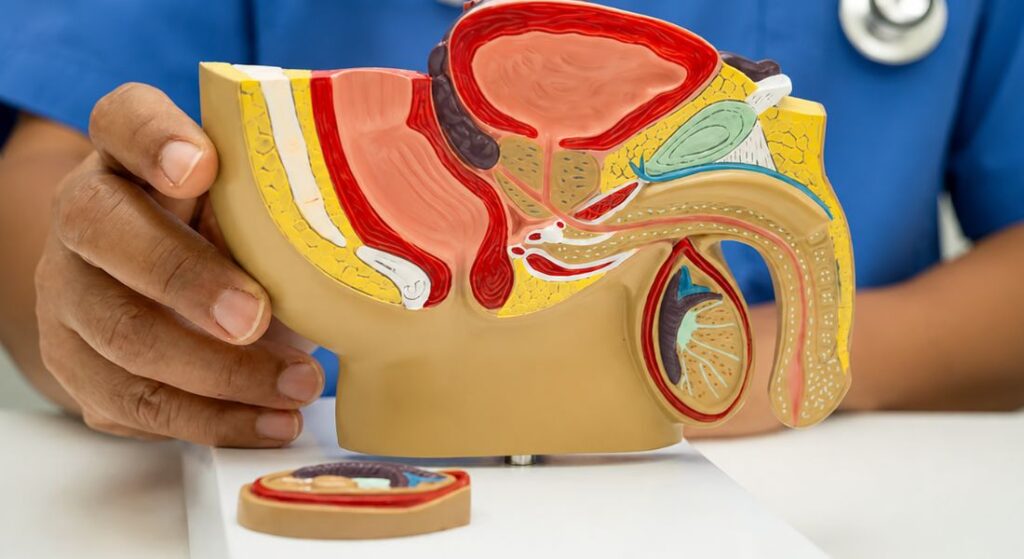
Penile rehabilitation is a recovery approach used after prostate surgery. If you are going through this stage, the aim is to support the health of your erectile tissue while the nerves gradually recover and regain function. It is designed as part of a structured recovery process rather than a quick solution.
This approach may include treatments such as sildenafil, vacuum erection devices, injections, or other options depending on what is suitable for you. After surgery, reduced erections can mean less regular oxygen-rich blood flow to the penis, which over time may affect the health of the erectile tissue. Supporting blood flow during this period is an important part of recovery.
Penile rehabilitation is intended to help maintain tissue health while your body heals. It is important to understand that it is not a quick fix and results take time to develop. The process often requires patience, support, and adjustments based on your individual recovery.
When Can Viagra Be Started After Prostate Surgery?
There is no single timing that applies to every man, as your recovery after prostate surgery is individual. Some specialists may consider starting sildenafil once your catheter has been removed and early healing is going well, but this depends on how your body is recovering.
In other cases, your doctor may suggest waiting a few weeks before starting treatment. This is especially important if there are concerns about pain, bleeding risk, wound healing, blood pressure, or interactions with other medicines you may be taking. Your safety and recovery always come first.
Your surgeon’s advice is the most important factor because they understand the details of your operation and recovery. They will consider whether you had nerve-sparing surgery, how much nerve function was preserved, and whether sildenafil is suitable for you. It is important not to start Viagra on your own, as your recovery plan may be different from other men.
Factors That Affect When Viagra May Be Started After Prostate Surgery
| Factor | Why It Matters | How It May Affect Timing |
| Catheter removal | Many doctors prefer to wait until the catheter is removed and early healing is progressing well. | Viagra may be considered after catheter removal, if recovery is suitable. |
| Wound healing | Early recovery needs time, especially if there is pain, bleeding risk, or wound concerns. | Your doctor may advise waiting longer before starting sildenafil. |
| Type of surgery | Nerve-sparing, unilateral nerve-sparing, or non-nerve-sparing surgery can affect rehabilitation planning. | Men who had nerve-sparing surgery may be offered a different plan from those who did not. |
| Heart health | Sildenafil may not be suitable for men with certain heart conditions or unstable cardiovascular health. | Your doctor may need to assess your heart safety before prescribing it. |
| Blood pressure | Viagra can lower blood pressure and may interact with some blood pressure medicines. | Timing, dose, or suitability may need adjustment. |
| Current medicines | Nitrates, alpha-blockers, and some other medicines can interact with sildenafil. | Viagra may be unsafe or require careful medical supervision. |
| Side effects risk | Headache, dizziness, flushing, indigestion, and visual changes can occur. | Your doctor may start cautiously or consider alternatives. |
| Erectile function before surgery | Stronger erections before surgery may suggest better recovery potential. | This may influence how rehabilitation is planned and what expectations are set. |
| Recovery progress | Fatigue, discomfort, urinary leakage, and emotional readiness can all affect sexual recovery. | Treatment may be delayed until you feel physically and emotionally ready. |
Why Catheter Removal Often Matters
After prostate surgery, you will usually go home with a catheter for a short period. This catheter helps drain urine while the connection between your bladder and urethra heals properly. During this stage, your focus is typically on rest, gentle walking, catheter care, and avoiding any unnecessary strain.
Many doctors prefer to wait until your catheter has been removed before starting sexual rehabilitation or medications like sildenafil. This is because the early healing phase needs time to settle, and your body is still adjusting after surgery. You may also not feel physically or emotionally ready to think about sexual function while the catheter is still in place.
Once your catheter is removed, your care team will usually begin discussing the next stage of recovery with you. This may include urinary control, pelvic floor exercises, and penile rehabilitation options. At this point, you can also have clearer conversations about when treatments like Viagra may be appropriate for you.
Why Timing Varies Between Patients
The timing for starting medications like Viagra after prostate surgery can vary quite a lot from person to person. Your recovery is influenced by several individual factors, so there is no one-size-fits-all answer that applies to everyone.
Your age, heart health, blood pressure, current medicines, and kidney or liver function all play a role in deciding when it is safe to start treatment. Your surgeon will also consider the details of your operation and how well you are healing during recovery.
The type of surgery you had is also very important. For example, if you had bilateral nerve-sparing surgery, your rehabilitation plan may be different compared to unilateral or non-nerve-sparing procedures. Your erectile function before surgery also matters, as your recovery potential can differ depending on your baseline.
This is why it is always best to follow the advice of your own surgeon or specialist team rather than relying on general guidance. They can assess your specific situation and recommend the safest and most appropriate timing for you.
Can Viagra Work Straight Away After Prostate Surgery?
Sometimes Viagra may help you early on after prostate surgery, but many men do not notice a strong response straight away. This can feel disappointing if you are expecting it to work in the same way it did before your operation.
After prostate surgery, the nerves that help control erections may still be recovering and may not be sending strong signals yet. Sildenafil also relies on some degree of nerve signalling as well as sexual stimulation to work effectively, so early on the response can be limited.
If your nerves are still healing, you may find that the effect is weak or absent at first. This does not necessarily mean that the medication will not work in the future. It may simply mean your body needs more time to recover before you see a better response.
Why Nerve-Sparing Affects Viagra Response
Viagra usually works better when the erection nerves are functioning properly. If both nerve bundles were preserved during surgery, you may have a better chance of responding to sildenafil over time, although recovery still takes time. If only one nerve bundle was preserved, you may still respond, but the results can be less predictable, and if neither nerve bundle could be safely spared, tablets may be less effective.
This does not mean you have no options if tablets do not work well for you. Other treatments such as vacuum erection devices, injections, or alternative therapies may be discussed as part of your recovery plan. Your specialist will guide you on which options are most suitable for your individual situation and recovery stage.
How Viagra Is Used After Surgery
Viagra may be prescribed in different ways after prostate surgery, depending on your individual recovery and your doctor’s plan. Some men are advised to take it before planned sexual activity to help support erections when needed.
In other cases, you may be advised to take a lower dose regularly as part of a rehabilitation approach, although this can vary between clinicians. There is no single schedule that is suitable for everyone, as your response and recovery can differ.
Your doctor may start with one approach and adjust it over time based on how you respond, any side effects you experience, and your overall progress. It is important that you follow the dose instructions exactly, as taking more than prescribed will not necessarily improve results and may increase the risk of side effects.
What Dose Might Be Used?
The dose of sildenafil should always be decided by your doctor based on your individual health and recovery after prostate surgery. You should not choose or adjust the dose yourself, as the right amount can vary from person to person.
Some men may be started on a lower dose, particularly if you are older, have other health conditions, or are taking certain medications. Others may be prescribed a standard dose used for erectile dysfunction, depending on what is considered safe and appropriate for you.
Your doctor will carefully assess factors such as your blood pressure, heart health, current medications, and overall safety before deciding on the best dose. If the first dose does not seem effective, you should not increase it on your own, as recovery after prostate surgery can take time and your treatment plan may need gradual adjustment.
How Long Before Sex Should Viagra Be Taken?
For erectile dysfunction, sildenafil is usually taken before sexual activity, but your doctor or pharmacist will tell you exactly how and when you should use it after prostate surgery. You should always follow their instructions, as your recovery stage can affect how the medicine works for you.
It may work better if you take it on an empty stomach or after a light meal, as a heavy or fatty meal can delay how quickly it is absorbed. This means you might notice a slower response if you have eaten a large meal beforehand.
Alcohol can also affect your erections and may increase side effects such as dizziness or low blood pressure. After prostate surgery, it is also important not to focus only on timing the tablet, but to consider your comfort, confidence, arousal, and whether your body feels ready for sexual activity.
Sexual Activity After Prostate Surgery
You should always ask your surgical team when it is safe for you to resume sexual activity after prostate surgery. This timing depends on your individual healing, whether your catheter has been removed, your pain levels, energy, urinary control, and overall recovery progress.
Sexual activity does not only mean penetrative sex. For you, it may also include intimacy such as touch, closeness, kissing, stimulation, or simply rebuilding comfort and confidence with your partner. These steps can be an important part of recovery and adjusting emotionally after surgery.
Some men feel emotionally ready before they feel physically ready, while others feel physically well but experience anxiety about erections, leakage, or performance. There is no need to rush this process, as recovery after prostate surgery is gradual and does not follow a fixed timeline.
What If Viagra Does Not Work at First?
It is quite common for Viagra not to work well straight away after prostate surgery. If this happens to you, it can feel discouraging, but it does not automatically mean that recovery will not improve over time.
After surgery, your nerves may still be healing, your body may be recovering from the operation, and factors like fatigue, anxiety, or pressure can also make erections more difficult. All of these can affect how well the medication works in the early stages.
Your doctor may advise you to try the medicine a few times under the right conditions before deciding whether it is effective for you. They may also adjust the dose, switch treatments, or add other options such as a vacuum erection device as part of your recovery plan. Try not to judge your progress based on a single attempt, as improvement often takes time.
Other Tablets After Prostate Surgery

Viagra is not the only tablet that may be used for erectile dysfunction after prostate surgery. If sildenafil is not suitable for you, your doctor may discuss other options based on your health, recovery, and treatment goals.
- Tadalafil: Tadalafil, also known as Cialis, may last longer than sildenafil and can sometimes be used as a daily low-dose option.
- Vardenafil: Vardenafil works in a similar way to sildenafil but may suit some men better depending on response and side effects.
- Avanafil: Avanafil is another PDE5 inhibitor that may act more quickly for some men when taken before sexual activity.
- Do Not Combine Tablets: Erectile dysfunction tablets should not be mixed unless your doctor specifically advises this, as it can increase side effect risks.
Overall, several tablet options may be available after prostate surgery if sildenafil is not the right choice for you. The best option depends on your recovery, general health, other medicines, and how you respond to treatment. Your doctor can guide you towards the safest and most suitable approach.
Vacuum Erection Devices
A vacuum erection device may be used after prostate surgery as part of your recovery or sexual rehabilitation plan. If you are exploring options, this is one of the non-tablet treatments your consultant may discuss with you.
The device works by creating suction around the penis, which helps draw blood into the erectile tissue. A constriction ring is then often used at the base to help maintain the erection for sexual activity, depending on your comfort and suitability.
Some men also use vacuum devices as part of rehabilitation even if they are not yet ready for sexual intercourse. It may feel a little awkward at first, but with practice many men become more comfortable using it. Your specialist or nurse can show you how to use it safely and correctly. If tablets like Viagra are not working well for you, a vacuum erection device may be a useful option to discuss with your care team.
Penile Injections
Penile injections may be offered if tablets do not work well enough for you after prostate surgery. If you are exploring further options, this is one of the treatments your urologist may discuss when first-line medicines are not giving the desired effect.
This treatment involves injecting a small amount of medicine directly into the side of the penis to help create an erection. The idea can feel worrying at first, but many men are taught how to use it safely and become more confident with practice and proper guidance.
Injections can be effective even when nerve recovery is limited, because they act more directly on blood flow rather than relying on nerve signals. However, they are not suitable for everyone and must always be prescribed and taught by a healthcare professional. You should never use injection treatments without medical supervision.
Urethral Treatments
Some men may be offered a treatment where medication is inserted into the urethra after prostate surgery. If you are not familiar with this option, it is less commonly used than tablets, vacuum devices, or injections, but it may still be suitable in certain cases.
The urethra is the tube that carries urine out of your body. In this treatment, medication is placed into the urethra to help improve blood flow and support an erection, depending on your individual response and suitability.
Your specialist can explain whether this option is appropriate for you and how it would fit into your overall recovery plan. As with all erectile dysfunction treatments after prostate surgery, the best choice depends on your recovery, safety, personal preference, and how you respond to other available options.
Penile Implants
A penile implant may be considered for some men who continue to experience long-term erectile dysfunction after prostate surgery. If you are exploring all available options, this is usually discussed only when other treatments have not been successful or are not suitable for you.
This is not typically the first treatment offered. It may be considered if tablets, vacuum devices, or injections have not worked well enough, or if you are unable or unwilling to use them as part of your recovery plan.
A penile implant is a surgical option, so it involves careful discussion about the potential benefits, risks, recovery process, and what you can realistically expect. Some men find it provides reliable erections for sexual activity, but it is a significant decision that requires time and consideration.
Your urologist can help you understand whether this option is relevant to your situation and whether it may be appropriate later in your recovery journey.
Safety: Who Should Not Take Viagra?
Viagra is not suitable for everyone, and it is important that you only take it if it has been approved for you by your doctor. If you are considering sildenafil after prostate surgery, safety checks are a key part of deciding whether it is appropriate.
You should not take sildenafil if you use nitrates for chest pain or certain heart conditions, as this combination can cause a dangerous drop in blood pressure. You must also tell your doctor about any medicines you take for blood pressure, heart disease, angina, prostate symptoms, or HIV treatment, as interactions may be possible.
It is also important to inform your doctor if you have a history of heart attack, stroke, severe liver disease, low blood pressure, uncontrolled high blood pressure, or certain serious eye conditions. Because of these risks, Viagra should only ever be taken after medical approval, especially following major surgery like prostate surgery.
Side Effects of Viagra
Like all medicines, Viagra can cause side effects, and it is important that you are aware of them before using it. If you are taking sildenafil after prostate surgery, your doctor will consider your overall health to help reduce any risks.
Common side effects may include headache, flushing, indigestion, a blocked nose, dizziness, or mild visual changes. Some men may also feel light-headed, particularly if you already have low blood pressure or are taking certain medications that affect circulation.
You should seek urgent medical advice if you experience chest pain, severe dizziness, sudden vision loss, sudden hearing loss, or an erection lasting more than four hours. Most men tolerate sildenafil reasonably well, but your safety should always come first.
If you do experience side effects that bother you, it is important that you speak to your doctor rather than stopping the medication on your own. Your treatment can often be adjusted so you are more comfortable while still supporting your recovery.
Viagra and Heart Health
Sexual activity can place some demand on your heart, as it increases your heart rate and circulation. For many men this is completely safe, but after prostate surgery or cancer treatment, your doctor may want to make sure your heart health is stable before prescribing erectile dysfunction medication.
This is especially important if you have a history of angina, a recent heart attack, heart failure, an irregular heartbeat, or if you take multiple heart medicines. In some cases, your doctor may ask simple questions about your daily activity, such as whether you can climb stairs or do moderate exercise without chest pain or significant breathlessness.
These questions are used to help assess whether sexual activity and sildenafil are safe for you. It is important that you are honest about your heart history, as this allows your doctor to make the safest and most appropriate decision for your recovery and treatment plan.
Viagra and Blood Pressure Medicines

Some blood pressure medicines can interact with sildenafil or increase the likelihood of side effects such as dizziness. If you are taking treatment for blood pressure, your doctor will carefully consider how it may affect you when prescribing Viagra after prostate surgery.
Alpha-blockers, which are sometimes used to treat urinary symptoms, can also lower blood pressure. When combined with sildenafil, they may increase the chance of feeling light-headed or dizzy, especially when standing up.
If you are taking blood pressure tablets or medication for prostate symptoms, your doctor may adjust the timing or dose to reduce any risks. You should not try to manage this yourself, as your doctor or pharmacist needs to review your full medication list. If you feel faint, dizzy, or unwell after taking sildenafil, you should seek medical advice promptly.
Does Viagra Help Nerves Heal?
Viagra does not directly repair or regenerate the nerves after prostate surgery. If you are taking sildenafil, it is important to understand that its main role is not nerve healing, but supporting blood flow to the penis and helping maintain erectile tissue health during recovery.
The nerves themselves need time to recover, and this process can take several months or even longer after surgery. This is why penile rehabilitation is generally described as supporting recovery rather than guaranteeing a specific outcome, as results depend on how well nerve function returns over time.
The aim is to create the best possible conditions for healing while your body naturally recovers. Your specialist will explain what sildenafil can and cannot do in your specific case so you have realistic expectations.
How Long Might You Need Viagra After Surgery?
Some men use sildenafil temporarily during their recovery after prostate surgery, while others may continue using it for a longer period. The length of time you need it can vary widely depending on how your body heals.
It depends on several factors, including whether your erections naturally recover, how well the tablets are working for you, whether you experience any side effects, and what your personal sexual goals are during recovery.
Your doctor will usually review your progress after a set period and decide whether to continue the same treatment, adjust the dose, switch to a different medicine, or add another option. You should not feel that needing medication is a failure, as using support for erections after prostate surgery is very common and completely normal.
Emotional Impact of Erectile Dysfunction
Erection problems after prostate surgery can affect your confidence, mood, and relationships. If you are going through this, it is normal to feel embarrassed, frustrated, or even less like yourself during recovery.
You may also feel pressure to recover quickly, especially if you were expecting nerve-sparing surgery to protect your erections. When things do not improve as fast as hoped, it can feel disappointing and emotionally challenging.
These feelings are very common, but they are not always easy to talk about. It can help to remember that erectile dysfunction after prostate surgery is a medical side effect, not a personal failure, and support is available to help you through this stage of recovery.
Talking to Your Partner
If you have a partner, talking openly can make a real difference during your recovery after prostate surgery. If you are in this situation, you may both feel worried, but in different ways. You might be concerned about performance, while your partner may be worried about hurting you or adding pressure.
It can help to explain that sexual recovery often takes time and that intimacy does not have to depend only on erections. When you share this understanding, it can reduce pressure and help both of you adjust to the changes more comfortably.
You do not need to discuss everything at once. A simple conversation can be a helpful starting point, such as saying, “I want us to stay close, but I am still recovering and I may need support.”
Managing Expectations
Viagra after prostate surgery is not usually a quick “magic switch” for you. If you are using it during recovery, it may help some men, especially when nerves have been preserved, but it does not always work straight away or in the same way it did before surgery.
You may notice that erections return gradually rather than suddenly, and it is quite common for you to need repeated attempts, dose adjustments, or even a different medicine or additional treatment. This is all part of the normal recovery process after prostate surgery.
It can feel frustrating if progress seems slow, but even small improvements are still positive signs for you. Try to focus on gradual progress over time rather than expecting everything to return perfectly straight away.
When to Speak to Your Specialist
You should speak to your specialist if you are unsure when to start Viagra after prostate surgery, if it is not working for you, or if you are experiencing side effects that are bothering you. Getting advice early can help you feel more confident about your recovery plan.
You should also reach out if erectile dysfunction is affecting your confidence, mood, or relationship. These concerns are very common after prostate surgery, and your care team is used to discussing them openly and without judgement.
Try not to wait for months in silence because you feel embarrassed. Sexual recovery is a normal part of prostate cancer care, and the earlier you speak up, the sooner you can understand your options and get the right support for you.
What Not to Do
You should not buy Viagra from an unsafe or unregulated source, as you cannot be sure what the tablets contain or whether they are safe for you. If you are recovering after prostate surgery, it is especially important that any medication you use is properly prescribed and monitored.
You should never take someone else’s tablets or increase your dose on your own in the hope of getting faster results. You also should not combine sildenafil with other erectile dysfunction medicines unless your doctor has specifically advised it, as this can increase the risk of side effects.
It is also very important that you do not take sildenafil with nitrates, as this combination can cause a dangerous drop in blood pressure. After prostate surgery, your body is still healing, so any medication should always be used carefully and only under proper medical guidance.
Why Follow-Up Matters
Erectile recovery after prostate surgery often requires follow-up, so your care does not stop after the first prescription. If you are taking sildenafil, your initial plan may not be the final version, and it may need adjusting over time depending on how you respond.
During follow-up appointments, your clinician may ask about erections, side effects, urinary leakage, confidence, relationship concerns, and whether the treatment is helping you. This helps them understand your recovery in a complete and realistic way.
It is important that you are honest during these reviews, even if things feel uncomfortable to talk about. If the medicine is not working for you, or if you are not taking it because of anxiety or embarrassment, sharing this allows your team to support you properly and adjust your treatment if needed.
Viagra After Nerve-Sparing Surgery
If you had nerve-sparing surgery, sildenafil may be included as part of your recovery plan. If this applies to you, the aim is often to support erections and help maintain penile tissue health while the nerves gradually recover.
If you had bilateral nerve-sparing surgery, you may have a better chance of responding to sildenafil compared with unilateral nerve-sparing. However, even in these cases, results can still vary from person to person, and recovery is not always immediate.
Even after nerve-sparing surgery, you may not notice a response at first. This does not mean anything has gone wrong or that recovery is not possible. It may simply mean your nerves need more time to heal and start functioning properly again.
Your consultant can guide you on how long to continue trying Viagra and when it may be appropriate to adjust your plan or consider other treatment options if needed.
Viagra After Non-Nerve-Sparing Surgery
If the nerves could not be spared during your prostate surgery, sildenafil may be less likely to produce strong erections for you. This is because Viagra relies on nerve signals as well as blood flow to work effectively.
Even so, your specialist may still discuss it with you as part of a wider recovery or sexual rehabilitation plan, depending on your individual situation. In some cases, it may still offer limited benefit, even if the response is not strong.
Other treatments may be more effective for you, such as vacuum erection devices or injections, which do not rely as much on nerve function. While this can feel disappointing, it does not mean that intimacy or sexual activity is no longer possible.
You may simply need a different approach, and your care team will help guide you towards options that are realistic, safe, and suitable for your recovery after surgery.
Can Viagra Help With Confidence?
For some men, having a treatment plan that includes Viagra can help improve confidence after prostate surgery. If you are in this situation, simply knowing that support is available may reduce anxiety, even if erections do not return immediately.
However, it is also normal for you to feel some pressure around taking tablets. You might worry about whether they will work, whether your partner will notice, or whether sex will feel different compared to before surgery.
This is why emotional support is just as important as medical treatment. Your confidence often returns gradually as you begin to understand your body, your options, and your recovery timeline, rather than expecting everything to feel the same straight away.
Speak to Your Doctor Before Starting

The safest answer to “How soon can you take Viagra after prostate surgery?” is only when your doctor confirms it is safe for you. If you are recovering, this timing can vary a lot from person to person, and there is no fixed rule that applies to everyone.
For some men, it may be considered after catheter removal, but your doctor will only decide this once they have checked your healing, heart health, blood pressure, current medicines, and the details of your surgery. These factors all help ensure it is safe for you to start treatment.
Your doctor will also explain how to take Viagra properly, what you can realistically expect, and what to do if it does not work at first. Starting too early or without medical advice can increase risks and may also lead to disappointment if your body is not yet ready for sexual recovery.
Speak to Our Specialist
If you are recovering from prostate surgery and are unsure about Viagra, penile rehabilitation, or erectile recovery, a specialist consultation can help you get clear guidance. If this is your situation, you may need advice about when to start medication, whether sildenafil is safe with your other medicines, and what to expect based on whether you had nerve-sparing or non-nerve-sparing surgery.
You can also talk through other options such as vacuum devices, injections, penile rehabilitation plans, and longer-term treatments if tablets are not effective for you. This helps ensure you understand all available pathways rather than relying on guesswork.
These conversations can feel very personal, but they are a normal and important part of recovery after prostate cancer surgery. You deserve clear, practical advice that is tailored to you, so you can make informed decisions about your recovery and sexual health.
FAQs:
1. How soon can you take Viagra after prostate surgery?
You can only start Viagra after prostate surgery when your doctor confirms it is safe for you. For some people, this may be after the catheter is removed, but timing varies depending on your healing and overall health. Your surgeon will consider your surgery type, recovery progress, and any other medications you are taking. You should only start it after discussing it with your doctor or specialist team.
2. Why might you be prescribed Viagra after prostate surgery?
You may be prescribed Viagra as part of penile rehabilitation to support recovery after surgery. It helps improve blood flow to the penis while your nerves heal. The aim is not always immediate erections but long-term recovery support. It is often part of a wider recovery plan.
3. Will Viagra work straight away after prostate surgery?
Not always, and you should not expect instant results. After surgery, your nerves may still be recovering, so the response can be weak at first. Some men notice gradual improvement over time rather than immediate effects. It may take several attempts before you see any benefit.
4. What is sildenafil?
Sildenafil is the active ingredient in Viagra and belongs to a group of medicines called PDE5 inhibitors. It helps increase blood flow to the penis when you are sexually stimulated. It does not create arousal on its own. It is commonly used to treat erectile dysfunction.
5. Can you start Viagra while you still have a catheter?
In most cases, you will not start Viagra while the catheter is still in place. Doctors usually prefer to wait until it has been removed and early healing is progressing well. This helps ensure your body has started recovering properly. Your surgeon will guide you on the right timing.
6. Why does the timing vary from person to person?
Timing varies because every person’s recovery is different after prostate surgery. Factors like nerve-sparing surgery, age, heart health, and medications all affect when you can start. Your healing progress also plays a big role. That’s why there is no fixed timeline for everyone.
7. What should you do if Viagra doesn’t work after surgery?
It is quite common for Viagra not to work well at first after surgery. This does not mean it will never work, as your nerves may still be healing. You may need more time, a dose adjustment, or repeated attempts. Your doctor may also suggest alternative treatments if needed.
8. Are there alternatives if Viagra doesn’t help you?
Yes, there are several alternatives if Viagra is not effective. These may include other tablets, vacuum erection devices, or penile injections. In some cases, urethral treatments or implants may be considered. Your specialist will help choose what is most suitable for you.
9. Is Viagra safe for you after prostate surgery?
Viagra can be safe, but only when your doctor has checked you properly. They will review your heart health, blood pressure, and other medications before prescribing it. It is especially important after major surgery to avoid complications. You should only take it under medical supervision.
10. Does Viagra help your nerves heal?
Viagra does not directly repair or heal your nerves after surgery. What it can do is improve blood flow to the penis, which may support tissue health during recovery. Nerve healing itself takes time and varies from person to person. Viagra is mainly supportive, not a cure for nerve damage.
Final Thoughts on Viagra After Prostate Surgery
Recovery after prostate surgery is a gradual process, and it’s completely normal for you to have questions about when you can safely use Viagra and what to expect from it. There isn’t a one-size-fits-all timeline, because your healing, surgery type, nerve preservation, and overall health all play a role in when treatment can begin and how well it works.
What matters most is that you follow your specialist’s guidance rather than trying to start treatment on your own. Viagra (sildenafil) can be a helpful part of penile rehabilitation for some men, but it is not an instant solution and often works best as part of a broader recovery plan that may include other treatments and ongoing support.
With time, patience, and the right medical guidance, many men do see gradual improvements in erectile function and confidence. If you are unsure about your recovery or treatment options, getting personalised advice can make the process clearer and less stressful. If you would like specialist guidance about erectile recovery after prostate surgery, you can contact us at Prostate Clinic London to discuss your options and understand what may be suitable for your situation.
References:
- Mulhall, J.P., Bella, A.J., Briganti, A., McCullough, A. and Brock, G. (2010) ‘Erectile function rehabilitation in the radical prostatectomy patient’, Journal of Sexual Medicine, 7(4 Pt 2), pp.1687–1698. Available at: https://pubmed.ncbi.nlm.nih.gov/20388165/
- Montorsi, F., Brock, G., Lee, J., Shapiro, J., Van Poppel, H., Graefen, M. and Stief, C. (2008) ‘Effect of nightly versus on-demand vardenafil on recovery of erectile function in men following bilateral nerve-sparing radical prostatectomy’, European Urology, 54(4), pp.924–931. Available at: https://pubmed.ncbi.nlm.nih.gov/18640769/
- Pavlovich, C.P., Levinson, A.W., Su, L.M., Mettee, L.Z., Feng, Z., Bivalacqua, T.J., Trock, B.J., Partin, A.W. and Burnett, A.L. (2013) ‘Nightly vs on-demand sildenafil for penile rehabilitation after minimally invasive nerve-sparing radical prostatectomy: results of a randomized double-blind trial with placebo’, BJU International, 112(6), pp.844–851. Available at: https://pubmed.ncbi.nlm.nih.gov/23937708/
- Gandaglia, G., Suardi, N., Cucchiara, V., Bianchi, M., Shariat, S.F., Roupret, M., Salonia, A., Montorsi, F. and Briganti, A. (2015) ‘Penile rehabilitation after radical prostatectomy: does it work?’, Translational Andrology and Urology, 4(2), pp.110–123. Available at: https://pmc.ncbi.nlm.nih.gov/articles/PMC4708129/
- Castellucci, R., Galassi, P., Dell’Atti, L., Conti, A. and Scarcella, S. (2023) ‘Penile Rehabilitation after Prostate Cancer Treatment’, Uro, 3(1), pp.100–111. Available at: https://www.mdpi.com/2673-4397/3/1/9