




When you ask about the success rate of nerve-sparing prostate surgery, it is important to first understand what “success” actually means for you personally. For one man, success may mean complete cancer removal and an undetectable PSA after surgery, while for another it may mean regaining bladder control quickly or returning to a good quality of life. For many men, success is also linked to recovering erections strong enough for sex, sometimes with the help of medication.
In reality, success after nerve-sparing prostate surgery is measured in several different ways, not just one. These include cancer control, urinary continence, erectile function recovery, how quickly you recover, overall quality of life, and whether any further treatment is needed in the future.
That is why it is not helpful to focus on a single percentage or “one-size-fits-all” success rate. Nerve-sparing surgery can improve the chances of functional recovery in carefully selected men, but your outcome depends on many factors such as your cancer stage, age, pre-surgery erectile function, general health, and whether one or both nerve bundles can be preserved.
The most honest way to look at it is that nerve-sparing surgery can be very successful for the right patient, but it does not guarantee perfect recovery in every case. It is a personalised surgical approach, where results vary from person to person based on individual circumstances.
What Is Nerve-Sparing Prostate Surgery?
Nerve-sparing prostate surgery is an approach used during radical prostatectomy. A radical prostatectomy is an operation to remove the prostate gland, usually along with the seminal vesicles. In some cases, nearby lymph nodes may also be removed if your surgeon needs to check whether cancer has spread.
The nerves that help you get erections run very close to the prostate. During nerve-sparing surgery, the surgeon tries to preserve one or both of these nerve bundles if it is safe to do so. This can improve the chance of erectile function recovery after surgery. It may also support earlier functional recovery in some men.
However, nerve-sparing is only suitable when it does not compromise cancer treatment. If the cancer is close to the nerves, your surgeon may need to remove more tissue to reduce the risk of leaving cancer behind.
Why Success Is Not Measured by One Number
Many patients understandably want a clear success rate when they are considering nerve-sparing prostate surgery. You may want a simple answer to questions like “What are my chances of being cured?” or “What are my chances of getting erections back?” These are completely valid and important questions.
The challenge is that “success” depends on what outcome you are talking about. Cancer control is measured separately from urinary continence recovery, and continence recovery is measured differently from erectile function recovery. Even erectile recovery can be defined in different ways depending on whether studies include men using tablets or only those achieving natural erections.
So when you see a success rate online, you always need to ask what it is actually measuring. A high continence rate does not automatically mean a high erectile recovery rate, and good cancer control does not guarantee easy functional recovery. These outcomes are related, but they are not the same thing.
What “Success” Means After Nerve-Sparing Prostate Surgery
| Success Area | What It Means | How It Is Measured |
| Cancer control | Cancer fully removed | PSA level, surgical margins, pathology report |
| Urinary continence | Regaining bladder control | Pad use, dryness during daily activities |
| Erectile function | Ability to achieve erections | Natural erections or response to medication |
| Quality of life | Overall wellbeing after surgery | Physical, emotional, sexual, daily function |
| Recovery speed | How quickly you improve | Time to regain continence, energy, function |
| No further treatment | No additional cancer therapy needed | PSA stability over long-term follow-up |
Cancer Control Is the First Measure of Success
The first and most important goal of prostate cancer surgery is cancer control. This means your surgeon aims to remove the prostate cancer as safely and completely as possible, while also protecting surrounding structures where appropriate. After surgery, the prostate that has been removed is carefully examined in a laboratory to assess the cancer grade, stage, and whether the surgical margins are clear.
After the operation, your PSA is monitored over time. Because your prostate has been removed, your PSA level should usually fall to a very low or undetectable level. If it stays low, that is generally a reassuring sign that the cancer has been effectively controlled.
However, if your PSA begins to rise later, it may suggest that some cancer cells remain or that the cancer has returned. This is why success is not judged only on the day of surgery, but through ongoing follow-up, pathology results, PSA trends, and whether any further treatment is needed.
Nerve-Sparing Must Not Compromise Cancer Safety
Nerve-sparing surgery should only be done when it is safe from a cancer-control point of view. This is one of the most important things you need to understand before making a decision about your operation for prostate cancer.
If your cancer is close to the nerve bundles, trying to preserve too much nerve tissue may increase the risk of leaving cancer cells behind. In that situation, your surgeon may recommend partial nerve-sparing, one-sided nerve-sparing, or no nerve-sparing on the higher-risk side to prioritise cancer safety.
This can feel disappointing, especially if preserving sexual function is very important to you. However, the main purpose of surgery is always to treat the cancer effectively and safely. A successful operation is not simply the one that preserves the most nerves. It is the one that removes the cancer properly while still preserving as much function as is safely possible.
What Are Surgical Margins?
Surgical margins help your doctors understand whether any cancer cells are present at the outer edge of the tissue removed during prostate cancer surgery. In simple terms, it tells you how “clean” the removal of the prostate has been.
If cancer cells are found at the edge of the removed tissue, this is called a positive surgical margin. It may suggest that some cancer cells could have been left behind, although it does not always mean the cancer will come back. If the margin is clear, that is usually more reassuring, as it suggests the cancer has been fully removed.
Margins are important because nerve-sparing surgery happens very close to the prostate. If the cancer is near the edge of the gland, preserving too much nerve tissue could increase the risk of a positive margin. This is why your surgeon carefully reviews your MRI, biopsy results, PSA level, cancer grade, and overall findings before deciding how much nerve tissue can safely be preserved.
Continence Recovery as a Success Measure
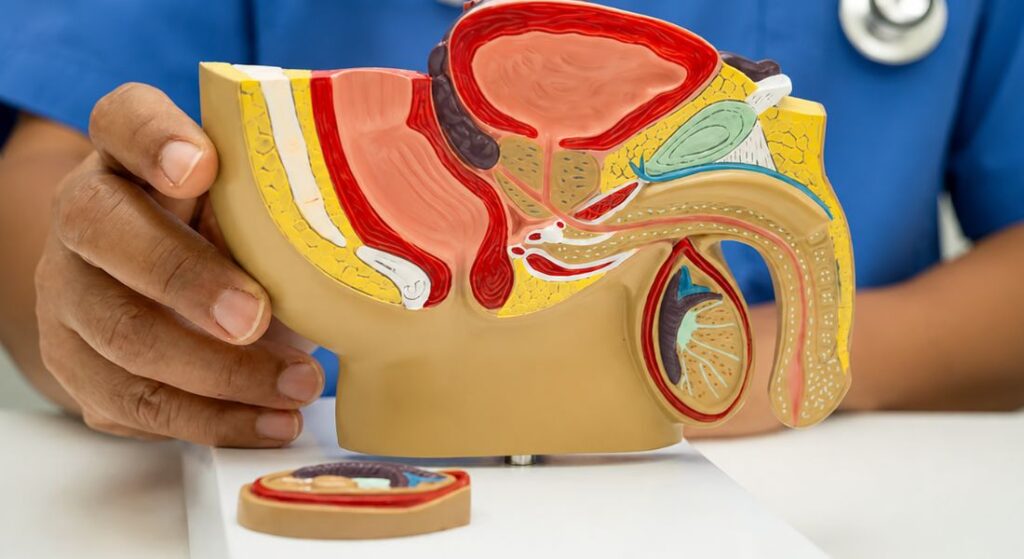
Another important measure of success is urinary continence. After prostate surgery, many men leak urine when the catheter is removed. This can happen even after careful robotic surgery. Leakage may occur when you stand, cough, sneeze, walk, lift, or move suddenly. At first, you may need pads.
For many men, continence improves gradually over weeks or months. Some recover quickly, while others need more time. Success in continence recovery may mean using fewer pads, staying dry during daily activities, sleeping without leakage, or feeling confident going out again. It is important to remember that continence recovery is a process, not an instant result.
Does Nerve-Sparing Help Continence?
Nerve-sparing is mainly discussed in relation to erections, but it may also support functional recovery in some men. Some research and guidelines suggest that nerve-sparing can be associated with earlier continence recovery. This may be because preserving tissues around the prostate can help support the structures involved in urinary control.
However, continence depends on many factors. Your age, pelvic floor strength, bladder function before surgery, surgical technique, catheter recovery, healing, and pelvic floor exercises can all influence bladder control. So, nerve-sparing may help, but it is not the only reason some men recover continence well.
Erectile Function Recovery as a Success Measure
Erectile function recovery is often the outcome you think about most when you hear the term “nerve-sparing” during prostate cancer treatment. However, success can mean different things for different people. For you, it might mean natural erections, or it might mean erections strong enough for sex with tablets. For others, it may include using injections or a vacuum device effectively.
Erection recovery after nerve-sparing surgery can take time. Even when the nerves are preserved, they can be stretched, bruised, or temporarily affected during surgery, which means they may not function properly straight away. As a result, erections may be weak or absent for several months after the operation.
Some men notice gradual improvement over the first year, while others continue to recover into the second year. In some cases, you may still need ongoing erectile dysfunction treatments to support sexual function during recovery or long term.
Why Erectile Recovery Rates Vary
Erectile recovery rates vary widely because patients vary widely. A younger man with strong erections before surgery and both nerve bundles preserved may have a better chance of recovery than an older man with diabetes, poor circulation, and weaker erections before treatment.
The definition of recovery also changes the numbers. Some studies count erections firm enough for sex with medication. Others count erections without medication. Some include all patients, while others include only men with good erections before surgery.
This is why you should be cautious with any simple success rate. The more useful question is: “What is my likely outcome based on my age, health, cancer location, nerve-sparing plan, and current erectile function?”
Age and Success Rates

Age is one of the factors that can influence functional recovery after surgery for Prostate cancer. In general, younger men may have better blood flow, fewer long-term health conditions, and stronger erections before surgery, which can improve the chances of recovering erectile function after nerve-sparing surgery.
However, age is not the only factor that matters. An older man with excellent pre-surgery erectile function and good overall health may recover better than a younger man who has conditions like diabetes, a smoking history, poor circulation, or existing erectile dysfunction.
This is why age should only be seen as one part of the overall picture. Your recovery depends on a combination of factors, including your general health, baseline sexual function, cancer characteristics, and how much nerve tissue can safely be preserved during surgery.
Pre-Surgery Erectile Function Matters
Your erection quality before surgery is one of the strongest predictors of erectile function recovery after prostate cancer treatment. In general, if you had firm, reliable erections before surgery, your chances of recovery afterwards may be better.
If you already had some degree of erectile dysfunction before surgery, nerve-sparing may still be considered, but recovery can be more challenging. This is because the nerves involved in erections are only one part of the process.
For erections to work properly, you also need healthy blood vessels, smooth muscle function, balanced hormones, and psychological confidence. That is why your surgeon or specialist nurse may ask you personal questions about your sexual function before surgery, so they can give you more accurate and realistic advice about recovery.
One-Sided vs Both-Sided Nerve-Sparing
Whether one or both nerve bundles are preserved during prostate cancer surgery can have an impact on functional recovery, especially erectile function. When both nerve bundles are preserved (bilateral nerve-sparing), and it is safe to do so, this usually gives you the best chance of recovering natural erections.
If only one nerve bundle is preserved (unilateral nerve-sparing), you may still recover some erectile function, but the chances are often lower compared to both-sided preservation. Some men still respond well, but recovery can be more limited or slower.
If no nerve-sparing is possible, the nerves are removed to ensure cancer is fully treated, and natural erections are much less likely to return. However, erectile dysfunction treatments such as tablets, injections, or devices may still help you achieve sexual function. The most suitable approach always depends on where your cancer is located and how close it is to the nerves, with cancer safety being the priority.
Graded Nerve-Sparing and Personalised Success
Graded nerve-sparing is a more personalised approach used during prostate cancer surgery. Instead of simply deciding whether to preserve the nerves or not, your surgeon adjusts the level of nerve preservation depending on how close the cancer is to each side.
This means that more nerve tissue may be preserved on the lower-risk side, while a wider removal may be done on the higher-risk side. It is not a fixed, one-size-fits-all decision, but something tailored to your individual cancer pattern.
For example, if your cancer is close to the nerves on one side but further away on the other, your surgeon may remove more tissue where the risk is higher and use a nerve-sparing approach where it is safer. This balance helps prioritise cancer control while still protecting function where possible.
Because of this personalised planning, “success” becomes more realistic and individualised, rather than based on a standard surgical template that does not reflect your specific situation.
MRI and Biopsy Findings Influence Success
MRI and biopsy results play an important role in planning nerve-sparing surgery for prostate cancer. Your MRI scan helps show where the cancer is located and whether it appears close to the edge of the prostate or the nearby nerve bundles.
Your biopsy results provide more detail about which areas contain cancer and how aggressive the cancer cells look under the microscope. When these results are reviewed together, they help your surgeon understand how safe it is to preserve the nerves on each side.
If the cancer looks well contained and away from the nerves, nerve-sparing surgery may be more likely. If it appears closer to the prostate capsule or higher risk, your surgeon may need to take a more cautious approach to prioritise cancer safety while still preserving function where possible.
Surgeon Experience and Technique
Surgeon experience can influence outcomes after nerve-sparing surgery for prostate cancer. This type of surgery requires careful judgement and precise technique, because your surgeon has to work very close to important structures like the nerves, bladder, urethra, and blood vessels while still ensuring the cancer is fully removed.
Experience also matters because the surgical plan may need to be adjusted during the operation. Even with careful pre-surgery planning, your surgeon may have to make real-time decisions depending on what they see once they are operating.
For example, if the cancer appears closer to the nerves than expected, they may decide to remove more tissue to prioritise cancer safety. If the tissue plane looks clear and safe, they may be able to preserve more nerve tissue.
It is completely reasonable for you to ask your surgeon about their experience, their approach to nerve-sparing, and their typical outcomes for both cancer control and functional recovery. This can help you feel more informed and confident about your treatment choices.
Robotic Surgery and Nerve-Sparing
Many nerve-sparing operations for Prostate cancer are performed using robotic-assisted surgery. This approach can give your surgeon a magnified 3D view and very precise instrument control, which may help when working around delicate structures such as nerves, blood vessels, and the urethra.
However, the robotic system does not make decisions on its own. Your surgeon is still fully in control of every movement and every step of the operation. The outcome of robotic nerve-sparing surgery still depends on many factors, including whether you are a suitable candidate, where the cancer is located, your anatomy, how the surgery is planned, the surgeon’s experience, and how your body heals afterwards.
Robotic surgery is simply a tool that can support precision. It does not guarantee perfect urinary continence or full recovery of erectile function, so realistic expectations are still important.
Recovery Time Affects How Success Is Judged
Success should not be judged too early after surgery for Prostate cancer. In the first few weeks, you are usually still recovering from pain, catheter use, urinary leakage, tiredness, and the emotional impact of surgery.
At this stage, it is very common for erections to be absent, even if your nerves have been preserved. Your bladder control may also feel poor after the catheter is removed, which can understandably feel worrying or frustrating.
However, this does not mean the operation has failed. Functional recovery usually happens gradually, with continence improving over weeks or months, while erectile function may take much longer. You simply need time before the full outcome becomes clear.
Penile Rehabilitation and Erectile Success
Penile rehabilitation may help improve erectile recovery after surgery for Prostate cancer. It is designed to support healing while the nerves recover, and it may improve long-term outcomes for some men.
This can include tablets, vacuum erection devices, injections, pelvic floor exercises, lifestyle changes, and regular follow-up. The main goal is to maintain blood flow to the penis and help protect erectile tissue during the recovery period.
Not every man needs the same rehabilitation plan because recovery varies from person to person. Some men respond well to tablets alone, while others may need additional support or combination therapies. If erectile function is important to you, it is helpful to ask about rehabilitation early rather than waiting in silence.
Pelvic Floor Exercises and Continence Success
Pelvic floor exercises are often recommended before and after surgery for Prostate cancer. These exercises help strengthen the muscles that control urine flow, and they can also improve your confidence during recovery after catheter removal.
Doing them correctly really matters. It is not the same as tightening your stomach, thighs, or buttocks. Instead, you need to learn how to specifically activate your pelvic floor muscles so they work effectively when you need them most.
Some men find it helpful to see a pelvic health physiotherapist, who can guide you through the correct technique. This can make a big difference, especially if you are unsure whether you are doing the exercises properly. Continence recovery is often better when you understand the exercises clearly, start them at the right time, and keep practising consistently as part of your recovery plan.
General Health and Recovery Success
Your general health can play an important role in recovery after surgery for Prostate cancer. Conditions such as diabetes, high blood pressure, heart disease, obesity, and poor circulation can all affect how well your body heals and how your erectile function recovers over time.
Smoking is another important factor, as it can reduce blood flow and slow down healing. This may also make erection recovery more difficult, even when nerve-sparing surgery has been performed.
Your level of physical fitness can also influence how quickly you regain energy and return to your normal daily activities. While good health does not guarantee perfect recovery, it does support your body’s ability to heal and respond to treatment.
If you are preparing for surgery, it can be helpful to improve your fitness where possible, stop smoking, manage your weight, and keep any existing medical conditions well controlled. These steps may help support a smoother recovery overall.
Cancer Risk Group and Success
The type and risk level of your prostate cancer play an important role in how your surgery is planned. If your cancer is low-risk or favourable intermediate-risk and appears contained within the prostate, your surgeon may be able to preserve more nerve tissue in selected cases.
If your cancer is higher-risk, close to the edge of the prostate, or there are concerns it may have started to spread outside the gland, a wider surgical removal may be needed. This can reduce the amount of nerve preservation that is safely possible.
This is where it becomes important to balance different outcomes. While more nerve preservation may improve the chance of erectile function recovery, cancer control always comes first and may require a more extensive approach.
So, when you think about “success”, it should always be judged in the context of your original cancer risk. A successful operation for higher-risk cancer may still involve less nerve preservation, because the priority is to remove the cancer safely and completely.
Quality of Life as a Success Measure
Success after surgery for Prostate cancer is not only about test results or medical reports. It is also about how you feel in your everyday life, because quality of life is a major part of recovery.
After surgery, you may notice changes in sleep, confidence, bladder control, sexual function, emotional wellbeing, energy levels, work, exercise, and relationships. These are all important parts of how you experience your recovery, not just secondary concerns.
A good recovery plan should support all of these areas, not just focus on cancer control. You should feel comfortable speaking to your care team about urinary leakage, erection difficulties, fatigue, pain, low mood, or relationship concerns, because these are all part of the healing process.
Emotional Recovery Matters
Emotional recovery is an important part of healing after surgery for Prostate cancer. Even when your cancer treatment has gone well, you may still find yourself struggling with changes such as urinary leakage, erectile dysfunction, dry orgasm, fertility loss, or shifts in body confidence.
These changes can feel especially difficult when others assume you are “back to normal” just because the operation is over. On the outside, you may look like you are recovering well, but emotionally it can feel very different.
That is why success should also include feeling supported, informed, and comfortable asking for help when you need it. If you feel low, anxious, or withdrawn, it is important to speak to your GP, specialist nurse, counsellor, or prostate care team. You do not have to manage the emotional impact on your own.
What Success May Look Like in the First Year
In the first year after surgery for Prostate cancer, success often looks like gradual, step-by-step improvement rather than instant recovery. You may notice your PSA becoming undetectable, your wounds healing, your catheter being removed, and your walking and energy slowly returning.
Your bladder control may also improve over time. You might start by needing several pads a day, then gradually reduce this to fewer pads, and in some cases eventually become pad-free as your muscles and control strengthen.
Erectile function recovery can also be gradual. You may begin with partial erections, a response to tablets, or progress through a penile rehabilitation plan over time. Some weeks may feel encouraging, while others may feel like setbacks.
This uneven pattern is completely normal. Recovery is not a straight line, and Fluctuations do not mean things are going wrong; they are often just part of how healing naturally happens.
What Success May Look Like After Two Years
By two years after prostate cancer surgery, you usually have a much clearer understanding of your longer-term recovery. By this stage, your urinary continence has often stabilised, and you are likely to know whether you have fully recovered control or if you still need some support.
Your erectile function recovery also becomes clearer over this time. You may notice that it has improved, plateaued, or still requires ongoing treatment support. If natural erections have not fully returned, there are still options available, including tablets, vacuum erection devices, injections, or in selected cases, discussions about penile implants.
From a cancer control point of view, if your PSA remains undetectable or very low and stable, that is generally reassuring. However, long-term monitoring is still important, as PSA follow-up continues for many years after surgery. At this stage, “success” is often about stability, adaptation, and finding the right combination of support and treatments that help you live well long term.
Why Published Success Rates May Not Match Your Case
Published success rates are useful, but they may not predict your personal outcome. Studies may include different age groups, cancer stages, surgical techniques, follow-up times, and definitions of continence or erectile recovery.
Some define continence as no pads. Others allow one safety pad. Some define erectile recovery as intercourse with medication, while others define it as natural erections.
This is why you should be careful with numbers from the internet. Your own surgeon is better placed to explain what success may look like for you based on your test results and health.
When to Seek More Support
You should seek more support after surgery for Prostate cancer if your recovery is not going as expected. This may include ongoing urinary leakage, difficulty with erections, low mood, pain, fatigue, or anxiety about your PSA results.
You do not need to wait until things feel severe before asking for help. Early support can make a real difference by helping you manage symptoms, adjust treatment, and feel less alone during recovery.
Specialist nurses, urologists, pelvic health physiotherapists, erectile dysfunction specialists, and counsellors can all support different parts of your recovery. In many cases, success is not just about the operation itself, but also about the support you receive afterwards.
Speak to Our Specialist

If you are considering nerve-sparing surgery for prostate cancer, it can help to speak to a specialist about what “success” may realistically mean in your specific case. This discussion can give you a clearer understanding of cancer control, continence recovery, erectile function, nerve preservation, and overall recovery.
You may also want to ask how your MRI findings, biopsy results, and tumour location influence the surgical plan. A specialist can explain whether full, partial, one-sided, both-sided, or non-nerve-sparing surgery is likely to be most suitable for you.
It is also important to discuss how your age, general health, and current erectile function may affect your outcome. This helps you move away from general success rates and focus on what is realistic for you.
FAQs
1. What is the success rate of nerve-sparing prostate surgery?
There is no single success rate because “success” can mean different things, such as cancer control, continence recovery, or erectile function. Outcomes depend on cancer stage, age, health, and whether one or both nerve bundles are preserved.
2. What does “success” mean after prostate surgery?
Success can include undetectable PSA (cancer control), good urinary continence, recovery of erections, and overall quality of life. Each outcome is measured separately, so results vary between patients.
3. Does nerve-sparing surgery guarantee normal erections?
No. Even when nerves are preserved, recovery is not guaranteed. Nerves may take months or longer to recover, and some men may still need medication or other treatments to achieve erections.
4. How long does recovery take after nerve-sparing prostate surgery?
Continence may improve over weeks to months, while erectile recovery can take 6–24 months or longer. Recovery is gradual and varies widely between individuals.
5. What factors affect success after nerve-sparing surgery?
Key factors include age, pre-surgery erectile function, cancer location, nerve preservation level, overall health, surgeon experience, and whether one or both nerve bundles are spared.
6. Does nerve-sparing improve continence recovery?
It may help some men recover continence earlier, but bladder control also depends on pelvic floor strength, healing, surgical technique, and individual anatomy.
7. What is the difference between one-sided and both-sided nerve-sparing?
Both-sided nerve-sparing usually offers a better chance of erectile recovery, while one-sided preservation may still help but often with reduced recovery potential. The decision depends on cancer safety.
8. Can I still have a successful outcome without nerve-sparing?
Yes. Cancer control remains the main priority. Even without nerve-sparing, many men still achieve good continence and can use treatments for erectile function if needed.
9. What is penile rehabilitation after surgery?
Penile rehabilitation involves treatments like tablets, vacuum devices, or injections to support blood flow and help recovery of erectile function while nerves heal.
10. Why do published success rates not always match individual results?
Studies use different definitions of success and include varied patient groups. Your personal outcome depends on your own cancer details, health, and surgical plan, which may differ from averages.
Final Thoughts on the Success Rate of Nerve-Sparing Prostate Surgery
The success rate of nerve-sparing prostate surgery cannot be defined by a single number because “success” means different things for different people. For some, it is complete cancer control and an undetectable PSA, while for others it is urinary continence or recovery of erectile function. In reality, success is a combination of cancer outcomes, continence recovery, erectile function, and overall quality of life, all of which depend on individual factors such as cancer stage, age, health, and whether one or both nerve bundles can be preserved.
Because of this, it is more helpful to focus on your personal expected outcome rather than general statistics. A specialist can guide you based on your MRI, biopsy results, and overall health to explain what realistic success may look like in your case. If you are considering nerve-sparing prostate surgery in London, you can arrange a consultation to discuss your diagnosis, MRI findings, biopsy results, nerve-sparing options, and what realistic success may look like for you. A specialist can help you understand the balance between cancer control, urinary recovery, erectile function, and long-term quality of life.
Reference:
- Ficarra, V., Novara, G., Ahlering, T.E. et al. (2012) Systematic review and meta-analysis of urinary continence recovery after robot-assisted radical prostatectomy, European Urology, 62(3), pp. 405–417. Available at: https://www.sciencedirect.com/science/article/abs/pii/S0022534717530128
- Merentitis, D., Neuenschwander, J., Foerster, B., John, H., Bachmann, L.M., Bodmer, N.S. and Tornic, J. (2026) Differences in Quality of Life Related to Lower Urinary Tract, Bowel and Sexual Function After Robot-Assisted Radical Prostatectomy in Patients with and without Nerve-Sparing. Uro, 6(1), pp. 1–15. Available at: https://www.mdpi.com/2673-4397/6/1/3
- Tewari, A., Sooriakumaran, P., Bloch, D.A. et al. (2012) Positive surgical margin and perioperative complication rates of primary surgical treatments for prostate cancer: a systematic review and meta-analysis. Cancers, 4(4), pp. 1264–1283 Available at: https://www.mdpi.com/2072-6694/15/24/5839
- Wang, X., Wu, Y., Guo, J. et al. (2018) Intrafascial nerve-sparing radical prostatectomy improves patients’ postoperative continence recovery and erectile function: a pooled analysis based on available literature. Medicine (Baltimore), 97(29), e11297. Available at: https://pubmed.ncbi.nlm.nih.gov/30024505/
- Liu, Y., Deng, X., Qin, J. et al. (2023) Erectile function, urinary continence and oncologic outcomes of neurovascular bundle sparing robot-assisted radical prostatectomy for high-risk prostate cancer: A systematic review and meta-analysis. Frontiers in Oncology. Available at: https://pmc.ncbi.nlm.nih.gov/articles/PMC10113629/