




If you have been told you may need prostate cancer surgery, you may also hear your surgeon mention nerve-sparing surgery. This can naturally make you wonder what nerves are being preserved, why they matter, and whether saving one side or both sides could affect your recovery.
Bilateral nerve-sparing means your surgeon aims to preserve the nerve bundles on both sides of the prostate. Unilateral nerve-sparing means the surgeon aims to preserve the nerve bundle on one side only. The right approach depends on where your cancer is, how close it is to the edge of the prostate, and what your tests show.
Your MRI findings, biopsy results, PSA level, prostate examination, general health, and your surgeon’s judgement all help guide this decision. The aim is always to remove the cancer safely while giving you the best possible chance of preserving urinary and sexual function where possible.
What Are the Nerve Bundles Around the Prostate?
The nerves involved in erections run very close to your prostate. They sit in delicate bundles on both sides of the gland and are often called neurovascular bundles because they contain both nerves and blood vessels.
These nerves help signals travel between your brain, spinal cord, blood vessels, and penis. When they are working well, they help support erections and normal sexual function.
The challenge is that these nerve bundles sit very close to where prostate cancer may be present. During prostate removal, your surgeon has to decide whether they can be safely preserved. This is why nerve-sparing surgery is always planned around your individual cancer, rather than treated as a one-size-fits-all decision.
What Does Nerve-Sparing Surgery Mean?
Nerve-sparing prostate surgery means your surgeon tries to avoid damaging the nerve bundles beside your prostate while removing the prostate gland. These nerves are important because they help with erections, so preserving them may improve your chances of erectile function recovery after surgery.
However, nerve-sparing does not mean there is no risk of erectile dysfunction. Even when the nerves are preserved, they may still be stretched, bruised, heated, or disturbed during the operation. Because these nerves are very sensitive, they can take months or longer to recover.
So, if your surgeon says nerve-sparing may be possible, it is encouraging, but it is not a guarantee of full sexual recovery. Your results can vary depending on your cancer, your health, your erection quality before surgery, and how your body heals afterwards.
What Does Bilateral Nerve-Sparing Mean?
Bilateral nerve-sparing means your surgeon tries to preserve both nerve bundles as much as safely possible. In simple terms, “bi” means two, and “lateral” refers to the sides, so this means both sides of the prostate are spared.
This approach is usually considered when your cancer appears safely contained and away from both nerve bundles. Your surgeon will look at your MRI, biopsy results, PSA level, examination findings, and overall cancer risk before deciding whether preserving both sides is safe.
For many men, bilateral nerve-sparing offers the best chance of erectile function recovery compared with preserving only one side or neither side. However, it is only suitable when it does not compromise cancer treatment, because removing the cancer safely must always come first.
What Does Unilateral Nerve-Sparing Mean?
Unilateral nerve-sparing means your surgeon tries to preserve the nerve bundle on one side of your prostate. “Uni” means one, so this simply means one-sided nerve preservation.
This may be used when the cancer is close to one nerve bundle but appears further away from the other. In that case, your surgeon may remove more tissue on the higher-risk side while preserving the nerves on the safer side.
This approach can still support sexual function recovery, although the chances may be lower than with bilateral nerve-sparing. It is often a careful compromise, aiming to protect cancer outcomes while preserving function where it is safe to do so.
Why Would a Surgeon Preserve Only One Side?
A surgeon may preserve only one side if your cancer features suggest that one nerve bundle is at higher risk. For example, the cancer may be closer to the edge of the prostate on one side, or it may look more extensive there on your MRI or biopsy results.
If the surgeon preserves nerves too closely around a cancerous area, there may be a higher risk of leaving cancer cells behind. That is why one-sided nerve preservation may be chosen when preserving both sides would not be safe for you.
This does not mean your operation is less careful. It means your surgery is being tailored to your cancer anatomy, with the aim of protecting cancer control while preserving function where it is safe.
Why Would a Surgeon Preserve Both Sides?

Both nerve bundles may be preserved when your cancer appears to be in a favourable position. This is usually possible when the cancer is away from the outer edge of the prostate and not close to the nerve bundles.
Your surgeon will usually consider your MRI scan, biopsy results, PSA level, cancer grade, prostate size, and overall clinical picture before deciding. If both sides appear safe to preserve, bilateral nerve-sparing may offer better potential for functional recovery.
This can be especially important if you had good erections before surgery and sexual recovery is a major priority for you. However, the decision must always be made carefully, because preserving both sides is only suitable when it does not compromise the main aim of removing the cancer safely.
Why Would Nerve-Sparing Not Be Possible?
Sometimes nerve-sparing may not be recommended if it is not safe for your cancer treatment. This can happen when the cancer is close to both nerve bundles, appears to have spread outside the prostate, or has features that make wider tissue removal safer.
In these cases, your surgeon may need to remove more tissue around the prostate to treat the cancer properly. This can reduce your chance of erectile function recovery, but it may be necessary to lower the risk of leaving cancer behind.
This can feel disappointing, especially if you were hoping for nerve-sparing surgery. However, your surgeon’s first responsibility is to remove the cancer as safely and thoroughly as possible. You should still ask about sexual recovery options, as support may still be available even when nerve-sparing is not possible.
How Surgeons Decide Between Bilateral and Unilateral Nerve-Sparing
Surgeons usually decide between bilateral and unilateral nerve-sparing by looking at several details together. Your MRI scan may show where the cancer is and whether it appears close to the edge of the prostate.
Your biopsy results can show which side of the prostate contains cancer and how aggressive the cells look. Your PSA level, prostate examination, cancer stage, overall health, and erections before surgery can also affect the plan.
This decision is not made from one test alone. Your surgeon looks at the full picture to decide whether preserving one side, both sides, or neither side is safest for you.
Factors That Help Decide Between Bilateral and Unilateral Nerve-Sparing
| Factor | Why It Matters | How It May Affect the Surgical Plan |
| MRI findings | MRI can show where the cancer is and whether it appears close to the prostate capsule or nerve bundles. | If cancer is close to one side, the surgeon may be more cautious on that side. |
| Biopsy results | Biopsy results show which side of the prostate contains cancer and how aggressive the cancer cells appear. | Higher-grade or more extensive cancer on one side may reduce nerve preservation on that side. |
| PSA level | PSA helps build the overall risk picture, although it does not show the exact cancer location. | A higher PSA may suggest a need for more cautious planning, depending on other findings. |
| Cancer stage | Staging helps show whether the cancer appears contained within the prostate or may have spread outside it. | If there is concern about spread beyond the prostate, wider tissue removal may be needed. |
| Cancer location | Cancer may be closer to one nerve bundle than the other. | This may make unilateral nerve-sparing more suitable than bilateral nerve-sparing. |
| Pre-surgery erectile function | Stronger erections before surgery may mean better recovery potential after nerve-sparing surgery. | If erections were good before surgery, preserving nerves may offer more functional benefit. |
| Overall health | Diabetes, heart disease, smoking, age, and general health can affect erectile recovery. | These factors help set realistic expectations after surgery. |
| Surgeon’s intraoperative judgement | Sometimes the final decision depends on what is seen during the operation. | The plan may be adjusted to prioritise safe cancer removal. |
MRI Findings and Nerve-Sparing Decisions
MRI plays an important role in planning nerve-sparing prostate surgery. It can help show whether your cancer is close to the outer capsule of the prostate or whether there are signs it may have spread outside the gland.
If your MRI suggests the cancer is close to one nerve bundle, your surgeon may be more cautious on that side. If the MRI looks favourable on both sides, bilateral nerve-sparing may be more realistic.
However, MRI is not perfect, so it guides the plan rather than giving the final answer on its own. Your surgeon may discuss the likely approach before surgery, while also explaining that the final decision can depend on what is found during the operation.
Biopsy Results and Nerve-Sparing Decisions
Your biopsy results help your surgeon understand where cancer has been found in your prostate. If samples from one side show more cancer or a higher-grade cancer, this may affect whether the nerves can be safely preserved on that side.
If the cancer is mainly on one side, the opposite side may be safer for nerve-sparing. This is why your biopsy report is important, as it helps guide treatment planning and not just the diagnosis.
Your surgeon may explain how many biopsy cores were positive, which side they came from, and what the grade group means for you. If you are unsure how your biopsy affects nerve-sparing, you should ask directly, as it is a reasonable and important question.
Cancer Safety Comes First
It is completely understandable that you may want the best possible chance of erectile function recovery after surgery. However, nerve preservation must always be considered alongside cancer safety.
If your cancer is too close to the nerves, preserving them may not be the safest choice. In that situation, your surgeon may recommend removing more tissue to reduce the risk of leaving cancer cells behind.
This can be difficult to hear, especially when sexual recovery matters to you. But the aim is not to spare nerves at any cost. A good surgical plan should focus on removing the cancer safely while preserving function where it is sensible and safe to do so.
How Bilateral Nerve-Sparing May Affect Recovery
Bilateral nerve-sparing may give you the best chance of erectile function recovery after prostate surgery. This is because both nerve pathways are preserved as much as safely possible.
Your recovery potential may be better if you had strong erections before surgery, are younger, and do not have major health conditions that affect erections. However, you may still not have erections immediately after surgery.
Even preserved nerves can go through a period of shock after the operation and may need months to recover. So, bilateral nerve-sparing can improve your chances of recovery, but it does not make recovery instant or guaranteed.
How Unilateral Nerve-Sparing May Affect Recovery
Unilateral nerve-sparing can still support your erectile recovery, but the chances may be lower than with bilateral nerve-sparing. This is because only one nerve bundle is preserved, so your body has fewer nerve pathways available to help with erections.
Some men do recover useful erections after unilateral nerve-sparing, especially if they had good erectile function before surgery. Your age, general health, diabetes, heart disease, smoking, medication use, and erection quality before surgery can all affect your recovery.
It is important to ask your surgeon what unilateral nerve-sparing may mean for your own situation. Your recovery will depend on your personal starting point, cancer details, and what was done during surgery.
Erectile Function Recovery Is Not Immediate
One of the most important things to understand is that erections often take time to recover after prostate surgery. Even after nerve-sparing surgery, you may still have erection problems at first, which can feel upsetting if you expected everything to work normally straight away.
This can happen because the nerves may be bruised, stretched, or temporarily stunned after the operation. Blood flow may also be affected for a while, and your confidence can be shaken after going through cancer treatment.
Recovery may happen gradually over several months, and for some men it can take longer. During this time, you may need support such as tablets, vacuum devices, injections, or a penile rehabilitation plan to help your recovery.
What Is Penile Rehabilitation?
Penile rehabilitation means using treatments that support your erectile tissue and blood flow after prostate surgery. The aim is to help keep the penile tissue healthy while your nerves are recovering.
Your specialist may discuss options such as tablets, vacuum erection devices, injections, or other treatments depending on your situation. This can feel awkward to talk about, but it is a normal part of prostate cancer recovery.
You do not have to wait in silence and hope things improve on their own. If sexual recovery matters to you, say so early, so your team can explain realistic options and guide you properly.
Does Nerve-Sparing Affect Urinary Control?
Nerve-sparing surgery is mainly discussed in relation to erections, but it may also support earlier functional recovery in some selected patients. Urinary control after prostate surgery depends on many factors, including your urinary sphincter, pelvic floor muscles, bladder function, age, surgical technique, and continence before surgery.
You may still leak urine after your catheter is removed, even if nerve-sparing surgery was performed. This leakage often improves gradually, but the speed of recovery can vary from one person to another.
Pelvic floor exercises, time, and specialist advice can all help with recovery. You should not assume that bilateral nerve-sparing means you will avoid urinary leakage completely, as continence recovery still depends on your individual situation.
Continence Recovery After Nerve-Sparing Surgery
After prostate surgery, you will usually have a catheter for a short time. Once it is removed, you may notice urine leakage when you stand, cough, laugh, walk, or move suddenly.
This can happen after both unilateral and bilateral nerve-sparing surgery. For many men, bladder control improves gradually over weeks and months, although some recover faster than others.
If leakage continues, specialist support can help. You may be advised to do pelvic floor exercises, review your fluid habits, or see a continence physiotherapist. Try not to judge your recovery too early, as the first few weeks after catheter removal do not always show where you will be several months later.
How Age Affects Recovery
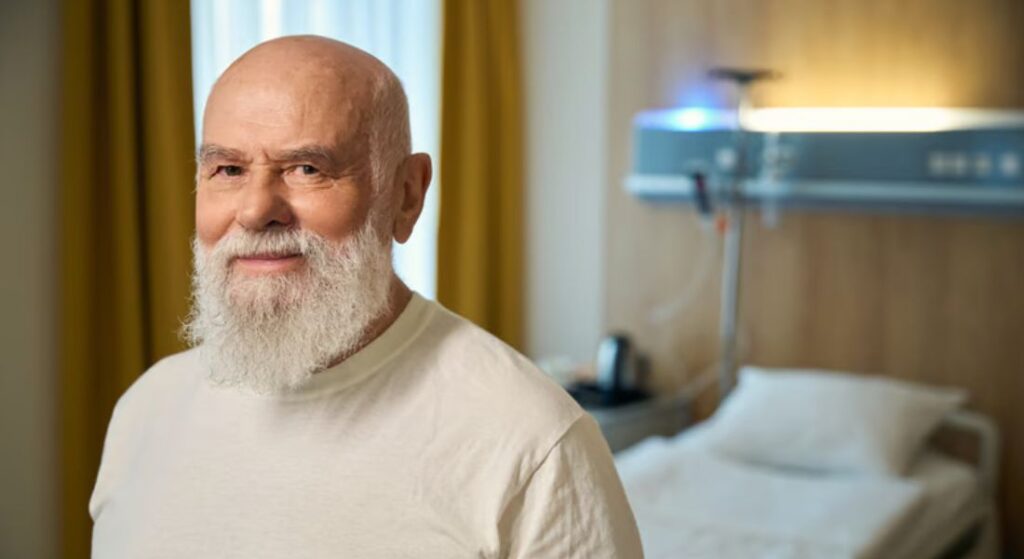
Age can affect how you recover after nerve-sparing prostate surgery. Younger men often have better erectile recovery potential than older men, although this is not a fixed rule for everyone.
Your general health also plays an important role. Conditions such as diabetes, high blood pressure, heart disease, obesity, and smoking can affect erection quality and slow recovery.
Your erections before surgery are very important too. If they were strong before treatment, recovery may be more likely, but if they were already weak, recovery may be more limited. This is why your surgeon may ask personal questions before surgery, as they help set realistic expectations for you.
Why Pre-Surgery Erectile Function Matters
Your erections before surgery are one of the strongest clues about how recovery may look afterwards. If you were able to get firm erections without tablets before surgery, your recovery potential may be better.
If you needed tablets before surgery or already had difficulty getting erections, recovery may be slower or less complete. This does not mean treatment cannot help you, but it does mean your expectations should be realistic.
Your surgeon may also ask about libido, sexual activity, medication, diabetes, heart health, and any previous pelvic treatments. These questions may feel personal, but they help your team give advice that is specific to you.
What Should You Ask Your Surgeon?

Before surgery, it is worth asking your surgeon whether nerve-sparing is likely in your case. You can ask whether bilateral nerve-sparing is possible, whether unilateral nerve-sparing may be safer, or whether wider tissue removal is recommended.
You may also ask which cancer features are influencing the decision. For example, you can ask whether the cancer is close to one nerve bundle, whether the MRI shows any concern, and what your biopsy results suggest.
You can also ask how the decision may affect your erections, urinary control, and recovery expectations. These questions are not embarrassing; they are an important part of helping you make an informed decision.
Will the Final Decision Be Made During Surgery?
Sometimes the surgical plan is discussed before your operation, but the final judgement may be made during surgery. Your surgeon may plan bilateral nerve-sparing, unilateral nerve-sparing, partial nerve-sparing, or wider removal depending on what seems safest.
In some centres, extra techniques may be used during surgery to check the margins, although these are not available everywhere. The key point is that your surgeon may need some flexibility if your anatomy or cancer position looks different from expected.
If needed, the plan may be adjusted to prioritise safe cancer removal. You should ask your surgeon how often plans change during surgery and what would make them decide to spare less nerve tissue.
Is Bilateral Always Better Than Unilateral?
Bilateral nerve-sparing may support better erectile recovery when it is safe, but it is not always the right choice for every patient. If cancer is close to one side of the prostate, preserving both nerve bundles may increase risk. This is why the safest option depends on your cancer location, anatomy, and treatment priorities.
- Bilateral Nerve-Sparing: This may offer better functional recovery when both nerve bundles can be safely preserved.
- Unilateral Nerve-Sparing: This may be safer when cancer is too close to one side of the prostate.
- Cancer Control Comes First: Saving more nerve tissue is not always better if it affects safe cancer removal.
- Personalised Surgical Planning: The best approach should be chosen based on your individual scan, biopsy, anatomy, and goals.
Overall, bilateral nerve-sparing is not automatically better than unilateral nerve-sparing. The right choice is the one that gives the safest balance between cancer control and possible functional recovery. Your surgeon should explain why one approach is more suitable for your specific situation.
Is Unilateral Nerve-Sparing a Bad Outcome?
No, unilateral nerve-sparing is not a bad outcome. It often means your surgeon has found a way to preserve function on one side while treating the cancer safely on the other.
It can feel disappointing if you hoped both sides could be preserved. However, one-sided nerve-sparing may still offer meaningful recovery potential for some men, especially when it is the safest balance for your cancer.
Try not to see unilateral surgery as a failure. It is often a careful, tailored decision, and your surgeon should explain why one side could be preserved while the other side needed wider removal.
What If No Nerves Can Be Spared?
If no nerve-sparing is possible, you may still have support options after surgery. Erectile recovery can be more difficult, but treatments may still help you achieve sexual activity.
These options may include vacuum devices, injections, urethral treatments, or penile implants in selected cases. The right choice will depend on your health, preferences, relationship situation, and treatment goals.
It is also important to talk about emotional recovery, as sexual changes after prostate surgery can affect your confidence and relationships. You deserve proper support, even if nerve-sparing is not possible.
Emotional Impact of Nerve-Sparing Decisions
The decision between bilateral and unilateral nerve-sparing can feel emotionally heavy. You may feel hopeful, anxious, disappointed, or confused, especially when you are thinking about cancer control, erections, intimacy, and confidence at the same time.
These feelings are normal because prostate cancer surgery is not only about removing the cancer. It can also affect how you feel about your body, your relationship, and your future after treatment.
You may find it helpful to talk openly with your partner, specialist nurse, surgeon, GP, or counsellor. You do not need to pretend the functional side of recovery does not matter, because it does matter and deserves proper discussion.
How to Prepare for Recovery
Before surgery, it is helpful to ask what recovery may look like in your case. You may want to discuss catheter removal, continence recovery, pelvic floor exercises, sexual rehabilitation, time off work, and any limits on activity.
It can also help to prepare practically before you come home. You may need pads if advised, comfortable clothing, transport after hospital, and enough time away from work so you are not rushing your recovery.
You should also know who to contact if you have catheter problems, fever, wound concerns, heavy bleeding, or difficulty passing urine after the catheter is removed. Good preparation will not remove every worry, but it can help you feel more confident and make recovery feel more manageable.
Recovery Is Different for Every Man
Recovery is different for every man, even when the same type of nerve-sparing surgery is used. Two men may both have bilateral nerve-sparing surgery, but one may regain erections earlier while the other may need tablets or other support.
Bladder control can also recover at different speeds. You may recover quickly, or you may need more time depending on your anatomy, cancer features, health, age, surgery details, nerve response, and rehabilitation.
This variation can feel frustrating, especially if you compare yourself with others. Try to measure your progress against your own starting point, not someone else’s experience. Small improvements still matter and can be an important part of your recovery.
Speak to Our Specialist

If you have been told you may need prostate cancer surgery, speaking to a specialist can help you understand whether nerve-sparing is suitable for you. You can ask whether bilateral or unilateral nerve-sparing may be possible in your case.
You may also want to discuss how your MRI and biopsy results affect the decision, and what recovery could look like afterwards. A specialist can explain erectile recovery, urinary control, penile rehabilitation, and what to expect after catheter removal.
These conversations can help you feel more prepared and less uncertain before treatment. You should not have to make sense of these decisions alone, especially when they can affect both cancer treatment and quality of life.
FAQs
1. What is nerve-sparing prostate surgery?
Nerve-sparing prostate surgery is a technique where the surgeon tries to preserve the delicate nerve bundles that sit alongside the prostate. These nerves are important for erectile function, so preserving them may improve the chance of recovery after surgery. However, the primary goal is always to remove the cancer safely, so nerve preservation is only done when it is appropriate.
2. What is the difference between bilateral and unilateral nerve-sparing?
Bilateral nerve-sparing means both nerve bundles on either side of the prostate are preserved, while unilateral nerve-sparing means only one side is preserved. Bilateral preservation is generally preferred when it is safe, as it may offer a better chance of erectile recovery. Unilateral preservation is used when cancer is too close to one side.
3. How does a surgeon decide between bilateral and unilateral nerve-sparing?
The decision is based on several factors, including your MRI results, biopsy findings, PSA level, and how close the cancer is to the nerve bundles. Your overall health and pre-surgery erectile function are also considered. The surgeon’s priority is always to remove the cancer safely while preserving function where possible.
4. Does nerve-sparing guarantee normal erections after surgery?
No, nerve-sparing does not guarantee normal erectile function. Even when nerves are preserved, they may be temporarily affected by surgery and take months or longer to recover. Some men may still need additional treatments such as medication or rehabilitation support.
5. Is bilateral nerve-sparing always better than unilateral?
Bilateral nerve-sparing may offer a better chance of erectile recovery, but it is not always the safest option. If cancer is close to one side, preserving both sides could increase the risk of leaving cancer behind. The best option is always the one that balances cancer safety with function preservation.
6. Can unilateral nerve-sparing still allow erectile recovery?
Yes, many men can still recover erectile function after unilateral nerve-sparing surgery. However, the chances may be lower compared to bilateral preservation because only one nerve pathway is available. Recovery also depends on age, health, and pre-surgery erectile function.
7. What happens if no nerve-sparing is possible?
If nerve-sparing is not possible, the surgeon will prioritise complete cancer removal. Erectile recovery may be more challenging, but there are still treatment options available such as tablets, injections, vacuum devices, or implants. Your care team can guide you through these options.
8. How long does recovery take after nerve-sparing surgery?
Recovery varies from person to person and can take several months to over a year. The nerves may be temporarily affected after surgery, even if preserved, so improvement is usually gradual. Support treatments may be used during this recovery period.
9. Does nerve-sparing affect urinary control?
Nerve-sparing is mainly related to erectile function, but it may also support earlier recovery of urinary control in some men. However, continence depends on many factors, including age, bladder function, and surgical technique. Some leakage after surgery is common and usually improves over time.
10. Can I choose between bilateral and unilateral nerve-sparing?
You cannot directly choose the type of nerve-sparing, as the decision depends on your cancer location and safety considerations. Your surgeon will recommend the most appropriate approach based on your scans and biopsy results. It is important to discuss your priorities and ask questions before surgery.
Final Thoughts: Making Sense of Nerve-Sparing Choices
When you’re facing prostate cancer surgery, the discussion around bilateral and unilateral nerve-sparing can feel overwhelming at first. In reality, it all comes down to a careful balance between removing the cancer safely and preserving the nerves that support urinary and sexual function where possible. There isn’t a “one-size-fits-all” answer the right approach depends entirely on your MRI findings, biopsy results, overall health, and what your surgeon sees as the safest option during planning and surgery.
What’s important to remember is that nerve-sparing, whether bilateral or unilateral, is about maximising your recovery potential without compromising cancer treatment. Even if only one side can be preserved, or in some cases none at all, there are still pathways and support available to help you through recovery, including rehabilitation and additional treatments. If you are looking for nerve-sparing prostate surgery in London, you can reach out to us to arrange a consultation and receive personalised advice about your diagnosis, treatment choices, and recovery.
References:
- Del Giudice, F., Busetto, G.M., Maggi, M., Sciarra, A. and Salciccia, S. (2023) Penile Rehabilitation after Prostate Cancer Treatment. Uro, 3(1), pp.113-129. Available at: https://www.mdpi.com/2673-4397/3/1/9
- Zhang, L., Li, X., Wang, Y., Chen, J. and Zhao, H. (2025) Nerve-Sparing Robotic-Assisted Radical Prostatectomy Based on Preoperative MRI and Biopsy Risk Stratification. Cancers, 17(6), 962. Available at: https://www.mdpi.com/2072-6694/17/6/962
- Avulova, S., Zhao, Z., Lee, D., et al. (2018) The Effect of Nerve Sparing Status on Sexual and Urinary Function: 3-Year Results from the CEASAR Study. The Journal of Urology. Available at: https://pubmed.ncbi.nlm.nih.gov/29253578/
- Finley, D.S., Osann, K., Chang, A., et al. (2009) Effect of unilateral vs bilateral nerve sparing on sexual function recovery after robotic radical prostatectomy. Available at: https://pubmed.ncbi.nlm.nih.gov/19388985/
- Tal, R., Alphs, H.H., Krebs, P., Nelson, C.J. and Mulhall, J.P. (2009) Erectile Function Recovery Rate after Radical Prostatectomy: A Meta-Analysis. The Journal of Sexual Medicine, 6(9), pp.2538-2546. Available at: https://pmc.ncbi.nlm.nih.gov/articles/PMC4097184/