




Many men want to know how often you should take Viagra after prostatectomy, and it is a completely understandable question. After prostate cancer surgery, you may be thinking about erections, confidence, intimacy, urinary control, and how your body will recover over time.
Viagra is the brand name for sildenafil, which belongs to a group of medicines called PDE5 inhibitors used to treat erectile dysfunction. After prostatectomy, it may be prescribed as part of a penile rehabilitation plan, where the aim is often to support blood flow to the penis while your nerves recover, rather than producing an immediate strong erection.
How often you take Viagra depends on your surgeon’s advice and your individual recovery. Factors such as your heart health, other medications, type of surgery, and whether nerve-sparing was possible all play a role in deciding the safest and most effective schedule for you.
You should not decide the frequency yourself. Sildenafil should only be taken as prescribed by your doctor or specialist nurse, who will guide you based on what is appropriate and safe for your recovery.
What Is Prostatectomy?
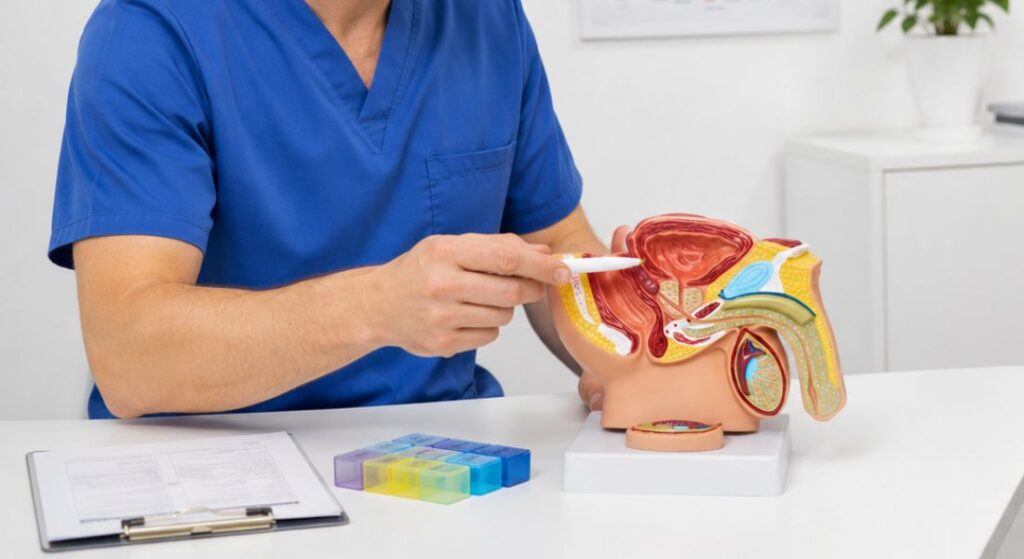
A prostatectomy is an operation to remove the prostate gland. If you are having treatment for prostate cancer, this is usually called a radical prostatectomy, where the prostate is removed and the bladder is reconnected to the urethra, which is the tube that carries urine out of your body.
This is major surgery, even when it is performed using robotic or keyhole techniques. Because the prostate sits close to important nerves, blood vessels, the bladder, and the urinary sphincter, the surgery can affect more than one aspect of your recovery.
After the operation, you may need time for wound healing, catheter removal, recovery of urinary control, return of energy levels, and gradual improvement in sexual function. Each of these areas can recover at a different pace, so it is normal for your overall recovery to take time.
Why Erections Can Be Affected After Prostatectomy
The nerves that help you get an erection sit very close to your prostate. Because of this, prostate surgery can affect your erectile function, even when it is done carefully.
During your operation, your surgeon may try to preserve these nerves if it is safe to do so, which is called nerve-sparing surgery. However, this is not always possible, especially if the cancer is close to the nerve bundles and wider tissue removal is needed to treat it safely.
Even when your nerves are preserved, they can still be stretched, bruised, or temporarily affected during surgery. This is why erections often do not return straight away after prostatectomy, and your nerves may need several months or longer to recover and start working again.
What Is Viagra?
Viagra is a brand name for a medicine called sildenafil. If you are prescribed it, it is usually to help support erections when you are sexually stimulated.
Sildenafil works by increasing blood flow to the penis, but it does not create sexual desire on its own, and it will not usually cause an erection without arousal. It simply helps your body respond more effectively when you are already sexually stimulated.
For erectile dysfunction, you may take sildenafil before sexual activity. After prostatectomy, it can also be used in a more structured way as part of penile rehabilitation to support recovery over time. Your doctor will decide if it is suitable for you, what dose you should take, and how often you should use it based on your individual situation.
What Is Penile Rehabilitation?
Penile rehabilitation is a planned approach used after prostatectomy to support erectile tissue and sexual recovery while your body heals. If you are going through this process, the aim is to help maintain the health of the penile tissue during the period when nerve function is recovering.
The idea behind it is that regular blood flow may help keep the erectile tissue healthier while the erection nerves gradually recover. Penile rehabilitation may include tablets such as sildenafil, tadalafil, or other PDE5 inhibitors, and in some cases vacuum erection devices, injections, or other treatments depending on what is suitable for you.
The exact plan can vary between specialists and will be tailored to your recovery. Some men are advised to take tablets regularly, while others are told to use them only before sexual activity, and some may need a combination of treatments over time depending on their response.
Is There One Standard Viagra Schedule After Prostatectomy?
No, there is not one standard schedule that suits every man after prostatectomy. If you are recovering from surgery, the way you use sildenafil will depend on your individual situation rather than a fixed routine. Some men may be prescribed it on demand before sexual activity, while others may be advised to take it regularly as part of penile rehabilitation.
In some cases, you may not be prescribed sildenafil at all if it is not safe or unlikely to be effective for you. Your doctor will decide the frequency based on your healing, side effects, medication safety, and overall treatment goals.
This is why it is important not to copy another patient’s schedule, as your recovery after prostatectomy will be unique to you.
Common Ways Viagra May Be Used After Prostatectomy
| Approach | What It Means | When It May Be Considered | Important Point |
| On-demand use | Taking sildenafil before sexual activity. | When you are ready to try sexual activity and your doctor confirms it is safe. | It still requires sexual stimulation and may not work immediately after surgery. |
| Regular intermittent use | Taking sildenafil on specific days as part of a planned rehabilitation schedule. | Sometimes used to support blood flow and erectile tissue health during nerve recovery. | The exact schedule should be set by your doctor, not decided yourself. |
| Daily PDE5 inhibitor use | Taking erectile dysfunction medication every day under medical guidance. | Sometimes considered in penile rehabilitation, more commonly with medicines such as tadalafil. | Daily use is not suitable for everyone and depends on side effects, heart health, and medication safety. |
| Combination rehabilitation | Using tablets alongside options such as a vacuum erection device. | May be considered if tablets alone are not enough or as part of a wider recovery plan. | Should only be done with specialist advice. |
| Alternative treatment plan | Using injections, vacuum devices, urethral medication, or other options instead of Viagra. | May be needed if sildenafil is unsuitable or ineffective, especially after non-nerve-sparing surgery. | Viagra is not the only option for erectile recovery support. |
Why Doctors May Prescribe Viagra Regularly
If you are prescribed Viagra regularly after prostatectomy, it may be part of a penile rehabilitation plan. In this context, the goal is not always immediate sexual activity each time you take it, but rather to support blood flow and help maintain the health of the erectile tissue during recovery.
This approach can be especially relevant after nerve-sparing prostatectomy, where the nerves may recover gradually over time. By maintaining circulation to the area, your doctor may aim to support a healthier environment for potential erectile recovery as healing progresses.
However, the evidence on the ideal schedule is not completely straightforward. Some studies suggest early, structured use of PDE5 inhibitors may be helpful, while others show that nightly use is not necessarily more effective than intermittent, planned use. This is why your specialist will often tailor the plan specifically for you rather than using a one-size-fits-all routine.
On-Demand Use After Prostatectomy
On-demand use means taking Viagra before sexual activity. If you are in this stage of recovery, this is one of the most common ways sildenafil is used for erectile dysfunction outside of prostate surgery.
After prostatectomy, on-demand use may be recommended once you are ready to try sexual activity and your doctor feels it is safe for you. You may be given clear instructions on when to take it before sex, what dose to use, and how often it can be taken.
It is important to remember that sildenafil still requires sexual stimulation to work. It is not designed to create an erection without arousal, so the context and timing still matter.
If it does not work the first time, this does not automatically mean it will not work in the future. It may simply take more time, adjustment, or repeat attempts during your recovery.
Regular Intermittent Use After Prostatectomy
Some doctors may recommend regular intermittent use of Viagra after prostatectomy. If this applies to you, it usually means taking sildenafil on specific days of the week as part of a structured rehabilitation plan.
The aim is often to encourage regular blood flow and provide repeated stimulation to the erectile tissue while your nerves are still recovering. This can sometimes be combined with attempts at sexual stimulation or the use of a vacuum erection device, depending on what your doctor feels is appropriate for you.
The exact schedule should always be set by your own doctor, so you should not create your own routine based on online advice. After prostatectomy, taking more medication does not necessarily lead to better or faster recovery, so it is important that your plan is tailored and medically supervised.
Daily Use: Is It Always Recommended?
Daily use of medications like Viagra is sometimes discussed in penile rehabilitation after prostatectomy, but it is not always the right choice for every man. If you are considering this approach, it should only ever be done under the guidance of your doctor.
Some specialists may use daily PDE5 inhibitor therapy, particularly with medicines such as tadalafil, which stays in the body longer. Sildenafil, however, is more commonly used on demand, although in some rehabilitation plans it may still be prescribed on a regular basis.
Daily use is not suitable for everyone. If you experience side effects, have low blood pressure, heart problems, medication interactions, or other safety concerns, your doctor may advise against it. They will always weigh the potential benefits against the risks to decide what is safest and most appropriate for your recovery.
Why Your Nerve-Sparing Status Matters
How often you are prescribed Viagra after prostatectomy can depend on whether nerve-sparing surgery was possible. The condition of your erection nerves affects how well sildenafil may work during recovery. This is why your rehabilitation plan should be based on the details of your operation.
- Both Nerve Bundles Preserved: Sildenafil may have a better chance of helping over time if both nerve bundles were spared.
- One Nerve Bundle Preserved: Viagra may still be useful, but the response can be more variable and less predictable.
- No Nerve-Sparing Possible: Tablets may be less effective because sildenafil partly depends on nerve signalling to work properly.
- Other Recovery Options: Vacuum devices, injections, and other treatments may still help support erectile rehabilitation.
Overall, your nerve-sparing status is an important part of planning Viagra use after prostatectomy. It helps your surgeon explain what response may be realistic and which treatments may suit you best. Your recovery plan should always be personalised to your surgery, nerve function, and overall health.
Bilateral Nerve-Sparing and Viagra Use
If you had bilateral nerve-sparing surgery, it means both nerve bundles were preserved as much as safely possible. If this applies to you, your doctor may be more likely to include sildenafil as part of your recovery or rehabilitation plan.
Even so, you may not notice erections straight away. It is common for the nerves to remain temporarily “stunned” after surgery, even when they have been carefully preserved.
Viagra may be used to support blood flow to the penis and assist erectile function as your recovery progresses. The frequency and timing will depend on your doctor’s specific protocol and how your body responds over time.
Even with bilateral nerve-sparing surgery, recovery can vary significantly from one man to another, so it is important not to compare your progress with others.
Unilateral Nerve-Sparing and Viagra Use
If you had unilateral nerve-sparing surgery, it means that one nerve bundle was preserved while the other could not be safely saved. If this applies to you, sildenafil may still be prescribed, but your expectations may be slightly different.
A single preserved nerve bundle can still support erectile recovery, especially if you had good erections before surgery. However, you may find that your response takes longer to return, or that it is not as strong or consistent compared with bilateral nerve-sparing.
Your doctor will usually monitor your progress over time and decide whether Viagra alone is enough or whether another treatment should be added to support your recovery. This is why regular follow-up is important, so your plan can be adjusted based on how you are responding.
Non-Nerve-Sparing Surgery and Viagra Use
If neither nerve bundle could be preserved during your prostate surgery, Viagra is less likely to produce strong erections for you. If this is your situation, it is important to stay realistic about what tablets can and cannot achieve, even though it can feel disappointing.
Your specialist may still discuss sildenafil in some cases, but other treatments are often more effective when nerve signals are no longer available. These may include vacuum erection devices, penile injections, urethral medication, or longer-term options such as penile implants for selected men.
The right approach will depend on your personal goals, overall health, recovery, and preferences. Even if tablets do not work well, it is important to remember that support and other treatment options are still available to help you manage sexual function and intimacy.
Your Erections Before Surgery Matter
Your erectile function before prostatectomy is one of the most important factors in your recovery. If you had strong erections before surgery, you may have a better chance of responding to Viagra afterwards, especially if nerve-sparing surgery was possible.
If you already had erectile dysfunction before your operation, recovery may be more challenging. This does not mean sildenafil cannot help you at all, but it may mean your expectations need to be adjusted based on your starting point.
Your doctor may ask you personal questions about your erections before surgery. If this happens, it is not to embarrass you, but to help build a clearer picture so they can recommend a realistic and appropriate rehabilitation plan for your recovery.
Your Age and General Health Matter

Your age can influence how well erections recover after prostatectomy, but it is not the only factor that matters. If you are younger, you may have a better chance of recovery, but individual health still plays a major role.
Conditions such as diabetes, high blood pressure, heart disease, obesity, smoking, high cholesterol, and certain medications can all affect erectile function. If any of these apply to you, they may influence how often Viagra is recommended and how well it works for you.
Your doctor will always take these factors into account before deciding on your treatment plan, because sildenafil affects blood vessels and blood pressure. A safe and effective approach must consider your overall health, not just your prostate surgery alone.
How Soon After Surgery Might Viagra Be Started?
The timing for starting Viagra after prostate surgery can vary from person to person. If you are recovering, you may be advised to start sildenafil only once your catheter has been removed and early healing is going well.
In other cases, you may be asked to wait longer depending on factors such as pain, bleeding risk, urinary leakage, wound healing, heart health, or other medications you are taking. These factors all help your doctor decide when it is safe for you to begin treatment.
Your surgeon’s advice is the safest and most important guide for you. You should not start Viagra immediately after surgery unless your medical team has specifically told you to, as your body is still healing internally and treatment needs to match your recovery stage.
Why Catheter Removal Often Comes First
After prostatectomy, you will usually have a catheter in place for a short period. If this applies to you, it is there to help drain urine while the connection between your bladder and urethra heals properly.
While the catheter is still in place, your main focus is usually on rest, gentle walking, wound care, and managing the catheter itself. At this stage, many men do not feel physically or emotionally ready to think about erections or sexual recovery.
Once your catheter is removed, your care team may begin discussing the next steps in your recovery, including pelvic floor exercises, urinary control, and penile rehabilitation. This is often when conversations about erectile recovery become more practical and focused on your long-term progress.
Can You Take Viagra More Than Once a Day?
You should not take sildenafil more often than your doctor prescribes. If you are using it after prostatectomy, it is important to follow your specialist’s instructions carefully rather than adjusting the frequency yourself.
For standard erectile dysfunction use, sildenafil is usually taken when needed and should not be taken more than once in 24 hours unless your doctor specifically tells you otherwise. Taking extra tablets will not necessarily improve your erections.
It may also increase the risk of side effects such as headache, flushing, dizziness, low blood pressure, or visual changes. After prostatectomy, your body is still healing and may already be managing fatigue, urinary symptoms, and recovery, so it is important that any medication is used safely and responsibly.
What Dose Might Be Prescribed?
Sildenafil comes in different doses, and if you are prescribed it after prostatectomy, your doctor will choose the most appropriate one for you. This decision is based on factors such as your age, overall health, other medicines, and your risk of side effects.
You may be started on a lower dose or a standard dose, depending on what is considered safest and most suitable for your recovery. Some men may later need a dose adjustment if the medicine is not working well enough or if side effects become troublesome.
You should not increase your dose on your own, even if you feel the effect is not strong. If Viagra does not work at first, it may simply be because your nerves are still recovering rather than the dose being too low. Always speak to your doctor before making any changes to how you take it.
What If Viagra Does Not Work?
Viagra may not work well at first after prostatectomy, and if this happens to you, it can feel frustrating. However, this is very common during the early stages of recovery.
The erection nerves may still be healing, and factors such as anxiety, tiredness, urinary leakage, pain, and pressure to perform can also affect how well the medication works. All of these can temporarily reduce your response even if the medicine is suitable for you.
Your doctor may suggest trying sildenafil several times under the right conditions before deciding whether it is helping. They may also adjust the dose, switch you to another tablet, or add a different treatment if needed. It is important not to judge your overall recovery based on a single attempt, as improvement often takes time.
How Many Times Should You Try Before Giving Up?
Viagra may not work well the first time after prostatectomy, and if this happens to you, it can feel disappointing. However, this is very common in the early stages of recovery, so one unsuccessful attempt does not mean it will not work for you at all.
Your erection nerves may still be healing, and things like anxiety, tiredness, urinary leakage, pain, or feeling pressure to perform can all affect how well sildenafil works. These factors can temporarily reduce your response even when the medicine is appropriate for you.
Your doctor may suggest trying it a few times in the right conditions before deciding whether it is helpful. They may also adjust your dose, change the medication, or add another treatment if needed. It is important that you do not judge your long-term recovery based on a single or early attempt, as improvement often takes time.
Viagra and Sexual Stimulation
Viagra works together with sexual stimulation, so it does not usually create an erection simply because you have taken a tablet. If you are using it after prostatectomy, this is especially important to understand, as your nerve signals may still be weaker during recovery.
You may find that a relaxed setting, patience, intimacy, and reducing pressure can all help improve your response. It can also help to think of sexual recovery as a gradual process rather than something that needs to happen perfectly every time.
Trying to force an erection can increase anxiety and make things more difficult for you. Giving yourself time and communicating openly with your partner, if you have one, can make this stage of recovery feel less stressful and more manageable.
Viagra and Urinary Leakage
If you are experiencing urinary leakage after prostatectomy, it can understandably affect your confidence around sex. You may worry about leaking during arousal or intimacy, and if this is the case for you, it can make you hesitant to try Viagra even when you are physically ready.
If this is something you are concerned about, it is a good idea to speak to your specialist nurse or doctor. They can guide you on practical steps such as pelvic floor exercises, managing fluid intake, and emptying your bladder before intimacy, which may help reduce worry.
You do not need to wait until your urinary control is perfect before addressing erectile recovery. If you are in this situation, both urinary and sexual function can be supported at the same time as part of your overall recovery plan.
Side Effects That May Affect Frequency
Side effects can affect how often Viagra is suitable for you after prostatectomy. If you are taking sildenafil, your doctor will always consider how your body responds before recommending a long-term plan.
Common side effects may include headache, flushing, a blocked nose, indigestion, dizziness, or mild visual changes. If these are mild, your doctor may adjust your dose or change the timing to help you tolerate the medicine better.
If side effects become troublesome, your doctor may suggest switching to a different medicine or another treatment option altogether. You should seek urgent medical help if you develop chest pain, severe dizziness, sudden vision loss, sudden hearing loss, or an erection lasting more than four hours, and you should not ignore any concerning symptoms.
Who Should Not Take Viagra?
Viagra is not suitable for everyone, and if you are considering sildenafil after prostatectomy, safety checks are essential before starting treatment.
You should not take sildenafil if you use nitrate medicines for chest pain or certain heart conditions, as combining these can cause a dangerous drop in blood pressure. You must also tell your doctor if you are taking alpha-blockers, blood pressure medicines, heart medicines, or any other regular medications, as interactions may occur.
Your doctor will need your full medication list before prescribing Viagra to make sure it is safe for you. This is especially important after prostatectomy, as your recovery plan needs to be both effective and safe for your overall health.
Viagra and Heart Health
Your heart health is an important factor when deciding whether Viagra is suitable for you after prostatectomy, and how often it may be used. If you are in this situation, it is worth understanding that sexual activity itself places some demand on your heart.
If you have conditions such as angina, a recent heart attack, heart failure, an irregular heartbeat, low blood pressure, or uncontrolled high blood pressure, your doctor may need to carefully assess whether sildenafil and sexual activity are safe for you. This assessment helps ensure that your recovery plan is appropriate for your overall health.
This does not mean that every man with heart disease cannot take Viagra. It simply means the decision needs to be made carefully and individually. Being honest with your doctor about your heart history and any symptoms you experience will help them guide you safely.
Viagra and Other Erectile Dysfunction Tablets
Viagra is not the only PDE5 inhibitor available. If you are exploring options after prostatectomy, your doctor may also consider medicines such as tadalafil, vardenafil, or avanafil depending on what is most suitable for you.
Tadalafil, for example, lasts longer in the body than sildenafil and may sometimes be prescribed in a different way, including as a low-dose daily option. Your doctor may choose between these medicines based on your lifestyle, side effects, how you respond, and your rehabilitation goals.
You should not combine different PDE5 inhibitors unless your doctor specifically tells you to. Taking more than one erectile dysfunction tablet can increase the risk of side effects, including low blood pressure, so it is important to follow medical guidance closely.
Vacuum Devices Alongside Viagra
A vacuum erection device may sometimes be used alongside tablets as part of a penile rehabilitation plan after prostatectomy. If you are using this approach, the device works by creating suction around the penis, which draws blood into the erectile tissue.
Some men use it to help maintain tissue health during recovery, while others use it to achieve an erection for sexual activity. It can feel a bit unusual at first, especially if you are new to it, but many men become more comfortable with practice over time.
Your specialist or nurse can show you how to use it safely and effectively. If Viagra on its own is not giving you the results you hoped for, a vacuum device may be something worth discussing as part of your overall recovery plan.
Injections If Viagra Is Not Enough
If Viagra is not effective enough after prostatectomy, penile injections may be offered as another option for you. If you are in this situation, this treatment involves injecting a small amount of medicine directly into the side of your penis to help produce an erection.
The idea can feel worrying at first, but many men find that once they are properly trained, they can use injections safely and confidently. With the right support from a specialist, you can learn exactly how to do it in a controlled and manageable way.
Injections may still work even if nerve recovery is limited, because they act directly on blood flow rather than relying on nerve signals. However, they must always be prescribed and taught by a specialist, and you should never try injection treatments without medical supervision.
Emotional Pressure Around Taking Viagra
Taking Viagra after prostatectomy can feel emotionally heavy for you, especially in the early stages of recovery. If you are going through this, you may feel hopeful, nervous, embarrassed, or even disappointed if the medicine does not work straight away.
Some men feel that needing tablets means they have lost part of their sexual identity, while others feel relieved that there is at least a clear plan in place. If you are feeling either of these ways, both reactions are completely normal.
Erectile dysfunction after prostatectomy is a medical side effect of surgery, not a personal failure. You deserve support that looks after both the physical and emotional parts of your recovery, not just the medical side alone.
Talking to Your Partner
If you have a partner, open communication can really help reduce pressure during your recovery after prostatectomy. If you are in this situation, you may be worried about erections, while your partner may be worried about hurting you, rushing you, or saying the wrong thing.
It can help to explain that recovery takes time and that Viagra may not work immediately or in the same way it did before surgery. This can take some of the pressure off both of you and make the situation feel less focused on performance.
Intimacy does not have to depend only on penetration or a firm erection. If you are rebuilding confidence, closeness, touch, affection, and patience can all be important parts of that process. You do not need to solve everything in one conversation, as it is something you can gradually work through together.
Why Follow-Up Appointments Matter

Your first Viagra prescription after prostatectomy may not be your final plan. If you are in recovery, it is normal for your treatment to be reviewed and adjusted over time.
Your doctor may check how often you are using it, whether it is helping your erections, whether you are experiencing any side effects, and whether you might benefit from a different dose or additional treatment options.
It is important to be honest during follow-up appointments. If you are not taking it because you feel anxious, if it is not working, or if side effects are affecting you, you should say so. Your specialist can only adjust your plan properly if they understand what is really happening for you.
What You Should Not Do
If you are taking Viagra after prostatectomy, it is important for you to use it safely and exactly as prescribed. You should not take it more often than your doctor has advised, even if you feel the first dose did not work as expected.
You should never take someone else’s tablets or buy sildenafil from unsafe or unregulated sources. You should also avoid combining Viagra with nitrates, and you should not mix different erectile dysfunction medicines unless your doctor has clearly instructed you to do so.
It is also important that you do not increase the dose on your own in an attempt to improve results. After prostatectomy, erectile recovery often takes time, so safe and guided use is far more important than trying to rush the process.
How Long Might You Need Viagra?
If you are recovering from prostatectomy, the length of time you might need Viagra can vary quite a lot. Some men only use it for a few months during the early recovery phase, while others may continue for longer depending on how their erections return.
Over time, some men are able to reduce their reliance on tablets or move on to other treatments, while others continue to use medication as part of their long-term sexual health plan. The exact timeline will depend on factors such as nerve recovery, the type of surgery you had, your age, overall health, side effects, relationship needs, and your personal goals.
Your specialist will usually review your progress regularly and adjust your plan based on how you are responding. It is important to remember that needing medication during this period is not a failure, but a normal part of recovery support for many men after prostatectomy.
Why Personalised Advice Matters
General information can help you understand your options, but your own situation is what matters most when deciding how Viagra should be used after prostatectomy. If you are going through recovery, your plan needs to fit your individual health and surgical details.
The right frequency or approach can depend on whether you had bilateral nerve-sparing, unilateral nerve-sparing, or non-nerve-sparing surgery. It also depends on factors such as your heart health, blood pressure, other medications, erections before surgery, urinary recovery, and how you respond to treatment or side effects.
This is why two men who have had the same operation may be given completely different advice. If this happens, it is not inconsistency, but personalised care based on what is safest and most appropriate for each person. You should always follow the plan given to you by your own specialist, rather than trying to follow advice meant for someone else.
Speak to Our Specialist

If you are unsure how often you should take Viagra after prostatectomy, speaking to a specialist can really help you get clear, personalised guidance. If you are in this situation, you may need advice on sildenafil timing, penile rehabilitation, your nerve-sparing status, possible side effects, and safety with your other medicines.
You can also discuss what to do if tablets are not working as expected, as well as other options such as vacuum devices, injections, and longer-term treatments. This helps you understand all the available pathways rather than feeling stuck with one approach.
These conversations can feel personal, but they are a normal and important part of prostate cancer recovery. You should not have to guess your way through erectile recovery, and your specialist is there to guide you through each stage of the process.
FAQs:
1. How often should you take Viagra after prostatectomy?
How often you take Viagra after prostatectomy depends entirely on your doctor’s advice. Some men are told to use it before sexual activity, while others may be given a regular rehabilitation schedule. There is no single routine that suits everyone. Your recovery, health, and surgery type all influence the plan.
2. Can you decide how often to take Viagra yourself?
No, you should not decide the frequency yourself after prostate surgery. If you are taking sildenafil, it needs to be carefully prescribed based on your recovery and safety factors. Taking it too often will not speed up recovery and may increase side effects. Always follow your specialist’s instructions.
3. Why might you be prescribed Viagra regularly after prostatectomy?
You may be prescribed Viagra regularly as part of penile rehabilitation. The idea is to help maintain blood flow to the penis while your nerves recover. This can support erectile tissue health over time. It is not always about immediate sexual performance.
4. What is sildenafil and how does it relate to Viagra?
Sildenafil is the active ingredient in Viagra. If you are using it after prostatectomy, it works by improving blood flow to the penis during sexual stimulation. It does not create desire or work without arousal. It is commonly used in erectile dysfunction treatment.
5. Is there a standard Viagra schedule after prostate surgery?
No, there is no standard schedule that applies to everyone. Some men use it on demand, while others follow a structured rehabilitation plan. Your doctor will tailor the frequency based on your individual recovery. This ensures the safest and most effective approach for you.
6. What does “on-demand” Viagra use mean after prostatectomy?
On-demand use means you take Viagra before sexual activity when you need it. If you are in recovery, your doctor may suggest this once it is safe for you to resume intimacy. It still requires sexual stimulation to work. It is one of the most common approaches.
7. Can you take Viagra daily after prostatectomy?
Daily use is sometimes considered but is not suitable for everyone. If you are prescribed this approach, it will only be under medical supervision. Sildenafil is more commonly used on demand, while other medicines like tadalafil are more often used daily. Your doctor will decide what is right for you.
8. Why does nerve-sparing surgery affect how often you take Viagra?
If you had nerve-sparing surgery, your doctor may include Viagra more actively in your recovery plan. This is because preserved nerves give a better chance of response over time. If nerves were not preserved, the response to sildenafil may be weaker. This may influence how often it is prescribed and how it is used as part of your recovery plan.
9. What should you do if Viagra does not work after prostatectomy?
If Viagra does not work at first, you should not worry. This is very common after prostate surgery as your nerves may still be healing. You may need more time, repeat attempts, or a change in treatment. Your doctor may also adjust your dose or suggest alternatives.
10. Are there alternatives if Viagra is not suitable for you?
Yes, there are several alternatives if Viagra is not effective. These can include other tablets, vacuum erection devices, or penile injections. In some cases, other treatments like urethral therapy or implants may be discussed. Your specialist will guide you based on your recovery needs.
Final Thoughts: Finding the Right Viagra Routine After Prostatectomy
There is no single “correct” schedule for taking Viagra after prostatectomy, because recovery is highly individual. The frequency depends on factors such as nerve-sparing status, overall health, medication tolerance, and how your body responds during healing. For some men, sildenafil is used on demand before sexual activity, while for others it may form part of a structured penile rehabilitation plan. What matters most is that it is used safely, under medical supervision, and adjusted over time as your recovery progresses.
Erectile recovery after prostate surgery often takes patience. It is normal for results to vary in the early stages, and it does not necessarily reflect long-term outcomes. Regular follow-up with your specialist helps ensure your treatment plan remains appropriate, whether that involves adjusting the dose, changing the schedule, or exploring additional options if needed. If you would like specialist guidance about erectile recovery and penile rehabilitation after prostatectomy, you can contact us at Prostate Clinic London to discuss what may be suitable for your situation.
References:
- Hatzimouratidis, K., Burnett, A.L., Hatzichristou, D., McCullough, A.R., Montorsi, F. and Mulhall, J.P. (2009) ‘Phosphodiesterase type 5 inhibitors in postprostatectomy erectile dysfunction: a critical analysis of the basic science rationale and clinical application’, European Urology, 55(2), pp.334–347. Available at: https://www.sciencedirect.com/science/article/abs/pii/S0302283808012451
- Jo, J.K., Jeong, S.J., Oh, J.J., Lee, S.W., Lee, S.E., Byun, S.S. and Hong, S.K. (2018) ‘Effect of starting penile rehabilitation with sildenafil immediately after robot-assisted laparoscopic radical prostatectomy on erectile function recovery: a prospective randomized trial’, Journal of Urology, 199(6), pp.1600–1606. Available at: https://pubmed.ncbi.nlm.nih.gov/29307683/
- Montorsi, F., Brock, G., Stolzenburg, J.U., Mulhall, J.P., Moncada, I., Patel, H.R.H., Chevallier, D., Krajka, K., Henneges, C., Dickson, R. and Büttner, H. (2014) ‘Effects of tadalafil treatment on erectile function recovery following bilateral nerve-sparing radical prostatectomy: a randomised placebo-controlled study’, European Urology, 65(3), pp.587–596. Available at: https://pubmed.ncbi.nlm.nih.gov/24169081/
- Lin, H., Wang, R. and Liu, J.H. (2013) ‘The science of vacuum erectile device in penile rehabilitation after radical prostatectomy’, Translational Andrology and Urology, 2(1), pp.61–66. Available at: https://pmc.ncbi.nlm.nih.gov/articles/PMC4708600/
- Emanu, J.C., Avildsen, I.K. and Nelson, C.J. (2016) ‘Erectile dysfunction after radical prostatectomy: prevalence, medical treatments, and psychosocial interventions’, Current Opinion in Supportive and Palliative Care, 10(1), pp.102–107. Available at: https://pmc.ncbi.nlm.nih.gov/articles/PMC5005072/